

Business
Labor Department's proposal is a 'huge step' for your 401(k), BlackRock's Nefouse says

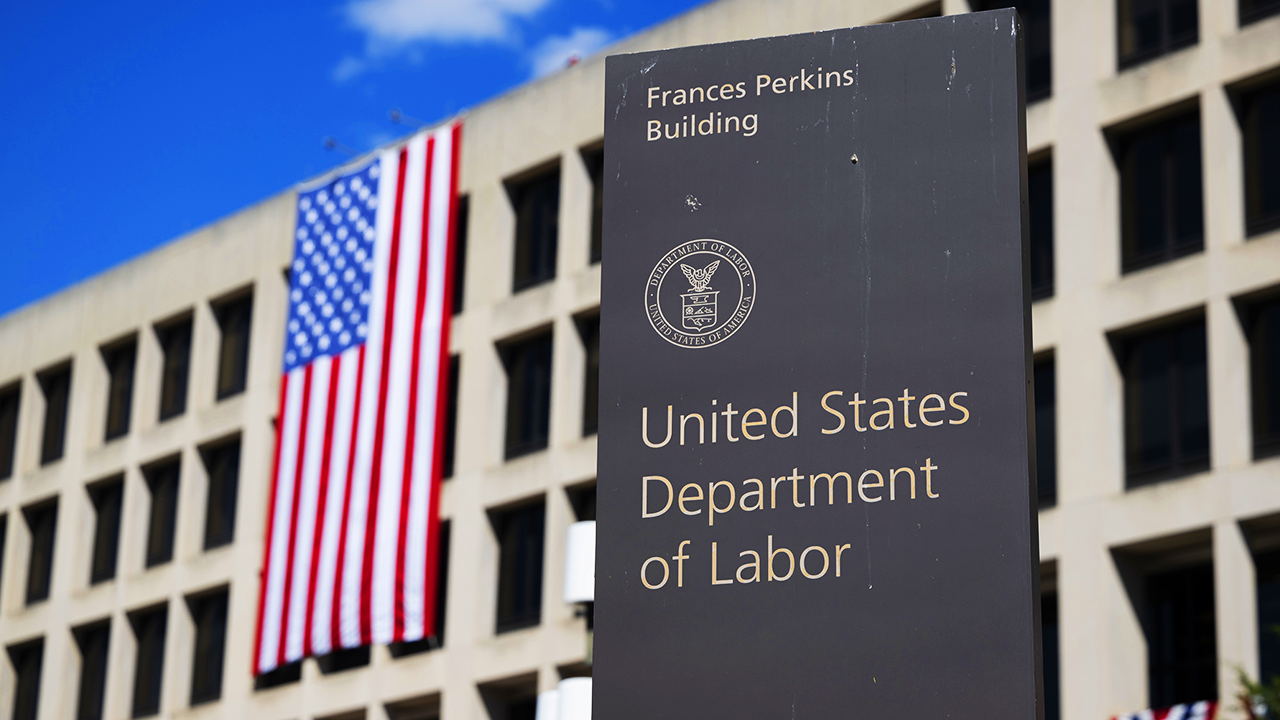
A proposed Department of Labor rule could significantly expand what Americans are able to hold inside their retirement accounts, potentially opening the door to assets like cryptocurrency, real estate and private markets.
BlackRock Global Head of Retirement Solutions Nick Nefouse described the rule as “a huge step forward for the 401(k) market” while discussing what the change could mean for everyday investors during his appearance on “Varney & Co.” Tuesday.
“The proposed regulation explains the steps that managers of 401(k) plans should take when considering alternative assets as a component in their investment lineups and establishes a set of process-based safe harbors for plan fiduciaries to use when selecting designated investment alternatives,” the Labor Department said in a press release on March 30.
Rather than endorsing specific investments, Nefouse suggested that the proposal is focused on creating a structured process for plan providers to follow when evaluating alternative assets.
AMERICANS TAP RETIREMENT FUNDS AT RECORD RATES AS MOUNTING FINANCIAL STRESS TAKES TOLL
“What the rule is trying to do… is establish a process, not necessarily say which asset classes are good or bad,” Nefouse said.
The shift could narrow a long-standing gap between retirement systems. While large institutional-style plans already have access to a wider range of investments, many workers in traditional 401(k) plans do not.
LARRY FINK CALLS FOR SOCIAL SECURITY REFORM, SAYS INVESTING A PORTION OF FUNDS COULD STRENGTHEN THE PROGRAM
“Think of regular people. About 25% of the population are in defined benefit plans. About 80% are in defined contribution plans,” Nefouse said.
“What we’re trying to do is level the playing fields, and so many Americans are relying on 401(k) plans,” he added.
The change could broaden access to investment options that have traditionally been limited to institutional retirement plans.



I am a specialist in Asian equities after having been a sellside analyst for 13 years. In addition, I have also spent time covering US hardware and semiconductor stocks on the sellside. Within Asia, I have covered the casino, automotive, industrial, consumer and technology sectors. I have also worked on the buyside as a fund manager in long only and as an analyst in hedge funds all covering Asian equities where I have developed a keen understanding of Asian companies and economies with a focus on China. From a global equities perspective, I enjoy covering companies globally by examining key metrics such as financial statements strength, valuation upside, and conducting proper analysis of the competitive advantages of the company. Throughout my career, I have found and written on undiscovered small cap companies which have increased in equity value by multiple times. I would like to write for Seeking Alpha where my goal is to help investors cut through the noise and to focus on fundamentals and the company’s competitive outlook instead of the momentum trade.
Analyst’s Disclosure: I/we have no stock, option or similar derivative position in any of the companies mentioned, and no plans to initiate any such positions within the next 72 hours. I wrote this article myself, and it expresses my own opinions. I am not receiving compensation for it (other than from Seeking Alpha). I have no business relationship with any company whose stock is mentioned in this article.
Seeking Alpha’s Disclosure: Past performance is no guarantee of future results. No recommendation or advice is being given as to whether any investment is suitable for a particular investor. Any views or opinions expressed above may not reflect those of Seeking Alpha as a whole. Seeking Alpha is not a licensed securities dealer, broker or US investment adviser or investment bank. Our analysts are third party authors that include both professional investors and individual investors who may not be licensed or certified by any institute or regulatory body.

Fidelity’s mission is to strengthen the financial well-being of our customers and deliver better outcomes for the clients and businesses it serves. With assets under administration of $12.6 trillion, including discretionary assets of $4.9 trillion as of December 31, 2023, Fidelity focuses on meeting the unique needs of a broad and growing customer base. Privately held for 77 years, Fidelity employs more than 74,000 associates with its headquarters in Boston and a global presence spanning nine countries across North America, Europe, Asia and Australia. Note: This account is not managed or monitored by Fidelity, and any messages sent via Seeking Alpha will not receive a response. For inquiries or communication, please use Fidelity’s official channels.

This is the forum for daily political discussion on Seeking Alpha. A new version is published every market day.
Please don’t leave political comments on other articles or posts on the site.
The comments below are not regulated with the same rigor as the rest of the site, and this is an ‘enter at your own risk’ area as discussion can get very heated. If you can’t stand the heat… you know what they say…
More on Today’s Markets:
Iran’s new supreme leader, Mojtaba Khamenei, who has not been seen or heard publicly since the war began, “issued new and decisive directives for the continuation of operations and the powerful confrontation with the enemies” while meeting with the head of the joint military command, the state broadcaster reported, with no details.
In April 2026, exports reached a record high of $359.44 billion, up 14.1% year-on-year, exceeding forecasts and showing a strong rebound after a weak growth of 2.5% in March. For the first four months of the year, total exports still grew 14.5% year-on-year to USD 1.34 trillion. However, during the period, sales to the US dropped 10.2%.
Meanwhile, Israeli Prime Minister Netanyahu warned in a 60 Minutes interview that the war is “not over… There are still enrichment sites that have to be dismantled, there are proxies that Iran supports, there are ballistic missiles that they still want to produce… there’s work to be done.”
Moderation Guidelines:
We remove comments under the following categories:
- Personal attacks on another user account
- Anti-Vaxxer or covid related misinformation
- Stereotyping, prejudiced or racist language about individuals or the topic under discussion.
- Inciting violence
Business
Urban Company shares tank 9% after Q4 net loss swells to Rs 161 crore despite a sharp revenue uptick

Revenue from operations for Q4FY26 rose 43% year-on-year to Rs 426 crore from Rs 298 crore a year ago. On a sequential basis, revenue grew 11% from Rs 383 crore reported in the October-December quarter of FY26. The company’s losses also widened sharply quarter-on-quarter, increasing nearly eightfold from Rs 21 crore in Q3FY26.
The professional services platform reported a 42% year-on-year rise in net transacting value (NTV) to Rs 1,148 crore during the quarter, the highest level in the last 15 quarters.
Adjusted EBITDA loss for Q4FY26 stood at Rs 98 crore, while adjusted EBITDA excluding InstaHelp came in at Rs 22 crore. The company also reported a 160-basis-point improvement in margins.
For the full financial year, NTV increased 31% year-on-year to Rs 4,290 crore, while revenue from operations rose 36% to Rs 1,556 crore. According to the company’s filing, both NTV and revenue growth accelerated for the second consecutive year.

Among key business segments, India Consumer Services excluding InstaHelp posted 26% year-on-year NTV growth in Q4FY26, marking the strongest growth in 11 quarters. International operations across the UAE and Singapore recorded 84% year-on-year growth in NTV during the quarter.
The company said both India Consumer Services, excluding InstaHelp and the international business remained profitable in Q4FY26 while also improving margins on a yearly basis.Native NTV rose 67% year-on-year in the March quarter, while revenue from the segment increased 75%.
InstaHelp delivered 2.7 million orders and recorded Rs 40 crore in NTV in Q4FY26, compared with 1.6 million orders and Rs 28 crore in NTV in Q3FY26. March alone saw over 1.1 million orders.
Sensex, Nifty today: Catch all the LIVE stock market action here
(Disclaimer: Recommendations, suggestions, views and opinions given by the experts are their own. These do not represent the views of The Economic Times)

Shares in South Perth-based FMR Resources rose by more than 30 per cent early on Monday following news it would expand its presence in Chile.

ESG consultant David Elliott saw a need to provide a software solution for SMEs, due to Australian regulatory changes.
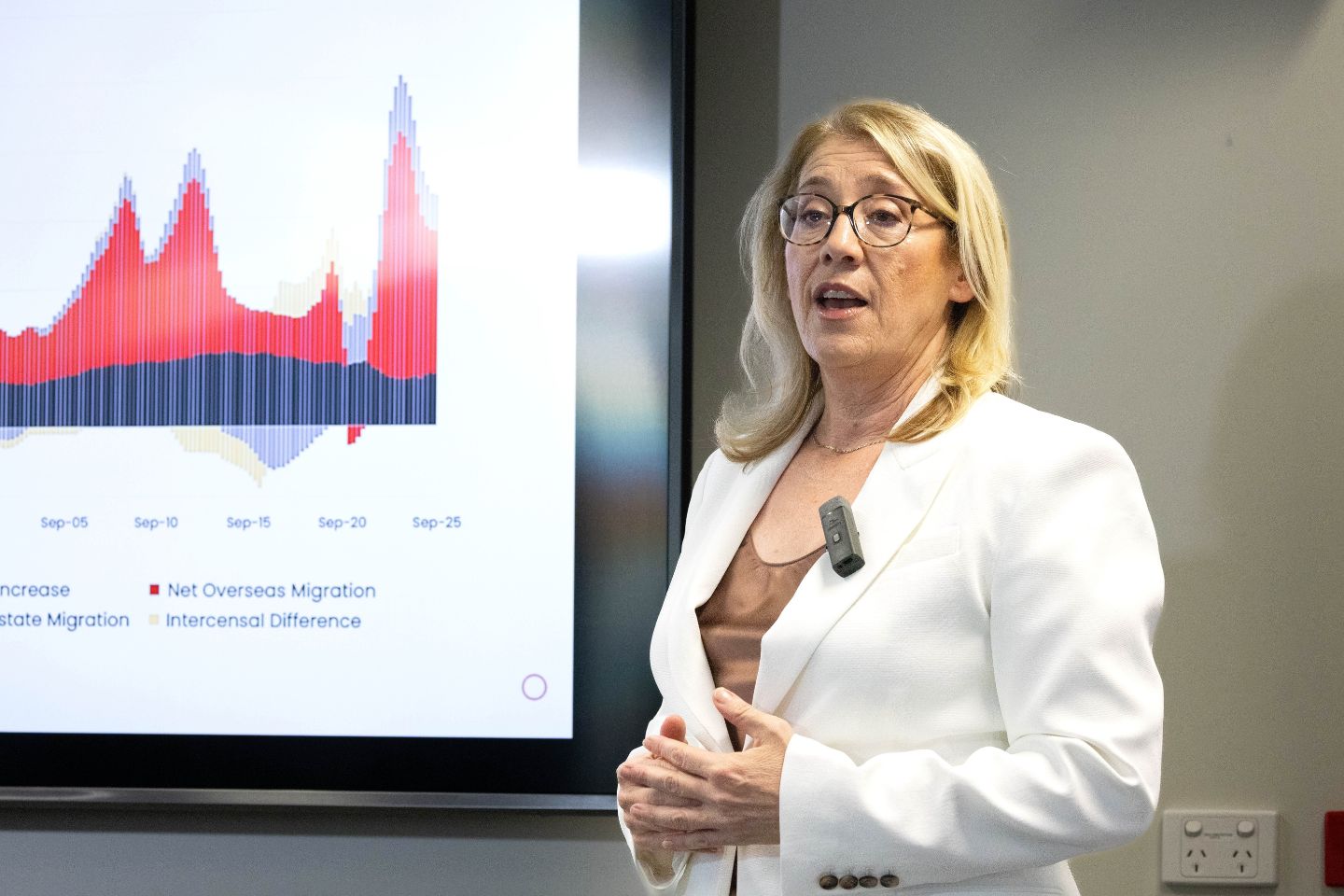
Deputy Premier Rita Saffioti said she hasn’t had an apology from the editor-in-chief of the West Australian newspaper after a post-budget breakfast event was soured.
Business
Titan shares crash 6% after Q4 results. What are Goldman Sachs, Morgan Stanley, Bernstein, other brokerages saying?

The company’s total income in Q4FY26 was up 46% to Rs 20,300 crore versus Rs 13,891 crore in the corresponding quarter of the previous financial year.
The jewellery business recorded another exceptional quarter of 50% growth over the year-ago period. The watch business achieved a total income of Rs 1,222 crores for the quarter, growing 8% over Q4FY25 and achieving an EBIT of Rs 143 crores at 11.7% margin. Domestic eyecare business achieved total income of Rs 227 crores in Q4FY26, growing 17% over Q4FY25 and recording an EBIT of Rs 21 crores at 9.2% margin.
Titan shares: Should you buy, sell or hold?
Morgan Stanley maintained its “Overweight” rating on Titan Company shares and raised its target price to Rs 5,212 from Rs 5,102, an upside of 15.4%. The brokerage said Titan’s jewellery business delivered a top-line and margin performance that exceeded expectations during the March quarter. Morgan Stanley noted that elevated gold prices supported ticket-size expansion and wedding-related purchases.
The brokerage added that the earnings miss at the overall level was largely due to higher losses in emerging and international businesses. Management reiterated its guidance of 15-20% CAGR in jewellery revenue over the next 3-5 years, and Morgan Stanley expects the stock to continue outperforming on the back of strong growth visibility and relatively attractive valuations.
Goldman Sachs maintained its “Buy” rating on Titan Company and kept a target price of Rs 5,400 (20% upside). Management guided for a 15-20% CAGR in jewellery sales over the next 3-5 years, while Titan also estimated a 50-60 basis points gain in jewellery market share during FY26. Goldman Sachs said international jewellery margins were impacted by Damas consolidation and disruptions in the Middle East. The brokerage raised its FY27 and FY28 revenue estimates by 7-8%, driven by a stronger jewellery outlook, although earnings per share upgrades were relatively lower because of higher interest costs and the drag from Damas.
Bernstein retained its “Outperform” rating on Titan Company share price with a target price of Rs 5,000 (11% upside). The brokerage said concerns around growth, buyer demand and margins have now eased meaningfully. However, margins saw some contraction due to a lower studded jewellery mix and the impact of the Damas consolidation. The brokerage also pointed out that CaratLane’s growth moderated to 22% after delivering over 30% growth in previous quarters, while the watches segment reported growth of just 8%, below the expected 15-20% range. Despite these factors, Bernstein said it remains constructive on Titan, citing the company’s ability to navigate uncertain demand cycles effectively.Nuvama retained its “Buy” rating on Titan Company and raised the target price to Rs 5,240, implying an upside potential of 16%. The brokerage said the Indian retail landscape continues to evolve amid the interplay of several demographic and economic factors. According to Nuvama, long-term prospects remain strong as changing consumer behaviour increasingly favours higher discretionary spending, creating a healthy growth runway for the retail sector over the next five years. The brokerage added that the biggest opportunity lies in the rising share of organised retail, supported by consumers allocating a larger portion of income toward consumption alongside gradual lifestyle improvements.
Elara Capital maintained its “Buy” recommendation on Titan Company with a target price of Rs 5,350. The brokerage said the company’s underlying consumer business revenue grew 46% year-on-year, supported by robust jewellery demand. Analysts expect strong momentum to continue in the second half of FY27, supported by elevated gold prices.
(Disclaimer: Recommendations, suggestions, views and opinions given by the experts are their own. These do not represent the views of The Economic Times)

Savannah Guthrie marked a painful first Mother’s Day without her mother Sunday by issuing an emotional public vow: the family will never stop searching for Nancy Guthrie, the 84-year-old who was kidnapped from her Tucson-area home more than three months ago.
The “Today” co-anchor, 54, shared an Instagram Reel filled with cherished family photos and videos of Nancy — as mother, daughter, sister and beloved “Nonie” — alongside a raw caption that captured the family’s ongoing anguish and determination.
“Mother, daughter, sister, Nonie — we miss you with every breath,” Guthrie wrote. “We will never stop looking for you. We will never be at peace until we find you.”
She added a direct appeal for help: “We need help. Someone knows something that can make the difference. Call 1-800-CALL-FBI. You can be anonymous and the reward remains available. Please keep praying. Bring her home.”
Nancy Guthrie vanished from her Catalina Foothills home in the early hours of Feb. 1, 2026. Authorities quickly treated the case as a kidnapping after discovering bloodstains confirmed to be hers, signs of a struggle, and doorbell camera footage showing a masked, armed intruder tampering with the device around 1:47 a.m. Her pacemaker monitor lost connection shortly afterward, and she left behind her phone, medication and other essentials.
Pima County Sheriff Chris Nanos described the scene as highly suspicious for an 84-year-old woman with limited mobility who could not have walked away on her own. The FBI joined the investigation, and the home was declared a crime scene. Multiple ransom notes have surfaced through media outlets, though their authenticity remains under review. No arrests have been made, and Nancy’s whereabouts are still unknown nearly 100 days later.
Family’s relentless public campaign
Guthrie and her siblings, Camron and Annie, have maintained a steady stream of appeals since the first days after Nancy’s disappearance. They offered a $1 million family reward for information leading to her safe recovery and have repeatedly urged anyone with knowledge to come forward anonymously.
In earlier videos, the family addressed Nancy directly and spoke to her possible captor, emphasizing her need for daily medication and fragile health. Savannah has described waking up at night imagining her mother’s terror, calling the uncertainty “unbearable.” Yet she has also vowed not to let the tragedy rob her own children — Vale, 11, and Charley, 9 — of their mother’s presence and joy.
Her husband, Michael Feldman, posted his own tribute Sunday, calling Savannah “the strongest person I know” while surrounding her and their kids with love amid the heartbreak.
Investigation updates and challenges
Recent weeks brought both hope and disappointment. On May 7, authorities investigated human remains found about seven miles from Nancy’s home, only to determine they were prehistoric and unrelated to the case. DNA evidence recovered from the scene continues to be analyzed.
The FBI released enhanced doorbell camera images and video in February showing the suspect — described as roughly 5-foot-9 to 5-foot-10 with a mustache — wearing gloves and carrying a backpack. Tips continue to pour in, but no breakthrough has been announced.
Savannah stepped away from “Today” duties for weeks to focus on the search and family before returning to the anchor desk in April. Colleagues have described her resilience, with Hoda Kotb calling her strength “inspiring” during emotional interviews.
Nancy’s life and the family’s bond
Born Nancy Ellen Long in 1942 in Kentucky, Nancy moved to the Tucson area decades ago. Widowed since 1988 after the death of her husband Charles, she remained independent, sharp-minded and active in her church and community despite mobility challenges. She was a devoted grandmother and the heart of the Guthrie family.
Savannah has often spoken warmly of her mother on air and in personal posts, sharing memories of a woman full of faith, conviction and love. The Mother’s Day Reel captured lighter moments — family gatherings, holidays and everyday joy — underscoring the profound void left by her absence.
Broader impact and calls for awareness
The high-profile case has drawn national and international attention, sparking conversations about elder vulnerability, home security and the power of public appeals in missing persons investigations. Elizabeth Smart, who survived a notorious abduction as a teen, recently expressed belief that Nancy could still be alive, citing her own experience.
Law enforcement continues to stress that anyone with even small details should contact the FBI tip line. The $1 million reward offered by the family remains active.
As Mother’s Day unfolded across the country with brunches, flowers and tributes, the Guthrie family’s message stood apart — a raw reminder that for some, the day brings not celebration but a desperate plea wrapped in love and unwavering hope.
Savannah Guthrie’s words echoed far beyond her Instagram followers: the search continues, prayers persist, and peace remains elusive until Nancy comes home. In a case defined by uncertainty, the family’s commitment stands firm. They will never stop looking.
Business
Why UK SMEs Are Getting Legal Translation Wrong in 2026 (And What AI Consensus Is Changing)

When a contract clause means something different in the target language than it does in the original, nobody knows until it matters. By then, the dispute is already underway.
For UK small and medium-sized businesses operating across borders, whether that means engaging EU suppliers post-Brexit, managing international legal translation is not an optional extra. It is load-bearing infrastructure. And for most SMEs, it is being handled in ways that create far more risk than they realise.
The Real Cost of Getting It Wrong
Legal translation errors are not theoretical. Industry data published by Leaders in Law found that legal translation submissions routinely contain up to 17% grammar errors, 14% vocabulary errors, and a further 7% formatting errors, with formatting problems alone frequently causing document rejection by courts and regulatory bodies. A single rejected clause in a cross-border commercial agreement can mean a delayed transaction, an unenforceable penalty provision, or a governing law dispute that takes months and significant legal spend to resolve.
The exposure is growing. AI-generated legal claims are already adding to the cost burden on British businesses, with more than a third of UK firms reporting a rise in low-merit claims linked to AI tools. As documentation volumes increase and more contracts involve parties operating in different languages, the weak point in many SME operations is not their legal strategy, it is the translation layer sitting underneath it.
Post-Brexit compliance has made this more acute. UK businesses no longer benefit from reciprocal enforcement mechanisms with EU counterparts that were previously standard. The legal enforceability of a translated contract in a French or German court now depends on translation quality in a way it simply did not before 2021. Language differences can lead to misunderstandings with regulatory authorities, contractual disputes, and compliance failures that carry real financial consequences.
Where AI Translation Has Already Entered Legal Work
The legal sector is not waiting for consensus on whether AI belongs in its workflows. It has already arrived. A survey conducted by Business Matters found that 56% of UK adults would trust AI to interpret contracts or terms and condition, and the actual use of AI tools in UK law firms has been tracked by the Solicitors Regulation Authority at over 50% of firms.
That adoption is happening unevenly. Large firms can invest in enterprise-grade legal AI with built-in verification layers. SMEs tend to reach for whatever translation tool is fastest and cheapest, often a single large language model accessed via a browser tab, without considering what they are actually relying on when that output is inserted into a contract or a compliance document.
This is where the risk concentrates. Not in whether AI is used, but in how its output is treated.
The Problem With Single-Engine Translation for Legal Text
Standard AI translation tools work by generating a single output from a single model. That model may be excellent for marketing copy, product descriptions, or customer communications. Legal text is a different class of problem.
Legal language is precise by design. Terms like “indemnification,” “force majeure,” “representations and warranties,” or “entire agreement” do not have clean one-to-one equivalents in every language, and their legal force depends on how they are rendered in the target jurisdiction. A mistranslation that would go unnoticed in a marketing email can produce an unenforceable or ambiguous clause in a binding agreement.
No single AI model produces consistently reliable output across all language pairs for this type of content. They make different errors, carry different training biases, and handle jurisdictional legal terminology with different degrees of precision. Cross-border compliance experts have consistently noted that language barriers in international commerce can lead to misunderstandings with regulatory authorities and compliance failures that prove costly to corre, and relying on a single automated output, without any cross-verification, amplifies that risk.
The practical consequence for an SME is this: a translation that looks fluent and sounds confident may still contain errors that only emerge when tested by a court, a regulator, or an opposing party’s legal team.
Why Testing Multiple Models Changes the Risk Calculation
The more defensible approach is not to choose the “best” AI translation tool and trust it. It is to run multiple AI engines simultaneously and treat disagreement between them as a quality signal.
This is the operating principle behind MachineTranslation.com, an AI translator that runs outputs across 22 AI models in parallel, including DeepL, ChatGPT, Google Translate, and other, and surfaces where they agree and where they diverge. In testing across legal contracts and marketing texts, the platform found that AI models frequently disagree on the same source sentence. When multiple independent models produce identical or near-identical output, that convergence functions as a confidence signal. When they diverge, the divergence flags a term or clause that warrants human review.
For legal teams and in-house counsel at SMEs, this changes the workflow from ‘did we use AI?’ to ‘where does the AI output carry real uncertainty?’ It transforms translation from a black box into an auditable process. The platform also preserves document formatting across DOCX files, maintaining the structural integrity of contracts, signature blocks, and cross-reference numbering, elements that, as noted above, are a documented source of court rejections when mishandled.
The optional human review layer connects users with certified translators who refine AI output to publication-ready standards, which is particularly relevant for documents that will need to satisfy jurisdiction-specific certification requirements in EU member states or in cross-border litigation.
What UK SMEs Should Do Now
The mistake most SMEs make is treating legal translation as a commodity task. Because it is cheap and fast with modern tools, it gets treated as low-stakes. The actual legal exposure tells a different story.
Three practical steps are worth taking now, regardless of which tools an SME currently uses:
First, identify which documents in your current operations carry genuine legal weight in a foreign jurisdiction: supplier contracts, service agreements, regulatory filings, terms and conditions. These are the documents where translation quality has direct legal consequence and where single-engine AI output should not be treated as final.
Second, build cross-verification into your process. Whether that means running the same text through multiple tools and comparing outputs manually, or using a platform that does this automatically, the principle is the same: disagreement between models is information. It tells you where to focus human attention.
Third, understand certification requirements before you need them. Different jurisdictions have different standards for translated documents to be considered legally admissible. EU member states typically require sworn translators for official documents. Knowing this in advance of a transaction, rather than after a court raises the issue, saves significant cost and delay.
The legal function at most SMEs is already stretched. As Business Matters’ legal coverage consistently shows, the regulatory environment facing UK businesses in 2026 is more complex, not less, from the Employment Rights Act to new digital markets rules and cross-border enforcement changes. Translation accuracy sits underneath all of it. It deserves the same scrutiny as any other legal risk.

Red Rock Resorts Q1 2026 Earnings: Focus On The Long Term (NASDAQ:RRR)
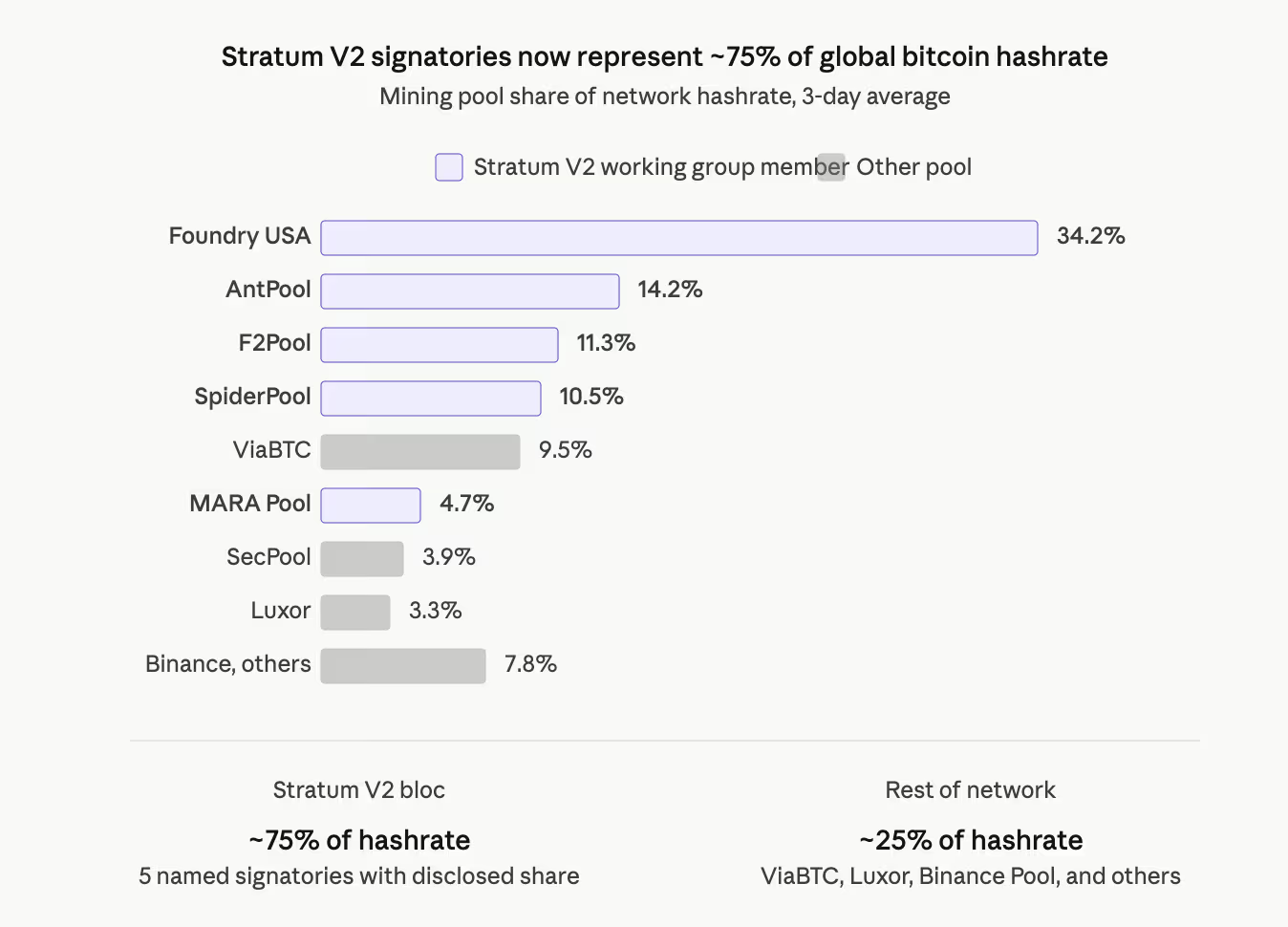
Bitcoin (BTC) mining pools with 75% of hashrate back open standard for block construction

Sadie Robertson’s Baby Kit’s Health Scare: What to Know

Manchester United reach agreement with Casemiro over contract clause amid transfer speculation

US brings back mandatory military draft registration

Steven Gerrard disagrees with Gary Neville over ‘shock’ Chelsea and Arsenal claim | Football


-
 Crypto World3 days ago
HarrisX Poll Found 52% of Registered Voters Support the CLARITY Act
-

 Crypto World4 days ago
Upbit adds B3 Korean won pair as Base token gains Korea access
-

 Fashion3 days ago
Weekend Open Thread: Marianne Dress
-

 Tech6 days ago
Image AI models now drive app growth, beating chatbot upgrades
-
 NewsBeat4 days ago
NCP car park operator enters administration putting 340 UK sites at risk of closure
-
 Business2 days ago
Ignore market noise, India’s long-term story intact, say D-Street bulls Ramesh Damani and Sunil Singhania
-

 Politics2 days ago
Politics Home Article | Starmer Enters The Danger Zone
-
 Sports7 days ago
2026 NHL playoff picks: Second-round predictions, series odds, Stanley Cup bracket
-

 Crypto World6 days ago
UAE Free Zone Deploys Blockchain IDs to Verify Registered Firms
-

 Crypto World5 days ago
BlackRock CEO Larry Fink Discusses a New Asset Class
-

 Crypto World4 days ago
Robinhood says Wall Street is building onchain
-

 Tech5 days ago
Apple and Samsung are dominating smartphone sales so thoroughly that only one other company makes the top 10
-
Entertainment6 days ago
Serena Williams hits Met Gala in metallic dress after GLP-1 reveal
-

 Politics6 days ago
Met Gala 2026: Madonna’s Dramatic Red Carpet Look Steals The Show
-

 Fashion4 days ago
The Best Work Pants for Women in 2026
-
 Sports7 days ago
Hearts v Rangers LIVE: Prediction, team news and line-ups as Scottish Premiership title rivals meet at Tynecastle
-

 Tech5 days ago
I tested the Xiaomi 17 Ultra’s camera and I don’t think I’ll ever go back to an iPhone
-
Crypto World4 days ago
The FOMO Is Back: Why Bitcoin’s Latest Rally Has Analysts Flashing Warning Signs
-

 Entertainment7 days ago
Skai Jackson Responds To AI Baklash After Viral Snapchat Photos
-
 Tech4 days ago
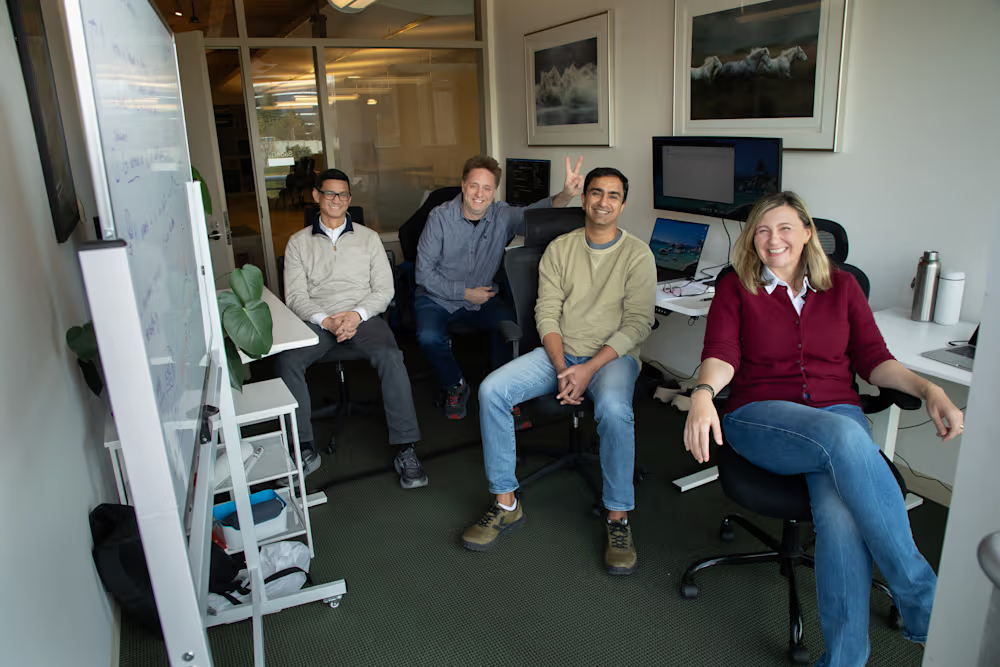
AI agents are missing all the discussions your team is having. SageOX has an answer: agentic context infrastructure
You must be logged in to post a comment Login