Connect with us
DAPA Banner
DAPA Coin
DAPA
COIN PAYMENT ASSET
PRIVACY · BLOCKDAG · HOMOMORPHIC ENCRYPTION · RUST
ElGamal Encrypted MINE DAPA
🚫 GENESIS SOLD OUT
DAPAPAY COMING

Sports

Spurs stadium atmosphere is not ‘nice’ but actually ‘amazing’ – Roberto De Zerbi

Published

on

Roberto De Zerbi has scoffed at suggestions Tottenham Hotspur Stadium is too nice and is adamant Spurs can end their poor home on Monday against Leeds.

Tottenham’s survival prospects have been significantly lifted by back-to-back away wins, but they remain without a home victory in the Premier League since December 6.

The north London club have won only twice at home in the division all season and were seconds away from a third victory in De Zerbi’s debut in N17 before his old team Brighton produced a last-gasp equaliser.

Asked if the atmosphere at their ground might be part of the problem, De Zerbi insisted: “No, because there are a lot of big stadiums and very nice stadiums, like theatres in the Premier League.

“Tottenham’s stadium is hot. When I was in this stadium with Brighton, in the bench of Brighton, or against Brighton two weeks ago, the stadium was very, very hot.

Advertisement

“And for us, we are lucky to play in this stadium.

“The atmosphere against Brighton was amazing. The bottom of the (table), 60,000 fans to support you, to push you, to stay before the game, during the game, after the game, we have been very close with the (fans) and I think it’s luck for us.”

De Zerbi also pointed to Spurs’ 25-match unbeaten home record in Europe as evidence this season is a one-off.

He added: “I think it was a coincidence, because against Atletico Madrid, they won at home. Against Borussia Dortmund in January, they won at home.

Advertisement

“If you ask me against Brighton? We won, but we didn’t take three points. We took one point, but we won in my head as a performance and if we analyse the game against Brighton, it’s like a win. I think it’s a mistake if we keep the focus on this (poor home form) part.”

For Spurs to secure safety after a terrible campaign they will have to exorcise any demons at home in a similar manner to goalkeeper Antonin Kinsky, who suffered a nightmare display in Madrid last month but has bounced back admirably.

With Guglielmo Vicario still sidelined after hernia surgery, Kinsky will continue against Leeds and De Zerbi cited him as an example to the whole squad.

“He has a big character, a big personality, a great guy, a great professional and a great keeper. He’s playing very well. He has to stay focused and don’t take risks in any situation, but he’s playing very well. He’s very important for us now,” De Zerbi explained.

Advertisement

“Of course he is an example. Of course what he felt after Madrid, for sure was a big motivation for him.”

De Zerbi described Vicario as still “first choice”, but the Italian could miss the rest of the season and that is almost certainly the case for Dejan Kulusevski, who has targeted a place in Sweden’s World Cup squad despite making no appearances in 12 months after a right patella injury.

“For me it is difficult to understand how he can play the World Cup if he didn’t play any game this season, but I texted him after (Aston Villa),” De Zerbi said.

“He told me the next week I think he will come back (in the country) and I hope he can be available to stay with us (to watch) in the last game because he’s an amazing player.”

Advertisement

Source link

Continue Reading
Click to comment

You must be logged in to post a comment Login

Leave a Reply

Sports

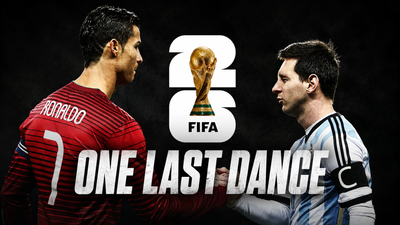
FIFA World Cup 2026: Only three scenarios where Messi and Ronaldo could finally face each other ‘one last time’ | Football News

Published

on

FIFA World Cup 2026: Only three scenarios where Messi and Ronaldo could finally face each other 'one last time'
FIFA World Cup 2026: What Needs to Go Right for Lionel Messi and Cristiano Ronaldo to Meet

A record-breaking sixth FIFA World Cup for both Lionel Messi and Cristiano Ronaldo could finally produce the one meeting football has never had: a World Cup clash between the sport’s defining rivals. Both Argentina and Portugal arrive in North America in encouraging form after winning their opening pre-tournament friendlies, with Argentina beating Honduras 2-0 and Portugal edging Chile 2-1. While Messi is recovering well from a minor hamstring strain, Ronaldo is fully fit and expected to spearhead Portugal’s challenge.The prospect of a showdown between the two icons carries extra significance because, despite defining an era of football for nearly two decades, they have never faced each other on the sport’s biggest stage. Their rivalry has spanned leagues, continents and competitions, yet the FIFA World Cup remains the one major tournament where their paths have never crossed in a competitive match.That could finally change in 2026. With Ronaldo approaching 41 and Messi nearing 39, both are widely expected to be appearing at their final World Cup. As a result, the expanded tournament offers what may be the last opportunity for football’s most celebrated rivalry to receive a World Cup chapter.Whether that dream matchup becomes reality, however, depends on a very specific chain of results, knockout pathways and qualification scenarios unfolding across FIFA’s newly expanded 48-team format. Before exploring those possibilities, it is worth understanding how the tournament is structured, because the format itself is what makes a potential Messi-versus-Ronaldo meeting both more achievable and more complicated than ever before.

How the 48-team World Cup actually works

The 2026 tournament, hosted across the United States, Canada and Mexico, expands from 32 to 48 teams, which changes the entire rhythm of the competition.Instead of eight groups, there are now twelve groups, labelled from Group A to Group L, and each group contains four teams. Argentina have been drawn into Group J alongside Algeria, Austria and Jordan, while Portugal are in Group K with Colombia, Uzbekistan and DR Congo.From these twelve groups, the path forward works in two layers.First, the straightforward part: the teams that finish first and second in each group automatically qualify for the knockout stage. That accounts for 24 teams.Then comes the part that did not exist in previous World Cups. All twelve third-placed teams are compared across the tournament based on points, goal difference and goals scored, and the best eight among them also qualify. That brings the total to 32 teams moving into the knockouts.From there, the tournament becomes a straight elimination bracket, beginning with a Round of 32, then moving to the Round of 16, quarter-finals, semi-finals and finally the final. A team that goes all the way will now play eight matches instead of seven, reflecting the expanded structure, and the tournament overall stretches to 104 matches.This format matters because it creates multiple entry points into the knockout bracket, which is where a Ronaldo–Messi meeting becomes possible.

The weight both teams carry into 2026

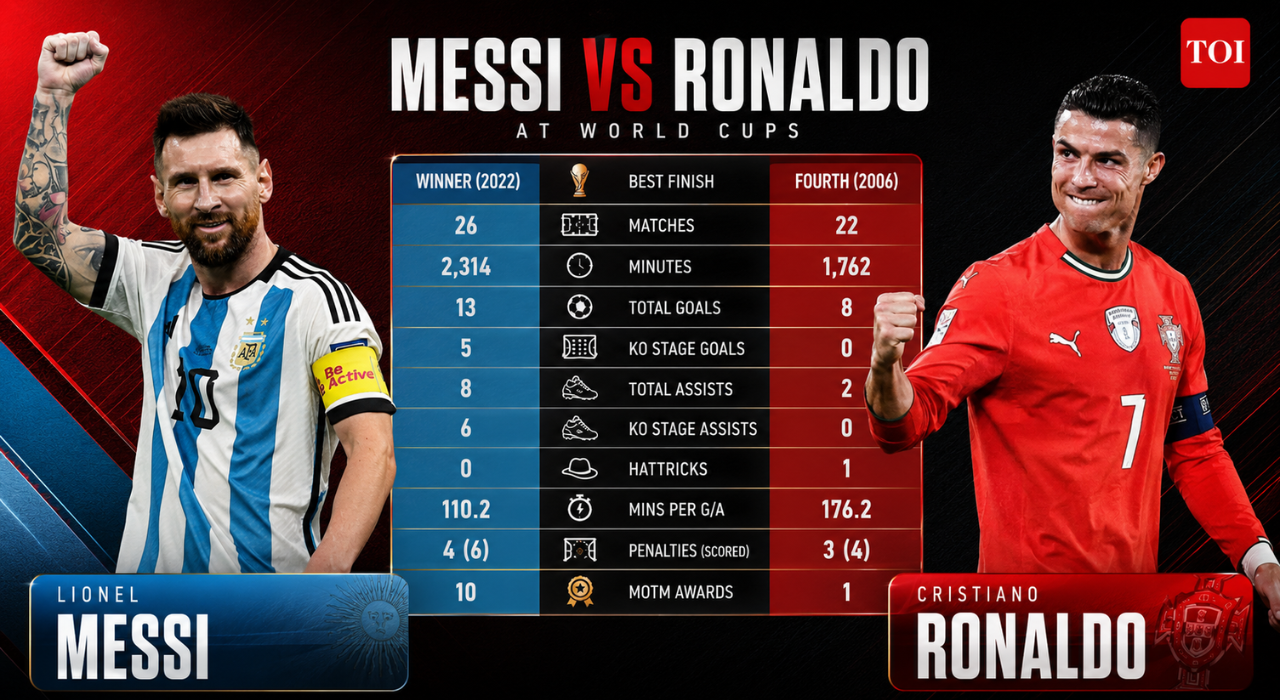
Argentina arrive as defending world champions after lifting the trophy in Qatar 2022, a moment that reshaped Messi’s international legacy after years of near misses that included a World Cup final defeat and three Copa América final losses before their 2021 breakthrough. Since then, Argentina have added another Copa América title and head into 2026 with continuity, depth and a squad built around their captain.Portugal’s story has been different. Ronaldo, the all-time leading scorer in men’s international football with 143 goals, has won the European Championship and two UEFA Nations League titles, but the World Cup has remained out of reach. Portugal’s best finish in the Ronaldo era came in 2006, when they reached the semi-finals, and since then they have exited in the Round of 16 twice, in 2010 and 2018, gone out in the group stage in 2014, and reached the quarter-finals in 2022, where they were eliminated by Morocco with Ronaldo largely used as a substitute in the knockouts.Individually, Messi has played 26 World Cup matches and scored 13 goals, while Ronaldo has made 22 appearances with eight goals, and both are expected to feature in what would be their sixth World Cup, with Messi yet to officially confirm his participation.
Advertisement
Messi vs Ronaldo

Messi vs Ronaldo Worldcup stats

All of that context sits behind the simple fact that they are now in separate groups, Argentina in Group J and Portugal in Group K, which means any meeting can only happen once the knockout rounds begin.

Group stage expectations and probabilities

Argentina are widely viewed as strong favourites to top Group J, with projections placing their probability of finishing first at roughly 75% to 77%, reflecting both their status as defending champions and the relative balance of the group that also includes Austria, Algeria and Jordan. Austria are considered the primary challengers, with an estimated 20% to 22% chance of winning the group.
Advertisement
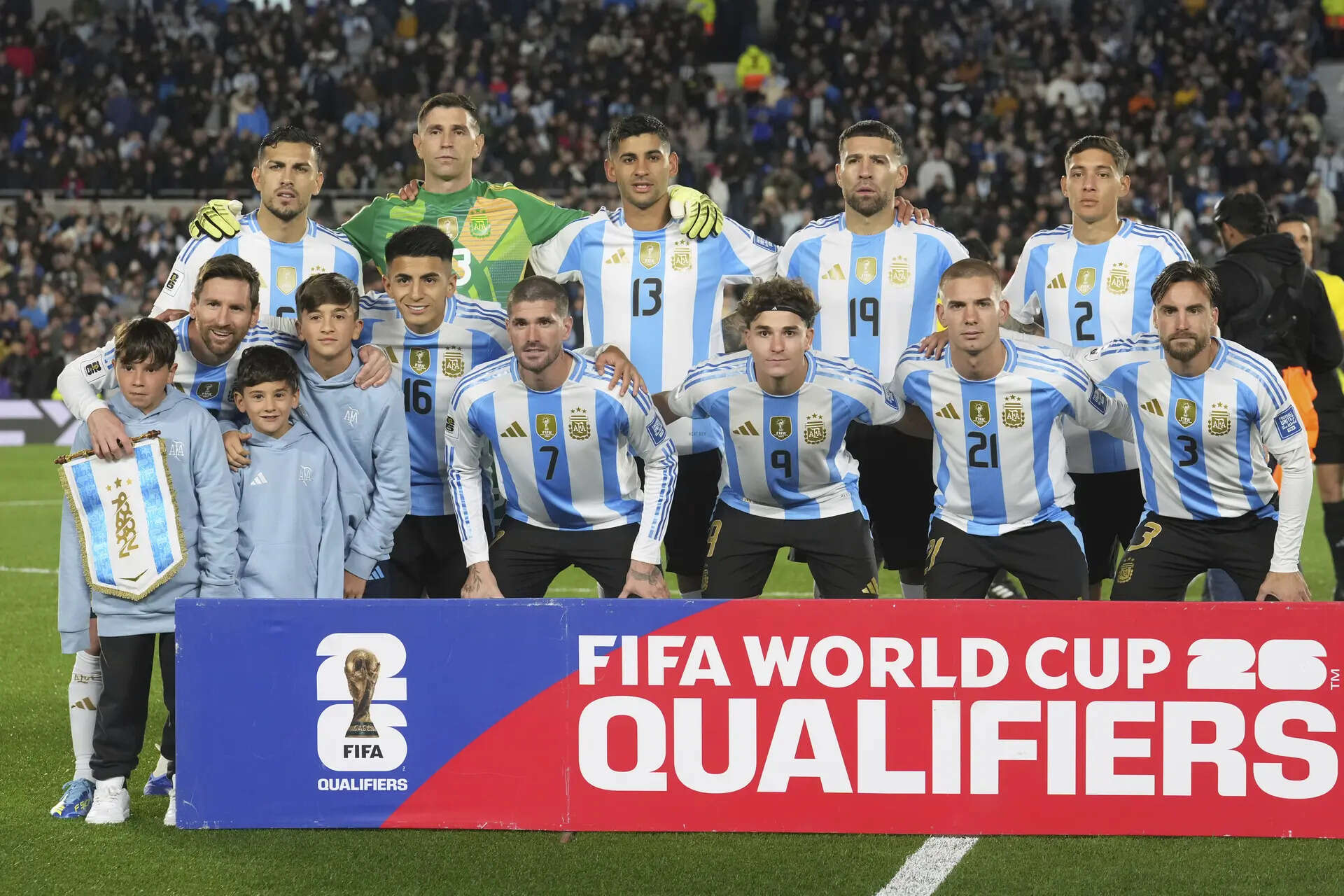
Argentina Venezuela WCup Soccer

Argentina’s Lionel Messi, second from left, poses with teammates and his sons prior to a World Cup 2026 qualifying soccer match against Venezuela at the Monumental stadium in Buenos Aires, Argentina, Thursday, Sept. 4, 2025. (AP Photo/Gustavo Garello)

Portugal, placed in Group K, are also expected to lead their group, with a squad that still includes Ronaldo alongside players like Bruno Fernandes and João Félix. According to leading betting sites, Portugal are the heavy favourites to finish top of the group at the 2026 FIFA World Cup, with an implied probability of around 65% to 71%, although Colombia are seen as a genuine threat after a strong qualifying campaign in South America, led by Luis Díaz, James Rodríguez, and Davinson Sánchez, along with other key figures such as Jhon Córdoba, Jefferson Lerma, and Richard Ríos.
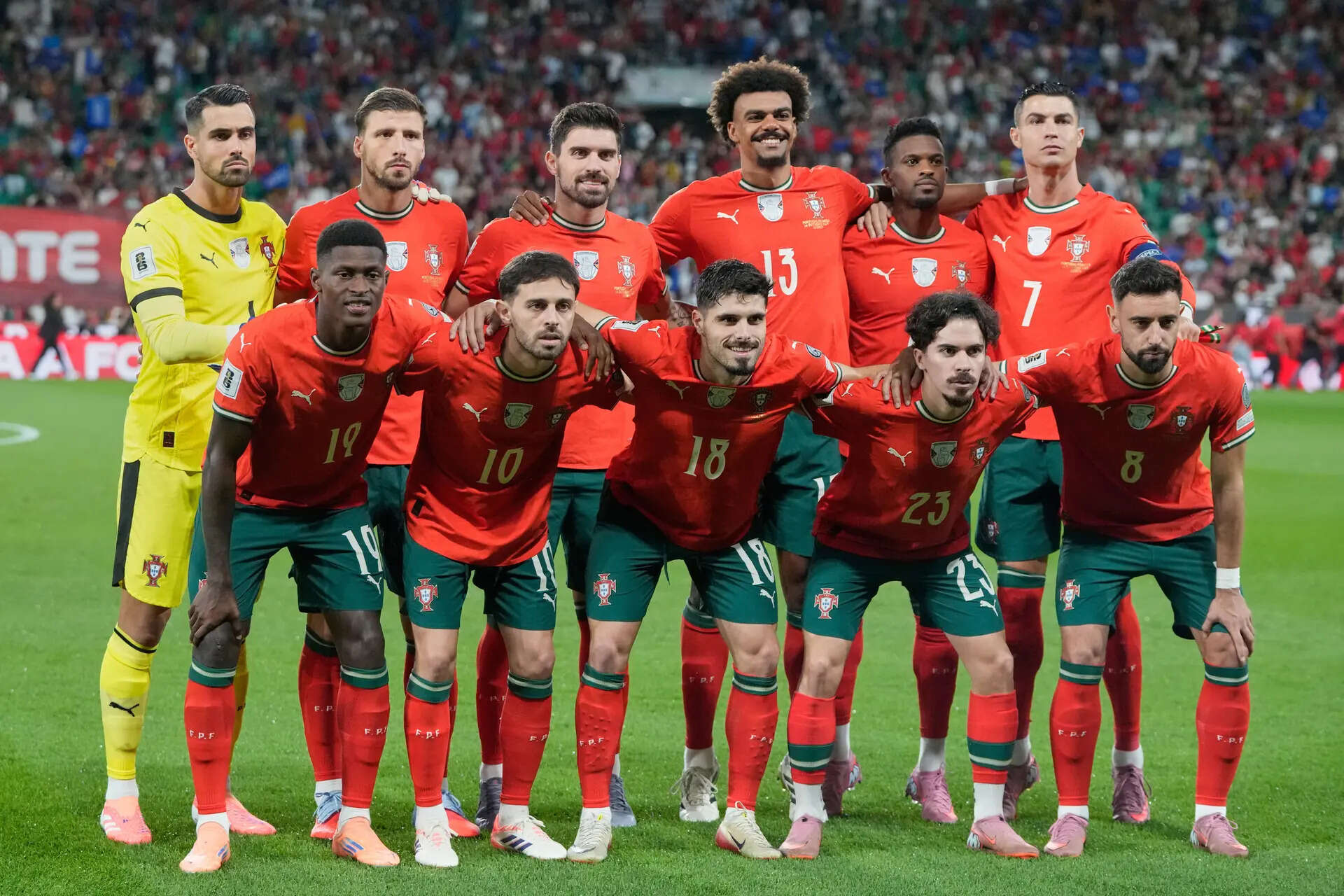
WCup Portugal Soccer

FILE – Portugal players pose for a team photo before a World Cup 2026 group F qualifying soccer match between Portugal and Hungary in Lisbon, Tuesday, Oct. 14, 2025. (AP Photo/Armando Franca, File)

Advertisement

The bracket reality: why they cannot meet early

Because both Argentina and Portugal were top seeds placed in Pot 1 during the draw, FIFA structured the bracket so that teams from the same seeding pot are separated into different pathways. In simple terms, that means they cannot meet in the group stage and are kept apart until certain points in the knockout rounds depending on how they finish.Their placement in Groups J and K also puts them on intersecting sides of the bracket, which is why their meeting depends so heavily on specific finishing positions.

Scenario 1: both win their groups, quarter-final collision

If Argentina finish first in Group J and Portugal finish first in Group K, both teams would enter the knockout rounds on a path that brings them together in the quarter-finals, scheduled for July 11 in Kansas City, provided they win their Round of 32 and Round of 16 matches.Argentina’s route in that scenario would begin against the runner-up of Group H in the Round of 32, followed by a Round of 16 tie against the winner emerging from a clash between the second-placed teams in Groups D and G.Portugal, by contrast, would face one of the qualifying third-placed teams in their Round of 32 match, before moving into a Round of 16 tie against the winner of a match involving the winner of Group B.Only if both navigate those two knockout rounds successfully does the bracket align for a Ronaldo versus Messi meeting in the quarter-finals.

Advertisement

Scenario 2: both finish second, early Round of 16 meeting

If both teams finish as runners-up in their respective groups, the structure brings them together much earlier, with a potential Round of 16 clash on July 6 in Arlington, again assuming both win their opening knockout matches.In this case, Argentina would face the winner of Group H in the Round of 32, while Portugal would take on the runner-up of Group L, which includes teams such as England, Croatia, Ghana and Panama.The key difference here is that finishing second compresses the timeline, creating a pathway where the meeting happens just one round after the initial knockout stage.

Scenario 3: split positions, only the final remains

If one of the two teams wins their group while the other finishes second, the bracket separates them completely until the final on July 19 in New Jersey.In that configuration, they are placed on opposite sides of the knockout draw, meaning they would have to progress through every round, Round of 32, Round of 16, quarter-finals and semi-finals, without slipping, for the meeting to happen.This is the longest and most demanding route, but also the one that would deliver the most symbolic ending: a World Cup final between two players whose rivalry has defined an era.

Advertisement

The wildcard variable: third-place qualification

The expanded format introduces another layer of uncertainty through the best third-placed teams.If either Argentina or Portugal finish third but still qualify among the top eight third-placed sides, their exact position in the knockout bracket cannot be determined until all group matches are completed, because those rankings depend on points, goal difference and goals scored across all groups.That makes any Ronaldo–Messi meeting in that scenario unpredictable, as their pathways would only become clear after the group stage concludes.
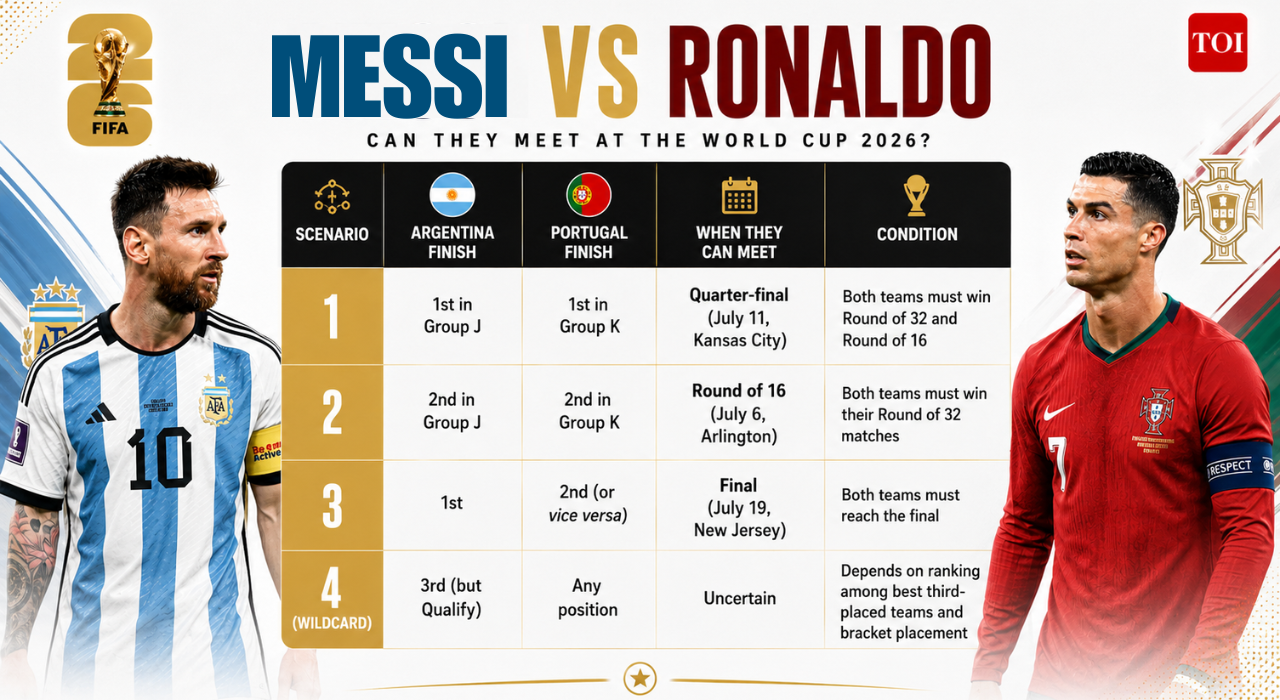
Messi Vs Ronaldo scenario

A sixth World Cup for Messi and Ronaldo could finally deliver the biggest showdown football fans have awaited.

Why this World Cup feels different

Advertisement

For all the permutations and pathways, the underlying reality is simple. This is likely the last time both players will share a World Cup stage, and the structure of the 48-team tournament has made it possible, but not guaranteed, for them to finally meet.It will take Argentina performing to expectation, Portugal navigating a competitive group, and both teams handling at least one or two knockout rounds without error, depending on the route.Only then does the bracket open up in a way that allows the rivalry to reach the one stage it has always missed.

Source link

Continue Reading

Sports

MacIntyre: Gallagher to Canucks makes sense but isn’t a guarantee

Published

on

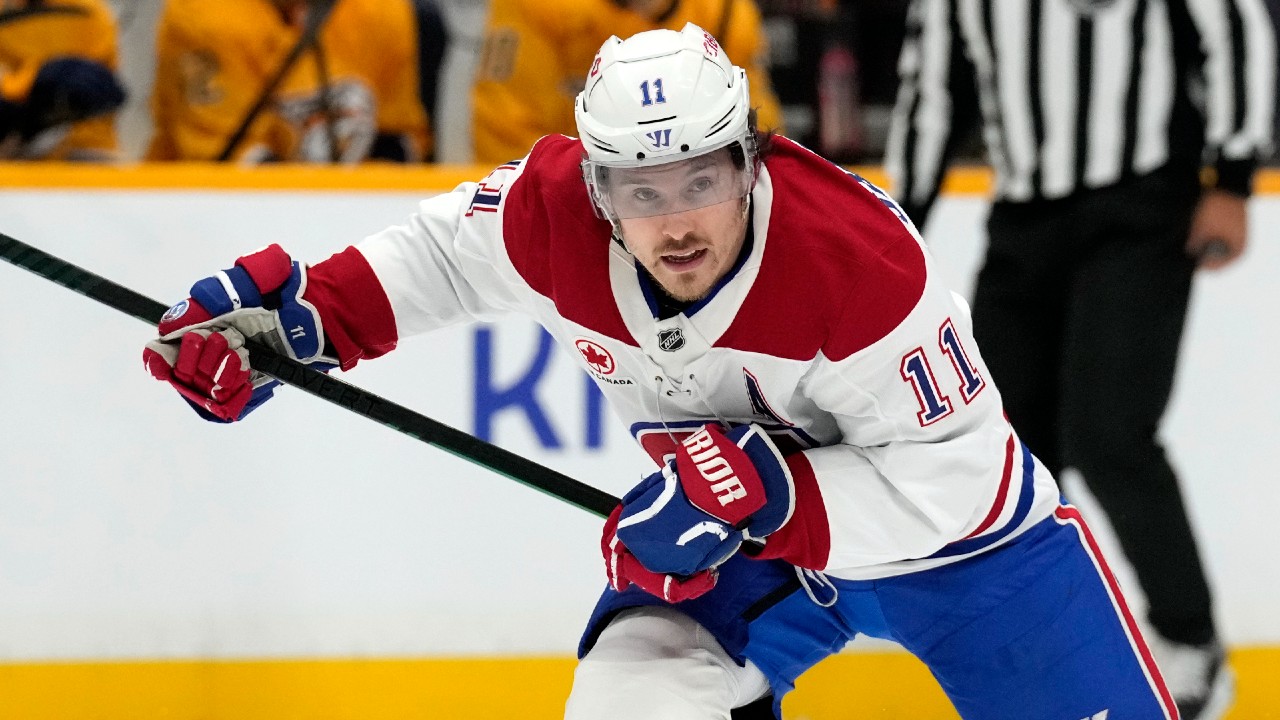
VANCOUVER — The Brendan Gallagher train is gaining steam. But it’s difficult to know at this stage who or how many are driving the locomotive and where the train will go.

The former Vancouver Giants junior, who moved with his family to Metro Vancouver from Edmonton at age 12, could be a crowd favourite if he joins the Canucks in the wake of Gallagher’s declaration last week that he needs to move on from the Canadiens after spending 14 National Hockey League seasons in Montreal.

A poll on the Donnie and Dhali television show had 82 per cent of respondents saying the Canucks should acquire Gallagher.

But the acquisition cost is where things get tricky for Vancouver. There is also the matter of a $4-million salary the 34-year-old is due in the final year of his contract, which carries a cap hit of $6.5 million.

Advertisement

With the Canucks at the embryonic stage of a rebuild under a newly-promoted regime, general manager Ryan Johnson and co-presidents Henrik and Daniel Sedin have emphasized the need for careful, step-by-step construction, and vowed not to rush the process or take shortcuts through trade or free agency.

All of them saw first-hand the mistakes previous regimes under the Jims, Benning and Rutherford, made trying to build a winner.

Johnson declined Tuesday to discuss the Gallagher story, noting that he remains the Canadiens’ player.

But the player’s agent, Gerry Johansson, told CHEK-TV on Monday that he had contacted the Canucks and the team is interested in his client.

Advertisement

After Gallagher surprised his current bosses during his exit media availability with news that he would be leaving Montreal, the Canadiens have granted Johansson permission to plumb interest in Gallagher from other teams.

“I think initially they expressed interest but they have moving parts too, right?” Johansson said of the Canucks. “They do have a lot of things happening — the draft and free agents, and there’s a lot coming up here. So, I do think it’s on their desk, and I do think they have interest, and it’s just a matter of whether it can work or not.”

Part of Johansson’s job is to cultivate a market for his client. Obviously, Gallagher, who has limited no-trade protection, would like several options to continue his NHL career. And getting as many teams as possible interested significantly helps the Canadiens, who should ideally want an asset in return for Gallagher and no loose ends on their salary sheet.

Until the suppressed salary cap began its historic, revenue-based escalation two years ago, shedding a $6.5-million contract for a 34-year-old who scored seven times in 77 regular-season games and was healthy-scratched for all but three of Montreal’s 19 playoff games would have been impossible without a serious sweetener.

Advertisement

But these are different economic times for the NHL, and the Canadiens will likely wait and see if they can add a draft pick for Gallagher instead of spending one to induce someone else to take him. Like most teams, Montreal is untroubled by next season’s $104-million salary cap, up from this season’s $95.5 million.

Setting aside the question of the player’s salary, the Canucks are extremely unlikely to trade a positive asset for Gallagher. As part of a deal, would Montreal take back from Vancouver a contract the Canucks want to shed for their rebuild – say, the five years and $27.5 million owed to 29-year-old winger Jake DeBrusk? That could be a conversation.

For now, however, Johansson was correct about all the things Johnson and his staff need to work through in the opening weeks of their era.

The GM still has to build out his hockey operations department, work with new coach Manny Malhotra on reconstructing the coaching staff, and finalize preparations for the June 26-27 entry draft that is critical to the Canucks, who have four picks among the first 41 selections.

Advertisement

Beyond that looms free agency and, more importantly, management’s need to work through their existing roster and contract log to see which other veterans might be offloaded this summer.

Johnson has other priorities, even if the chance to add Gallagher at a discount for his experience and leadership — for a player fans and teammates will like — is an intriguing prospect.

Unlike the Canucks’ disastrous repatriation a year ago of local kid Evander Kane, who proved untradeable at the deadline in his one-and-done season in Vancouver, there doesn’t appear to be much downside to a Gallagher homecoming besides his salary and acquisition cost.

He grew up in Tsawwassen and his dad, Ian, runs the highly successful Delta Hockey Academy.

Advertisement

Of course, since Gallagher wants to earn an NHL contract beyond next season, he might prefer to showcase himself on a winning team. The Canucks may not be his first option; they were merely the only other NHL team he was asked about last week.

“I can keep playing,” Gallagher said during his emotional press scrum in Montreal. “Honestly, the way I feel… I just know it’s not done. I just feel like, you know, around here, the opportunity is just not going to be there. So, for me, I just need to find a new home, and… do what I do as a player.”

“You know, it’s an opportunity that’s there — if it is,” he said. “I haven’t had an opportunity, really, with my agent to sit down. I’m sure there’ll be a couple of places, (and I will) sit down with my wife and figure out what’s best for our family. And then you go forward. But certainly… Vancouver would be a great place.”
Source link

Advertisement
Continue Reading

Sports

Randy Orton’s wife shares family update

Published

on

Randy Orton’s wife shared a personal update today amid the legend’s absence from WWE. The Viper has not been seen since WrestleMania 42 earlier this year.

The 46-year-old’s wife, Kim Orton, took to Instagram today to share a family update. She shared several family photos in the post, and Orton can be seen in the first slide. You can check out the photos in Kim Orton’s Instagram post below.

Orton aligned with Pat McAfee ahead of WrestleMania 42 during his rivalry with Cody Rhodes over the Undisputed WWE Championship. The legend won the Men’s Elimination Chamber match earlier this year to become the number one contender.

Advertisement

Pat McAfee tried to interfere in the match, but Orton betrayed the former NFL punter and planted him with an RKO. The American Nightmare capitalized on the distraction and hit Orton with the Cross Rhodes for the pinfall victory to retain the title at The Show of Shows.

The Apex Predator has not been seen on WWE TV since his loss to Rhodes on The Grandest Stage of Them All. There have been rumors that he was dealing with a back issue, but the former champion shut those down on social media.

Former WWE star tells hilarious Randy Orton story

Wrestling veteran Maven recently shared a humorous story about Randy Orton flipping out at a restaurant.

Speaking on the INSIGHT podcast with Chris Van Vliet, Maven stated that he once accompanied Randy Orton to Denny’s, and the veteran got upset because there was water floating on top of his oatmeal. The situation led to an argument between Orton and the manager.

Advertisement

“Orton looked at her and threw the oatmeal. So out comes the manager. And the manager looks and sees, and it was me and Orton and someone else. I’m not going to say who. And the manager sizes us up. I’m the smallest guy in the group. And the manager says, well, you’re going to have to pay for that oatmeal and the one they’re making. And in true Randy Orton fashion, he says, I’ll buy every box of oatmeal you got if you can get one of them right. And that was a tame day, with early Orton.”

WWE SmackDown ratings have reportedly dropped by over 30% since Randy Orton was taken off television due to injury.

Only time will tell when the former champion will make his return to WWE television.