Connect with us
DAPA Banner
DAPA Coin
DAPA
COIN PAYMENT ASSET
PRIVACY · BLOCKDAG · HOMOMORPHIC ENCRYPTION · RUST
ElGamal Encrypted MINE DAPA
🚫 GENESIS SOLD OUT
DAPAPAY COMING

Business

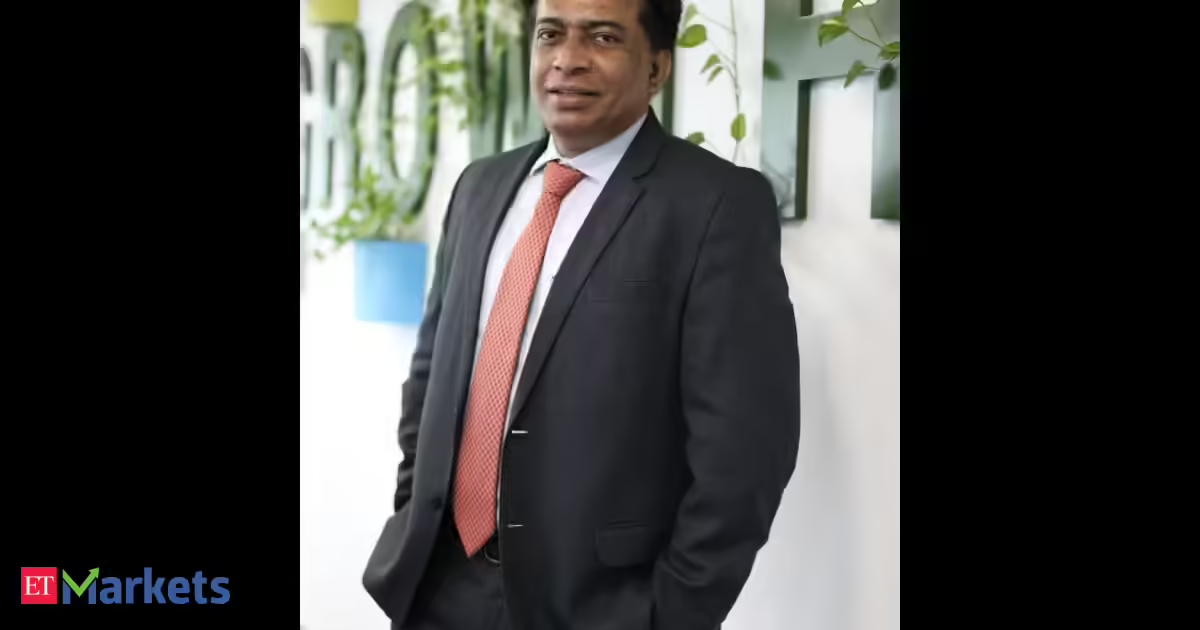
Largecap funds no longer the best bet? Edelweiss CIO Trideep Bhattacharya explains why flexicaps may win now

Published

on

Largecap funds no longer the best bet? Edelweiss CIO Trideep Bhattacharya explains why flexicaps may win now

Are largecap funds losing their edge? Edelweiss CIO Trideep Bhattacharya argues that structural market share losses to nimbler competitors mean traditional giants are no longer the ultimate safe havens. Instead, he points to flexicap and midcap funds as the optimal vehicle for modern wealth creation, blending stable leaders with high-growth challengers.

Edited excerpts from a chat:

What is your broad outlook on IT services as a sector, and how are you positioned within IT? Have you been buying the dip we’ve seen over the last six months?

Not yet. My thinking on Indian IT is that it’s in the middle of a technology change. The Indian IT services sector has gone through multiple such changes before, starting with Y2K, followed by package implementation, followed by cloud, and AI is the latest one, probably the biggest one, and the sector is in transition.
My sense is that this transition will take about two to four quarters to complete, so we don’t buy into the early dip. We want to get gradually closer to the end of that transition before nibbling in. Our starting point is that we’re underweight IT services, not that we don’t own any, but we’re underweight, and as we get more clarity on this shift coming to an end, we’d be inclined to increase our position. So, not yet.

And what’s your overall positioning in banks, particularly private banks?

Financials is a sector where we’re meaningfully overweight across our portfolios. We’ve been talking about this for a while. We also launched a financial services fund earlier this year. Our thinking has been that credit growth in India has bottomed out. It bottomed around September to December last year at 8% to 10%. It’s currently hovering around 15% to 16%, and my sense is that if it goes to plan, it will be somewhere around 18% to 20% by the back half of this year. That has a strong positive bearing on financials as a sector.
While this is a top-line tailwind for financials, from a margin standpoint we need to watch which part of financials benefits, because there’s an inflation angle that also brings in an interest rate angle. But net-net, we’re positive on financials as a sector, and within financials, we particularly like private sector banks. We think they’re net winners of demand trends, and valuations are reasonable.

Over the last two to three years, investors who have been seeking safety in largecaps have been disappointed. Are largecaps no longer safe?

I wouldn’t go as far as that. But let me say that we’ve been a big proponent of mid and small caps over the last couple of years. Part of that argument, particularly for mid caps, is that some of the business models in mid caps are challengers to the incumbent business models that dominate large caps. In the consumption basket, the overall pattern of consumption in India is changing, and as a result some of these could see structural market share loss, with the gainers mostly being smaller companies in mid, small, or unlisted categories.
That’s why we’ve favoured a flexicap strategy over a largecap strategy. Some largecap business models are seeing structural market share losses, which can be complemented by mid and small cap stocks that make up a good portfolio from a wealth creation standpoint. So for the last couple of years we’ve suggested flexicap over largecap, for that exact reason, and now even more so.

Advertisement

In that context, what would you recommend to someone who’s owning a largecap fund?

Generic advice is difficult, since it depends on overall asset allocation and where you stand on profit or loss. But putting that aside, if I were starting with a clean slate today and choosing between a largecap fund and a flexicap fund, my choice would be flexicap over largecap.

Generally, between the two, we’ve been recommending a combination of flexicap and midcap as a fertile combination to cover the entire market.

Why do you say that?

Because a flexicap fund, including ours, is generally largecap dominated, more than 60%. Ours is positioned at roughly 55% to 75% largecap at different points in time, with the rest in mid and small cap. That’s why I say it’s a good replacement for a pure largecap fund. There are largecap names doing quite well, particularly in consumption and jewellery, for instance, gaining market share, so you want exposure there. But in areas where largecaps are struggling to gain share, and where new business models are taking over, replacing them with mid and small caps is a good idea. That’s why a flexicap fund is a suitable replacement for largecap.

The midcap segment, in my opinion, is the best play India has on the earnings upgrade story, which is why most people come to emerging markets in the first place. The reason we’ve favoured midcap as a category is that the category exposure you get there is concentrated in high-growth areas such as hospitals, capital markets, defence, and industrial exports. These sectors are fundamentally underpenetrated in India and are seeing structurally higher growth rates. They’ll have their ups and downs, but they carry a higher weight in the midcap segment, which is why they’re, in many ways, the categories of the future. So a combination of flexicap and midcap covers the entire market quite nicely.

Advertisement

And where does small cap fit into this picture?

We’re a little more selective on small caps right now, because as I mentioned, there could still be some earnings downgrades coming through in the June quarter, and small caps might feel that impact more. So we’re positive on midcap, selective on small cap, though when I talk about midcap generally, I’m referring to the mid and small cap space as a whole.

Within India, largecaps are probably the most undervalued, with mid and small caps somewhere in the middle. Largecaps have some challenges, which is why we’re positive on midcaps and selective on small caps.

How are you and your portfolios playing the AI-proxy theme in India? Is there a genuine AI-proxy theme in India at all?

India, for all practical purposes, is seen as an anti-AI trade in general. Most of us are users of AI rather than beneficiaries of it. But let me put this in a time-series context. The AI beneficiaries in India right now are the data centre players, and we do have a couple of them in our portfolios. The bigger part of the pie, though, isn’t really present in India to that extent.

Any technology wave typically starts with semiconductors and hardware, then gradually moves into software and services as the trend matures. We’re in the first stage of this AI wave, which is why we don’t have much of a direct play in India yet. But over time, as the wave progresses more towards software, services, models, and design, you’ll see Indian companies emerge in that space too.

Advertisement

We’re more bullish on power capex plays that are indirectly linked to this theme and are also export oriented, though I wouldn’t put those under the AI trade. I’d call that an energy security trade instead. One of the problems India has faced, and I hate to say this, is that 70% to 80% of our energy imports come from the Strait of Hormuz, which is a vulnerable position for a country to be in. Over the next four or five years, India will spend a considerable amount of money diversifying away from that. The plays here are power generation and renewables, and the best plays within that supply chain are the companies providing the nuts and bolts to it, which is where we’re most bullish.

Continue Reading
Click to comment

You must be logged in to post a comment Login

Leave a Reply

Business

Biocon shares jump 6% as Mylan likely exits drugmaker after Rs 3,481 crore stake sale

Published

on

Biocon shares jump 6% as Mylan likely exits drugmaker after Rs 3,481 crore stake sale
Shares of Biocon jumped more than 6% on Tuesday, on track to record the sharpest single day surge in 18 months, as Viatris-owned Mylan is set to sell up to 9.2 crore shares worth up to Rs 3,481 crore, exiting the Indian drugmaker.

Biocon shares jumped more than 6% to trade at Rs 436.15 apiece on Tuesday. If the stock manages to hold on to the gains till the end of the session, then today would mark its best day since January, 2025.

Mylan, which is part of global healthcare company Viatris, planned to sell the stake which represents 5.64% of Biocon’s outstanding shares, according to a term sheet as per a Reuters report. The floor price of the offer was fixed at Rs 378.50 per share, implying a discount of nearly 8% to Biocon’s previous closing price of Rs 410.95 per share. The report added that Citigroup Global Markets India and Jefferies India were the joint bookrunners and brokers for the deal.

Meanwhile, around 4.4 crore shares, or 2.7% equity, changed hands in a block deal in the early trading hours, followed by another block deal that saw 4.6 crore shares change hands, ET Now reported. This brings the total number of shares which were traded in block deals to nearly 9 crore, nearly matching what Mylan was expected to sell, although the seller in the block deals that took place in the morning is yet to be ascertained.

Advertisement

Also Read | Mylan to sell up to $363 million stake in India’s Biocon, term sheet shows

Biocon shareholding pattern

Mylan held 5.64% stake in Biocon at the end of the financial year 2026, according to data on the company’s shareholding pattern available on NSE. Promoter Kiran Mazumdar Shaw held around 30% stake, while Glentec International held around 15% stake.


Around 39 mutual funds held over 15% stake in the company, while insurance companies held more than 6% stake. Nearly 3.74 lakh retail shareholders meanwhile owned 6% stake in the company, as of March 31, 2026.

Biocon share price

Biocon shares sharply jumped more than 6% on Tuesday to trade at Rs 436.15 apiece on NSE, the highest level seen since May 29 this year. The shares of the company have jumped around 7% in one week and 4% in one month.

The shares of the drugmaker have gained around 12% in 2026 so far. In the longer term, Biocon shares have delivered 14% returns over one year, 66% returns over three years and 9% returns over five years.Also Read | Sensex falls 500 points, Nifty slips below 24,100 as US-Iran conflict escalates. What lies ahead?

(Disclaimer: Recommendations, suggestions, views and opinions given by the experts are their own. These do not represent the views of The Economic Times)

Advertisement
Continue Reading

Business

How long-awaited new Birkenhead market could look

Published

on

Business Live

Historic shopping destination set to move to former TJ Hughes site

How the new Birkenhead Market could look.

How the new Birkenhead Market could look(Image: BDP)

Plans for how the new Birkenhead Market in the Pyramids Shopping Centre could look, have been submitted to Wirral Council. The historic 19th century market is set to move to the former TJ Hughes store.

Advertisement

After a period of uncertainty surrounding the market’s future location, the council this week announced that work at the TJ Hughes site is set to begin. Some market traders are now preparing to make the move over to the new site, which is expected to take place before the end of the year.

A planning application has been launched, on behalf of the council, for changes to the exterior of the former TJ Hughes site. Plans explain the main entrance to the new market will be from the north, on Borough Pavement, where a new glazed sliding double door is set to be introduced. The new-look entrance will have a “neutral and contemporary material palette.”

A second entrance is expected to be formed in between the main entrance and the CEX unit next door. Plans say the shopfront with be ‘upgraded’ in the process of the works.

Planning permission is only sought for the external changes to the site. Submitted plans explain the internal alterations do not require planning permission.

Advertisement

Celebrating the news that work is set to begin on the new market, the leader of Wirral Council, Cllr Paula Basnett said: “This marks the start of an exciting new chapter for Birkenhead Market, and for the town centre as a whole. A huge amount of work has been going on behind the scenes to get to this stage. I’m incredibly pleased that people will soon start to see a real transformation getting underway at the former TJ Hughes site to create the town’s new market.

“Birkenhead Market’s greatest strength has always been the people who make it what it is, and despite the challenges of recent years our traders have continued to serve customers and champion the market. Their partnership and commitment has been instrumental in bringing us to this point and will continue to be vital as we create a market fit for the future. This is fantastic for Birkenhead, for traders and for local people, and will be placing the Market at the heart of the town centre where it should be.”

To find all the planning applications, traffic diversions, road layout changes, alcohol licence applications and more in your community, visit the Public Notices Portal.

Advertisement
Continue Reading

Business

Cumins set to retire as Cashies director

Published

on

Cumins set to retire as Cashies director

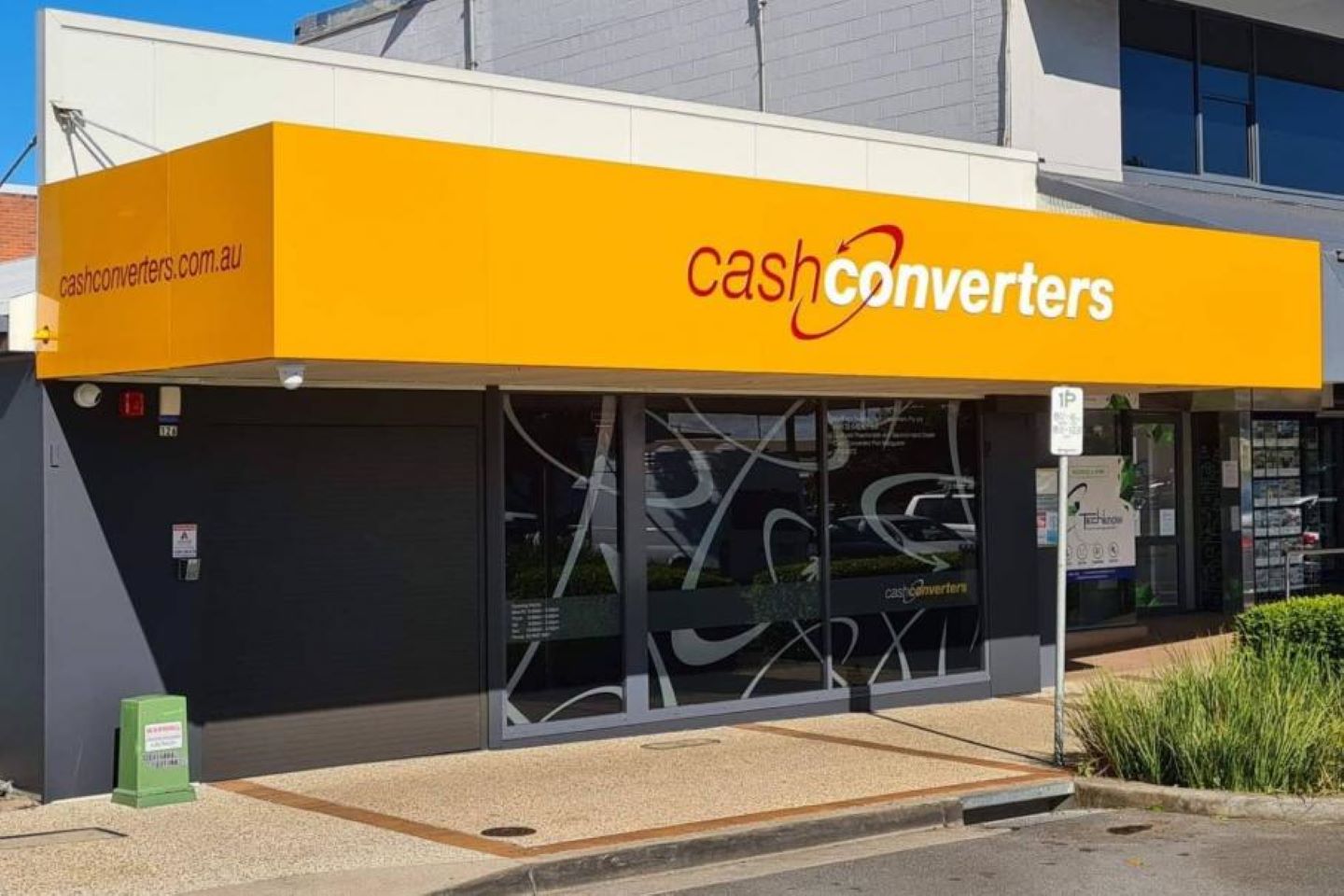
Longstanding Cash Converters International executive Peter Cumins has announced he will retire as a director of the company next year.

Continue Reading

Business

FirstEnergy: Cheap And With Potential To Grow (NYSE:FE)

Published

on

FirstEnergy: Cheap And With Potential To Grow (NYSE:FE)

This article was written by

Daniel is an avid and active professional investor.
He runs Crude Value Insights, a value-oriented newsletter aimed at analyzing the cash flows and assessing the value of companies in the oil and gas space. His primary focus is on finding businesses that are trading at a significant discount to their intrinsic value by employing a combination of Benjamin Graham’s investment philosophy and a contrarian approach to the market and the securities therein. Learn more.

Analyst’s Disclosure: I/we have no stock, option or similar derivative position in any of the companies mentioned, and no plans to initiate any such positions within the next 72 hours. I wrote this article myself, and it expresses my own opinions. I am not receiving compensation for it (other than from Seeking Alpha). I have no business relationship with any company whose stock is mentioned in this article.

Seeking Alpha’s Disclosure: Past performance is no guarantee of future results. No recommendation or advice is being given as to whether any investment is suitable for a particular investor. Any views or opinions expressed above may not reflect those of Seeking Alpha as a whole. Seeking Alpha is not a licensed securities dealer, broker or US investment adviser or investment bank. Our analysts are third party authors that include both professional investors and individual investors who may not be licensed or certified by any institute or regulatory body.

Advertisement
Continue Reading

Business

Bank earnings live updates: JPM, BofA, Citi, Goldman

Published

on

Bank earnings live updates: JPM, BofA, Citi, Goldman

Here’s what analysts are expecting from Wells Fargo

Wells Fargo & Company Chairman and CEO Charlie Scharf is interviewed during an Economic Club of Washington luncheon at the Westin hotel on April 20, 2026 in Washington, DC.

Chip Somodevilla | Getty Images

Wells Fargo, led by CEO Charlie Scharf, is scheduled to report second-quarter earnings before the opening bell Tuesday.

Analysts are looking for signs of business momentum after the Federal Reserve lifted a balance sheet restriction on the bank last year.

Advertisement

Here’s what Wall Street expects:

  • Earnings per share: $1.72, according to LSEG
  • Revenue: $21.84 billion, according to LSEG
  • Net interest income: $12.39 billion, according to StreetAccount
  • Provision for credit losses: $1.2 billion, according to StreetAccount

Company executives will hold a conference call with analysts at 10 a.m. ET.

— Hugh Son

Wall Street’s longest running saga: The race to succeed JPMorgan CEO Jamie Dimon

Co-CEOs of Commercial & Investment Bank at JPMorganChase, Troy Rohrbaugh and Douglas Petno.

Courtesy: JPMorganChase

Advertisement

This will be the first chance that analysts have to directly ask JPMorgan CEO Jamie Dimon questions about succession planning after the sudden exit of Marianne Lake, who had been considered a top candidate.

As CNBC and others reported last month, Dimon expects to remain CEO for roughly three more years, though that timeline could change, according to two people with knowledge of his thinking. After that, he’ll spend some time as chairman.

Since Dimon has spent more than a decade saying that retirement was five years away, analysts will want to quiz him on how he’s thinking about the issue.

Meanwhile, Doug Petno and Troy Rohrbaugh, who have jointly led the bank’s commercial and investment banking division since early 2024, are now the top contenders to succeed Dimon.

Advertisement

They were made co-presidents and were each awarded $30 million retention bonuses last month.

— Hugh Son

Here’s what analysts are expecting from JPMorgan

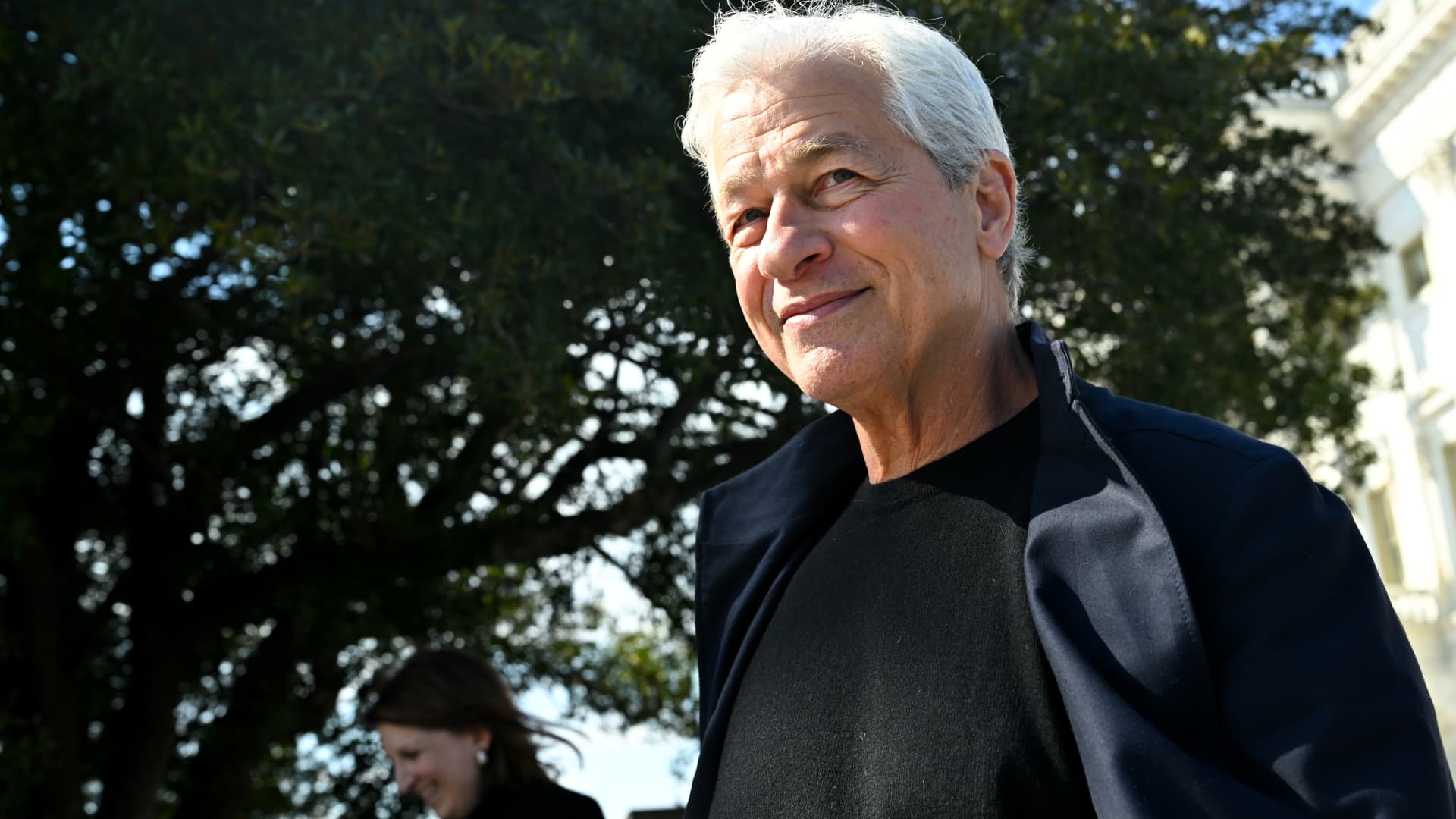
Jamie Dimon, CEO of JPMorgan Chase, departs the Capitol in Washington, Feb. 25, 2026.

Graeme Sloan | Bloomberg | Getty Images

Advertisement

JPMorgan Chase is scheduled to report second-quarter earnings before the opening bell Tuesday.

JPMorgan, led by longtime CEO Jamie Dimon, is the biggest U.S. bank by assets and the largest in the world by market capitalization.

Here’s what Wall Street expects:

  • Earnings per share: $5.78, according to LSEG
  • Revenue: $50.19 billion, according to LSEG
  • Investment banking fees: $2.82 billion, according to StreetAccount
  • Trading revenue: Fixed income of $6.22 billion, equities of $3.89 billion, according to StreetAccount

Company executives will hold a conference call with analysts at 8:30 a.m. ET.

— Hugh Son

Advertisement

Five megabanks posting earnings on the same day? ‘It’s never happened before’

(L-R) Charles Scharf, CEO and President of Wells Fargo and Company; Brian Thomas Moynihan, Chairman and CEO of Bank of America; Jamie Dimon, Chairman and CEO of JPMorgan Chase; Jane Fraser, CEO of Citigroup; Ronald O’Hanley, CEO of State Street; Robin Vince, CEO of BNY Mellon; David Solomon, CEO of Goldman Sachs; and James Gorman, CEO of Morgan Stanley, testify during a Senate Banking Committee hearing at the Hart Senate Office Building on December 06, 2023 in Washington, DC.

Win Mcnamee | Getty Images

For more than four decades, Portales Partners analyst Charles Peabody has covered bank earnings.

In all that time, there’s never been a bank earnings day as crowded as today, he said.

Advertisement

Oftentimes, JPMorgan, Citigroup and Wells Fargo will report on the first day of earnings week, followed by Bank of America, Goldman Sachs and Morgan Stanley on subsequent days, he said.

His theory: Banks are rushing to disclose robust earnings.

“It’s never happened before,” Peabody told CNBC. “You’re assuming there’s going to be really good news out of those banks” that pushed their earnings dates ahead.

Still, it doesn’t make the job of covering banks any easier.

Advertisement

“You’re not going to get a lot of deep analysis on Day 1,” Peabody said. “We’ll need more time.”

— Hugh Son

Continue Reading

Business

Somerset company used by royal family rescued from administration

Published

on

Business Live

The fruit harvesting machinery business had been in operation for more than four decades

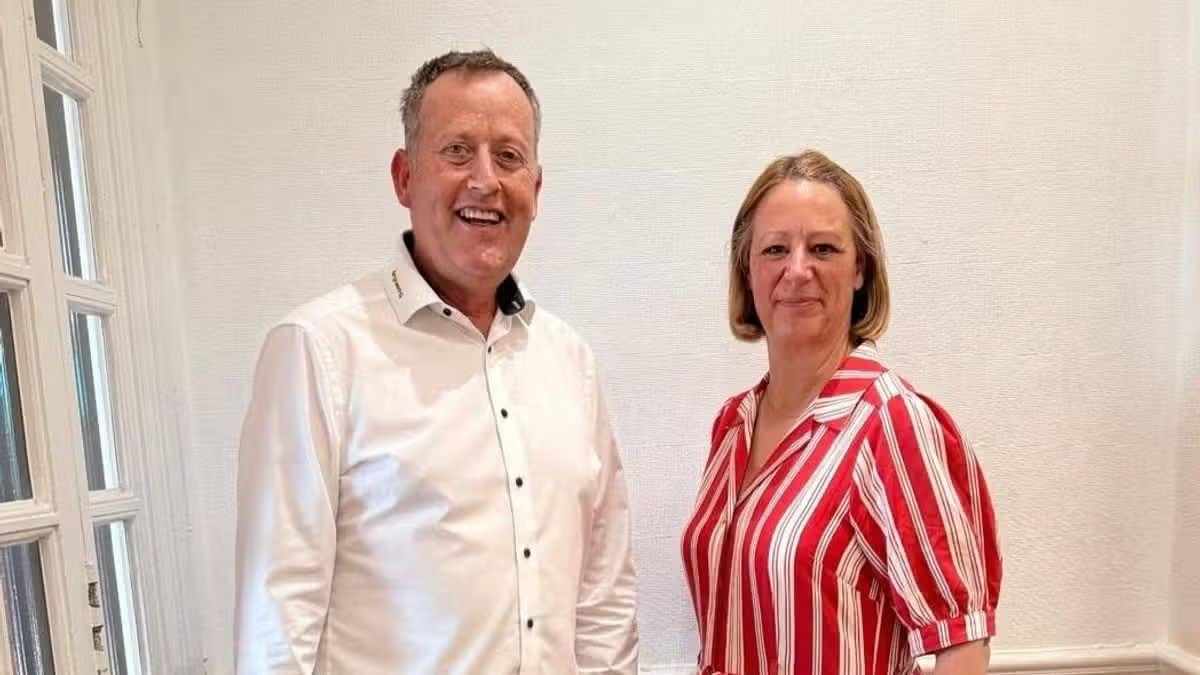
Graham and Emma Bramley, directors of Bramley Aerospace

Graham and Emma Bramley, directors of Bramley Aerospace have rescued the Somerset firm(Image: Bramley Aerospace)

A Somerset fruit machinery business that once supplied the royal household has been rescued from administration, saving 15 jobs. SFM Technology had collapsed owing to cashflow difficulties, but has now been acquired by Bramley Precision Aerospace, which has bought its assets, goodwill and intellectual property.

The well-established engineering company had been operating for four decades and will continue trading from its current Martock premises.

Advertisement

Its roots date back to 1985 when it was established as Somerset Fruit Machinery, designing and manufacturing bespoke fruit harvesting equipment for apple and blackcurrant producers.

Its new owner say its foundation in practical, high-quality agricultural engineering enabled the firm to build a respected reputation in the fruit harvesting industry, with machinery and specialist support delivered to clients in the UK and internationally.

In 2012, SFM Technology was granted a Royal Warrant for the supply of fruit harvesting machinery to the royal family, “reflecting the quality and standing the business had achieved”.

The firm later diversified into aerospace and advanced manufacturing, applying its design and fabrication knowledge to specialist precision engineering sectors.

Advertisement

Over the years, SFM developed sophisticated capabilities across CAD design and prototyping, CNC machining, laser and waterjet cutting, welding, fabrication, 3D printing and complex assembly work, reports Somerset Live.

The business has served national and international aerospace and defence firms, as well as clients in advanced manufacturing and specialist engineering. Its expertise and highly skilled workforce made it an appealing prospect for Graham and Emma Bramley, who operate a thriving manufacturing firm, Bramley Engineering.

Bramley Harvesting apple collecting machine

Bramley Harvesting apple collecting machine(Image: Bramley Precision Aerospace Ltd)

The family-run enterprise designs and manufactures bespoke cranes and lifting equipment for utilities, transport and civil engineering companies, and will now operate under two distinct brands: Bramley Aerospace for advanced aerospace engineering, and Bramley Harvesting for its specialist fruit harvesting machinery division.

Graham Bramley, managing director of Bramley Aerospace, said: “Businesses like SFM are built on people, skill and years of experience. When we looked at SFM, we saw a proud Somerset engineering business with a remarkable history, a talented team and real potential for the future.

Advertisement

“Our priority is to keep work moving for customers and give the team in Martock the confidence to look forward again.”

Director Emma Bramley added: “We understand what it takes to run a specialist engineering business, and we also understand the responsibility that comes with protecting skilled jobs and long-standing customer relationships.

“SFM has a remarkable story, from its origins in fruit harvesting machinery through to advanced aerospace and manufacturing work. We are proud to be able to carry that story forward as Bramley Aerospace, while keeping the business rooted in Martock. Local customers and supply chains matter to us and we will be seeking to establish strong relationships in Somerset whilst also supporting the local economy.”

Bramley says it will now concentrate on stabilising the business, supporting existing clients, forging relationships with suppliers, and pursuing new opportunities across aerospace and broader specialist engineering. The firm is also exploring recruitment prospects as part of its development plans for the Martock site.

Advertisement

Mr Bramley added: “We want customers to know that the capability they relied on is still here. We want staff to know that their skills are valued. And we want Somerset to know that an important piece of its engineering history has been saved.

“Our focus now is on giving the Martock operation the support it needs, building on SFM’s strengths and creating a positive future for everyone connected to the business.”

As part of its ambitions to grow the Martock site, Bramley Aerospace is currently seeking to fill positions including an office manager, CNC operative and a design manufacturing manager, while also welcoming enquiries from skilled individuals with specialist manufacturing expertise regarding potential future roles.

Advertisement
Continue Reading

Business

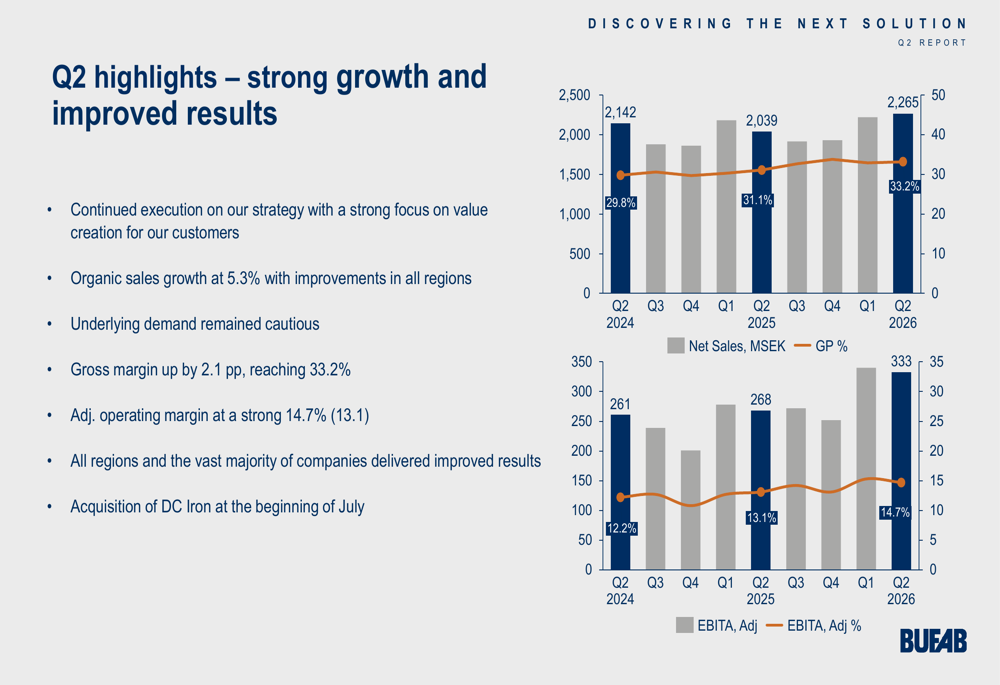
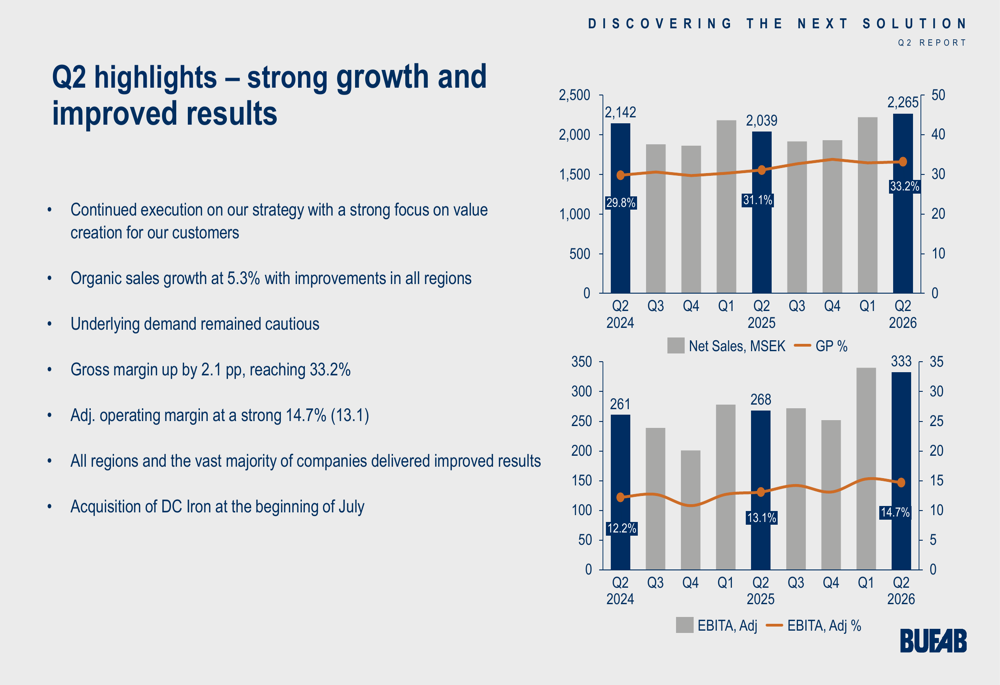
Bufab Q2 2026 slides: margins hit 14.7% on organic growth

Published

on

Bufab Q2 2026 slides: margins hit 14.7% on organic growth


Bufab Q2 2026 slides: margins hit 14.7% on organic growth

Continue Reading

Business

BP sees weaker upstream output, slightly stronger oil trading in Q2; stock up

Published

on


BP sees weaker upstream output, slightly stronger oil trading in Q2; stock up

Continue Reading

Business

Kalyan Jewellers shares skyrocket 50% in 5 days, market value swells by Rs 18,200 crore. Time to buy or book profits?

Published

on

Kalyan Jewellers shares skyrocket 50% in 5 days, market value swells by Rs 18,200 crore. Time to buy or book profits?
Shares of Kalyan Jewellers India rose another 4% on Tuesday, extending their five-session rally to 50% and adding over Rs 18,200 crore to the company’s market value, as analysts continued to see further upside.

The stock climbed to Rs 531 apiece, taking the jewellery retailer’s market capitalisation to over Rs 54,800 crore. The sharp rally, which has added nearly one-third to the company’s market value, was sparked by its stronger-than-expected Q1 business update released last week.

Kalyan Jewellers Q1 business update

Kalyan Jewellers last week said that the April-June quarter of the ongoing financial year 2027 was a “very satisfying one” as it recorded consolidated revenue growth of nearly 38% when compared to the same period in the previous financial year. The gold jewellery maker’s 38% revenue growth came despite the 28-day Adhik Maas period falling fully in the recently concluded quarter, when several customers typically avoid gold purchases.

Advertisement

Read More: From Kalyan Jewellers’ 52-week high to Trent’s reality check: LKP Securities’ top trading ideas

The company also posted same-store sales growth of approximately 28%. The share of recycled gold as a percentage of revenue rose to over 46% during Q1 FY27. For June, the share of recycled gold as a percentage of revenue was in excess of 55%.

The international operations recorded revenue growth of approximately 35% year-on-year (YoY) in Q1 FY27. “Within the Middle East specifically, we witnessed revenue growth of approximately 30% for Q1 FY27 as compared to Q1 FY26, driven predominantly by same-store sales growth despite the impact on footfall during April due to the geopolitical tensions in the region,” it added.
Kalyan launched 12 showrooms and 5 Candere showrooms in India during the quarter under review. “The ongoing quarter has started well, and we are upbeat about the new showroom launches, gearing up with fresh collections and campaigns for the upcoming festive and wedding season across the country,” the company added further in a statement.

Should you buy Kalyan Jewellers shares now?

Kalyan Jewellers shares have broken out above a downward-sloping trendline, while continuing to trade above all its key short- and long-term moving averages on the weekly chart, reinforcing the strength of the prevailing uptrend, said Sudeep Shah, Head of Technical and Derivatives Research at SBI Securities.The RSI has also registered a breakout above its own downward-sloping trendline on the weekly timeframe, indicating a clear shift from bearish to bullish momentum, he said, adding that the widening gap between the DI+ and DI− lines reflects strengthening buying interest and confirms that bulls remain firmly in control.

Another encouraging sign is that the stock has closed above the upper Bollinger Band in each of the last four trading sessions, a characteristic often observed during the early stages of a strong trending move, Shah explained. “From a technical perspective, the 475–470 zone is expected to act as a strong support. As long as the stock sustains above this zone, the trend is likely to be bullish with the potential for further upside,” he added.

Advertisement

Also read: From Kalyan Jewellers’ 52-week high to Trent’s reality check: LKP Securities’ top trading ideas

What lies ahead for Kalyan Jewellers shares?

After the Q1 business update, brokerages issued bullish calls for the shares of Kalyan Jewellers. Citi believes the stock has the potential to rise to Rs 750 apiece. This implies an upside potential of nearly 47% from the stock’s previous closing price of Rs 510.65 apiece. The international brokerage expects the company’s franchise-led expansion strategy to continue supporting revenue growth. It also believes the company’s asset-light model will aid deleveraging and improve return on capital employed (ROCE).

ICICI Securities, meanwhile, maintained a Buy rating on the stock with a target price of Rs 670, implying an upside of more than 31%. The brokerage said Kalyan Jewellers’ strong Q1 FY27 performance despite multiple headwinds reflects resilient underlying jewellery demand.

It believes continued store expansion and the ongoing formalisation of the jewellery industry reinforce its positive outlook, although it cautioned that any structural decline in natural diamond prices remains a key risk.

Advertisement

Kalyan Jewellers share price

Kalyan Jewellers shares have jumped 50% in one week and 54% in one month. The stock is up nearly 10% in 2026 so far.

In the longer term, the shares of the jewellery-maker have fallen more than 9% in one year, but delivered 191% returns over three years and 598% in five years.

Also read: Kalyan Jewellers stock to double from here? Why analysts are bullish

(Disclaimer: Recommendations, suggestions, views and opinions given by the experts are their own. These do not represent the views of The Economic Times)

Advertisement
Continue Reading

Business

Aussie shares recover losses but Hormuz risk remains

Published

on

Aussie shares recover losses but Hormuz risk remains

Australia’s share market has clawed back some early losses to end the session flat despite oil trading at one-month highs as the US and Iran ramp up attacks in the Persian Gulf.

Continue Reading

Trending

Copyright © 2025