Connect with us

Business

LARRY KUDLOW: Everyone should keep more of what they earn

Published

on

LARRY KUDLOW: Hormuz will not stop history

There are reports that the administration is cooking up a plan to allow married couples with a stay-at-home spouse to collect childcare subsidies, using funds from a Health and Human Services program, also intended to assist working parents. The HHS fund was created a while back to help low income and working-class parents afford child care, so they could go to work.

Under the new plan, parents who stay at home with their children could be eligible for about $9,000 per child each year, by redirecting money from the HHS working parents, to the new stay-at-home parents. Kind of sounds like taking from Peter in order to give to Paul. I don’t think it’s a really good idea.

Advertisement

According to reports, about 80 percent of the 870,000 families who currently get the childcare subsidies, have single working parents, most of them mothers, according to HHS data.

So let’s step back for a moment. I’m for parents having tots. And I’m certainly for work. Both are Godly. But this sounds like big government Republicanism. Too much government directing to this, and too much government directing to that. 

Why not just reform the tax code, and let everybody keep more of what they earn, and then let them decide how to spend their own money? In other words, that means not the government deciding how to spend their money, but letting individuals and families decide how to spend their own money — probably more astutely than the government.

We should be reforming the tax code. Take a police detective and his schoolteacher wife. I’ll bet their combined income is $150,000 to $200,000 a year. That’s good money. But they shouldn’t have to pay a 32 percent tax rate. I’d knock their rate down to 15 percent or 20 percent. In other words, a middle-class tax cut. And by the way, we don’t need seven tax brackets, which is overly complex.

Advertisement

Let’s knock it down to 3 brackets; 10, 20, and 30. Ronald Reagan, more than 40 years ago, left it at 28 percent and 15 percent. If you make $500,000 or $ 600,000 a year, you can pay 30 percent, not 37 percent. The middle bracket is if you make $200,000 or 250,000, you should pay only 15 percent or 20 percent.

The bottom bracket could be 10 percent but nobody really pays taxes there anyway. This would simplify the tax code, clean out a lot of unnecessary IRS flotsam and jetsam. And it’ll let people keep much more of what they earn. It’ll help families, it’ll help their children, and by the way it’ll be a big help to small businesses who pay the individual income tax. And it will keep big government’s nose out of peoples lives.

Continue Reading
Click to comment

You must be logged in to post a comment Login

Leave a Reply

Business

Beef business weighs on Tyson Foods

Published

on

Beef business weighs on Tyson Foods

SPRINGDALE, ARK. — As the final days of Tyson Foods’ fiscal year wind down in September, executives revealed a revised, gloomier outlook for its Beef business segment beyond the projected loss of between $500 million and $650 million announced as part of its third-quarter report in early August.

The company is now projecting a loss of between $625 million and $775 million. The company’s share price on the New York Stock Exchange on Sept. 3 dipped more than 7% in afternoon trading after the new outlook was announced, which included companywide adjusted operating income expectations declining from $2.1 billion to $2.3 billion, as of Aug. 3, to between $1.85 billion and $2.05 billion.

“The revised outlook is primarily driven by significant margin compression amid volatile cattle prices and one of the most severe cattle shortages in US history, as well as the expected impact of lower cattle prices on the value of live cattle inventories,” the company said.

The outlooks for the company’s other segments also were revised, including Chicken to between $1.85 billion to $1.95 billion (down from $1.9 billion to $2.05 billion), and Pork to between $200 million to $250 million (down from $250 million to $300 million). The company’s outlook for its Prepared Foods ($1.30 billion to $1.35 billion) and International ($150 million to $200 million) segments did not change.

Advertisement

Tyson’s leadership addressed the company’s recent efforts to reduce costs with plans to improve its financial performance in the coming fiscal year.

“The Beef pressures that have intensified this quarter reflect industry-wide cattle-cycle dynamics that required decisive action,” said Donnie King, president and chief executive officer.   “As announced in August, we are restructuring our Beef network around three strategically located facilities in the central United States to create a more efficient and competitive footprint for the long term. We expect these actions to begin reducing operating cost pressures as we enter fiscal 2027.”

The company said challenges in the foodservice sector are the result of more cautious consumer spending, but its Chicken segment is reaping the benefits of customer partnerships and adding to its value-added product mix.

With a glut of pork available in the current market, prices and product values have declined, outpacing lower production costs and limiting profitability.

Advertisement

Meanwhile, the company said its Prepared Foods and International business segments continue to thrive in an environment that has consumers seeking value as the cost of living continues to rise.

“Our diversified, multi-protein portfolio helps us manage pressure from individual commodity cycles,” King said. “We enter fiscal 2027 with a healthy balance sheet, continued momentum in our branded businesses and a clear strategy to drive long-term growth.” 

Continue Reading

Business

Amazon sued over alleged discrimination against pregnant workers

Published

on

Amazon sued over alleged discrimination against pregnant workers

Amazon has been accused of discriminating against potentially thousands of pregnant employees by allegedly firing or retaliating against workers seeking additional accommodations, according to a nationwide class-action lawsuit filed Tuesday. 

The lawsuit, brought by four former hourly warehouse employees, alleged that the retail giant violated the federal Pregnant Workers Fairness Act and New York state law, which require employers to provide reasonable accommodations to pregnant workers without penalty. 

Advertisement

“This case arises from Amazon’s systematic, company-wide failure to accommodate pregnant workers and its deliberate policies of retaliation against workers who seek pregnancy accommodations,” the lawsuit stated. 

According to the complaint, Amazon required “unnecessary” medical documentation for every accommodation request, with plaintiffs saying the added requirements often resulted in denials or delays for basic needs such as requests for chairs and bathroom and water breaks. 

AMAZON ACCUSED OF KEEPING HUNDREDS OF MILLIONS IN TARIFF COSTS TO CURRY FAVOR WITH TRUMP ADMINISTRATION

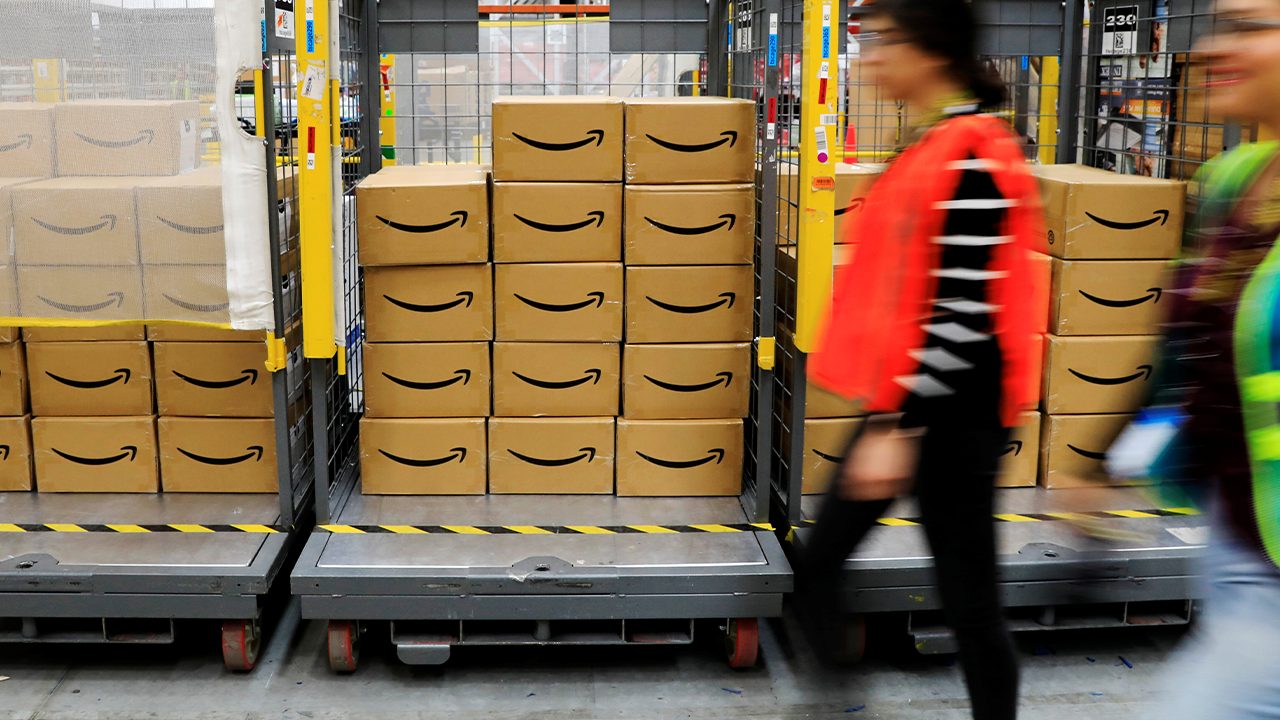
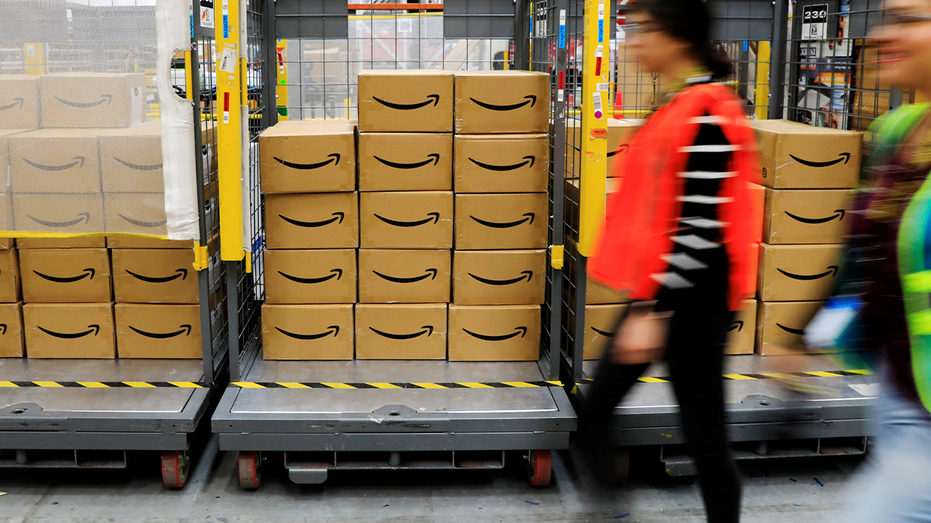
Amazon packages at a warehouse.

FILE — Packages are seen at an Amazon warehouse. The company is facing a class-action lawsuit alleging discrimination against pregnant workers. (Carlos Jasso / Reuters Photos)

The lawsuit also alleges that time off for medical appointments and emergencies is automatically deducted from workers’ limited banks of unpaid time off. Once that time is exhausted, workers can receive termination warnings and ultimately be fired, according to the complaint. 

Advertisement

Amazon’s tracking practices are also under scrutiny. The company reportedly uses handheld scanners to monitor workers’ activities minute-by-minute, including time spent in lactation rooms, according to the suit. The complaint alleges the system could penalize employees for taking legally protected pumping breaks. 

Kelly Nantel, an Amazon spokesperson, rejected the accusations, saying the company approved more than 99.9% of pregnancy-related accommodation requests over the past year. The adjustments included additional breaks, modified duties and seated roles. 

“Ensuring the health and well-being of our employees is one of our greatest responsibilities, and we strive to provide a safe and supportive environment for everyone, which includes supporting tens of thousands of employees with pregnancy accommodations each year,” Nantel told FOX Business. 

The company said accommodations are provided on an individualized basis, adding that the approach is consistent with federal law. 

Advertisement

“Our accommodations policies follow the Pregnancy Workers Fairness Act, and any implication we don’t follow federal law is false and misleading,” Amazon said. 

AMAZON PLANS MASSIVE EXPANSION OF PRIME AIR DRONE DELIVERIES

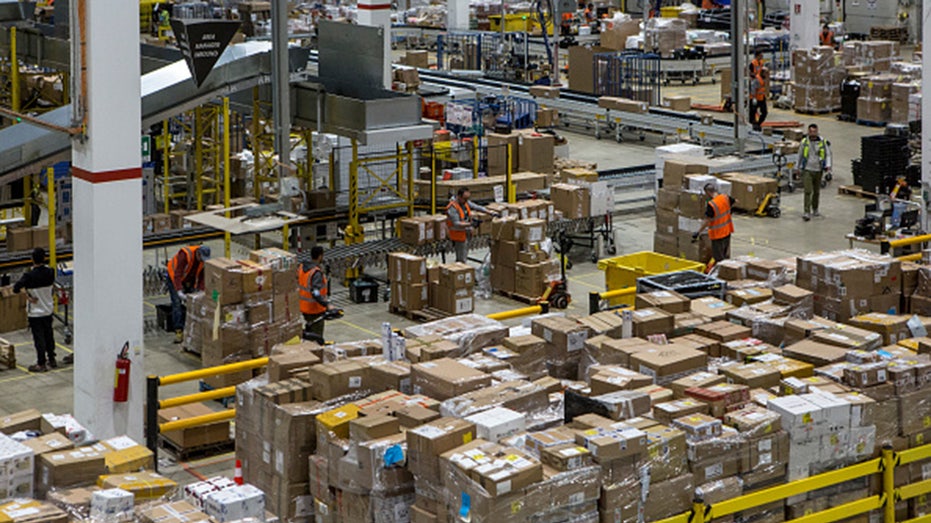
An Amazon warehouse.

FILE — A general view of the inbound area of an Amazon.com fulfillment center. Amazon has denied allegations that it retaliated against pregnant employees. (Emanuele Cremaschi/Getty Images)

According to the lawsuit, plaintiff Willamina Barclay had a high-risk pregnancy with preeclampsia and severe morning sickness but was denied a seated position. 

Amazon allegedly delayed her request for weeks while waiting for paperwork, with one manager reportedly saying, “If I give you a chair, I have to give everybody else a chair,” the suit said. 

Advertisement

The company then deducted her approved extra breaks and time spent in the emergency room from her unpaid time off (UPT), according to the complaint. She was reportedly fired on June 22, 2025, after her UPT balance fell below zero. 

Plaintiff Kristina Green, who was at risk of preeclampsia, was also denied additional accommodations after a two-month delay, according to the lawsuit. 

Her UPT was drained during unpaid maternity leave and while taking lactation breaks, the complaint said. 

She received a final written warning for about two hours of unverified inactive time and was fired on May 7, 2026, according to the lawsuit. 

Advertisement

AMAZON’S 30-MINUTE DELIVERY PUSH RAISES STAKES IN RACE FOR SPEED

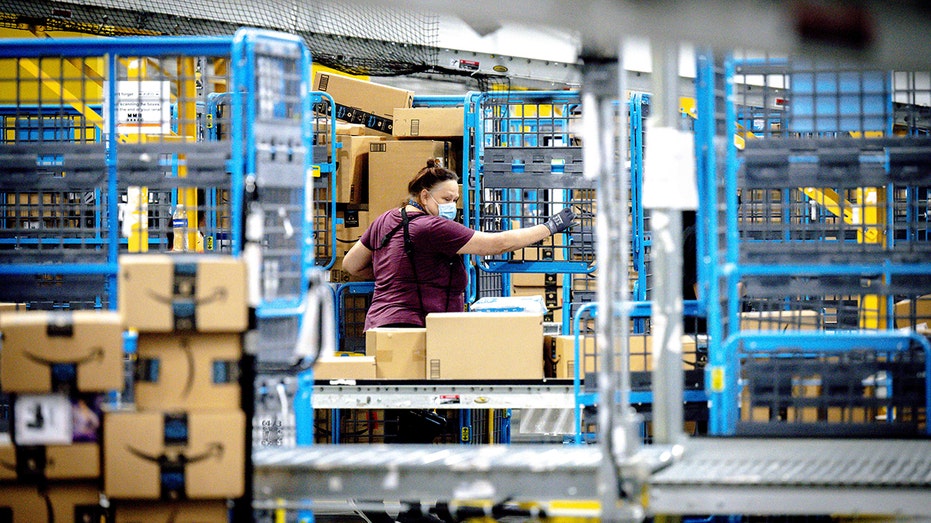
A worker at an Amazon warehouse in California.

FILE — A worker sorts out parcels in the outbound dock at an Amazon fulfillment center. The company says it approved more than 99.9% of pregnancy-related accommodation requests over the past year. (Watchara Phomicinda/MediaNews Group/The Press-Enterprise / Getty Images)

Plaintiff Jennifer Hatch, who had a high-risk pregnancy and asthma, also had four emergency room visits for severe abdominal pain, according to the lawsuit. 

An operations manager allegedly ordered her to stand and refused to let her use an available chair because her accommodation had not been approved, the complaint said. 

Hatch was fired on April 2, 2025, after her UPT balance fell below zero, according to the lawsuit. 

Advertisement

CLICK HERE TO GET FOX BUSINESS ON THE GO

Ticker Security Last Change Change %
AMZN AMAZON.COM INC. 256.97 -1.54 -0.60%

Plaintiff Dazaria Parks, who suffered from pregnancy-related sciatica, was also denied permission to sit, according to the lawsuit.

She was reprimanded by automated monitoring systems for avoiding packages weighing more than 20 pounds and penalized for taking approved medical leave, the complaint said.

Parks was automatically fired on July 13, 2026, according to the lawsuit.

Advertisement

Amazon said it is reviewing each case but maintained that the allegations in the lawsuit do not present the full picture.

“The details provided in this lawsuit do not reflect the full facts of these cases or the reality of our extensive accommodations process,” the company said. 

“While we’re not able to discuss individual employee details, we have conducted thorough internal reviews of each case referenced. We’re limited in discussing ongoing legal matters, however we look forward to a timely resolution of these matters, as extended investigation timelines benefit neither employees nor employers.”

Advertisement
Continue Reading

Business

Xometry at Goldman Sachs Communacopia + Technology Conference 2026: growth, AI and Siemens

Published

on


Xometry at Goldman Sachs Communacopia + Technology Conference 2026: growth, AI and Siemens

Continue Reading

Business

Japan manufacturers’ mood hits near 5-year high on semiconductor demand: Reuters poll

Published

on


Japan manufacturers’ mood hits near 5-year high on semiconductor demand: Reuters poll

Continue Reading

Business

Newell Brands Inc. (NWL) Presents at Barclays 19th Annual Global Consumer Staples Conference Transcript

Published

on

OneWater Marine Inc. (ONEW) Q1 2026 Earnings Call Transcript