Connect with us

Business

LG Display Unveils FLiPP OLED Technology Promising Brighter, Longer-Lasting Panels for TVs and Wearables

Published

on

Apple's Beats 360 Headphones Keep Leaking as Regulatory Filings Reveal

BUSAN, South Korea — LG Display has unveiled a new OLED manufacturing technology it says eliminates a decades-old production bottleneck, promising displays that are significantly brighter, longer-lasting and more energy-efficient across products ranging from tiny wearable screens to massive televisions.

The technology, called FLiPP, or FMM-Less innovative Pixel Patterning, was publicly introduced at the International Meeting on Information Display 2026 in Busan beginning Aug. 19, according to Techgenyz. LG Display describes the approach as a “dream technology” because it removes the need for conventional fine metal masks, a manufacturing method that has served as the mainstream approach for producing RGB OLED pixels for more than a decade.

In traditional OLED manufacturing, red, green and blue organic materials are evaporated through tiny openings in a metal plate, known as a fine metal mask, to form individual RGB subpixels, a process TechPowerUp compared to a stencil art technique. That method carries several significant drawbacks: fine metal masks are expensive to produce and must be remade whenever a panel’s size, resolution or pixel layout changes, according to PR Newswire’s coverage of LG’s announcement. Additionally, due to the physical properties of metal, large masks tend to sag under their own weight at the center, which can cause misalignment and result in color-mixing defects during production.

FLiPP takes a fundamentally different approach. According to Engadget, the technology coats RGB pixels directly onto panels in a precise, ordered sequence, then uses photolithography and ultraviolet light to “erase unnecessary areas during OLED pixel patterning,” eliminating the need for a physical metal stencil entirely.

Advertisement

The performance improvements LG Display is claiming for the new process are substantial. According to Forbes, FLiPP-manufactured panels are 1.6 times brighter than equivalent fine-metal-mask panels, offer a lifespan 2.4 times longer, and consume 13% less power, improvements the company attributes to a 55% increase in the display’s aperture ratio, the proportion of the total display area occupied by actual RGB pixels rather than surrounding mask structure. By reclaiming space previously occupied by the metal mask itself, LG Display is able to give each pixel a larger surface area through which light can escape, according to OC3D’s analysis of the technology, directly improving both brightness output and overall energy efficiency, since the display retains less heat during operation.

Choi Young-seok, chief technology officer at LG Display, characterized the breakthrough as the culmination of the company’s accumulated OLED manufacturing expertise. “We were able to successfully realize FLiPP, a next-generation OLED patterning technology referred to as a ‘dream technology,’ by bringing together our proprietary WOLED technologies and know-how,” Choi said, according to TFTCentral.

Beyond the performance gains, LG Display says FLiPP delivers significant manufacturing efficiency improvements. According to TechPowerUp, the company has become the first display manufacturer to produce FMM-less OLED panels using an entire 8.5th-generation mother glass substrate as a single, whole piece, rather than requiring the substrate to be divided into smaller sections as some competing FMM-less approaches require. For OLED laptop panels of comparable size, LG Display says FLiPP delivers up to 64% higher mother-glass utilization efficiency compared with both traditional fine-metal-mask production and other existing FMM-less manufacturing methods, a gain the company says translates directly into reduced substrate material waste, higher overall productivity and lower manufacturing costs.

One of FLiPP’s most significant advantages, according to multiple outlets covering the announcement, is its apparent lack of the panel-size and resolution constraints that have historically limited fine-metal-mask-based OLED production. Neowin reported that the technology could theoretically be used to produce displays ranging from just one inch, suitable for small wearable devices, all the way up to 100-inch televisions, positioning FLiPP as what LG Display has described as a genuinely universal OLED manufacturing approach applicable across an unusually broad range of product categories, including potential use in virtual reality and augmented reality display panels alongside more conventional monitors and televisions.

Advertisement

LG Display has indicated it plans to introduce FLiPP-manufactured panels gradually rather than across its entire product lineup immediately. According to Engadget, the company intends to begin deploying the technology in tablets and monitor panels first, before gradually expanding its use to cover the full range of products the technology theoretically supports, from one-inch wearable device displays up through ultra-large television panels, tailoring the rollout to specific customer and product requirements as manufacturing capacity scales up.

LG Display has also moved to protect the intellectual property surrounding its new manufacturing process. According to TechPowerUp, the company has filed trademark applications for the FLiPP name in South Korea and in key global markets, reflecting its ambitions to establish the technology as a distinct, branded manufacturing platform within the broader display industry.

The announcement arrives amid broader industry-wide interest in eliminating fine metal masks from OLED production more generally. According to Notebookcheck, rival display maker Japan Display Inc. has separately been testing its own maskless OLED technology, called eLEAP, which the company says extends OLED panel lifespan by more than three times compared with fine-metal-mask panels while more than doubling brightness. Samsung Display has also reportedly considered pursuing similar maskless production research, while Chinese OLED manufacturer Visionox has been developing its own non-FMM production approach under the branding ViP, according to the same report, suggesting FLiPP represents LG Display’s entry into a broader competitive race across the display industry to solve the same underlying fine-metal-mask limitations through different technical approaches.

Neowin’s coverage of the announcement placed FLiPP within the context of LG Display’s longer competitive history in OLED technology, noting that the company continued investing heavily in OLED manufacturing even after rivals Sony and Panasonic abandoned their own OLED display partnership in 2013 and Samsung shifted its primary display strategy toward Q-LED technology in 2015. That sustained investment eventually positioned LG Display as a key OLED panel supplier to major consumer electronics brands including Sony, Panasonic, Toshiba, Philips and Loewe by 2017, and has since enabled the company to develop distinctive OLED-based products such as its Wallpaper TV and rollable television lines, showcasing the flexibility the underlying technology offers compared with more conventional LCD-based display manufacturing.

Advertisement

As with any newly announced manufacturing technology, FLiPP remains, for now, a production process rather than a feature consumers can purchase directly. Neowin cautioned that the technology’s real-world impact will depend on how successfully and how quickly LG Display can transition FLiPP from initial demonstration into large-scale commercial production across its planned range of applications, a process the company has indicated will begin with tablets and monitors before gradually expanding into the broader array of products the underlying technology is theoretically capable of supporting.

Continue Reading
Click to comment

You must be logged in to post a comment Login

Leave a Reply

Business

How high can whey prices go?

Published

on

How high can whey prices go?

KANSAS CITY –Whey, once a cheesemaking byproduct that was discarded into wastewater, has been on a historic three-year run, with prices soaring to unprecedented levels.

Much of the rally has been driven by consumers’ growing appetite for convenient protein.

“Whey protein is not something you just see at GNC or in the sports nutrition aisle now,” said Joshua White, vice president of dairy ingredients at T.C. Jacoby & Co. “It can be found in nearly every aisle of the grocery store.”

Amid the surge in demand, expanding cheese production has given processors a larger whey stream to work with, while investments in filtration and processing capacity have scaled the industry’s ability to extract more value from that stream. Whey can be processed into products, including whey protein concentrate (WPC) 34% or further concentrated into higher-protein WPC 80% and whey protein isolate (WPI). As values for those higher-protein products have risen, processors have at times prioritized their production, reducing WPC 34% output and contributing to tight supplies across the whey protein complex.

Advertisement

After climbing almost continuously since mid-2023, whey protein prices are beginning to test what buyers are willing to pay. White estimated spot WPC 80% surged from about $2.50 per lb in mid-2023 to $13.50 per lb today.

The underlying demand behind the numbers is expected to remain strong. Custom Market Insights, a market researcher, projected the global whey protein market will grow from $13.52 billion in 2025 to $26.04 billion by 2034, a compound annual growth rate of 7.56%. The report identified ready-to-drink beverages and functional foods as major growth areas.

GLP-1 weight-loss drugs also have accelerated the trend, but White cautioned against giving them all the credit. Health and wellness demand extends beyond GLP-1 users and across international markets. European whey protein prices have surpassed those in the United States, and export interest has increased.

However, at current levels, some WPC buyers have resisted adding coverage, with recent reports of customers staying on the sidelines in hopes of securing better values.

Advertisement

White characterized the hesitancy to commit as a possible sign the market is moving beyond its “parabolic” phase and into a more mature period. Supplies are still tight, but high prices are beginning to reshape who can justify whey.

WPC 80% once served several tiers of demand, from calf milk replacer to sports nutrition and functional foods. Rising prices have pushed lower value, such as its use in feed, out of the market, while health and wellness customers have been willing to pay a premium.

Now, some food manufacturers may be next to reconsider. Those seeking higher protein content may have more flexibility than customers that specifically need whey’s nutritional or functional characteristics, making milk protein concentrate, casein and caseinates increasingly attractive alternatives in some formulations.

whey prices embed.jpgPhoto: USDA

But not all WPC alternatives are created equal.

“They don’t all perform the same and don’t share the same nutritional profile,” White said.

Advertisement

Still, substantially cheaper milk proteins could offer reformulation opportunities where whey is desirable rather than indispensable.

Buying strategy, White said, depends largely on how much flexibility a customer has. Those who are reliant on whey may be better served maintaining coverage rather than betting on a substantial price break while supplies are still tight. Buyers with more flexibility can afford to wait, adding spot loads opportunistically if better values emerge later in the year.

Heading into 2027, food manufacturers may have to reset their expectations for what whey will cost.

“If you budgeted $5 (per lb) or $6 (per lb) whey protein last year, you may have to budget $10 or $12 whey protein this year,” White said.

Advertisement

It remains to be seen how much of those higher ingredient costs manufacturers can absorb before passing along to consumers, and how that could shape demand in the year ahead.

White is watching a couple signals that may offer clues to end users as they build buying strategies for the remainder of this year and into next year. One is promotional activity and price reductions in online sports nutrition, where consumers are particularly price sensitive. The other is whether food manufacturers increase reformulation activity toward milk proteins.

He also recommended that buyers keep a close eye on the spot market. If contracted customers begin taking less than forecast, processors may find themselves with extra loads to sell. The residual loads often become the transactions that move dairy protein prices.

For now, the whey complex remains tight, and the broader demand story appears intact. The key will be how buyers and consumers respond as lofty prices work their way through the market, and whether that response is enough to bring demand closer in line with available supplies. 

Advertisement
Continue Reading

Business

J.M. Smucker promotes food science exec

Published

on

J.M. Smucker promotes food science exec

ORRVILLE, OHIO— The J.M. Smucker Co. has promoted Jeff Varcoe, PhD, to senior vice president of science and technical excellence.

Varcoe, currently vice president of quality assurance and food safety, starts in the new role on Aug. 24, Orrville-based J.M. Smucker said. In the post, he will lead the food company’s science and technical excellence operations, which span all technical disciplines that support product quality, compliance and innovation. He will report to Rob Ferguson, chief product supply officer and executive vice president of coffee, pet and away-from-home products.

“Jeff is an exceptional leader whose expertise, integrity and ability to inspire teams have made a lasting impact on our organization,” Ferguson. “His broad experience across the food operations, science and technical functions, combined with his commitment to developing talent and fostering accountability, makes him well-suited to lead this important area of our business. I am confident that under Jeff’s leadership, we will continue to maintain the high standards of quality and safety our consumers expect, while advancing innovation across our portfolio.”

Varcoe has more than 25 years of food industry leadership experience in the areas of quality assurance, research and development, and operations. He came to J.M. Smucker in June 2023 as vice president of quality assurance and food safety, and the company noted that he has since led a “comprehensive food safety and quality vision.”

Advertisement

Before joining J.M. Smucker, Varcoe spent 21 years at The Schwan Food Co., where he held leadership roles of increasing responsibility, including vice president of manufacturing technical services, vice president food safety and quality, director of research and development, director of food safety and microbiology, and manager of food safety.

Continue Reading

Business

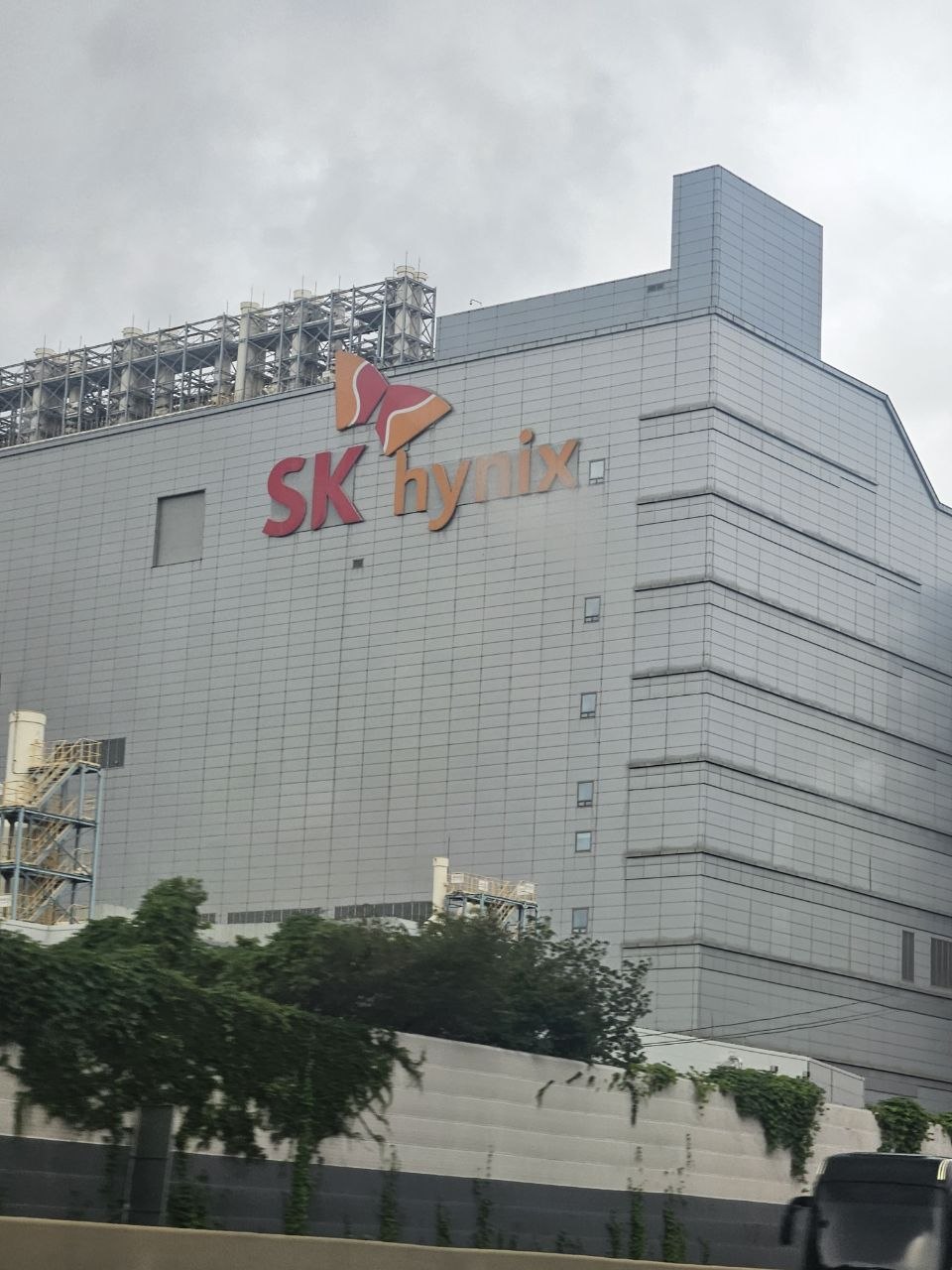
SK Hynix ADR Climbs on Record $28.6 Billion Buyback as AI Memory Demand Fuels Record Profits

Published

on

Apple's Beats 360 Headphones Keep Leaking as Regulatory Filings Reveal

SEOUL — Shares of SK Hynix Inc. rose modestly in U.S. trading Friday, building on gains driven by the company’s announcement of a record share repurchase program, as the South Korean memory chipmaker continues to benefit from surging demand for high-bandwidth memory used in artificial intelligence systems.

The American depositary receipts, trading under the ticker SKHY, advanced about 0.45% to $163.82 in morning trading on the Nasdaq. The move followed a stronger session the previous day, when the ADRs climbed more than 4% after SK Hynix detailed plans to buy back and cancel 40 trillion won, or roughly $28.6 billion, of its shares.

The repurchase, covering approximately 24.07 million shares or about 3.3% of outstanding stock, is scheduled to run from mid-August through mid-November, after which the shares will be retired. The company also raised its shareholder-return target to more than 50% of cumulative free cash flow generated from 2025 through 2027, up from a previous ceiling of 50%. It indicated it would consider additional buybacks and dividends, with further details expected later this year.

In a regulatory filing, SK Hynix said the decision “stems from the assessment that the Company’s intrinsic value—underpinned by its business competitiveness, robust cash generation capability, and mid-to-long-term growth potential—is not fully reflected in its current stock price.”

Advertisement

The buyback ranks as one of the largest in South Korean corporate history and comes against a backdrop of volatile trading in semiconductor stocks. Seoul-listed shares of SK Hynix had fallen sharply earlier in the week amid a broader tech selloff before rebounding on the announcement. The company ended the second quarter with a net cash position of about 69 trillion won, providing substantial financial flexibility to fund returns while continuing heavy capital investment.

SK Hynix has been a primary beneficiary of the AI-driven memory supercycle. In the second quarter of 2026, the company reported record results, with revenue reaching 79.32 trillion won, up 257% from a year earlier and 51% sequentially. Operating profit climbed to 60.54 trillion won, representing a 76% operating margin, while net profit stood at 93.92 trillion won. Cumulative first-half revenue surpassed 100 trillion won for the first time in the company’s history.

Management attributed the performance to strong sales of high-value products, particularly high-bandwidth memory and advanced DRAM and NAND used in data centers. “As AI evolves into agentic forms that perform complex tasks on behalf of users and expands across various services, the underlying demand base for memory is broadening,” the company said in its earnings release. “Consequently, a structural shift is occurring where demand for both AI memory and conventional memory is expanding in tandem.”

SK Hynix began mass shipments of its HBM4 products in the second quarter and plans to ramp production further in the second half of the year. The company highlighted the technology’s operating speeds, power efficiency and cost competitiveness. It has finalized long-term agreements with around 10 key customers and continues discussions with additional clients to lock in multi-year supply.

Advertisement

“In a market environment where customer demand exceeds supply capabilities, the ability to deliver requested volumes in a timely manner has emerged as a core business competitiveness,” the company stated. Industry observers note that SK Hynix has maintained a leading position in the HBM market, particularly for Nvidia’s AI accelerators, though competition from Samsung Electronics and Micron Technology remains intense as all three expand capacity.

To support longer-term growth, SK Hynix has committed significant capital expenditure. It plans investments in the high 40 trillion won range this year and announced 54 trillion won in spending for new facilities in Yongin and Cheongju to expand production of AI memory. Cleanroom capacity from those projects is not expected online until late 2028 at the earliest. Executives have indicated that tight supply conditions could persist well beyond the current decade.

Wall Street analysts largely remain constructive on the stock. Consensus ratings lean toward Strong Buy, with average price targets implying substantial upside from current levels. Some firms have noted that the expanded buyback helps narrow the valuation gap relative to U.S. peers and reflects confidence in sustained free cash flow generation.

The ADR listing itself is relatively recent, providing U.S. investors direct access to one of the world’s top memory producers. Trading volumes have been elevated as the stock serves as a proxy for AI infrastructure spending. Memory prices have risen sharply across both specialized HBM and more conventional server DRAM and enterprise SSDs, supporting elevated margins industrywide.

Advertisement

Risks remain. The memory business has historically been cyclical, and any slowdown in hyperscaler capital spending or faster-than-expected capacity additions could pressure pricing. Geopolitical factors and currency fluctuations also influence results for a company whose primary listing is in Seoul. Recent analyst notes have flagged potential quarterly fluctuations in HBM shipments tied to the timing of next-generation AI platforms.

Nevertheless, the combination of record profitability, multi-year customer contracts, and a decisive capital-return program has reinforced investor focus on SK Hynix’s role in the AI supply chain. The company continues to emphasize technological leadership and disciplined capacity expansion as demand for high-performance memory extends from training clusters into inference workloads and broader computing architectures.

Market participants will monitor third-quarter results and any further details on shareholder returns for signals on how management balances investment needs with cash distribution. For now, the buyback announcement has provided a tangible demonstration of confidence in the durability of the current cycle.

Advertisement
Continue Reading

Business

Big rise in number of people in Wales employed in the defence sector

Published

on

Business Live

Latest MoD figures show a rise of more than a quarter on the previous year

The Army.

The number of people in Wales employed in defence supported roles has risen by more than a thousand in a year, shows latest UK Government figures.

New Ministry of Defence employment estimate shows the number increased from 3,900 to 4,900 between 2023/24 and 2024/25, a rise of more than a quarter.

For the UK as a whole defence now comprises 462,000 roles across the Armed Forces, industry, and the civil service.

The increase in Wales was driven in part by a surge of 400 roles in the weapons and ammunitions sector.

Advertisement

Wales Office Minister Anna McMorrin said: “I am proud of Wales’s contribution to strengthening the UK’s national security. With 1,000 additional Welsh jobs supported by the MOD in 2024 to 2025, the UK Government is helping to grow the Welsh defence sector, building on our existing talent and expertise and bringing about good well-paid jobs of the future.”

Minister for Defence Readiness and Industry Luke Pollard MP said:“These figures show that a rising defence budget is creating more good jobs across the UK. Defence is an engine for growth and our investments are driving reindustrialisation. As we increase our military readiness and capabilities we are generating good well-paid jobs nationwide.”

The rise in weapons and ammunition jobs forms part of a wider picture of expansion in defence-related employment across the UK, which has seen a year-on-year increase of 26,000 roles, spanning both direct roles in manufacturing and indirect jobs in the wider supply chain.

The MoDmaintains a significant footprint in Wales, spending more than £1 billion annually with industry in the region, including £42 million with SMEs. Wales is home to Brecon and Cawdor Army Barracks, as well as RAF Valley and HMS Cambria. A number of key defence strategic suppliers have established locations across Wales, including General Dynamics, Airbus, Thales UK and BAE Systems.

Advertisement

The growth in defence-supported roles is set to accelerate further under the defence investment plan, which commits £298bn to UK defence over the next four years.

Better quality data has seen revisions made to the 2023/24 statistics, which previously stated 463,000 total UK defence jobs. The updated figure for 2023/24 is 439,000 jobs, now increasing to 462,000 in 2024/25.

Similarly, better quality data has seen revisions to the 2023/24 statistics, which previously stated 272,000 direct and indirect UK industry roles. The updated figure for 2023/24 is 248,000 jobs, now increasing to 274,000 in 2024/25.

Advertisement
Continue Reading

Business

Nscale seeks $3 billion US IPO amid AI data center rush

Published

on


Nscale seeks $3 billion US IPO amid AI data center rush

Continue Reading

Business

Panera Bread hires Rebhun as CMO

Published

on

Panera Bread hires Rebhun as CMO

BOSTON — Panera Bread has hired Andrew Rebhun as chief marketing officer. He succeeds Mark Shambura, who has left the company.

In his new role, Rebhun will lead all aspects of marketing at Panera, including brand and creative, digital and loyalty, menu innovation and media.

Prior to joining Panera Rebhun was chief marketing and experience officer at CAVA. Earlier, he was CMO at El Pollo Loco, Inc. He also spent time in marketing roles at McDonald’s and Ford Motor Co.

He received a bachelor’s degree in marketing and political science at the University of Wisconsin-Madison and a master’s degree in business administration and management at Northwestern University — Kellogg School of Management.

Advertisement

“I am thrilled to welcome Andy to my leadership team at Panera,” said Paul Carbone, chief executive officer of Panera Bread. “His extensive expertise in the restaurant industry and focus on brand building, customer engagement, loyalty and growth strategy will be invaluable as we continue to transform our business. Andrew brings a strong track record of delivering impact, and I look forward to the vision and energy he will bring to our business as we work to deepen our relevance and drive demand with our guests.”

Continue Reading

Business

Innovation key as margins narrow, says USDA Economist

Published

on

Innovation key as margins narrow, says USDA Economist

VAIL, COLO. — Profit margins for nearly all US commodity producers have come under increasing pressure from rising input costs and intensifying competition from global suppliers. As a result, major geopolitical disruptions, such as Russia’s invasion of Ukraine or threats to shipping through the Strait of Hormuz, have become some of the few catalysts capable of providing meaningful support to agricultural commodity prices.

“The question becomes is this something that the market can rely on long term,” Justin Benavidez, chief economist at the US Department of Agriculture, recently asked attendees at the 41st annual International Sweetener Symposium in Vail. “I would think it’s pretty clear that no, we can’t continue to rely on shocks to provide injections of profitability. You have to start looking for new markets, new uses and new markets for those new uses.”

Benavidez reviewed the challenges that have unsettled agricultural commodity markets this year and offered insight into how producers can navigate them, beginning with a clear understanding of why production costs have been steadily rising. He noted that commodity prices and production expenses generally moved in tandem until around 2015, when the relationship began to diverge. Since then, increasingly efficient global competitors have expanded production and captured market share, which has narrowed margins for US producers.

“When you have an increase in total supply coupled with an increased demand for inputs and not a whole lot of production of those inputs, what you begin to see is a higher cost of production with a lower rate of return,” he explained.

Advertisement

That situation has been further complicated by disruptions to shipping through the Strait of Hormuz, a critical corridor that typically handles about one-third of the world’s seaborne fertilizer trade. The strait also is a vital conduit for global energy shipments, and disruptions there have supported higher fuel prices across the entire agricultural commodity supply chain and squeezed margins even tighter.

“This will become important not only for the crop year we’re in but for the upcoming crop year as we think about preplant applications in the fall,” Benavidez said. “We know that the opening of the Strait of Hormuz does not mean that fertilizer will show up immediately. There’s going to be some sort of delay between the opening up of the Strait and the filling of ships and their arrival at the port of New Orleans. We think that between the opening of the Strait and the return to normal shipping will take anywhere between four to six months. So, we are at a place where there could be some challenges this fall for new plant in terms of the cost of production. It could lead to changes in overall planting choices for next year’s crop.”

Volatility in trade policy also has clouded the outlook, injecting uncertainty across global markets and discouraging some long-term trading relationships. Compounding the challenge, the sustained strength of the US dollar over the past decade has reduced the competitiveness of US agricultural exports relative to those of rival suppliers.

Still, Benavidez said there were some bright spots. Strong demand for corn, particularly from Mexico, coupled with record high mandates for the domestic renewable fuel standard program have provided profitable outlets for corn and soybean producers.

Advertisement

Also, challenging weather events, from droughts in the Plains to damaging floods in parts of the Midwest, have complicated crop production, but the threat these conditions pose to yields has provided support for agricultural commodity prices.

“We’re at historically low wheat production in 2026,” Benavidez said. “Low acres, low yield and an increase in overall abandonment have led to historically low wheat production, which is supporting prices but also making it a little less competitive for exports globally.”

Benavidez noted that while federal financial assistance has helped cushion the impact of recent market challenges, such support was never intended to serve as a permanent solution. Long-term success, he said, will depend on producers’ ability to innovate, identify new opportunities and stay actively engaged in the marketplace as they navigate an increasingly volatile operating environment.

“I do truly believe we are still competitive,” he said. “Knowing the costs, marketing at the appropriate moment, taking advantage of short run ups in price are really important because you fundamentally can’t change long-term price without changing supply and demand.”

Advertisement
Continue Reading

Business

Via Transportation: Lock In Gains On This Massive Rebound (Downgrade)

Published

on

Via Transportation: Lock In Gains On This Massive Rebound (Downgrade)

Via Transportation: Lock In Gains On This Massive Rebound (Downgrade)

Continue Reading

Business

US borrowing costs rise as attempts to ease rates prove short-lived

Published

on

A stock market trader monitors screens on the stock market

Long-term borrowing costs in the US rose again despite an announcement from the government that it would intervene to try to lower them.

Earlier this week, the Treasury Department said it would buy back more debt in a bid to lower rates being charged by investors on global bond markets, which governments and major corporations rely on to borrow money.

While rates – or yields as they are called – eased on borrowing over 30 years following the intervention, they have since risen again. Such moves can affect mortgage rates and car loans.

Economists said the surprise move by the US government had proved short-lived, with ongoing concerns over the level of borrowing as national debt passed $40tn.

Advertisement

On Friday, the interest rate on 30-year bonds had risen to around 5.27%.

Governments and corporations sell bonds – essentially an IOU – to raise money for spending, and in return they pay interest. Interest rates on bonds are known as yields.

Bond investors typically demand higher returns – or yields – if inflation is high or they expect it to be elevated in the future.

Yields had fallen sharply earlier this week to 5.18% from an almost two-decade high of 5.34% following the Treasury Department announcing its “support”.

Advertisement

By stepping in to buy back government debt, Treasury Secretary Scott Bessent aimed to boost demand for bonds and lower borrowing rates.

But the strategy has appeared to have only worked in the short-term.

John Canavan, lead analyst at Oxford Economics said the response to the government’s intervention was “unsurprisingly short-lived”.

He said traders were focused on the “daunting” amounts of global borrowing from governments and corporations, as well as increases in oil prices.

Advertisement

“As Bessent himself confirmed, the move is mainly a signalling mechanism, with the Treasury showing it is prepared to step in with yields near current levels,” said economists at Capital Economics.

“It is not necessarily an effective one, however, as much of the initial fall in 30-year yields has now been reversed.”

The BBC has contacted the Treasury Department for comment on the market reaction.

Bessent sought to blame the Biden administration for the current situation, telling US media on Thursday: “We did not get here in a day, we were left with a mess.”

Advertisement
Continue Reading

Business

BJ’s Wholesale Club Holdings, Inc. (BJ) Q2 2026 Earnings Call Transcript

Published

on

OneWater Marine Inc. (ONEW) Q1 2026 Earnings Call Transcript