

Connect with us
DAPA Banner

Business

Linde: Strong Execution, But Valuation Leaves Limited Upside (Rating Downgrade)

Published

on

Linde: Strong Execution, But Valuation Leaves Limited Upside (Rating Downgrade)

This article was written by

Buy-side hedge professionals conducting fundamental, income oriented, long term analysis across sectors globally in developed markets. Please shoot us a message or leave a comment to discuss ideas.DISCLOSURE: All of our articles are a matter of opinion, informed as they might be, and must be treated as such. We take no responsibility for your investments but wish you best of luck.

Analyst’s Disclosure: I/we have no stock, option or similar derivative position in any of the companies mentioned, and no plans to initiate any such positions within the next 72 hours. I wrote this article myself, and it expresses my own opinions. I am not receiving compensation for it (other than from Seeking Alpha). I have no business relationship with any company whose stock is mentioned in this article.

Seeking Alpha’s Disclosure: Past performance is no guarantee of future results. No recommendation or advice is being given as to whether any investment is suitable for a particular investor. Any views or opinions expressed above may not reflect those of Seeking Alpha as a whole. Seeking Alpha is not a licensed securities dealer, broker or US investment adviser or investment bank. Our analysts are third party authors that include both professional investors and individual investors who may not be licensed or certified by any institute or regulatory body.

Advertisement
Continue Reading
Click to comment

You must be logged in to post a comment Login

Leave a Reply

Business

Private equity deals drop as AI and Iran war tensions bite

Published

on

Business Live

Private equity groups agreed buyouts worth $172bn in the first quarter of the year

View of London

View of London(Image: Getty Images)

The value of acquisitions by private equity firms declined by more than a third during the opening quarter of the year, with dealmakers cautioning that apprehensions over AI’s influence on software companies and the continuing Middle Eastern conflict could accelerate the slowdown.

During the three months to March, private equity firms completed transactions worth $172bn (£129.8bn), representing a 36 per cent fall from the previous quarter according to Dealogic.

It also marked an eight per cent decline from the corresponding period in the prior year.

Buyout professionals and advisers attributed the reduction to firms postponing deal signings amid the persistent market volatility triggered by the Middle Eastern conflict.

Advertisement

Meanwhile, mounting concerns about AI’s implications for software groups have also dampened expectations that private equity is rebounding following its extended downturn, as reported by City AM.

Software, amongst the buyout sector’s more lucrative areas, has encountered investor exodus in response to swift AI advancement, which has compressed returns.

Attitudes towards software have also deteriorated within the private credit sector, amid increasing investor worries that the software and technology businesses comprising a substantial proportion of the industry’s lending portfolios were particularly susceptible to being supplanted or disrupted by AI.

Speaking to the Financial Times, the head of a large European buyout group, said: “We’re in one of the most turbulent periods that I can remember.

Advertisement

“Things are grinding down quite quickly now in terms of activity.”

The executive cautioned that the most severe economic consequences of the conflict have yet to materialise, while the potential disruption to software firms’ business models could have an even greater bearing on dealmaking over the coming months.

Within the private credit sector, investors have retreated towards the security of liquid assets, such as equities and bonds, while others have sought refuge in cash and money market funds.

The substantial quarter-on-quarter decline in the value of buyout deals follows a resurgence in the second half of last year, with global deal value climbing to over $900bn in 2025, propelled by a handful of megadeals.

Advertisement

These included the $23.7bn acquisition of Walgreens Boots Alliance, spearheaded by Sycamore Partners, while Aligned Data Centres was acquired by a consortium of investors for approximately $40bn.

However, the early-year rebound from a period of volatility was abruptly halted by the conflict, also extinguishing the optimism the industry had harboured regarding the state of private equity in 2026.

The value of global private equity exits in the first three months likewise fell to $162bn, representing a decline of one-third from the preceding quarter.

This also dragged the value of global private equity exits back to levels comparable with the same period the previous year.

Advertisement

Certain funds are hesitant to reduce the valuations of their portfolio companies, many of which were acquired during the peak valuation surge between 2020 and 2021, while some institutional investors have grown wary of the market due to its underperformance compared to public markets, which have benefited from strong-performing AI stocks.

Continue Reading

Business

Bristol’s Aviva Arena targets Brit Awards as 20,000-capacity venue prepares for 2028 opening

Published

on

Bristol's Aviva Arena targets Brit Awards as 20,000-capacity venue prepares for 2028 opening

Bristol is about to join the big league of British live entertainment, with the city’s forthcoming Aviva Arena setting its sights on staging the Brit Awards within its first years of operation.

The 20,000-capacity indoor venue, which is taking shape on the historic Filton Airfield in north Bristol, the very site where every British-built Concorde rolled off the production line, is on track to open in late 2028. Its backers believe it will plug a glaring gap in the country’s events infrastructure, given that the south-west remains the only English region without a major arena.

The project sits at the heart of a broader development called YTL Live, which will occupy the three vast Brabazon Hangars once used to assemble supersonic aircraft. The central and largest hangar will house the arena itself, flanked by conference and exhibition spaces designed to keep the complex busy well beyond gig nights. Organisers expect the venue to stage upwards of 120 major events each year, generating an estimated £1 billion for the wider Bristol economy over its first decade.

Andrew Billingham, chief executive of the Aviva Arena, said the ambition extends well beyond regional pride. The venue wants a place on the global touring circuit, and the Brit Awards sit firmly in its crosshairs following the ceremony’s well-received stint in Manchester earlier this year.

The arena’s specification suggests those ambitions are not merely fanciful. Plans include 20 state-of-the-art dressing rooms, extensive production facilities and what is billed as Europe’s largest services yard, with capacity for up to 60 touring lorries at once. A new railway station, Bristol Brabazon, is due to open this autumn, giving the site a direct public transport link that many rival venues lack.

Advertisement

Behind the project is YTL, a Malaysian infrastructure conglomerate and the largest Malaysian investor in the United Kingdom, whose British portfolio already includes Wessex Water. The group acquired the Filton site roughly a decade ago with a vision that went far beyond housebuilding, it set about creating an entire mixed-use community encompassing homes, workplaces and leisure. Construction of the arena is expected to support more than 2,000 jobs, with a further 500 permanent roles once the doors open.

For Bristol, a city whose creative economy already punches well above its weight, the arrival of a venue of this scale represents a significant commercial moment. If Billingham and his team can deliver on the Brit Awards pledge, it would mark the latest step in the ceremony’s journey away from its traditional London base, and confirm that the south-west finally has a stage to match its cultural ambition.


Amy Ingham

Amy is a newly qualified journalist specialising in business journalism at Business Matters with responsibility for news content for what is now the UK’s largest print and online source of current business news.

Advertisement

Continue Reading

Business

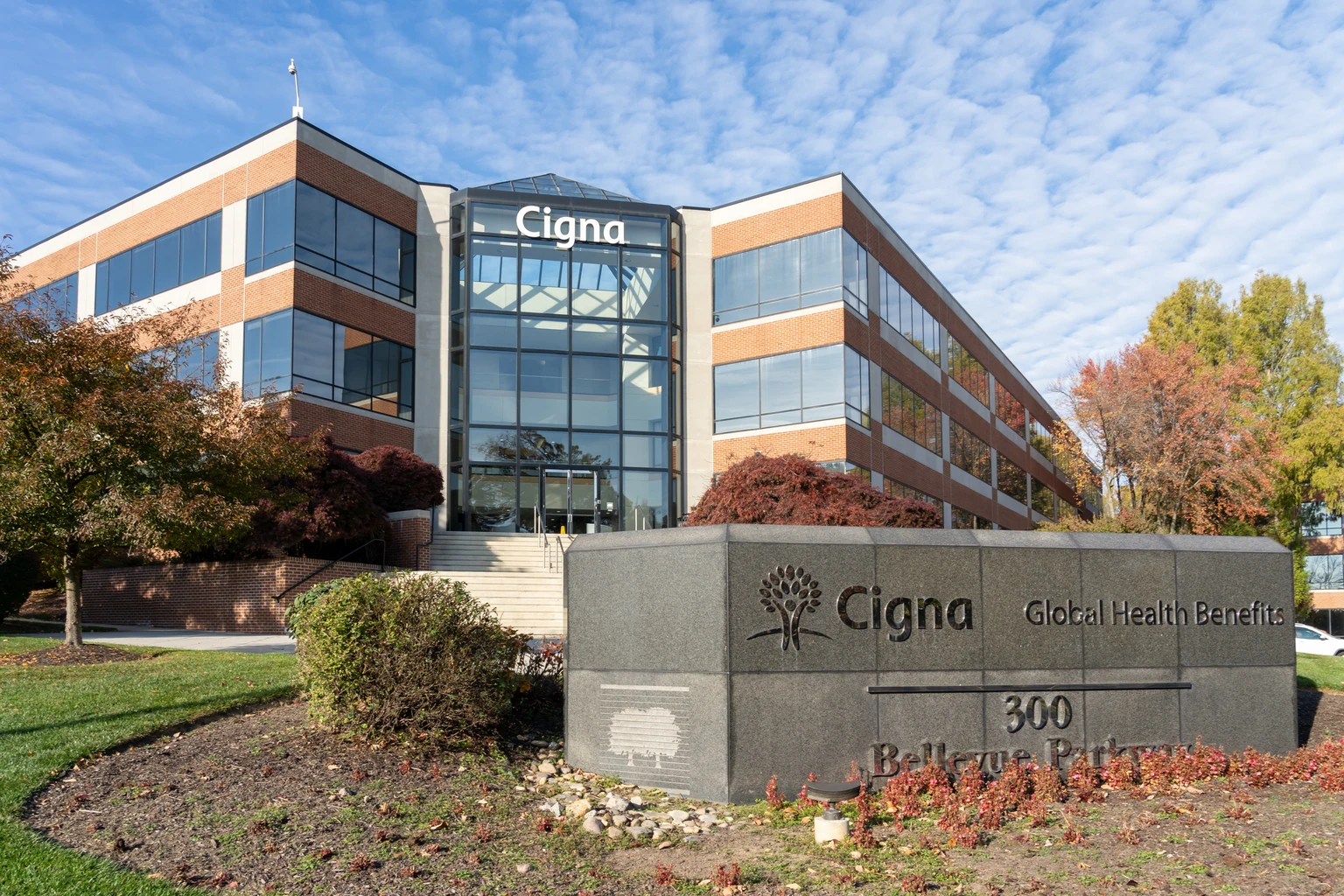
Cigna: Flashing A Buy For Dividend Growth And Deep Value (NYSE:CI)

Published

on

Cigna: Flashing A Buy For Dividend Growth And Deep Value (NYSE:CI)

This article was written by

Scott Kaufman, aka Treading Softly, learned about investing firsthand from over a decade of financial sector experience. He is the lead analyst for Dividend Kings providing actionable insight into high quality dividend growing and undervalued opportunities. His focus is to see a bountiful harvest of cash dividends and strong capital gains, providing a robust total return.

Analyst’s Disclosure: I/we have a beneficial long position in the shares of CI either through stock ownership, options, or other derivatives. I wrote this article myself, and it expresses my own opinions. I am not receiving compensation for it (other than from Seeking Alpha). I have no business relationship with any company whose stock is mentioned in this article.

Kody’s Dividends, Justin Law, and Rachel Kaufman are part of the Dividend Kings team.

Advertisement

Seeking Alpha’s Disclosure: Past performance is no guarantee of future results. No recommendation or advice is being given as to whether any investment is suitable for a particular investor. Any views or opinions expressed above may not reflect those of Seeking Alpha as a whole. Seeking Alpha is not a licensed securities dealer, broker or US investment adviser or investment bank. Our analysts are third party authors that include both professional investors and individual investors who may not be licensed or certified by any institute or regulatory body.

Continue Reading

Business

Israel’s natural gas flows to Egypt return to pre-war levels

Published

on


Israel’s natural gas flows to Egypt return to pre-war levels

Continue Reading

Business

Larry Gies’ Madison Air targets $13.2 billion valuation in US IPO

Published

on

Larry Gies’ Madison Air targets $13.2 billion valuation in US IPO


Larry Gies’ Madison Air targets $13.2 billion valuation in US IPO

Continue Reading

Business

Causes, Signs, and Effective Treatment Options

Published

on

Causes, Signs, and Effective Treatment Options

If you are a frequent traveller or live in a shared accommodation, bed bugs are likely to be a problem that you will face. The first step to conquering it, is knowing what it is.

Bed bugs are small, parasitic insects that feed on the blood of sleeping people and animals. The good thing is that if you know what to look for and what to do, you can tackle a bed bug problem.

What Are Bed Bugs and Why Do They Spread?

Bed bugs are small, flat bugs that bite humans, likely when they are asleep. Bed bugs are mostly found on or near where people sleep, such as on mattresses, inside bed frames, near sofas, or behind wall covering. Bed bugs are very good at hiding, and that makes them very difficult to detect at first.

Bed bugs can spread quickly because they can travel undetected. They can attach themselves to luggage, clothes, and used furniture. This allows them to be transported to people’s homes without detection. This problem is much more likely to happen in crowded cities and communal living environments.

Common Signs of a Bed Bug Infestation

Identifying bed bugs as early as possible can stop a potential infestation. Some early warning signs can include:

Advertisement
  • Small red bites on the skin, often appearing in lines
  • Tiny dark spots on bedding or mattresses
  • Shed skins or eggs in hidden areas
  • A slight musty smell in the room

If you experience these signs, you must take action as soon as possible to stop the possible spread of bed bugs.

Why DIY Methods Often Fall Short

Many people try things like cleaning, sprays, and other home remedies to get rid of bed bug infestations. Even though some of these things may kill some of the bugs, it won’t get rid of the infestation as a whole. Bed bugs are excellent at hiding in spaces that are hard for people to see.

For example, bed bugs might hide in the small gaps of the bed frame, and even in the walls of your home. DIY methods for bed bug treatments often fail to provide long-lasting solutions, as even missing a few bug eggs can cause infestation to come back.

Professional Bed Bug Control and Heat Treatment Explained

In large cities such as London, due to communal living, widespread travel, and compact environments, the incidence of bed bug infestations is alarmingly high. Simple DIY methods are virtually useless, as infestations can quickly spread to surrounding apartments, hotels, and other public venues.

This leads many people to begin seeking out structured solutions. During this stage, they often search for services such as bedbugs control in London, which focus on comprehensive inspections and treatments of all the concealed areas in order to ensure the problem does not resurface.

Advertisement

One of the most successful treatments available to control bedbugs control is known as a heat treatment. This method raises the temperature of the entire room to a degree that exterminates all bedbugs and bedbug eggs. It works even in furniture, mattresses, and walls where bed bugs may be hiding.

When it comes to dealing with stubborn bed bug infestations, many consider bed bug heat treatment to be one of the most reliable, chemical-free, and fast options.

Simple Steps to Prevent Bed Bugs

The best way to avoid dealing with the stress of a bed bug infestation is to avoid getting infested in the first place. Some steps you can take to avoid bedbugs include the following:

  • Checking beds and furniture when traveling
  • Washing clothes after returning from trips
  • Inspecting used furniture carefully
  • Keeping your home clean and reducing clutter
  • Using protective mattress covers

Each one of these steps keeps you one step further away from bringing hidden bed bugs into your home.

Final Thoughts

Bedbugs are a serious issue, but with the right knowledge and strategies, they can be managed. Knowing where and how bedbugs are spreading, recognizing the problem early, and knowing what the best treatments are can help keep them under control.

Advertisement

Cleaning the area may help to avoid the issue in the early stages, but if the infestation is serious, then you may need to look to other options. The more you know, the better you can manage the issue and the more you will be able to protect your home.

Advertisement
Continue Reading

Business

The YieldMax Trap: Why "Nosebleed" Yields Often Lead To Losses

Published

on

AppLovin: Alphabet's Project Genie Threat Is An Irrational Excuse

The YieldMax Trap: Why "Nosebleed" Yields Often Lead To Losses

Continue Reading

Business

Goldman Sachs private credit fund defies redemption surge across industry

Published

on

Goldman Sachs private credit fund defies redemption surge across industry


Goldman Sachs private credit fund defies redemption surge across industry

Continue Reading

Business

Wells Fargo upgrades Olin stock rating on supply constraints

Published

on


Wells Fargo upgrades Olin stock rating on supply constraints

Continue Reading

Business

Top 10 Companies Leading Innovation in 2026

Published

on

Germany's AI Powerhouses: Top 10 Companies Leading Innovation in 2026

BERLIN — Germany’s artificial intelligence sector has surged into 2026 as one of Europe’s most dynamic tech ecosystems, with nearly 1,000 AI startups raising billions in funding and delivering breakthroughs in language models, defense systems, generative imagery and enterprise automation. From established players like DeepL to high-valuation newcomers such as Black Forest Labs, these companies are positioning the country as a sovereign AI leader amid global competition from U.S. and Chinese giants.

Germany's AI Powerhouses: Top 10 Companies Leading Innovation in 2026
Germany’s AI Powerhouses: Top 10 Companies Leading Innovation in 2026

Analysts credit Germany’s strengths in engineering, data privacy regulations and industrial expertise for the momentum. The appliedAI Institute documented 935 active AI startups in its 2025 landscape report, with funding accelerating in 2025-2026 across defense, healthcare, manufacturing and creative tools. Berlin, Munich, Cologne and Heidelberg remain key hubs, drawing international investors while emphasizing trustworthy, explainable AI compliant with EU standards.

Here are 10 of the standout AI companies shaping Germany’s landscape in 2026, ranked by a synthesis of funding, valuation, impact and industry buzz as of early April:

  1. DeepL (Cologne) — Often called Germany’s AI flagship, DeepL has evolved from a superior neural machine translation service into a full language AI platform. Its tools outperform competitors in contextual accuracy for European languages, serving over 200,000 enterprise customers including half the Fortune 500. With more than $400 million raised and a valuation exceeding €1.7 billion, DeepL expanded into writing assistance, speech translation and APIs while maintaining strict GDPR compliance. Founder Jaroslaw Kutylowski’s focus on quality has made it a daily tool for millions.
  2. Helsing (Munich) — This defense-tech innovator builds AI systems for national security, processing data locally on military platforms without cloud dependency. Helsing has raised over €1.4 billion, achieving unicorn-plus status with a valuation around €3-4 billion in recent rounds backed by General Catalyst, Accel and Saab. Its technology supports democratic governments in autonomous systems and intelligence analysis, addressing Europe’s geopolitical needs. Critics note ethical debates around military AI, but the company stresses responsible deployment.
  3. Black Forest Labs (Freiburg) — Founded in 2024 by former Stability AI researchers, this generative AI lab quickly became one of Europe’s most valuable startups. Its FLUX model family excels in text-to-image generation with superior realism, anatomy accuracy and creative control. A $300 million Series B in late 2025 at a $3.25 billion valuation attracted Nvidia, a16z, Salesforce Ventures and others. The company targets creators, developers and enterprises, positioning visual intelligence as a core 2026 growth area.
  4. Aleph Alpha (Heidelberg) — Dubbed the “German OpenAI,” Aleph Alpha develops sovereign large language models with strong emphasis on explainability, privacy and regulatory compliance. Its PhariaAI platform serves enterprises and public sectors needing transparent AI decisions. Backed by significant European funding, the company focuses on multilingual capabilities and secure deployment, appealing to industries wary of foreign models. It continues expanding in 2026 amid EU AI Act implementation.
  5. n8n (Berlin) — This open-source workflow automation platform integrates AI, low-code tools and custom code to help businesses orchestrate processes without vendor lock-in. Deutsche Telekom’s T-Capital and other investors have fueled growth. n8n powers AI-driven automations across marketing, operations and IT, gaining traction as companies seek flexible alternatives to proprietary tools. Its 2026 roadmap includes deeper generative AI agent capabilities.
  6. Cognigy (Düsseldorf/Berlin area) — A leader in conversational AI, Cognigy provides enterprise-grade voice and chat agents that handle complex customer interactions. Its platform powers contact centers and internal tools for global brands. With consistent funding and deployments, Cognigy stands out for scalability and integration with existing systems, helping German Mittelstand companies adopt AI without massive overhauls.
  7. deepset (Berlin) — Specializing in enterprise search and natural language processing, deepset builds open-source and commercial tools for knowledge management. Its Haystack framework powers AI search infrastructure used by large organizations. Acquired elements and partnerships have strengthened its position. In 2026, deepset focuses on multimodal and agentic AI to enhance internal company intelligence.
  8. Parloa (Berlin) — This conversational AI platform targets customer service automation with intelligent agents capable of handling nuanced dialogues. It has secured strong backing and enterprise wins, particularly in retail, finance and telecom. Parloa’s emphasis on German-language proficiency and seamless handoff to human agents makes it a practical choice for European firms scaling support operations.
  9. Quantum Systems (Bavaria) — While primarily a drone manufacturer, its AI-powered autonomous systems for defense, security and surveying have elevated it in the broader AI ecosystem. Achieving unicorn status in 2025 with €95 million+ rounds, the company integrates advanced computer vision and edge AI for extended-endurance eVTOL drones. It exemplifies Germany’s dual-use tech strengths.
  10. Ada Health (Berlin) — Using AI for symptom assessment and personalized health guidance, Ada Health has built one of the world’s largest medical knowledge bases. Its app and enterprise tools assist millions while partnering with health systems. Ongoing refinements in 2026 incorporate multimodal data for more accurate triage, contributing to preventive care innovations.

Beyond these, Germany’s AI scene includes strong performers like OroraTech (satellite-based wildfire detection), Neura Robotics (cognitive robotics), and service-oriented firms such as AI Superior and Alexander Thamm GmbH that help traditional industries adopt AI. Large corporates like SAP and Siemens integrate AI deeply into enterprise software and industrial applications, amplifying startup impact through partnerships and acquisitions.

Challenges persist. Talent shortages, energy demands for training models and competition for compute resources remain hurdles. The EU AI Act, effective in phases through 2026, requires high-risk systems to meet strict transparency and risk-assessment standards — an area where German firms claim an edge with “trustworthy AI” approaches. Government initiatives and funds like the German AI Strategy continue supporting research and commercialization.

Investors have taken notice. European and U.S. venture capital flowed into German AI in 2025, with defense and generative sectors attracting outsized rounds. Berlin alone hosts hundreds of AI startups with aggregate funding in the billions. Industry observers predict further consolidation as mature players acquire niche innovators.

Advertisement

Public-private collaboration drives progress. Universities in Munich, Karlsruhe and Aachen produce top talent, while accelerators and institutes like appliedAI foster ecosystems. Companies emphasize sustainability, with some exploring energy-efficient models to address environmental concerns around large-scale AI.

As 2026 unfolds, Germany’s top AI firms are not just competing globally but defining European approaches to sovereign technology. DeepL democratizes communication, Helsing bolsters security, Black Forest Labs advances creativity, and Aleph Alpha champions explainable systems. Together, they illustrate how engineering rigor and regulatory foresight can yield competitive advantages.

Experts forecast continued growth, with AI contributing significantly to Germany’s digital economy. For businesses and policymakers, engaging these companies offers pathways to productivity gains while navigating ethical and legal complexities.

The coming months will test resilience amid economic pressures and geopolitical shifts, but early 2026 signals robust momentum. Germany’s AI sector, once seen as playing catch-up, now stands as a vital pillar of European technological sovereignty.

Advertisement
Continue Reading

Trending

Copyright © 2025