Earlier last month, I noticed my son’s baby monitor, the Nanit Pro, started showing a sleep score every morning. This number tells you how well your child slept the night before on a scale from zero to 100. Sleep scores track how long it takes to fall asleep, sleep cycles, heart rate throughout the night and any disruptions that may have happened. This is also one of our expert-recommended baby monitors, so it seemed appropriate that it would provide this information. As many parents know, infant and toddler sleep habits can be unpredictable.
I previously tested the Oura Ring, one of CNET’s favorite smart rings, which tracks your health and sleep data. It also provides a sleep score based on data collected by its sensors on your finger (movement, temperature, heart rate and more). I started using the Oura Ring to hold myself more accountable for going to sleep on time.
Seeing that my son has his own sleep score made me think, “I bet he has a better sleep score than I do.” I decided to conduct an experiment to see if I could prove my point by comparing our sleep scores.
Advertisement
To preface this, my 2.5-year-old has been going through a rough patch of sleep, which I’m blaming on a sleep regression (a temporary phase when babies and toddlers struggle with sleeping). Despite the disrupted sleep, he still seems better rested than I am on most days.
I started consistently wearing my Oura Ring to put my theory to the test. For the sake of this experiment, I tracked our data over a couple of weeks to prove (or disprove) my point.
How the Nanit baby monitor tracks sleep
As previously mentioned, I use the Nanit Pro Baby Monitor to keep an eye on my son while he sleeps. According to Nanit, it first introduced the sleep score in December 2025, and this is the first AI-driven, science-backed sleep score designed to grow with your child and automatically adjust as they age. Nanit collects the sleep score using the same advanced computer vision technology sensors it has used for years to analyze sleep.
To come up with a sleep score, Nanit looks at four aspects of sleep: sleep duration (how long your child slept), sleep timing (your child’s bedtime and wake-up time), sleep continuity (how smoothly your child sleeps) and parent visits (how often a guardian tends to the child).
Advertisement
How our sleep scores compared
After a week of reviewing his data, my son’s sleep scores were higher than mine overall, as I predicted. He was hitting scores over 80, with the lowest being a 74. His highest was a 95, which I vividly remember was one of the times he slept through the night without getting up once. I also slept peacefully because I wasn’t being awoken by cries at 3 a.m.
For context, below is the week’s worth of data I collected from the Nanit Pro and the Oura Ring.
Friday, Feb. 20
The first day shows that my son had a better sleep score than me.
Advertisement
CNET/Giselle Castro-Sloboda
Our sleep scores were close, but I didn’t feel well-rested, even though Oura said I got a good amount of sleep. It’s not common for my son to sleep under 10 hours, so that’s how you know he didn’t have the most restful night. Plus, he woke up before 6 a.m. on this day.
Saturday, Feb. 21
Somehow, I scored a higher sleep score than my toddler on this day, but by a small margin.
CNET/Giselle Castro-Sloboda
I found it ironic that I scored slightly higher than my son, even though he slept longer than I did and we both had a poor night’s sleep. He also got up earlier than normal. A normal wake time for him is between 6:30 a.m. and 7 a.m.
Advertisement
Sunday, Feb. 22
My son had a higher sleep score, and mine was efficient on this day.
CNET/ Giselle Castro-Sloboda
As you can see, he had a higher sleep score than I did and slept over 11 hours. He also woke up at 7 a.m., which I consider sleeping in for both of us. My sleep score was considered efficient, even though I remember feeling tired this day.
Monday, Feb. 23
Advertisement
My son had a higher sleep score than me on this day and even slept about 10 hours.
CNET/Giselle Castro-Sloboda
Monday night was another night when my son had a higher sleep score than me. He slept about 10 hours, but this was one of those days when he woke up slightly earlier than his usual wake time.
Tuesday, Feb. 24
This was one of my worst sleep scores during the experiment. However, my son fared pretty well.
Advertisement
CNET/Giselle Castro-Sloboda
It’s evident I had a terrible night of sleep on Tuesday. My son had a significantly higher sleep score than me, which doesn’t surprise me. I slept in his bed and couldn’t get comfortable, which affected my ability to get quality sleep.
Wednesday, Feb. 25
This was one of the couple of nights where we both had a restful night of sleep.
CNET/Giselle Castro-Sloboda
This was the one day out of the week when we both slept well, and I felt the most refreshed. You can see by our sleep scores that his is nearly perfect and still higher than mine. I could tell by his mood that day that he was well rested, and he had fewer tantrums.
Advertisement
Thursday, Feb. 26
The Nanit didn’t collect a sleep score for my son this night. I only have the Oura sleep score, which showed I had an OK night of sleep.
CNET/Giselle Castro-Sloboda
I’m not sure why the Nanit didn’t collect enough data for a sleep score this night. I’m assuming it must’ve disconnected from the Wi-Fi at some point. This was one of my issues with the monitor when I first reviewed it. Since it only functions on Wi-Fi, the monitor can’t be used without it.
The Oura Ring noticed I had another so-so night of sleep and pointed out how sleep trends can fluctuate. I’ve included one extra day to this experiment to even things out.
Advertisement
Friday, Feb. 27
My son had a decent night of sleep, but Oura pointed out that I’ve been having a bad period of sleep.
CNET/ Giselle Castro-Sloboda
My son had better sleep than I did again on Friday, sleeping for about 10 hours. He slept well overall through the night, except for a couple of visits, but you can tell it affected my sleep. Even Oura notes that my sleep hasn’t been the best and says that this can happen some weeks.
Saturday, Feb. 28
Advertisement
This day had my worst sleep score during the experiment, and I felt it.
CNET/Giselle Castro-Sloboda
I clearly was depleted on Saturday morning. This was my lowest sleep score yet. My son had a really bad night of sleep, continuously getting up because of nightmares. Coincidentally, this was the night before I signed up for a bootcamp class in the morning. It’s a miracle I made it to the class, let alone completed it.
Sunday, March 1
My sleep wasn’t the worst this night because my son had a more restful slumber.
Advertisement
CNET/Giselle Castro-Sloboda
This night wasn’t so bad for either of us, but my son’s sleep score was still higher than mine. He slept the majority of the night, and I think that can be attributed to getting energy out by running around with other kids during a family party the evening prior.
Monday, March 2
This was a better day of sleep for me, but not as good for my son.
Giselle Castro-Sloboda
Sunday was a successful night, and I even got an extra hour of sleep. My rating was higher than my son’s, surprisingly, and I did feel more rested.
Advertisement
Toddler sleep explained
Brittany Sheehan, a certified pediatric sleep therapist, tells CNET that sleep needs for toddlers vary by age. “Total sleep needs do diverge as kids get older, but for a 2-year-old, for example, we ideally want at least 11 hours overnight in bed, if not 12, along with a nap that is at least two hours, up to three hours,” said Sheehan. If it’s a true sleep regression, Sheehan notes that it can last anywhere from a day or two to up to six weeks in the most extreme cases.
Under normal circumstances, my son is a good sleeper (with the occasional wake-up), so when he started having frequent night wakings, I suspected it was a sleep regression. Dr. Alisa Niksch, senior director of medical affairs at Owlet, a baby monitor company, points out that disordered sleep during early childhood doesn’t occur for the same developmental reasons as those earlier in infancy.
“What parents are usually seeing is a disruption that stems from developmental and environmental factors,” Niksch said. She elaborates that for toddlers, the most common driver is developmental, driven by a growing imagination and increased cognitive function.
“Night wakings where a child cries but resettles quickly is a sign of this growth, as the developing brain is actively processing new experiences and emotions during sleep, which can surface as nightmares,” she said. Nightmares are common during this age, and although they’re normal, they also shouldn’t be ignored.
Advertisement
Natalie Barnett, who holds a doctoral degree and is vice president of clinical research at Nanit, said, “If [nightmares are] occurring once in a while and your child is calmed by a quick hug and then [goes] back to sleep, you probably don’t need to do anything about it necessarily.” However, if the nightmares are occurring repeatedly or are interfering with daytime function, she recommends speaking with your child’s pediatrician.
How to improve your toddler’s sleep
Sleep is important for toddlers and can affect everything from their mood to eating behaviors. Niksch points out that overtired toddlers often become hyperactive and emotionally dysregulated. Additionally, poor sleep affects their immune function, growth hormone release and early memory and learning. This also applies to naps, which they outgrow over time but shouldn’t be eliminated right away.
Generally, children under three should still be napping, but as they reach ages three to four, total sleep needs decrease slightly to 10 to 13 hours, and naps become shorter and less frequent before disappearing altogether. If you’re at this stage, Barnett recommends cutting the nap back first before removing it altogether.
“If your toddler is resisting bedtime, it’s often a sign that they’re not tired enough, so you may want to think about cutting back or cutting out the nap,” Barnett said. “In those first couple of weeks after dropping a nap, it can be hard for your toddler to stay awake in the late afternoon.” She advises against placing them in the stroller or car, where they’re more likely to fall asleep, in the late afternoon, since even a short nap can mess with bedtime.
Advertisement
Sheehan says that parents often drop a toddler’s nap too early in an attempt to fix sleep problems, but this can have a negative, compounding effect. “Often nap struggles are behavioral, regression-related or simply the timing is off,” she said.
Another mistake Sheehan sees parents make with 2-to-3-year-olds is putting their child down for a nap too early. This impacts their sleep because they don’t have enough sleep pressure built up to take a good nap. If you’re seeing constant bedtime and nap-time resistance or early-morning wake-ups, this could mean your toddler’s sleep timing needs adjustment.
Even with sleep disruptions, you want to make sure that their bedroom is set up for sleep success. “To support better sleep, the fundamentals remain the same: a consistent sleep and wake schedule, a predictable bedtime routine and a dark and quiet sleep environment,” Niksch said.
What parents can do to feel less sleep-deprived
Parents often take the brunt of these sleep disruptions and also struggle to function at full capacity daily. Sheehan advises that parents figure out a process or arrangement with another caregiver that allows them to rest during these phases. “If you can’t make these changes, give yourself some grace and realize it’s OK to choose a nap over a run, or to tag team with a partner who is on duty for night wake-ups,” Sheehan said.
Advertisement
Niksch agrees and recommends that parents apply the same sleep principles for their toddlers to themselves: “Consistency matters most, whether that is committing to a regular sleep and wake schedule or building a simple bedtime routine that signals to the body that rest is coming.” She points out that some parents try to sleep when their toddler does, but for some, it can be challenging if they’re not tired enough.
“If sleep doesn’t come within 15 minutes of lying down, it’s better to get up and do something that calms the mind, like reading, until tiredness sets back in,” Niksch advised.
What I took away from this experiment
Eventually, I’m sure my son’s and my sleep scores will even out again, but for now, it’s important to support him as he transitions to the next stages of toddlerhood. The sleep scores feature of the Nanit baby monitor is helpful for better understanding my son’s sleep habits and is something I wish I had when he was an infant. It also gives me some insight into his mood on some days compared to others, since sleep affects so many aspects of a child’s life.
Even restarting my tracking helped — my sleep score showed me my blind spots, ways to improve my sleep and when to take it easy. As someone who likes staying busy, it’s easy for me to have a hard time resting. The Oura Ring tracking my sleep and stress levels reminds me to take a beat.
Advertisement
While I’ve only been a parent for two years, I’ve learned that children go through many phases. This sleep experiment was a necessary reminder that you can’t bypass the tough times; you just have to get through them as best as you can.
Apple is at a transformational point in its product history. The company is making a record amount of money with a rich product portfolio, fumbled its AI strategy, and just had a leadership change.
Tim Cook is out as the CEO, and engineering veteran John Ternus is taking over the chief role. Interestingly, it seems Apple is also making the biggest shift in its product development history, with no less than ten categories of devices planned for the coming years.
Apple
What’s next from Apple?
It seems Apple planned the leadership change at a crucial point in its product development phase, with the focus being on Ternus delivering some knockout products early in his leadership tenure. According to Bloomberg, the first of these buzzy product reveals is going to be the iPhone Fold (or the iPhone Ultra), the first foldable smartphone by the company.
Apple is years late to the race, but the excitement around the upcoming “pocketable but not pocket-friendly” phone is pretty high. “Ternus is poised for an even bigger flood of products. Including the foldable iPhone, Apple will enter roughly 10 new product categories within the next few years. That means Ternus could quickly eclipse his predecessor by this measure,” says the report.
The launch of ten product categories is pretty ambitious, as Cook’s tenure only witnessed the launch of three new segments, two being mass-market wearables (AirPods and Apple Watch) and one XR hardware in the misfiring Vision Pro.
Advertisement
iPhone Fold CAD-based renderAI Visualization
A truly transformational roadmap
Apple has played it relatively safe with its wearables, but it seems the company is going all-in across the board. Starting with the AirPods, the company is reportedly planning to launch a camera-equipped version, dramatically boosting their health potential as well as understanding of the world around them using multi-modal AI. Think of Visual Intelligence, but instead of pointing your iPhone’s camera, the earbuds in your ears do the job.
It’s an immensely promising idea that will also be pretty hard to execute. Yet, if products like the Meta-Ray Ban AI glasses are anything to go by, Apple can execute it. And it’s not an outlandish idea, either. Experts at the University of Washington recently showcased the VueBuds, packing cameras on off-the-shelf earbuds that are capable of world-understanding and assisting with translation, among other AI-powered tricks. And let’s not forget Apple’s partnership with Google, which essentially puts Gemini at the foundations of Apple’s AI revival plans.
AI-generation concept of Apple smart-glasses with a holographic display.Gemini AI
Aside from the earbuds, the following is the list of other product categories that are reportedly in development at the company, many of which have been delayed due to Apple’s hobbled AI efforts:
While the iPhone Fold is nearing launch, the future of the often-rumored folding iPad is still in question, as it may never actually make it to consumer hands.
What a large folding iPad could look like – Image Credit: AppleInsider
The rumor mill has been infatuated by the idea of the folding iPhone, which is widely believed to be on the way later in 2026. However, Apple has also been working on another foldable device with less chance of becoming a reality. Writing in Sunday’s “Power On” newsletter for Bloomberg, the foldable iPad is a real thing being developed behind closed doors. Described as a tablet with a super-sized 20-inch display, it has been a priority of incoming CEO John Ternus while in his hardware chief role. Rumor Score: 🤔 Possible Continue Reading on AppleInsider | Discuss on our Forums
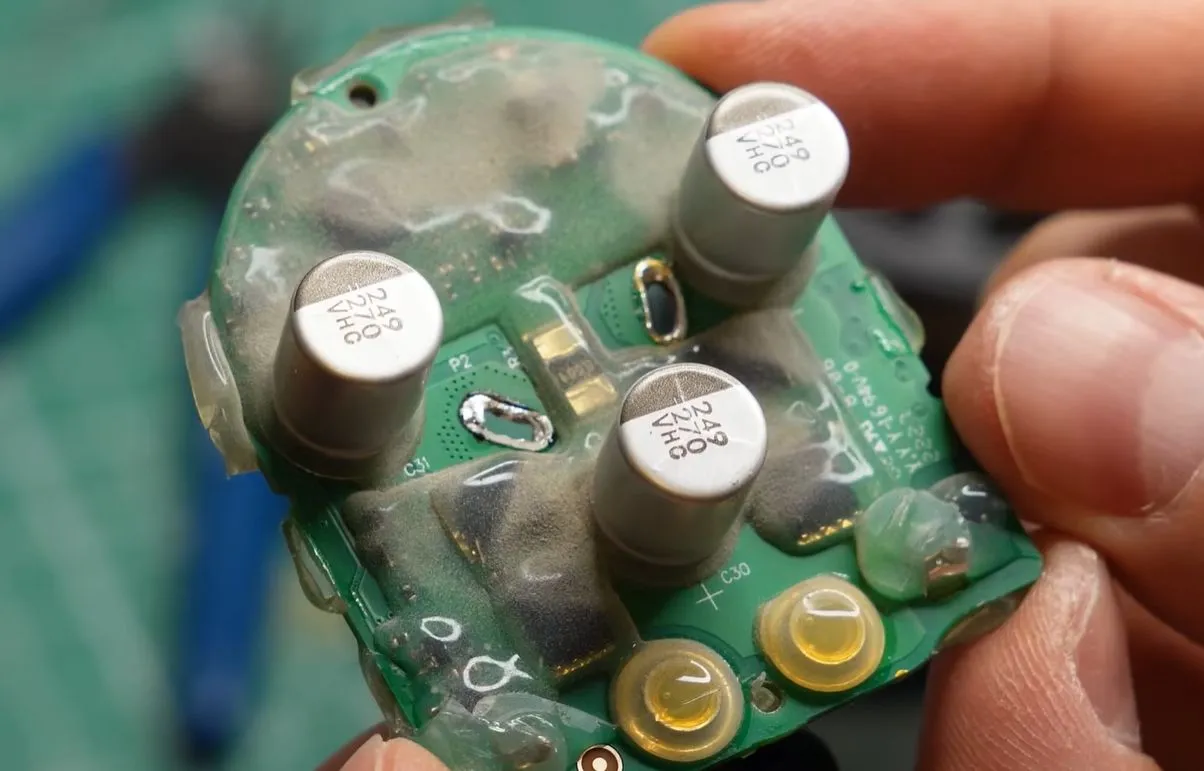
It seems to be becoming a bit of a theme that consumer electronics are dying not due to some critical fault, but due to Cooked Capacitor Syndrome (CCS). Case in point, Dyson handheld vacuums and the capacitors on its driver board. After having his $800 Dyson V15 handheld vacuum die after two and a half years of regular use, [LeftyMaker] found himself elbows-deep in the dusty innards of the vacuum just to replace some capacitors.
After initially trying a new battery and other common troubleshooting steps, he found that lots of people were having the same flaky behavior with their Dyson vacuums, all with the same underlying cause. On the driver board for the DC brushless motor, there are a couple of capacitors that seem to cause issues across models, with the standard response by Dyson being to ‘buy a new body’.
While it’s definitely possible to tear down the vacuum to get to the driver board, you’ll be doing effectively a full disassembly, all to see the capacitors located right next to the hot motor in a very confined space. [LeftyMaker] confirmed a very high ESR on the old capacitors before replacing them with 125℃ rated Rubycon 35PZF270MT810X9 polymer capacitors for $1 a pop.
Advertisement
Unsurprisingly, the vacuum worked fine after that fix, but it shows a trend where CCS has become so commonplace that it’s no wonder that the phrase ‘planned obsolescence’ is being uttered alongside it. For this particular series of Dyson vacuums, the issue is apparently so bad that [Hasan] created a custom driver board that might be superior in multiple ways. Maybe we need an OSHW vacuum cleaner, just to avoid such shenanigans.
Both left and right-wing accounts claimed, without evidence, that the attack was staged.
President Donald Trump, Vice President JD Vance, and dozens of other high-profile administration officials and journalists were attending the dinner at the Hilton hotel in Washington, DC, when a suspect, later identified by media reports as Cole Tomas Allen from California, allegedly ran past security towards the event. He was detained by law enforcement while the president and vice president were evacuated. Police said that they believe Cole acted alone, but did not expand on who his intended target was or what his motive may have been. “We believe the suspect was targeting administration officials,” acting attorney general Todd Blanche told NBC’s Meet the Press on Sunday morning.
On Bluesky, which has a predominantly left-leaning user base, many people simply wrote the word “STAGED” over and over again, echoing the response to the Trump assassination attempt in Butler, Pennsylvania in 2024.
Advertisement
On X, many claimedthe shooting was staged as a way to bolster support for Trump’s plan to build a new ballroom in the White House. The president referenced the ballroom in a press conference after the incident and a Truth Social post on Sunday morning. Many prominent online Trump boosters echoed the need for the ballroom, including far-right podcaster Jack Posobiec, Libs of TikTok creator Chaya Raichik, and Tom Fitton, the right-wing activist who runs Judicial Watch.
Their quick response, conspiracy theorists claimed, was evidence of a coordinated campaign following the shooting. “Is this another staged event,” one X user asked in a post that has been viewed more than 5 million times.
Other social media users who claimed the incident was staged pointed to a Fox News clip that featured the station’s White House correspondent Aishah Hasnie speaking from the Hilton hotel. Hasnie told viewers that prior to the shooting, press secretary Karoline Leavitt’s husband allegedly told her “you need to be very safe,” before the call was cut off.
“Fox News just cut one of their reporters off as they seemed to indicate the shooting was a pre-planned false flag,” one X user wrote in a post that has been viewed more than 2 million times. Hasnie later clarified in an X post that her cell service had cut out in a location with notoriously bad service, adding: “He was telling me to be careful with my own safety because the world is crazy. He was expressing his concern for my safety.”
Advertisement
“I don’t want to be fomenting conspiracies,” wrote Angelo Carusone, the chair and president of Media Matters, on Bluesky about the Fox News interview. “But I mean…this was super weird. Super weird.”
Leavitt herself was also the focus of conspiracy theories after she said “shots will be fired” in an interview ahead of the dinner, referring to the jokes Trump was scheduled to deliver. Following the attack, X users claimed the comment was “strange,” “sus,” or a “curious choice of words,” while sharing memes that suggested the shooting was staged. At least one mainstream outlet appeared to amplify the conspiracy theory as well, describing Leavitt’s comment as “eerie” and “bizarre.”
If you’re a small business selling products to consumers, you’d better have an e-commerce site and operation. But where to begin? You can choose a solution like Shopify or BigCommerce and risk spending top dollar. You can also go the open-source route and use a product like CubeCart.
With CubeCart, you can develop and maintain an entire e-commerce platform and install it on your company server or use a web-based solution like Hostinger. I did this recently when I wanted to set up an online store.
What is CubeCart?
Advertisement
CubeCart is a popular open-source e-commerce shopping cart solution that enables businesses of all dimensions to develop and manage their online commercial platforms. The British company provides a full suite of online store management tools, including product and order management, customer account features, and reporting capabilities. All CubeCart versions are free and don’t require licensing keys.
Article continues below
CubeCart’s primary advantage stems from its ability to adapt to specific business needs. The Smarty engine, together with user-friendly templates, enables users to design and modify their online store appearance with ease. The platform features a responsive design that guarantees both form and functionality across every device, including desktop computers, smartphones, and tablets.
Advertisement
CubeCart allows users to organize their inventory easily, manage products by category, and upload detailed product information and digital download content. The platform’s central order management interface simplifies order processing, order history viewing, and customer information management.
The platform enables global e-commerce because it supports both multi-currency and multi-language functionalities. It also supports secure transactions through various payment gateways, SSL encryption, and payment transaction log capabilities.
The platform delivers improved online visibility through SEO optimization, which produces search engine-friendly URLs alongside manual metadata controls. The CubeCart marketplace provides users with numerous plugins and integrations that help expand platform functionality through shipping methods, social plugins, abandoned cart recovery, and marketing tools.
Sign up to the TechRadar Pro newsletter to get all the top news, opinion, features and guidance your business needs to succeed!
Advertisement
The intuitive admin interface of the system makes managing an online store easy for both beginners and experts. The platform features an analytics dashboard that tracks sales performance and customer activity. You can run CubeCart as a self-hosted system or choose official optimized hosting solutions.
What is Hostinger?
Hostinger provides compelling benefits tailored for small businesses, making it a popular choice for establishing an online presence. One of the most significant advantages is its affordability. Hostinger offers competitively priced plans with essential features such as a free domain name, SSL certificates, and professional email accounts. This combination can significantly reduce initial setup costs, making it an ideal option for budget-conscious entrepreneurs looking to launch their websites without breaking the bank.
In addition to cost-effectiveness, Hostinger prioritizes performance. With features like LiteSpeed web servers and SSD storage, users benefit from fast loading times, crucial for user experience and search engine optimization. A website that loads quickly is more likely to retain visitors, enhance engagement, and improve search engine rankings. This focus on performance ensures that small businesses can create a seamless online experience for their customers, which can be a deciding factor in today’s competitive digital landscape.
Advertisement
Hostinger also makes website creation and management accessible, even for those with limited technical expertise. Their user-friendly hPanel control panel and intuitive drag-and-drop website builder allow anyone to create a professional-looking website without extensive coding knowledge. This ease of use empowers small business owners to focus on their core operations rather than getting bogged down in technical details, enabling them to bring their visions to life quickly and efficiently.
Customer support is another vital aspect in which Hostinger excels. With reliable 24/7 customer support via live chat, small business owners can promptly address technical issues or questions, ensuring minimal downtime. This level of support is crucial for businesses that rely on their online presence to attract and retain customers, as delays can lead to lost sales and damaged reputations.
Security is a top priority for Hostinger. The platform includes robust security measures such as daily backups, malware scanners, and DDoS protection to safeguard valuable business data and customer information. By prioritizing security, Hostinger helps small business owners gain peace of mind, knowing that their websites and customer data are well-protected against potential threats.
Advertisement
Finally, one of Hostinger’s standout features is its scalability. As small businesses grow, so do their online needs. Hostinger offers the flexibility to easily upgrade hosting plans as traffic and resource demands increase. This scalability ensures that businesses do not have to worry about outgrowing their hosting solutions, allowing them to confidently focus on growth and expansion.
Installing CubeCart on Hostinger
(Image credit: Future)
You can install CubeCart manually on a company server or use an auto-installer tool if you are a Hostinger customer.
To get started using the Auto Installer:
Advertisement
Log in to your Hostinger account on the official Hostinger website.
From the left-hand menu, click on Websites.
Next to your account name, click Dashboard.
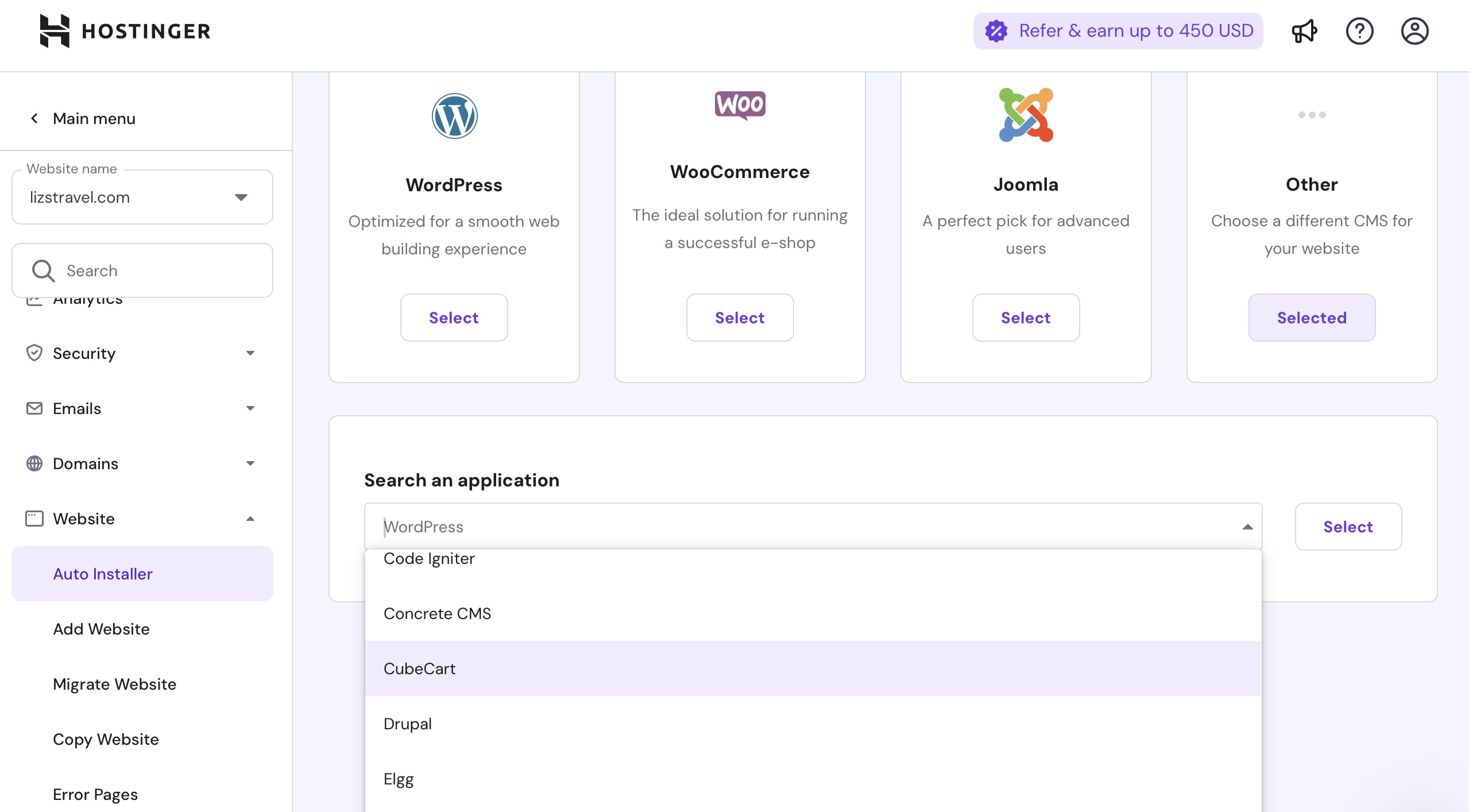
In the left-hand menu, go to Websites again and select Auto Installer.
Under the “Other” section, click Select.
From the dropdown menu, choose CubeCart.
Click Select.
A pop-up window will appear to configure your CubeCart installation. To keep it separate from your main site, it’s recommended that you install CubeCart in a subdirectory of your website (e.g., `yourdomain.com/store`).
During these next steps, you must assign a Website Title, Administrator Email, Administrator Username, and Administrator Password at the top of the pop-up window.
Next, click Advanced, then:
In the Enter Subdirectory box, type the name you want for your subdirectory (e.g., `ls`, `store`, `cubecart`).
Ensure “Create new database” is selected, and then assign a strong password for this new database.
Advertisement
Final steps
(Image credit: Future)
It’s time to set up CubeCart using the new site’s administrator control panel. This page is tricky to find because of how it’s set up. Many installations include an “admin.php” file for this, but CubeCart does not. For security purposes, it changes the name of this file to something like “admin_xkdlsdf.php.” That’s the location where you’ll find the control panel.
You can go into the FTP section of Hostinger to find the example name of this file.
In my example, I installed CubeCart as a subdirectory for my website called “store.” Therefore, the control panel is located at http://mywebsitename.com/store/admin.xkdlsdf.php.
You can log in from this page using the credentials you created above. On the next page, you can set-up CubeCart to your liking.
Some teachers say the efforts are helping, at least a little… To engage students, teachers say they often feel the need to deliver teaching not only in shorter bursts, but also in more entertaining ways. “The new word is ‘edutainment,’” said Curtis Finch, superintendent of Deer Valley Unified School District in Arizona. “How can you make your lesson applicable, interactive? Teachers are going to have to be more engaging for students….”
In a kindergarten classroom at McKinley STEAM [a K-8 public school], students start the day with a meditation. The classroom of two dozen children is perhaps its quietest during this short activity every morning. Imagine you’re in the Arctic, a voice from a meditation video tells them, with snowflakes melting on your skin. Silently, the children lay down on the carpet and close their eyes for a moment. After the meditation, the students gather in a circle and do a few deep breathing exercises before taking turns proclaiming what they are capable of each day. “I can be a good student,” one little boy said before the child next to him replied: “I can listen to the teacher.” The goal is that these mantras will stay with the children hours later, when they have to sit through the more tedious lessons of the day. An instructional coach at McKinley STEAM says the strategies are working students aren’t reaching for their phones during class and sometimes actually get drawn into lessons.
The article also explains why some teachers find this necessary:
Advertisement
In recent years, educators say, it has grown more challenging to get students to pay attention. Eighty-eight percent of respondents in an international survey from 2025 of more than 3,000 teachers believed their students’ attention spans were getting shorter. In a study published last year about kindergarten through second-grade classrooms in the United States, 75 percent of teachers said attention spans had dropped since the coronavirus pandemic, when the use of laptops and other technology for schooling spread rapidly. A growing body of research says that excessive screen time and short-form content such as TikTok videos are part of the problem. At least 36 states, including Ohio, have laws requiring schools to have some form of a cellphone ban.
There is debate over whether screen time reduces people’s ability to focus or their desire to — many developmental experts lean toward the latter, suggesting that it is possible to help students regain longer attention spans.
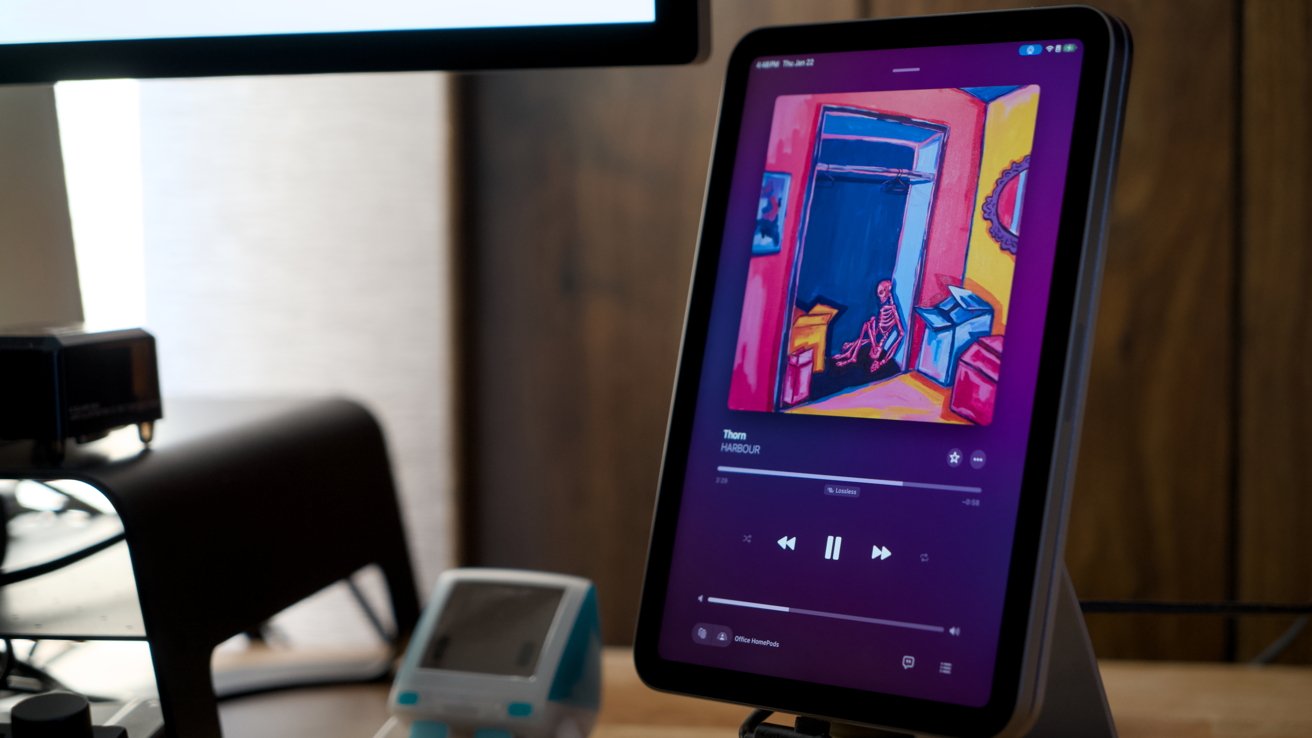
The long-awaited Apple Home Hub and more will finally arrive thanks to the revamped Apple Foundation Models trained by Google Gemini. The release window is still in question, though.
Apple’s Home Hub tablet will attach to various products via magnets
There have been rumors about various AI-centered products for years. However, their release has been pushed back with each Apple Intelligence upgrade delay. According to thePower On newsletter, Apple is focused on releasing three AI-powered smart home products. This is repeat information shared on Thursday with details that have been repeated ad nauseam since the products have been ready for production for some time. Rumor Score: 🤯 Likely Continue Reading on AppleInsider | Discuss on our Forums
The Dodge Stratus R/T was a sporty coupe that was discontinued in 2006 — over 20 years ago — due to its lack of sales. Mid-size vehicles were losing out to full-size sedans around that time (the 2007 sixth-generation Dodge Charger offered more power and more muscle), causing automakers to pivot. Since then, you probably haven’t heard much about the Stratus R/T. There doesn’t seem to be a lot of hype around it, with good-condition examples selling at auction for just a few thousand dollars. While there may not be a ton of people jumping to buy a used Stratus R/T in 2026, that doesn’t meant there aren’t fans of the car with fond memories of driving it in the 2000s.
While the Dodge Stratus R/T may have not stood out enough back in the day, the ones who did notice it were drawn in by its affordability. It was a way to get a fun, sporty manual car for less money. The 2002 Stratus R/T was $17,755 when new (about $32,600 in 2026 dollars), offering drivers a 200 horsepower car that fans felt was just enough to make it feel pretty zippy. While that may not have offered the best performance out there, it was enough to have fun. And it had the looks to match — it came with a sporty-looking rear wing. One owner on Cars.com reported: “I think its styling is so unique. Kind of looks like a Maserati from the front. The women at work think it’s an exotic sports car.”
Advertisement
Is the Dodge Stratus R/T as unreliable as they say?
One of the reasons the Dodge Stratus R/T lost sales over time was due to reports that it was unreliable. The 2.7L V6 engine gained notoriety for early failure due to a common oil sludge buildup issue. Drivers across social media have continued to lament about the downfall of the otherwise handsome and fun Stratus R/T due to the engine — there is even a website dedicated to the notorious oil sludge horrors of Chrysler’s 2.7L V6 engine.
However, long-time Dodge Stratus R/T owners would beg to differ. You’ll find those that have driven their Stratus R/T on the daily for nearly 20 years without any issue. Some examples are even nearing 200,000 miles on the odometer and have owners reporting that it’s still smooth sailing. Many Stratus R/T drivers have noted that the little coupe can handle severe weather, gets decent mileage, and offers a pretty exciting driving experience if you opt for the manual transmission.
Advertisement
While the Stratus R/T may not be the most iconic sporty 2000s car out there, those that drive it will stick up for it with passion, with many calling it the best car they’ve ever owned after decades of memories. Even SlashGear has called it an underrated Dodge model, often forgotten in conversations where it belongs.
XChat, the standalone app for accessing X’s messaging feature, is available to download now for iOS. X first suggested it would be stripping direct messaging from X in 2025, but at least for now, XChat is available in the original X app, the web and this new app.
Based on its launch video, the new XChat app offers many of the elements of modern messaging X had already introduced to its chats feature, like the ability to delete and edit messages, block screenshots and send disappearing messages. The new XChat app also supports video and audio calls, and X claims that all messages sent with XChat are end-to-end encrypted.
XChat will also be expected to be the home of any groups that formed around X’s Communities feature. The social platform recently announced that it was retiring Communities at the end of May, and suggested that XChat’s support for larger group chats could be a worthwhile alternative. XChat’s group chats can currently have 350 participants, but X plans to expand that number in the future.
Elon Musk’s original pitch after he rebranded Twitter as X, was to turn the platform into an “everything app,” where things like an algorithmic feed, messaging, job boards and even payments could exist side-by-side. A standalone messaging app seems like the exact opposite of that, but it might also reflect where X finds itself in 2026. The company is now a subsidiary of xAI, and xAI itself is part of SpaceX. Musk’s push into AI appears to be the going concern, and cloning something like WeChat might just be less important.
Utility technology company Itron, Inc. has disclosed that an unauthorized third party accessed some of its internal systems during a cyberattack.
The company states that it activated its cybersecurity response plan when detecting the activity last month, notified law enforcement authorities, and engaged external advisors to support the investigation and incident containment.
“On April 13, 2026, Itron, Inc. was notified that an unauthorized third party had gained access to certain of its systems,” the company says says in an 8-K filing with the U.S. Securities and Exchange Commission (SEC).
“The company activated its cybersecurity response plan and launched an investigation with the support of external advisors to assess, mitigate, remediate, and contain the unauthorized activity.”
The unauthorized activity has now been blocked, and the company stated that it has observed no follow-up activity.
Advertisement
Itron is a Washington-based public company that provides utility technology products and services for energy and water resources management.
The company is listed on NASDAQ, employs roughly 5,600 people, and in 2025 reported revenue of $2.4 billion. It serves 7,700 customers in 100 countries and manages 112 million endpoints.
Itron’s business is interwoven with critical infrastructure such as electricity grids, water distribution, and gas networks.
However, the company noted that in this case, business operations recorded no material disruption, and it does not currently expect any subsequent impact. Also, it expects a significant portion of incident-related costs to be covered by insurance.
Advertisement
Itron has also noted that the unauthorized activity did not extend to customers. However, it’s important to note that the investigation into the incident’s scope and impact is still ongoing.
No ransomware group has claimed the attack on Itron. BleepingComputer contacted Itron with a request for more details about the attack and will update this post once we hear back.
AI chained four zero-days into one exploit that bypassed both renderer and OS sandboxes. A wave of new exploits is coming.
At the Autonomous Validation Summit (May 12 & 14), see how autonomous, context-rich validation finds what’s exploitable, proves controls hold, and closes the remediation loop.




















































You must be logged in to post a comment Login