
Business
London Tube Strikes April 2026: Dates, Lines Affected and the Impact on SMEs

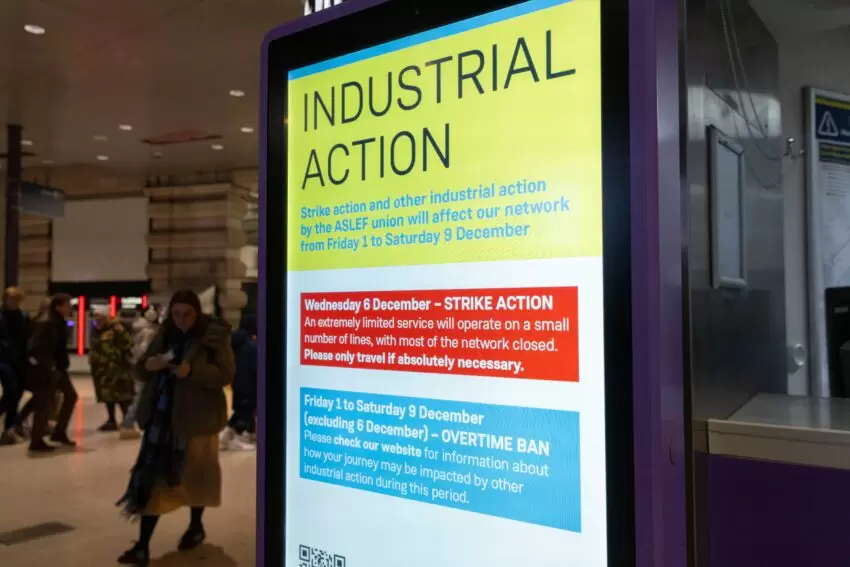
London’s small and medium-sized businesses are bracing for a punishing week of disruption as London Underground drivers prepare to stage two 24-hour walkouts, in a dispute over working patterns that threatens to drain millions of pounds from the capital’s already fragile hospitality and night-time economy.
Members of the Rail, Maritime and Transport (RMT) union will down tools from midday on Tuesday 21 April and again from midday on Thursday 23 April, with Transport for London (TfL) warning operators and passengers to expect “significant disruption” across the entire network. A separate walkout by 150 Unite members working as bus station and network traffic controllers, running from 23 to 25 April, is set to compound the misery.
For business owners across the capital, the timing could scarcely be worse. Operators in hospitality, retail and leisure are already contending with a fresh wave of energy price rises, persistent wage pressures and jittery consumer confidence. The loss of reliable late-night transport, industry leaders warn, risks tipping vulnerable SMEs over the edge.
TfL has published a day-by-day forecast of likely disruption. Normal services are expected to run on Tuesday 21 April until mid-morning, with availability tapering off ahead of the midday walkout. Any trains still running will wind down early, and TfL is advising those who must travel to complete their journeys by 8pm.
On Wednesday 22 April, services will start later than usual, with no trains expected before 7.30am. Significant disruption is forecast across all lines until midday, with a gradual recovery throughout the afternoon and evening.
The pattern repeats on Thursday 23 April, with normal services until mid-morning and a 12pm walkout triggering severe disruption into the evening. Friday 24 April will again see no service before 7.30am and continuing disruption across the network.
Although a reduced timetable will operate on some routes, TfL has confirmed there will be no service at all on the Piccadilly and Circle lines, no trains on the Metropolitan line between Baker Street and Aldgate, and no service on the Central line between White City and Liverpool Street. Trains that do run are likely to be sporadic, overcrowded and unable to pick up every waiting passenger.
The Elizabeth line, DLR, London Overground and tram services will operate as normal.
Adding to the disruption, seven bus routes operated by Stagecoach from Bow Bus Garage in East London will be affected by a 24-hour walkout from 5am on Friday 25 April. Routes 8, 25, 205, 425, N8, N25 and N205 are all in scope, although TfL expects the 25 and 425 to maintain a near-normal service for most of the day. The N8 will run a reduced route between Hainault and Liverpool Street at its usual frequency, while the remaining routes are likely to be severely delayed or cancelled.
The dispute centres on TfL’s proposal to introduce a four-day working week for train operators. The union has branded the plan “fake”, arguing it would simply condense existing hours into fewer days without delivering genuine improvements.
The RMT initially suspended strike action last month after TfL management agreed to negotiate, but accused the operator of reneging at the weekend.
RMT general secretary Eddie Dempsey said the union had “approached negotiations with TfL in good faith throughout this entire process”, adding: “despite our best efforts, TfL seem unwilling to make any concessions in a bid to avert strike action. This is extremely disappointing and has baffled our negotiators. The approach of TfL is not one which leads to industrial peace and will infuriate our members who want to see a negotiated settlement to this avoidable dispute.”
Claire Mann, TfL’s chief operating officer, countered that the proposals were fair and flexible. “We have set out proposals to the RMT for a four-day working week. This allows us to offer train operators an additional day off, whilst at the same time bringing London Underground in line with the working patterns of other train operating companies, improving reliability and flexibility at no additional cost. The changes would be voluntary, there would be no reduction in contractual hours and those who wish to continue a five-day working week pattern would be able to do so.”
For Michael Kill, chief executive of the Night Time Industries Association (NTIA), the latest walkout is another hammer blow to a sector running on empty.
“As the sector faces a fresh surge in energy and operating costs, this new wave of strike action creates yet more uncertainty that businesses simply cannot absorb,” he said. “Margins are being squeezed from every direction, and confidence is increasingly fragile.”
Mr Kill questioned the wider purpose of the industrial action. “The ongoing disruption to transport services begs the question, who does this actually benefit? Because right now, it’s businesses, workers and the wider public who are paying the price for the reckless actions of the few.”
He warned that the knock-on effects go well beyond lost footfall. “Without reliable late-night transport, staff struggle to get to work, customers stay away, and businesses lose critical trade. Many venues are already under intense financial pressure, continued disruption only compounds that risk.”
While acknowledging workers’ right to withdraw their labour, Mr Kill called for an urgent return to the negotiating table. “We respect the right to strike, but this situation cannot continue. All parties must get round the table and find a resolution, because sustained uncertainty at a time like this will have serious, lasting consequences for London’s night-time economy.”
TfL is urging travellers to use its journey planner to map their routes in advance and to check the status of lines in real time via its live status page. For SMEs, the message from industry is simpler: brace for a difficult week, and start demanding that both sides find a settlement before the damage to the capital’s economy becomes permanent.

Amy Ingham
Amy is a newly qualified journalist specialising in business journalism at Business Matters with responsibility for news content for what is now the UK’s largest print and online source of current business news.

Business
BSE launches Housing Finance Index to track sectoral opportunities, enable passive investing

The newly introduced index draws its constituents from the broader BSE 1000 index, specifically those classified under the housing finance segment as per basic industry categorisation.
The index has a base value of 1,000, with June 22, 2015 set as the base date. It will be reconstituted semi-annually in June and December, in line with standard index review practices.
The BSE Housing Finance Index is designed to support a wide range of investment applications. It can serve as an underlying benchmark for passive investment products such as ETFs and index funds, while also being used by portfolio managers for benchmarking PMS strategies and mutual fund schemes.
With this launch, BSE aims to provide investors with a more focused lens to track housing finance companies, enabling better participation in sector-specific growth opportunities. The index also adds to BSE’s expanding suite of indices, offering broader tools for portfolio diversification and strategy development.

BSE Index Services Pvt. Ltd. is a wholly owned arm of BSE Ltd and was formerly known as Asia Index Pvt. Ltd. It is responsible for designing, calculating and maintaining a wide array of indices. As part of BSE — Asia’s oldest stock exchange and home to the benchmark Sensex — the subsidiary continues to expand its offerings for both domestic and global.
Its total returns over a one-year period stands at negative 12.84% according to a media release issued by BSE Index Services. There are 11 constituents in the index viz. LIC Housing Finance, PNB Housing Finance, Sammaan Capital, Home First Finance Company, Bajaj Housing Finance, Aptus Value Housing Finance, Can Fin Homes, Aadhar Housing Finance, AAVAS Financiers and India Shelter Finance Corporation.The highest weight of 17.16% is carried by LIC Housing Finance while the lowest by 3.89%.
(Disclaimer: The recommendations, suggestions, views, and opinions given by the experts are their own. These do not represent the views of The Economic Times.)


Christmas is still eight months away, but artificial tree maker Lou Liping is already worried about a bad holiday season due to the Iran war.
Lou’s company, Kitty Christmas Factory, has been making artificial trees for the U.S. and European markets for nearly three decades. Her facility is based in the city of Yiwu, known as China’s Christmas capital.
“Many customers … are holding off on orders,” she told CNBC last Friday at her showroom in the city’s international expo center. The center houses hundreds of manufacturers that contribute to the country’s vast production of the world’s artificial trees, tinsel, ornaments and other decorations.
An estimated 87% of Christmas decor sold in the U.S. is sourced from China, according to the American Christmas Tree Association, with much of it from Yiwu.
Lou said the disrupted shipping in the Strait of Hormuz and high oil prices due to the Iran conflict have raised her costs per tree by 10%. The base material of her trees is PET plastic derived from oil. The price of the PET in her artificial pine needles is up 5%, and the cost of the plastic used as packaging for shipments is up 15%, she said.
Lou said her revenue is down roughly 12% because of the lost orders.
Yiwu’s factories normally gear up in the spring to make sure that their products are on store shelves for the Christmas shopping season.
“The war happened at a bad time — right when we need to get our shipments out,” tinsel maker Yun Zhuomei told CNBC from her booth at the expo center. “It’s very painful for us manufacturers.”
Yun said plastic prices for her tinsel are up as much as 40%.
Chen Lian, who makes Christmas lights, said she fears further price increases, with suppliers all moving up delivery schedules to accommodate customers worried about transport delays.
“Everyone needs to deliver between May and August so demand is concentrated,” Chen said. “Material prices are bound to go up.”
To adjust, artificial tree maker Lou said she has accelerated shipments. And when her contracts with customers allow, she passes on some cost. For next year, she said she aims to design a wider variety of lower-end trees so more people can afford her products.
But for this season, Lou said American shoppers will likely be stuck paying at least 15% more.
“The price of Christmas trees in the U.S. will definitely go up,” she said. “It is unavoidable.”

FOX Business’ Madison Alworth joins ‘The Big Money Show’ to report on New York Governor Kathy Hochul’s proposed NYC second-home tax.
Amanda Cruz thought she was playing it safe, as the New Jersey real estate agent recently placed an offer for a client at $150,000 over the asking price — a figure she feared was “a little bit high for the market.”
It turns out she wasn’t even close.
“Someone else came in much higher than us. Like, we weren’t even in the ballpark,” Cruz explained in a now-viral social media post currently gaining hundreds of thousands of views. “My buyers didn’t get the house.”
AVERAGE MONTHLY MORTGAGE PAYMENT HITS NEW HIGH, TOPPING $2K FOR FIRST TIME EVER
“Then I have a listing in Middletown,” she continued. “No offers for two and a half weeks. Yesterday, same day, four offers, all over asking, all phenomenal offers. And this is going on in other parts of Monmouth County as I speak to other agents as well.”

An aerial view of Asbury Park in Monmouth County, New Jersey. (Getty Images)
Her experience isn’t a one-off; it’s the front line of a statewide surge. While the rest of the U.S. housing market recorded 0.5% growth in early 2026, according to recent data from Cotality, New Jersey has seen a nearly 6% surge.
More specifically, Newark recorded a 6.7% year-over-year price jump, marking the steepest hike of the 100 largest metros across America. Housing supply in New Jersey reportedly remains well below pre-pandemic levels, with nearly 40% of homes selling above asking prices.
Cruz explained in her post that a “mass exodus” from New York City and Hoboken is flooding suburban markets like Monmouth County, making it nearly impossible for the “average person” to secure a home.
M2 Communities CEO Mitch Roschelle discusses the slow spring housing market amid the Iran war and uncertainty and programs from Iowa and Connecticut helping first-time homebuyers on ‘Varney & Co.’
“There is definitely [a] mass exodus from New York, people that are worried in Hoboken for that spillover, they’re jumping over to Monmouth County with the ease of transportation to the city,” Cruz said.
“So if you don’t live in this area already, I don’t think the average person is going to be able to move into Monmouth County, the eastern Monmouth area, very soon.”
GET FOX BUSINESS ON THE GO BY CLICKING HERE
‘The Ramsey Show’ host Dave Ramsey discusses how young adults feel isolated from buying homes and entering the real estate market on ‘FOX Business In Depth: Hitting Home: Rebuilding the Dream’
Cotality’s latest findings also linked the New Jersey boom to workers getting priced out of the city who are choosing its stately neighbor to avoid sacrificing their full paychecks while maintaining transit access. Many of these new commuters are in the finance, pharmaceutical or biotechnology sectors.
“These diverse trends indicate an ongoing process of price discovery — one where sales and comparisons remain limited — and underscore a market that is rebalancing locally rather than correcting nationally,” Cotality Chief Economist Selma Hepp said.

The firm founded by Amazon billionaire Jeff Bezos is investigating the failed launch.

Sen. Kevin Cramer, R-N.D., joins ‘Mornings with Maria’ to discuss President Donald Trump’s backing of Kevin Warsh for Fed chair, pressure on Jerome Powell, and the timeline for the CLARITY Act
Kevin Warsh, President Donald Trump’s pick to lead the Federal Reserve, is set to deliver a pointed message to lawmakers Tuesday: the Fed must stay independent on interest rates, but not above accountability.
In prepared remarks obtained by FOX Business, Warsh vows to keep monetary policy “strictly independent,” while making clear the central bank should not operate unchecked across its broader responsibilities.
“The Fed must stay in its lane. Fed independence is placed at greatest risk when it strays into fiscal and social policies where it has neither authority nor expertise.”
The warning reflects Warsh’s broader push to rein in what he sees as an overextended central bank.
TRUMP’S FED PICK DISCLOSES $131M FORTUNE AS NOMINATION FACES HEADWINDS
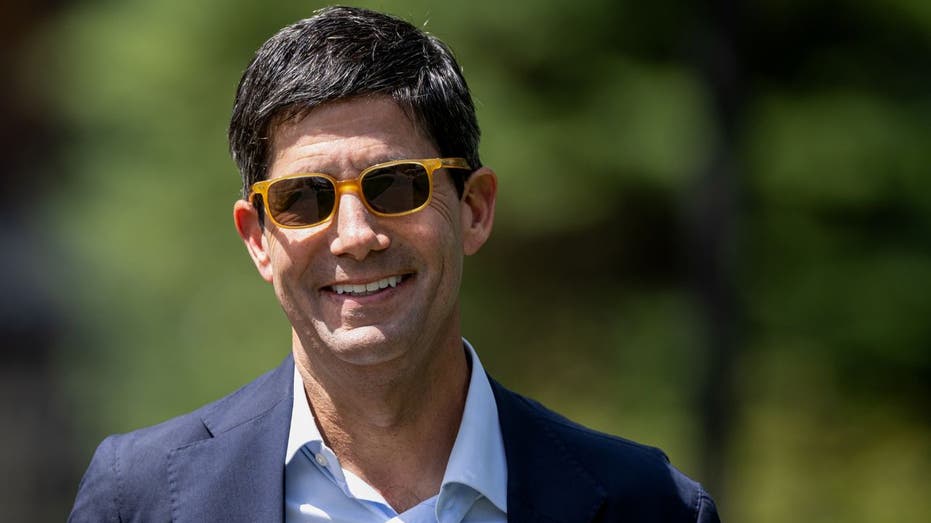
Kevin Warsh, former governor of the Federal Reserve, will return to lead the central bank. (David Paul Morris/Bloomberg via Getty Images)
At the same time, he opens the door to closer coordination with elected leaders, pledging to work with the White House and Congress on non-monetary matters – an approach that could reshape how the Fed operates in Washington.
Warsh, nominated to replace Jerome Powell, also takes aim at what he sees as a complacent central bank. He warns that large institutions are prone to inertia – and that clinging to the “status quo” in a fast-moving economy is not just outdated, but dangerous.
Calling this a “consequential” moment for the U.S. economy, Warsh argues a “reform-oriented Federal Reserve” is urgently needed – and suggests the stakes for everyday Americans couldn’t be higher.
His potential ascent comes at a turbulent moment for the central bank.
The Federal Reserve is facing pressure on multiple fronts, including a Justice Department criminal probe involving Chair Jerome Powell, a Supreme Court case weighing limits on the Fed’s independence, and persistent cost-of-living concerns testing Trump’s economic agenda.
FEDERAL RESERVE CHAIR POWELL UNDER CRIMINAL INVESTIGATION OVER HQ RENOVATION
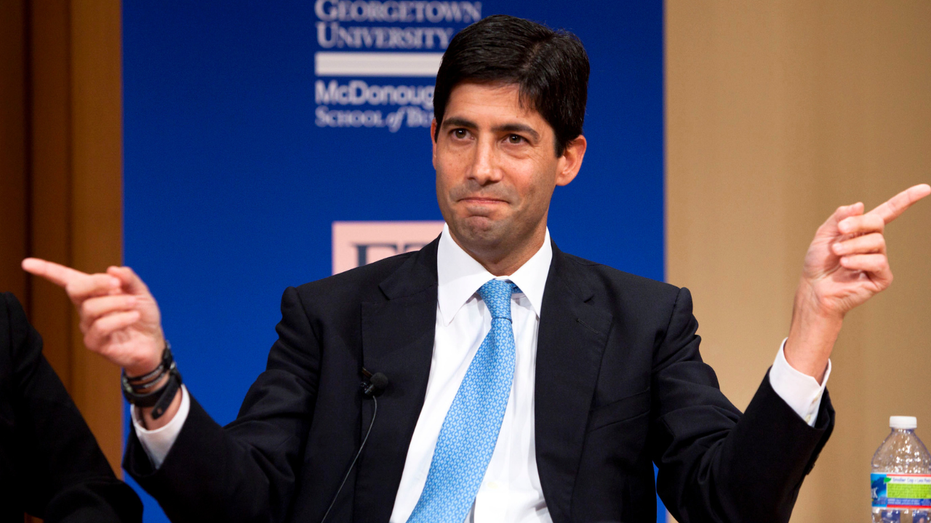
Kevin Warsh is a former Morgan Stanley banker and became the youngest member of the Fed’s Board of Governors in 2006. (Brendan Hoffman/Bloomberg/Getty Images)
A former Fed governor, Warsh revives a long-running critique: the central bank has drifted too far from its core mission. His message is blunt – “stay in its lane.”
That includes steering clear of politically charged areas like climate policy and broader social goals, which he has previously criticized as an expansion beyond the Fed’s core mandate.
But his sharpest warning is reserved for inflation.
“Low inflation is the Fed’s plot armor,” Warsh says, arguing that recent price spikes have inflicted “grievous harm” on Americans – especially those least able to afford it. Rising costs, he warns, don’t just hit wallets – they risk eroding public trust in the broader system of economic governance.
GET FOX BUSINESS ON THE GO BY CLICKING HERE

Federal Reserve Chairman Jerome Powell is set to finish his term leading the central bank next month. (Kent Nishimura/Getty Images)
Warsh, like Powell, is not an economist by training but brings a background in law and finance that has shaped his views on the central bank.
A former Morgan Stanley banker, he became the youngest member of the Fed’s Board of Governors in 2006 and later served as a key liaison to Wall Street during the 2008 financial crisis. He also served in the Bush administration as a special assistant to the president for economic policy.


Described as “significant milestone” in company’s ongoing global expansion.
Business
Kaynes shares plunge 43% from October peak. Is a tactical rebound on the cards or more pain ahead?

Edited excerpts from a chat with Anand James, Chief Market Strategist, Geojit Investments Limited:
After a flat week, how would you trade the market now? Would Friday’s RBI optimism carry forward on Monday as well? Friday’s optimism stemmed from the completion of a morning star pattern, signaling a potential reversal from the downtrend that began on December 1. However, while the downswing was brief, the reversal is also likely to be short-lived, as evidenced by Friday’s stall at 26,200, a key congestion resistance.
Although oscillators support a possible uptrend extension, we do not see sufficient momentum for a strong move higher. We favor a swing lower toward 26,085–26,065 initially. Alternatively, a breakout above 26,200 could trigger further gains toward 26,460–26,550, but a sharp vertical rise is less likely.
IT was among the major gainers in the week. Do you see chances of more upside?
Yes, the IT sector shows strong potential for further upside. Nifty IT has been signaling a reversal since September and recently broke above the weekly supertrend, indicating strength. The weekly RSI near 60, along with the index closing above its 20-week high, reinforces the positive outlook. Based on these technical cues, the index could target 39,500 in the coming weeks.
Derivative data also supports this bullish view. Over 50% of constituent stocks saw short additions in near OTM put strikes and long additions in call strikes. Additionally, 70% of stocks experienced long build-up on Friday, while 80% recorded weekly short covering, suggesting traders are positioning for further gains. Heavyweights like TCS, Infosys, HCL Tech, Wipro, and Tech Mahindra show strong weekly charts and are expected to lead the rally toward 39,500.PSU banks were under selling pressure but recovered on Friday. Does the chart indicate a fresh 52-week high again going forward?
Even though the index saw a pullback on Friday, the charts suggest a mixed outlook. The wedge pattern breakout in September and the resulting upside has been losing momentum since November. The recent breakdown below the rising trendline near 8,500 indicates a possible short-term trend shift, while the weekly MACD shows exhaustion candles, signaling early signs of consolidation. Despite this, longer-term charts still reflect underlying strength, keeping the possibility of a fresh 52-week high alive.
Derivatives data shows some recovery attempts on Friday, with long additions and short covering in stock futures, but weekly data indicates that more than half of the positions still involved short additions. Among individual stocks, SBI, Bank of Baroda, PNB, Union Bank, Canara Bank, and Indian Bank may see a quick pullback early next week, though sustainability remains uncertain. The preferred strategy is to capitalize on any early upside next week while remaining cautious in the latter half.
Kaynes ended the week down 21% amid negative reports. Do you see chances of an upside bounce or is it too risky to chase the falling knife?
Kaynes has now fallen 43.5% from its October peak, with Friday’s 12.5% decline marking the steepest single-day drop during this period. Momentum indicators and oscillators point to a strong downward trend with no signs of bearish exhaustion, raising the risk that the slide could extend to at least the year’s low of Rs 3,825 seen in February. That said, the severity of Friday’s fall suggests that fear may have peaked.
Adding to this view, the only previous occasion the stock had stretched so far from its 200-day moving average was in April, when the gap was around 25%. Currently, the stock is nearly 26% away from the 200-day SMA, prompting close monitoring for potential mean-reversion moves in the coming week. Given the contrarian nature of this view, the downside marker is advised slightly below Rs 4,300, with Rs 4,541 as the initial recovery target.
Give us your top ideas for the week ahead.
COFORGE (CMP: 1977)
View: Buy
Target: 2080-2180
SL: 1882
The stock has been in a steady uptrend since 2020 and is currently forming a Cup and Handle pattern on the charts. It is attempting a breakout from this formation, supported by a weekly RSI near 60 and a MACD above the signal line. The price action remains strong, trading well above the 20-, 50-, and 100-day moving averages, reinforcing the bullish outlook. The stock is expected to move toward Rs 2,080 and Rs 2,180 in the near term. Long positions should be protected with a stop-loss placed below Rs 1,882.
ABCAPITAL (CMP: 358)
View: Buy
Target: 368-377
SL: 348
The stock has maintained a strong uptrend since February 2025 and continues to show strength on both daily and weekly charts. The weekly MACD remains above the signal line, and the price is trading comfortably above the 20-, 50-, and 100-day moving averages, reinforcing the bullish outlook. The stock is expected to move toward Rs 368 and Rs 377 in the near term. All long positions should be protected with a stop-loss placed below Rs 348.

Morningstar CEO Kunal Kapoor shares ETFs worthy of long-term investment on ‘The Claman Countdown.’
Most investors have heard that investing in the S&P 500 is one of the best ways to create long-term wealth. It’s probably the default option in their workplace retirement plan. Even a lot of self-directed investors will put their money in the Vanguard S&P 500 ETF or the iShares Core S&P 500 ETF and call it a day. There’s a reason, after all, that these are the two largest ETFs in the world, with more than $1.6 trillion in assets combined.
The S&P 500 is many people’s only investment. That can create some problems because it leaves a whole slew of asset classes unrepresented. Including them can enhance growth opportunities, mitigate downside risk, or create a regular income stream. Without any of that to complement it, the high-tech concentration or the growth tilt of the index could mean too much volatility.

The S&P 500 is many people’s only investment. (iStock)
Key takeaways
- The S&P 500 has delivered a roughly 10% average annual return over the long term, making it a more than adequate core retirement holding.
- The top 10 holdings account for around 38% of the index. That makes it concentrated and heavily exposed to a handful of tech stocks.
- Holding just the S&P 500 means you’re excluding small caps, international stocks, fixed income, gold, and crypto. These asset classes offer important diversification benefits.
- An S&P 500 ETF is sufficient as a core portfolio holding, but retirement portfolios should have more balance.
US ETF ASSETS UNDER MANAGEMENT TO MORE THAN DOUBLE TO $25T BY 2030, CITIGROUP SAYS
| Ticker | Security | Last | Change | Change % |
|---|---|---|---|---|
| GSPC | NO DATA AVAILABLE | – | – | – |
| VOO | VANGUARD S&P 500 ETF – USD DIS | 652.78 | +7.92 | +1.23% |
| IVVV | NO DATA AVAILABLE | – | – | – |
The case for owning only the S&P 500
It would be easy to look at the returns of the S&P 500 over the past 10 to 15 years and come to the conclusion that it’s the only investment you need. Thanks to its heavy concentration in the “Magnificent Seven” stocks, it has outperformed most sectors, styles, and themes over that time.

The S&P 500 includes many of the best companies the U.S. economy has to offer. (Spencer Platt/Getty Images)
But setting aside the performance numbers, the S&P 500 includes many of the best companies the U.S. economy has to offer. It owns companies such as Apple, Microsoft, Amazon, Walmart, JPMorgan Chase, ExxonMobil, Johnson & Johnson, and Visa. These companies produce billions of dollars in cash flow, generate huge revenues, and have been around for decades. They’re the cornerstones of the economy and will likely be around for many more decades.
GOLDMAN SACHS COMPLETES INNOVATOR CAPITAL ACQUISITION, LIFTING ETF ASSETS TO $90B
These are exactly the kinds of high-quality companies that can make a great portfolio.
| Ticker | Security | Last | Change | Change % |
|---|---|---|---|---|
| AAPL | APPLE INC. | 270.23 | +6.83 | +2.59% |
| MSFT | MICROSOFT CORP. | 422.79 | +2.53 | +0.60% |
| AMZN | AMAZON.COM INC. | 250.56 | +0.86 | +0.34% |
| WMT | WALMART INC. | 127.50 | +2.68 | +2.15% |
| JPM | JPMORGAN CHASE & CO. | 310.29 | +0.34 | +0.11% |
| XOM | EXXON MOBIL CORP. | 146.44 | -5.54 | -3.65% |
| JNJ | JOHNSON & JOHNSON | 234.18 | -0.36 | -0.15% |
| V | VISA INC. | 317.02 | +1.92 | +0.61% |
The case for owning more than the S&P 500
While the S&P 500 is unquestionably a great index to invest in, it’s also incomplete.
VANGUARD FUND STRIPS OUT CHINA IN EMERGING MARKETS INVESTMENT PLAY
Here’s what investors are missing out on by investing only in the S&P 500:
- Small- and mid-caps: The Vanguard Total Stock Market ETF (NYSEMKT: VTI), which invests in the entire U.S. equity market, holds about 3,500 stocks. The 3,000 stocks not held by the S&P 500 represent about 25% of the entire U.S. equity market capitalization. Small and mid caps have an entirely different sector allocation and cyclical exposure. Omitting them means missing out on a big chunk of the U.S. economy.
- International stocks: As we’ve seen over the past year, foreign stocks can perform very well when U.S. stocks stall. They, too, have a different economic composition and are sensitive to different factors than U.S. companies.
- Fixed income: Bonds may be boring, but they can balance out portfolio risk and provide an important income component. As workers get closer to retirement, relying more on fixed income for safety and income becomes more important.
- Gold: Precious metals typically perform well during inflationary periods and geopolitical disturbances. They traditionally have a very low correlation to stocks, which makes them a great risk reducer.
- Crypto: Bitcoin and other stablecoins have become a legitimate asset class. Adding crypto as even a small piece of a broader asset allocation makes some sense.
| Ticker | Security | Last | Change | Change % |
|---|---|---|---|---|
| VTI | VANGUARD TOTAL STOCK MARKET ETF – USD DIS | 349.86 | -0.66 | -0.19% |
Holding more than just U.S. large-cap stocks lets you participate in different market cycles, helps smooth out overall portfolio volatility, and can help build a portfolio more suited to your goals and risk tolerance.
Investors should own more than just the S&P 500
The S&P 500 is a great core investment, but you need more.
GET FOX BUSINESS ON THE GO BY CLICKING HERE
I’m a big advocate of diversification and looking for ways to mitigate risk exposure. Adding different asset classes helps accomplish this. In most cases, it’s not about trying to pick winners. Simply buy the global economy and let the long-term power of compounding do the work for you.
JPMorgan Chase is an advertising partner of Motley Fool Money. David Dierking has positions in Apple and Vanguard Total Stock Market ETF. The Motley Fool has positions in and recommends Amazon, Apple, JPMorgan Chase, Microsoft, Vanguard S&P 500 ETF, Vanguard Total Stock Market ETF, Visa, and Walmart and is short shares of Apple. The Motley Fool recommends Johnson & Johnson. The Motley Fool has a disclosure policy.

There is a fine balance between the benefits of improved infrastructure, versus the cost of disruption. Does the country have it right?

Blue Origin faces FAA probe after New Glenn satellite deployment fails
BSE launches Housing Finance Index to track sectoral opportunities, enable passive investing

Poland’s Biggest Crypto Exchange Falls, and Nobody Can Find the Man Who Holds the Keys

No 10 seemingly admits Starmer misled parliament



-

 NewsBeat6 days ago
Trump and Pope Leo: Behind their disagreement over Iran war
-

 Fashion3 days ago
Weekend Open Thread: Theodora Dress
-

 Crypto World7 days ago
SEC Signals Exemption for Crypto Interfaces From Broker Registration
-

 News Videos6 days ago
Secure crypto trading starts with an FIU-registered
-

 Sports3 days ago
NWFL Suspends Two Players Over Post-Match Clash in Ado-Ekiti
-

 Crypto World7 days ago
SEC Proposes Certain Crypto Interfaces Don’t Need to Register as Brokers
-

 Business1 day ago
Powerball Result April 18, 2026: No Jackpot Winner in Powerball Draw: $75 Million Rolls Over
-

 Crypto World3 days ago
Russia Pushes Bill to Criminalize Unregistered Crypto Services
-

 Politics3 days ago
Palestine barred from entering Canada for FIFA Congress
-
 Business4 days ago
Creo Medical agree sale of its manufacturing operation
-

 Politics1 day ago
Zack Polanski demands ‘council homes not luxury flats for foreign investors’
-
 Entertainment7 days ago
Brand New Day’ Footage Reveals the Devastating Impact of ‘Now Way Home’
-

 Crypto World3 days ago
Russia Introduces Bill To Criminalize Unregistered Crypto Services
-

 Tech6 days ago
Microsoft adds Windows protections for malicious Remote Desktop files
-

 Tech2 days ago
Auto Enthusiast Scores Running Tesla Model 3 for Two Grand and Turns It Into Bare-Bones Go-Kart
-
 Entertainment7 days ago
Karol G’s ‘Ultra Raunchy’ Coachella Set Gave ‘Satanic Vibes’
-

 Tech5 days ago
‘Avatar: Aang, The Last Airbender’ Leaked Online. Some Fans Say Paramount Deserves the Fallout
-

 Entertainment7 days ago
How Babylon 5 Turned Brief Side Story Into Emotional Masterpiece
-

 Tech7 days ago
What was the first ransomware attack to demand payment in Bitcoin?
-

 Business7 days ago
Intuitive Machines Stock Climbs 2.4% as $180M NASA Lunar Contract and $900M Revenue Outlook Fuel Momentum
You must be logged in to post a comment Login