The Vancouver-based athleticwear company is taking its battle with activist founder Chip Wilson public, writing in a letter to shareholders on Monday he has “outdated perspectives” and “troubling conflicts of interest” that will derail its turnaround plan, materials reviewed by CNBC show.
The letter, Lululemon’s first major public response to Wilson since his proxy battle ramped up late last year, comes after settlement talks with the retailer’s founder fell apart last week, materials reviewed by CNBC show. The missive lays out why the company’s strategy, its incoming CEO Heidi O’Neill and board nominees are ultimately best for shareholders as it urged them to vote in its favor and set June 25 as the date for its long-awaited annual meeting.
“Wilson, who stopped serving on the Board over a decade ago for well-documented reasons, has been attacking the company and the Board for many years, damaging the brand and hurting shareholders. He has now put forward three opposing nominees in an attempt to regain increased influence over the company that he has coveted since he left,” the letter, viewed by CNBC, states.
Advertisement
“Your Board firmly believes that replacing any of lululemon’s directors with Mr. Wilson’s less qualified nominees would endorse his misguided perspectives, deprive the company of critical skills and expertise, and risk derailing our progress in an especially pivotal time for our business and organization.”
Wilson didn’t immediately return a request for comment.
Lululemon’s business has been under pressure for around two years, particularly in the Americas, its largest market, as it navigates the impact of tariffs, a shaky U.S. consumer and a product assortment that’s failed to wow shoppers in the same way it once did. It has also faced steep competition in the athleisure space from upstarts like Vuori and Alo Yoga as the global athleisure market started to cool.
When reporting fiscal fourth-quarter earnings in March, Lululemon issued weak fiscal 2026 guidance and warned higher tariffs and its proxy battle with Wilson would weigh on its bottom line. As of Friday’s close, shares are down almost 43% this year.
Advertisement
Wilson, who founded Lululemon in 1998, stepped down as CEO in 2005 but stayed on as chairman until 2013 when he departed after blaming a recall of its trademark black pants on customers. He told Bloomberg at the time, “Some women’s bodies don’t work for the pants.”
“It’s really about the rubbing through the thighs, how much pressure is there over a period of time,” he said.
Wilson has been a frequent critic of the brand in the years since, but ramped up his attacks late last year as Lululemon’s challenges were mounting.His biggest gripe has been the company’s board of directors, whom he blames for his decision to step down as chair in 2013, and has been lobbying both the company and shareholders to get behind his slate of nominees.
In response, Lululemon has asserted that its leadership is why the brand has been able to scale into an $11 billion retailer, and argued Wilson is aligned with direct competitors including Alo Yoga and Vuori, who Wilson has admitted to advising, security filings show.
Advertisement
At Lululemon’s annual meeting next month, shareholders will be presented with two sets of director options for election that both sides are betting can help turn the company around. Shareholders can vote to elect the retailer’s nominees, former Levi Strauss CEO Chip Bergh, former Unilever chief growth and marketing officer Esi Eggleston Bracey and serial board member and former Gap finance chief Teri List. Or, they can opt for Wilson’s nominees, former ESPN chief marketing officer Laura Gentile, former Activision CEO Eric Hirshberg and former On co-CEO Marc Maurer.
Wilson has said the retailer’s downward slide is a result of “deprioritizing creative excellence at the altar of efficiency.” The solution, he argued in a letter to shareholders last week, is “more proven, creative leaders” in the boardroom.
“Our three nominees all understand what it takes to foster a creative, focused and successful business that delivers superior returns through creative excellence – in design, technology and execution,” Wilson wrote. “[They] have all led organizations that only succeed when they out-create their competitors, and they know what it takes to create an inspired, creative organization and help it thrive.”
Last week, Lululemon made a final attempt to resolve its proxy contest with Wilson and reach a settlement agreement, materials viewed by CNBC show. It offered to appoint two of Wilson’s nominees following the annual meeting, up from a previous offer of one, and agreed to appoint a third new director not from his slate but subject to his approval. The company also said it would to create an advisory brand product council that would include Wilson’s third nominee not appointed to the board.
Advertisement
In response, Wilson upped his demands, asking for the right to replace directors if his nominees stopped serving on the board and full reimbursement for his campaign by the company, among other requests, materials viewed by CNBC show. Lululemon rejected that offer and settlement talks fell apart.
Now, Lululemon is arguing in the letter that its nominees are “vastly superior” to Wilson’s and the election of any one of the founder’s picks “would result in a significant degradation of your Board’s experience and expertise, including the loss of deep industry and corporate governance experience as well as financial expertise that is required for a public company.”
It criticized Gentile, Hirshberg and Maurer for having no public company board experience and either no or little time working in apparel and retail.
It pointed out that Maurer, who about a year ago stepped down as the co-CEO of On, a direct competitor to Lululemon, still has a personal stake in his former company worth tens of millions of dollars, making up “a considerable portion of his net worth.”
Advertisement
The company also came to the defense of its incoming CEO, who is slated to take the helm in September after almost 30 years at Nike
When Lululemon announced last month O’Neill was its choice as its next CEO, Wall Street sold off the stock on concerns she was partially responsible for some of the challenges Nike is currently facing. There are also concerns that she won’t be starting in the job for several months, pushing out the timeline to recovery further than some investors had hoped, especially given Lululemon’s long lead times for merchandise.
“A near 30-year veteran of [Nike] is not the symbol of transformative, creative-first leadership that can instill shareholder confidence in today’s world,” Wilson wrote in a letter to shareholders on April 29. “Shareholders are right to question if she has the product skillset or history of value creation that is needed to revitalize lululemon.”
In response, the retailer said in its letter to shareholders that O’Neill is “the ideal executive to lead” the company and brings a “unique balance of creativity and operational discipline required at this pivotal moment.”
Advertisement
“As the Board initiated the CEO search, we established criteria that encompassed both turnaround and growth experience. We recognize there are parts of lululemon’s business that need a reset, but that should not be the end game. The lululemon brand remains fundamentally strong and there is significant potential to innovate and evolve product and engage our communities to scale the business even further across activities and internationally,” Lululemon wrote.
“During the months-long interview process, Ms. O’Neill distinguished herself through a rare combination of deep industry, product, and brand experience as well as her strong track record of both transformation and growth at scale. She demonstrated an ability to clearly articulate the lululemon brand’s essence and future opportunity, while also bringing a pragmatic, execution-oriented mindset,” the company added in the letter.
Lululemon pointed to O’Neill’s many years of experience leading Nike’s apparel business through a period of rapid growth and her time spent reducing product lead times and resetting the brand prior to her departure.
“O’Neill established and built Nike’s Women’s business and grew it into a multi-billion-dollar franchise,” Lululemon said. “And she led important digital transformations as an early digital champion and innovator, during a period of rapid digital commerce sales growth of more than 65%.”
Costs range widely depending on what is wanted and/or required.
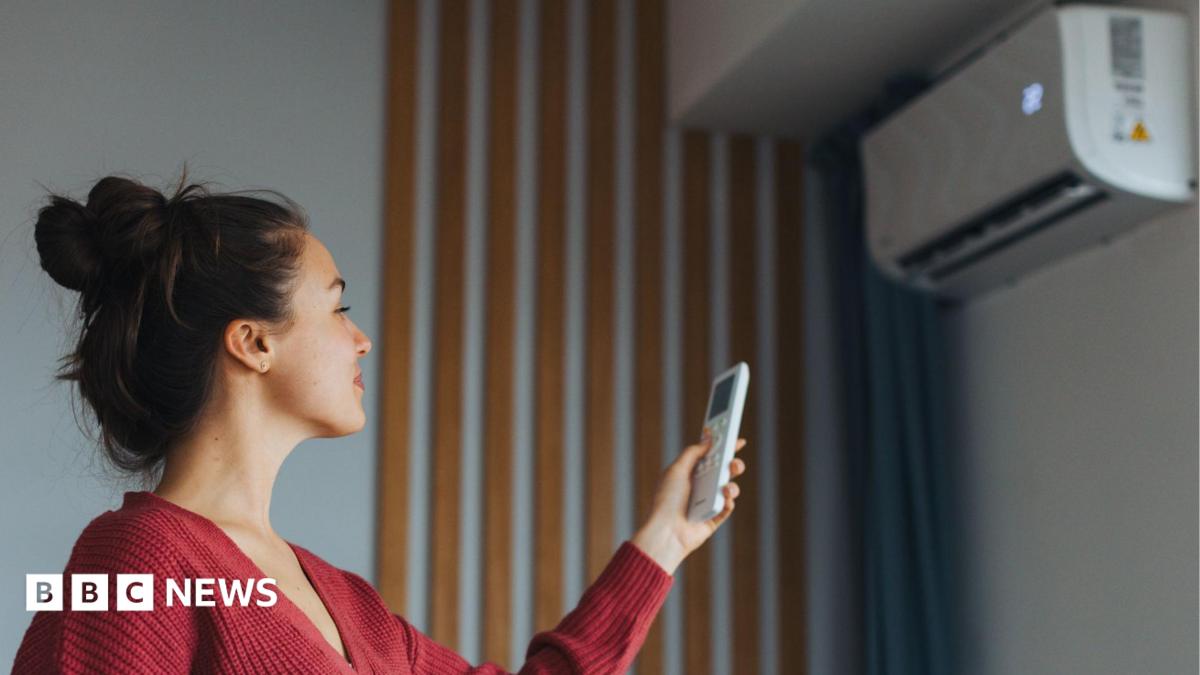
Portable units are the cheapest form of air con, ranging from £350 to £650 on average, depending on the brand and performance, according to Checkatrade., external
However, as demand has soared in recent weeks some retailers began selling the cooling machines for £149, as Lidl did in its infamous middle aisles.
Wall mounted or split air con units can cost between £750 and £1,100 each, Checkatrade says – but that is just the unit, and does not include the labour and other installation costs, such as hooking it up to the property’s electricity fuse board. Installation company Heatable suggests, external a full cost is typically £2,000 to £3,500, but can go up to £6,000 if you want to have it in more than one room.
Advertisement
Ducted air con systems cost the most, between £990 and £1,750 without installation costs, according to Checkatrade. Fitting the ducting or remedial work to hide it inside properties means it is likely to be more expensive than any of the other systems given the level of work involved. Heatable estimates it to be between £5,000 and £10,000, depending on the property size, layout and how complex the ductwork needs to be.
The size of both split and ducted units are determined by what is known as the BTU (British Thermal Unit), Checkatrade says, to ensure it will cool the space it’s required to. The larger the BTU number, the bigger the room to cool, and therefore the more expensive the unit.
Following installation, consumer group Which? suggests the running costs “vary wildly” and depend on the type of system.
“A typical portable air conditioner adds roughly 25p to 40p an hour to your electricity bill,” it says.
Owner of MC Hotel and CEO of Circle Squared Alternative Investments Jeff Sica details how his New Jersey hotel became a prime destination for FIFA World Cup teams on ‘The Claman Countdown.’
Colombia and Portugal were deadlocked at zero in one of the most thrilling 2026 FIFA World Cup matches when a cross from Colombia whipped into Portugal’s box.
Davinson Sánchez of Colombia read the pass perfectly the whole way to the far post and used his head to smash the ball into the back of Portugal’s net. The goal was in stoppage time, Colombia and its fan base were in rapture, and the game appeared to be won.
Advertisement
That is until the head referee of the match changed everything.
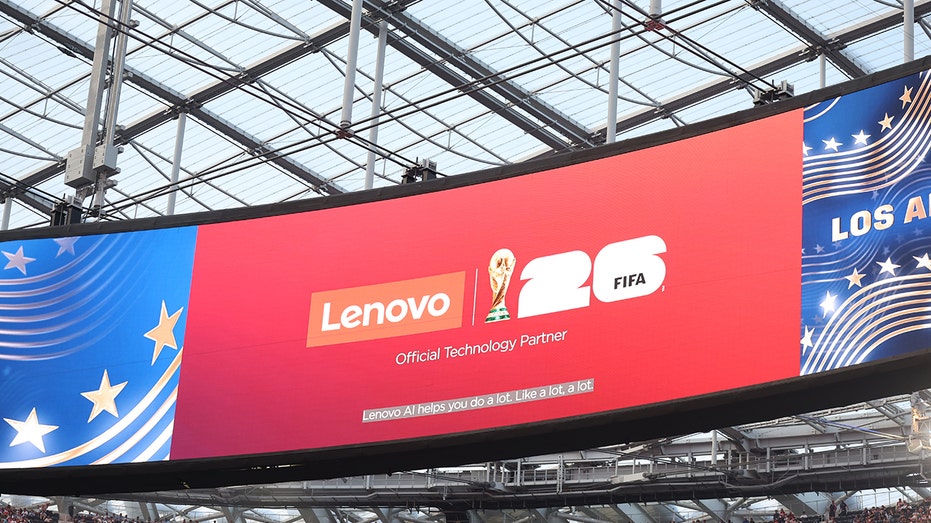
Lenovo during the FIFA World Cup 2026 Group D match between USA and Paraguay at Los Angeles Stadium on June 12, 2026 in Los Angeles, California. (Joe Scarnici – FIFA / Getty Images)
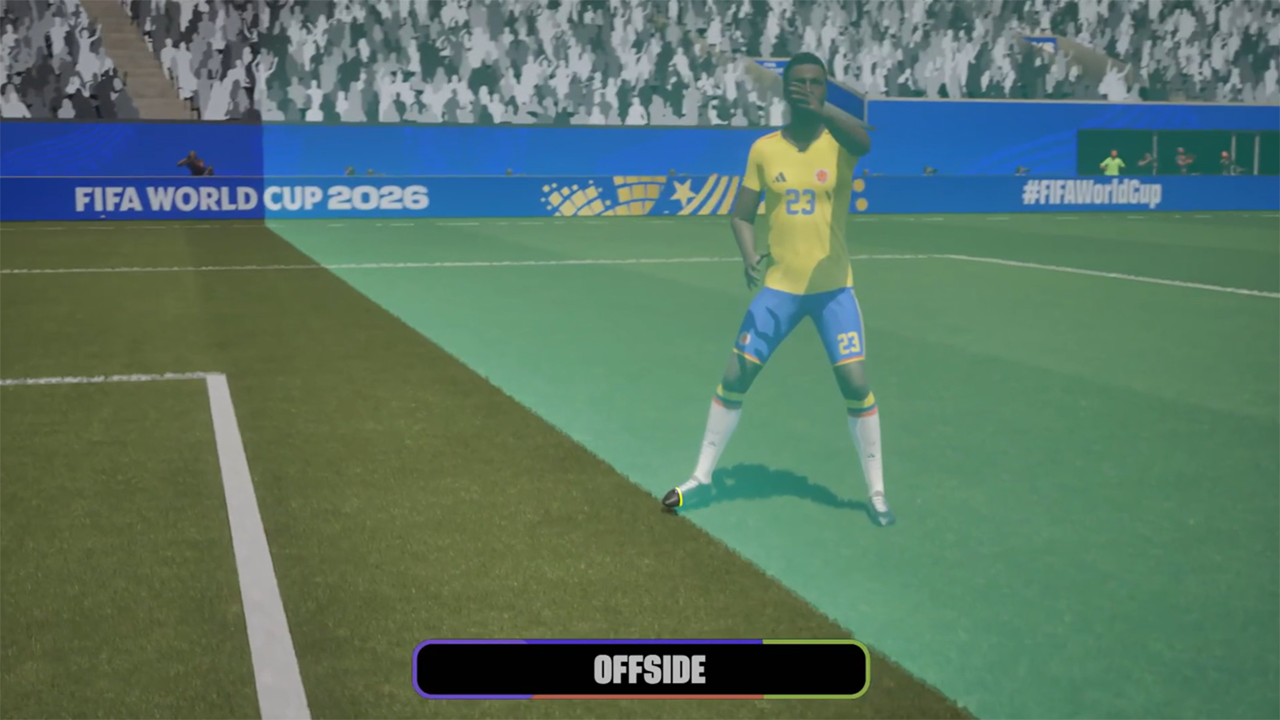
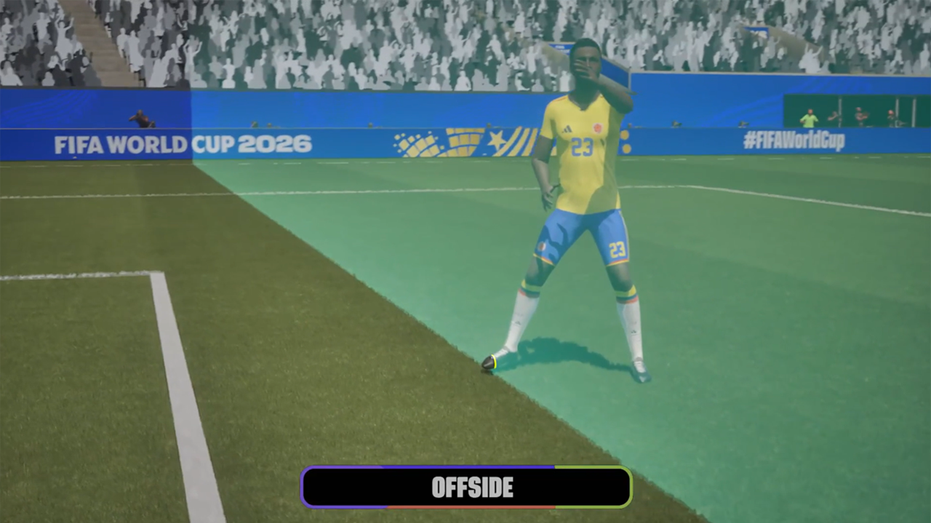
Sánchez was ruled offside, and soccer fans around the globe couldn’t believe it. It appeared that Sánchez was right next to his Portugal opponent when the ball was kicked by his teammate, and there was no way the goal was being called off.
But during the FOX broadcast, the ruling made more sense to the viewer, whether they were upset or not, because a 3D avatar of Sánchez was shown offside – by the literal front of his boot.
Advertisement
It’s moments like these, and many more, that are showing how Lenovo, the official technology partner of FIFA, is making an impact on the fan experience, both at home and in the 16 different stadiums across three countries, throughout this tournament with its AI-powered solutions.
“This is a sponsorship that goes well beyond just a logo,” Cathy Meister, Executive Director North American PC & Smart Device Sales at Lenovo, told Fox Business during a roundtable discussion about the impacts on the World Cup thus far. “Being the official technology sponsor, we are truly the end-to-end backbone of all the operations. Our technology, everything from mobile phones all the way to our storage and infrastructure, our AI-powered services, truly end-to-end, Lenovo is showcased in powering these games.”
The AI-powered 3D digital avatars are a perfect example of how Lenovo is helping improve not just the fan experience, but the game itself. Before the tournament began, each team had their players 3D reconstructed to replicate them precisely on the pitch to support FIFA’s match officials in their offside decision-making.
Advertisement
A 3D avatar of Colombia’s Davinson Sánchez shows that he was offside thanks to Lenovo AI technology. (Lenovo/FIFA / Fox News)
We’ve seen it on multiple occasions throughout matches in the World Cup, giving players, coaches, and fans in the stands and at home the visual of how a tool that helped a crucial call come to be on the pitch.
Then, in the locker rooms, meeting rooms and training pitches, every team has access to FIFA AI Pro, a groundbreaking AI-powered enterprise knowledge assistant that has been delivering data analytics and performance insights for countries participating throughout the tournament.
This specialized football interaction tool is “leveling the playing field,” as Meister put it, giving teams that may not have the most robust analytics teams within their squad access to millions of data points, metrics and rapid insights following each match. We’ve seen smaller clubs in terms of manpower, like Cape Verde, DR Congo and others, shock the football world against powerhouse clubs.
Could FIFA AI Pro have aided in that? Either way, that’s the vision for this World Cup and others moving forward.
Advertisement
Lenovo CEO Yang Yuanqing and FIFA President Gianni Infantino speak at event. (Lenovo/FIFA / Fox News)
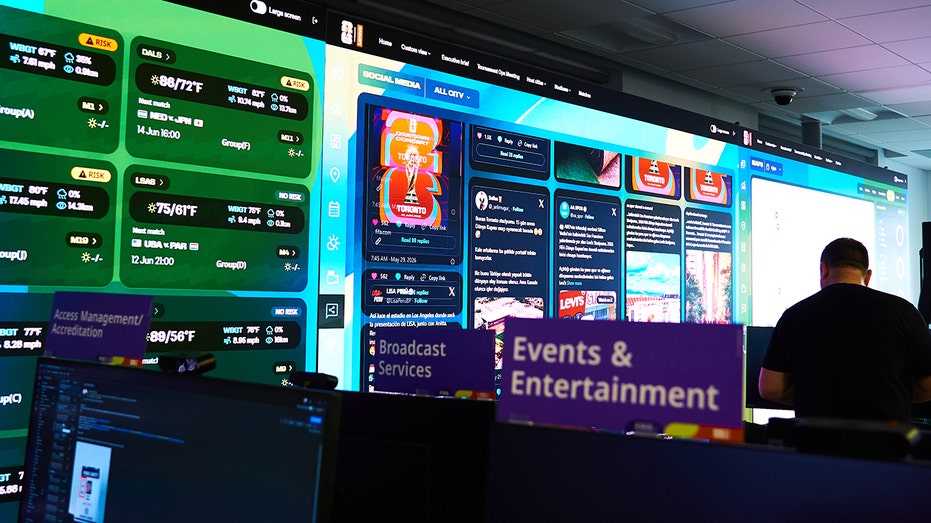
From the Intelligent Command Center, the control room for the tournament, creating “digital twins” of each venue to allow predictive planning to optimize the event experience, “Smart Wayfinding,” which allows matchgoers to streamline their experiences at venues, and the referee cam, Lenovo knew it could take on these 104 FIFA World Cup matches and provide an improved experience from every aspect of this great game.
The partnership itself was one that Breanna Reader, Senior Communications Manager North America for Lenovo US, said came together with a dinner between top marketing officials within the technology powerhouse, where they dreamed big.
“Throwing ideas out and it was one of those stories where it was like, ‘What could we do?’ FIFA came up, and that’s how the idea started,” Reader said. “FIFA has such a high standard of excellence and precision. It was lengthy conversations and we had to prove the rigor of our technology and our expertise in that space. So, it’s best summed up as a true partnership. There were lots of conversations about how we could enhance the experience, what they needed from a technology partner. Just testing and talking about it as we went.
“FIFA, we all know the high degree of excellence and precision, and we needed to back it up. It shows we did.”
Advertisement
And Lenovo isn’t done yet.
Shot of Lenovo’s Technology Operations Center for FIFA in Miami. (Lenovo/FIFA / Fox News)
There are still big matches to go, including the World Cup Final on July 19 at New York/New Jersey Stadium. But the company has already proven it can help bring players, coaches, fans and everyone surrounding the World Cup closer to the game than ever before through groundbreaking innovation.
Looking ahead, the Women’s World Cup in 2027 in Brazil will be yet another opportunity Lenovo will put its stamp on the game. And just as they have with their other sports partnerships, including F1, the Dallas Cowboys and Carolina Hurricanes, they will take learnings from this World Cup and imply it to their next challenge.
Advertisement
“We’ll carry on the technologies that we developed, and I’d imagine we’ll have learnings along the way and continue to innovate and continue to improve the fan experiences. The Women’s World Cup is contained to Brazil so – I don’t want to say easy – but after three countries and 16 different stadiums, I believe we’ll be ready,” Meister said.
SEOUL, South Korea — South Korea’s benchmark KOSPI index closed higher Thursday, rising 45.12 points, or 0.62 percent, to 7,291.91, recovering modestly from a steep two-day rout as strong investor demand for SK Hynix’s planned Nasdaq listing helped restore some confidence in the country’s battered semiconductor sector.
The rebound followed a punishing selloff earlier in the week that had briefly pushed the KOSPI into bear market territory. The index plunged 4.91 percent Tuesday and a further 5.35 percent Wednesday, closing at 7,246.79, its lowest level since May 20 and more than 20 percent below the index’s June 22 record of 9,114.55, the threshold traders use to confirm a bear market. Thursday’s opening bell offered immediate relief, with the KOSPI jumping as much as 3.3 to 3.7 percent in early trading before settling into a more modest close as the session progressed.
The rebound was driven largely by renewed strength in the two chipmakers that dominate the index. SK Hynix climbed 5.83 percent Thursday, while Samsung Electronics edged up a more modest 0.36 percent, both recovering a portion of the sharp declines suffered a day earlier. Semiconductor shares found support after reports confirmed that SK Hynix’s planned U.S. American Depositary Receipt offering had been oversubscribed by more than seven times, reflecting strong investor demand for the memory chipmaker despite the broader volatility gripping the sector. Other notable gainers Thursday included SK Square, up 4.80 percent, SK Inc., up 2.36 percent, LS Electric, up 2.13 percent, and Hyosung Heavy Industries, up 3.87 percent.
Sentiment was further supported by an upgraded economic outlook for South Korea. The Asian Development Bank raised its 2026 growth forecast for the country to 2.6 percent from a previous estimate of 1.9 percent, citing robust global AI demand and strong semiconductor exports as key drivers behind the improved projection. Even so, renewed tensions between the United States and Iran kept investors cautious throughout the session, with higher oil prices continuing to fuel inflation concerns and weigh on broader global risk appetite.
Advertisement
Some analysts pointed to signs that the market’s recent violent swings may have pushed valuations into genuinely oversold territory. According to Kiwoom Securities, the KOSPI’s 12-month forward price-to-earnings ratio stood at 6.25 as of Wednesday, a level even lower than the market’s trough during the 2008 global financial crisis, when the ratio bottomed at 6.27. Kiwoom Securities research analyst Ji-Young Han said the index had technically entered oversold territory, adding that the area around 7,280 points represented a zone where the market could plausibly find a bottom. Hana Securities offered a similar assessment, noting that during past major downturns, including concerns over U.S. interest rate policy and the outbreak of the broader Iran conflict, the KOSPI’s average maximum drawdown from peak levels had been roughly 20 percent, a figure that would translate to approximately 7,290 points under current conditions. Hana Securities analyst Jaeman Lee noted that as of Wednesday, 88 percent of KOSPI-listed stocks had fallen more than 30 percent from their yearly highs, suggesting that large-cap names had already absorbed significant declines and that the possibility of a price bottom forming was worth considering.
Despite those constructive technical signals, some risks continue to cloud the outlook for South Korea’s chip-heavy market. U.S. investment bank Goldman Sachs has cautioned that companies within the artificial intelligence sector, which have driven much of the recent earnings-fueled rally, may find it difficult to sustain the pace of surprises that propelled valuations higher earlier this year, a concern that has weighed on sentiment toward memory chipmakers globally in recent weeks.
This week’s volatility caps an extraordinary run for South Korean equities in 2026. The KOSPI has been among the best-performing major stock indices globally this year, having surged as much as 92 percent at various points, driven by an unprecedented boom in memory chip demand tied to global AI infrastructure spending. That dramatic rally, however, has left the market particularly vulnerable to sharp reversals, a dynamic that played out dramatically over the past week as investors questioned whether current chip valuations had run too far ahead of underlying fundamentals, despite Samsung Electronics reporting record preliminary second-quarter operating profit of 89.4 trillion won, or roughly $58.6 billion, a figure that nonetheless failed to prevent a sharp “sell the news” reaction across the sector.
Concerns over leveraged single-stock exchange-traded funds tied to Samsung and SK Hynix have also contributed to the market’s recent instability, with South Korean authorities saying they would closely monitor risks to broader financial stability given how sharply those instruments can amplify price swings during periods of heightened volatility. Tuesday’s plunge triggered South Korea’s sixth circuit breaker of the year, a 20-minute trading halt automatically activated when the index falls at least 8 percent from the previous session’s close.
Advertisement
SK Hynix’s planned Nasdaq listing has emerged as a central storyline shaping investor sentiment this week, with the company’s American Depositary Receipt offering reportedly capable of raising as much as 45.45 trillion won, or roughly $29.4 billion, positioning it as one of the largest such listings from a South Korean company. Analysts have said the strong subscription demand for the offering helped counteract some of the broader anxiety weighing on the chip sector earlier in the week, though some market watchers, including UBS, have flagged the potential for a pricing gap to emerge between SK Hynix’s existing Seoul-listed shares and its new U.S. listing, adding a fresh layer of scrutiny to the closely watched deal.
With South Korea’s chip sector continuing to navigate a delicate balance between historic profitability and mounting questions about the sustainability of the broader AI investment cycle, investors are likely to remain focused on how SK Hynix’s Nasdaq debut ultimately performs once trading begins, along with any further signals from Samsung’s forthcoming detailed quarterly results, as they assess whether Thursday’s modest rebound marks the beginning of a more durable recovery or merely a pause within an increasingly volatile stretch for one of the world’s best-performing stock markets this year.
The firm has been backed by the Cardiff Captial Region’s equity fund.
09:44, 09 Jul 2026Updated 09:48, 09 Jul 2026
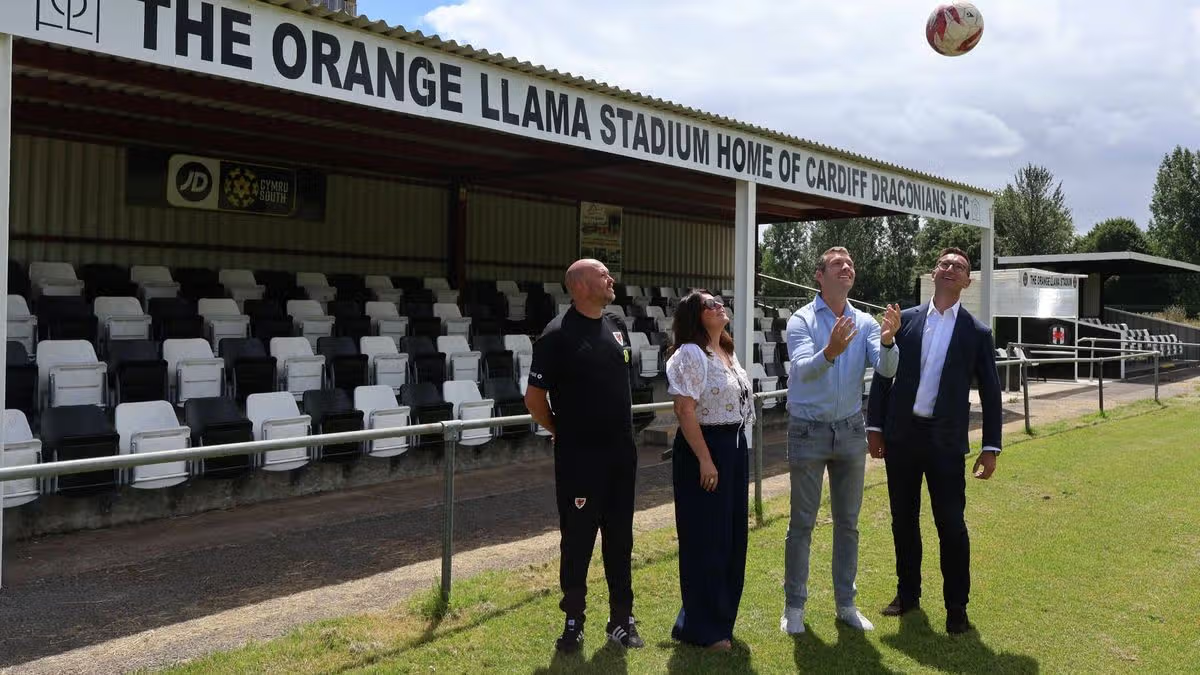
Left to right: Rob Franklin FAW, Kellie Beirne chief executive of the Cardiff Capital Region, David Sciama Coaches’ Voice and Rob Asplin PwC.
football education and digital coaching platform Coaches’ Voice has secured a seven figure equity investment to support its growth plans.
The Cardiff-based company has secured backing from the £50m equity fund of the Cardiff Capital Region.
Advertisement
Working with coaches, clubs, leagues and governing bodies across the global game, Coaches’ Voice delivers expert‑led insight, digital learning tools and specialist education to help coaches develop, adapt and succeed at every level of football, from grassroots pitches to the international stage.
Co‑founded by David Sciama and Peter Kenyon, Coaches’ Voice supports more than 4,000 football organisations worldwide, delivering over one million learning hours each year. The business is increasingly focused on widening access to coaching education and strengthening football at the community level, with Wales central to its future growth.
Chief executive Mr Sciama, said: “As the world enjoys a summer of football, this investment allows us to expand our presence in South East Wales and support the grassroots coaches who underpin the game. Visibility at the top level always inspires participation, and with great coaching available, that is what sustains the interest in communities across Wales.”
A key driver of Coaches’ Voice’s impact in Wales is its partnership with the Football Association of Wales (FAW) through Coach Cymru, which provides ongoing cotinued professional development support for FAW-qualified coaches.
Advertisement
Mr Sciama added: “With 4,500 coaches already active in Wales, we expect this figure to grow significantly over the next 18 months. It is through our close relationship with FAW that gives Coaches’ Voice a meaningful and growing role in the continued development of Welsh football.”
Rob Franklin, FAW’s head of coach education, said: “Supporting coaches is essential to sustaining growth at every level. Through our work with Coaches’ Voice via Coach Cymru, we’re expanding access to high-quality, digital coaching content that supports learning anytime, anywhere.
“This allows us to connect coaches across Wales with the latest insights, techniques and best practice from the global game. By using accessible, modern learning tools, we’re helping to raise standards, strengthen the coaching pathway and ultimately support the development of coaches and players across the country.
The Cardiff Capital Region’s Innovation Investment Capital (IIC) fund is manged by Capricorn Fund Managers.
Advertisement
Chief executive of the Cardiff Capital Region, Kellie Beirne, said:“There is now a real opportunity to capture national attention and support greater coach participation across every level of the game. Football has the unique power of connecting communities and Coaches’ Voice is helping ensure that coaches across South East Wales have access to the best learning and support they need to nurture that enthusiasm.
“This investment is about creating lasting value, strengthening communities and helping this and future generations benefit from better coaching, stronger support and wider access to football education.”
Lynda Stoelker, Capricorn Fund Managers’ chief operating officer and chair of the IIC investment committee, added: “Coaches’ Voice is a strong fit with IIC’s investment philosophy of backing innovative, high-growth businesses that have the potential to create lasting impact in the Cardiff Capital Region.”
PwC provides investment research and sourcing to Capricorn.
Advertisement
Rob Asplin, PwC partner, said: “Coaches’ Voice stood out as an investment opportunity because of its blend of premium content, digital capability, commercial relevance and international market potential, alongside a clear commitment to growing its regional presence.”
The exact value of the seven figure investment has not been disclosed.












































You must be logged in to post a comment Login