Connect with us

Business

Major industrial park in South Wales under new ownership

Published

on

Business Live

Bridgend Industrial Park has been acquired

Bridgend Industrial Estate

A major industrial park in South Wales is under new ownership.

Manchester-based David Samuel Properties has acquired Bridgend Industrial Park from Zurich Assurance.

Advertisement

The park, close to the M4, provides 300,000 sq ft of warehousing and industrial space with an additional 30 acres of development land. The estate is a mix of large standalone buildings with smaller estates together with ancillary retail and office space.

The park has a strong occupancy rate of 95%.

ACRE London acted on behalf Zurich with the Cardiff investment teams of Fletcher Morgan and Calan acting on behalf David Samuel Properties.

A spokesman for David Samuel Properties said: “This latest acquisition reflects our continued conviction in well-located industrial assets with strong tenant demand, attractive reversionary potential and resilient cashflows.

Advertisement

The value of the deal has not been disclosed.

David Samuel Properties oversees a portfolio of more than 1,200 units at 150 plus locations across the UK.

Moreover, four commercial property projects in North Wales are set to deliver new industrial and employment space with support from the Wales Commercial Property Fund, managed by the Development Bank of Wales.

Developments in Kinmel Bay, Conwy and Bangor have secured almost £7m from the fund, which will support the delivery of almost 67,000 sq ft of modern commercial space across 32 units.

Advertisement

The projects include new light industrial units at Tir Llwyd Enterprise Park in Kinmel Bay, flexible space at Conwy Morfa Enterprise Park, and two separate schemes at Parc Bryn Cegin in Bangor, one of Gwynedd’s strategic employment sites.

Deputy fund manager Claire Sedgwick and property development executive Rob Good supported K&C Group with the funding for Tir Llwyd Enterprise Park while senior property development executive Anna Bowen delivered the funding for Vectorex in Conwy along with Hillcliff Holdings and Lingar Holdings in Bangor.

Nicola Crocker, property fund manager at the Development Bank of Wales, said:“Across North Wales, we are seeing strong demand for modern, flexible commercial space and a pipeline of experienced developers ready to bring forward high-quality schemes.

“These four projects show how targeted funding can help unlock commercial developments that might otherwise struggle to proceed, creating the space businesses need to grow while supporting construction supply chains and strengthening local economies. From Kinmel Bay and Conwy to Bangor, this investment is helping create practical, high-quality employment space in locations where businesses want to operate.


Advertisement
Continue Reading
Click to comment

You must be logged in to post a comment Login

Leave a Reply

Business

How one investor is playing the school year

Published

on

How one investor is playing the school year

Aerial over the University of North Carolina-Chapel Hill

Ryan Herron | Istock | Getty Images

A version of this article first appeared in the CNBC Property Play newsletter with Diana Olick. Property Play covers new and evolving opportunities for the real estate investor, from individuals to venture capitalists, private equity funds, family offices, institutional investors and large public companies. Sign up to receive future editions, straight to your inbox.

Advertisement

Students are heading back to school across the nation and leasing student housing at a faster clip than they were last year. 

For investors, that creates new opportunities, but one leader in the field cautions that the differences in market fundamentals are widening across universities and regional markets.

On a national level, pre-leasing across the Yardi 200 — a curated set of the most important student housing markets, representing 90% of the institutional space — reached 89.1% in July ahead of fall move-ins. That is up from 88.1% in July 2025 but still below August 2025 levels of 89.9%. 

According to Yardi, 117 of the 200 markets surveyed in July were at or above their year-earlier pre-leasing levels, but there was significant variation across different markets. 

Advertisement

“New supply is increasingly concentrated in large markets, dragging down performance at schools with the most beds and weighing more heavily on national metrics,” wrote Tyson Huebner, director of research at Yardi Matrix, in the report.

Harrison Street Asset Management is one of the largest investors and developers in the sector, with more than $24 billion allocated across 432 student housing properties since its launch in 2005. Its investments total more than 238,000 beds across 200 university markets in North America and Europe. 

“Our conviction in student housing is really high, but our conviction in every student housing market is not,” said Mike Gordon, global chief investment officer for real estate at Harrison Street. “Frankly, I think that creates a really interesting investment environment.”

Gordon said there are a lot of investors trying to get access to the sector, but only a limited number of managers with long-term experience in it. Specialization, he said, is more vital than ever, because the differences between university markets have grown quickly due to funding cuts, enrollment and specific student demand. 

Advertisement

Get Property Play directly to your inbox

CNBC’s Property Play with Diana Olick covers new and evolving opportunities for the real estate investor, delivered weekly to your inbox.

Subscribe here to get access today.

“Enrollment, applications, selectivity, research funding, student outcomes are increasingly concentrated at many of the leading institutions. Michigan, UVA, UNC, a number of the large public Power Four universities,” said Gordon, referring to the schools that belong to the four major athletic conferences. “Prospective students continue to value strong graduation incomes, alumni earnings, research capabilities, and many of the university markets that we focus on are really operating at or above 95% occupancy.”

He noted that housing supply has lagged enrollment growth at the universities in a number of these markets, specifically citing Virginia Tech, Auburn University and Penn State. 

Advertisement

“I think about the best university towns almost like factory towns where the factory is never closing. The university is the factory, and what it produces is intellectual capital. It attracts students, obviously, but also professors and researchers, entrepreneurs, companies that want to be close to that intellectual capital, and everyone needs somewhere to live,” Gordon said. 

Harrison Street acquires and develops assets on its own and through public-private partnerships with state universities. It has also been selling some of its assets given rising demand in certain markets. 

Earlier this year, Harrison Street sold a 12-property student housing portfolio for $910 million, one of the largest student housing portfolio dispositions in recent years.

Choose CNBC as your preferred source on Google and never miss a moment from the most trusted name in business news.
Advertisement
Continue Reading

Business

Exelixis: ‘Hold’ On Zanzalintinib Subpopulation Miss And STELLAR-304 H2 2026 Data

Published

on

Exelixis: 'Hold' On Zanzalintinib Subpopulation Miss And STELLAR-304 H2 2026 Data

This article was written by

Terry Chrisomalis is a private investor in the Biotech sector with years of experience utilizing his Applied Science background to generate long term value from Healthcare. He is the author of the investing group Biotech Analysis Central which contains a library of 600+ Biotech investing articles, a model portfolio of 10+ small and mid-cap stocks with deep analysis for each, live chat, and a range of analysis and news reports to help Healthcare investors make informed decisions.

Analyst’s Disclosure: I/we have no stock, option or similar derivative position in any of the companies mentioned, and no plans to initiate any such positions within the next 72 hours. I wrote this article myself, and it expresses my own opinions. I am not receiving compensation for it (other than from Seeking Alpha). I have no business relationship with any company whose stock is mentioned in this article.

Seeking Alpha’s Disclosure: Past performance is no guarantee of future results. No recommendation or advice is being given as to whether any investment is suitable for a particular investor. Any views or opinions expressed above may not reflect those of Seeking Alpha as a whole. Seeking Alpha is not a licensed securities dealer, broker or US investment adviser or investment bank. Our analysts are third party authors that include both professional investors and individual investors who may not be licensed or certified by any institute or regulatory body.

Advertisement
Continue Reading

Business

Thailand’s Visa-Free Stay Drops from 60 to 30 Days Starting September 15, 2026

Published

on

Thailand to Reduce Visa-Free Stay Limit to 30 Days

It is now official. Thailand is ending its 60-day visa exemption scheme and reverting to a 30-day stay for nationals of 60 countries and territories, including the United States, the United Kingdom, Canada, Australia and most of the European Union. The four Ministry of Interior regulations behind the change were published in the Royal Gazette on August 31, setting the effective date at September 15, 2026.

What is changing

Since July 2024, travelers from eligible countries have been able to enter Thailand visa-free for up to 60 days, a scheme introduced to help revive tourism after the pandemic. From September 15 onward, that period is cut to 30 days for tourism purposes. The change affects only the length of stay, not the process itself: eligible nationalities still enter without applying for a visa in advance.

Travelers arriving on or before September 14 remain under the current 60-day rule for that entry, even if their stay extends past the cutoff date. The new 30-day limit applies only to entries made from September 15 onward.

Who is affected

The reform sorts nationalities into several tiers. Sixty countries and territories, including the US, UK, Canada, Australia, France, Germany and most other EU members, receive a 30-day tourist exemption. Two nationalities, reportedly Mauritius and the Seychelles, move to a 15-day exemption, while three others remain on the Visa on Arrival track.

Advertisement

This finalizes a process that had been under discussion since March 2025, when Thailand’s Tourism and Sports Ministry first floated the idea of scaling back the 60-day scheme over concerns it was being used for unauthorized work, informal business activity, and overstays. The Cabinet approved the principle of the rollback on May 19, before the exact terms were settled and published.

The 30-day extension option

The shorter exemption does not fully close the door on longer stays. As was the case before 2024, travelers can apply for a 30-day extension at a Thai immigration office, generally for a fee of around 1,900 baht and a TM.7 application form. That brings the maximum visa-free stay to 60 days in total, down from the 90 days previously available under the 2024 scheme, but only if the traveler completes the extension in person.

Why Thailand is scaling back

Thai authorities have framed the rollback as a response to abuse of the extended exemption, including unauthorized remote work, informal businesses run without a work permit, and cases where the extra time was used to facilitate illegal activity. Industry groups had also raised concerns that the looser 60-day rule made it easier to bypass proper visa channels altogether. The reform comes as Thailand’s tourist arrivals continue to run behind the government’s targets for the year, a backdrop that shaped months of internal debate before the final texts were signed.

What this means for travelers

For a standard two- to three-week holiday, the change makes no practical difference: a passport valid for at least six months, a completed Thailand Digital Arrival Card filed within 72 hours of arrival, and proof of onward travel remain the only requirements. The impact falls mainly on travelers who had grown used to two full months without paperwork. Anyone planning to stay longer than 30 days from September 15 onward will need to either apply for the extension locally or arrange an appropriate visa before departure.

Advertisement
Continue Reading

Business

Musk Says Tesla FSD Pothole Avoidance Is Coming Soon, Seven Years After He First Teased This Feature

Published

on

Musk Says Tesla FSD Pothole Avoidance Is Coming Soon, Seven

Elon Musk said this weekend that Tesla’s Full Self-Driving software will soon be able to automatically steer around potholes, reviving a promise the Tesla and SpaceX CEO first made roughly seven years ago that has yet to materialize.

Musk offered the latest update Sunday night, responding on the social platform X to a user who asked whether FSD would eventually be able to avoid potholes. True to his typically terse style, Musk replied with just two words: “coming soon.” The exchange quickly drew attention from Tesla-focused outlets given how long the specific promise has been outstanding.

Potholes remain one of the most persistent and costly road hazards in the United States, capable of damaging tires, wheels and suspension components, and in more severe cases, causing injury to vehicle occupants. Reliable, automated pothole detection and avoidance has proven to be a genuinely difficult engineering problem, requiring a vehicle’s software to identify a pothole under varying lighting and road conditions, estimate its depth, location and overall risk level, and then decide in real time whether to slow down, steer around it, or simply drive through it if avoidance isn’t feasible.

Musk’s pledge traces back years earlier than most casual observers might expect. In 2019, he agreed with a Tesla owner that pothole avoidance would “definitely” improve the driving experience under Autopilot, the company’s less capable predecessor to Full Self-Driving. The following year, in February 2020, Musk responded “Yes” when asked whether Tesla vehicles could eventually create and share “micro-maps” containing data on road features such as potholes and stop signs, allowing the broader vehicle fleet to benefit from data collected by individual cars. Neither capability has become a standard, broadly available feature in the six years since.

Advertisement

Despite that long gap, there are indications the feature may genuinely be closer to release this time. Pothole avoidance has been explicitly listed as an “Upcoming Improvement” in Tesla’s FSD release notes since the company deployed FSD version 14.3 in April, distributed through software update 2026.2.9.6. That version also included a significant upgrade to Tesla’s neural network vision encoder, improving the system’s understanding of three-dimensional geometry and difficult road environments, alongside a complete rewrite of the company’s underlying AI compiler and runtime software, which Tesla said resulted in a 20% improvement in the system’s reaction time. More recent builds, including versions 14.3.4 and 14.3.8 rolling out as part of Tesla’s 2026 Summer Update, have continued to list the feature as pending rather than active.

Some drivers have already reported seeing early, inconsistent signs of the capability in action. Tesla vehicles running current FSD versions have occasionally been observed steering slightly to avoid large potholes, including one documented case in which FSD version 14.2.2.5 positioned a vehicle so that a damaged section of road passed cleanly between its tires. It remains unclear whether the software specifically recognized the feature as a pothole or simply treated it as a generic road obstacle, though the behavior suggests the underlying capability may already be partially functional even without a formal rollout.

Unlike some previous Tesla hardware initiatives, pothole avoidance is expected to be delivered as a pure software update rather than requiring new sensors or components, meaning it should eventually become available across Tesla’s existing FSD-capable vehicle fleet, including older cars running Hardware 3, once the feature is formally activated.

Musk’s latest promise arrives at a notable moment for Tesla’s broader autonomous vehicle ambitions. The company recently expanded the operational area for its driverless robotaxi service in Austin, Texas, marking its first such expansion in some time, as Tesla continues working to establish its Cybercab service amid intensifying competition from rival autonomous vehicle operator Waymo. Musk has a long history of publicly discussed self-driving predictions that have taken considerably longer to materialize than initially promised, a pattern extensive enough that it has been documented at length by outside trackers. Even so, Tesla has continued to make incremental technical progress toward full autonomy in the years since Musk’s original 2019 pothole comments, even if the specific feature he first teased has, until now, remained conspicuously absent from the company’s production software.

Advertisement
Continue Reading

Business

GFL Environmental closes acquisition of SECURE Waste

Published

on


GFL Environmental closes acquisition of SECURE Waste

Continue Reading

Business

What to do if you've been scammed

Published

on

A £10 note sticking out of someone's back pocket with a tape measure attempting to steal it.

Consumer Expert Harry Kind explains how you could get you money back if you have been scammed.

Continue Reading

Business

UK long-term borrowing costs hit highest since 2008 ahead of October Budget

Published

on

A woman with long brown hair looks at someone off-camera

Long-term government borrowing costs have risen to a 28-year high, putting further pressure on Prime Minister Andy Burnham ahead of his first Budget next month.

The yield on a 30-year gilt — a loan to the British government — rose to 5.89%, the highest since 1998.

The effective cost of borrowing for governments across the globe has continued to rise this morning with new multi-decade highs in market interest rates.

The moves reflect concerns about inflation arising from the ongoing Iran war, competition from major tech firms for long-term borrowing, and concerns about state borrowing levels.

Advertisement

All of those factors will make the Budget process trickier for Burnham, who will face MPs on Tuesday for the first time as prime minister, and his Chancellor John Healey.

Higher borrowing costs will reduce the amount of headroom the government has against its self-imposed fiscal rules, limiting the amount Healey can spend on consumer-friendly measures to ease the cost of living.

Downing Street said fiscal discipline is the “bedrock” of Britain’s economic stability and national security.

But a spokesperson for the prime minister refused to comment directly on the rise in borrowing costs.

Advertisement

“The chancellor and the prime minister are in lockstep that the government will meet the fiscal rules with a buffer against uncertainty and we’re cutting the deficit faster than any other G7 economy to the lowest level in six years,” the spokesperson said.

The yield on the benchmark 10-year gilt rose to its highest rate since June 2008, at the height of the global financial crisis.

Gilt yields move counter to the value of the bonds, meaning their prices fall when yields rise.

Borrowing costs in the US, Japan and Europe have hit similar highs in recent days.

Advertisement

Global markets reacted in particular after suggestions in the US that its central bank could raise rates. The UK market was closed for the bank holiday yesterday. Japan is also facing pressure to raise rates.

The Chancellor is in the USA attending a meeting of global finance ministers and central bankers. He told the G20 that the UK had the fastest growth in the G7 in 2026 so far, that productivity was improving and that the UK was cutting its borrowing at the fastest rate of the major economies.

Kathleen Brooks, research director at investment company XTB, told the BBC News Channel: “Of course, this is red lights flashing.”

“We are used to pockets of volatility, it has been volatile few months,” she says.

Advertisement

But record levels of government debt and a record tax take mean “these are not comfortable times for the new government and the new chancellor,” she says.

Every time bond yields rise, the UK has to pay more on the debt interest, she says.

Continue Reading

Business

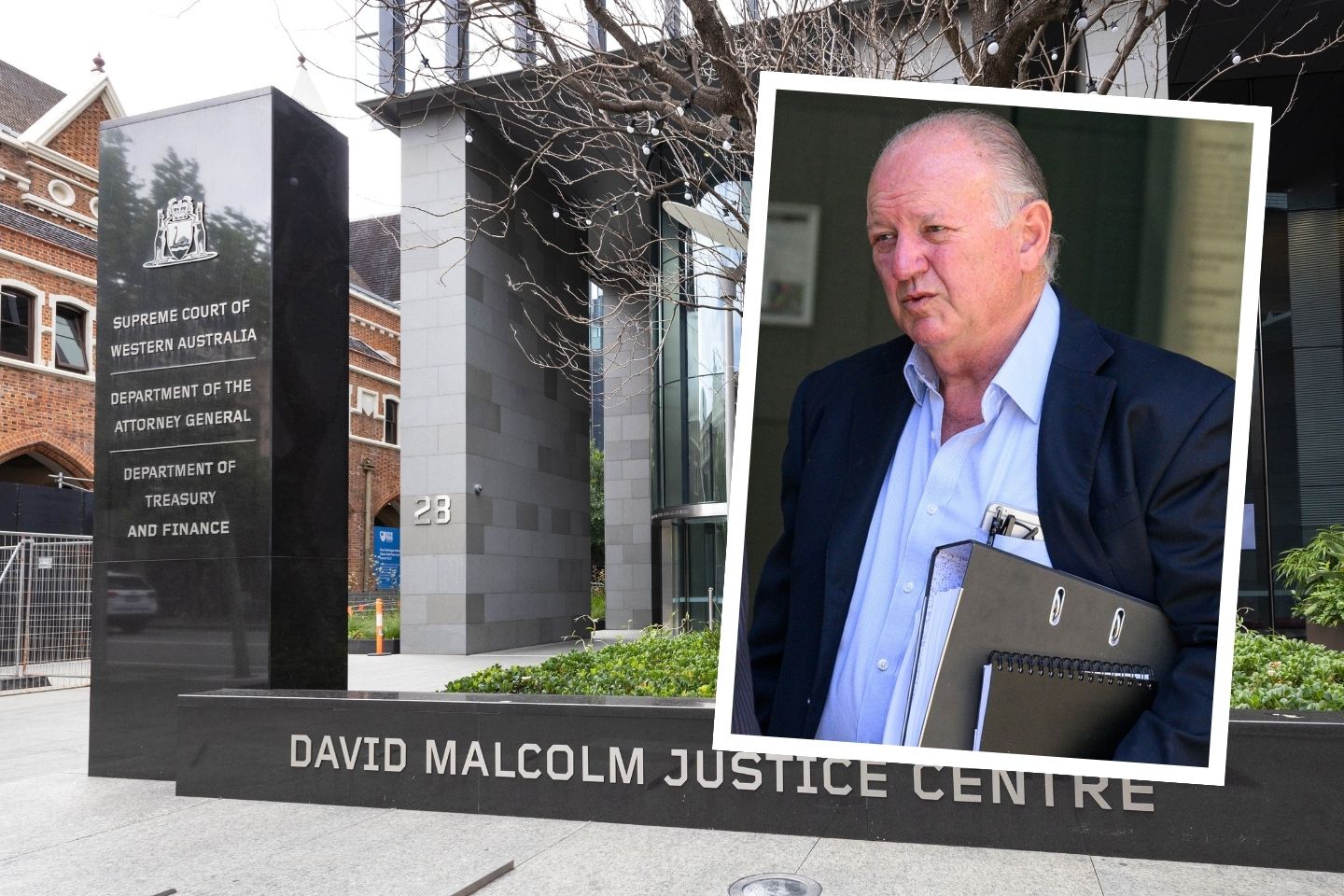
Court rejects Allen Caratti’s bid to block inquiry over debt to Reliance

Published

on

Court rejects Allen Caratti’s bid to block inquiry over debt to Reliance

A WA court has rejected Allen Caratti’s bid to shelve an inquiry despite the property mogul’s claims he has secured financing arrangements to pay off a judgment debt.

Continue Reading

Business

Keurig Dr Pepper to sell back Chobani stake for $925 million

Published

on


Keurig Dr Pepper to sell back Chobani stake for $925 million

Continue Reading

Business

The Mall at Cribbs Causeway becomes more eco friendly with help of bees and robot cleaner

Published

on

Business Live

The shopping centre has invested in a number of schemes to cut carbon emissions

The Mall at Cribbs Causeway in Patchway, South Gloucestershire.

The Mall at Cribbs Causeway in Patchway, near Bristol(Image: The Mall at Cribbs Causeway)

Cribbs Causeway shopping centre has been recognised for its eco efforts after launching a number of schemes to help it become more environmentally friendly. The Mall is one of only a few UK retail destinations to secure the so-called BREEAM excellent rating, according to its owners.

The award follows a comprehensive environmental programme by Cribbs including a campaign called ‘People, Planet, Purpose’ aimed at helping shoppers and tenants understand how the Mall is becoming more energy efficient.

Advertisement

Changes include installing LED lighting across 98 per cent of the site; investing in a solar thermal domestic hot water system powering hot water taps across toilet blocks; and replacing its inefficient plant with modern heating-cooling and fresh air systems.

The shopping centre has also introduced a robotic cleaning machine, which it says uses 35 per cent less water than traditional cleaning methods, and has developed a wildflower garden with beehives to boost biodiversity across the estate.

Other schemes include a new recycling strategy within the centre; reinstating a recycling coffee grinds initiative for shoppers to collect unwanted coffee grinds for their gardens; and regularly recycling unused uniforms from staff.

“The award highlights all the hard work the team have undertaken over the past few years as we strive to become one of the most sustainability-friendly destinations in the country,” said Katie Searle, director of asset management at Sovereign Centros from CBRE, which provides asset management to Cribbs.

Advertisement

“Becoming BREEAM certified is one of the key steps on this journey and we are looking forward to working closely with our partners at Savills, tenants and the local community to implement new ideas to not only support our ESG goals, but also those of our retailers and the wider community.”

BREEAM – or building research establishment environmental assessment method – is an international system used to measure and certify the environmental and sustainability performance of buildings and infrastructure.

The certification follows wider investment by Cribbs, including £300,000 in pedestrian and cycle pathway extensions; installing more electric vehicle charging points; and collaborating with local travel networks to offer staff subsidised rates on public transport.

Elsewhere, the shopping centre has launched a free events calendar, while also investing in first aid, mental health, and dementia and autism awareness training for its guest services team, it said.

Advertisement

It has also refurbished its accessibility unit and introduced care packages and new sanitary bins across male toilets as part of the ‘Boys Need Bins’ campaign – a public health initiative calling on the UK government to make sanitary disposal bins a legal requirement in all male public and workplace restrooms.

Continue Reading

Trending

Copyright © 2025