Connect with us
DAPA Banner

Business

Making the case for cereal as healthy, clean and functional

Published

on

Making the case for cereal as healthy, clean and functional
Continue Reading
Click to comment

You must be logged in to post a comment Login

Leave a Reply

Business

Saks CEO Accused of Potential Favoritism Toward Moncler in Bankruptcy Proceedings

Published

on

Artificial Intelligence / AI

Saks Global CEO Geoffroy van Raemdonck is facing scrutiny over possible favoritism toward Moncler as the retailer moves through bankruptcy proceedings.

Concerns have been raised that his dual role as Saks CEO and a Moncler board member could create a conflict of interest.

The issue surfaced in a February complaint filed through EthicsPoint, a platform used for anonymous reports.

The complaint questioned whether Moncler, which is owed about $6.3 million in the bankruptcy case, could receive better treatment than other creditors, NY Post reported.

Advertisement

It asked, “When vendors are paid off during bankruptcy and Moncler is paid a higher percentage than a different vendor, would it be due to the presence of Geoffroy?”

The filing also raised concerns about business decisions beyond payments. It suggested that Saks might receive priority access to Moncler products, such as popular jackets, because of van Raemdonck’s position.

The complaint warned that even the appearance of favoritism could affect how other retailers, including competitors, view the situation.

Expert Says Saks CEO ‘Stuck on Both Sides’

Moncler responded on March 5, saying it is reviewing the matter. The company stated it is “conducting the appropriate regulatory corporate governance and assessment” and added that it is working to prevent and manage any potential conflict of interest.

Advertisement

A spokesperson for Saks Global said the company had reviewed van Raemdonck’s outside roles before hiring him.

The spokesperson explained that safeguards are already in place. “Protocols are in place under our longstanding conflict of interest policy, which have been discussed with Moncler, and a direct line of communication has been established between the companies to ensure continued compliance,” the statement said.

According to TotalNews, experts say the situation puts the executive in a difficult position. Charles Elson of the University of Delaware said van Raemdonck is “stuck on both sides,” with duties to Saks as a bankrupt company and to Moncler as a board member.

He added that the situation is “not a good look” for Moncler, which may want to avoid appearing to favor one creditor over others.

Advertisement

Saks Global filed for bankruptcy protection on January 14. As part of the process, a court is expected to review van Raemdonck’s employment agreement, including his role at Moncler, with a decision anticipated in April.

Van Raemdonck joined Moncler’s board in April 2025 after leading Neiman Marcus through its own bankruptcy and later overseeing its acquisition by Saks in a $2.7 billion deal.

Originally published on vcpost.com

Advertisement
Continue Reading

Business

Asia-Pacific Faces SDG Crunch as 2030 Deadline Nears

Published

on

What Businesses Must Know in 2026

With only five years left to meet the 2030 Agenda for Sustainable Development, Asia and the Pacific are entering a decisive phase, one in which the region’s vast economic strength, demographic weight, and innovation potential will be tested by deepening structural pressures. 

Key takeaways

  • Asia-Pacific is not on track to achieve any of the 17 SDGs by 2030 despite gains in poverty reduction, health, and infrastructure.
  • Environmental setbacks are eroding progress, with rising greenhouse gas emissions and regression in marine and land ecosystems.
  • The region is set to miss 103 of 117 measurable targets, while data gaps for 52 targets are limiting effective action.

The Asia and the Pacific SDG Progress Report 2026 presents a region of extraordinary promise, but also one increasingly strained by climate vulnerability, rapid urbanization, widening inequality, and demographic change. It argues that the choices made now will determine whether Asia-Pacific can turn its advantages into a sustainable future for all or fall short of its international commitments.

The report portrays a region moving in two directions at once. On one hand, it has delivered tangible gains in some of the most visible areas of development. Poverty has declined, infrastructure has expanded, and health outcomes have improved. 

On the other hand, those gains are being weakened by environmental deterioration and by slow or reversing progress in goals tied to equality, resilience, and inclusion. The central message is stark: despite meaningful progress in several sectors, Asia and the Pacific are not on track to achieve any of the 17 Sustainable Development Goals by 2030.

Progress Recorded, but Not Fast Enough

Among the strongest-performing areas, the report highlights SDG 9, covering industry, innovation, and infrastructure, where no measurable targets are currently in decline. SDG 3, on health and well-being, also stands out as a relative success story, supported by continued reductions in maternal, neonatal, and under-five mortality. Improvements are also noted under SDG 1, no poverty, and SDG 6, clean water and sanitation, although the report stresses that the pace in both areas remains insufficient to guarantee achievement by the end of the decade.

Advertisement

Still, the broader picture is far from reassuring. The report warns that some of the region’s hardest-won gains are now at risk, especially as environmental pressures intensify. The contradiction is especially visible in the way development progress is being offset by ecological decline. Growth in infrastructure and social services may continue, but it is unfolding alongside rising emissions, biodiversity loss, and mounting pressure on marine and land ecosystems.

That environmental strain is one of the most alarming themes in the report. Under SDG 14, Life Below Water, the region is facing setbacks in sustainable fishing and coastal conservation. SDG 13, climate action, remains a grave concern as total greenhouse gas emissions continue to increase. SDG 15, life on land, is also being hampered by accelerating biodiversity loss and land degradation. Together, these trends suggest the region is advancing economically and socially while losing ground environmentally, a trajectory that could undermine long-term sustainability.

The scale of the challenge is laid out in blunt terms. On its current trajectory, Asia and the Pacific is expected to miss 103 of the 117 measurable SDG targets by 2030. Only 14 targets are on track to be achieved, while seven of the 17 goals have no targets on course at all. That leaves little room for complacency. The report makes clear that what is needed is not merely incremental improvement, but urgent, coordinated, and accelerated action across sectors and countries.

Data Gaps, Inequality, and the Risk of Falling Behind

A second major warning in the report concerns the weakness of the evidence base itself. ESCAP says 52 targets still lack adequate data, creating major blind spots for policymakers trying to monitor progress and design effective responses. The report includes figures tracking changes in data availability between 2020 and 2025, availability by SDG, and the extent of disaggregated data. These gaps matter because weak measurement can conceal where inequality is worsening and where the most vulnerable populations are being left behind.

Advertisement

That concern feeds directly into one of the report’s most important conclusions: the pledge to “leave no one behind” is under strain. Setbacks are identified in equal access to education and justice, while limited data on gender equality and strong institutions make it harder to judge whether excluded groups are being reached effectively. In other words, the challenge is not just that progress is too slow, but that the region does not always have a clear enough picture of who is benefiting and who is being missed.

The report also offers a more nuanced picture of individual goals. On poverty, it credits the region with progress in reducing income deprivation, but warns that these gains are threatened by disasters and by declining official development assistance for poverty reduction in least developed countries. 

In food systems, it notes slow progress on malnutrition and warns that setbacks in sustainable agriculture and the preservation of local breeds may jeopardize long-term food security. In health, the region’s gains are real, but still fragile, challenged by noncommunicable diseases, suicide, tobacco and alcohol use, antimicrobial resistance, high household health costs, and low health worker density.

Taken together, the report reads as a warning against assuming that past gains will be enough to carry the region through to 2030. Asia and the Pacific still have the capacity, scale, and innovation base to change course, but the window is narrowing. Without deeper policy shifts, stronger resource allocation, and a more balanced approach linking growth, inclusion, and environmental protection, the region risks arriving at the end of the decade having advanced in important areas while still missing the broader promise of sustainable development.

Advertisement

Continue Reading

Business

Upstream Bio enters $150 million at-the-market sales agreement with Leerink Partners

Published

on


Upstream Bio enters $150 million at-the-market sales agreement with Leerink Partners

Continue Reading

Business

JLR temporarily halts production at Solihull plant

Published

on

JLR temporarily halts production at Solihull plant

A JLR spokesperson said: “Due to a part supply challenge with a supplier, we are temporarily pausing production on certain vehicle lines at our Solihull manufacturing facility. We are working closely with that supplier to resolve the issue as quickly as possible and minimise any impact on our clients or our operations.”

Continue Reading

Business

PetroTal Corp. (TAL:CA) Q4 2025 Earnings Call Transcript

Published

on

OneWater Marine Inc. (ONEW) Q1 2026 Earnings Call Transcript

Mark Antelme

Hello. Thank you for joining PetroTal’s Q4 2025 webcast. Your presenters today are Manolo Zuniga, President and CEO; and Camilo McAllister, CFO. [Operator Instructions]

So I’ll now hand over to Manolo. Many thanks.

Advertisement

Manuel Zuniga Pflucker
President, CEO & Director

Thank you, Mark, and good morning, everyone, and thank you for joining PetroTal’s year-end 2025 webcast, where we are going to discuss the financial and operational results we released overnight. My name is Manolo Zuniga and I am the President and CEO of PetroTal. I am joined today by Camilo McAllister, our Executive Vice President and Chief Financial Officer.

If you have clicked on the link in this morning’s press release, you should hopefully see our slide presentation on your screen. But before I begin, I should mention that there are some disclaimers towards the end of the main presentation on our website, which I encourage you to read after our prepared comments.

On Slide 2, we have our usual summary of our key financial and operational metrics. In the left-hand column, we have highlighted key production data from 2025 and 2026.

Advertisement

In 2025, PetroTal delivered average production of approximately 19,500 barrels of oil per day, representing a 9% increase over 2024. However, production declined throughout the year with Q4 2025 production averaging approximately 15,300 barrels per day, reflecting operational constraints at Bretaña. As we have previously disclosed, these constraints are primarily related to water handling and reinjection capacity, which remain the key bottleneck to restoring the more than 5,000 barrels per day of shut-in oil production.

Looking at 2026, we’re off

Advertisement
Continue Reading

Business

Morrisons ‘alert’ to impact of Middle East conflict on customers

Published

on

Business Live

The supermarket chain said economic conditions are ‘tough’ for its customers

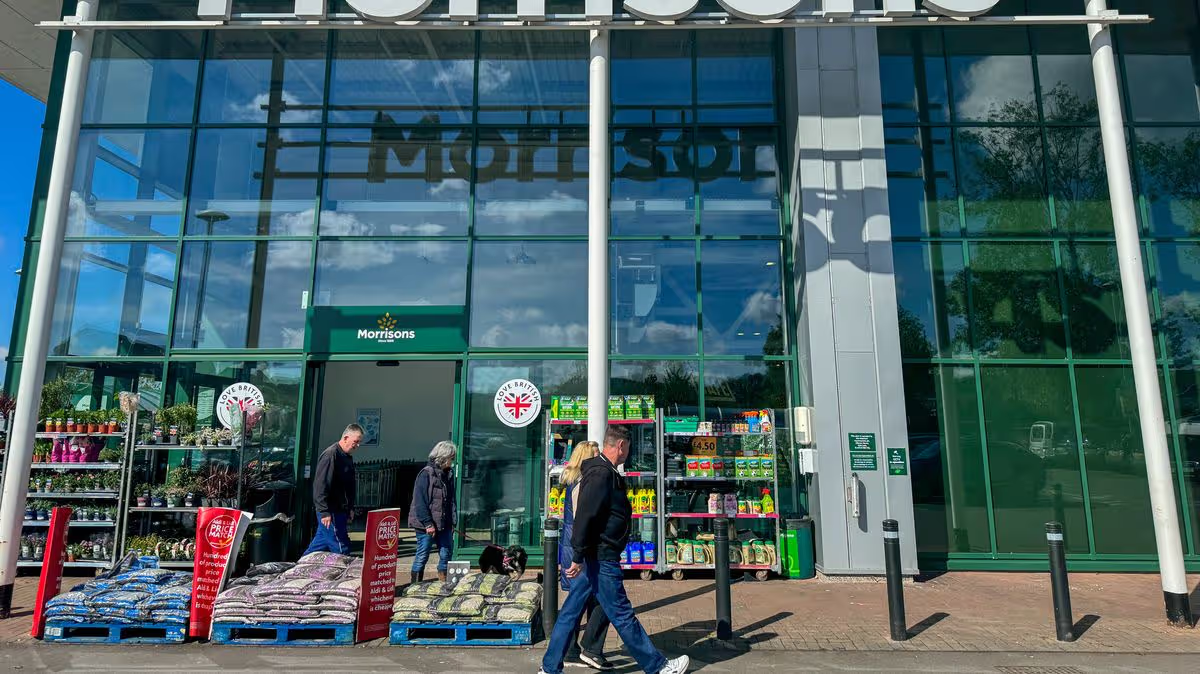
WELLS, UNITED KINGDOM – MAY 19: The Morrisons supermarket logo is displayed outside a branch of the supermarket retailer Morrisons on May 19, 2024 in Wells, England. The British retailer is one of the largest market leaders of groceries in the UK. (Photo by Matt Cardy/Getty Images)

Supermarket chain Morrisons said it is “alert” to the impact of the Iran war on consumer confidence and its supply chain after reporting stronger recent sales. The Bradford-based group said it is “tough for customers right now” and committed to further investment in pricing to support shoppers.

Boss Rami Baitieh said the business is assessing how shopping habits and the supply of products might be affected by the conflict in the Middle East. The business revealed sales grew over the past three months, driven by a “much-improved Christmas” performance.

He said: “We are watching current international events closely, alert to the impacts on consumer confidence and supply chains, and we will continue to do what we can to mitigate effects on our customers.”

The retailer said total sales rose 2.6% to £4.1 billion for the 13 weeks to January 25, compared with a year earlier. Group like-for-like sales were 2.8% year-on-year, it said.

Advertisement

Morrisons said it saw sales volumes grow on the back of “investment in lower prices” amid a period of intense competition between UK grocers. Under the leadership of Mr Baitieh, the retailer has sought to fight off pressure from discount rivals Aldi and Lidl, as well as price-focused strategies from other major grocers including Tesco, Sainsbury’s and Asda.

The retailer said it delivered £49m of cost savings during the quarter as it continues a transformation programme.

Mr Baitieh, chief executive of the business, said: “Against a highly competitive backdrop, with grocery market growth lagging previous expectations, we achieved our targets in Q1, delivering our 13th quarter of like-for-like sales growth. We know it’s tough for customers right now and we’re doing everything we can to offer them better value and give them more reasons to shop at Morrisons.

“That means continuing to invest in price, promotions and loyalty, concentrating on driving value where it matters most for our customers.

Advertisement

Earlier this year, Morrisons warned warned staff that it was not planning to offer significant pay rises this year as it swallows higher costs.

Continue Reading

Business

7 Top Affordable Electric Fencing Options for Businesses

Published

on

7 Top Affordable Electric Fencing Options for Businesses

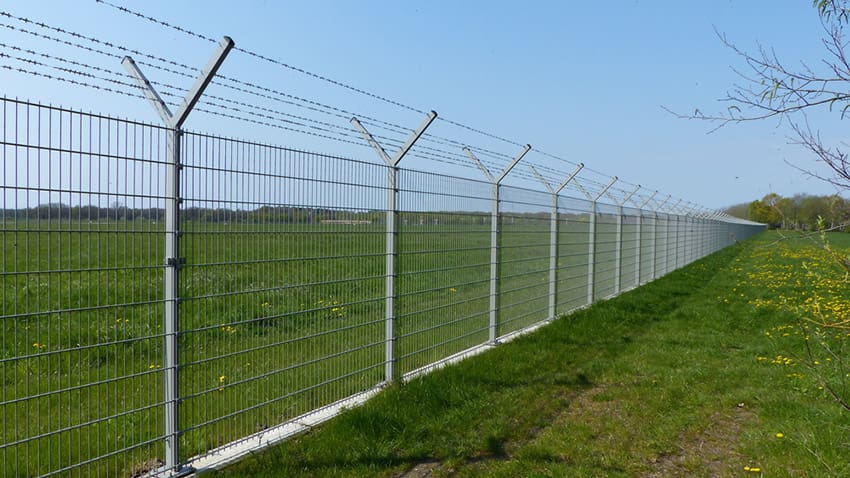
Property crime continues to pressure commercial operators to strengthen perimeter security.

Businesses that store equipment, vehicles, raw materials or finished goods outdoors often turn to electric fencing because it creates a visible deterrent and supports controlled access. It can also lower long-term loss exposure when compared to repeated theft-related costs.

Selecting the Best Commercial Electric Fences

Electric fencing is modernizing perimeter security by combining traditional barriers with new technology. This evolving market is making boundaries more secure, efficient and resilient while aligning with changing stakeholder needs.

The best option usually balances affordability with installation requirements, maintenance needs, reliability and the ability to integrate with broader site security. Key evaluation points include:

  • Total cost of ownership, including hardware, installation, maintenance and compliance
  • Site coverage and scalability across growing facilities
  • Integration with surveillance, alarms and access control
  • Power reliability during outages or disruptions
  • Internal labor to manage the system over time

Top 7 Electric Fencing Providers

Below are seven affordable electric fencing options for businesses, with emphasis on value, pricing approach, scalability and operational fit.

1. AMAROK

Across commercial applications, AMAROK stands out by offering a managed security-as-a-service model rather than a conventional hardware purchase. Its commercial electric fencing solution includes design, permitting, installation, maintenance, monitoring and system support under a single monthly agreement. AMAROK also helps businesses avoid large up-front capital costs and shift security spending into a more predictable operating expense model.

Advertisement

The company also positions electric fencing as part of an integrated perimeter strategy built to protect property, people, productivity, profits and reputation. Its system uses a 10-foot electrified inner fence powered by solar and battery backup, and company materials state that over 99% of customers report zero external theft after installation. For businesses seeking affordability tied to turnkey execution rather than piecemeal management, this model offers a strong advantage.

2. Gallagher Security

Within the enterprise segment, Gallagher Security remains one of the most established names in electric fencing and perimeter protection. The company offers pulse fencing systems, zone-based control and software integration features that help larger sites monitor fence condition, detect disturbances and respond to threats with more precision.

Gallagher Security suits businesses that need strong perimeter intelligence across complex sites, such as industrial compounds, logistics operations, or multi-zone facilities. Buyers typically manage procurement, installation and ongoing maintenance through this traditional ownership mode.

3. Zareba Systems

For businesses seeking a lower-cost entry point into electric fencing, Zareba Systems is a go-to option. The brand offers energizers, posts, insulators, and accessories through broad retail distribution. This product mix makes it easier for smaller operations to assemble a practical perimeter deterrent without committing to a fully managed security contract.

Advertisement

Zareba Systems’ approach can work well for businesses with internal maintenance teams or straightforward site layouts. To assess the solution’s overall value, decision-makers should factor in labor costs for installation, repairs, compliance and monitoring duties.

4. Patriot

Patriot

is suitable for businesses that need dependable electric fencing without stepping into premium enterprise pricing. Its energizers support multiple power configurations, including AC, battery and solar. This gives businesses flexibility when securing remote yards or smaller commercial properties.

This brand suits operators who want affordable equipment with room to scale gradually. As with most product-purchase models, the customer remains responsible for installation planning, routine maintenance, and long-term performance management.

Advertisement

5. Speedrite

For sites with lengthy fence installations, Speedrite stands out with high-output energizers designed for extensive coverage. Businesses with large industrial yards, agricultural-commercial hybrid sites or expansive storage areas often experience strong pulse performance over long distances, which this brand can expertly provide.

Its affordability comes from hardware value and wide availability rather than a managed service package. That structure makes it attractive for organizations that already have personnel capable of overseeing perimeter upkeep and troubleshooting.

6. Shanghai Gato

Shanghai Gato

focuses on advanced perimeter systems for businesses that need more than a basic electric barrier. Its portfolio includes pulse electric fencing and other intrusion-detection technologies, which makes it more suitable for sensitive sites or businesses facing elevated threat levels.

Advertisement

The provider can offer strong value when threat exposure is high and layered detection is required, which is especially true for high-risk environments. Pricing can vary based on system scope, integration demands and site conditions.

7. King Innovation

For simple upgrades to an existing perimeter, King Innovation supplies affordable energizers and accessories that help small businesses strengthen their perimeter without a major investment. This brand fits companies that need a modest electrified deterrent as part of a broader physical security plan, rather than a full commercial perimeter solution.

King Innovation has met consumer needs since the 1940s. Because the offering is more entry-level, its electric fencing solutions are best suited for smaller properties or limited-risk applications.

Comparative Overview of Top Electric Fencing Providers

Businesses should evaluate electric fencing options based on the total cost of ownership rather than just the hardware price. A lower initial purchase can become more expensive once installation, maintenance, repairs, compliance and internal labor enter the equation.

Advertisement
Provider Best For Pricing Model Up-front Cost Maintenance Responsibility
AMAROK Full commercial perimeter security Monthly service model Low to none Provider-managed
Gallagher Security Enterprise and multi-zone facilities Product purchase Moderate to high Customer-managed
Zareba Systems DIY and budget-focused businesses Product purchase Low Customer-managed
Patriot Midsize commercial properties Product purchase Low to moderate Customer-managed
Speedrite Large sites needing long coverage Product purchase Moderate Customer-managed
Shanghai Gato Higher-risk and integrated security sites Project-based Moderate to high Customer-managed
King Innovation Small-scale deterrence upgrades Product purchase Low Customer-managed

Choosing the Right Partner for Business

The ideal electric fencing choice depends on-site, risk level and operational complexity. Consider how much responsibility the business wants to keep in-house. Companies that compare affordability through that wider lens are more likely to choose a perimeter solution that protects assets effectively without creating avoidable long-term costs.

Advertisement
Continue Reading

Business

ResQ call centre to create 400 jobs in Hull and Seaham following contract wins

Published

on

Business Live

Hull call centre operator ResQ plans to create 400 jobs by the end of the year following contract wins in energy, telecoms and automotive sectors

ResQ is based out of headquarters on Paragon Street.

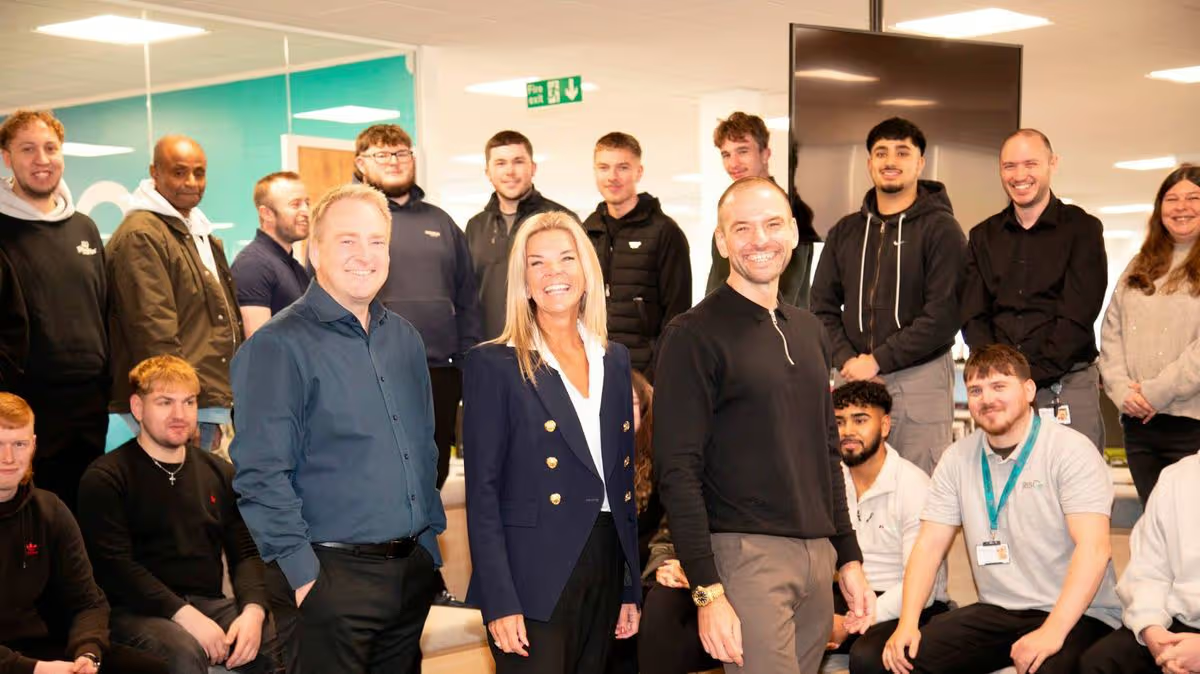
ResQ CEO Gill Marchbank (centre) with staff.(Image: ResQ)

Call centre operator ResQ has announced plans to create around 400 jobs by year-end following several new contract wins. The £38m turnover business has landed fresh work across the energy, telecoms and automotive sectors.

The 2,000-strong organisation now plans to expand its workforce at its Hull and Seaham, County Durham locations. The new positions are anticipated to encompass customer service administrators, team leaders and operational support roles.

ResQ states it will offer training and career development opportunities for new employees as the company continues its expansion. This recent growth follows the enlargement of the Seaham facility last year with over 100 new starters.

Gill Marchbank, CEO at ResQ, said: “This latest round of growth speaks to the reputation we have built at ResQ for delivering expert customer service within organisations where teams are under intense pressure to respond quickly and effectively.

Advertisement

“It’s a real vote of confidence in our people and the quality of service we deliver for our partners. In many of the sectors we support, customers are contacting organisations at stressful or critical moments, so combining human empathy with real-time insight through iQ , our AI platform, allows our teams to respond in the right way and helps our clients make better decisions in real time.”

ResQ’s call handlers assist clients’ customers in urgent scenarios such as loss of heating or vehicle breakdowns, where the firm states that reassurance, speed and accurate information are paramount. The new contract wins are expected to drive further investment in jobs, training and careers across the North East and Humber regions.

The company has made substantial investment in developing its own software in-house, and now combines human call handlers with the technology. The iQ system supports teams in “high-stakes” situations where understanding customer needs and urgency is essential, reports Hull Live.

ResQ says the technology enables its teams and clients to identify risks earlier and make better-informed decisions. The firm claims to be one of the largest call centre operations in the country, operating several major contact-centre hubs across the UK, serving prominent brands across sectors including telecoms, utilities, retail and financial services.

Advertisement
Continue Reading

Business

Mars adding 600 jobs in Chicago

Published

on

Mars adding 600 jobs in Chicago

Part of $100 million investment in global headquarters.

Continue Reading

Business

Instagram, YouTube Found Responsible for Teen’s Mental Health Struggle in Historic Ruling

Published

on

YouTube Agrees to $24.5M Settlement Over Trump Account Suspension

A Los Angeles jury has found Meta Platforms’ Instagram and Google’s YouTube responsible for harming a young user’s mental health, marking a historic decision that could reshape how social media companies are held accountable.

The case involved a 20-year-old woman identified only as Kaley, who said she became addicted to the platforms at a young age due to features like infinite scrolling and autoplay.

Jurors ruled that these design elements contributed to her struggles, awarding a total of $6 million in damages.

Meta was ordered to pay $4.2 million, while Google was held liable for $1.8 million, NY Post reported.

Advertisement

Kaley testified that her use of the apps began early, starting with YouTube at age six and Instagram at nine.

Over time, her usage increased sharply. By age 10, she had uploaded more than 200 videos, and by 15, she had created multiple Instagram accounts.

She told the court, “I wanted to be on it all the time. If I wasn’t on it, I felt like I was going to miss out on something.”

Jury Rules Social Media Apps Exploit Kids

Her testimony described long hours spent online, including days where she used Instagram for up to 16 hours.

Advertisement

She said the constant notifications and likes gave her a “rush,” which kept her coming back. Over time, this led to anxiety, depression, and body image issues, along with thoughts of self-harm.

Lawyers for Kaley argued that the platforms were designed to keep young users hooked.

They described the apps as “digital candy for the brain,” claiming the companies knowingly built features that exploit children’s vulnerabilities. One attorney said the verdict shows that “accountability has arrived” for the tech industry.

The ruling is seen as groundbreaking because it focuses on product design rather than user content.

Advertisement

According to Yahoo, this approach allowed the case to bypass Section 230, a law that typically protects tech companies from liability over what users post.

Legal experts say this could open the door to thousands of similar lawsuits already pending in courts.

Both companies denied wrongdoing and said they plan to challenge the decision. In a statement, Meta said, “We respectfully disagree with the verdict and are evaluating our legal options.”

Google added, “We disagree with the verdict and plan to appeal,” arguing that YouTube is a responsibly built platform.

Advertisement

Originally published on vcpost.com

Continue Reading

Trending

Copyright © 2025