
Business
Malk unveils plant-based whole milk





The number of people entering insolvency in England and Wales was 14 per cent higher in July than in the same month last year, according to official figures, driven by a rise in individual voluntary arrangements.
A total of 11,926 individuals entered insolvency during the month, Insolvency Service data show, of which 7,442 were individual voluntary arrangements (IVAs) – agreements in which people who cannot pay their debts reach a deal with their creditors as an alternative to bankruptcy. With the exception of December 2025, when figures were inflated by the clearing of a backlog of cases agreed in earlier months, it was the highest monthly IVA total since November 2022.
In the 12 months to the end of July, one in 360 adults in England and Wales entered insolvency, a rate of 27.8 per 10,000 adults. A year earlier the rate stood at 24.3 per 10,000, or one in 412.
Sonia Jordan, the president of R3, the insolvency trade body, said the figures underlined “the continued pressure on household finances”.
“Many households continue to struggle with debt and there is a clear need for effective support and breathing space,” she said. “Government support such as the £150 energy bill discount and the freeze on bus fares will provide some relief. Recent figures showing a decline in mortgage arrears and repossessions are also encouraging, but financial pressures remain.”
Debt relief orders (DROs) – which allow people with debts below £50,000, few assets and little spare income to write off what they cannot pay – fell 4 per cent compared with July 2025, to 3,820. Monthly numbers so far this year remain above last year’s average, and since the fee for entering a DRO was removed in April 2024, monthly totals have been higher than at any point since the orders were introduced in 2009.
There were 5,248 registrations under the “breathing space” scheme, which gives people temporary protection from creditors while they take debt advice and put a plan in place – 38 per cent fewer than in July 2025. Numbers have been lower since December 2025, after StepChange, the largest money adviser group by number of cases, updated its suitability criteria.
The overall number of individual insolvencies in July was similar to June. Across the 12 months to 31 July, IVAs accounted for 59 per cent of individual insolvencies, debt relief orders 35 per cent and bankruptcies 6 per cent, with the Insolvency Service noting a long-term decline in the proportion of cases that are bankruptcies.
IVA numbers have been rising since 2023, and in the first seven months of 2026 were 14 per cent higher than the 2025 monthly average, although they remain below the levels recorded between 2018 and 2022. The highest numbers came before the Financial Conduct Authority banned debt packagers from receiving referral fees for introducing customers to IVA firms in June 2023, and before professional insolvency bodies tightened related rules.
Separately, 1,931 registered company insolvencies were recorded in England and Wales in July, 5 per cent higher than in June but 5 per cent lower than the same month a year earlier.

Amy Ingham
Amy Ingham is a reporter at Business Matters, covering UK business news with a focus on breaking news, business policy, late payments and insolvency. She joined the magazine in 2026 after completing the NCTJ Diploma in Journalism at Harlow College’s journalism school. Her recent reporting includes British Steel’s nationalisation and its impact on SME suppliers, the decline in late payments by large firms, and Insolvency Service director disqualifications. Reach her at aingham@cbmeg.co.uk.
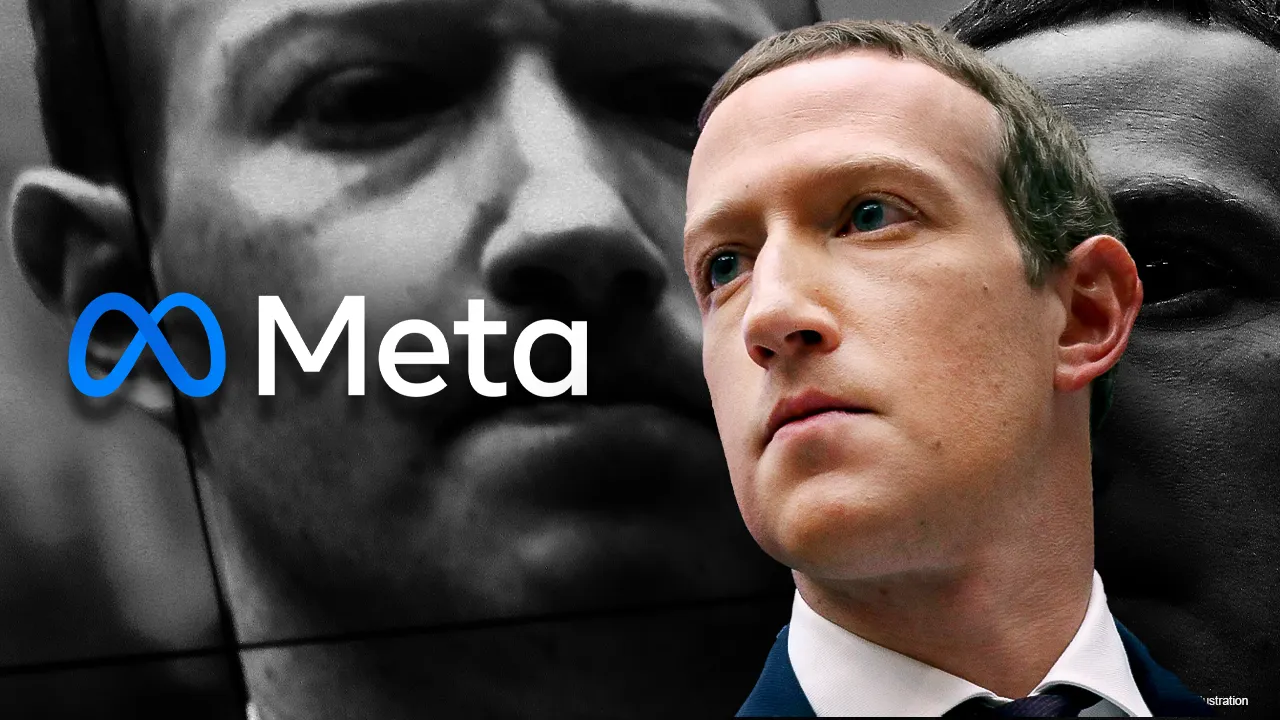
Meta faces a landmark lawsuit in California from 29 states seeking $200 billion in damages over claims its platforms are addictive to children. FOX Business’ Ashley Webster reports on the potential financial and existential threat to the company.
Meta faced accusations of targeting children for addictions to Facebook and Instagram in federal court on Tuesday.
Deputy California Attorney General Meghan O’Neill launched her case against Meta in a trial that could reshape how Facebook, Instagram and other social media platforms operate.
O’Neill told the jury that Meta’s business model was all about trying to “hook the users, hold them for as long as they can, harvest their data and then hide the truth from the public.”
She said children were particularly susceptible to Meta’s algorithms and that Meta was aware of and sought to exploit that fact, pointing to an internal report at Meta, “The Young Ones are the Best Ones.”
WE GREW UP BEFORE SCREENS TOOK OVER. OUR KIDS DESERVE THAT CHANCE TOO

Meta unveiled a new campaign promoting an optimistic vision for artificial intelligence, saying the technology should help people build, connect and create. (Samuel Boivin/NurPhoto via Getty Images / Getty Images)
California, Colorado, Kentucky and New Jersey are leading a bipartisan group of 29 states suing Meta.
The states argue that Meta’s addictive platforms resulted in such harms as anxiety, depression and even suicide, and misled consumers about the platforms’ safety.
“Meta needed kids, and it needed to reassure the people who cared about those kids that the kids are safe,” O’Neill said.
WHEN IS A MENTAL HEALTH CRISIS TOO SEVERE FOR TELEHEALTH? WARNING SIGNS FAMILIES SHOULDN’T IGNORE
Meta co-founder and CEO Mark Zuckerberg and Instagram chief Adam Mosseri are expected to testify in the weekslong trial.
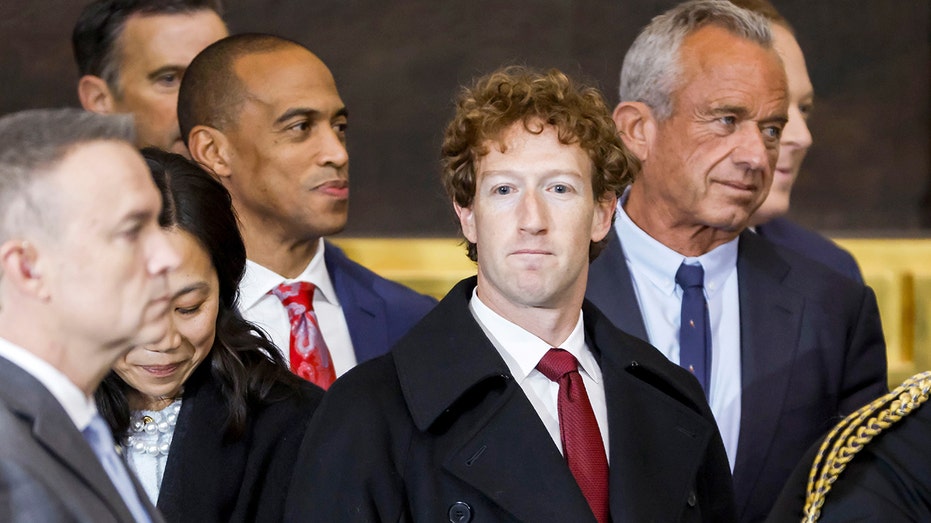
Mark Zuckerberg, CEO of Meta Platforms Inc., center, arrives for the 60th presidential inauguration in the rotunda of the U.S. Capitol in Washington, D.C., Jan. 20, 2025. (Shawn Thew/EPA/Bloomberg via Getty Images / Getty Images)
Meta faces steep financial penalties depending on the outcome of the trial, with attorneys general stating last week that it could cost the company around $200 billion.
Representatives for Meta have denied wrongdoing and pointed to measures they put in place to protect teens and keep younger children off of their platforms.
Silhouettes of mobile users next to a screen projection of Facebook logo in this illustration taken March 28, 2018. (Reuters/Dado Ruvic/File Photo / Reuters)
GET FOX BUSINESS ON THE GO BY CLICKING HERE
“The AGs offer no proof anyone in their states was misled, claim benign features like having an additional Instagram account somehow harmed their residents, and attempt to penalize Meta for industry-wide challenges like age verification,” a Meta spokesperson said before the trial this week.
“Rather than sticking to the facts or the law, the states have instead decided to chase an outlandish payout.”
Reuters contributed to this report.
Business
Before Her Death, Hayden Panettiere Spoke Candidly About Trauma, Motherhood and Mental Health Struggles

In the months before her death at age 36, actress Hayden Panettiere had spoken with unusual candor about the traumas that had shaped her life, from a childhood spent performing catastrophe on screen to her adult struggles with addiction, postpartum depression and an abusive relationship.
Panettiere, known for her roles in “Heroes” and “Nashville,” was found unresponsive in an apartment in Greenville, South Carolina, and was pronounced dead at the scene on Sunday, police said. A cause of death has not yet been established, but authorities said there were no signs of foul play.
Her death came just months after the publication of her memoir, “This Is Me: A Reckoning,” a book in which she said she wanted to be “brutally honest” about “every aspect of my life, from childhood to now.” Speaking to The Independent in May, Panettiere described the process of writing the book. “I had to learn not to be afraid of what people would think about it. Or if they would judge me,” she said.
Panettiere began performing as an infant, when her mother, former soap opera actress Lesley Vogel, started bringing her to commercial auditions. She went on to voice Princess Dot in the 1998 Pixar film “A Bug’s Life” and appeared in soap operas as a young child. In her memoir, Panettiere wrote about how the traumatic storylines she portrayed as a child actor shaped her early understanding of attention and love. “Grown-ups gave me positive attention when — as an actor — I failed, got sick, screamed and cried, killed, grieved, and suffered,” she wrote. “Is it any wonder why I’ve faced so many real struggles in my life? I’ve often wondered whether — unintentionally — I’ve brought on my traumas because I’m wired to think they’re good for me.”
Panettiere achieved mainstream fame in 2006 for her role as a superpowered cheerleader on NBC’s “Heroes,” a breakthrough that prompted her entire family to relocate to Los Angeles. Speaking to Jay Shetty on his podcast “On Purpose,” Panettiere described the strange dynamics that success brought to her family life as a teenager. “My mum bought an apartment for me when I was 16 and my whole family lived in it. So again, it was just that very strange, uncomfortable feeling of the role reversal and desperately wanting to still feel like the kid and still feel like I had parents to lean on,” she said. She described her mother as functioning primarily as her manager throughout her childhood, a dynamic that shaped how she understood approval. “She was my boss, that’s how I saw her. Even if she was the most supportive person when I did what I was supposed to do and did it well and was the one cheering me on, it did feel like it was what I had to do to get her love,” Panettiere said.
In 2014, at age 25, Panettiere welcomed her daughter, Kaya, with her then-partner, former professional boxer Wladimir Klitschko. The birth itself was medically traumatic; Panettiere told the outlet Momé in July that she experienced severe hemorrhaging following delivery, requiring seven blood transfusions and surgery. She said that when she was finally able to see her newborn daughter after the operation, she “felt nothing.” “I had always heard that mums feel an instant rush of love, but I didn’t — and I had no idea why,” she told Momé. After attempting to self-medicate with alcohol, Panettiere eventually sought professional help and received a diagnosis of postpartum depression, which she first spoke about publicly in 2015 on the talk show “Live with Kelly and Michael.”
Panettiere later described the broad and often misunderstood spectrum of postpartum depression symptoms, pushing back against narrow public assumptions about the condition. “When they tell you about postpartum depression, you think about, ‘Okay, I feel negative feelings towards my child, I want to injure my child, I want to hurt my child,’” she said. “I’ve never ever had those feelings and some women do, but you don’t realise what broad of a spectrum you can really experience that on, and it’s something, I think, that needs to be talked about and women need to know that they’re not alone.” She added that public skepticism toward the condition compounded its difficulty. “There’s a lot of misunderstanding and I feel like there’s a lot of people out there who think that it’s not real, that it’s not true, that it’s something that’s made up in their mind. It’s something that’s completely uncontrollable and it’s really painful and scary,” she said. Panettiere also told Shetty that cosmetics brand Neutrogena ended a decade-long endorsement deal with her after she spoke publicly about her postpartum depression, citing a morality clause in her contract. “Of all the things I had been caught doing, that being the thing where they drew the line, was shocking to me,” she said.
On the set of “Nashville,” Panettiere said the storylines written for her character, Juliette Barnes, closely mirrored what she was privately experiencing at the time, including struggles tied to pregnancy, substance use and early motherhood. “I was suffering from debilitating anxiety and an addiction I couldn’t shake, and I had to live through it twice. First at home, as Hayden, and then in front of millions as Juliette,” she wrote in her memoir. She told Shetty the boundary between herself and her character became difficult to distinguish. “I didn’t know where Juliette ended and Hayden began,” she said. “I couldn’t come up to air from it.” To manage her anxiety and panic attacks during that period, she said she turned to substances. “I was self-medicating and looking for relief at the bottom of a bottle … I needed to self-numb,” she said.
When Panettiere and Klitschko separated in 2018, their daughter, then 2 years old, began living full time in Ukraine with her father. Panettiere was in the midst of her struggles with substance abuse at the time. “It wasn’t a decision I made lightly, nor was it a decision I even wanted to make,” she told Momé. “I was going through a really challenging time in my life … I knew I needed to be able to put her first so that I could get the help I needed and be the mum she needed me to be.” She said she remained close to her daughter despite the distance. “I love my daughter, and I’m so proud of the young woman she is becoming. I talk to her all the time, and I feel so connected to her,” she said.
Panettiere also spoke to Shetty about the difficulty of leaving an abusive relationship, describing the sustained effort required to fully end contact. “At one point I thought I had gotten out of it and gotten away from it,” she said. “Abusers, they weave themselves like weeds into your life and there’s always something that they left behind. There’s always something they have to come back for, there’s always something that they find to keep that connection, keep you on the hook.” She said she initially believed she could manage the separation alone before recognizing she needed outside help. “I thought I was capable of doing it by myself but I needed an incredible amount of support and back-up in order to make sure that there was no way for him to find his way back in,” she said.
Panettiere’s final Instagram post, shared July 27, showed a photo of her with photographer Randall Slavin, captioned simply, “Good times and good friends.” In her memoir, she described herself as an “optimist to the core” who resisted being defined by tragedy, despite the many hardships she experienced throughout her life, including the sudden death of her younger brother, actor Jansen Panettiere, in 2023. “One thing I know from my 36 years in the public eye is this: Life is a process that evolves day by day, year by year and — like it or not — you are engaged in a cycle of growth until the moment you take your last breath,” she wrote.
This story discusses sensitive topics including postpartum depression, addiction and domestic abuse. If you or someone you know is struggling with any of these issues, support is available. In Australia, contact Lifeline on 13 11 14, Beyond Blue on 1300 22 46 36, or 1800RESPECT for domestic violence support. In the United States, you can call or text 988 for the Suicide and Crisis Lifeline, or contact the National Domestic Violence Hotline at 1-800-799-7233.


The company is launching a Red Bull-fueled beverage option.

Starbucks (SBUX) is currently trading with a very low implied volatility rank which means options on the coffeehouse chain are cheap compared to the last 12 months. That could mean it’s a good time to look at a breakout trade such as a long strangle. A long strangle is constructed through buying an out-of-the-money call and an out-of-the-money put. The…
Copyright ©2026 Investor’s Business Daily, LLC. All rights reserved. 87990cbe856818d5eddac44c7b1cdeb8


Startup aims to bridge meat snacks and salty snack aisles.
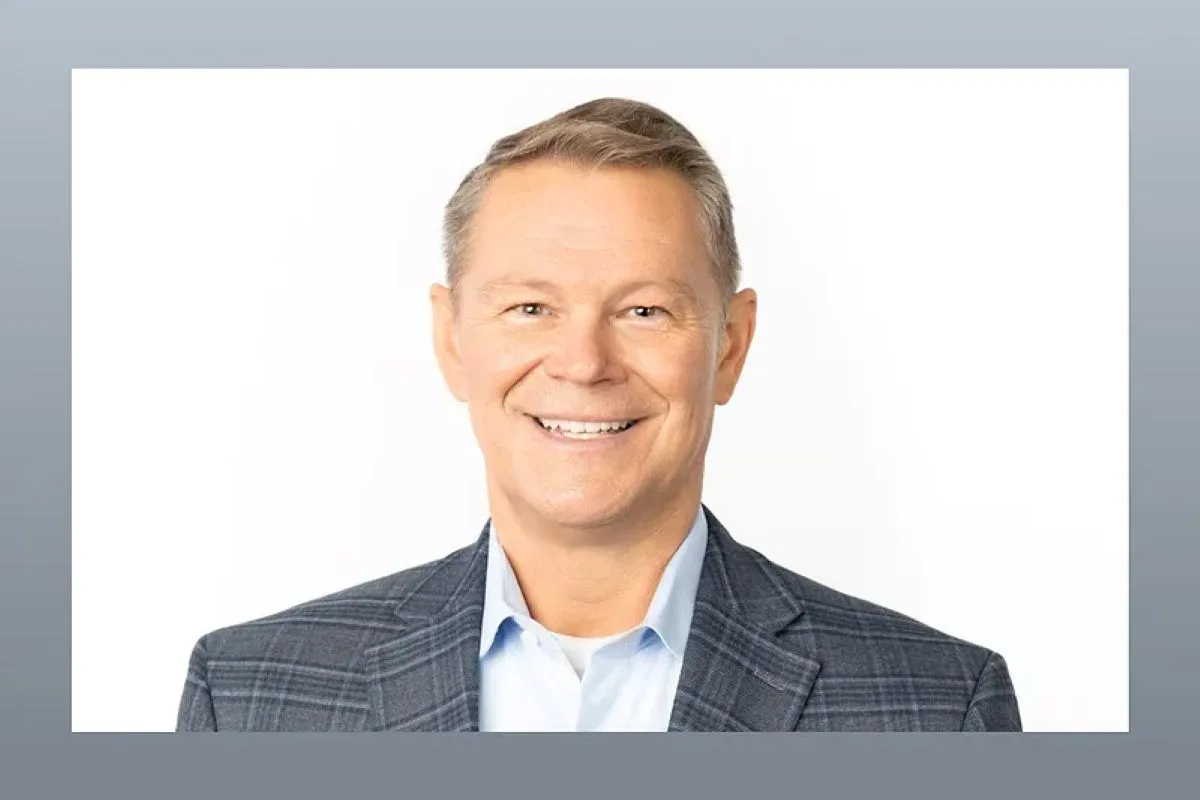

Most recently was with Dairy Management Inc.

We’ve all looked up and seen the white lines trailing behind aircraft in the sky.
Known as contrails, these icy clouds contribute to climate change, and scientists have been trying to work out how to stop them.
Now, a £5m UK trial will test whether AI can help, by predicting where warming contrails are likely to form and getting planes to avoid those areas.
It will focus on the Shanwick Oceanic airspace in the eastern half of the North Atlantic corridor which accounts for approximately 5% of global contrail warming.
The 30-month Operation Blue Skies project brings together Google, the UK government, the Met Office, air traffic control provider National Air Traffic Services (NATS) and researchers at the University of Cambridge and Imperial College London.
Contrails – also known as vapour trails – are made when the hot exhaust from aircraft engines meets the cold air at high altitude, creating ice crystals.
Many disappear quickly, but in particularly cold and humid conditions they can persist and spread, forming clouds which trap heat that would otherwise escape from the Earth.
Dr Paul Hodgson, Google’s technical lead for the operation, told the BBC’s Tech Life programme his five-year-old has a more colourful description for the white lines – “sky graffiti”.
“We think that contrail warming is responsible for something like a third of all aviation climate warming,” he said.
Dr Hodgson acknowledged there was uncertainty around the precise figure, but said scientists were confident it was “either quite a large problem or a very large problem”.
The project also comes as the government backs expansion of UK airports, raising the wider question of whether tech solutions can sufficiently reduce aviation’s environmental impact as demand for flying grows.
Google is also one of many big tech companies spending billions on new data centres – the giant, power-hungry banks of computer chips which power AI – which environmentalists are concerned will contribute even more to climate change.

Speaking at the 22nd Motilal Oswal Annual Global Investor Conference in Mumbai, Agrawal said there is a high probability of Nifty hitting 50,000 anytime before 2035.
Raamdeo Agrawal’s Nifty math: 3 scenarios
Agrawal’s timeline hinges on a single assumption: Nifty earnings compounding at roughly 12% a year, in line with an expected 11% nominal GDP growth rate. From there, the path to 50,000 splits three ways depending on the multiple the market is willing to pay. If the P/E multiple holds steady at 20–21x, the Nifty target of 50,000 will take roughly 8 years. If the multiple expands to around 24x, it will take roughly 6 years and if the multiple compresses to around 18x, which is below the ten-to-twenty-year historical average, then the journey to 50k will take roughly 9 years.
For the near term, Agrawal pointed to an earnings recovery already underway. “Nifty earnings growth of around 12% is a reasonable expectation,” he said, adding that current-quarter growth looks stronger still, in the 16–20% range.
Underpinning the bull case is what Agrawal called an “unprecedented” surge in retail market participation. Demat accounts in India have grown from roughly 40 million to 234 million as of last month, with 2.9 million added in that single month alone, a pace he said is “likely unmatched anywhere in the world.”

Mutual fund folios rose about 19%, from 55 million to 74 million, over the past year. Monthly SIP flows have crossed ₹31,000 crore, and equity mutual fund AUM has compounded at roughly 30% a year over the past decade, climbing from about ₹4 lakh crore to about ₹86 lakh crore.
Agrawal likened the moment to a structural shift in the US four decades ago: “This feels like India’s ‘401(k) moment’ — comparable to when U.S. retail investors began participating heavily in markets in the early 1980s.” The U.S. now sees roughly $750 billion a year in 401(k) contributions flowing into stocks and bonds; India’s expanding demat base, he said, is becoming the domestic equivalent.Also Read |Equity investments should give about 15% annual returns over next 5 years: Raamdeo Agrawal
FII selling overdone
The retail boom is unfolding even as foreign institutional investors pull back sharply. FIIs sold about $18 billion of Indian equities last year and roughly $25 billion more in the first half of this year, Agrawal said while calling it a marked reversal for a group that, aside from 2022, had historically stayed committed to Indian markets.
Domestic flows have more than offset the exodus: from just $5–10 billion a year around 2020 to roughly $90 billion annually more recently, including $54 billion in the first half of this year alone.
“FIIs have oversold India,” Agrawal said, noting that India’s weight in global allocation benchmarks like MSCI sits at only around 7–8%, underweight relative to its economic size. He argued that even if foreign selling continues, or simply stops, “domestic demand alone is strong enough to sustain a healthy market”, a dynamic he said keeps valuations structurally elevated.
A Bigger Bet: India’s Path From $4 Trillion to $16 Trillion
Agrawal framed the Nifty call within a much larger economic thesis. India crossed $1 trillion in GDP around 2007–08; the journey since has been uneven as the $2 to $4 trillion stretch took ten to eleven years, delayed by demonetization and COVID. But Agrawal projects the economy now moving from $4 trillion to $8 trillion in about seven years, and to $16 trillion within another seven to eight years after that.
“India is a multi-trillion-dollar opportunity,” he said, arguing that the jump from $4 trillion to $16 trillion represents a fundamentally different scale of opportunity than the earlier climb from $1 trillion to $4 trillion.
He tied this to savings: over the last seventeen years, India saved a cumulative $15 trillion; over the next seventeen, minimum cumulative savings are projected at $47 trillion, with $1.3 trillion saved last year alone.
Agrawal situated his India and Nifty forecasts inside a broader global wealth thesis drawn from a 2002 book, The Wealthy World, written by a finance professor who Agrawal said correctly anticipated the scale of global financial wealth creation decades in advance — from $13 trillion in 1980 to a projected $6,000 trillion by 2050.
“There is no absolute upper limit to financial wealth creation,” Agrawal said, “not for a country, and, increasingly, not even for a single corporation.”
He pointed to Nvidia and Apple, each having touched roughly $5 trillion in market value, as evidence that corporations are now rivaling, and in some cases surpassing, the size of nations. Global market capitalization has risen from about $200 billion in 1950 to roughly $164 trillion today, against a global GDP of about $120 trillion — a market-cap-to-GDP ratio that has climbed from 0.2–0.3 to about 1.3 over 75 years.
India’s own market-cap-to-GDP ratio now sits at 1.2–1.3x, up from well below 1x historically, with market cap around ₹500 lakh crore against GDP of ₹360–370 lakh crore. India’s share of global market capitalization has risen from about 2% a decade ago to about 3% today, among the very few major markets, alongside the U.S., Taiwan and South Korea, to have gained global share over that period.
Earnings, Profitability and the AI Wildcard
Corporate profit as a share of India’s GDP has recovered to about 5.7%, up from a low of 1.7% around 2019–20, though still well below its 2000 peak of 6.2% and further behind the near-double-digit levels seen in the US. Agrawal suggested artificial intelligence could push that ratio higher still, as “the return on capital may increasingly outpace the return on labor.”
“I think we shouldn’t focus too much on the Nifty number itself,” Agrawal said, adding that the real takeaway is that the world is getting wealthier and India is getting wealthier faster than almost anywhere else.
His conclusion: it’s “highly probable that Nifty reaches 50,000 sometime before 2035” — with the exact timing, he acknowledged, ultimately hinging on policy execution and how India navigates whatever “potholes” lie ahead.
(Disclaimer: Recommendations, suggestions, views and opinions given by the experts are their own. These do not represent the views of The Economic Times)
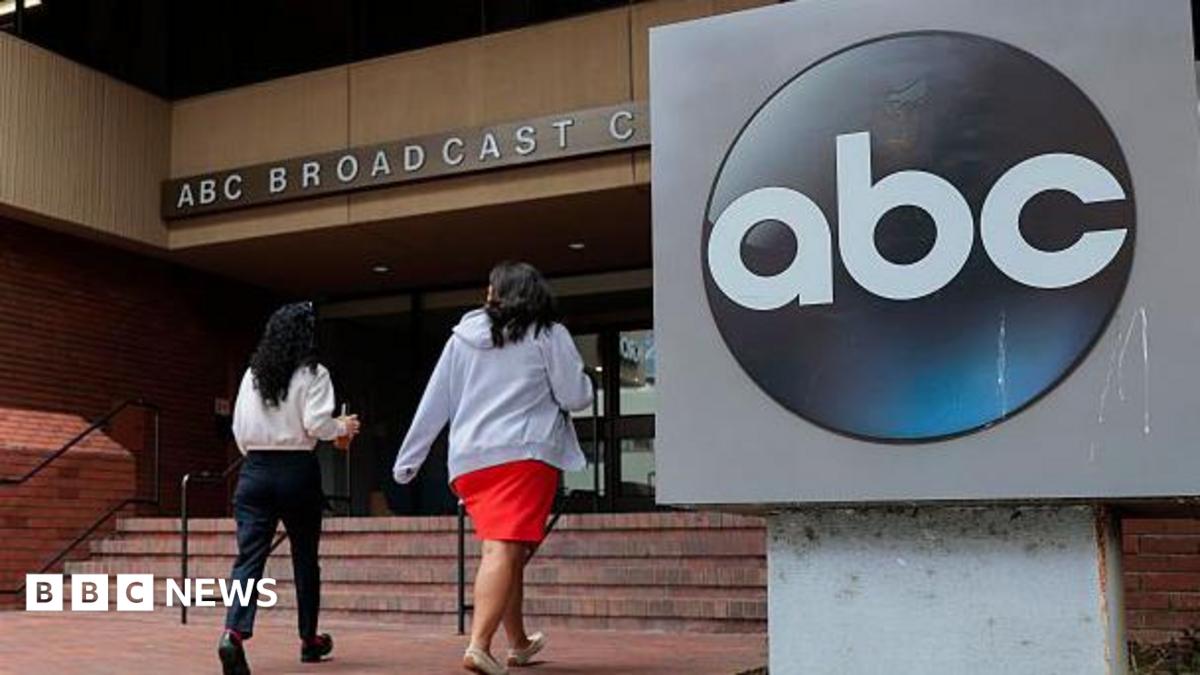
Disney and ABC have filed a lawsuit to stop the Trump administration from launching an early licence renewal process, arguing that the network is being unfairly targeted over its editorial content.
“Government censorship is deeply un-American,” the lawsuit says. “This case concerns the Administration’s sustained effort to do just that.”
The lawsuit says the Federal Communication Commission – the government’s media regulator – is being pressured to renew broadcast licences years early. It alleges the push stems from complaints from, and under the direction of, President Donald Trump.
FCC chairman Brendan Carr has said that the renewal requests were focused on “public interest”, not retaliation.
“If broadcasters don’t like that, that’s okay,” Carr told CNBC in July.
“They can become a cable channel, they can become a podcast, they can stream online. But if you want to uniquely be on the public’s airwaves, you have to comply with those obligations.”
The BBC has contacted the FCC for comment.
Disney and its eight owned-and-operated TV stations are plaintiffs in the lawsuit filed on Tuesday against FCC and its chairman.
The FCC ordered licence renewals for the Disney-owned ABC stations in April.
Disney previously had been under investigation for its alleged diversity, equity, and inclusion (DEI) practices and for ABC’s daytime talk show, The View.
But the notice for early renewal of licence from the FCC came a day after ABC’s late-night host Jimmy Kimmel made a joke about first lady Melania Trump.
In the lawsuit, Disney calls the order by the FCC “unprecedented”, saying that before then the commission had not called for early renewal in over 50 years.
“Acting through the Federal Communications Commission, the Administration has waged a retaliatory campaign against ABC for a single reason: it disapproves of what ABC broadcasts,” the lawsuit says.
It cites Trump’s own social media posts as evidence, including one in which Trump complained about ABC’s coverage of him being “almost 100% negative”.
In the same social media post, Trump also questioned whether their broadcast licences should “be terminated”, and answered his own question: “I say, Yes!”.
Under pressure from FCC chairman Carr, Disney pulled Kimmel off air in September 2025, after he made remarks about the murder of conservative activist and Trump ally, Charlie Kirk.
But Kimmel was quickly returned to his role after widespread public backlash over alleged free speech violations, including from Republican Senator Ted Cruz.
The FCC gave ABC and Disney 30 days to file applications, which, according to plaintiffs in the lawsuit, “ordinarily take months to prepare”.
The lawsuit also notes that the FCC has never demanded early renewal applications from a group of stations commonly owned by a single broadcast network.
ABC and Disney have requested a “speedy hearing” from the court and a temporary restraining order.

Personal insolvencies jump 14% as IVAs hit post-2022 high

0G Private Computer tops 250B tokens, adds USD payments

Ariana Grande Takes Romance With Ricky Álvarez To Next Level

Weekend Open Thread – Corporette.com

Weekend Open Thread: Brooks Brothers

London Mayor Sadiq Khan handed a peerage by Keir Starmer alongside 15 other Labour figures… just days before the PM leaves No10

Bitcoin to $250k: What it Means for Ethereum and Solana

Explicando de forma sencilla las preguntas financieras que TODOS deben saber

What Is Cryptocurrency? Bitcoin, Blockchain & US Dollar Explained #Crypto #Bitcoin #Shorts
-

 Fashion4 days ago
Weekend Open Thread: Ann Taylor
-
 NewsBeat7 days ago
Communication cards help banking customers access services or report scams
-
 Sports5 days ago
This U.S. Amateur is a glimpse into golf’s future in more ways than you think
-

 Sports4 days ago
Birmingham 2026: Day 6 Timetable for Irish Athletes
-
 NewsBeat4 days ago
Myanmar says over 300,000 Rohingya refugees verified for repatriation as exodus enters ninth year
-

 Tech4 days ago
11 Ways to Rank Your Videos
-

 Politics3 days ago
SEQ Code: The Three Letter Boarding Pass Code That Could Give You The Worst Seat
-
 Entertainment6 days ago
Keke Palmer Subtly Hints At Sean Evans Drama With Cryptic Post
-

 Tech7 days ago
Zoom Screen-Sharing Bug Let People Fully Take Over Other Devices On A Call
-
 Crypto World7 days ago
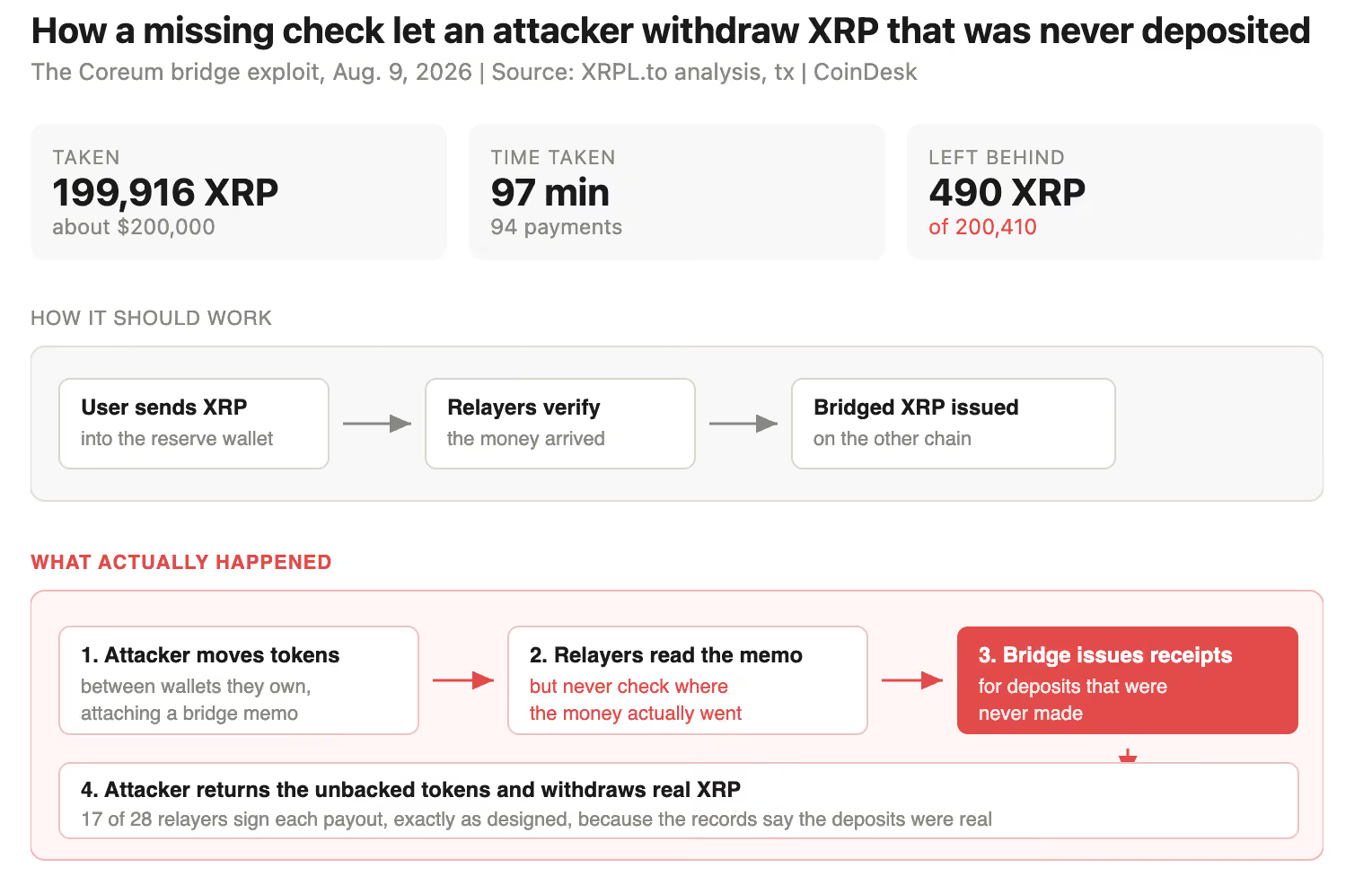
XRP bridge drained after software mistook fake deposits for real ones
-
 Tech5 days ago
DeepSeek Harness launches as open source rival to Claude Code, alongside V4-Pro on API with higher prices
-

 Sports6 days ago
DeQuan Jones in ‘high spirits’ after successful leg surgery
-
 Crypto World6 days ago
Perplexity AI Predicts an XRP Scenario Few Analysts Are Discussing
-

 Tech7 days ago
SpaceXAI’s Grok Bot turns agents into persistent digital coworkers that can operate your apps for $120-per-month
-
 Entertainment6 days ago
2026’s Most Ambitious Fantasy Movie Officially Scores Sequel Update
-

 Politics6 days ago
How Average Are You In The UK?
-

 Business7 days ago
Evolv Technologies Holdings, Inc. (EVLV) Q2 2026 Earnings Call Transcript
-
 Tech7 days ago
A Zoom Screen-Sharing Bug Let Anyone Take Over Other Devices On a Call
-
 NewsBeat6 days ago
‘Regret is a major theme of my work’: Matt Haig on finding acceptance
-

 Fashion6 days ago
Wednesday’s Workwear Report: Stretch-Cotton Pleated-Waist Top
You must be logged in to post a comment Login