

Business
Market in consolidation phase, break above 24,600 crucial for trend shift: Gautam Shah


Energy remains a structural story
Shah reiterated his long-standing bullish view on energy, calling it a structural theme with durable tailwinds.
“Energy is a structural play. There are a lot of fundamental tailwinds there. Valuations seem to be comfortable and the government is at play, helping many of the Indian companies to do much bigger things on a global scale. Given all of that and given the way the charts are, I do believe that energy is a structural play and we are looking at the index going back to the previous highs at least. That would be the first working target and then much bigger upside. So, the entire basket of power and energy stocks looks good to me. We have obviously been committed to it for a couple of months now and we are playing test cricket here. We are not looking at getting out very quickly. So, think big. There is another 15% to 20% upside on the index and you just stay committed. There will be dips from time to time because the rally has been large and every time that dip happens it might be a good idea to buy fresh.”
He added that investors can either accumulate baskets or focus on selective stock picking within the space.

Auto sector under pressure
On autos, Shah maintained a negative stance and expects meaningful underperformance ahead.
“We would be negative on auto, I think that has been the stance for a couple of months now. And with auto being a direct reflection of the economy and with the way the charts are placed, there is a greater possibility of the auto index actually losing about 10-12% from here and going back to the March lows. Now, if that were to happen, then there is a big problem because a lot of stocks will come off substantially.”
He added that both autos and FMCG could remain under pressure if largecaps fail to show leadership.
Nifty stuck in a tight range
On the broader index, Shah expects consolidation with a defined trading band and limited upside unless key resistance levels are breached.
“24,600 on multiple counts was and remains a very important resistance. And as you might have noticed in the last seven days, the market is just taking a breather. There seems to be a fierce battle between the bulls and the bears within a very tight range, 23,800 on the downside and 24,250 and 24,600 on the upside. Till the Nifty does not get past 24,600, I would be cautious, I would be conservative and there is a greater possibility of a breakdown below 23,800.”
He highlighted weak leadership from IT, banking, and Reliance Industries, which together form a large part of the index.
Banks and IT remain weak links
Shah expressed caution on banks, particularly private lenders, which he believes could weigh on the index.
“Look at what HDFC Bank has done in this entire April recovery and look at where it is today in comparison to the rest of the banking space. When you have HDFC and ICICI Bank undergoing such a phase of underperformance and not being able to rally for whatever reasons, questions about their growth, FII selling, the fact that they are all richly valued versus peers around the world, you can put out a lot of cases there. But it is out there that private banks are underperforming and if that is going to continue, Nifty will find it difficult to rally.”
He added that PSU banks remain mixed, with only one large name standing out.
Sector rotation into PSUs, metals and pharma
Shah believes the market is now entering a phase of rotational strength across previously underperforming sectors.
He remains bullish on PSU, metals, defence, capital goods, and real estate over a 6–12 month horizon. He also sees early signs of revival in chemicals, textiles, and pharma.
“Pharma is one space that we continue to like… a bigger breakout is coming after 18 months of consolidation and it will do exceedingly well.”
On metals, he remains strongly constructive with a long-term structural view:
“Our working target for the NSE Metals Index is about 14,000… The rest of this year will belong to metals.”
Real estate showing bottoming signs
Shah sees real estate as a high-conviction medium-term opportunity after a deep correction.
“We are going to see a large 25% rally on the index from current levels… So, it is an opportunity, but do not look at it short term. There will be volatility in the short term, but now they will start a sequence of higher tops and higher bottoms.”
Crude oil and macro risks
On crude oil, Shah flagged it as a key risk factor for India.
“Nymex crude is likely to remain elevated… eventually it can gradually go towards a 120-125 number. Now if that were to happen, it is definitely a big impact on the economy more medium-term.”
He also pointed to rupee weakness and global AI-driven disruption as additional headwinds for foreign inflows.
Final takeaway: be selective and concentrated
Summing up his strategy, Shah advised a focused approach rather than broad diversification.
“Be concentrated, be in companies that have less to do with foreign policy and be with companies that have relative better earnings visibility for the next three to five years. Anything and everything in this market will not work because you do not have the index tailwind in your favour.”

Business
(VIDEO) Berks County Police Officer Kristen Yeager Killed in Crash While Assisting Neighboring Department
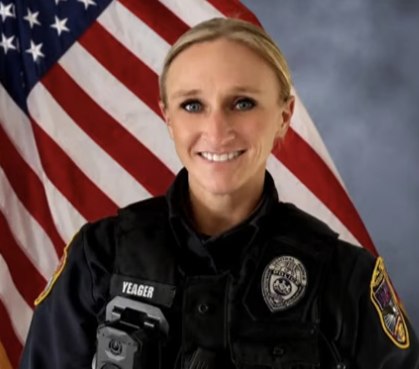
A two-and-a-half-year veteran of the Central Berks Police Department died Friday night when her patrol car crashed while responding to an emergency assist request from a neighboring law enforcement agency, authorities said Saturday.
Officer Kristen Yeager, responding near the intersection of Manatawny and Shoemaker Roads in Earl Township, was pronounced dead at the scene. The crash occurred just before 8 p.m. as she traveled to support another department’s call, officials confirmed.
Pennsylvania State Police are investigating the incident. No details have been released on the cause of the crash or whether other vehicles were involved. West Philadelphia Avenue and surrounding roads were closed for approximately four hours as emergency crews worked the scene.
EMS units from Oley, Boyertown and Earl Township responded to the crash. The Earl Township Fire Company later thanked mutual aid agencies and first responders for their assistance. The roadway reopened to traffic shortly after midnight.
Central Berks Police described Yeager as a dedicated officer who “served the citizens of our community with courage, compassion, and unwavering dedication.” The department noted that throughout her career, she “exemplified the highest standards of law enforcement, selflessly answering the call to protect and serve while placing the safety and well-being of others above her own.”
Community impact and department response
The loss has shaken the small department and the broader Berks County community. Yeager leaves behind her husband and three children. In the immediate aftermath, colleagues organized a meal train to support department members affected by the tragedy. Donations can be dropped off at the Central Berks Police station lobby Monday through Friday between 8 a.m. and 4 p.m.
Local leaders expressed condolences. Berks County officials and neighboring police departments offered support to the Central Berks team as they navigate the difficult period. The incident highlights the inherent risks faced by law enforcement officers, even during routine assistance calls.
Central Berks Police serves multiple municipalities in the region, covering a mix of rural and suburban areas north of Reading. With a relatively small force, officers frequently rely on mutual aid from neighboring departments for emergency responses, a common practice across Pennsylvania.
Officer background and service
Yeager joined the department about two and a half years ago. Colleagues remembered her as a committed public servant who approached her duties with professionalism and care. The department’s public statement emphasized her focus on community-oriented policing and her willingness to support fellow officers.
Pennsylvania law enforcement agencies have faced increased scrutiny and challenges in recent years, including staffing shortages and rising calls for service. Traffic-related incidents remain one of the leading causes of officer fatalities nationwide, according to data from the Officer Down Memorial Page and the FBI.
In 2025, several Pennsylvania officers died in vehicle-related incidents while on duty, prompting renewed discussions about vehicle safety, pursuit policies and wellness programs within departments.
Broader context of police line-of-duty deaths
Nationwide, line-of-duty deaths continue to affect law enforcement families. The crash involving Yeager adds to this year’s toll. Organizations such as Concerns of Police Survivors (C.O.P.S.) provide resources for families of fallen officers, offering grief support and programs for surviving children and spouses.
Local memorials are expected in the coming days. The Pennsylvania Chiefs of Police Association and other groups often coordinate tributes when an officer falls in the line of duty. A procession and funeral arrangements have not yet been publicly detailed as the family and department focus on immediate needs.
Earl Township, where the crash occurred, is a small community known for its agricultural roots and proximity to larger population centers. Residents expressed shock at the news, with some taking to social media to offer prayers for Yeager’s family and colleagues.
Safety on Pennsylvania roads
The stretch of road near Manatawny and Shoemaker has seen previous incidents, though officials have not linked prior crashes to Friday’s event. Pennsylvania State Police regularly investigate fatal collisions in rural areas where speed, weather and visibility can play significant roles.
State transportation officials continue efforts to improve road safety through signage, lighting and enforcement. However, emergency response driving presents unique challenges, including the need for speed balanced against public safety.
The investigation by Pennsylvania State Police will examine factors such as vehicle condition, road conditions, weather at the time, and any potential mechanical issues. Results typically take weeks to finalize.
Community support initiatives
The meal train organized by Central Berks Police reflects a common practice in tight-knit law enforcement communities. Such efforts provide practical help during times of grief and allow officers to focus on their duties and supporting one another.
Donations of prepared meals or gift cards are being accepted at the station during business hours. Similar initiatives have helped families of fallen officers in past Pennsylvania incidents.
Local businesses and residents have also begun offering support. Churches in the area planned prayer services, while community groups discussed ways to honor Yeager’s service.
Looking ahead
As the investigation proceeds, Central Berks Police Department will continue operations with reduced staffing in the short term. Neighboring agencies have offered additional coverage to ensure public safety is maintained.
The department has asked for privacy for Yeager’s family as they grieve. No public funeral details have been released, though a memorial service is expected in the coming weeks.
This tragedy serves as a sobering reminder of the daily risks taken by men and women in uniform. Across the United States, police departments emphasize officer safety training, mental health resources and equipment upgrades to reduce such incidents.
Yeager’s death comes at a time when many communities are working to strengthen police-community relations. Her commitment to service, as highlighted by her department, exemplifies the dedication many officers bring to their roles despite the inherent dangers.
Friends, colleagues and residents continue to share messages of support online. The Berks County region, known for its strong sense of community, is expected to rally around the family in the days and weeks ahead.
Authorities urge anyone with information about the crash to contact Pennsylvania State Police. The full circumstances surrounding the incident may take time to emerge as the investigation unfolds.


MSc in Finance. Long-term horizon investor mostly with 2-5 year horizon. I like to keep investing simple. I believe a portfolio should consist of a mix of growth, value, and dividend-paying stocks but usually end up looking for value more than anything. I also sell options from time to time.
Analyst’s Disclosure: I/we have no stock, option or similar derivative position in any of the companies mentioned, and no plans to initiate any such positions within the next 72 hours. I wrote this article myself, and it expresses my own opinions. I am not receiving compensation for it (other than from Seeking Alpha). I have no business relationship with any company whose stock is mentioned in this article.
Seeking Alpha’s Disclosure: Past performance is no guarantee of future results. No recommendation or advice is being given as to whether any investment is suitable for a particular investor. Any views or opinions expressed above may not reflect those of Seeking Alpha as a whole. Seeking Alpha is not a licensed securities dealer, broker or US investment adviser or investment bank. Our analysts are third party authors that include both professional investors and individual investors who may not be licensed or certified by any institute or regulatory body.
Business
(VIDEO) San Antonio Man Arrested for Terroristic Threats Against Erika Kirk Before Turning Point USA Summit
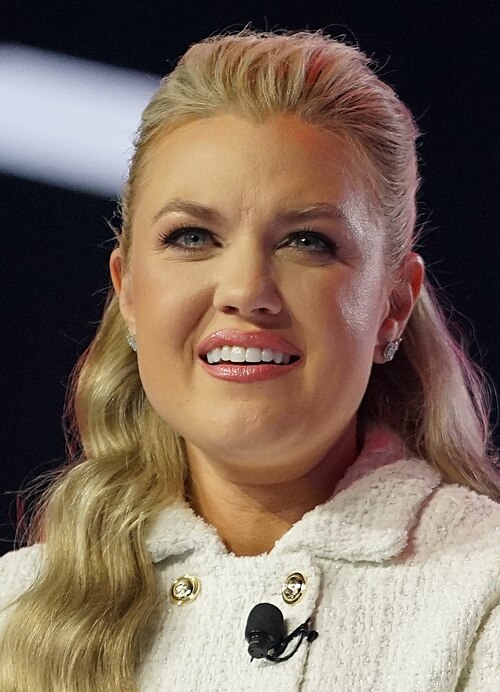
A 26-year-old San Antonio man faces felony charges after authorities say he made online threats to bomb a Turning Point USA event and kill its CEO Erika Kirk, prompting an arrest days before the conservative organization’s Women’s Leadership Summit.
Jacob Wenske was taken into custody early Thursday on two counts of making a terroristic threat causing public fear of serious bodily injury, a third-degree felony. Each charge carries a potential penalty of up to 10 years in prison. He remained in custody with a $120,000 bond as of late May.
According to court documents obtained by local investigators, Wenske allegedly posted threats in response to a public social media announcement about the upcoming summit. One comment reportedly stated, “I know exactly where to bomb.”
An email account linked to Wenske also sent a message to Turning Point USA stating, “Death to Erika Kirk and every single speaker there!!” according to the arrest affidavit. Additional posts referenced acting as a “valet for her escort” and driving “Charlie Kirk’s scum wife straight to the grave.”
Background on the targeted event
The Turning Point USA Women’s Leadership Summit is scheduled for June 5-7 at the Marriott Rivercenter on the San Antonio River Walk. Kirk, 37, widow of the late conservative activist Charlie Kirk, is set to appear as a featured speaker. The organization has not commented publicly on security adjustments but has indicated it takes such threats seriously.
San Antonio Police Department officers arrested Wenske following an investigation that traced the online activity. The threats surfaced in April and January, prompting coordination between local law enforcement and event organizers.
No explosives or weapons were reported in connection with Wenske, and authorities have not indicated any active plot beyond the alleged online statements. The case highlights growing concerns over political violence and online rhetoric targeting public figures.
Context surrounding Erika Kirk
Erika Kirk assumed a prominent role at Turning Point USA following the 2025 assassination of her husband, Charlie Kirk, founder of the conservative youth organization. She has continued advocating for the group’s mission of promoting conservative values on college campuses and among young Americans.
The threats come amid heightened national sensitivity to political violence. Law enforcement agencies across the country have reported increased threats against public officials and event organizers in recent years, particularly those tied to partisan gatherings.
Turning Point USA events often draw large crowds and significant media attention. The San Antonio summit is expected to feature multiple conservative speakers and workshops focused on leadership development.
Legal proceedings and investigation
Wenske faces charges under Texas law for terroristic threats, which apply when statements are deemed to create public fear of serious bodily injury or disruption. Prosecutors in Bexar County will handle the case. Court records show standard processing following the arrest.
Investigators examined social media posts, email records and other digital evidence. The rapid response underscores improved monitoring of online threats ahead of major public events.
No additional suspects have been identified. Authorities encourage anyone with relevant information to contact the San Antonio Police Department.
Broader implications for event security
The incident reflects challenges in securing large-scale political and ideological gatherings. Organizers of similar events nationwide increasingly rely on private security, K-9 units and coordination with local law enforcement to mitigate risks.
Free speech advocates note the fine line between protected expression and actionable threats, while security experts emphasize proactive monitoring of digital platforms. Federal agencies sometimes assist in high-profile cases involving potential interstate elements, though this matter has remained at the local level so far.
San Antonio, a major convention city, hosts numerous large events annually. The River Walk area, where the Marriott Rivercenter is located, typically sees heavy tourist and business traffic, making threat assessments more complex.
Community and organizational response
Turning Point USA has a history of facing protests and occasional disruptions at its events. The organization has previously emphasized resilience in the face of opposition. Kirk herself has spoken publicly about continuing her late husband’s work despite personal challenges.
Local conservative groups in San Antonio expressed concern over the threats, while city officials reiterated commitment to protecting free assembly and speech. No formal statements from Kirk were available as of Friday.
The case has drawn national media coverage, appearing on outlets including Fox News and local Texas stations. Discussions have focused on the rise of doxxing and targeted online harassment against political figures.
Looking ahead
The summit is expected to proceed as planned with enhanced security measures. Organizers typically implement bag checks, credentialing and surveillance for such gatherings. Attendees are advised to follow any updated protocols.
Legal experts following the case suggest it may hinge on proving the statements were true threats rather than protected hyperbole — a determination often made based on context, specificity and the speaker’s intent. Similar prosecutions have succeeded when evidence shows targeted individuals or locations.
This arrest serves as a reminder of the tensions in America’s polarized political climate. As major events continue throughout 2026, authorities and organizers remain vigilant against both online incitement and real-world risks.
Wenske is presumed innocent until proven guilty in a court of law. His next court appearance has not been publicly detailed in initial filings.
Anyone with information related to the case is asked to contact San Antonio police. The investigation remains active as prosecutors build their case.


I am a stock analyst with over 20 years of experience in quantitative research, financial modeling, and risk management. My focus is on equity valuation, market trends, and portfolio optimization to uncover high-growth investment opportunities. As a former Vice President at Barclays, I led teams in model validation, stress testing, and regulatory finance, developing a deep expertise in both fundamental and technical analysis. Alongside my research partner (also my wife), I co-author investment research, combining our complementary strengths to deliver high-quality, data-driven insights. Our approach blends rigorous risk management with a long-term perspective on value creation. We have a particular interest in macroeconomic trends, corporate earnings, and financial statement analysis, aiming to provide actionable ideas for investors seeking to outperform the market.
Analyst’s Disclosure: I/we have no stock, option or similar derivative position in any of the companies mentioned, and no plans to initiate any such positions within the next 72 hours. I wrote this article myself, and it expresses my own opinions. I am not receiving compensation for it (other than from Seeking Alpha). I have no business relationship with any company whose stock is mentioned in this article.
Seeking Alpha’s Disclosure: Past performance is no guarantee of future results. No recommendation or advice is being given as to whether any investment is suitable for a particular investor. Any views or opinions expressed above may not reflect those of Seeking Alpha as a whole. Seeking Alpha is not a licensed securities dealer, broker or US investment adviser or investment bank. Our analysts are third party authors that include both professional investors and individual investors who may not be licensed or certified by any institute or regulatory body.
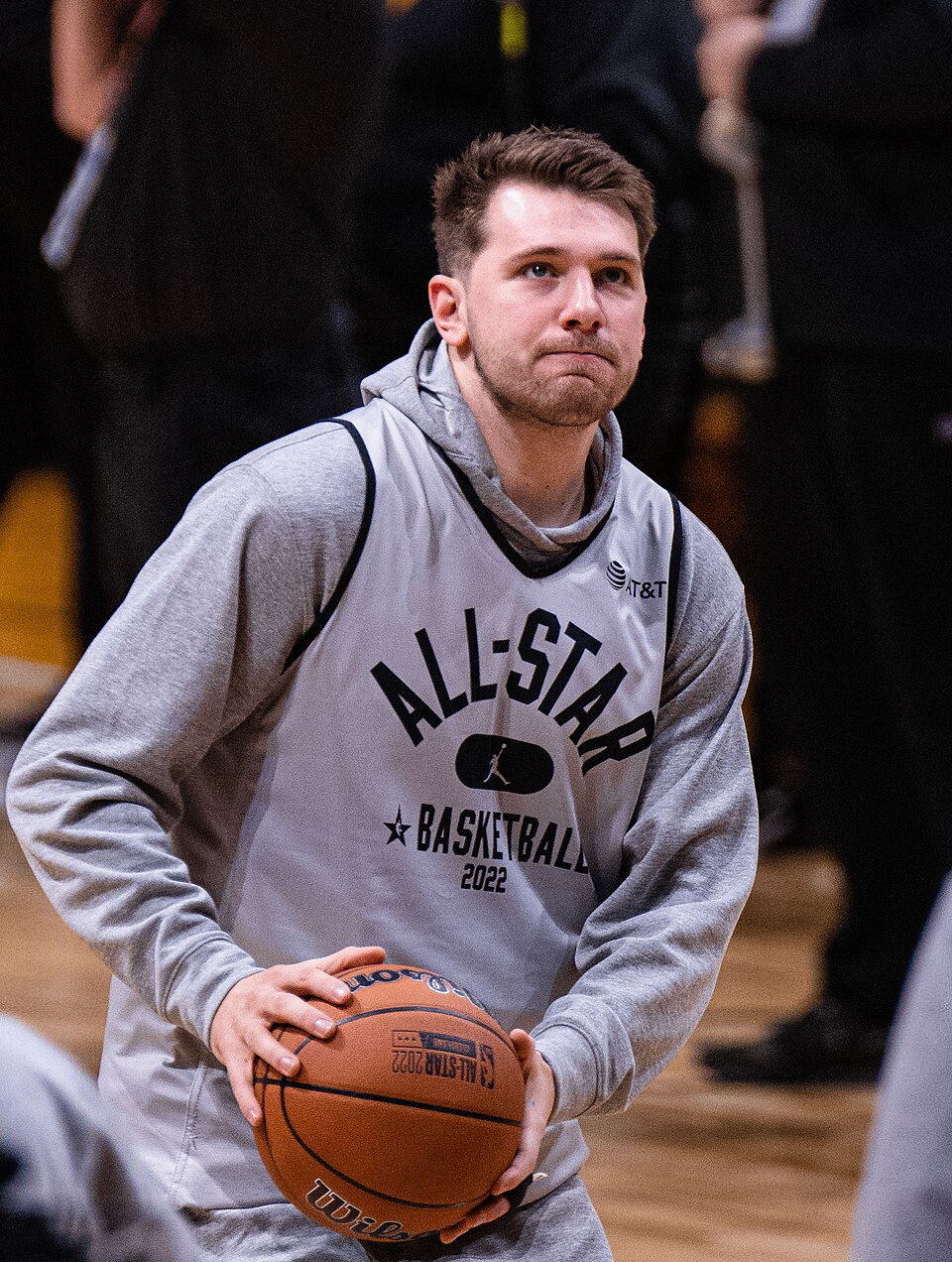
Los Angeles Lakers star Luka Dončić has joined a group led by former Dallas Mavericks executive Donnie Nelson to purchase Italian club Vanoli Cremona, with plans to relocate the team to Rome and position it as a candidate for the NBA’s proposed European league.
The transaction, announced Friday, marks a significant step in Dončić’s post-playing ambitions and Nelson’s continued involvement in basketball development. The group intends to move the club from the northern Italian city of Cremona to the Italian capital ahead of the 2026-27 season in Lega Basket Serie A.
Nelson, who served as Mavericks president of basketball operations when Dallas drafted Dončić in 2018, acts as lead investor and managing partner. The ownership group also includes longtime Italian coach Valerio Bianchini and former player Rimantas Kaukėnas.
Strategic relocation to Rome
Cremona, known for its violin-making tradition, currently hosts the team. The relocation to Rome aims to tap into a larger market with stronger infrastructure and fan potential. Rome has lacked a top-tier professional basketball club since Virtus Roma’s struggles in recent years.
The new owners have already submitted a bid for the franchise to serve as Rome’s representative in NBA Europe, the league expected to launch as early as 2027. NBA officials have discussed a 16-team competition in partnership with FIBA to expand the game’s global footprint.
Dončić expressed enthusiasm for the project. He has “dreamed about owning a team in Europe for a long time” and believes “we can do something special for basketball in Italy and Europe.”
The Slovenian superstar, who rose through European ranks with Real Madrid before joining the NBA, sees the move as a way to give back to the continent that shaped his career.
Background and partnership
Nelson played a pivotal role in bringing Dončić to the Mavericks. The pair’s longstanding relationship formed the foundation for this business venture. Reports of their interest in an Italian club first surfaced in February.
The acquisition comes as Dončić, now with the Lakers, continues his NBA career at an elite level. Ownership in a European club does not currently violate NBA rules regarding future league participation, though final NBA Europe structures remain under discussion.
Nelson, son of Hall of Fame coach Don Nelson, brings decades of NBA front-office experience. His vision focuses on building sustainable professional basketball in major European cities.
NBA Europe context
The NBA has signaled strong interest in formalizing a European presence. Discussions include potential integration with existing competitions like EuroLeague while creating a new tier featuring NBA-affiliated teams. Cities such as Rome represent attractive markets due to population size, cultural significance and untapped commercial opportunities.
Rome’s PalaEur arena has been mentioned as a potential venue. The city last hosted consistent top-level basketball years ago, creating demand for a competitive franchise.
Analysts view the Dončić-Nelson bid as strategically timed. A successful entry could provide a blueprint for player-driven ownership in emerging leagues and strengthen ties between the NBA and European basketball ecosystems.
Impact on Italian basketball
The move ends Vanoli Cremona’s presence in its current location but promises elevated competition in Rome. Italian league officials have welcomed investment that raises the profile of Serie A.
Local fans in Cremona expressed mixed reactions, with some disappointed by the departure while others recognize the broader benefits for Italian basketball. The club has competed in the top division but faced challenges in sustaining long-term success.
Bianchini and Kaukėnas bring deep local expertise. Bianchini is a respected coach with multiple titles, while Kaukėnas enjoyed a successful playing career in Italy and Lithuania. Their involvement ensures continuity and cultural understanding.
Financial and operational outlook
Specific purchase terms were not disclosed. European club valuations vary based on league status, arena rights and commercial potential. Rome’s larger market could significantly increase the franchise’s value if it secures an NBA Europe spot.
The group plans immediate preparations for the 2026-27 season in Rome, including roster planning, marketing and infrastructure upgrades. Success in Serie A could strengthen their NBA Europe application.
Dončić’s star power is expected to boost visibility. His global following could attract sponsorships and international attention to the new Roman club.
Broader implications for player ownership
Dončić becomes one of the first active NBA players to pursue ownership in a professional team outside the United States. This development raises questions about future regulations as the NBA expands globally.
League officials have indicated flexibility during the planning phase for NBA Europe. The initiative aims to grow the sport while protecting the integrity of the NBA’s flagship competition.
For Dončić, the project aligns with his European roots. Born in Slovenia, he developed his game in Spain and maintains strong ties across the continent. The investment represents a long-term commitment beyond his playing days.
Next steps and timeline
The relocated team will begin play in Rome for the 2026-27 Italian season. NBA Europe’s launch target of 2027 provides a clear horizon for the bid’s evaluation. Multiple groups are reportedly competing for various European markets.
Nelson emphasized the opportunity. “Rome deserves world-class basketball, and we are excited to be bringing it back,” he said in a statement.
Dončić posted on social media celebrating the news: “Basketball is coming back to Rome.”
The venture has drawn positive reactions from basketball executives on both sides of the Atlantic. It could accelerate development in markets hungry for high-level competition and create pathways for European talent to reach the NBA.
As details emerge in coming weeks, attention will focus on roster construction, coaching staff and arena arrangements. The collaboration between a current NBA superstar and a veteran executive signals serious intent to elevate basketball in Italy and beyond.
This initiative underscores the growing convergence of American and European basketball. With Dončić’s involvement, the new Roman club carries both sporting ambition and cultural significance for fans across the continent.

Exelixis presents Cabometyx data for neuroendocrine tumors

Get ahead of the market by subscribing to Seeking Alpha’s Wall Street Week Ahead, a preview of key events scheduled for the coming week. The newsletter keeps you informed of the biggest stories set to make headlines, including upcoming IPOs, investor days, earnings reports, and conference presentations.
The stock market opened higher as traders kept a close watch on any updates related to the U.S.-Iran conflict amid reports of fresh strikes. The U.S. and Iran have reportedly reached a deal; however, President Donald Trump will have to give the final approval. Reports suggested that Iran had launched missiles. The wholesale inventories’ growth slowed less than expected in April, while retail growth came in line.
Major economic data are scheduled for the coming week. S&P Global and ISM Manufacturing PMI data are scheduled for Monday. JOLTS job opening data is due on Tuesday. On Wednesday, data including S&P Global services and composite PMI and ISM non-manufacturing PMI will be released. Initial jobless claims will be out on Thursday, while nonfarm payrolls and the unemployment rate will be released on Friday.
_______________________________________________________________
Earnings spotlight: Monday: Hewlett Packard (HPE) and Credo Technology (CRDO). See the full earnings calendar.
Earnings spotlight: Tuesday: Palo Alto Networks (PANW) and Ulta Beauty (ULTA). See the full earnings calendar.
Earnings spotlight: Wednesday: Broadcom (AVGO), CrowdStrike (CRWD), and Medtronic (MDT). See the full earnings calendar.
Earnings spotlight: Thursday: Ciena Corp. (CIEN), lululemon (LULU), and DocuSign (DOCU). See the full earnings calendar.
Volatility watch: Netflix (NFLX) and Globalstar (GSAT) have seen options volatility increase over the last week. The most overbought stocks per their 14-day relative strength index include Momentus (MNTS), Hyliion (HYLN), and Redwire (RDW). The most oversold stocks per their 14-day Relative Strength Index include Verra Mobility (


First Windows PC powered by Nvidia chips to debut next week, Axios reports
Business
Colombia accuses Ecuador of “deliberate interference” in presidential election amid tariff spat
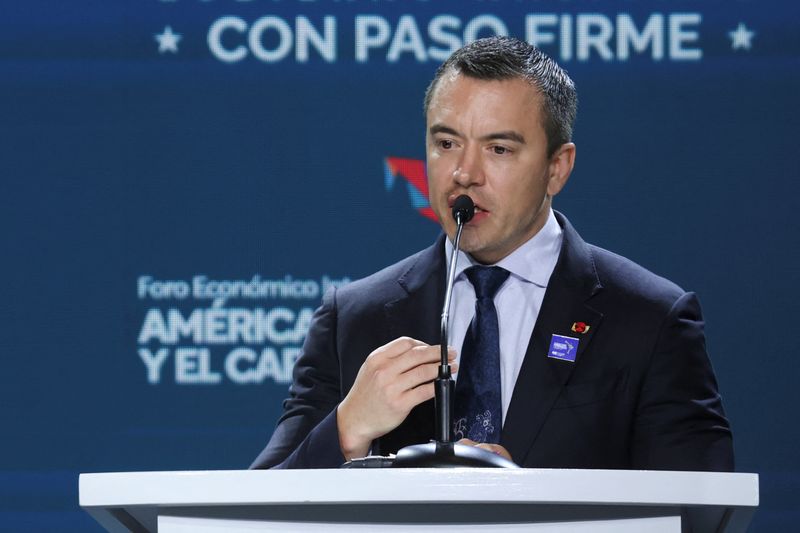

Colombia accuses Ecuador of “deliberate interference” in presidential election amid tariff spat

Zscaler: Why I'm Not Buying The Dip
Sandisk is launching new SATA SSDs in 2026 because NVMe prices are out of control

Paris Saint-Germain vs Arsenal LIVE: Team news confirmed ahead of Champions League final

(VIDEO) Berks County Police Officer Kristen Yeager Killed in Crash While Assisting Neighboring Department

Steven Gerrard disagrees with Gary Neville over ‘shock’ Chelsea and Arsenal claim | Football

US brings back mandatory military draft registration

Register Renaming | Hackaday

Financial Analyst Life | How to become a Financial Analyst? | #analystjob #datanalystjobs

The CEO Of Japan’s Biggest Crypto Firm Just Said XRP Will Be VERY Expensive

The Blueprint of Building a Financial Empire From Scratch | Kamal Poddar – Choice Group
-

 Business6 days ago
NYT Strands Answers May 24 2026 Revealed for Puzzle No. 812 Theme Summer Essentials
-

 NewsBeat3 days ago
Israel says it has killed new Hamas military leader in Gaza City airstrikes
-

 Politics5 days ago
Bridgerton Season 5: Cast, Release Date And Everything We Know So Far
-

 Business4 days ago
Selena Gomez Reportedly Upset Over Benny Blanco’s Comments on Her ‘Terrible’ Diet
-
 Crypto World4 days ago
Micron Crosses $1 Trillion Market Cap as AI Demand Reshapes Memory Sector
-

 Tech5 days ago
Microsoft’s quiet Claude Code retreat and the real cost of enterprise AI
-

 Business5 days ago
BTS Sells Out Four Las Vegas Shows at Allegiant Stadium for ARIRANG World Tour
-
 Tech4 days ago
China assigns ID codes to 28,000+ humanoid robots
-

 News Videos4 days ago
XRP *JUST* SUCCEEDED!!!! CLARITY ACT EXPOSED!!! (SHE EXPOSED IT)
-

 Tech1 day ago
Waymo dominates autonomous vehicle registrations as Tesla trails behind
-
Tech3 days ago
The Samsung pay deal is the moment Korean unions changed register
-

 Tech5 days ago
Westone Audio and Etymotic Acquired by Fidelity Collective in Major IEM Market Move
-
Crypto World6 days ago
Brian Armstrong Outlines Crypto Vision for the Future Financial System
-
 Entertainment5 days ago
‘Breaking Bad’ Star’s Easy-to-Binge 6-Part Crime Series Spin-Off Is Finally Heading to Free Streaming
-
 Tech4 days ago
Millions of AI agents imperiled by critical vulnerability in open source package
-
Crypto World3 days ago
SpaceX’s $2 Trillion IPO: Why Tech Giants Nvidia (NVDA), Apple (AAPL), and Microsoft (MSFT) May Face Pressure
-
 Crypto World5 days ago
Nvidia (NVDA) CEO Calls on Super Micro to Strengthen Export Controls Amid Smuggling Probe
-

 Tech3 days ago
NASA taps Blue Origin to deliver lunar rovers for Moon Base initiative
-
 NewsBeat5 days ago
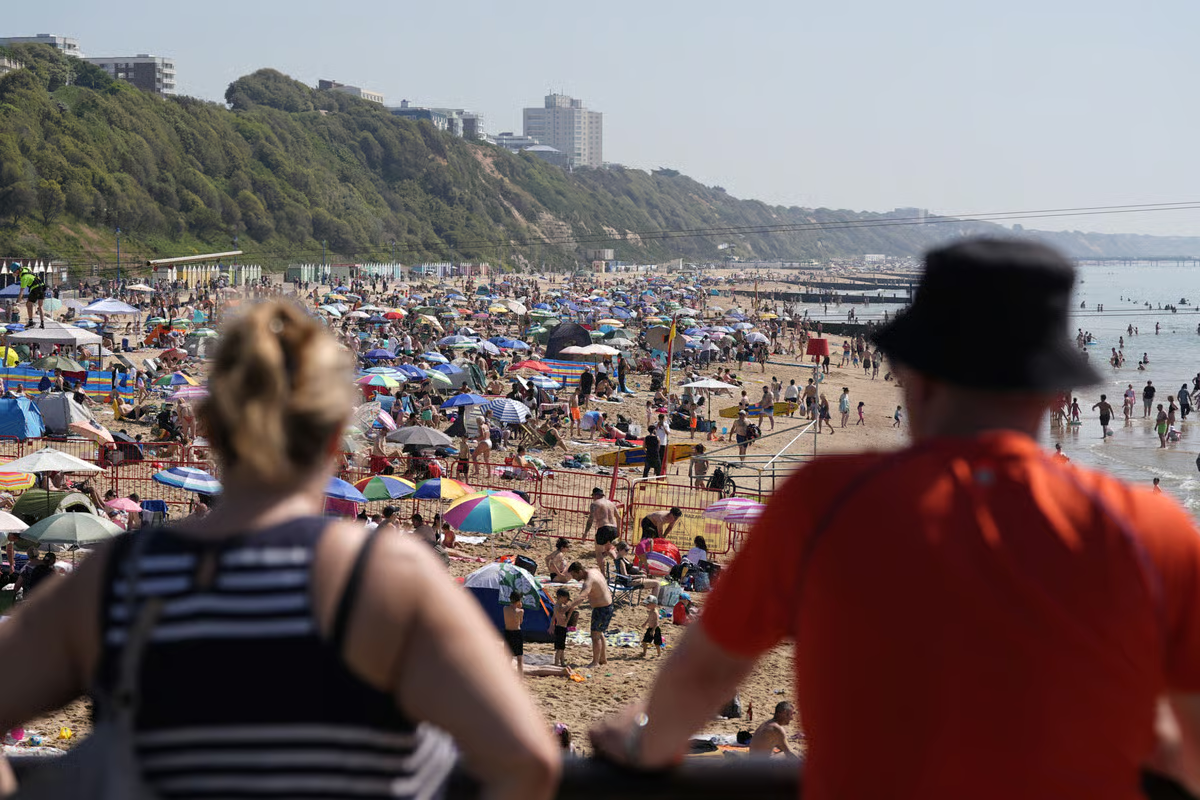
Hottest May day ever as London hits 34.8C in 2C leap from previous records
-
 Crypto World22 hours ago
Snowflake (SNOW) Stock Rallies on Strong Q1 Results and AI Product Growth
You must be logged in to post a comment Login