

Business
Marvell Technology stock hits all-time high at 324.3 USD



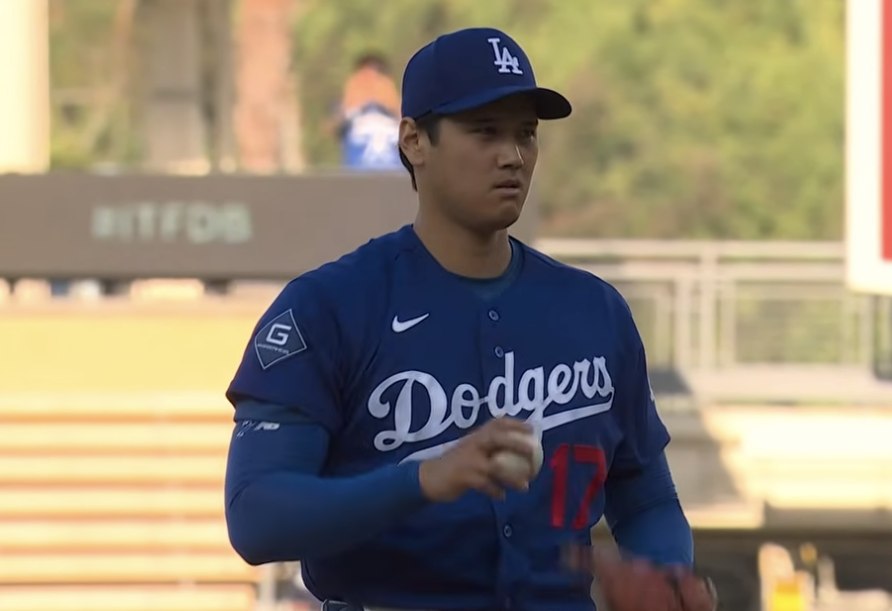
Shohei Ohtani is once again breaking baseball. Through the first months of the 2026 season, the Los Angeles Dodgers’ two-way phenom is pitching at a historical level on the mound — yet despite putting up numbers that rival the greatest pitching seasons of the modern era, Ohtani remains far from a lock to finally claim the one major individual honor that has eluded him throughout his career: the Cy Young Award.
A Career-Long Pursuit
The Cy Young chase is not a new ambition for Ohtani, but rather one that traces back to his earliest baseball aspirations. When Shohei Ohtani was in high school in Iwate, Japan, he wrote down a list of life goals, many of them tied to baseball. In nine Major League seasons so far, he’s already produced a body of work that is unmatched in the game’s history as a superstar on the mound and at the plate. He’s a four-time MVP — one of only two players in MLB history to win more than three MVP honors — a five-time All-Star, a four-time Silver Slugger Award winner, the 2025 National League Championship Series MVP, and a two-time World Series champion. But the Cy Young Award has eluded him, and he wants it badly. On his high school list, he had penciled in a goal of winning that honor by age 22 — a lofty aspiration even for a player as supremely talented as Ohtani.
A Historically Dominant Stretch
Early in the 2026 season, Ohtani delivered exactly the kind of statement performance that suggested this could finally be the year. Shohei Ohtani’s quest for the Cy Young Award began with six shutout innings for the Los Angeles Dodgers in his first outing on the mound this season. At the plate, the two-way superstar went 1 for 3 with two walks and a strikeout in a rainy 4-1 win over the Cleveland Guardians.
That dominance continued deep into the season. Through his first 10 starts of the 2026 campaign, Ohtani was pitching to a minuscule 0.74 ERA, the third-lowest mark of any pitcher since earned runs became an official statistic in 1913. Only Jacob deGrom, who posted a 0.56 ERA in 2021, and Juan Marichal, who posted a 0.59 ERA in 1966, have ever recorded better marks at that point in a season. Ohtani’s outward metrics backed up the historic ERA: he pitched to a 0.787 WHIP with 67 strikeouts and only 18 walks, a 3.72 strikeout-to-walk ratio. The underlying advanced metrics loved him even more, with a 100th percentile Pitching and Breaking Run Value and a 98th percentile Fastball Run Value.
A More Recent Rough Patch
Despite that dominant stretch, Ohtani’s invincibility on the mound has shown some cracks more recently. In a start against the Pittsburgh Pirates, Ohtani experienced what was statistically the worst pitching outing of his season, with three earned runs, six hits, and three walks allowed across 6 2/3 innings. He was pulled mid-inning for the first time all season, with a two-out, two-run, seventh-inning double from Pirates second baseman Brandon Lowe ultimately knocking him from the game. Even with that rougher outing factored in, Ohtani’s ERA rose to a still-minuscule 1.06, underscoring just how big a cushion his earlier dominance had built.
The Central Obstacle: Innings
Despite the eye-popping rate statistics, the central question hanging over Ohtani’s Cy Young candidacy has nothing to do with his ability and everything to do with workload. In order to protect Ohtani’s arm and their investment in him, the Dodgers have exclusively used a six-man rotation this year. Because of this, his innings totals naturally lag behind the rest of the league — a structural deficit that voters have historically weighed heavily when comparing starting pitchers for the award.
That workload concern is not new to this season. Ohtani has qualified for an ERA title only once in his career. He pitches for the Los Angeles Dodgers, a team that has the luxury of slow-playing their starting pitchers until the postseason, given the organization’s deep roster and championship aspirations.
The Competition He’s Up Against
Ohtani also faces a deep and accomplished field of National League starting pitchers, several of whom have posted their own historic numbers this season while throwing significantly more innings. Rivals for the award include Phillies left-hander Cristopher Sánchez, who posted a 1.47 ERA over 79 1/3 innings; Brewers phenom Jacob Misiorowski, with a 1.65 ERA and an incredible 39.6% strikeout rate; and reigning NL Cy Young winner Paul Skenes of the Pirates, who has a 2.89 ERA over 65 1/3 innings.
To overcome the innings disadvantage built into his usage pattern, Ohtani will likely need to finish with an ERA under 2.00 over the full season in order to compensate. Whether he can sustain his historically low ERA over a complete campaign remains an open question — the lowest ERA for a qualified starter since the pitching mound was lowered to its current height in 1969 belongs to Dwight Gooden, who posted a 1.53 ERA over 35 starts for the Mets in 1985.
A Strikeout Rate Slightly Below His Career Norm
One additional data point working against Ohtani’s case involves his strikeout rate relative to his own established career standard. Ohtani’s career strikeout rate as a pitcher is 31.1%. So far in 2026, he’s below that figure, at 28.6%. With Misiorowski posting historic velocity-driven strikeout numbers unlike anything seen before, Ohtani will need to find ways to close that gap if he hopes to compete directly with the league’s most dominant strikeout artists on a rate basis.
What a Realistic Path Looks Like
Entering the season, evaluators had a useful baseline for projecting what an award-worthy Ohtani campaign might look like. On a per-162-game basis, he had averaged a 13-7 record with a 3.00 ERA, a 143 ERA+, 228 strikeouts, and 5.5 bWAR entering this season — numbers that would have represented a great jumping-off point even before accounting for his historically dominant early-season form in 2026.
With the season now past its midpoint, Ohtani’s Cy Young case will likely come down to two intertwined factors: whether he can sustain an ERA in the range that compensates for his reduced innings total under the Dodgers’ six-man rotation, and whether voters are ultimately willing to reward dominant rate statistics over the larger workloads posted by rivals like Sánchez, Misiorowski, and Skenes. Given Ohtani’s unprecedented two-way burden and the historic nature of his rate numbers through the season’s first half, his candidacy remains a genuine storyline to track — even if the most decorated player of his generation still has work to do to finally cross his lifelong goal off the list.
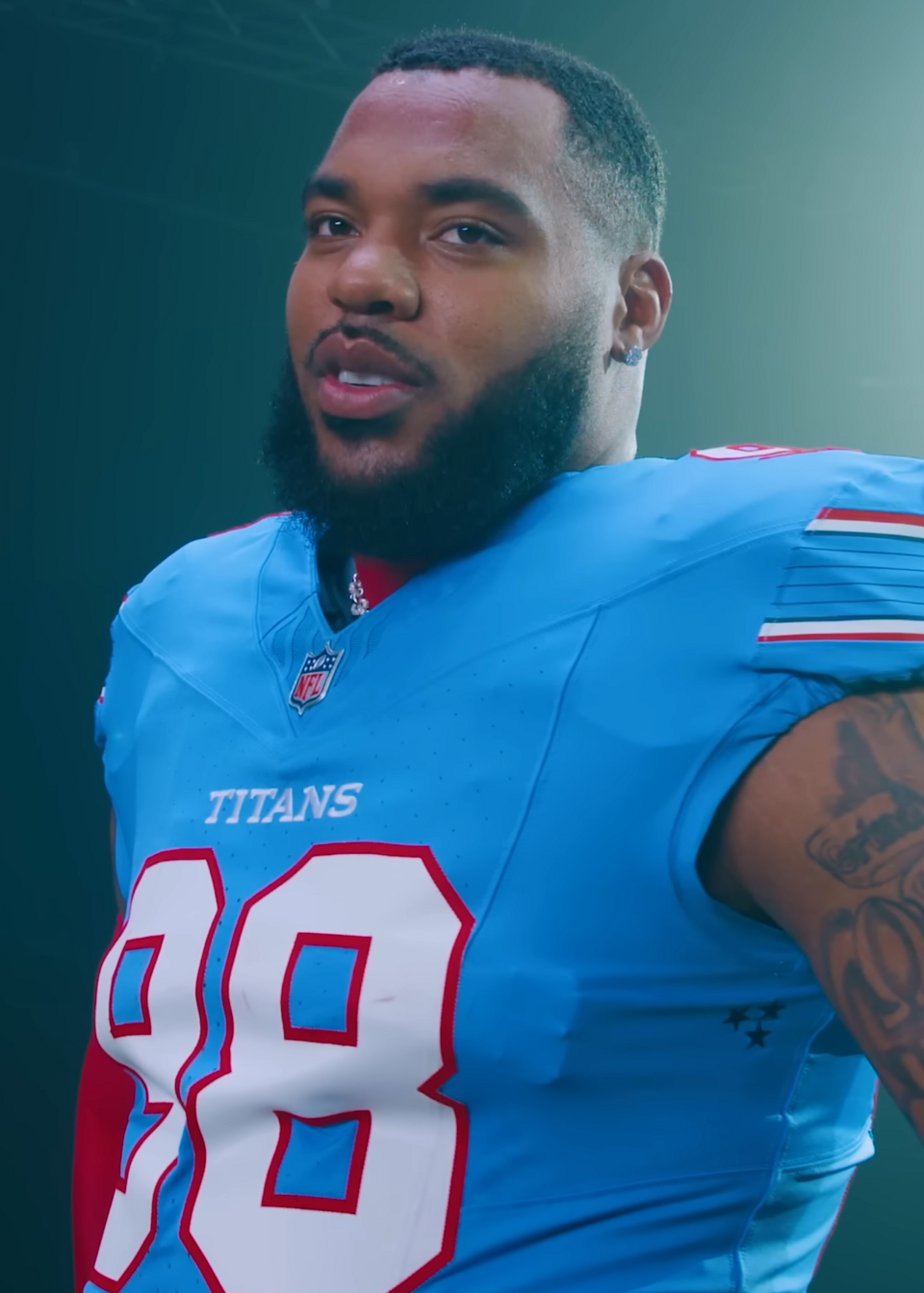
The Tennessee Titans agreed to a rich contract extension with star defensive tackle Jeffery Simmons on Friday, cementing the franchise’s commitment to its defensive cornerstone for years to come.
The Financial Terms
The Titans did not reveal financial terms, but multiple reports have Simmons receiving a three-year extension worth $105.8 million — with $100 million guaranteed — through the 2030 season.
The $35.27 million annual average salary makes Simmons the highest-paid defensive tackle in NFL history, surpassing the Kansas City Chiefs’ Chris Jones, who previously held the mark at a $31.75 million average.
A Career-Best Season
The extension comes on the heels of arguably the finest individual season of Simmons’ career. Simmons, a four-time Pro Bowl selection, recorded a career-best 11 sacks in 2025. He also set personal bests with 17 tackles for loss and 21 quarterback hits. The 28-year-old has played all seven of his NFL seasons with the Titans, never having worn another team’s uniform since entering the league.
Simmons was a first-team All-Pro as well as a Pro Bowl pick last season while contributing 67 tackles and three forced fumbles to go with his lofty sack total — a level of all-around production that placed him among the most disruptive interior defenders in the entire league.
Simmons’ Statement on the Deal
Simmons expressed deep gratitude toward the organization that drafted him and has remained his only NFL home throughout his career. “Tennessee has become a second home for me,” Simmons said in a news release. “From day one, this organization believed in me, and I’m grateful for the opportunity to continue to pour into this franchise and community. I want to thank God, my family, my teammates, Ms. Amy (Adams Strunk, the owner) and the entire Titans organization for believing in me. My job isn’t finished. I believe in this locker room and this staff, and I’m focused on helping this team get back to competing for championships.”
Career Numbers Since Entering the League
Simmons has built one of the most consistently productive careers among interior defensive linemen since being drafted by Tennessee. He has 376 tackles, 42.5 sacks, 66 tackles for loss, eight forced fumbles, and six fumble recoveries in 99 games, with 97 starts, since entering the NFL in 2019.
The General Manager’s Perspective
Titans general manager Mike Borgonzi emphasized both Simmons’ on-field dominance and his broader value to the organization in explaining the decision to lock him up long-term. “Jeffery Simmons is a pillar for our franchise and embodies what it means to be a Titan,” Borgonzi said in the news release. “He’s the premier defensive tackle in the National Football League and you win with players like Jeffery.”
Borgonzi extended his praise beyond Simmons’ play on the field, pointing to his standing within the locker room and the broader Nashville community. “Not only is his leadership on the field what we want our program to represent, but off the field, he sets the standard for our community,” Borgonzi said. “You always want to keep your best players and we accomplished that today. We’re excited for Jeffery to be here in Nashville for the long haul.”
A Brief Playoff Résumé Tied to an Earlier Era
Simmons’ lone stretch of postseason football came earlier in his career, during a period when the Titans were consistently competing for championships under a different head coach. Simmons has played in five career playoff games, all coming in 2019-21 during Mike Vrabel’s stint as head coach. He recorded three sacks against the Cincinnati Bengals in a 19-16 AFC Divisional round loss on January 22, 2022 — a performance that remains one of the signature individual showings of his postseason career, even in defeat.
What the Deal Means for Tennessee’s Defense
The extension provides the Titans with long-term cost and roster certainty at one of the most valuable defensive positions in modern football, locking in their best defensive player through the 2030 season at a position the organization has clearly identified as foundational to its rebuilding efforts. With Simmons signed through the end of the decade, Tennessee’s front office now has a clear anchor around which to continue building out the rest of its defensive personnel in both the draft and free agency.
The timing of the deal, coming off a career-best statistical season, also reflects the Titans’ apparent confidence that Simmons, now entering his late 20s, has not yet reached the peak of his physical abilities — a significant bet for any franchise to make on an interior defensive lineman, a position where workload and physical wear can often accelerate decline compared to other roles on the field.
A Statement of Franchise Direction
Beyond the financial and on-field implications, the extension also serves as a broader signal of how the Titans intend to approach roster construction as the franchise looks to climb back into playoff contention. By making Simmons the highest-paid player at his position in NFL history, Tennessee has effectively staked its rebuilding timeline to its homegrown star, betting that his combination of disruptive interior pass-rush ability and locker-room leadership will be central to any future return to postseason football.
With Simmons now signed through 2030, the Titans’ immediate offseason focus will likely shift toward continuing to build complementary pieces around him on both sides of the ball as the franchise works to return to the level of competitiveness it experienced during the Vrabel era, when Simmons made his only playoff appearances to date. For Simmons personally, the extension provides long-term financial security and a clear vote of confidence from ownership and the front office — but as he made clear in his own statement on the deal, his stated focus remains on helping the franchise get back to competing for championships, rather than simply collecting the record-setting contract now in hand.
Business
Jio IPO: Spectrum acquisition, among 7 risks investors need to know about India’s largest offer

The IPO comes at a time when Jio’s operating performance remains robust. For the March quarter of FY26, the telecom giant reported a 13% year-on-year increase in operating revenue to Rs 44,928 crore, while net profit rose 13% to Rs 7,935 crore. EBITDA grew 18%, aided by a 230 basis-point expansion in operating margins.
The filing marks a major milestone for Reliance Industries as it moves to list its digital business nearly six years after Jio Platforms raised more than Rs 1.5 lakh crore from global strategic investors. The offering is expected to value the telecom and digital services company among India’s most valuable listed firms.
While the fundamentals remain strong, investors would do well to look beyond the growth story. Here are the key risk factors highlighted in the DRHP for what is set to be India’s largest-ever IPO.
Also read: How Mukesh Ambani plans to spend Jio’s mega Rs 27,500 crore IPO proceeds
1.) Spectrum Acquisition Challenges
Access to adequate spectrum is critical for maintaining network quality, supporting growing data consumption and driving future growth. Jio’s network performance and expansion plans depend heavily on the quantity and quality of spectrum it holds across low, mid and high frequency bands.

However, acquiring and retaining spectrum comes with challenges. Spectrum is primarily obtained through government auctions or spectrum-sharing and trading arrangements, both of which are competitive and subject to regulatory uncertainty. High reserve prices can increase acquisition costs, while competitors may outbid Jio in auctions or strengthen their spectrum holdings through strategic arrangements. Any inability to secure sufficient spectrum at commercially viable terms could affect network quality, customer growth and financial performance.
2.) Highly Regulated Industry
Jio operates in a heavily regulated industry and is subject to oversight by the Telecom Regulatory Authority of India (TRAI) and the Department of Telecommunications (DoT). These regulators oversee critical aspects of the telecom sector, including licensing, spectrum allocation and management, network rollout obligations, interconnection charges, and infrastructure sharing.
The company must also comply with regulations relating to unsolicited commercial communications, subscriber verification requirements, know-your-customer norms, electromagnetic radiation standards, and network safety requirements. Any failure to comply with these regulations, or any changes in the regulatory framework, could lead to penalties, higher compliance costs, operational restrictions, or reputational damage, affecting Jio’s business and financial performance.
Read more: RIL AGM: Jio listing soon, but anybody’s guess on Reliance Retail IPO. Here’s what Mukesh Ambani said
3.) Heavy Capital Needs
Jio’s business requires significant and ongoing investments to expand and upgrade its network infrastructure in line with evolving technology standards and customer expectations. In FY26, the company incurred cash capital expenditure of Rs 34,184 crore, equivalent to 23.3% of its revenue from operations of Rs 1.47 lakh crore. Given the scale of these investments and the fast-changing nature of the telecom and digital services industry, there is no guarantee that Jio will realise the expected returns from its capital spending, which could affect its financial performance and growth prospects.
4.) Vendor Dependence Risk
Jio relies on a limited number of equipment suppliers, including certain related-party vendors, creating concentration risk within its supply chain. Any disruption in these relationships, or any failure by suppliers to deliver equipment on time, in required quantities, or according to quality standards, could affect the company’s ability to maintain and expand its network infrastructure. Such disruptions may arise from capacity constraints, technical failures, production issues, labour-related challenges, or other operational factors.
While a significant portion of Jio’s equipment requirements is sourced domestically, several Indian vendors are subsidiaries of companies based in countries such as the United States, South Korea, Finland, and Sweden. This leaves the company exposed to global supply chain disruptions and geopolitical uncertainties. Any increase in import dependence could further expose Jio to currency fluctuations, trade restrictions, and supply-related challenges.
5.) Intense Market Competition
Jio operates in one of the world’s most competitive telecom markets, where future growth depends on attracting new subscribers, retaining existing users, and increasing engagement through value-added services. Although the company carried nearly 60% of India’s wireless data traffic in FY26, according to the DRHP, it faces strong competition from rival telecom operators that may offer better pricing, stronger customer service, or more compelling products. Any inability to keep pace with technological changes, shifting consumer preferences, or competitive pressures could hurt Jio’s market share, profitability, and overall financial performance.
6.) Infrastructure Concentration Risk
Jio’s network operations depend heavily on a small group of passive infrastructure providers. This includes telecom towers, shelters, fibre pairs, and ducts that form the backbone of its connectivity services. As of March 31, 2026, 1,74,451 of the 3,60,382 towers used by the company were owned by Summit Digitel Infrastructure Limited (SDIL), highlighting its reliance on a key infrastructure partner.
The dependence is even greater in fibre infrastructure. Jio Digital Fibre Private Limited (JDFPL) provides substantially all of Jio’s optic fibre network requirements, except for the last-mile fibre network owned by Reliance Jio Infocomm. Any disruption in services, contractual disagreements, operational challenges, financial stress, or regulatory issues affecting these providers could impact network availability, service quality, and expansion plans.
7.) Cybersecurity Threat Exposure
Jio’s operations rely on complex technology systems, network infrastructure, and large volumes of customer data, making it vulnerable to a range of cybersecurity threats. These include distributed denial-of-service (DDoS) attacks, ransomware, malware, phishing attempts, credential theft, hacking, social engineering attacks and risks arising from employee errors or misconduct. Any successful cyberattack or operational disruption could affect network availability, expose sensitive information, and result in financial losses, regulatory penalties, or reputational damage.
The risk is not limited to Jio’s own systems. The company also depends on third-party vendors, cloud service providers, and both cloud-based and on-premises data centres. Any cybersecurity incident involving these partners could disrupt services, compromise data security, and affect business continuity. As cyber threats continue to evolve, Jio may have to incur significant costs to strengthen its security infrastructure and mitigate risks.
(Disclaimer: Recommendations, suggestions, views and opinions given by the experts are their own. These do not represent the views of The Economic Times)
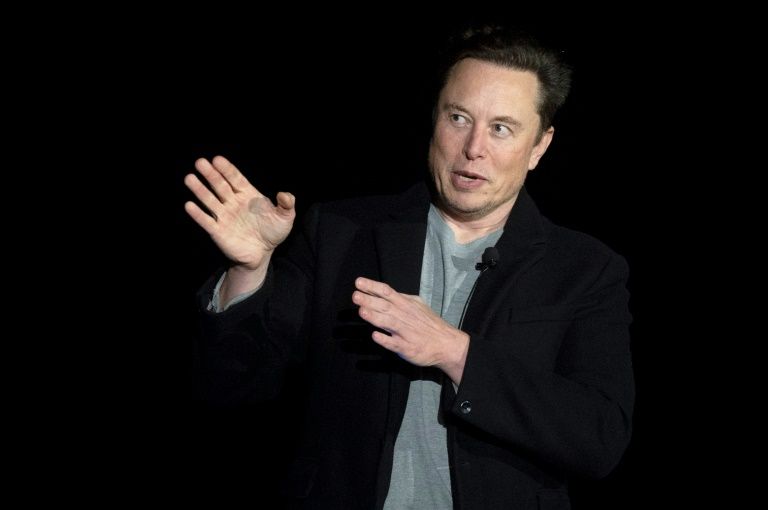
NEW YORK — Shares of Space Exploration Technologies Corp., trading under the ticker SPCX, closed lower on Thursday following the company’s record-breaking initial public offering, reflecting typical post-listing adjustments as initial enthusiasm moderates.
The stock finished the session at $185.00, representing a 3.56 percent decline from the previous close. After-hours trading saw further movement, with shares at approximately $181.60. The performance comes after SpaceX’s historic debut that briefly propelled its market value above $2 trillion.
Analysts anticipated some volatility following the massive IPO, which raised $75 billion and marked the largest in history. The company’s rapid ascent in its first days of trading gave way to profit-taking and market recalibration as investors assessed long-term prospects.
SpaceX, led by Elon Musk, has transformed the commercial space industry through reusable rocket technology and Starlink satellite internet services. The public listing provides greater transparency while exposing the company to broader market forces and shareholder expectations.
The stock’s movement reflects broader dynamics in the technology sector, where high valuations often face scrutiny as companies transition from private to public status. SpaceX’s business combines launch services, satellite operations and emerging artificial intelligence applications.
Musk’s substantial ownership stake ties his personal fortune closely to the company’s performance. The IPO significantly increased paper wealth for early investors and employees while generating substantial capital for future growth initiatives.
Market observers note that post-IPO pullbacks are common even for successful debuts. SpaceX’s fundamental strengths in securing contracts and technological leadership provide a foundation for long-term value, though near-term trading may remain choppy.
The company’s recent credit ratings from major agencies underscore its financial stability. Investment-grade assessments with stable outlooks reflect confidence in SpaceX’s business model and cash flow generation capabilities.
SpaceX continues expanding its Starlink constellation, providing broadband services to remote areas and supporting various commercial and government applications. The division has become a significant revenue contributor alongside traditional launch operations.
Analysts maintain varied price targets reflecting different views on growth trajectories. Some project substantial upside based on market expansion in space technology, while others adopt more cautious stances regarding execution risks and competition.
The IPO process itself demonstrated strong demand, with shares allocated across institutional and retail investors. The debut generated significant media attention and public interest in space industry investment opportunities.
For the broader market, SpaceX’s listing adds another major technology name to public exchanges. Its performance may influence sentiment toward other high-growth companies considering public offerings in coming months.
Musk has outlined ambitious goals for SpaceX, including Mars colonization efforts and increased satellite deployment. Achieving these objectives will require substantial capital investment and sustained innovation.
Investors will monitor upcoming earnings reports and operational updates as the company navigates its new public status. Quarterly results will provide greater insight into financial performance across different business segments.
The space sector continues attracting attention as technological capabilities advance and commercial opportunities expand. SpaceX’s leadership position positions it favorably, though competition from both established players and newcomers remains intense.
As trading volume normalizes, market participants expect more measured price discovery based on fundamental metrics rather than initial listing excitement. Long-term success will depend on execution against strategic objectives and ability to generate sustainable profits.
SpaceX’s journey from private startup to public company represents a significant milestone in commercial spaceflight. The coming years will test whether its ambitious vision can translate into consistent shareholder value while advancing humanity’s presence beyond Earth.
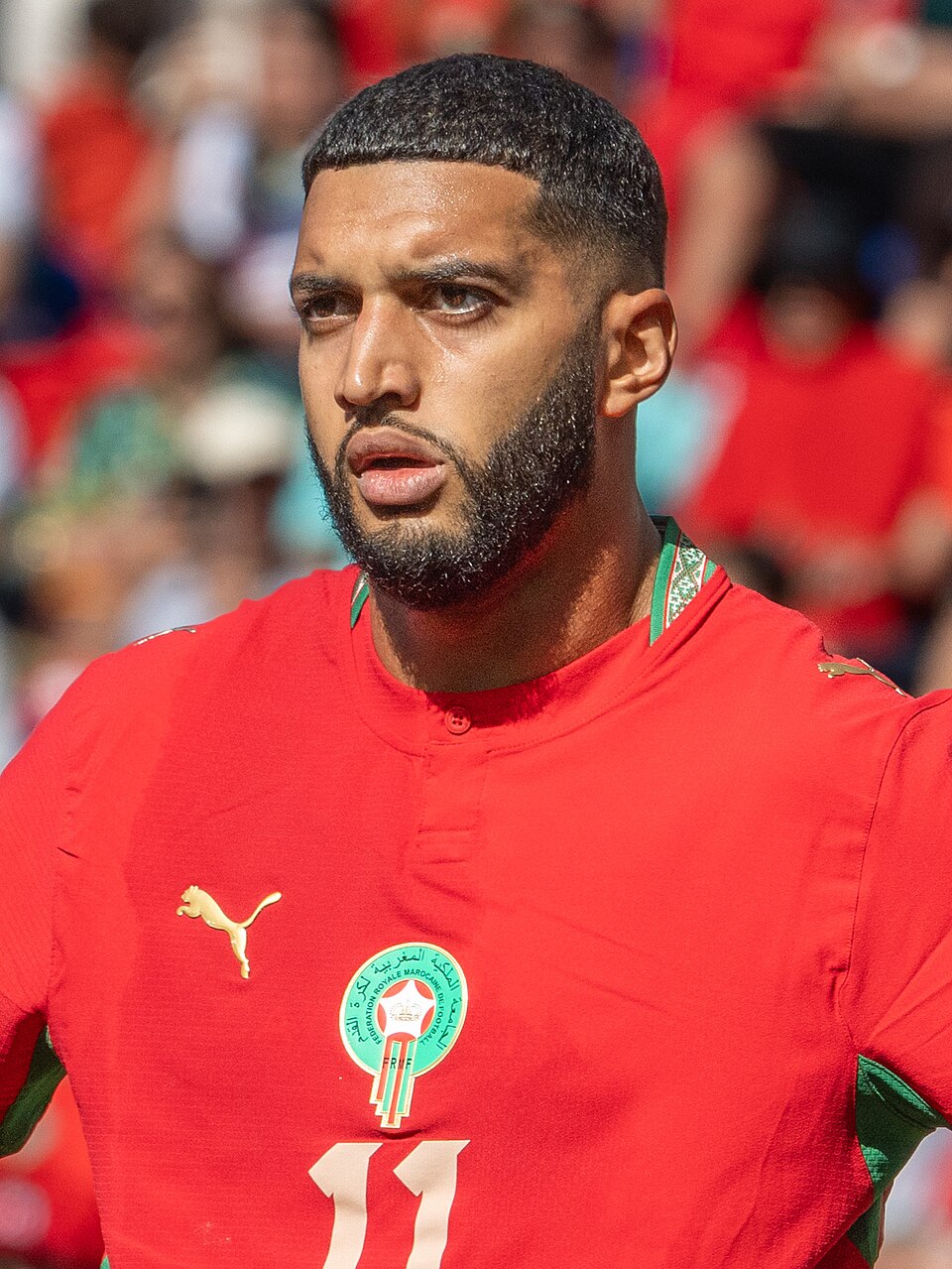
BOSTON — Morocco defeated Scotland 1-0 in Group C at the World Cup on Friday, as an early goal from Ismael Saibari proved to be the difference and left the Tartan Army’s hopes of reaching the knockout stage hanging in the balance heading into a decisive final group match against Brazil.
Saibari was played through by Brahim Díaz shortly after kickoff, before the PSV Eindhoven man took it down and fired past Angus Gunn at the far post. And while both sides had chances in the second half, an equalizer never came, leaving the North African side all but certainly through to the knockouts, while the fate of Steve Clarke’s side remains uncertain.
The Fastest Goal of the Tournament So Far
The speed of Morocco’s breakthrough stunned a Boston Stadium crowd that had arrived hoping to witness history. Ismael Saibari scored the fastest goal of the World Cup 2026 so far after just 71 seconds as Morocco beat Scotland 1-0 to close in on a place in the knockout rounds. Saibari scored in Morocco’s opening 1-1 draw with Brazil last weekend, and his clinical finish with just over a minute gone settled a hard-fought, physical contest.
A crowd of 64,146 fans turned up at the venue in Massachusetts to witness the result. Saibari’s clinical finish after 70 seconds from Brahim Diaz’s lofted pass proved enough for the Atlas Lions, who had much the better of the contest and struck the woodwork when Jack Hendry blocked Saibari’s second-half shot.
A Goal Born From a Defensive Lapse
Scotland’s nightmare start traced directly back to a moment of vulnerability at the back. Steve Clarke’s side knew victory would guarantee a place in the knockout stages of a major tournament for the first time, but they were rocked after just 70 seconds. Grant Hanley was caught out and Ismael Saibari took advantage with a clinical strike fired into the top corner. He almost made it two as the Scots struggled to find their composure in the early going at Boston Stadium.
Disputed Penalty Decisions
Scotland’s frustration mounted as the match progressed, with the Tartan Army twice appealing unsuccessfully for spot kicks that might have offered a route back into the contest. John McGinn appealed for a penalty not long after the restart after being brought down by Neil El Aynaoui, but it was deemed a fair challenge by the referee. Later in the match, Scott McTominay was also brought down inside the box, with that appeal likewise turned down.
Scotland took 46 minutes to create their first shot of the match, a stark illustration of how thoroughly Morocco controlled proceedings for long stretches of the contest.
Morocco’s Continued Attacking Threat
Even with a one-goal cushion, Morocco continued to press for a second goal that would have settled the contest beyond doubt. Morocco hit the woodwork five minutes into the second half as Saibari met a cutback by El Khannouss, and his attempt was deflected onto the bar by Jack Hendry. Moments later, Gunn made a fine stop to keep out an El Khannouss header from a corner, ensuring Scotland remained within a single goal heading into the closing stages.
Scotland’s Tactical Setup
Manager Steve Clarke made several changes to his starting lineup in an effort to shore up the defense against a technically superior Moroccan side. Moroccan coach Mohamed Ouahbi went with an unchanged starting lineup following the Brazil clash, but opposite number Steve Clarke made three changes. Clarke sought to reinforce his defense, meaning striker Lawrence Shankland dropped out as defender Kieran Tierney came into the side to make a back five. But that was of little use as Morocco went ahead practically from kickoff.
Defender Scott McKenna was out with a calf injury for Scotland, who brought in Kieran Tierney, Nathan Patterson, and Ryan Christie. Aaron Hickey, Ben Gannon-Doak, and Lawrence Shankland made way as a result.
Saibari’s Rising Profile
Beyond the result itself, Saibari’s performance further elevated his standing as one of the tournament’s breakout individual stars and reinforced reports of his impending move to one of European football’s biggest clubs. The 25-year-old, who was born in Spain and raised in Belgium, is reportedly on the brink of a $63 million transfer from Dutch champions PSV Eindhoven to Bayern Munich. The quality of his strike past goalkeeper Angus Gunn showed why he is attracting such interest, and it was telling that Scotland lacked the same quality in the opposition box — helping explain why Morocco are ranked fifth in the world, and Scotland 40th.
A Painful Historical Echo
The defeat carried a degree of historical resonance for Scottish supporters, given the team’s only previous World Cup meeting with a similarly daunting South American or European opponent. Scotland were a little unfortunate not to take a point when they faced Brazil in their first game at their last appearance at the finals in 1998, when Tom Boyd’s 74th-minute own goal decided the match.
Pundit Assessment
Former player and current analyst Steve Nicol offered a blunt verdict on Scotland’s overall performance in the aftermath of the result, suggesting the outcome reflected the genuine gap in quality between the two sides on the night.
Where the Group Stands
The result leaves Scotland on three points following their opening win over Haiti, with Morocco, who drew with Brazil, on four. The Selecao and Grenadiers meet in their second matches of the tournament at 01:30 BST on Sunday, a result that will further shape the picture in Group C heading into the decisive final round.
Another win here would have secured progress from Group C for Morocco, but their chances of going further remain up in the air going into their next match against Brazil in Miami next Wednesday. Both teams play their final games of the group stage on Wednesday.
Scotland now needs a result against Brazil to have a chance of progression, setting up a must-win or must-draw scenario for Steve Clarke’s side in their bid to reach the knockout stage of a major tournament for the first time in the nation’s history. Having already faced Brazil once before at a World Cup — in that narrow 1998 defeat — Scotland will look to that history for any source of encouragement as they prepare for what now amounts to a win-or-go-home final group match in Miami.

These top 5 small cap stocks that witnessed highest net buying by mutual funds in May. Here is a detailed breakup, according to a report by Motilal Oswal Financial Services.
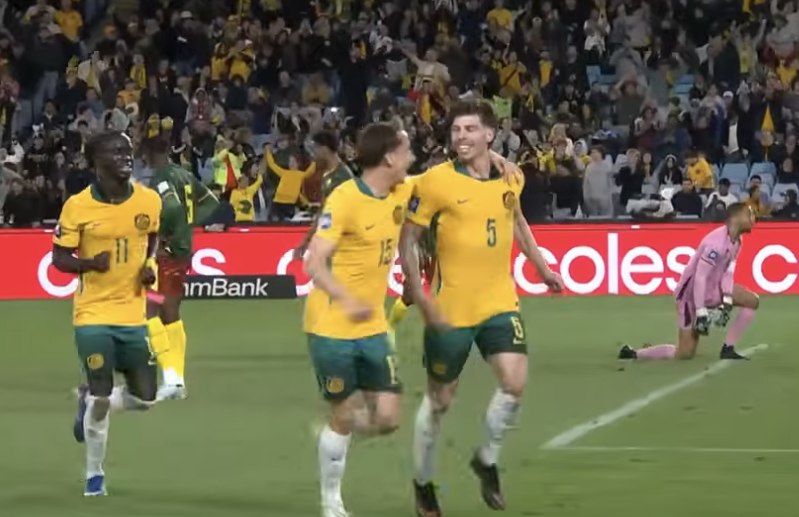
SEATTLE — The United States dominated Australia 2-0 on Friday at Seattle Stadium, with an own goal and a clinical finish from breakout star Alex Freeman sending the co-hosts surging into the World Cup knockout stage with a game still to spare in Group D.
The result, built on a self-inflicted opening goal and a composed individual finish, left the Socceroos reeling and the Americans firmly in control of their own destiny heading into the final round of group matches.
How the Goals Came
The breakthrough came when Australian defender Cameron Burgess turned the ball into his own net to give the United States the lead, a costly error that set the tone for the remainder of the match. Burgess clattered the ball into his own net for the opening goal, having ball-watched in the buildup before being forced into the unfortunate clearance. He was substituted at halftime following the difficult outing.
Folarin Balogun played a central role in generating the danger that led to the opener, with his incisive run up the channel rewarded with the own-goal opener. He held his own as Australia upped the physicality in the second half, remaining a persistent threat in the minds of the Australian defense throughout.
The second goal arrived through Alex Freeman, whose finish was ultimately confirmed following a VAR review. Freeman delivered another balanced all-around shift, this time with a goal to show for it — a player ratings assessment that flagged him as a “star in the making.” Sergiño Dest took the initial shot that was lobbed into Freeman’s zone for the second goal, with good interplay alongside Weston McKennie along the right flank helping generate the chance.
Standout Performances for the USA
Several American players drew praise for their contributions throughout the dominant performance. Tim Ream, serving as captain, was credited as the engineer of plenty of good efforts up the left flank and was often involved in the defensive half, delivering another credible shift in that leadership role. Chris Richards was not quite perfect on the pass but stewarded defensive sequences effectively, though a needless late challenge put him in yellow card limbo heading into the team’s next match.
Antonee Robinson kept the ball moving up the left touchline with seven progressive passes and provided width for Balogun’s run on the opener, though he too now finds himself on yellow card watch. Tyler Adams operated effectively behind a pair of box-to-box midfielders and kept Australia from making good progress through the central third throughout the match.
Weston McKennie relished a more advanced role, registering six progressive passes, eight progressive receptions, and four passes into the box, with some dazzling footwork alongside Dest in key moments. Malik Tillman delivered another composed shift with tidy ball recirculation and progression, proving difficult to dispossess and drawing additional cautions from the Australian defense in the process.
Ricardo Pepi, a surprise starter, thwarted Australia’s plans and overall shape but was unable to place either of his shot attempts on target, instead contributing industriously off the ball as a complement to Balogun’s more incisive running.
A Difficult Night for the Socceroos
For Australia, the match represented a sharp reversal from their promising start to the tournament. Several Australian players struggled throughout, with the back line in particular unable to contain the pace and movement of the American attack.
Jacob Italiano was beaten on numerous occasions by the USA’s wide players in the first half, though he showed a bit more creativity when pushing further forward in the final half-hour. Jordan Bos earned the game’s first yellow card for shoving McKennie in the face and was regularly beaten down the wing, offering very little in attack throughout his time on the pitch.
Aiden O’Neill was isolated and overwhelmed in midfield for most of the game, failing to control the tempo or connect key passes for his team. Paul Okon-Engstler struggled to assert himself physically for the first 70 minutes and lost too many one-on-one challenges against the American attackers.
A bright spot for the Socceroos came in the form of Mat Leckie, who was Australia’s best attacker early in the first half, generating a handful of shots and crosses before fading as the match progressed. He was forced off with an injury just after the hour mark. Despite the difficult overall performance, Alessandro Circati defended stoically for much of the match, picking up Australia’s second yellow card for a high boot but also making a desperate diving block to prevent what would have been a third American goal early in the second half.
Bench Contributions
Substitute Connor Metcalfe provided one of the few genuine positives for Australia off the bench, making an immediate impact with forward runs and line-breaking passes after coming on at halftime. Nestory Irankunda also offered a more dangerous counter-attacking threat than the player he replaced, causing trouble whenever he reached top speed.
For the United States, manager Mauricio Pochettino used his substitutions to manage the comfortable lead and protect his starters heading into the team’s remaining group fixture. Sebastian Berhalter came on to add midfield stability as the U.S. sacrificed an attacking option with the game well in hand, while Joe Scally and Auston Trusty both saw their first action of the tournament with the result already secure. Gio Reyna and Haji Wright entered in stoppage time as the match wound down toward its conclusion.
What the Result Means
The dominant victory sends the United States into the World Cup knockout stage with a game still remaining in the group phase, a significant achievement for the co-host nation as it continues building momentum on home soil. The result, paired with the team’s opening win, leaves the Americans in firm control of their own group-stage fate heading into their final fixture.
For Australia, the loss represents a significant step backward after an encouraging start to the tournament, leaving the Socceroos needing a strong result in their remaining group match to keep their own knockout-stage ambitions alive. The manner of the defeat — undone by a costly own goal and unable to generate sustained attacking pressure against a well-organized American side — will likely prompt searching questions for manager Tony Popovic as his team regroups ahead of its final group-stage test.
Business
Abu Dhabi Investment Portfolio: 10 stocks rally up to 106% in CY26, 2 new picks added in Q4 – Portfolio check

The equity portfolio of the Abu Dhabi Investment Authority (ADIA), managed through its global funds, has recorded a 30% gain so far in CY26, rising from Rs 3,720 crore in December 2025 to Rs 4,817 crore as of June 19, 2026. As of the March 2026 quarter, the portfolio comprised holdings in 26 publicly listed Indian companies.

ServiceNow: Expect Shares To Keep Trading Lower

Parag Parikh Large Cap Fund had an AUM of Rs 739 crore as of May 31, 2026. Here are the top 10 holdings of this large cap fund (Source: ACE MF)

SEC Commissioner Says Philippines Is Prepared for RWA Tokenization

Andy Burnham and the meaning of Makerfield

World Cup: Neymar expected to play for Brazil vs Scotland

Blockchain.com files with SEC for U.S. IPO

No Jackpot Winner as $257 Million Prize Rolls Over to $269 Million Monday Draw

Israel says it has killed new Hamas military leader in Gaza City airstrikes

XRP RUNNING ON BRICS RAILS? – CRYPTO & AI REVOLUTION IS HERE! – FLR ALTSEASON CONSERVATIVE PRICE?

How Santander Turned Financial Crises Into a Global Empire.

Paisa kamane wala app 2026 || NEW UPI MONEY EARNING APP || New Earning App Today || incred money
-
 Business6 days ago
No Jackpot Winner as $257 Million Prize Rolls Over to $269 Million Monday Draw
-
 Crypto World5 days ago
Zimbabwe Requires Crypto Businesses to Register Annually Under New FIU Regulations
-

 Fashion15 hours ago
Weekend Open Thread: Miami – Corporette.com
-
 Entertainment6 days ago
Matt Damon’s Viral Sci-Fi Thriller Has Taken Over HBO Max
-

 Business6 days ago
Anthropic staff to meet White House officials next week, Axios reports
-

 Tech6 days ago
As AI companies race to go public, who else is along for the ride?
-
 Crypto World6 days ago
Bitcoin could crash to $48,000, if this historical pattern is triggered
-
 NewsBeat6 days ago
what doctors are seeing in ebike crashes
-
 NewsBeat6 days ago
Warning of disruption as Cardiff Crossrail works to start
-
 NewsBeat6 days ago
Tributes to former deputy head teacher at Cambridge school among death and funeral notices
-

 Politics6 days ago
“Israel’s” ban on ICRC visits ruled illegal, but Knesset moves to stop them permanently
-

 Entertainment6 days ago
Deion Sanders Shares Powerful Post After Viral Advice To Deiondra
-

 News Videos6 days ago
Financial Accounting | Last Day Revision Strategy and Booster | CMA Inter – June 2026
-
 Entertainment6 days ago
Kate Middleton Glare Goes Viral After Kids Booed At Royal Event
-

 Crypto World6 days ago
XRP ETFs Outperform As Bitcoin And Ethereum Funds Extend Outflow Trend
-

 Tech5 days ago
Over 400 Arch Linux packages compromised to push rootkit, infostealer
-
 Crypto World6 days ago
Market Preview: SpaceX (SPCX) IPO Record, Federal Reserve Meeting, and Iran Nuclear Agreement
-

 Business6 days ago
Invesco Quality Income Fund Q1 2026 Commentary
-

 Sports6 days ago
Dick Advocaat’s Curacao scores first-ever World Cup goal against Germany
-

 NewsBeat6 days ago
Singer Oliver Tree dies aged 32 in helicopter crash in Brazil
You must be logged in to post a comment Login