

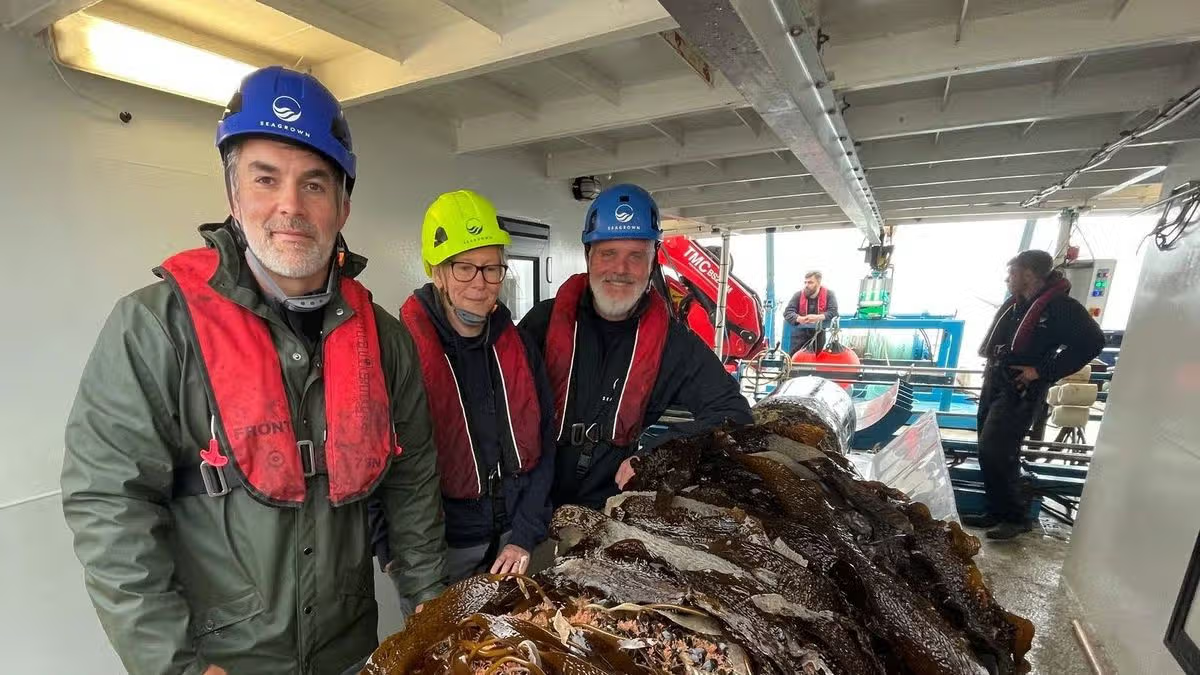
SeaGrown, a Scarborough company creating jobs and protecting the environment with an innovative approach to growing seaweed and shellfish in the North Sea, has been backed by York and North Yorkshire’s elected Mayor, David Skaith, as the county aims to become England’s first carbon-negative region by 2040

Elected Mayor Of York And North Yorkshire, David Skaith, On Seagrown’S Boat.(Image: Local Democracy Reporting Service)
The mayor of York and North Yorkshire has thrown his support behind an innovative seaweed cultivation firm as the region pushes to become England’s first carbon-negative area.
SeaGrown, a pioneering Scarborough-based company generating employment and safeguarding the environment through a groundbreaking approach to cultivating seaweed and shellfish in the North Sea, has secured the backing of the region’s elected Mayor, David Skaith.
The mayor recently joined the SeaGrown team aboard their workboat, Bright Blue, to witness first-hand how their revolutionary Kelpedo units are sustainably producing kelp four miles off the Scarborough coastline. The initiative, supported by combined authority funding, has allowed SeaGrown to recruit new personnel, including trainee marine crew members and scientists, to bolster their growing team.
Mr Skaith said: “We’ve got the landscape, coastline, expertise and the ambition to go further than any other region in England and become the first carbon-negative region by 2040. With my Carbon Negative Challenge Fund, we’re taking big steps towards our goal by backing the people behind our most pioneering projects.
“Just like our partners at SeaGrown, who are using our support to not only create jobs and growth in the county but also protect the rich biodiversity of our coast.”

David Skaith In Scarborough(Image: Local Democracy Reporting Service)
Backed by funding from the York and North Yorkshire Mayor’s Carbon Negative Challenge Fund, the company has launched project SeaSwell — an initiative to transform Yorkshire seaweed into biostimulants for crop growth and food ingredients. The project holds significant potential to bolster the food and agricultural sectors across North Yorkshire, while simultaneously cutting carbon emissions, improving ocean health, and supporting biodiversity.
The firm was established in 2018 by Captain Wave Crookes, a former fisherman who has held senior positions within the Royal Navy and RNLI, alongside marine scientist Professor Laura Robinson. The pair first met while working on the British Antarctic Survey.
“Joining forces with York and North Yorkshire Combined Authority on Project SeaSwell lets us take what we do every day in the North Sea and put it to good use on land,” said Captain Crookes, SeaGrown founder and director.
He added: “We’ve been growing seaweed on our KelpedoTM units for years. Now we’re working with local partners to see what that seaweed can do for the region, with trials on biostimulants and food products aimed at cutting carbon emissions.
“The Combined Authority set out to make York and North Yorkshire England’s first carbon-negative region by 2040. At SeaGrown, we love a challenge, and we’re pleased to be adding our weight to this vital task.”
The Carbon Negative Challenge Fund is a multi-million-pound programme providing support to pioneering projects aimed at decarbonising the region while driving growth and backing businesses and communities. This encompasses community energy initiatives, building retrofitting schemes and sustainable agriculture projects.
The fund underpins York and North Yorkshire’s ambition to become England’s first carbon-negative region by 2040. York and North Yorkshire Combined Authority is due to publish its Strategy for a Sustainable Future this autumn. The document will set out how the county intends to achieve its 2040 target.
The business recently submitted an application to transform a farm shop and café at Flatts Farm, situated less than 1km inland from the east coast and roughly 250m south-east of Burniston, into a centre for seaweed and shellfish cultivation, research and development, and product processing.
SeaGrown explained that its former premises had become “too small to accommodate 16 members of staff, a larger hatchery facility and further growth in product lines, meaning only packaging and a limited amount of production could take place” at the site.
The landowner has consented to lease Flatts Farm to SeaGrown, which stated the new premises would enable visitors, including schools, to attend and discover the environmental advantages of cultivating seaweed and shellfish.




























































You must be logged in to post a comment Login