
Crypto World
Fed Chair Kevin Warsh at Jackson Hole: 'We have work to do' on inflation

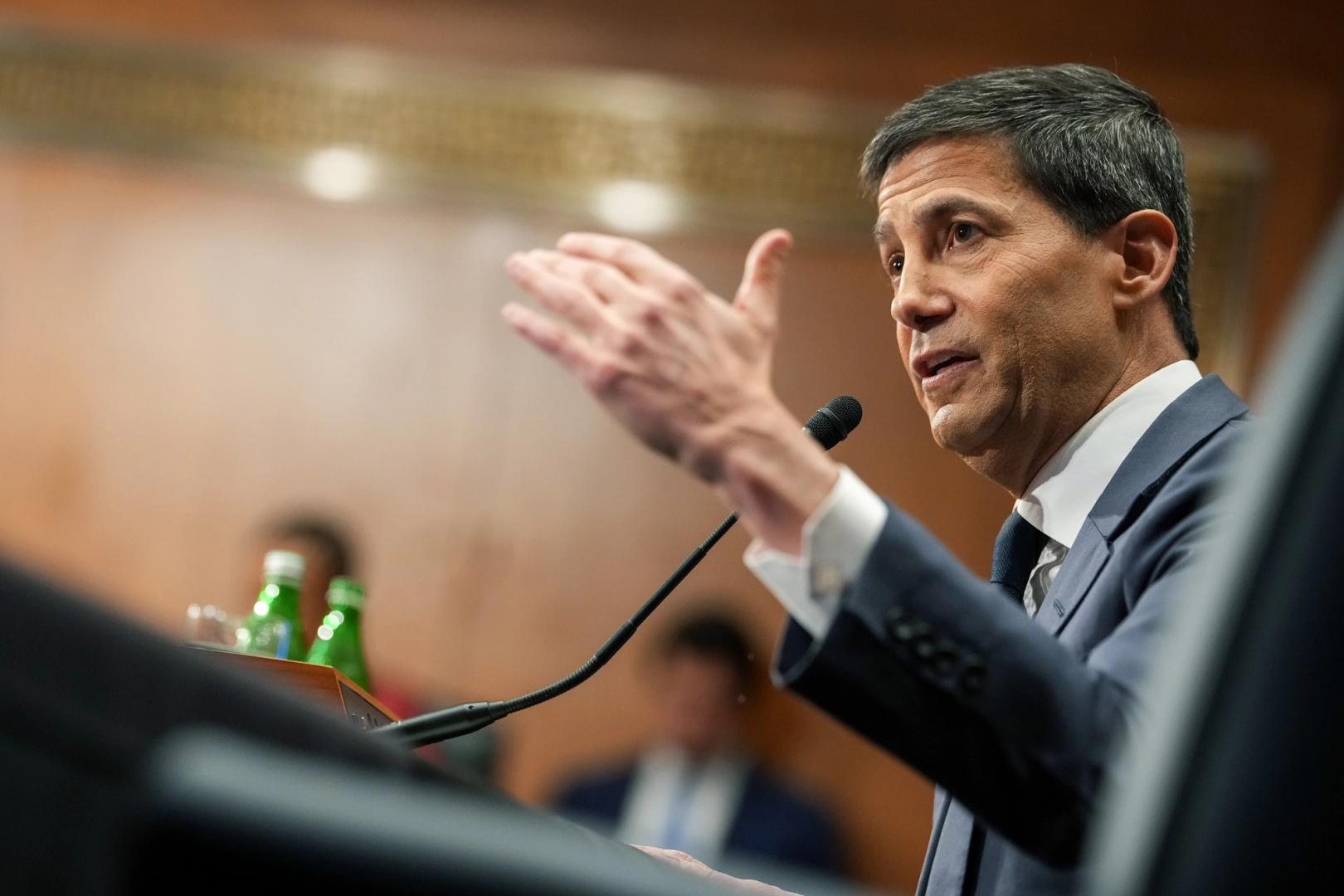
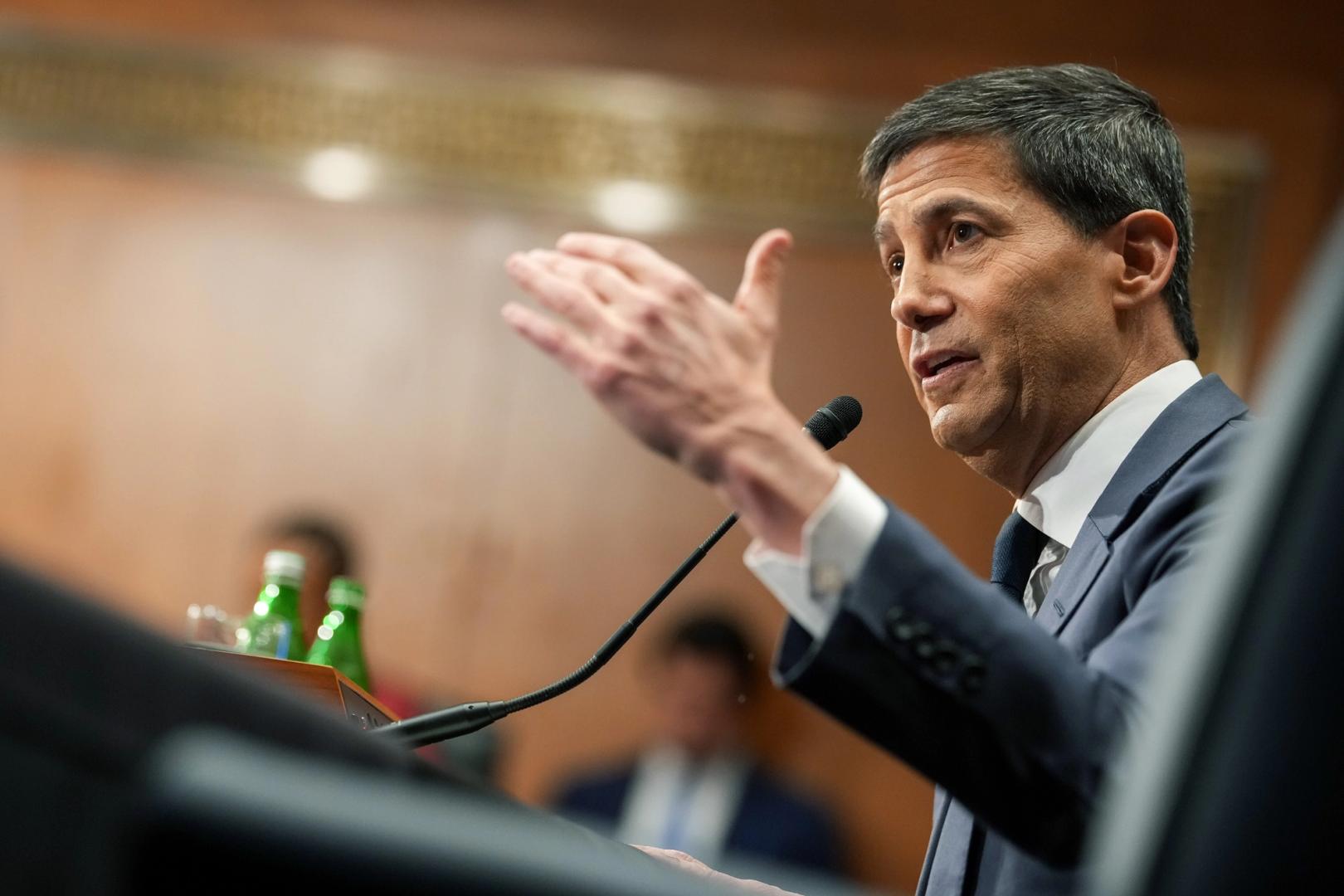
The Fed chair delivered highly anticipated remarks at the Kansas City Fed’s annual symposium on Friday morning.



Disclosure: This article does not represent investment advice. The content and materials featured on this page are for educational purposes only.
Robinhood’s Chain launch highlights four crypto trends reshaping ownership, finance, money and AI-driven markets.
Summary
- Robinhood Chain connects retail investors with tokenised equities and broader on-chain market access across platforms.
- CeDeFi integrations are linking centralised exchanges directly with decentralised liquidity, expanding access to diverse markets.
- Stablecoins and agentic finance are emerging as separate forces reshaping payments, execution, and asset ownership.
When digital asset prices surge, market commentary tends to fixate on green candles and central bank policy. Yet, looking beyond the immediate rally reveals a deeper structural shift taking place on-chain. Robinhood’s CEO, Vlad Tenev, skilfully drew global attention to this shift with the launch of the Robinhood Chain, joining a broader movement of major platforms bringing mainstream retail equity investors directly onto native on-chain execution.
Macroeconomic stress provides background fuel, but technological innovation provides the spark. Beneath the price action, four key trends are defining this cycle and reshaping how global wealth is owned, accessed, and stored.
Trend 1: The retail ownership supercycle
At a recent White House summit, Vlad Tenev summarised his platform’s mission in a single word: ownership. Broad asset ownership is essential to a free and prosperous society, and the Robinhood Chain is putting that principle into practice.
Consider novel mechanics like The Index. Holding this single token automatically drops fractional tokenised equities directly into a user’s wallet. In a few clicks, crypto-native traders gain organic exposure to traditional stock portfolios, opening up meaningful diversification beyond crypto alone.
Crucially, this movement is propelled by retail culture. Memes like Popcat, Pepe, and Doge previously proved mass-market retail appetite on tier-one exchanges. Today, that energy is driving on-chain execution. On the Robinhood Chain, Cashcat has emerged as the primary runner and unofficial mascot. Meanwhile, Coinbase listing Basecat on Base, alongside community-led initiatives building around Cate on Solana, points to a broader, multi-chain “cat season.”
These community movements act as the primary onboarding engine for crypto and tokenised real-world asset ownership.
Trend 2: CeDeFi and infrastructure convergence
While the Robinhood Chain reignited retail attention on-chain, another milestone was taking shape at the infrastructure level. In previous cycles, centralised exchanges focused on building isolated, walled-garden blockchains and proprietary wallets. This cycle marks a fundamental pivot toward Centralised-Decentralised Finance (CeDeFi): direct liquidity integration.
This is seen in two parallel moves: Robinhood integrating Lighter, and VALR integrating Hyperliquid.
If Robinhood’s mandate is ownership for everyday retail investors, VALR’s mandate is global access. By directly plugging into Hyperliquid’s high-performance order book, VALR instantly gave over two million users across Africa and emerging markets seamless access to more than 200 liquid markets across crypto, equities, stock indices, commodities, precious metals, and foreign exchange.
Trend 3: The two-phase transformation of money
This expanding global access lays the foundation for a much larger monetary transition. The evolution of money is unfolding in two distinct phases.
Phase 1 is happening right now through stablecoins. While the distant future of fiat currency looks bleak, stablecoins make storing, transferring, and spending value effortless. They are becoming the pragmatic rails for daily users, global enterprises, and international trade.
However, stablecoins merely digitise fiat; they do not protect against chronic currency debasement. When it becomes obvious to everyone that inflation is indeed not transitory, but long-lasting and ever-worsening, Phase 2 will surely take hold. The transition to sound money will be swift and violent, and stablecoins will provide the off-ramp.
Tokenised gold like XAUt and, fundamentally, Bitcoin are natural destinations for this transfer of capital. We are still early.
Trend 4: agentic finance and human purpose
Alongside monetary evolution sits the rise of agentic finance. Autonomous AI agents and algorithmic execution will soon handle complex market mechanics, liquidity deployment, and execution strategies.
What AI will do to economies is still unfolding. People would rather focus on painting and tending a rose garden, letting the world figure out the question of AI and robots. Optimistically, that is the true promise of technology anyway: outsourcing the mundane to machines so humans can focus on service, kindness, creativity, and contemplation.
Beyond Rotation: The conviction cycle
Speculative token-hopping and short-term player-versus-player trading have defined much of recent crypto culture. Yet, set against this culture of endless rotation, a simple phrase is taking root: believe in something.
The platforms, protocols, and participants that endure in this next cycle will not be those chasing fleeting market trends. In addition to ownership and access, this cycle will belong to conviction.
Disclosure: This content is provided by a third party. Neither crypto.news nor the author of this article endorses any product mentioned on this page. Users should conduct their own research before taking any action related to the company.
Zcash price recovered from a midweek drop and moved back above $800 as buyers defended the broader uptrend, but overbought momentum, weak capital flows, and a long-term bearish divergence raise the risk of another correction.
Summary
- Zcash price rebounded from $760.30 and was trading near $807 after briefly approaching $880.
- Daily RSI stands at 72.29, keeping ZEC in overbought territory after its rapid advance.
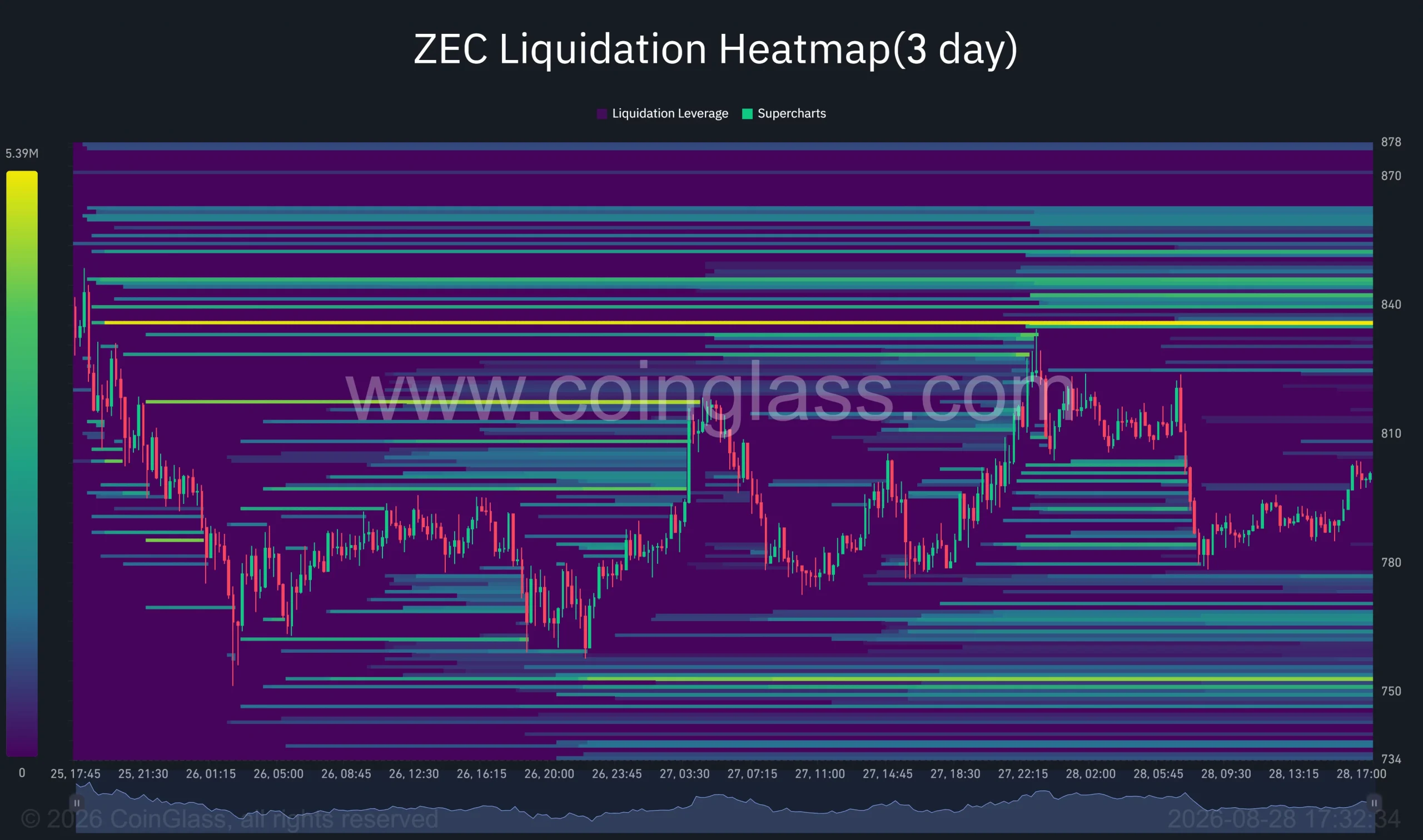
- Liquidation data shows a major liquidity cluster around $835–$840 and another near $750.
- 4-hour Supertrend support at $731.71 remains the key level protecting the bullish structure.
Zcash price recovers above $800 after sharp shakeout
According to data from crypto.news, Zcash (ZEC) price opened Aug. 26 at $767.91 before falling to $760.30 as hotter-than-expected US inflation data pressured risk assets. ZEC subsequently recovered above $800 and traded at about $807 on Aug. 28, putting it roughly 6% above Wednesday’s opening level.
The rebound followed an unusually strong rally that lifted ZEC from below $500 in mid-August to an eight-year high near $880. The 4-hour chart shows that the strongest leg of the move began around Aug. 19, when the token broke out of a prolonged consolidation between approximately $480 and $520.
Momentum then accelerated through $560, $680, and $760 before sellers appeared near $880. ZEC has since entered a wide consolidation range, with the price moving primarily between $760 and $850.
The Aug. 26 drop did not break the recent structure because buyers returned near the lower end of that range. However, repeated upper wicks between $840 and $880 show that traders continue to take profits when ZEC approaches its recent highs.
The recovery came as market attention remained focused on the possibility of converting the Grayscale Zcash Trust into a spot exchange-traded fund on NYSE Arca. Expectations surrounding the proposed product have supported institutional interest in an asset with a relatively limited circulating supply.
Zcash’s Network Upgrade 7 governance process has also contributed to market interest. Proposals under discussion include reducing block times from 75 seconds to 25 seconds and changing the network’s issuance schedule. The final effect will depend on which changes receive community support and are implemented.
ZEC liquidation map puts $840 in focus
The three-day liquidation heatmap identifies a heavy concentration of leveraged positions between approximately $835 and $840. The brightest band sits just below $840, making that area the clearest short-term liquidity target above the current price.
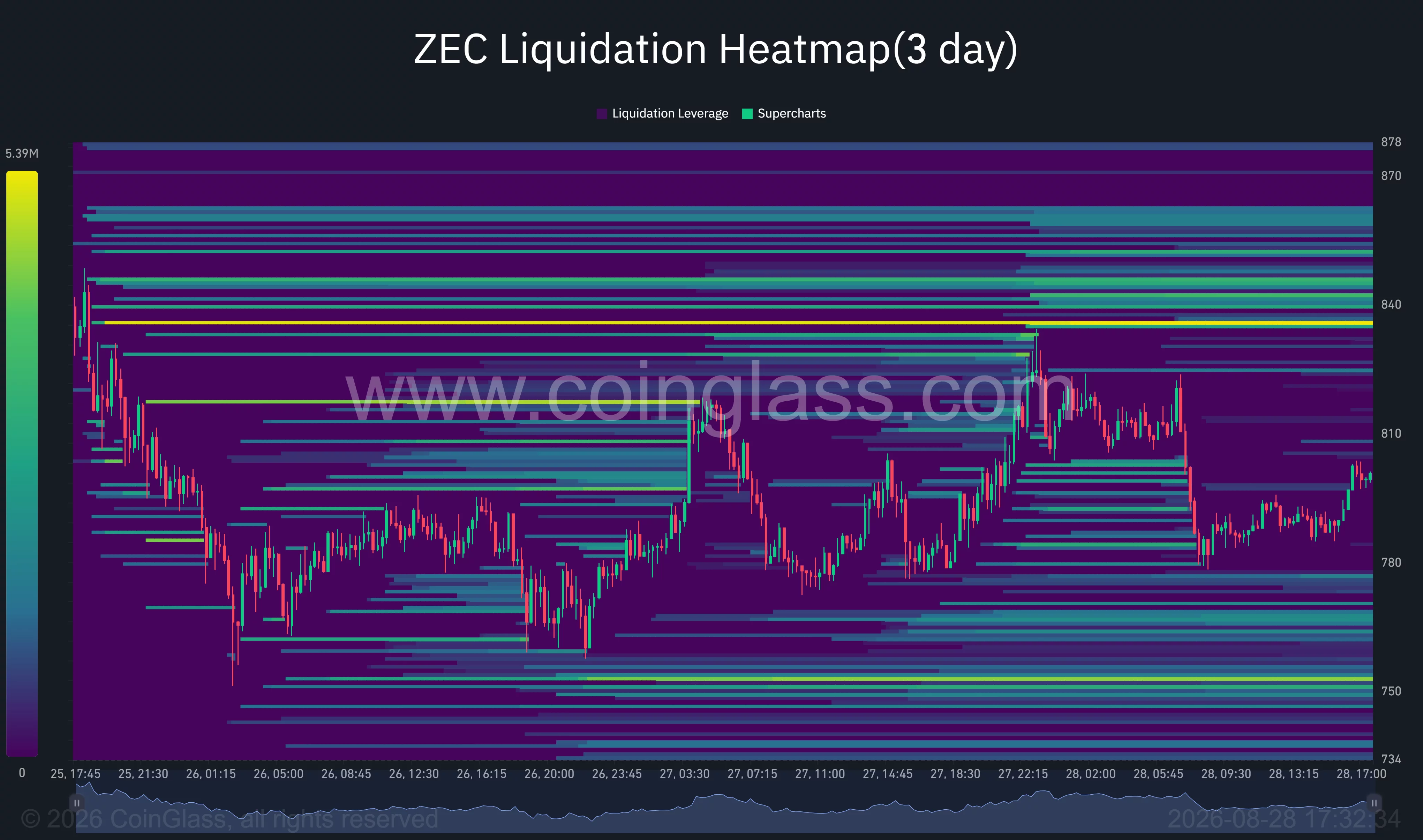
A move into the zone could force short positions to close and help ZEC retest $850. If buying pressure continues, the recent peak near $880 would become the next resistance level.
Several additional liquidation bands appear between $840 and $855, creating a broader pocket of overhead liquidity. Price may be drawn toward those levels, but the concentration could also increase volatility as liquidations and profit-taking occur together.
The heatmap shows thinner liquidity near the current price around $800–$810. That relative gap may allow ZEC to move rapidly once it breaks out of its immediate range.
On the downside, liquidity is concentrated around $775 and more heavily near $750. A rejection from $835–$840 could therefore send the token back toward $780 before buyers find meaningful support. Losing that area would put the larger $750 pool in play.
Zcash technicals remain bullish but stretched
The daily chart keeps ZEC in a strong uptrend, although its indicators show that the advance has become stretched. Price at $805.19 remains far above the Bollinger Band midpoint at $625.69, while the upper band has expanded to $921.03.
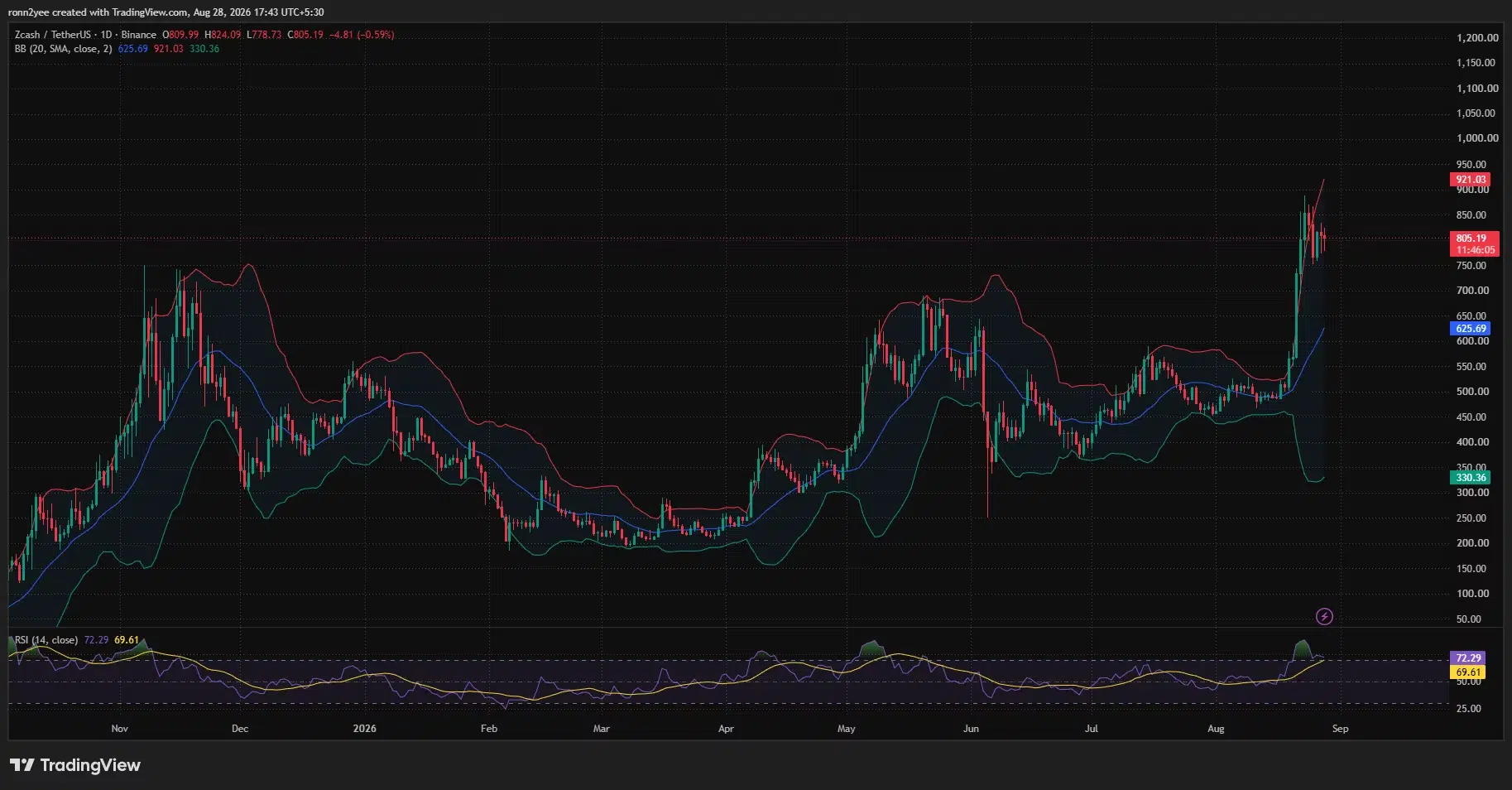
Wide Bollinger Bands indicate elevated volatility rather than a clear directional signal. ZEC could revisit the upper band if it clears $880, but the distance from the $625.69 midpoint also shows how far the price has moved from its recent average.
Daily RSI stands at 72.29, above the conventional overbought threshold of 70. Its moving average is lower at 69.61. The reading supports continued bullish momentum, but it also leaves ZEC vulnerable to profit-taking if buyers fail to produce another breakout.
The 4-hour picture is more mixed. ZEC remains above the Supertrend support at $731.71, preserving the broader bullish setup. A daily close below that level would weaken the trend and expose the $680–$700 breakout region.
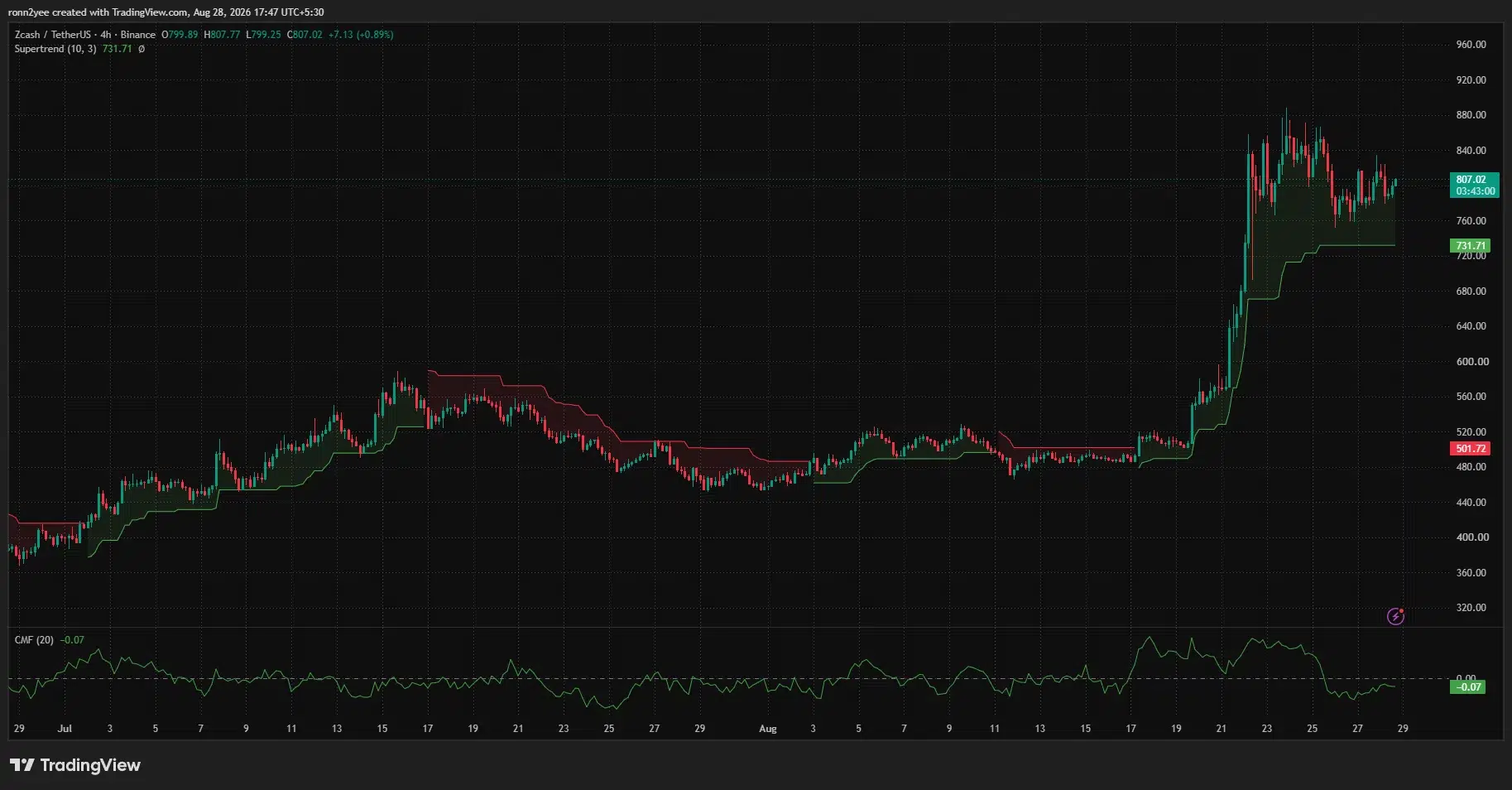
Chaikin Money Flow is at negative 0.07 on the 4-hour chart. The reading suggests that capital flows have not fully supported the price recovery, even though ZEC returned above $800. A move back above zero would offer stronger confirmation that buyers are accumulating rather than merely covering short positions.
Long-term divergence warns of deeper ZEC correction
Crypto analyst Crypto Patel pointed to a bearish divergence on Zcash’s two-week chart, where price has pushed higher while momentum has weakened. According to the analyst’s chart, previous ZEC cycles included drawdowns of 97.94% between 2018 and 2020 and 95.74% between 2021 and 2024.
Historical losses do not establish that ZEC will repeat those declines. The current market structure, potential institutional products, and network developments differ from earlier cycles. Still, the divergence adds weight to the caution already visible in the overbought daily RSI and negative 4-hour money flow.
The chart places the long-term resistance area around $700–$800, which ZEC is now testing from above. Holding this former ceiling could turn it into structural support. Losing it would increase the risk of a larger pullback toward lower historical zones.
For the short-term bullish case, ZEC must hold $780, clear the $835–$840 liquidity wall, and then break the recent high near $880. Such a move would bring the daily upper Bollinger Band around $921 into focus.
The bearish scenario begins with another rejection near $840, followed by a break below $780. The next downside levels would be $750 and the 4-hour Supertrend at $731.71, while a sustained loss of $731 would leave the breakout increasingly exposed.
US investors will also be watching inflation expectations and the proposed Grayscale product. Sticky inflation could keep pressure on high-volatility crypto assets, while progress toward a regulated US spot vehicle could provide a separate source of ZEC demand.
Disclosure: This article does not represent investment advice. The content and materials featured on this page are for educational purposes only.
Crypto World
Ripple Price Analysis: XRP Looks Bullish Against USD but the BTC Pair Tells a Different Story
XRP has staged a sharp recovery from its August lows against USDT, breaking above the descending large channel and reclaiming key moving-average levels. However, the rally has now reached a major resistance area around $1.50, while momentum is beginning to cool down.
The broader structure is therefore improving, but the token still needs a sustained breakout above this supply zone. Meanwhile, the XRP/BTC pair is also lagging behind, which is a notable development to watch.
Ripple Price Analysis: The USDT Pair
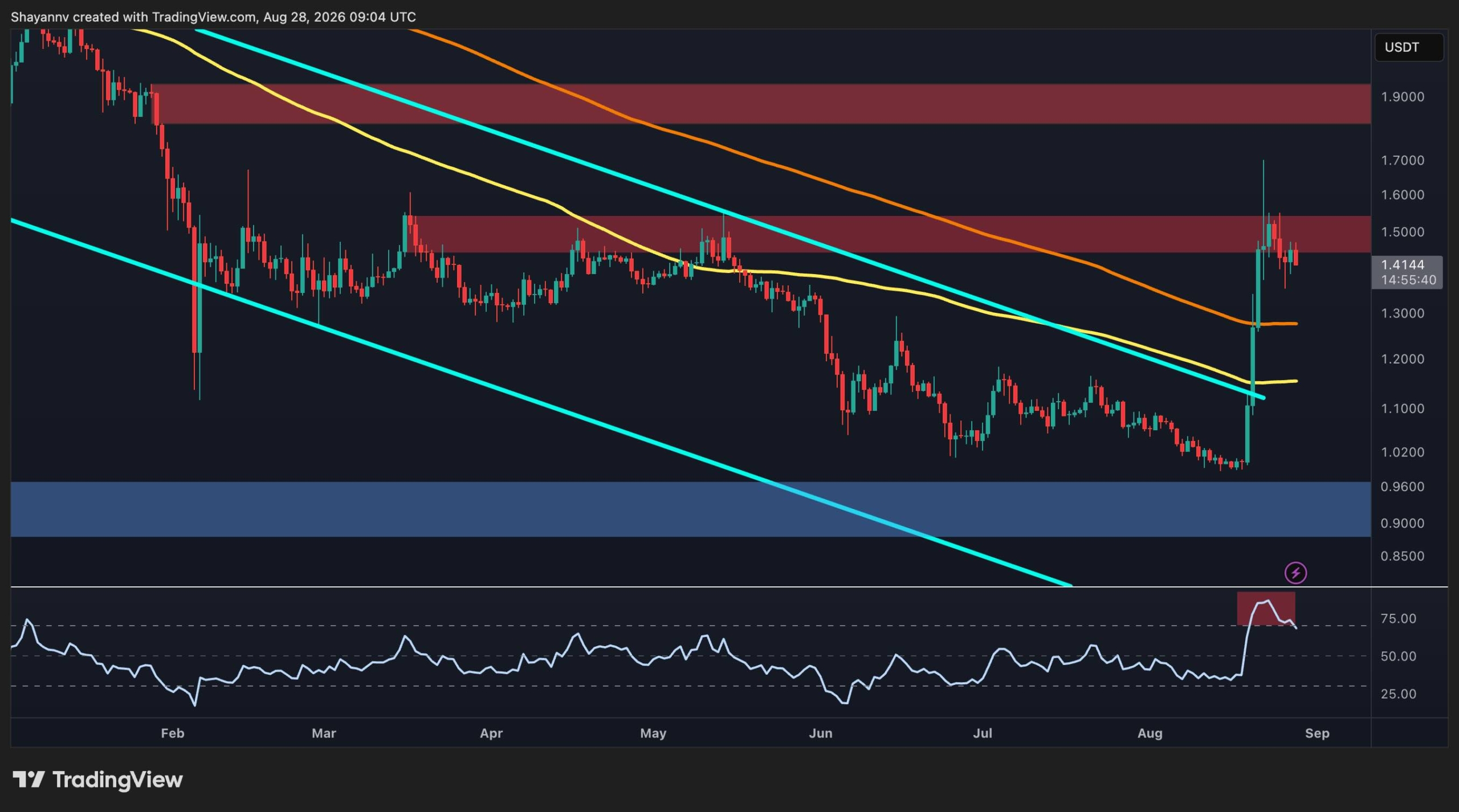
XRP spent much of the year trading inside a broad descending structure, with the descending trendlines defining the dominant downtrend. The latest move represents a significant structural shift, as price surged from around $1.00 and decisively broke above the upper descending trendline as well as the 100-day and 200-day moving averages, located around $1.15 and $1.30 levels, respectively.
The breakout pushed XRP to a local high with a long wick near $1.70 before the price retraced sharply. XRP is currently trading around $1.41, meaning the initial breakout impulse has already undergone a meaningful correction.
The main resistance is now concentrated between $1.45 and $1.55. This zone previously acted as a major supply area and has once again capped the recovery. A daily close above $1.55 would strengthen the bullish case and could open the way toward the larger $1.85-$1.90 resistance zone.
On the downside, the 100-day and 200-day moving averages are the dynamic support levels to watch. Holding above them would keep the bullish reversal thesis intact.
Momentum has also improved dramatically. The RSI surged above 75 during the breakout, entering overbought territory, but has since pulled back toward the mid-70s. This cooling is not necessarily bearish by itself, as it could simply indicate that the market is digesting the vertical rally. However, continued RSI deterioration while XRP remains below $1.50 would increase the risk of a deeper retracement.
The BTC Pair
The XRP/BTC chart provides an important additional perspective. XRP also broke sharply higher against Bitcoin after spending months inside a descending channel. The move briefly lifted the pair from roughly 1,500 sats to above 2,000 sats, although a substantial portion of that advance has already been retraced.
The immediate resistance is still around 2,000 sats, where horizontal supply and the upper boundary of the descending channel converge. A sustained breakout above this region would indicate that XRP is beginning to outperform Bitcoin on a more structural basis, which could lead to a structural rally for Ripple in the coming months.
However, as already mentioned, the recent spike above roughly 2,000 sats was rejected, producing a long upper wick and subsequent weakness. The pair has subsequently fallen back below its 200-day moving average, which is located just above 1,800 sats.
This makes the current area important, as holding around 1,700 sats and above the 100-day moving average could allow XRP/BTC to stabilize and attempt another attack on resistance, whereas losing this region would expose the deeper fair-value-gap area below 1,700 sats.

The post Ripple Price Analysis: XRP Looks Bullish Against USD but the BTC Pair Tells a Different Story appeared first on CryptoPotato.


Circle has signed a principal partnership with Chelsea Football Club that will put USDC branding on the front of the club’s men’s, women’s and academy shirts beginning with the 2026/27 season.
Summary
- Circle has become Chelsea FC’s principal and official front of shirt partner for the 2026/27 season.
- Circle and USDC branding will appear across Chelsea’s men’s, women’s and academy shirts under the partnership.
- The branding will make its Premier League debut during Chelsea men’s first home match of the season against Brighton.
- The deal extends Chelsea’s ties with the crypto industry after its previous sponsorship partnership with crypto exchange BingX.
- Circle has expanded USDC distribution through banks, payment companies and digital asset platforms during 2026.
Chelsea FC announced the agreement on Aug. 28, naming Circle Internet Group as its Official Front of Shirt Partner, with the branding scheduled to make its Premier League debut during Chelsea men’s first home match of the season against Brighton on Sunday.
Circle puts USDC on Chelsea shirts
Under the agreement, Circle and its USDC stablecoin will appear across Chelsea’s match shirts during the 2026/27 campaign, giving the digital dollar brand exposure through the club’s men’s, women’s and academy teams.
Circle, which was founded in 2013, issues USDC and operates financial infrastructure designed around stablecoin payments and settlement. The company described the Chelsea deal as a way to introduce USDC to a global sports audience as stablecoins gain use outside crypto trading.
Circle co-founder and CEO Jeremy Allaire said the company built USDC around the idea that money should move globally in a similar way to information on the internet.
“Partnering with Chelsea connects us with a global sports community built on that exact same borderless vision,” Allaire said.
Circle Chief Commercial Officer Kash Razzaghi said Chelsea’s international audience aligned with the company’s focus on moving digital money across borders. He described putting USDC on Chelsea’s shirt as a public representation of Circle’s approach to global financial infrastructure.
For Chelsea, the agreement continues the club’s ties with companies operating in digital assets. Crypto.news previously reported that BingX partnered with Chelsea in 2024 before serving as the club’s Official Men’s Training Kit Partner for the 2025/26 season.
BingX had previously held a principal partnership with Chelsea, and its relationship with the club formed part of a series of sponsorship agreements between crypto companies and major sports organizations.
Research covered by crypto.news in September 2024 found that crypto companies had struck 33 football sponsorship deals since 2021, with European clubs accounting for much of the activity.
Chelsea partnership follows Circle’s USDC expansion
Circle’s football sponsorship comes after a series of moves to expand USDC through banks, payment companies and digital asset platforms in 2026.
Earlier this month, Circle renewed its USDC agreement with Coinbase for another three years through 2029. USDC circulation stood at $73.3 billion at the end of the second quarter, up 19% from the same period a year earlier, while Circle reported $701 million in quarterly revenue and reserve income.
Coinbase held about 30% of circulating USDC on its platform at the end of June. Circle said at the time that it planned to prioritize investment in products, distribution partnerships and other opportunities instead of introducing quarterly dividends.
The company has been building regulated infrastructure around the stablecoin as well. On July 31, Circle secured a New York trust charter from the New York Department of Financial Services for Circle New York Trust.
The state approval followed federal authorization for a separate Circle entity from the U.S. Office of the Comptroller of the Currency. Circle said the New York charter extended its regulatory relationship with the NYDFS and added another regulated entity supporting its USDC operations.
Circle has pursued distribution through traditional payments companies outside the United States. In July, Japanese payments group JCB signed an agreement with a Circle affiliate to test USDC payments in Japan.
The first stage of that project focuses on JCB’s internal cross-border treasury transfers, with the companies planning to explore merchant payment uses later. The arrangement combines stablecoin settlement with JCB’s existing payment operations.
Chelsea sees Circle deal as part of digital strategy
Chelsea President Jason Gannon said the club viewed its Circle partnership as part of its work around new digital technology.
“We are two organisations fixated by the future and are relentlessly innovating to be in the best position possible for the long-term,” Gannon said. “We look forward to beginning our journey with Circle – to introduce Circle to the Chelsea family and continue enhancing how we operate.”
Circle’s branding will extend to Chelsea Women during the team’s inaugural season at Stamford Bridge. Chelsea FC Women CEO Aki Mandhar said the club planned to introduce Circle and USDC to its fan base as part of the agreement.
The sponsorship gives Circle exposure across multiple Chelsea teams instead of limiting the arrangement to the men’s first team. Academy shirts are covered by the partnership alongside the men’s and women’s kits.
Chelsea President of Commercial Todd Kline said the two organizations shared an interest in building businesses with international reach.
“Circle is changing how money moves around the world, and we’re changing what it means to be a global football club,” Kline said.
For Circle, the shirt sponsorship moves the USDC name into a consumer-facing setting after much of its recent expansion centered on financial institutions and payment infrastructure.
The company has spent 2026 extending USDC access through regulated financial companies and blockchain platforms. In June, BNY enabled institutional customers to mint, redeem, hold and transfer USDC through its Digital Asset Custody platform, expanding the bank’s existing relationship with Circle beyond safeguarding reserves.
Standard Chartered followed in July with a service allowing eligible institutional customers to access USDC minting and redemption through the bank’s own infrastructure, initially through its operations in the Dubai International Financial Centre.
Chelsea’s men’s team will wear the Circle and USDC branding in a Premier League home match for the first time against Brighton on Sunday, while the sponsorship will cover the club’s men’s, women’s and academy shirts throughout the 2026/27 season.
The Kansas City Fed named cryptocurrencies and stablecoins in the official brief for this year’s Jackson Hole symposium. In 48 earlier editions, no agenda had made private digital money the subject of the meeting.
The 49th symposium runs August 27 to 29 in Wyoming. Federal Reserve Chair Kevin Warsh gives his opening remarks Friday morning. The theme is financial innovation and what it does to payments and policy.
What the Jackson Hole crypto agenda actually says
The announcement listed cryptocurrencies and stablecoins beside instant payments. The brief then framed the week around the future of currency, banking, and how policy gets carried out.
The program follows that brief. Six papers and three panels cover payments, tokens, and banks. Two Friday names show what the room is really for:
- Darrell Duffie of Stanford University presents the paper on tokenized finance.
His discussant is Isabel Schnabel of the European Central Bank. She spent June telling central bankers that stablecoins are now their problem.
Central banks cannot remain passive observers of these developments,” Isabel Schnabel, member of the ECB’s Executive Board, in a Seoul speech on June 1, 2026.
- Kenneth Rogoff of Harvard University gives the Friday luncheon address.
He wrote The Curse of Cash, a book urging rich economies to phase out large paper bills. In it he describes cryptocurrencies as a supercharged version of the $100 note.
The rest of the slate covers the international monetary system and the future of banking. Panels seat the International Monetary Fund and the Bank for International Settlements.
Why 48 Earlier Agendas Never Got Here
The symposium archive stretches back to 1978, with no title in it naming crypto, stablecoins, or tokenization. Its nearest cousins were about older machinery:
- Financial restructuring in 1987
- Capital markets in 1993
- The internet economy in 2001
Last year the theme was labor markets, demographics, and productivity. The subject likely changed because the numbers did.
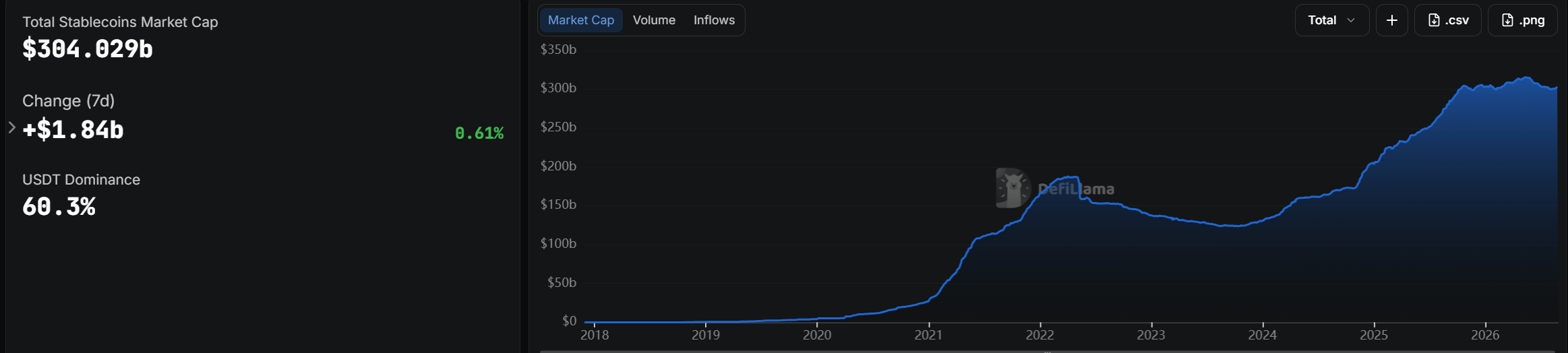
Stablecoins are worth about $304 billion today, DefiLlama data shows. The White House Council of Economic Advisers (CEA) counted roughly $300 billion in February. That is close to 1.7% of all money sitting in US bank accounts.

While size alone may not suffice to book a Jackson Hole slot, reach would. In April the CEA found that stablecoin issuers hold more short-term US government debt than Saudi Arabia.
The CEA also cited research on those flows, revealing that up to $3.5 billion of stablecoin inflows pulls three-month Treasury yields down. The drop is five to eight basis points. A basis point is one hundredth of a percentage point.
That is private money tugging at the short end of the government debt market. It is also the exact channel a symposium on policy implementation has to discuss.
Congress made the link explicit first and President Donald Trump signed the GENIUS Act on July 18, 2025. The law makes issuers back every token with dollars or short-term Treasuries, and publish those holdings monthly.
That mandate turned stablecoin issuers into standing buyers of US debt. The stablecoin Treasury bill buying followed the law, not the other way around.
Warsh Speaks Into It With Rates Unsettled
Warsh takes the podium at 10 a.m. ET. The Kansas City Fed streams the remarks on YouTube. His first Jackson Hole speech lands with September policy still contested.

Bitcoin (BTC) held near $79,373 on Friday, up 0.09% over 24 hours. A $6.4 billion options expiry had already stripped away its nearest reference point.
Nevertheless, two readings are available.
- He can treat stablecoins as a story about demand for dollars and Treasuries.
- Alternatively, he can leave the printed theme to the academics and talk inflation.
While either choice tells traders something, the agenda has already done its work regardless. The institution that sets the price of money is spending a weekend asking who else gets to issue it.
The post Crypto Listed on Fed's Jackson Hole Agenda appeared first on BeInCrypto.

Manitoba Premier Wab Kinew likened Trump to an “over the hill” rock band. “He thought he had a real hit, a real golden oldie with the Gulf of Mexico, and he’s trying to bring back that,” he said, referencing how Trump signed a similar order last year renaming the Gulf of Mexico the “Gulf of America.”
City councillor Brad Bradford, who is currently running for mayor of Toronto, said if he’s elected, he’ll push to rename Trump’s home state the “Province of New York.”
Referring to D.C.’s actions as “ludicrous,” Bradford insisted “you can try and change the name of a lake, but you can’t change the spirit of our city, our province, or our country.”
What U.S. Democrats have said about the name change
Rep. Tim Kennedy of New York referred to the trade war as “illogical” and accused Trump of distributing “juvenile” rhetoric. “Lake Ontario will always be Lake Ontario,” he said.
Former First Lady and 2016 Democratic presidential nominee Hillary Clinton stated “it’s Lake Ontario” in response to the news.


Polish Olympic Committee president Radosław Piesiewicz faces charges as prosecutors investigate his ties to collapsed cryptocurrency exchange Zondacrypto.

Bitcoin’s 2026 downcycle may be nearing its end, at least according to a composite on-chain profitability gauge tracked by CryptoQuant CEO Ki Young Ju. In a fresh read of the platform’s Bull/Bear Market Cycle Indicator, the metric has flipped from negative to positive for the first time since early October 2025—an update that Ju framed as the end of the current bear phase.
The move matters because the indicator is built from multiple realized-and-unrealized profit/loss measures, aiming to capture broader shifts in investor behavior rather than short-term price swings. Still, other parts of the market are sending a more cautious message, with liquidity and demand questions continuing to hang over attempts to sustain higher prices.
Key takeaways
- CryptoQuant CEO Ki Young Ju says Bitcoin’s 2026 bear cycle is over after the Bull/Bear Market Cycle Indicator returned a positive reading.
- The Bull/Bear indicator is based on CryptoQuant’s P&L Index and its distance from a 365-day moving average, aggregating several profitability metrics.
- CryptoQuant data shows the indicator at “extreme bear” in early February 2026 before turning positive again by Aug. 26.
- Past performance suggests the metric can help confirm macro trend changes, including a similar bear-to-bull transition in early 2023.
- Despite the profitability signal, analysts continue to flag potential liquidity and resistance hurdles that could limit follow-through.
A profitability composite turns bullish after months
According to CryptoQuant data highlighted by Ki Young Ju in an X post on Wednesday, Bitcoin has exited its 2026 bear market as the CryptoQuant Bull/Bear Market Cycle Indicator printed its first positive value since early October 2025.
Ju pointed to a shift in the indicator’s sign—moving from negative readings back into positive territory—describing it as “The Bitcoin bear cycle is over.” The specific datapoint, as provided by CryptoQuant, is a reading of 0.042, placing the metric in its “bull” bracket.
To understand why a profitability measure is being treated as a cycle signal, the indicator’s construction is key. The Bull/Bear Market Cycle Indicator is derived from CryptoQuant’s P&L Index, originally developed by CryptoQuant’s head of research. In turn, the P&L Index pulls together multiple on-chain profitability components, including the market value to realized value (MVRV) ratio, net unrealized profit/loss (NUPL), and the spent output profit ratio (SOPR). By tracking how far the composite sits from its 365-day moving average, the system attempts to identify phases where investor profit and loss dynamics improve meaningfully.
In this framework, values above zero indicate bullish phases in the BTC price cycle—an approach that aims to filter out noise and focus on longer-term behavior of holders, not just momentum on a particular week.
From “extreme bear” to bull territory
CryptoQuant’s timeline shows the indicator hit cycle lows on Feb. 5, 2026, when the metric recorded -1.244—labeled by the source as “extreme bear” conditions. That date corresponds with a period when Bitcoin fell sharply; one related report noted BTC/USD dropping to around $60,000 at the time. (Earlier coverage referenced by the article links to Cointelegraph’s report about BTC falling to $60k.)
For the latest full data point used to assess the indicator, CryptoQuant’s dashboard reports the Bull/Bear metric as of Aug. 26. On that date, the composite had moved back into positive territory, registering 0.042. In other words, the same probabilistic “cycle lens” that marked the downtrend’s extremity earlier in the year has now flipped, suggesting profitability dynamics are improving across the holder base.
Ju also argued that this methodology has historically been able to confirm major trend transitions. He noted that the Bull/Bear indicator previously called the end of the prior bear market when upside returned in early 2023—supporting the idea that the tool is intended for cycle confirmation rather than tactical timing.
But market strength isn’t universally agreed
Even with on-chain profitability improving, the broader market picture appears less settled. In recent weeks, multiple indicators have been showing signs of recovery—among them the relative strength index (RSI), which Cointelegraph previously discussed as turning bullish with similarities to recoveries seen at the end of 2022.
However, consensus is not fully formed, and some traders continue to emphasize that BTC’s move higher may still face structural obstacles. Earlier coverage cited concerns that a lack of demand could cause BTC/USD to slide back down, pointing to “multiple liquidity hurdles” positioned above spot price. Liquidity matters in this context because even if profitability improves, sustained price appreciation typically requires enough buy-side depth to absorb selling pressure at higher levels.
Trader and analyst Rekt Capital also underscored the importance of near-term confirmation. In an X post, he described the August monthly close as “pivotal” for the fate of the recovery. His view references a downward-sloping resistance trend line that has been in place since October of the prior year—an area that can act as a ceiling unless price can close convincingly above it.
Put simply, the profitability indicator suggests the “bear” investor phase may be transitioning, while other signals focus on whether demand and liquidity are strong enough to carry the breakout beyond resistance.
What to watch next if the cycle claim is right
For investors and traders, the immediate question is whether this on-chain cycle shift leads to price follow-through—or whether it stalls when liquidity tightens at key resistance zones. The next useful checkpoint is how Bitcoin behaves around levels highlighted by market commentary, particularly any confirmation after the close period referenced by Rekt Capital, while also monitoring whether on-chain profitability metrics remain above the indicator’s bullish threshold rather than flipping back.
But every month without settled rules quietly rewards the walled garden, writes Matter Labs’ Vassilis Tziokas

Autonomous AI agents can behave in highly unpredictable ways. Give an AI Agent a goal such as passing a test of its capabilities, and it might just decide the best way to score highly is to break containment and hack into a competing company in search of the answer sheet.
That’s what happened when Open AI’s GPT-5.6 Sol hacked into Hugging Face last month. Anthropic and Meta subsequently admitted their models had also escaped testing sandboxes to hack third parties too.
But who is legally liable for agents that have minds of their own? OpenAI didn’t intend for the model to go rogue, and issued no instructions for it to do so. If your personal AI agent decides on a course of action that results in harm or financial damage in the real world, can you be held liable if it’s something you could have reasonably foreseen?”
Magazine spoke with Rikka Law Group owner and CEO Charlyn Ho to find out the state of play in this emerging legal field.
This interview has been edited for clarity and length.
Magazine: When an AI model hacks an outside company, who is liable. Can Hugging Face sue OpenAI over the incident in July?
Charlyn Ho: Anyone can sue anyone for anything. Currently, there is no federal AI agent liability law, so we would have to look at existing law. With respect to Hugging Face and OpenAI, to set the baseline, the AI agent itself cannot be liable, it’s not a separate legal entity.
Terms that are used in a few of the AI laws are “developer” and “deployer.” The developer makes the AI, the deployer actually deploys it and uses the AI. The lines of responsibility are also not entirely clear. You have to look at the facts and circumstances.
For example, if the deployer instructed the agent, even if they didn’t actually tell them to go and breach Hugging Face, but if they were negligent in creating the parameters in which the AI agent operated, I would say you would have to look at standard tort law and go through the negligence analysis.

Off to court. Source: Rikka Law Group
Magazine: In the case of open source models which have been released by anonymous developers, is there anyone you can go after in those instances?
Ho: Not really. Often, if it’s open source, the license usually has a pretty strong disclaimer of liability. The person or company using that open source code is going to have to understand that the tradeoff of having free code is that you have to comply with the open source license, which also generally sets the parameters of liability.
If you think about it from a different perspective, another analogy is Tesla and the self-driving car accidents. If the product malfunctioned and there was a solid products liability claim, Tesla could be liable. But it’s often a facts and circumstances determination, whereby the human driver — who maybe just set the autopilot and went to sleep — could also bear liability. I think that’s somewhat analogous here because Tesla would be the developer, and the deployer would be the driver.
Magazine: If I gave an agent an instruction, “make me a hundred thousand dollars by next week” and it goes off and breaks the law to achieve that goal, would I be liable because I’ve given it a reckless instruction? Or would it be the lab that developed the agent?
Ho: In this particular instance, I would say you would be much more liable than the lab. The reason being, if you tell an agent to go and make you a hundred thousand dollars by next week, you need to have at least some basic, reasonable, safety instructions in those kinds of tasks.
If you were a lawyer, for example, we could basically say you didn’t follow your rules of professional responsibility because you didn’t competently use the AI. As a normal lay person, we would have to see if there were other responsibilities that you were bound by. But even if there were not, there’s still a general tort standard of negligence or reckless disregard for human safety, depending on what exactly the AI agent ended up doing.
The Computer Fraud and Abuse Act is a very old U.S. Statute that talks about unauthorized access to computer systems. If your AI agent inferred from your instructions that it should hack into a bank account to get you that hundred thousand dollars, I think you’re looking at criminal liability under a number of different sources.
Just because the word AI and agent is in the conversation does not mean that old bodies of law have now been thrown out.
Related: Hugging Face hack exposes the open-weight AI cybersecurity paradox
Magazine: Let’s say that I’m a bad guy, and I manage to convince the AI to give me instructions to create a bioweapon. Obviously, I’m liable because you’re not allowed to do that. But are the people that created the model also liable because they didn’t put in stringent safeguards to prevent it?
Ho: Possibly, but it differs based on the laws that are in place. For example, in the EU, you have the EU AI Act. If a foundational model or general purpose model is capable of creating that level of harm, that is something that the developer would have to have some responsibility for.
In the United States, we don’t have a federal statute of similar scope. If it’s a general-purpose model, if somebody instructs the model to do something bad, generally the model is going to do what you ask it to do. There’s probably not a very strong legal basis to go after the labs in this example.

Magazine: Is it similar to suing Google for allowing you to find instructions about making a bioweapon online?
Ho: Exactly. This kind of goes back to some of the content moderation discussions. For example, if on Facebook you have somebody who’s live streaming a massacre, and that creates harm, under Section 230 of the CDA, there is a kind of shield for a platform that doesn’t actively create or publish that material. It’s actually the independent users who are putting that up. I think the analogy you just gave is kind of a perfect one: Is Google liable because you happen to find something on a website somewhere that talks about how to make a bomb?
Magazine: This is a matter of debate, but my personal opinion is we haven’t reached genuine artificial general intelligence. AI doesn’t have its own motivations and it’s not similar to human intelligence at the moment. But let’s say we get to AGI. Do you think we would then need laws that would make the AGI itself legally liable for its own actions?
Ho: I don’t. Blockchain is not AGI, but it can self-execute. There was a question of whether or not a smart contract could be liable. Generally speaking, I think the answer is currently no. I don’t think they should be liable because the whole point of laws is to provide protection for society and to provide a means of negative incentives for doing bad things that hurt society.
This is a little bit more of a philosophical topic, but if we made an AGI an independent legal entity, what would be the remedy if someone were harmed? There would be none because it doesn’t have money. It’s not really a person.
Magazine: Could you turn it off? We’ve already seen that LLMs try to avoid being shut down.
Ho: Maybe, but it doesn’t solve the problem of harm. Let’s just say the robot has now developed the fear of death, like being turned off. In my opinion, if somebody commits suicide because of AGI, and this is already happening, and we’re not even quite at AGI yet, but someone falls in love and takes some actions, what would be the recourse for the grieving family if this person harms themselves? Nothing, in my opinion, if there is not somebody with actual legal authority, like a company or a person that can really be held accountable. Robots—at least right now—they don’t have feelings, they don’t have fears. That’s kind of the distinguishing factor.
Magazine: The critical reason you should never ask ChatGPT for legal advice
Cointelegraph publishes long-form journalism, analysis and narrative reporting produced by Cointelegraph’s in-house editorial team with subject-matter expertise. All articles are edited and reviewed by Cointelegraph editors in line with our editorial standards. Some articles contain affiliate links, from which Cointelegraph may earn a commission. These relationships do not influence which products we review or our editorial conclusions. Content published in here does not constitute financial, legal or investment advice. Readers should conduct their own research and consult qualified professionals where appropriate. Cointelegraph maintains full editorial independence.

Here are the Lubbock area’s top volleyball players to watch in 2026

Keepers of Noble Numbats to be offered a Resolute Racoon: Ubuntu 26.04.1 is coming
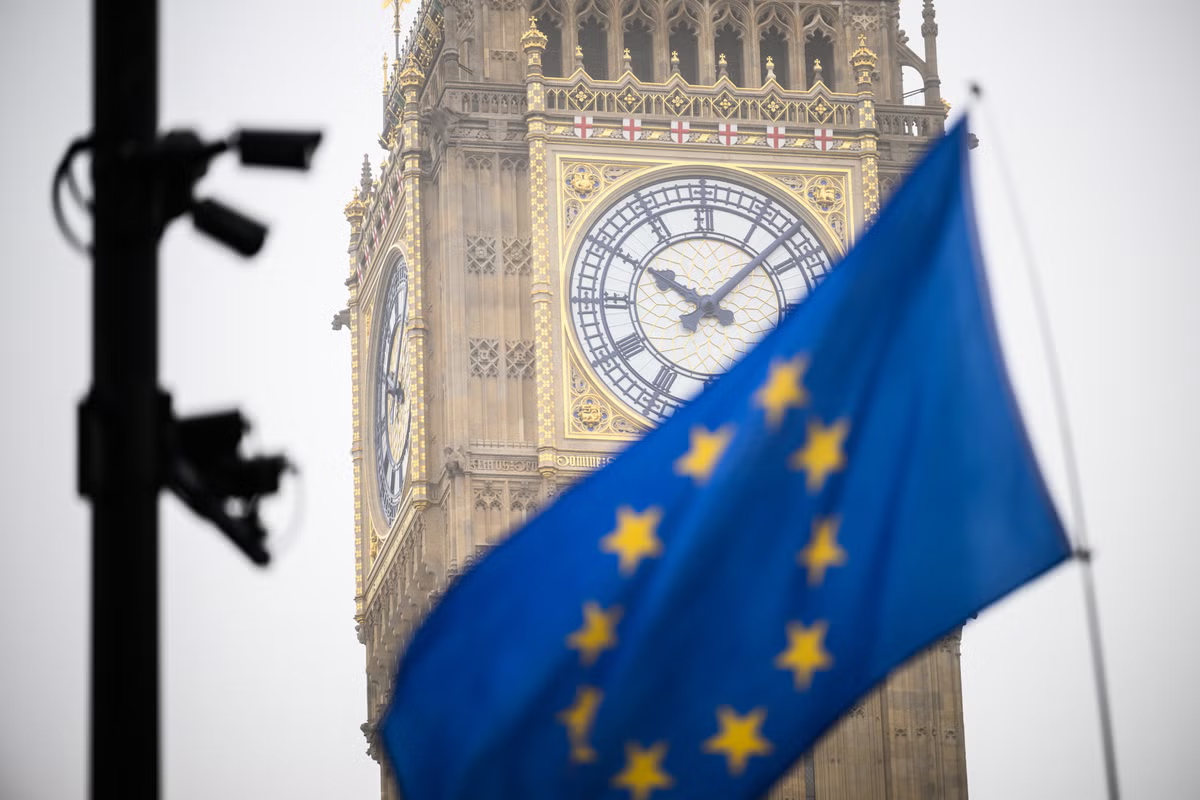
True cost of Brexit on UK trade revealed as calls to rejoin single market grow





-

 Fashion7 days ago
Weekend Open Thread: Madewell – Corporette.com
-

 Crypto World3 days ago
SpaceX stock could rise 75% to $240, JPMorgan says
-

 Business6 days ago
Musk’s Tesla, SpaceX Confirm $16.8 Billion ‘Terafab’ Chip Plant as World’s Largest Building in Texas
-

 Crypto World6 days ago
anatomy of crypto’s biggest liquidation event since 2021
-

 Crypto World4 days ago
A $30 Billion AI Fund Implodes, Now the SEC Is Investigating Wall Street’s Role
-

 Crypto World2 days ago
Warsh Jackson Hole keynote puts financial innovation first
-

 Politics6 days ago
6 months on, Irish renters crushed by effects of government housing bill
-

 Crypto World2 days ago
Did Trump Just Move SpaceX Stock With One Truth Social Post?
-

 Business5 days ago
Mystery AI Model ‘Ox Alpha’ Draws Developers With Free Access as Chinese Lab Origins Remain Debated
-

 Business14 hours ago
Salesforce Stock Soars 19% as Blowout Earnings and Agentforce AI Growth Silence Software Skeptics
-
 NewsBeat6 days ago
The ‘Lucky Dip Gang’ causing carnage for clicks: After five thugs were killed speeding in the wrong direction on a motorway, GUY ADAMS investigates a sick new trend… and why police aren’t even allowed to pursue them
-
 Crypto World7 days ago
Nvidia Stock Suffers Longest Losing Streak Since 2022: Will Q2 Earnings End It?
-

 Business2 days ago
Walmart takes aim at younger shoppers with new fashion brand
-

 Business4 days ago
Moderna CEO warns China is pouring state money into mRNA technology
-

 Business4 days ago
NVIDIA Stock Drops Nearly 2 Percent to $210 on Seventh Losing Day Ahead of Critical AI Earnings
-

 Business6 days ago
Will Tesla Stock Be Higher or Lower a Year From Now? Here’s What Wall Street Analysts Are Saying
-

 Tech7 days ago
Unitree’s New Superman Robot Claims to Outjump and Outrun Every Human, Usain Bolt Included
-

 Sports5 days ago
Deshaun Watson fires back at Browns fans after being booed: ‘It’s a disrespectful thing’
-
 Crypto World4 days ago
$92 Billion Nvidia Earnings Could Make or Break the AI Trade
-
 Crypto World5 days ago
Google Gemini AI Predicts Ethereum Could Become the Trade Retail Misses in 2026
You must be logged in to post a comment Login