
Business
McDonald's: Finally Lovin' It (Rating Upgrade)




M Rajeevan of National Atmospheric Research Laboratory said, “the failure to predict the 2009 drought has raised many serious issues. On the other hand, the state-of-the art coupled ocean atmospheric models have sho-wed improved skills in predicting inter annual variability of Indian summer monsoon rainfall.”
He was speaking at the golden jubilee conference of Indian Institute of Climate Change (IITM), Pune, on ‘opportunities and challenges in monsoon prediction in changing climate’. Since 2011, the IITM has used the coupled model for monsoon forecast.
Better weather forecast needs data from all parts of the globe. “In every part of the world, farmers are saying that the climate is not as it used to be. Hence, traditional knowledge is also failing. For better prediction of weather, we need observations from all countries. We need super computers of even higher capacities. We need to have knowledge about how to translate scientific progress into concrete applications,” said Michel Jarraud, secretary general, World Meteorological Organisation.
“Secretary Colin Powell received this gift from Indian Minister of Home Affairs Lal Krishna Advani,” the State Department said in its remarks written at the bottom of the elephant figurine.
In fact, it is one of the less than 50 gifts among the hundreds of those received by the Secretary of State over the year by foreign dignitaries that have been selected for display at the Exhibit Hall, in the centre of Henry S Truman Building, headquarters of the State Department, official sources said.
Describing the gift, the State Department said, “with royal aplomb, the great man rides in the howdah, or canopied seat, as the mahout or guide in front leads the elephant”.
“This colourful cloisonne figurine harks back to times when elephants were an indispensable part of Indian life – for transportation, fighting battles, protecting land and traversing forests,” it said.

The elephant figurine was made by Neeru Goel, an Indian artist from Bengal, who specialises in enamelware sculptures.
The Department officials, while explaining the reason for the selection of this particular gift from India to be displayed at the exhibition hall, said that elephants are a cultural icon of the country, which over centuries have become a status symbol representing wealth, wisdom, and strength.


Financial analyst by day and a seasoned investor by passion, I’ve been involved in the world of investing for over 15 years and honed my skills in analyzing lucrative opportunities within the market.I specialize in uncovering high quality dividend stocks and other assets that offer potential for long term-growth that pack a serious punch for bill-paying potential. I use myself as an example that with a solid base of classic dividend growth stocks, sprinkling in some Business Development Companies, REITs, and Closed End Funds can be a highly efficient way to boost your investment income while still capturing a total return that follows traditional index funds. I created a hybrid system between growth and income and manage to still capture a total return that is on par with the S&P.
Analyst’s Disclosure: I/we have no stock, option or similar derivative position in any of the companies mentioned, but may initiate a beneficial Long position through a purchase of the stock, or the purchase of call options or similar derivatives in RWL over the next 72 hours. I wrote this article myself, and it expresses my own opinions. I am not receiving compensation for it (other than from Seeking Alpha). I have no business relationship with any company whose stock is mentioned in this article.
Seeking Alpha’s Disclosure: Past performance is no guarantee of future results. No recommendation or advice is being given as to whether any investment is suitable for a particular investor. Any views or opinions expressed above may not reflect those of Seeking Alpha as a whole. Seeking Alpha is not a licensed securities dealer, broker or US investment adviser or investment bank. Our analysts are third party authors that include both professional investors and individual investors who may not be licensed or certified by any institute or regulatory body.

Apple, which just unveiled its first foldable iPhone and two other new models that go on sale this week, and Taiwan Semiconductor Manufacturing, which makes the chips that power them, lead this weekend’s watch list of five top stocks near buy points. Joining AAPL and TSM are cloud-based communications software platform Twilio (TWLO) and two healthcare plays. Oscar Health (OSCR)…
Copyright ©2026 Investor’s Business Daily, LLC. All rights reserved. 87990cbe856818d5eddac44c7b1cdeb8
Thomas Abraham
In Delhi it’s that time of year again when publishers, distributors and retailers are scrambling around frantically getting everything from point-of-sale to stocks right. It’s the World Book fair (WBF), which comes around once every two years sprawling across the giant halls of Pragati Maidan. This is the fair’s 20th edition, and although there are look-alikes all over the country, this one is undoubtedly the mother-of-them all.
In the 1980s and the ’90s, the Kolkata Book fair was the fair to go. But with the move from the maidan, apart from other venue and organisational problems, Kolkata has had to give up its title. Today the Delhi WBF is a mammoth affair, and has gone beyond just being a sort of retail exhibition.
Actually, no book fair in India would really qualify to be a ‘trade fair’ like Frankfurt or London, where business and rights deals are a norm. But like the Jaipur Literary Fest, what we lack in focus, or ‘order and method’, we make up for in sheer numbers.
The WBF is a giant carnival. The last edition had over 800,000 visitors, and the organizers are wondering whether this year the million mark will be touched, given that the Pragati Maidan now has direct metro connectivity and that admission is free. Certainly the exhibitors have gone up since last time to about 1,300. That’s still, of course, less than a tenth of the total number of publishers in the country, as estimated by the various federations who put the count at being well over 15,000.
Month of March
This year, for the first time, the dates of the WBF moved from the traditional January end to early February period to a whole month down the line. This has met with some consternation as many publishers felt that it was leaving it too late for library budgets, and many schools would have exams on, and that might affect the turnout a bit. The jury is out on that one – the verdict will be out on the 4th of March when it all gets over.
So what are the business stats from the fair? Herein lies the rub – there are none. Ironically, for an industry that is seeing technological change at a pace like never before, and typically of an industry still coming to grips with management information, there is no reliable data available apart from guesstimates.
The National Book Trust (NBT) – the fair organizers – blames it on traditional publisher mindsets and the archaic notion of ‘business secrets’ where exhibitors don’t divulge figures. But even just by conservative extrapolation, assuming a Rs 2.5 lakh average turnover per participant (incidentally, the big ones top Rs 20 crore) one is looking at a fair turnover of over Rs 30 crore in cash sales, which is more than three times the business done from all of the leading bookstores all over India in any given week. Trade buying, rights deals, subscription sales, print contracts, and other ‘collateral business’ are on top of this.
Trade & Rights
The WBF – indeed the industry – needs to take this to the next level with a dedicated two days for ‘trade and rights’. Years ago, the first two hours of the fair every day used to be designated trade hours where librarians and stockists could browse uninterrupted, a practice since discontinued. But if the 9-day fair could be shortened to seven days for consumers with two days as business days, India might yet see the fillip it needs in its rights business, as local-to-international rights networks build.
India has a large contingent going to Frankfurt but bulk of these is either English publishers-distributors, visiting principals or remainder merchants buying surplus stock. The size of the Indian rights pavilion is testament to the fact that our share of the rights pie is negligible.
When were the last time you heard of an Indian work in translation break out through a rights purchase the way Wolf-Totem was snapped up from Chinese or The Devotion of Suspect-X from the Japanese? It’s only if we build a rights module here within the WBF, that one can gradually work up (yes it will take years) to exploiting the rights potential from Indian languages in translation.
So what purpose does the fair serve? With the surge in online bookstores, does it still have any relevance? I believe it still has huge relevance. Quite simply it is at its most fundamental, the only real direct interface publishers have with their end readers. This is the only time you can actually put the range you want up there, and watch readers as they browse.
For most publishers, the long tedious day playing floor assistant and traffic cop rolled into one has its reward in watching that die-hard fan chasing that obscure book you thought would never sell. The ecstasy of finding that long lost book, the agony of seeing something priced beyond one’s budget, the amazement at seeing a bargain or combo offer…it’s all there every day, hour on hour. For readers, this is the one time you’ll get to see, touch, browse lists and full range as you can never anywhere else.
Online has its convenience, but by and large you need to know what book you want, notwithstanding the cross recommendations the better sites have. This is where a reader can experience that joy of discovery-where s/he will see full series, obscure imprints, rare titles.
Then there are the bargains. Fair rules make it impossible to deep discount but bargain tables with ‘fair prices’ and combination offers abound. What we have over the nine days of the fair is in essence the world’s largest bookstore-over a million square feet of books to choose from-in every Indian language, a lot of foreign ones, and of course English.
(The author is Managing Director, Hachette India)
If they are anything like most Oscar winners, the team behind The Artist will have spent the first day of the rest of their lives conforming to the grandest, and most lucrative, of Hollywood traditions.
Having woken up, pinched themselves, and made sure that -oui! – it really was a gold statuette on their bedside table, France’s newly minted movie stars are likely to have devoted their waking hours to pondering two pressing questions: how to shift that throbbing hangover, and which of the myriad career choices suddenly on their horizon should they pursue next?
Breaking the silence
The first will not have been easily answered. Having sought refreshment at the Governor’s Ball, the team who won five of Sunday’s Academy Awards – including Best Picture, Best Director, and Best Actor – adjourned to a packed party hosted by their film’s distributor, Harvey Weinstein, at the Mondrian Hotel in Hollywood.
Then they swept through Vanity Fair’s bash, before continuing to the Chateau Marmont hotel, where at around four in the morning, several boisterous members of their entourage leapt into the swimming pool, fully clothed.
The second post-Oscar question requires even more careful consideration. Like any winners of the biggest accolade in show business, The Artist’s leading man Jean Dujardin, director Michel Hazanavicius, and producer Thomas Langmann will, for the time being, be inundated with potential job offers. But, as any Hollywood agent will tell you, an overabundance of choice doesn’t always make for easy decisions. Leverage the success
On a purely pragmatic level, history suggests that all three can, if they so desire, leverage The Artist’s success into financial security. The film has already made $76 million worldwide and is now being widened into more than 2,000 cinemas in the US, with a view to further capitalise on its Best Picture status.
As well as “back end” earnings from that pot – which must also be dipped into by the voracious Weinstein – they are entitled to use their modish status to secure significant paydays.
Rupee#CAD#Economic crisis#Food Bill
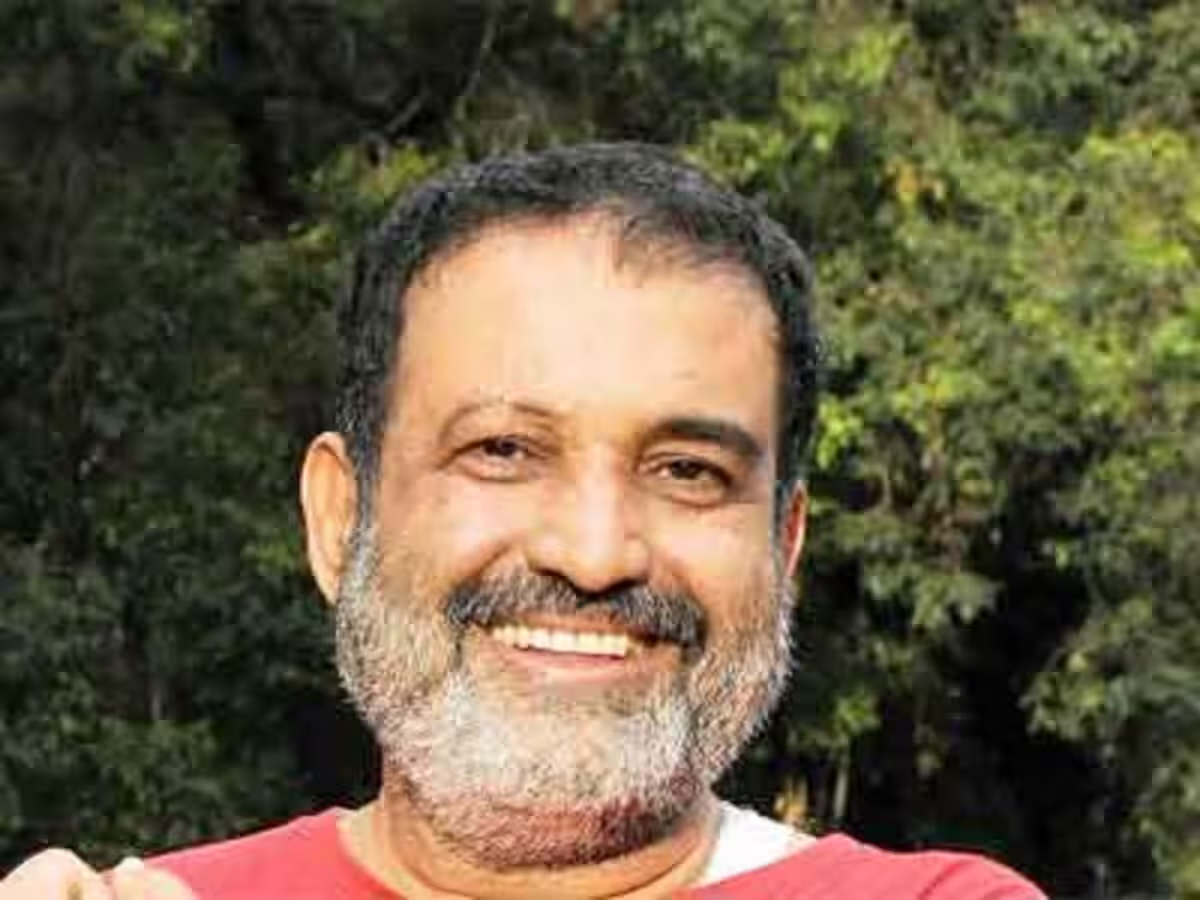
ET Now: There are two ways of looking at it the top level exits in Infosys. On the one hand, a lot of people say that there was a team that was probably not performing well and now they are exiting and that will probably be a positive for the stock over the long run. The sceptics, on the other hand, would argue that there are a lot of people who have been manning the company for the last many years and it is not a pint-sized company, but a Rs 1 lakh 70 thousand crore behemoth. Why have there been so many high profile exits in the company?
Mohandas Pai: There is a leadership vacuum in the company, because they made the wrong choice of CEO three years ago and that is playing out right now. The company has not performed and in June 2011, they had appointed three members on the board and all three of them have gone now and all three have been extraordinary individuals.
Ashok Vemuri is now the CEO of another company, V Balakrishnan had left and has started his own fund and BG Srinivas, I am told, would now be joining some other company as CEO.
So obviously, all three have been CEO materials. It is obvious that the chemistry did not work, or they were not fully empowered. There is a need for the board to sit down and work out a good succession plan and put a new team in place because the entire layer of people below the executive board are now gone and many of them were outstanding performers.
Yes, a few of them possibly were not pulling the weight, but it is not possible that all of them were not doing so. They were extraordinary people and they are performing at other places.
So there is a need for teamwork and need for people to come together. They need to forget the past and focus on the future, they need to realign the company based upon what the market needs.
The market has changed and so its model needs to change, its management structure needs to change and the set of people who have ruled the company for 30 years have to step down and hand over reins, because they have stayed on for too long. Therefore, I hope that in the next one or two months, the board will come together along with NRN and once and for all close this issue.
ET Now: Where can the breakthrough come from at this point, because you have already stated in the past that the board and Mr Murthy need to take responsibility for the exits. It just seems that the series of exits is not ending. Does this mean that the company may have to also consider forming a completely new team from outside and hiring some expensive resources from outside?
Mohandas Pai: My view is that the layer below BG Srinivas, V Balakrishnan and Ashok Vemuri is an extraordinary layer. You have many good people who have run units. But they have run units and they require one or two years to come up with enterprise.
Enterprise position is very different from a unit position. You could be an extraordinary unit person, but to run an entire enterprise in a very competitive environment, you require some mentoring and some experience.
Now the entire generation of leaders who could have handled enterprise has gone. The next layer of people have done very well and there is great management there, but they need to connect between themselves and NRN who is the executive chairman and will stay for the next three years. That connect has to be fixed and it is up to NRN to do it.
Now it can be done by somebody stepping up to the plate as CEO. He will be inexperienced, he would not have handled enterprise, but being very efficient, in three to six months, he can pick it up.
However, that requires a different style of functioning by NRN. It also means that some amount of bloodletting will happen. In fact, it has to happen when the next generation comes up, because obviously people who are much senior will not stay on and there has to be a cleanup. So in the next two or three months, we have to see a radical change.
It is very difficult to speculate whether we will have an external team of people coming in, because such a team does not exist in any other company, let us remember. It is a very large company, with 160000 people, and $25 billion or $30 billion of market value.
So it requires a certain level of expertise and the board and the chairman have to work with them very carefully. So they have their task cut out and it will help if Nandan Nilekani is asked to come back, because he could provide the link between the chairman and the next layer of people and help to mentor them for the next couple of years, because he had an extraordinarily connect with people, his style is very inclusive and he is a person who empowers his team and gives them full strength to go ahead and stands by them. So getting Nilekani back would be a great strategy.

Outlook Therapeutics at H.C. Wainwright: launch hinges on access
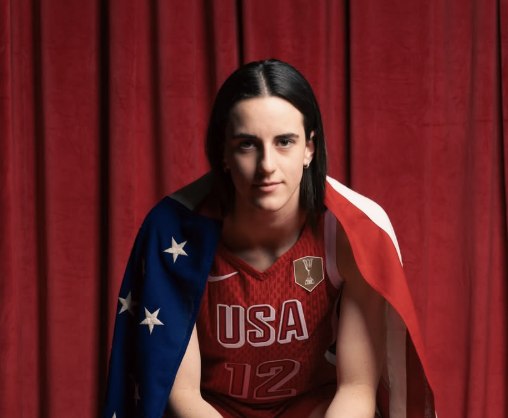
Team USA is two wins away from an unprecedented World Cup five-peat, and the Americans will take a significant step toward that goal Saturday when they face Spain in the semifinals of the 2026 FIBA Women’s Basketball World Cup at Berlin Arena in Berlin, Germany.
Tipoff is scheduled for 2 p.m. ET (1 p.m. CT, 11 a.m. PT), with the winner advancing to Sunday’s gold-medal game against the victor of the other semifinal between reigning Olympic silver medalist France and tournament host Germany, also being played Saturday.
How to watch
The USA-Spain semifinal is set to air on TBS in the United States, with coverage also available via truTV in some listings. The game can be streamed on TBS.com, the TBS app, and HBO Max. Every game of the tournament is additionally available in the U.S. through FIBA’s exclusive streaming platform, Courtside 1891, which is accessible through DAZN for $11.99 a month or $44.99 annually, offering both live and on-demand access to the full World Cup schedule. Cord-cutters can also stream the broadcast through live TV services such as YouTube TV and DIRECTV, which offers a free trial for new subscribers.
Team USA’s path to the semifinals
The United States enters Saturday’s matchup riding a 30-game World Cup winning streak, extended further with four consecutive victories in Berlin. Under head coach Kara Lawson, the Americans went 3-0 in group play, opening with a 94-61 win over China before a tighter 55-52 win over Italy and a 105-64 win over Czechia. Team USA then routed Hungary 108-56 in the quarterfinals to punch its ticket to the semifinal round.
The U.S. squad is playing in its 11th consecutive World Cup semifinal, extending a winning streak in the competition that stretches back 20 years; the Americans’ last semifinal loss came against Russia in 2006. Breanna Stewart, Napheesa Collier, Jackie Young, Kahleah Copper and Chelsea Gray have anchored the starting lineup throughout the tournament, with Jackie Young leading the team in scoring at 11 points per game. Paige Bueckers, Caitlin Clark and Angel Reese have provided key production off the bench.
Clark, playing in her first World Cup, has emerged as one of the tournament’s top facilitators, ranking among the competition’s assist leaders with an average of seven per game. Stewart has also been a steady contributor, entering the semifinal averaging 9.8 points, seven rebounds and 2.8 assists across the tournament, with a cumulative line of 39 points, 28 rebounds and 11 assists through four games.
Spain’s road to Berlin
Spain reached the semifinals after going 2-1 in group play, a stretch that included an uncharacteristic upset loss to Mali, before the team rebounded with a blowout win over reigning bronze medalist Australia in the quarterfinals.
The Spanish roster features several current WNBA players, headlined by guard Iyana Martin, a 2026 first-round pick of the Portland Fire who is expected to join the league next season. Martin leads Spain in both scoring, at 16.5 points per game, and assists, averaging 3.3 per contest. She is joined on the roster by Seattle Storm rookie center Awa Fam, Toronto Tempo forward Maria Conde, and fellow Fire center Megan DiLeo.
DiLeo, who played college basketball at Iowa and won conference player of the year honors during her collegiate career, was asked ahead of Saturday’s matchup whether having Clark come off the bench for Team USA might work to Spain’s advantage. She dismissed the notion directly.
“I don’t think so,” DiLeo said. “I think she’s just a great player.”
Head-to-head history favors the Americans
Historically, the matchup has heavily favored the United States. The Americans are 11-0 all-time against Spain in women’s international competition tracked by FIBA, and the two teams met earlier this year in a World Cup qualifying game, with the U.S. winning 84-70.
Despite that lopsided history, Spain’s run through the tournament, including its dominant quarterfinal performance against Australia, suggests the team is playing with confidence heading into Saturday’s semifinal, even against a heavily favored American squad chasing its 12th overall World Cup championship and fifth consecutive title.
What’s on the line
A win Saturday would put Team USA into Sunday’s gold-medal game, held at the same Berlin Arena venue, with the third-place game also scheduled for Sunday and broadcast on TNT, truTV and HBO Max. The tournament’s other semifinal, pitting France against host nation Germany, will determine the Americans’ potential opponent in the final should the U.S. advance.
For Spain, a victory would represent one of the program’s most significant results in program history, breaking a lengthy winless streak against the United States and denying the Americans a chance at an unprecedented fifth straight World Cup crown.
Looking ahead
With four days of group and quarterfinal play now behind both squads, Saturday’s semifinal represents the biggest test yet for a U.S. team that has leaned on balanced scoring, veteran leadership from players like Stewart and Collier, and rising stars such as Clark and Bueckers coming off the bench. Fans in the United States looking to follow the action live have multiple options across cable, streaming apps and subscription services to catch the full game as it unfolds from Berlin.
India Meteorological Department to use dynamic models for forecasts

The Cyclospora Outbreak, By the Numbers

Sam Darnold Injury Updates: What We Know About Seahawks QB’s Hip Issue

Memory prices are slowing because buyers ran out of money

Micron Stock Climbs Above $1,031 as AI Memory Crunch and a $50 Billion Outlook Fuel the Rally

AMD Stock Climbs After Management Lifts 2027 Data Center Outlook Toward $70 Billion in AI Sales


-
Tech4 days ago
Memory prices are slowing because buyers ran out of money
-
 Business3 days ago
Micron Stock Climbs Above $1,031 as AI Memory Crunch and a $50 Billion Outlook Fuel the Rally
-
 Business3 days ago
AMD Stock Climbs After Management Lifts 2027 Data Center Outlook Toward $70 Billion in AI Sales
-

 Crypto World4 days ago
Bitcoin price risks $76K drop as $78K support weakens
-

 Crypto World4 days ago
Robinhood Stock: How To Take Advantage With Reduced Risk
-

 Crypto World4 days ago
Ethereum price stalls below $2,500 as ADX drops to 11
-

 NewsBeat4 days ago
England up in reading, maths and science rankings as Scotland and Wales dip
-

 Fashion23 hours ago
Weekend Open Thread – Corporette.com
-

 Crypto World2 days ago
OKX launches 10x OpenAI, Anthropic X-Perps in Europe
-

 Crypto World2 days ago
2 Chip Stocks Broke Out This Week. Neither Was Nvidia
-

 Crypto World1 day ago
XAG/USD: Silver’s Short-Term Rally Meets Its Moment of Truth
-

 Crypto World4 days ago
Intel Stock Jumps 9% on Chip Price Hike Report, US Stake Gains $36 Billion
-

 NewsBeat4 days ago
What went right this week: an ‘historic’ fall in violent crime, plus more
-

 Crypto World3 days ago
Bitcoin price risks $70K if $78K neckline breaks
-

 Crypto World1 day ago
Diesel Tops $6 a Gallon for the First Time as 28 States Set Records
-

 Business4 days ago
Meta debuts long-awaited personal AI agent, Muse
-
Crypto World2 days ago
Ethereum Price Analysis: Consolidation at $2.5K Tests Momentum as On-Chain Activity Surges
-
 Crypto World3 days ago
Bitcoin price holds near $79K as cycle drawdowns narrow
-
 Crypto World3 days ago
Ethereum price breakout hinges on a close above $2,535
-
 Sports4 days ago
Phones confiscated, players sent home: Pakistan’s England tour turmoil revives memories of Mohammad Amir, Salman Butt and Mohammad Asif’s 2010 Lord’s spot-fixing scandal | Cricket News
You must be logged in to post a comment Login