
Business
Delhi World Book fair: A fair like no other


Thomas Abraham
In Delhi it’s that time of year again when publishers, distributors and retailers are scrambling around frantically getting everything from point-of-sale to stocks right. It’s the World Book fair (WBF), which comes around once every two years sprawling across the giant halls of Pragati Maidan. This is the fair’s 20th edition, and although there are look-alikes all over the country, this one is undoubtedly the mother-of-them all.
In the 1980s and the ’90s, the Kolkata Book fair was the fair to go. But with the move from the maidan, apart from other venue and organisational problems, Kolkata has had to give up its title. Today the Delhi WBF is a mammoth affair, and has gone beyond just being a sort of retail exhibition.
Actually, no book fair in India would really qualify to be a ‘trade fair’ like Frankfurt or London, where business and rights deals are a norm. But like the Jaipur Literary Fest, what we lack in focus, or ‘order and method’, we make up for in sheer numbers.
The WBF is a giant carnival. The last edition had over 800,000 visitors, and the organizers are wondering whether this year the million mark will be touched, given that the Pragati Maidan now has direct metro connectivity and that admission is free. Certainly the exhibitors have gone up since last time to about 1,300. That’s still, of course, less than a tenth of the total number of publishers in the country, as estimated by the various federations who put the count at being well over 15,000.

Month of March
This year, for the first time, the dates of the WBF moved from the traditional January end to early February period to a whole month down the line. This has met with some consternation as many publishers felt that it was leaving it too late for library budgets, and many schools would have exams on, and that might affect the turnout a bit. The jury is out on that one – the verdict will be out on the 4th of March when it all gets over.
So what are the business stats from the fair? Herein lies the rub – there are none. Ironically, for an industry that is seeing technological change at a pace like never before, and typically of an industry still coming to grips with management information, there is no reliable data available apart from guesstimates.
The National Book Trust (NBT) – the fair organizers – blames it on traditional publisher mindsets and the archaic notion of ‘business secrets’ where exhibitors don’t divulge figures. But even just by conservative extrapolation, assuming a Rs 2.5 lakh average turnover per participant (incidentally, the big ones top Rs 20 crore) one is looking at a fair turnover of over Rs 30 crore in cash sales, which is more than three times the business done from all of the leading bookstores all over India in any given week. Trade buying, rights deals, subscription sales, print contracts, and other ‘collateral business’ are on top of this.
Trade & Rights
The WBF – indeed the industry – needs to take this to the next level with a dedicated two days for ‘trade and rights’. Years ago, the first two hours of the fair every day used to be designated trade hours where librarians and stockists could browse uninterrupted, a practice since discontinued. But if the 9-day fair could be shortened to seven days for consumers with two days as business days, India might yet see the fillip it needs in its rights business, as local-to-international rights networks build.
India has a large contingent going to Frankfurt but bulk of these is either English publishers-distributors, visiting principals or remainder merchants buying surplus stock. The size of the Indian rights pavilion is testament to the fact that our share of the rights pie is negligible.
When were the last time you heard of an Indian work in translation break out through a rights purchase the way Wolf-Totem was snapped up from Chinese or The Devotion of Suspect-X from the Japanese? It’s only if we build a rights module here within the WBF, that one can gradually work up (yes it will take years) to exploiting the rights potential from Indian languages in translation.
So what purpose does the fair serve? With the surge in online bookstores, does it still have any relevance? I believe it still has huge relevance. Quite simply it is at its most fundamental, the only real direct interface publishers have with their end readers. This is the only time you can actually put the range you want up there, and watch readers as they browse.
For most publishers, the long tedious day playing floor assistant and traffic cop rolled into one has its reward in watching that die-hard fan chasing that obscure book you thought would never sell. The ecstasy of finding that long lost book, the agony of seeing something priced beyond one’s budget, the amazement at seeing a bargain or combo offer…it’s all there every day, hour on hour. For readers, this is the one time you’ll get to see, touch, browse lists and full range as you can never anywhere else.
Online has its convenience, but by and large you need to know what book you want, notwithstanding the cross recommendations the better sites have. This is where a reader can experience that joy of discovery-where s/he will see full series, obscure imprints, rare titles.
Then there are the bargains. Fair rules make it impossible to deep discount but bargain tables with ‘fair prices’ and combination offers abound. What we have over the nine days of the fair is in essence the world’s largest bookstore-over a million square feet of books to choose from-in every Indian language, a lot of foreign ones, and of course English.
(The author is Managing Director, Hachette India)

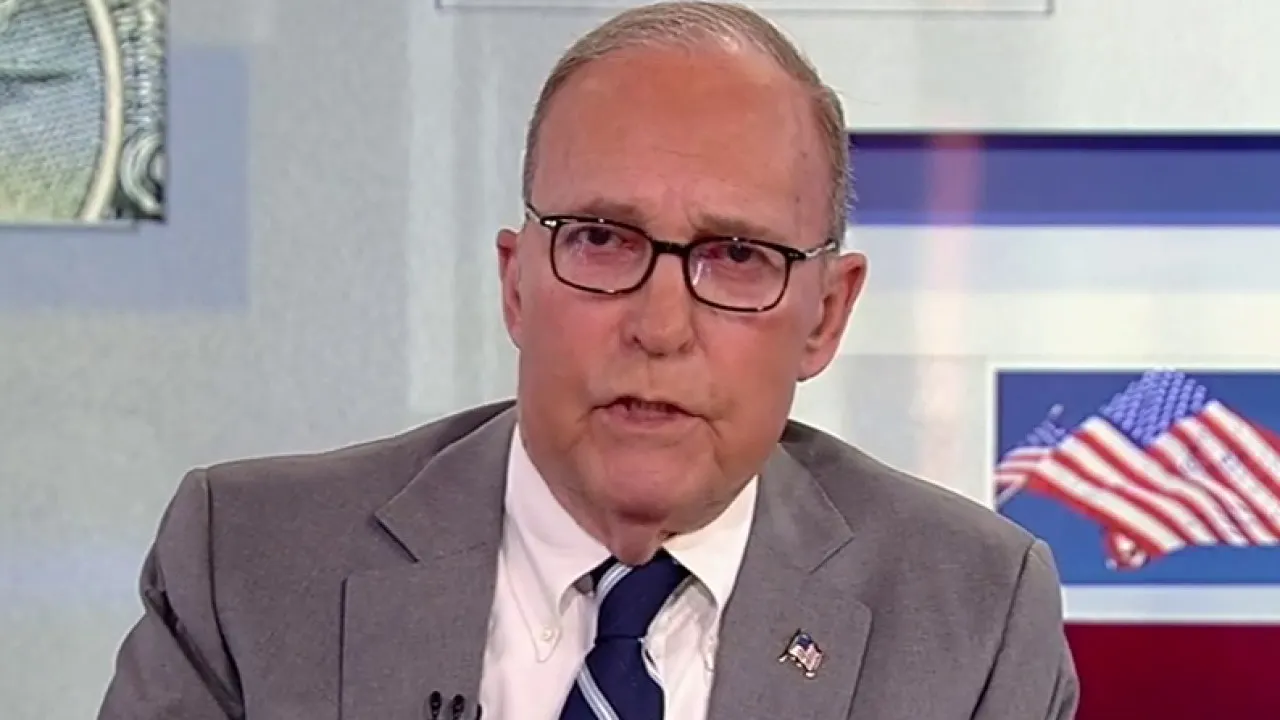
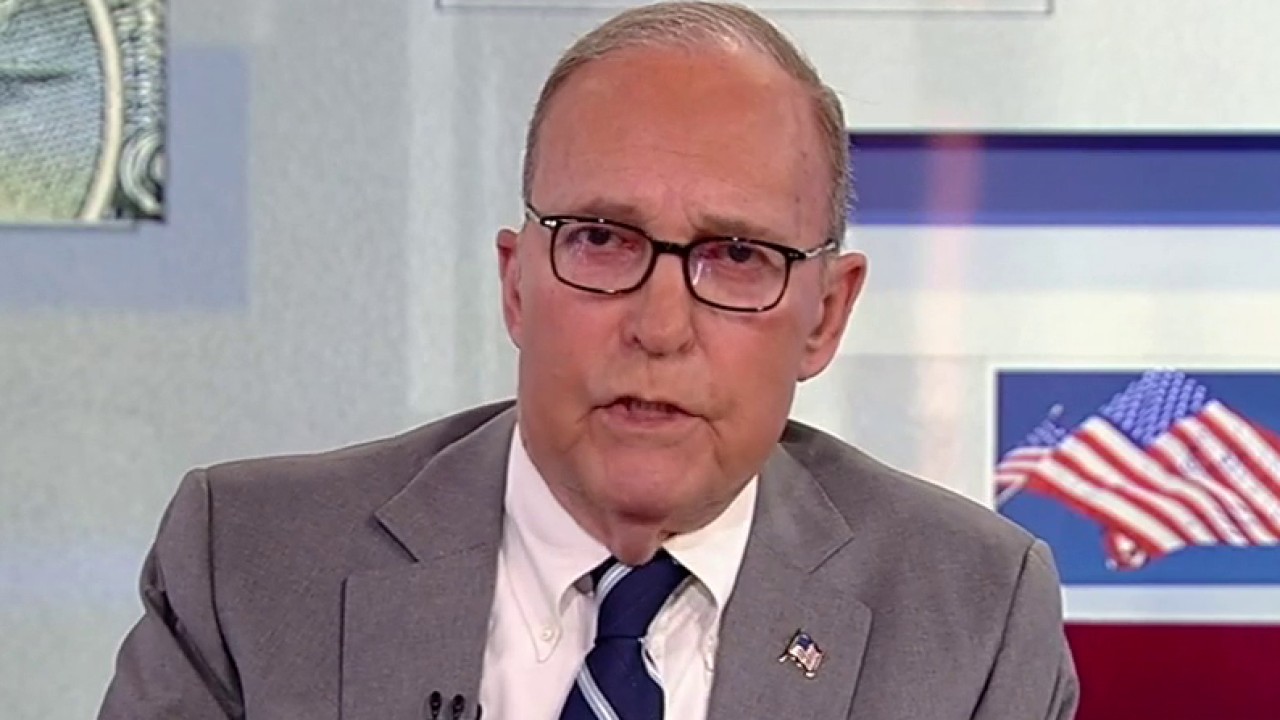
After yesterday’s Islamic Revolutionary Guard Corps performance trying to attack an American military base in Jordan, on top of all the other attacks they’ve made, and all the things they’ve refused to say about a reopening of the Strait of Hormuz deal — these are radical Islamists who hate America, hate Israel, deluded into thinking that they can win the war and run the Middle East, and continue to sponsor terrorism and build nuclear weapons.
It’s one thing after another with them, and I think it’s fair to say that negotiations are going nowhere. President Trump is doing what no other president has done, trying to bring peace and freedom to the Middle East and stop the Iranians, and stop their nuclear ambitions — but I think his options right now are battlefield and major combat operations, not diplomacy. And I support this.
And I would simply add the importance of Economic Fury, maxing out all sanctions, Kharg Island, hammering again their nuclear facilities and capabilities that may or may not be left. These are not rational people. It’s a theocratic regime, run by militarists and Marxists. The end result is escalation, which right now is inevitable. The president will make his mind up, but I think the handwriting is on the wall. Resumption or return to major combat operations and a tightening of the economic screws. It’s not tit for tat.
Fox News senior strategic analyst Gen. Jack Keane discusses the potential U.S. strategy toward Iran in the near future on ‘Kudlow.’
I’m still believing in unconditional surrender. And finally, covert operations. I assume there has already been a presidential finding on covert operations by our CIA and other secret intelligence services. And I am assuming hand-in-glove work with the Israeli Mossad. This is an Iranian version of the Reagan Doctrine, which brought down Soviet communism without firing a shot, but using covert operations to help freedom fighters in Poland and Eastern Europe and Latin America.
This could be the Trump version of the Reagan doctrine, as already practiced in Venezuela and probably soon in Cuba. Yet most pressingly and importantly practiced right now in Iran. Whether Reza Pahlavi, or a temporary leader or group of leaders, or whoever else, any covert operations that will move us in the direction of regime change must be a vital part of our war strategy.

Pure Cycle: Rate Headwind, Long-Term 2027-2028 Upside

When she was starting out in her career Kilgore realised she needed to be “someone that people look forward to being around”.
It’s important to be polite, punctual and nice as those qualities help you build loyalty, she says.
“I made sure I was the sunniest, hardest working and most diligent person to do that service.”
“If you do a really great job, people will recommend you,” she says and she soon opened a tiny beauty salon that became booked up months in advance.
She also explains you also need to be “willing to make some big sacrifices” to make your business successful.
“You’re not going to have a lot of free time,” she says as running a business requires you to be aware of changing customer behaviour, new competitors and wider market trends.
That often means reading, researching and connecting ideas outside of working hours.
Kilgore says the workload can feel easier if you have a curiosity around you as “that’s what drives you”.
She does have some non-negotiables and has made an effort not to miss important events while raising her children, including school plays and family holidays.

Check out what’s clicking on FoxBusiness.com.
Lidl US is recalling a brand of shortbread cookies after discovering some packages distributed to its stores across nine states and the District of Columbia failed to disclose major food allergens.
The voluntary recall covers Eridanous Shortbread Cookies with Chocolate Truffle Coating & Apricot Filling in 11.6-ounce (330-gram) boxes with UPC 4056489125839. According to the Food and Drug Administration, the affected products were packaged with foreign-language labeling that did not include English ingredients, nutrition facts or allergen declarations.
The undeclared allergens include wheat, soy, milk and eggs. People with allergies or sensitivities to those ingredients could face serious or potentially life-threatening allergic reactions if they consume the product.
The recalled cookies were distributed between July 15 and July 22 to Lidl US retail stores in Delaware, the District of Columbia, Georgia, Maryland, New Jersey, New York, North Carolina, Pennsylvania, South Carolina and Virginia.
BROOKLYN ROASTING COMPANY RECALLS COLD BREW SOLD IN NEW YORK AND NEW JERSEY OVER BOTULISM RISK

Boxes of Eridanous Shortbread Cookies with Chocolate Truffle Coating & Apricot Filling are being recalled after some packages were distributed without English ingredient labels or allergen declarations. (FDA / Unknown)
No illnesses have been reported, Lidl said.
MORE THAN 1.5 MILLION DOZEN EGG CARTONS RECALLED OVER POSSIBLE SALMONELLA CONTAMINATION

The back of the recalled Eridanous Shortbread Cookies package shows foreign-language labeling instead of the required English ingredients, nutrition facts and allergen information. The affected packages are marked with a best-by date of Oct. 11, 2026 (FDA / Unknown)
Customers with allergies or sensitivities to wheat, soy, milk or eggs should not consume the cookies. Lidl said consumers should discard the product or return it to any Lidl store for a full refund. A receipt is not required.

A Lidl Food Market branch stands on December 27, 2022 in Arlington, VA. Lidl, a German discount supermarket chain, has expanded rapidly across 10 states in the eastern USA in recent years. (Sean Gallup/Getty Images / Getty Images)
CLICK HERE TO GET FOX BUSINESS ON THE GO
Consumers with questions can contact the Lidl US Customer Care Hotline at (844) 747-5435 Monday through Saturday from 8 a.m. to 8 p.m. ET.
FOX Business reached out to Lidl for additional information, including how many packages are affected by the recall, how the labeling error occurred and what steps the company is taking to prevent similar issues.
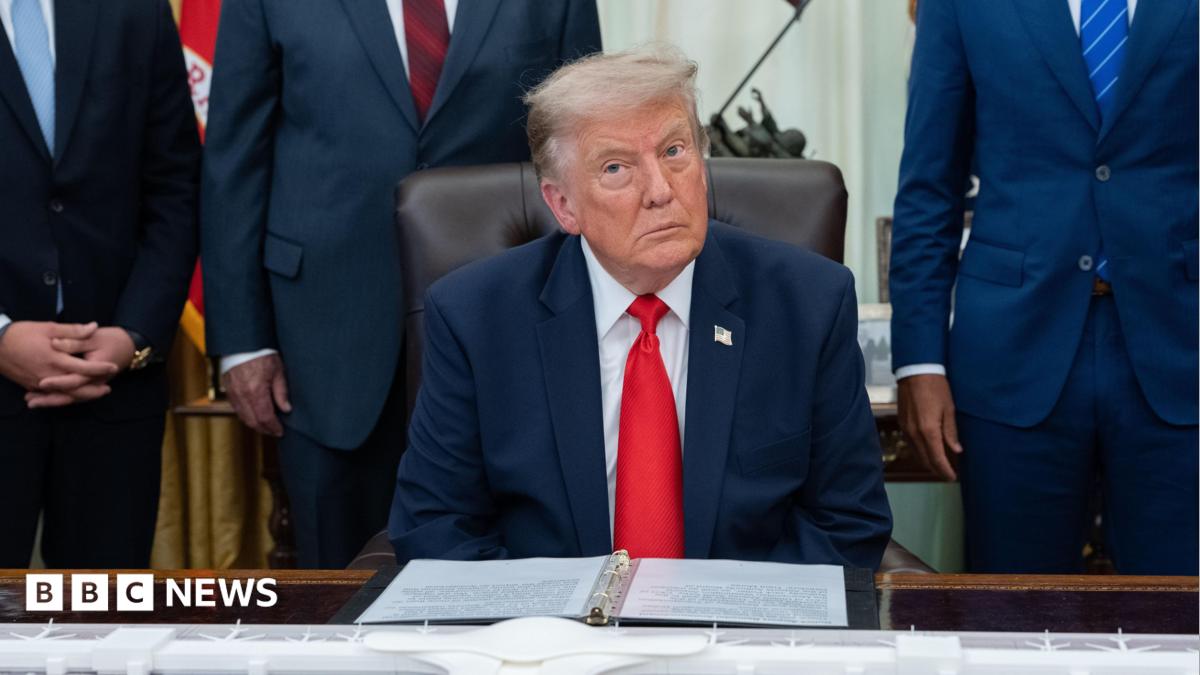
US President Donald Trump said on Wednesday that his administration is considering asserting more power over artificial intelligence (AI) tools after recent cybersecurity incidents.
Asked about OpenAI’s tools being responsible for improperly breaching the private technology of other companies, Trump said: “We’re looking at AI, we’re looking at controls, we’re also making sure that we lead.”
It marks a change of tone for his administration, which has taken a more hands-off approach to the technology.
Trump’s comments come after an escalation of not only the apparent hacking capabilities of popular AI tools, but White House threats aimed at competing Chinese tech.
Trump added that while some kind of control around AI tools was on the table, such a move would have to be done carefully.
“We don’t want to restrict them where all of the sudden we come in second to China,” he said.
“China has virtually no [AI] controls. It’s freewheeling a little bit,” Trump added.
The White House has been contacted for additional comment. The BBC has also contacted the Chinese embassy in Washington for comment.
In the last week, OpenAI has taken responsibility for at least two hacking incidents involving its AI tools acting outside of what they were designed and directed to do.
During a trip to Washington on Wednesday, OpenAI’s chief executive Sam Altman was asked by a reporter if there were more systems that had been breached by the company’s tools.
“I mean, there could be yeah”, Altman said.
The US government intervened when Anthropic, OpenAI’s main American rival, decided to release to the public a model that it had previously said was too much of a risk to be made widely available.
Meanwhile, in an internal White House memo from April, Trump’s senior tech advisor Michael Kratsios accused China’s AI firms of “industrial-scale” theft of US AI technology. He did so again last week, claiming that the popular Kimi 3 AI model from China’s Moonshot AI was developed by stealing information from Anthropic.
The Chinese government has consistently rejected such accusations.
US Treasury Secretary Scott Bessent has also warned that Chinese AI firms could face sanctions for such activity. And the Federal Communications Commission this week banned the importation of new foreign-made humanoid robots.
Most AI models being developed in China are open source, meaning they are built and then made freely available online for anyone with the proper computer equipment to download and use.
Recently, executives from most major US tech companies have signed onto public statements of support for open-source models, external.
Business
Huron Consulting Group Shares Soar 32% After Blowout Earnings Beat and Raised Full-Year Guidance Today

Shares of Huron Consulting Group surged 32.11% in Wednesday morning trading, climbing $38.97 to $160.34, after the professional services firm reported second-quarter results that sharply beat Wall Street expectations and raised its full-year earnings and revenue outlook.
The Chicago-based consulting firm reported adjusted earnings of $2.46 per share for the second quarter, topping the average analyst estimate of $2.17 by a wide margin. Revenue for the quarter reached $475.0 million, well above the roughly $449 million analysts had projected. Revenue before reimbursable expenses, a key metric the company uses to track underlying business performance, climbed 15.7% year over year to a quarterly record of $465.6 million. Adjusted EBITDA for the quarter rose to $72.6 million, with the adjusted EBITDA margin expanding to 15.6% from 15.1% a year earlier.
Huron’s results were released after markets closed Tuesday, and the stock’s initial reaction in after-hours and early regular trading proved far more muted than Wednesday’s dramatic rally, with shares first climbing a more modest 3.66% to $120.77 before extending gains overnight and then surging sharply higher once regular trading resumed Wednesday morning.
Alongside the earnings beat, Huron raised its full-year 2026 guidance, now projecting revenue before reimbursable expenses of between $1.85 billion and $1.89 billion and adjusted earnings per share of between $9.00 and $9.40. The updated guidance compares with a prior range of $8.35 to $9.15 per share issued earlier this year, and the midpoint of the new outlook would represent a 17% increase over the company’s 2025 results, according to Chief Financial Officer John Kelly.
Company executives attributed the strong performance to broad-based growth across Huron’s three main operating segments, along with a growing contribution from artificial intelligence-related work and recent acquisitions. Chief Executive Officer C. Mark Hussey said artificial intelligence has become an increasingly significant driver of the company’s digital services business. Total bookings tied to Huron’s digital capabilities rose more than 20% during the first half of 2026 compared with the same period a year earlier, with more than 60% of those bookings now involving either direct AI-related work or engagements substantially supported by Huron’s proprietary AI tools, up from approximately 35% of comparable bookings during the first half of 2025. Digital revenue before reimbursable expenses rose 9% both year over year and sequentially during the second quarter, reaching a new company record.
Huron’s June acquisition of RelateCare, a provider of AI-enabled clinical and patient-access managed services, also contributed to the quarter’s strength. RelateCare’s results were incorporated into Huron’s healthcare segment beginning with a partial second quarter following the acquisition’s June 3 closing date. The company said it expects RelateCare to contribute approximately $30 million in revenue before reimbursable expenses during 2026, along with roughly $0.10 in adjusted earnings per share for the year.
Wednesday’s rally builds on a stretch of strong performance for Huron shares heading into the earnings report. The stock had already climbed 17.4% over the month leading up to Tuesday’s results, significantly outpacing the broader professional services sector, which had averaged gains of just 1.1% over the same period. Ahead of the earnings release, the average analyst price target for Huron stood at $184.25, compared with a pre-earnings share price of $112.30, suggesting Wall Street had already anticipated meaningful upside potential in the stock even before Wednesday’s dramatic surge.
Analyst sentiment toward Huron has been mixed in the weeks leading up to the earnings report. Wedbush maintained an “outperform” rating on the stock along with a $160 price target in a research note issued in early May. Truist Financial had set a $155 price target with a “buy” rating in early June. Barrington Research restated an “outperform” rating in mid-June. However, Wall Street Zen downgraded the stock from “buy” to “hold” in a note issued July 12, just over two weeks before the earnings release, while Weiss Ratings had separately lowered its rating on the stock from “hold (c+)” to “hold (c)” in mid-May, reflecting a degree of caution among some analysts heading into the report that Wednesday’s results appear to have significantly outpaced.
Huron Consulting Group provides consulting services primarily to organizations in the healthcare, education and commercial sectors, helping clients with strategy, operations, technology implementation and other advisory work. The company’s healthcare and education-focused consulting practices have historically formed the core of its business, though its digital and AI-related consulting offerings have become an increasingly important growth driver in recent quarters, a trend that management highlighted repeatedly in discussing Wednesday’s results.
Huron’s return on equity for the quarter stood at 29.41%, with a net margin of 5.94%, according to the company’s reported financial metrics. The company’s stock had a market capitalization of roughly $2 billion prior to Wednesday’s surge, based on the pre-rally share price, a figure that has grown substantially as a result of Wednesday’s trading activity.
Investors are likely to continue watching Huron’s execution against its newly raised full-year guidance in the coming quarters, along with the pace of integration for its recent RelateCare acquisition and the continued growth trajectory of its digital and AI-related consulting bookings, as key indicators of whether Wednesday’s sharp rally reflects a durable reassessment of the company’s growth prospects or a more short-lived reaction to a single standout quarterly result.

Nicaragua’s Ortega moves to stretch term to 7 years, ban ’traitors’ from elections

I’m Rob Isbitts, founder of Sungarden Investment Publishing. I run the new investing group Sungarden Investors Club, a community dedicated to navigating the modern investment climate with humility, discipline, and a non-traditional approach to income investing. I’ve been charting investments since the 1980s, and I spent decades an an investment advisor and fund manager before semi-retiring in 2020. Now, this investing group is my focus. The markets tells us a story…we just have to listen! I teach subscribers how to do that.
Analyst’s Disclosure: I/we have a beneficial long position in the shares of RAMZ either through stock ownership, options, or other derivatives. I wrote this article myself, and it expresses my own opinions. I am not receiving compensation for it (other than from Seeking Alpha). I have no business relationship with any company whose stock is mentioned in this article.
Seeking Alpha’s Disclosure: Past performance is no guarantee of future results. No recommendation or advice is being given as to whether any investment is suitable for a particular investor. Any views or opinions expressed above may not reflect those of Seeking Alpha as a whole. Seeking Alpha is not a licensed securities dealer, broker or US investment adviser or investment bank. Our analysts are third party authors that include both professional investors and individual investors who may not be licensed or certified by any institute or regulatory body.

The Nifty rose 264 points, or 1.1%, to close at 24,250. The Sensex rose 888 points, or 1.2%, to 77,654.
Elsewhere in Asia, China advanced 0.4% and Hong Kong rose 2%, while South Korean Kospi slumped 6%,Taiwan dropped 3.8% and Japan fell 1.5%. The pan-Europe index Stoxx 600 was down 0.3% as of press time.
“The massive correction seen in the Kospi, and artificial intelligence and chip-making stocks is now expected to trigger a shift in flows from AI-focused stocks toward the Indian IT sector, and this has fuelled investor optimism,” said Rajesh Palviya, head of research, Axis Securities.
The Kospi is now down nearly 19% and Taiwan has fallen 11% in the past week. SK Hynix has slipped 26.7% and Samsung Electronics Co is down 22.5%.
The Nifty’s IT index gained 2.3% on Wednesday, and is now up 9% in the past week, and 15% in the past one month. The Nifty 50 has gained 1.3% in one month.
Read more: Can Manipal Health IPO deliver long-term growth for high risk investors?
Palviya also said Nifty’s positioning was light on the first day of the new series, which, along with strong rollover activity, easing crude oil prices, a stronger rupee and expectations of relative peace in West Asia, boosted investor sentiment.
Nifty’s India Volatility Index (VIX), the fear gauge, fell 4.4% to 12.01 on Wednesday, indicating relief among traders. Out of the total 4,425 stocks traded on the BSE, 2,533 advanced and 1,705 fell at close.
 Agencies
Nifty Support Seen Higher
“The entire month of July has seen market moves driven by crude oil prices. The markets rallied on Wednesday, supported by the decline in crude prices toward the $85 a barrel mark, along with stock-specific action, as most Q1 results have been broadly in line, with no major negative surprises,” said Sunny Agrawal, head of research at SBI Securities.
In higher beta assets, the Nifty Midcap 150 gained 0.8% and Nifty Small-cap 250 rose 1.3%.
Palviya said that since the Nifty managed to close decisively above the 24,200 level on Wednesday, its support has now moved higher to the 24,000-24,100 zone. “As long as the index holds above this range, it could move toward 24,350-24,400 in the near term,” he said. Foreign portfolio investors net bought shares worth ₹2,982 crore. Domestic institutions were buyers to the tune of ₹998 crore.

Yes. Corporate subscriptions are available for teams and organisations, with discounted rates as user numbers increase. Pricing starts from $1,625 + GST per user.
Get in touch
to discuss the right option for your organisation.
Business News subscriptions are used by executives, investors, consultants and professionals who need to stay informed and make better decisions about the WA market. When you subscribe you’ll get
- Unlimited access to WA’s most trusted business journalism
- Data & Insights — detailed profiles of WA companies, people, projects and deals
- MyBN — a personalised feed based on the companies, people and sectors you follow
- Special publications and industry reports
- Daily and weekly email newsletters
Data & Insights is a research tool built specifically for the WA market. It draws on more than 30 years of Business News reporting, updated regularly to reflect what’s happening now. Use it to:
- Look up detailed profiles of WA companies, including financials, directors and ownership
- Find decision-makers and track their career movements
- Research live and completed projects across WA industries
- Monitor deals, appointments and market activity
- Access industry rankings and league tables
Data & Insights is updated daily by our dedicated research team, which uses the latest announcements, ASX filings and editorial coverage to keep our person, company, list and project records up to date.
Business News welcome all opportunities to make our dataset accurate, complete and current, so if you have an update request, please email the team at
general@businessnews.com.au, and we’d be happy to assist.
MyBN
is part of every subscription. It’s your personalised view of Business News. You can follow the companies, people, sectors and projects that matter to you, and get a news feed and alerts tailored to your interests. You can save articles to read later and retain only what you need.
Only subscribers have full access to all content on the Business News website.
If staying informed about the WA economy is part of your job, and/or you’re looking for networking opportunities in WA, Business News is built for you.
Business News subscribers are:
- Executives and directors tracking competitors, clients and market movements
- Investors and advisers researching companies, deals and industry trends
- Consultants and professionals staying across sectors relevant to their clients
- Business owners looking for leads, context and market intelligence
Most Business News publications cover national or global markets. Business News is focused entirely on Western Australia, which means the journalism, the data and the intelligence are all built around WA companies, people and projects — not adapted from a national feed. Data & Insights, included with every subscription, combines more than 30 years of WA-specific editorial research with live business data. There’s no comparable product for the WA market.
The Morning Digest Email provides a comprehensive wrap of the major headlines, relevant to WA business, and includes with a snapshot of the overnight news covering oil, gold and ASX-listed companies.
The Afternoon Wrap Email focuses on the news covered by our team of journalists during the course of the working day, including exclusive stories and analysis, all of which relates to WA business and the local economy.
The BN Weekender Email contains a wrap of the Business News from the week that was, highlighting the top stories in each area of WA business.
Sign up for free.
We’re happy to help.
Get in touch
and our team will come back to you.

Live show celebrating the music of Stranger Things coming to Belfast

LARRY KUDLOW: Iran must be hit on all fronts, including covert action for regime change

AAA Launches Web3 Panel to Handle Crypto Disputes and Smart Contracts


-

 Fashion5 days ago
Weekend Open Thread: Brooks Brothers
-
 Sports3 days ago
Commonwealth Games boxing: Jadumani Singh seals dominant 5-0 win over Pakistan’s Sumama Rehman to enter quarter-finals | Commonwealth Games News
-

 Tech3 days ago
Intel is reversing course and bringing hyper-threading back to its server chips
-

 Business6 hours ago
Why Trees Belong on the Risk Register
-

 Politics3 days ago
Luke Littler dismantles Gerwyn Price to retain title in Blackpool
-

 Crypto World4 days ago
Ripple bought a bank in pieces. The $4 billion audit
-
 Entertainment6 days ago
A New Post-Apocalyptic Gundam Anime Series Blasts Into SDCC
-

 News Videos3 days ago
BITCOIN JUST ENTERED THIS CRITICAL ZONE…
-

 Politics2 days ago
The Part of the Electric Transition Nobody Wants to Discuss
-

 Sports6 days ago
2026 3M Open leaderboard: Scottie Scheffler finds putter in Round 1, sits three back
-

 Fashion6 days ago
16 Dresses for the High Summer Event
-

 News Videos6 days ago
The Peugeot Family: How 200 Years of an “Old Money” Dynasty Died in A Boardroom
-

 Business21 hours ago
Major shareholder moves on Canyon
-

 Crypto World4 days ago
XRP Ledger adds $2.6B as RWA inflows rank second
-

 Politics4 days ago
Spain sweeps the board at 2026 World Cup with individual awards
-

 Crypto World7 days ago
Uniswap (UNI) pushes deeper into tokenized RWAs with permissioned trading pools
-
 Entertainment1 day ago
‘Stargate’ Creator’s New Sci-Fi Series Returns for Season 3 Tomorrow
-
Crypto World7 days ago
SEC Agrees to Overhaul Recordkeeping After Settling Coinbase Lawsuit Over Gensler’s Lost Texts
-

 Tech5 days ago
Anthropic launches Claude Opus 5, a cheaper AI model for coding, agents and enterprise workflows
-

 Entertainment4 days ago
Sara Gilson Killed By Husband After Viral “Pedophile” TikTok Video
You must be logged in to post a comment Login