
Business
Meesho slides 40% from peak, slips below listing price. Here is why brokerages still see 26% upside


Meesho was listed in December at Rs 162 on the NSE, marking a 46% premium over the issue price of Rs 111. After rallying sharply to a peak of Rs 254 on December 18, the stock has since reversed nearly 40% and is now hovering around Rs 151, its Thursday closing price. Notably, Meesho had turned into a 129% multibagger within just seven sessions of listing before entering the current downtrend.
The December-listed e-commerce company reported a 32% year-on-year jump in revenue in Q3FY26 to Rs 3,518 crore versus Rs 2,674 crore in the corresponding quarter of the last financial year.
The company’s losses rose on a sequential basis as well, climbing from Rs 411 crore in Q2FY26, while the topline recorded a 14% quarter-on-quarter growth versus Rs 3,074 crore in the July-September quarter.
Also Read | Buy gold on corrections; rebalance silver via partial profit booking: Motilal Oswal PW

What brokerages recommend
Swiss brokerage UBS has maintained a Buy rating on Meesho with a target price of Rs 220. The stock was recommended at a price of Rs 173, implying a 26% upside.
“The topline growth was strong but profitability was impacted by one-off factors and is expected to revert back in the next two quarters,” the note said. UBS attributed the decline in contribution margin by 110 bps in Q2 and a further 100 bps in Q3, with an additional 16 bps impact due to network restructuring. “This impact was largely one-off and driven by the merger of two of the largest 3PL players, Delhivery and Ecom, into a single entity, which temporarily constrained the availability of 3PL providers for Meesho. As a result, Meesho accelerated the expansion of its in-house logistics arm, Valmo, leading to short-term network inefficiencies and higher costs,” the brokerage noted, adding that management expects these costs to normalise over the next two quarters.
UBS also highlighted management’s expectation of steady-state ad revenues of 5.5-6%. Margin improvement is expected to be driven by ads and other value-added services, while the logistics premium is likely to remain range-bound at 2-2.5% of net merchandise value.
BofA Securities has retained a Neutral view on the stock, though it sees a 9% upside, implying a target price of Rs 190. The stock was recommended at Rs 174.
The company’s Q3 revenues were ahead of BofA’s estimates.
The US brokerage is of the view that Meesho will continue to decide the right mix between Valmo and 3PL partners based on the lowest cost structure.
“Some capacity at Valmo was built at a very fast pace and was not optimised for costs. The company will fix this and then start to scale up Valmo again. Incremental costs from Q2 and Q3 are expected to normalise over the next two quarters, with operating leverage benefits from investments made across technology, marketing and logistics scale-up,” the note said.
According to BofA, Meesho’s growth over the next three to four years is expected to be led by faster expansion in annual transacting users rather than an increase in transaction frequency. The brokerage noted that first-year users typically transact less compared with more mature cohorts, with the top quartile of Meesho’s users clocking an average annual frequency of over 20 transactions. BofA added that the company is likely to maintain its logistics margin within a 2-2.5% contribution margin range on net merchandise value, with any gains from operational efficiencies expected to be passed on to users.
(Disclaimer: The recommendations, suggestions, views, and opinions given by the experts are their own. These do not represent the views of The Economic Times.)

Business
US Stocks today: Dow Jones soars 1,125 points, Nasdaq, S&P 3% as Iran war de-escalation seen
The Dow Jones Industrial Average rose 1,125.07 points, or 2.49%, to 46,341.21. The S&P 500 gained 185.27 points, or 2.92%, to 6,528.99, while the Nasdaq Composite climbed 795.99 points, or 3.83%, to 21,590.63.
The month-long war has left the S&P 500 and the Dow on track for their deepest quarterly declines since 2022 as investors worry that a wave of higher fuel costs could hurt demand for goods and services, while forcing the U.S. Federal Reserve to raise interest rates to contain inflation.
“What you’re seeing in capital markets today is speculation around an earlier off-ramp, or a cessation of hostilities,” said Bill Northey, senior investment director at U.S. Bank Wealth Management, in Billings, Montana.
“Details are light, but the capital markets are looking for any indication that there is an opportunity for a more normal flow of energy through the Strait of Hormuz.”
The U.S. stock market’s most valuable companies made big gains, with Nvidia, Alphabet, Meta Platforms and Amazon all higher.
The PHLX chip index also jumped. CoreWeave rallied after securing an $8.5 billion loan to expand AI infrastructure. Marvell Technology surged after Nvidia invested $2 billion in the firm. Many technology stocks have taken a beating in 2026 due to worries that Microsoft, Alphabet, Amazon and other heavyweights may be taking too long to show results from their massive spending in AI.
Last week, the Dow and the Nasdaq ended 10% below their record-high closes, confirming they were both in corrections. U.S. job openings fell more than expected in February and hiring dropped to the lowest level in nearly six years, government data showed.
The oil spike stemming from the Iran war has revived inflation worries, and money market traders think the Fed is more likely to raise interest rates by year-end than lower them, according to CME Group’s FedWatch Tool. Unilever agreed to separate its food unit and merge it with McCormick in a cash-and-stock deal, valuing the spice maker at about $44.8 billion. McCormick shares fell. Constellation Energy dropped after forecasting 2026 profit below Wall Street expectations.

From Pizza Hut to Dunkin’, Tom Brady is seemingly everywhere these days promoting food brands he once wouldn’t have touched during his NFL playing days.
The seven-time Super Bowl winning quarterback famously followed a strict health-focused diet and once referred to soda and sugary cereals as “poison for kids.” But Brady says he’s softened his stance in retirement.
“I think it’s moderation in all things,” Brady told CNBC’s Alex Sherman in a recent interview while discussing his partnership with Ferrero, one of the world’s biggest sweets makers. CNBC Sport’s full interview with Brady will be released on Thursday.
“I think there’s probably been people who have gone overboard with the kind of rigidity of my lifestyle or diet,” he said. “I have kids, and I have Halloweens and birthday parties, and we’re like a normal family.”
Brady built his career on health and longevity, pillars that helped him to play top caliber football until age 45. He’s also the co-founder TB12, a wellness brand centered on an anti-inflammatory diet, known for unconventional recipes such as avocado ice cream.
Brady recently wound down his TB12 brand, folding it into the Nobull fitness brand. Now, when it comes to endorsements, Brady said he’s focused more on creativity and connection.
“It’s good scripts and writing,” he said, along with opportunities to engage with fans.
During this year’s Super Bowl, Brady debuted both a Pizza Hut ad in which he gets tackled by an elderly woman while delivering pizzas, and a Dunkin’ ad spoofing “Good Will Hunting.”
Brady’s partnership with Ferrero includes a campaign pegged to the 2026 World Cup. In the ad, Brady is shown taking a bite of a chocolate Crunch bar and posing next to a trophy filled with chocolatey, sugary snacks.
“I just want to get out there and have a great time with the people,” Brady said.
Even so, Brady said he still aims to make healthy choices, but when he’s watching a football game, or traveling, he said it can be more difficult.
Despite hanging up his football cleats, Brady said he still works out frequently and makes sure to stay hydrated.
“I understand the reality of life as well,” he added. “I’ve been very fortunate over the course of my life to have people make food for me all the time and, we’ve had nutritionists as part of our teams, and I’ve been very blessed to have that.”
“I know there’s a lot of other people that are working really hard year round to provide for their family, and I have a lot of respect for those people and the way that they go about enjoying their life too,” Brady said.
Brady said when it comes to his own family, he makes pancakes for his kids with Nutella — another Ferrero product.
As for his own guilty pleasure? “Tic Tacs,” Brady said. (Yet another Ferrero brand.)
“They are everywhere in my house, and when I’m broadcasting,” he said.

A report has estimated the Royal Flying Doctor Service WA’s social value over the next 30 years would total $4.1 billion.


Virgin Galactic is reopening sales of its commercial spaceflights on a limited basis – though ticket prices have risen from the company’s previous rate.
The company made the announcement alongside its financial results for the fourth quarter and full year 2025, signaling that work on its fleet of SpaceShips is progressing to allow for commercial spaceflights to resume.
“We completed pivotal milestones during the first quarter of 2026, and with assembly of our first SpaceShip nearly complete and ground testing set to begin in April, we have released a limited number of Virgin Galactic Spaceflight Expeditions, each priced at $750,000,” Virgin Galactic Holdings CEO Michael Colglazier said in the release.
The $750,000 price point for Virgin Galactic’s commercial spaceflights is an increase of about $100,000 from what it charged before it paused spaceflights nearly two years ago to focus on building its SpaceShips that will handle the company’s space tourism business.
MUSK SAYS SPACEX SHIFTING FOCUS TO ‘SELF-GROWING CITY’ ON MOON BEFORE MARS PUSH
Colglazier said that with the company’s first SpaceShip nearly complete and ready for testing, the construction of its second SpaceShip is progressing and expected to allow for it to enter service later this year or early next year.
“Fabrication efforts are pivoting to support testing and production of our second SpaceShip, which we expect will enter service between late Q4 2026 and early Q1 2027 in line with our planned ramp in spaceflight cadence,” he explained.
ALTMAN CALLS MUSK’S SPACE DATA CENTER PLANS ‘RIDICULOUS’ FOR CURRENT AI COMPUTING NEEDS
“With production of SpaceShips well underway, we are gearing up for rocket motor assembly at our Phoenix factory, with manufacturing planned to begin in Q4 2026,” Colglazier added.
“We continue to strategically manage our capital to support our planned ramp in cash flow from commercial spaceline operations.”
DATA CENTERS IN OUTER SPACE EMERGE AS SOLUTION TO AI’S MASSIVE ENERGY REQUIREMENTS
Virgin Galactic said in its full year 2025 financial highlights that revenue decreased from $7 million in 2024 to $2 million last year, with the commercial spaceflight pause largely driving the move.
The company’s new Delta class SpaceShips have a higher capacity of six passengers rather than four, and are also designed to handle a higher operational tempo of spaceflights than Virgin Galactic’s Unity prototype.
“I’ve had to turn my heating off already, I’ve put more blankets on the bed to try and keep the girls and myself warm, I’ve put jumpers on, I’ve made sure we don’t use as much hot water as that drains your oil quite substantially, so I’m boiling the kettle more, but that uses more electric,” she added.
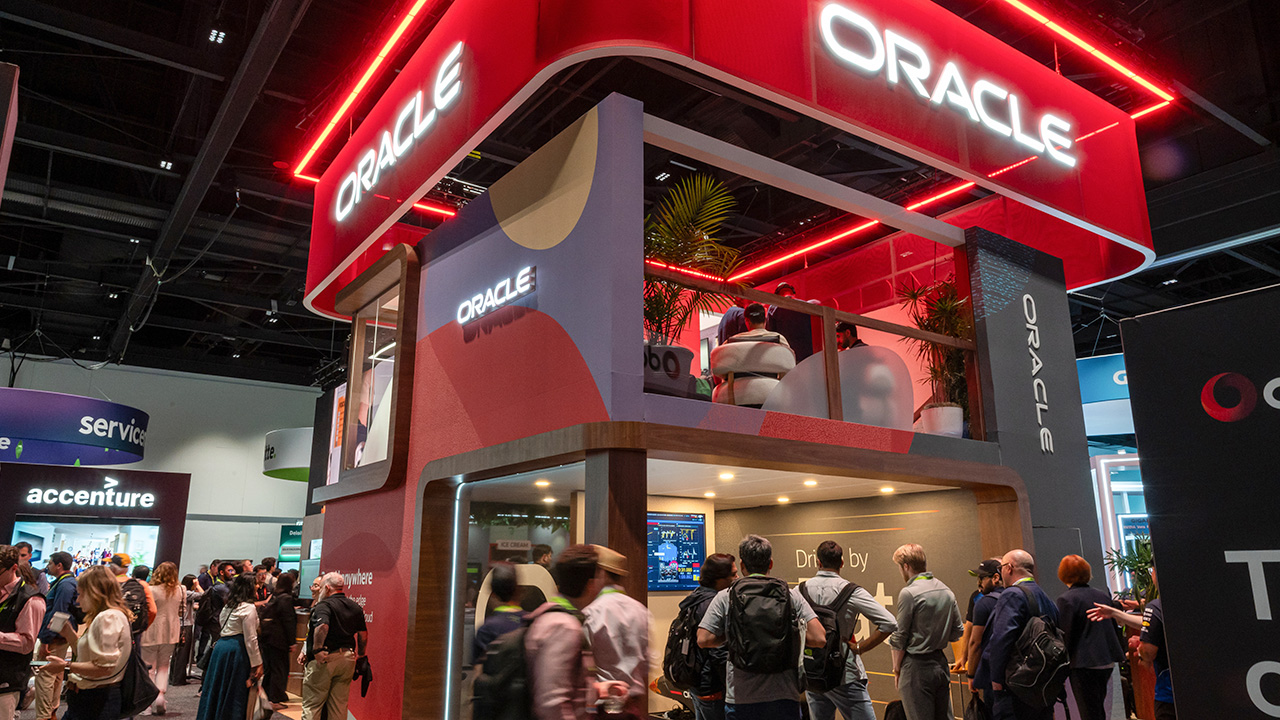
Oracle on Tuesday reportedly began notifying employees that it is moving forward with a round of layoffs as the company looks to reduce costs.
The number of layoffs in the thousands, according to a report by CNBC that cited two people familiar with the matter.
Oracle has recently ramped up capital spending to build artificial intelligence (AI) data centers as the company looks to incorporate those tools into its business software services.
The company’s stock has been volatile over the last year amid the AI buildout, with shares up about 3.5% in the last year despite declines of 48% in the last six months and 25% year to date amid concerns that AI presents a competitive threat to software providers. Shares rallied over 4% during Tuesday’s trading session on the layoff news.
HSBC WEIGHS DEEP JOB CUTS AS AI OVERHAUL UNFOLDS: REPORT
Business Insider reviewed copies of the layoff notification email sent to affected employees, which informed them they will be eligible to receive a severance package after signing their termination paperwork.
“After careful consideration of Oracle’s current business needs, we have made the decision to eliminate your role as a part of a broader organizational change,” the email reviewed by the outlet said. “As a result, today is your last working day.”
META SLASHES ROUGHLY 700 JOBS; LAYOFFS HIT MULTIPLE TEAMS ACROSS THE COMPANY
Oracle’s most recent 10-K filing noted the company had about 162,000 full-time employees in May 2025.
The company said in a March filing that it expects the total costs associated with its restructuring plan in fiscal year 2026 to be as high as $2.1 billion, most of which would go to employee severance and related expenses.
Tech companies are reassessing their workforces amid the rise of AI as they look to shift resources to meet infrastructure needs.
Meta announced layoffs affecting a few hundred people across multiple teams last week, and Reuters previously reported that Meta was planning sweeping layoffs that could affect 20% or more of its workforce.
GET FOX BUSINESS ON THE GO BY CLICKING HERE
Reuters contributed to this report.
The Trump administration on Monday issued a proposed rule to allow retirement plans to offer alternative assets like private equity and cryptocurrencies as part of the investment options in 401(k) accounts.
The Labor Department’s rule aims to ease longstanding barriers to incorporating alternative assets into retirement plans and follows an executive order signed by President Donald Trump last summer on the subject.
Advocates for the rule change argue that including alternative assets in 401(k) plans can help foster better long-term returns and make diversification easier. Skeptics note that alternative assets can be less liquid, more complex and have higher fees, which can limit gains while also introducing risk.
Under the proposed rule, plan fiduciaries would have to objectively, thoroughly and analytically consider and make determinations about performance, fees, liquidity, valuation, performance benchmarks and complexity. Trustees who abide by those rules will be granted safe harbor that protects them from lawsuits.
TRUMP SIGNS ORDER TO OPEN 401(K)S TO PRIVATE MARKETS: WHAT IT MEANS FOR YOUR RETIREMENT
Managers of defined contribution plans have historically had the authority to consider alternative investments, though most have opted against doing so.
The Biden administration in 2022 issued a rescinded compliance release that warned fiduciaries against including cryptocurrency options in 401(k) plans, which the Trump administration criticized as a “departure from the department’s decades-long approach to fiduciary investment decisions.”
Labor Secretary Lori Chavez-DeRemer said that the agency’s newly proposed rule “will show how plans can consider products that better reflect the investment landscape as it exists today. This greater diversity will drive innovation and result in a major win for American workers, retirees, and their families.”
Treasury Secretary Scott Bessent added that the pending regulation “is an initial step in implementing the President’s Executive Order in a safe and smart manner, broadening access to additional retirement plan options for millions of Americans while being mindful of the importance of protecting retirement assets.”
NEW YORK INVESTMENT GIANT APOLLO JOINS HEADQUARTERS MIGRATION TO ‘FREEDOM’ STATES
Following the Labor Department’s release of the proposed rule, the agency will open a 60-day comment period ahead of a decision to finalize the rule.
Alternative asset managers like Blackstone and Apollo Global Management could benefit from the opportunity to draw on a new pool of capital. Several industry members and groups applauded the rule.
Apollo CEO Marc Rowan said that the change is a “thoughtful step toward addressing the growing retirement crisis,” noting that “Americans increasingly lack the savings and income needed for a secure retirement” and that the shift could “meaningfully improve retirement outcomes.”
GET FOX BUSINESS ON THE GO BY CLICKING HERE
If the rule is adopted, Erin Cho, a partner at the Mayer Brown law firm, said that it “will not open the floodgates for private equity, private credit or crypto funds to move into the retirement space” as it will only provide a process for doing so.
Reuters contributed to this report.

Eli Lilly has agreed to pay up to $7.8 billion to acquire Centessa Pharmaceuticals and its experimental drug for excessive daytime sleepiness, the company said Tuesday.
Centessa is one of several companies working on a new class of drugs to treat narcolepsy, a condition that makes it difficult for people to stay awake during the day. The drugs may also be used to treat other neurological conditions that are accompanied by drowsiness, such as Alzheimer’s disease and depression, and possibly even more broadly.
Other possibilities include another severe sleep disorder called idiosyncratic hypersomnia, as well as other conditions where people experience sleepiness or executive function problems during the day and poor sleep at night, Lilly CEO Dave Ricks said in an interview with CNBC.
“We see a broader potential for this pathway, maybe a little bit of analogy to GLP-1, in a way that, you know, sleep and wakefulness are like core to our functioning, and when your sleep is disturbed or your wakefulness is disturbed, it causes a lot of other problems,” Ricks said. “So I think you can count on Lilly exploring broad use for [the orexins] and this new pathway, and we’re pretty excited about it.”
Under the terms of the deal, Lilly will pay $38 a share up front, or $6.3 billion for Centessa, a 38% premium to Monday’s closing price. If Centessa’s drugs win approval by the U.S. Food and Drug Administration by certain deadlines, Lilly will pay up to another $1.5 billion.
The transaction is expected to close in the third quarter, pending regulatory approval.
Shares of Lilly rose roughly 3% Tuesday, while Centessa’s stock surged 45%.
Orexin agonists used to treat narcolepsy and another severe sleep condition, called idiopathic hypersomnia, could amount to a $15 billion to $20 billion market if even about one-quarter of patients seek treatment, according to an estimate from Oppenheimer analyst Kostas Biliouris. Sales could go even higher if the drugs are used more broadly.
Centessa won’t be the first to market with its orexin agonist. A rival drug from Takeda is under review with the FDA and could be approved later this year.
Biliouris said he doesn’t expect Centessa’s drug to be approved until 2028, but he sees signs from mid-stage trial data that Centessa’s treatment could become the best in class.
Lilly, for its part, is a longtime leader in neuroscience. The company’s antidepressant Prozac catapulted Lilly to the top ranks of the pharmaceutical industry after it was approved in 1987.
More recently, Lilly introduced a drug called Kisunla for the early stages of Alzheimer’s disease with another trial on the horizon to see if the treatment can prevent the memory-robbing disease.
Lilly has been vocal about its intention to use the cash coming from its best-selling obesity and diabetes drugs Zepbound and Mounjaro to place more bets. Already this year, Lilly announced its intention to acquire cell-therapy company Orna Therapeutics and inflammation-focused Ventyx Biosciences.
Of the Centessa deal, Ricks said, “It’s the kind of thing we should be doing to really affect millions and millions of people, potentially, who suffer from neuroscience conditions like wakefulness and sleep.”
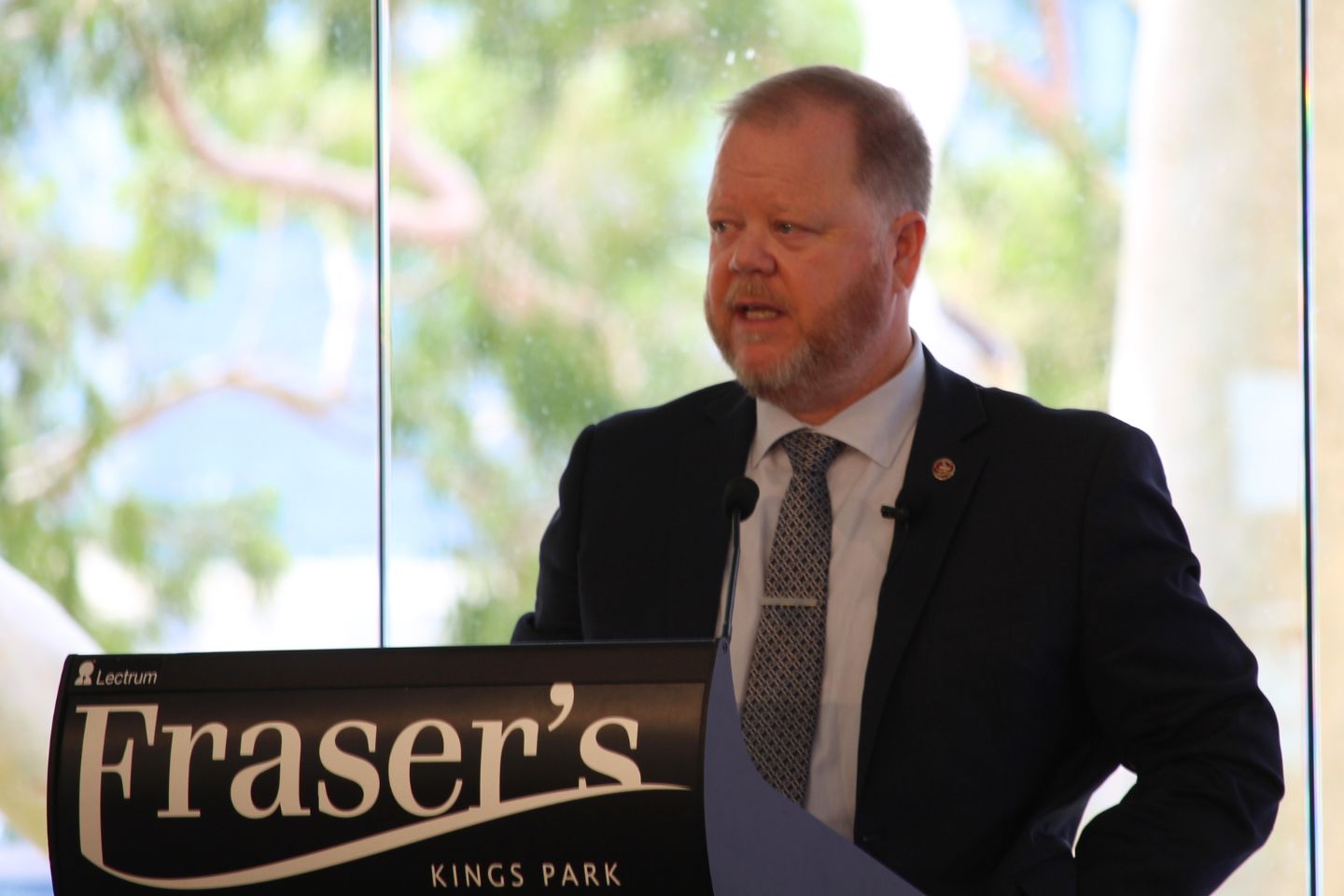
The state aims to enter a bilateral environmental regulatory agreement with the Commonwealth by late 2026, pushing out the timeframe previously flagged by Premier Roger Cook.
A proposed Department of Labor rule could significantly expand what Americans are able to hold inside their retirement accounts, potentially opening the door to assets like cryptocurrency, real estate and private markets.
BlackRock Global Head of Retirement Solutions Nick Nefouse described the rule as “a huge step forward for the 401(k) market” while discussing what the change could mean for everyday investors during his appearance on “Varney & Co.” Tuesday.
“The proposed regulation explains the steps that managers of 401(k) plans should take when considering alternative assets as a component in their investment lineups and establishes a set of process-based safe harbors for plan fiduciaries to use when selecting designated investment alternatives,” the Labor Department said in a press release on March 30.
Rather than endorsing specific investments, Nefouse suggested that the proposal is focused on creating a structured process for plan providers to follow when evaluating alternative assets.
AMERICANS TAP RETIREMENT FUNDS AT RECORD RATES AS MOUNTING FINANCIAL STRESS TAKES TOLL
“What the rule is trying to do… is establish a process, not necessarily say which asset classes are good or bad,” Nefouse said.
The shift could narrow a long-standing gap between retirement systems. While large institutional-style plans already have access to a wider range of investments, many workers in traditional 401(k) plans do not.
LARRY FINK CALLS FOR SOCIAL SECURITY REFORM, SAYS INVESTING A PORTION OF FUNDS COULD STRENGTHEN THE PROGRAM
“Think of regular people. About 25% of the population are in defined benefit plans. About 80% are in defined contribution plans,” Nefouse said.
“What we’re trying to do is level the playing fields, and so many Americans are relying on 401(k) plans,” he added.
The change could broaden access to investment options that have traditionally been limited to institutional retirement plans.

Addison Rae – Money is Everything (Official Lyric Video)

New cycle route brings road closures in Thornaby
US Stocks today: Dow Jones soars 1,125 points, Nasdaq, S&P 3% as Iran war de-escalation seen


-
 NewsBeat7 days ago
Manchester United reach agreement with Casemiro over contract clause amid transfer speculation
-

 News Videos6 days ago
Parliament publishes latest register of MPs’ financial interests
-
 Tech5 days ago
Intercom’s new post-trained Fin Apex 1.0 beats GPT-5.4 and Claude Sonnet 4.6 at customer service resolutions
-

 NewsBeat4 days ago
The Story hosts event on Durham’s historic registers
-

 Sports4 days ago
Sweet Sixteen Game Thread: Tide vs Michigan
-

 Business5 days ago
Instagram, YouTube Found Responsible for Teen’s Mental Health Struggle in Historic Ruling
-
 NewsBeat6 days ago
Tesco is selling new Cadbury Dairy Milk bar and people can’t wait to try it
-
 Entertainment3 days ago
Lana Del Rey Celebrates Her Husband’s 51st Birthday In New Post
-
Entertainment1 day ago
Fans slam 'heartbreaking' Barbie Dream Fest convention debacle with 'cardboard cutout' experience
-
Crypto World11 hours ago
Dems press CFTC, ethics board on prediction-market insider trades
-

 Sports6 hours ago
Tallest college basketball player ever, standing at 7-foot-9, entering transfer portal
-

 Sports7 days ago
Fantasy Baseball Week 1 Preview: Top sleeper hitters for both five- and 12-day period led by Munetaka Murakami
-

 Tech7 days ago
US FCC Prohibits Approval Of New Foreign-Made Consumer Routers
-
Sports7 days ago
One Team in Particular Is Monitoring Kirk Cousins
-

 Entertainment6 days ago
HBO’s Harry Potter Series Will Definitely Fail For One Big Reason, And It’s Not J.K. Rowling Or Snape
-
 NewsBeat7 days ago
DWP to close two benefits for all new and existing claimants before April
-

 Sports7 days ago
Football: France arrive in Boston to face Brazil and Colombia in friendlies – Sports
-
 Fashion6 days ago
How to Style Spring Like WeWoreWhat: Easy Outfit Ideas for 2026
-

 Fashion5 days ago
En Vogue in Brown Leather and Tailored Neutrals by Atelier Savoir, Styled by J Bolin
-
Sports7 days ago
Another Former Vikings QB Enters the Mix for Falcons
You must be logged in to post a comment Login