

Business
Meituan: Business Recovery Well Underway, Reiterate Buy (OTCMKTS:MPNGF)



I’m a passionate investor with a strong foundation in fundamental analysis and a keen eye for identifying undervalued companies with long-term growth potential. My investment approach is a blend of value investing principles and a focus on long-term growth. I believe in buying quality companies at a discount to their intrinsic value and holding them for the long haul, allowing them to compound their earnings and shareholder returns.
Analyst’s Disclosure: I/we have no stock, option or similar derivative position in any of the companies mentioned, and no plans to initiate any such positions within the next 72 hours. I wrote this article myself, and it expresses my own opinions. I am not receiving compensation for it (other than from Seeking Alpha). I have no business relationship with any company whose stock is mentioned in this article.
Seeking Alpha’s Disclosure: Past performance is no guarantee of future results. No recommendation or advice is being given as to whether any investment is suitable for a particular investor. Any views or opinions expressed above may not reflect those of Seeking Alpha as a whole. Seeking Alpha is not a licensed securities dealer, broker or US investment adviser or investment bank. Our analysts are third party authors that include both professional investors and individual investors who may not be licensed or certified by any institute or regulatory body.


Higher energy costs and a pickup in services prices drove inflation in the eurozone further beyond the European Central Bank’s target in May, cementing expectations that policymakers will raise the key interest rate next week.
Ahead of the first U.S. and Israeli strikes on Iran at the end of February, inflation in the 21-nation currency area had been close to the ECB’s 2% target for around a year, falling below the threshold to 1.7% in January. The central bank’s President Christine Lagarde had repeatedly said monetary policy was in a “good place.”
Copyright ©2026 Dow Jones & Company, Inc. All Rights Reserved. 87990cbe856818d5eddac44c7b1cdeb8

With an all-cash agreement Sunday for Taylor Morrison Home Corp., the Omaha, Neb.-based conglomerate is poised to become a top-five U.S. home builder, adding to its growing portfolio of housing-related companies:

Form 13D/A Repay Holdings Corp For: 3 June
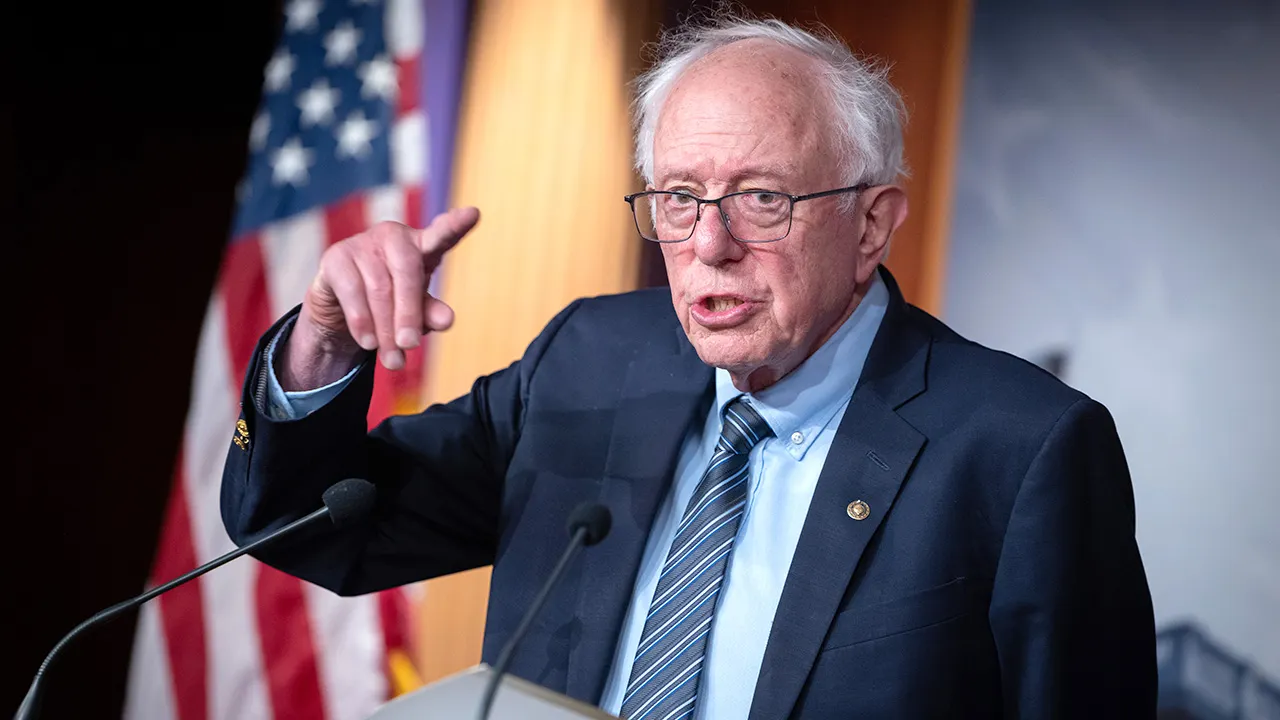
‘The Big Money Show’ discusses Sen. Bernie Sanders proposal to give the federal government a 50% ownership stake in OpenAI, Anthropic and other leading AI firms through a new sovereign wealth fund.
Democratic socialist Sen. Bernie Sanders, I-Vt., is arguing that the federal government should establish a sovereign wealth fund that’s financed by taking possession of half of the stock in AI giants like OpenAI, Anthropic and xAI, among others.
Sanders wrote an op-ed in The New York Times on Sunday that AI companies built and trained their models using the creative work of millions of people to inform generative AI tools, mostly without receiving permission from the creators or compensating them.
He explained that those creative works have “essentially been stolen by some of the wealthiest people in the world. It’s time for us to reclaim it.”
“Since AI is built on the collective knowledge of humanity, the wealth it generates must benefit humanity,” Sanders wrote, rather than benefiting the founders of leading AI companies or “venture capitalists in Silicon Valley or money managers on Wall Street who undoubtedly see AI as the next great wealth-extracting machine.”
BERNIE SANDERS WARNS OF ‘THE MOST TRANSFORMATIVE ECONOMIC REVOLUTION IN THE HISTORY OF THIS COUNTRY’
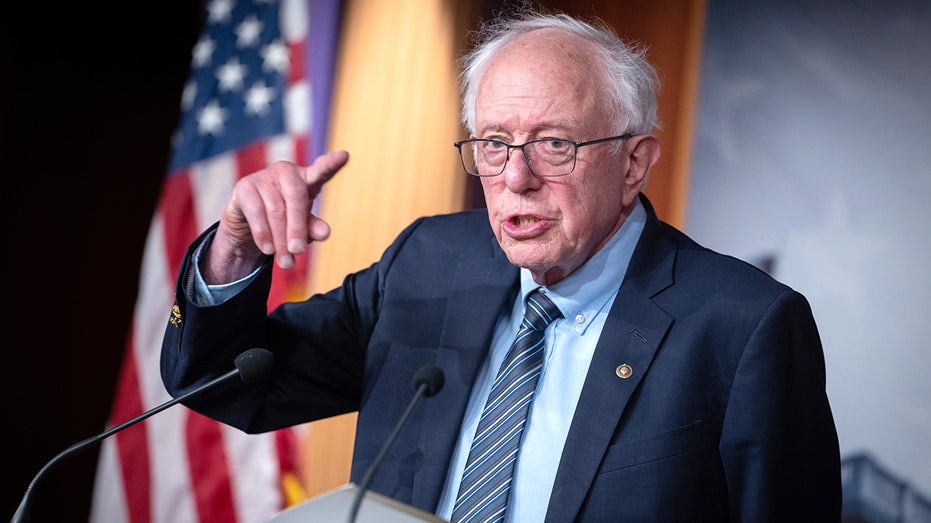
Sen. Bernie Sanders, I-Vt., is calling for an AI sovereign wealth fund with large stakes in leading U.S.-based AI companies. (Nathan Posner/Anadolu via Getty Images)
Sanders explained that he’s planning to introduce legislation that will be called the American AI Sovereign Wealth Fund Act, which would impose a one-time 50% tax payable with the stock of leading AI companies like OpenAI, Anthropic, xAI and others.
The senator said the bill would give the public “a direct role in determining the future of this technology,” if his legislation were enacted.
“No longer would the future of AI and the transformation of human life that it will bring be dictated by a handful of Big Tech oligarchs,” Sanders wrote. “The federal government would have the power, through its voting shares and an equal representation on each company’s board, to block decisions that hurt our citizens and to push for policies that help them.”
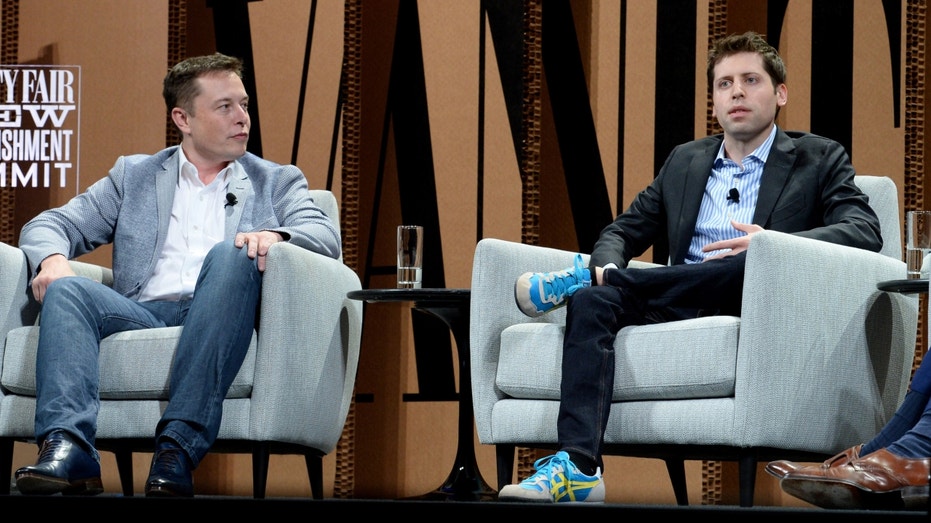
Sanders’ bill aims to take large ownership stakes in AI companies founded by “Big Tech oligarchs” like Elon Musk and Sam Altman. (Michael Kovac/Getty Images for Vanity Fair)
He added that the bill would also “guarantee that the trillions of dollars potentially generated by AI are used to improve the lives of all of us – not simply to make the richest people in the world even richer.”
“If the big AI companies continue to grow as rapidly as many analysts expect, then the value of the sovereign wealth fund will grow as well – and the benefits to the American people will grow along with it,” the senator wrote.
Sanders said other sovereign wealth funds, like the one operated by Norway’s government derived from oil revenues, give the government a say in how those resources should be used for the nation rather than allowing oil companies to direct those funds.
He also noted Alaska’s oil fund as well as state pension systems holding stock in companies as other examples of the role the government can play.
ELON MUSK CALL HIMSELF A ‘MAKER,’ SLAMMING POLITICIANS LIKE BERNIE SANDERS: ‘THEY TAKE’
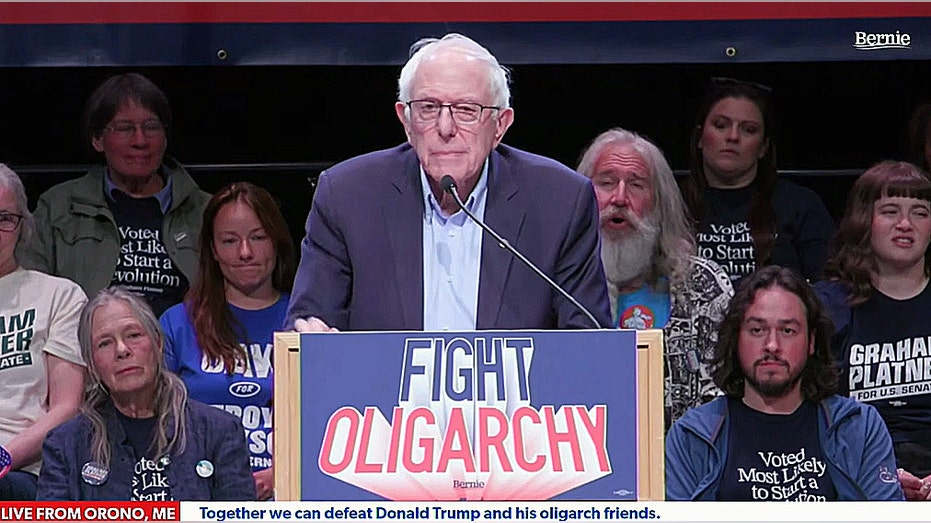
Sen. Bernie Sanders speaks during a “Fight Oligarchy” rally in Orono, Maine, where he warned that artificial intelligence and robotics could replace workers and deepen economic inequality. (Fox News / Fox News)
Sanders’ proposal for the AI sovereign wealth fund to control 50% of the stock in U.S. AI companies goes well beyond the limit imposed by Norway’s sovereign wealth fund, which prohibits the fund from holding more than 10% of the shares in public companies, aside from real estate firms.
Additionally, state pension funds typically hold relatively small amounts of stock in individual companies as the funds tend to diversify their holdings to help safeguard the pensions’ assets.
Under the senator’s proposal, the “billions, if not trillions, of dollars generated by this fund would provide direct payments to the American people. And as the fund generates more and more wealth, the proceeds would be used to ensure that every man, woman and child in our country has a decent and dignified standard of living, including healthcare, education and housing.”
“I recognize that for the government to have a major stake in a company, particularly one for which AI is only part of its business, is complicated. More details – including the specific spending priorities and the mechanics of implementation – will be included in the legislation I unveil in the coming weeks,” Sanders said.
GET FOX BUSINESS ON THE GO BY CLICKING HERE
“But the principle is simple: when a public resource generates wealth, the public should share in that wealth. AI is being built on a public resource far more valuable than oil: the accumulated knowledge, creativity and labor of mankind,” he explained.
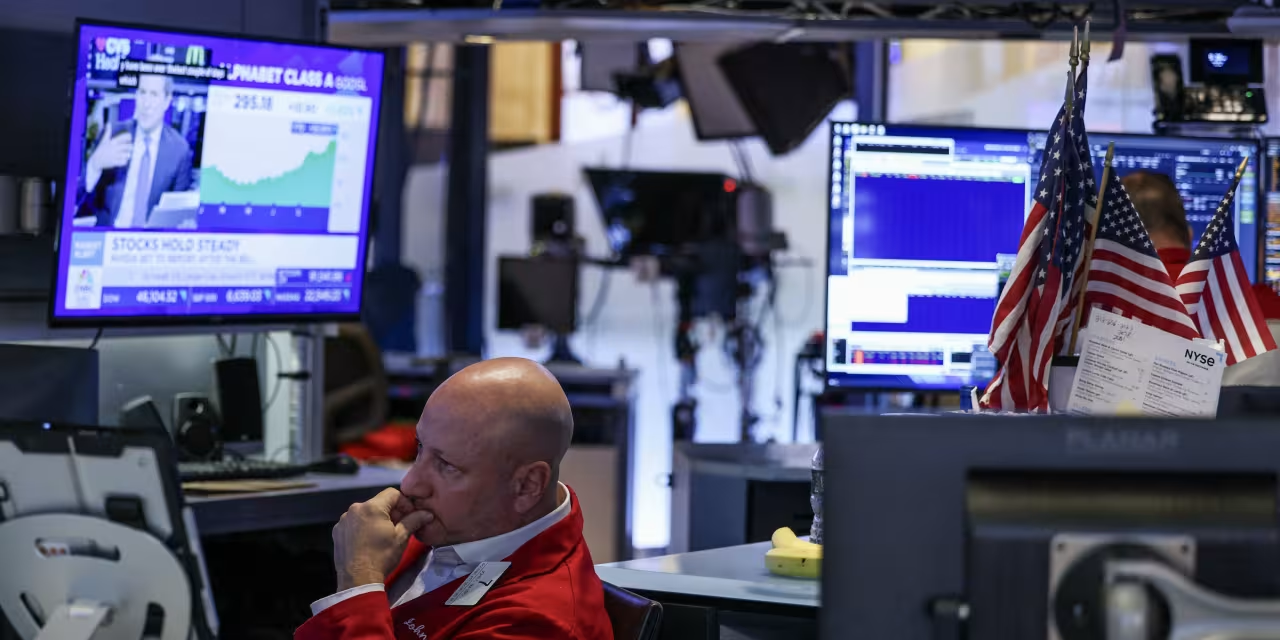
Stock Markets Signal They’re Ready to Absorb Google and Anthropic Capital Raises

Expected to improve shopping experience for consumers.
Business
SPAC and New Issue ETF (SPCK) Rises 0.72% as Investors Hunt Fresh IPO and Merger Plays in 2026
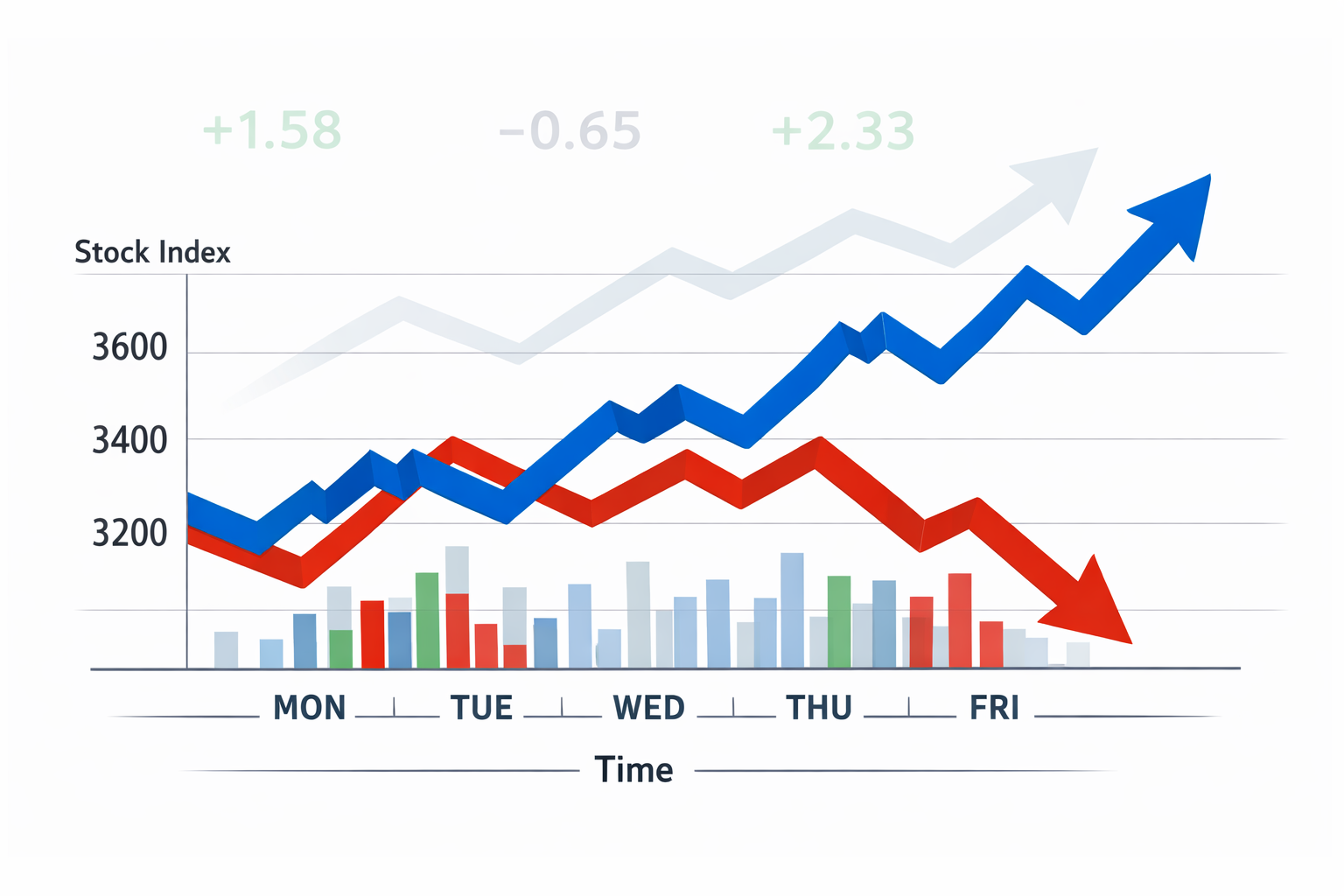
NEW YORK — The SPAC and New Issue ETF (NASDAQ: SPCK) gained 0.72% on Wednesday morning, climbing to $22.49 as renewed investor interest in special purpose acquisition companies and upcoming initial public offerings lifted sentiment around the specialized fund.
The ETF, which provides targeted exposure to SPACs, pre-IPO companies and newly listed stocks, has attracted attention in 2026 as the market for new issues shows signs of thawing after several years of subdued activity. Trading volume remained solid in morning sessions, reflecting selective buying in a segment that has lagged broader market gains for much of the past two years.
The SPAC and New Issue ETF aims to capture opportunities in companies going public through traditional IPOs or mergers with blank-check companies. Its portfolio typically includes a mix of pre-de-SPAC targets, recent listings and special purpose vehicles still seeking acquisitions. With many high-profile companies choosing to go public in recent quarters, the ETF has offered investors a diversified way to participate in this resurgence without picking individual names.
Market participants pointed to several factors supporting the ETF’s modest advance. Improving macroeconomic conditions, stabilizing interest rates and stronger corporate confidence have encouraged more companies to explore public listings. Investment banks have reported increased IPO pipeline activity, particularly in technology, healthcare and clean energy sectors.
The broader SPAC market has evolved significantly since its peak frenzy in 2020-2021. Many earlier deals faced challenges with performance and regulatory scrutiny, leading to a sharp decline in new formations. However, 2026 has seen a more disciplined approach, with sponsors focusing on stronger targets and clearer paths to value creation. This maturation has helped restore some investor confidence.
Analysts note that SPCK benefits from exposure to both completed mergers and companies in the pre-listing phase. The ETF’s structure allows it to hold positions across various stages of the new issue lifecycle, providing a balanced approach to a historically volatile segment. Its year-to-date performance has been positive but trails major indices, reflecting the cautious return of capital to the space.
Wednesday’s gain came amid a broader rotation in small and mid-cap stocks, where many newly public companies reside. The Russell 2000’s solid performance earlier in the week provided a supportive backdrop for names with recent listings or pending mergers. Investors appear to be positioning for potential catalysts such as major IPOs expected in the second half of 2026.
The ETF holds a diverse basket of holdings, including stakes in companies that have gone public through SPAC mergers in sectors ranging from electric vehicles and biotechnology to fintech and software. Performance has been driven by several successful de-SPAC transactions that delivered strong post-merger results, though others have struggled with integration challenges and market conditions.
Fund managers have emphasized disciplined selection criteria, focusing on companies with proven business models, strong management teams and realistic growth projections. This approach contrasts with the more speculative nature of earlier SPAC waves and has helped the ETF avoid some of the sharp drawdowns seen in the broader sector.
Regulatory developments continue shaping the landscape. The Securities and Exchange Commission has maintained stricter disclosure requirements for SPACs and new listings, aiming to protect investors while allowing viable companies access to public markets. These rules have contributed to higher quality deals reaching the market in 2026.
Institutional interest in the ETF has grown steadily. Pension funds, hedge funds and retail investors seeking exposure to emerging growth stories have increased allocations. The product’s relatively low expense ratio and diversified holdings make it an accessible entry point compared to direct investments in individual SPACs or pre-IPO shares.
Challenges remain for the new issue market. Valuation discipline is critical, as many recent listings have experienced post-debut volatility. Companies must demonstrate sustainable growth and clear competitive advantages to maintain investor support after the initial hype fades. The SPCK ETF attempts to mitigate single-name risk through broad exposure across multiple deals and stages.
Looking ahead, several major IPOs and SPAC transactions are anticipated in coming months. Technology infrastructure, artificial intelligence applications and renewable energy companies are expected to feature prominently. The ETF is well-positioned to capture upside from these potential debuts while maintaining exposure to already-listed former SPACs showing operational progress.
Market strategists suggest the current environment favors selective participation in new issues. With interest rates potentially peaking and economic growth holding steady, conditions appear more supportive for growth-oriented companies seeking public capital. However, caution remains regarding overall market volatility and sector-specific risks.
The SPAC and New Issue ETF has carved out a specialized niche in the investment landscape. By focusing on companies at various stages of going public, it offers a unique risk-reward profile that appeals to investors comfortable with higher volatility in pursuit of potentially outsized returns from emerging leaders.
Performance data shows the ETF has experienced periods of strong gains during active IPO windows, followed by consolidation when deal flow slows. Its 2026 results reflect a gradual recovery in the new issue market rather than the explosive moves seen in previous cycles.
For financial advisors, the ETF provides a convenient tool for clients seeking targeted exposure to IPOs and SPACs without the operational complexities of direct investing. Its daily liquidity and transparent holdings make it suitable for both tactical allocations and longer-term thematic portfolios.
As the trading day continued Wednesday, the SPCK ETF maintained its gains, trading around $22.49. The modest advance reflects measured optimism rather than exuberance, consistent with the more disciplined nature of today’s new issue market.
Broader market context supports cautious participation. Strong corporate earnings in certain growth sectors and steady economic indicators have encouraged companies to move forward with listing plans. Investment bankers report healthier pipelines compared to 2024 and early 2025.
The evolution of SPAC structures, including better alignment of sponsor incentives and longer timelines for deal completion, has improved outcomes for investors. These changes have helped rebuild credibility in the mechanism as a viable path to public markets for quality companies.
Looking further into 2026, analysts expect continued moderate deal flow. Technology and healthcare are likely to lead activity, while consumer and industrial sectors may see selective opportunities. The SPCK ETF’s flexible mandate positions it to adapt across these varying themes.
Investors should approach the segment with realistic expectations. While attractive opportunities exist, not all new issues deliver strong long-term performance. Thorough due diligence and diversified exposure remain essential for success in this space.
The SPAC and New Issue ETF continues to serve as an important vehicle for capturing the excitement and potential of companies entering public markets. Wednesday’s positive performance adds to a constructive tone for the product as market conditions gradually improve for new listings and mergers.
As summer approaches, focus will shift toward upcoming earnings from recently listed companies and potential new filings. These developments will likely influence the ETF’s trajectory in the second half of 2026.
For now, the 0.72% gain to $22.49 reflects steady interest in a segment that has shown renewed vitality. The SPAC and New Issue ETF remains a specialized but increasingly relevant option for investors seeking exposure to the next generation of public companies.

The guidelines recommend using goods and services tax (GST) collections to estimate economic activity in trade, hotels, and restaurants; Annual Survey of Industries data for organised manufacturing, Annual Survey of Unincorporated Sector Enterprises for informal sector activities and the RBI banking statistics for financial services.
Earlier this year, the ministry of statistics and programme implementation (MoSPI) revised the national gross domestic product base year to 2022-23 from 2011-12.
“The availability of reliable and comparable DDP estimates is expected to support decentralised planning, evidence-based policy formulation, regional development analysis and informed decision-making at the district levels,” the ministry said in a statement The guidelines provide a framework for covering all major sectors of the economy, including agriculture, manufacturing, construction, trade, transport, financial services, public administration, and other services.

JPMorgan Chase CEO Jamie Dimon joins Mornings with Maria to discuss China, national security concerns and why America must strengthen its military and economic alliances to counter adversaries.
The Trump administration on Tuesday night announced a new plan to impose tariffs on up to 60 trading partners which would face additional import taxes of 10% or 12.5%.
The office of the U.S. Trade Representative (USTR) released a report that found the 60 countries were neglecting to enforce rules prohibiting imported goods made with forced labor, which in turn had a negative impact on American companies.
It found that 54 countries, including notable trading partners like China, Vietnam, Japan, South Korea and the United Kingdom, failed to impose and enforce a forced labor ban. A further six countries failed to effectively enforce such a ban, including Canada, Mexico and the European Union.
“The failure of our most important trading partners to address the importation of goods made with forced labor is unacceptable,” said Ambassador Jamieson Greer. “This creates a dynamic where American workers are forced to compete globally on an unlevel playing field.”
DHS EXPANDS FORCED LABOR IMPORT BAN TO STEEL, LITHIUM, BLOCKS IN CHINESE GOODS

U.S. Trade Representative Jamieson Greer announced the plans for new forced labor tariffs. (Victor J. Blue/Bloomberg via Getty Images)
“We will no longer tolerate this disparity,” Greer said. “Some trading partners have taken initial steps to prevent the importation of forced labor goods, including through USMCA and commitments in Agreements on Reciprocal Trade.”
“However, each of our trading partners must do more to ensure that trade does not perversely encourage and entrench forced labor,” he added.
For trading partners that have either a ban on forced labor imports, have committed to impose such a prohibition or have imposed a partial regime to prevent the importation of goods made with forced labor, they would have an additional 10% tariff. All other economies would face an additional tariff of 12.5%.
‘FORCED LABOR’: STATE AGS PROBE CHINESE COMPANY TEMU OVER ‘DISTURBING’ BUSINESS PRACTICES
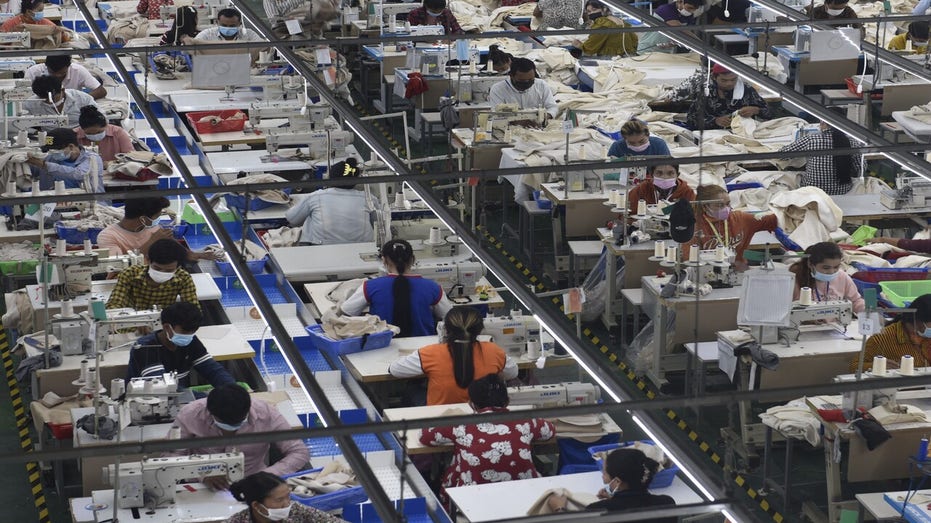
The textile industry is particularly vulnerable to sourcing cotton made with forced labor in China. (Wu Changwei/Xinhua via Getty Images)
USTR’s proposal also includes a mechanism to allow certain volumes of imported apparel and textiles to enter the U.S. at a lower tariff rate. Forced labor is commonly used overseas in producing cotton that’s used in textile products, particularly that which is sourced from the Xinjiang region of China.
Federal laws against the use of forced labor ban the importation of cotton made with forced labor into the U.S., including the Uyghur Forced Labor Prevention Act. The law refers to the ethnic Uyghurs who reside in Xinjiang and have faced persecution from the Chinese Communist Party, with many subject to forced labor.
The USTR report notes that nearly all the 60 countries that were subject to the investigation that began in March imported cotton from China in 2021 and 2025. It adds that the complexity of supply chain tracing “makes it difficult for consumers and apparel companies to trace their supply chains all the way to the raw material, particularly as garments produced by third-economy producers would not indicate China as their source.”
AI HELPING REMOVE CHINESE GOODS MADE WITH UYGHUR FORCED LABOR FROM CORPORATE SUPPLY CHAINS
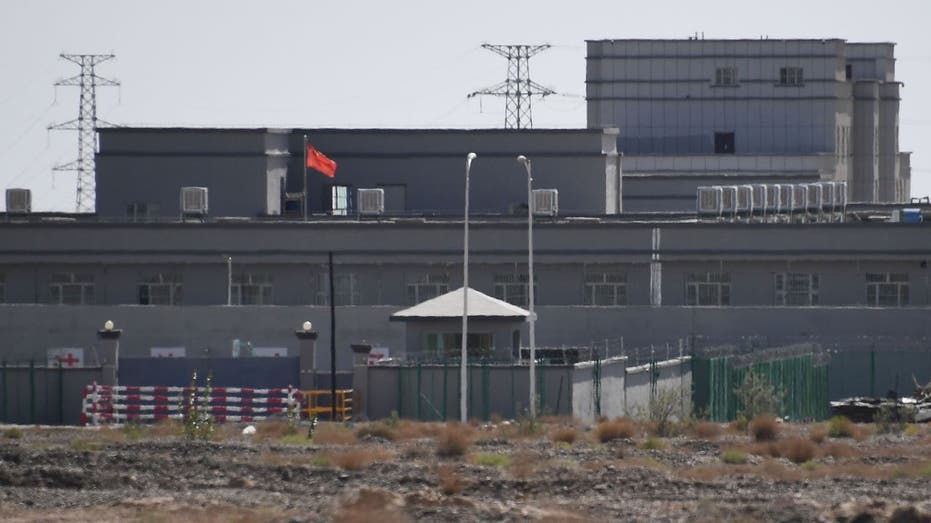
Ethnic Uyghurs in Xinjiang, China, are subject to forced labor and mass internment by the Chinese government. (Greg Baker/AFP via Getty Images)
The 60 countries that were investigated and found to impose or enforce a forced labor import ban imposed an “unreasonable or discriminatory burden” on U.S. commerce, according to the report.
USTR said that “undermines the universal aim of eliminating forced labor; permits firms that avail themselves of forced labor to produce goods at lower cost and therefore distort market conditions for firms that do not use forced labor; undermines that profitability of firms that do not use forced labor; and contributes to the circumvention of existing forced labor import prohibitions.”
GET FOX BUSINESS ON THE GO BY CLICKING HERE
Written comments on the proposal are due by July 6, with the USTR to hold hearings the following day on July 7. Interested parties should submit requests to appear at the hearings, along with a summary of testimony, by June 22.


Innovations at the show included new formats and formulations.

ASUS Announces Massive AI-Powered PC Lineup at Computex 2026

Crypto Live Trading| 02 june #vinbullindia #livetrading #vinbulllive #live #trading #cryptotrading
Eurozone Inflation Rises to 3.2%, ECB Interest Rate Hike Looms

HarrisX Poll Found 52% of Registered Voters Support the CLARITY Act

BloFin War of Whales 2026 Grand Prix opens registration for $5M trading championship

Blockchain.com files with SEC for U.S. IPO
Crypto Live Trading| 02 june #vinbullindia #livetrading #vinbulllive #live #trading #cryptotrading

Children are a lifestyle choice as much as they are a financial choice.

Is crypto trading profitable? #crypto currency #crypto
-

 Tech6 days ago
Waymo dominates autonomous vehicle registrations as Tesla trails behind
-

 News Videos5 days ago
This is BROKEN! INSANE 5x MONEY CAR WASH WEEK! The NEW GTA Online UPDATE Today! (GTA5 New Update)
-
 Tech4 days ago
SpaceX just won a second Golden Dome contract. This one is $4.16 billion.
-

 Business2 days ago
Jade Biosciences, Inc. (JBIO) Discusses Positive Interim Results From JADE101 Phase I Healthy Volunteer Study and Development Plans Transcript
-

 News Videos5 days ago
SHE IS KILLING XRP!!! WATCH URGENT AND ACT FAST
-
 NewsBeat5 days ago
FIRST NIGHT REVIEW: Take That bring the Circus back to life in spectacular sun-soaked style
-
 Crypto World5 days ago
CFTC Has Approved the First Regulated Bitcoin Perpetual Contract in the U.S.
-

 Business4 days ago
Is the Spurs Phenom Already Better Than Prime Diesel?
-
 NewsBeat5 days ago
Novak Djokovic v Joao Fonseca LIVE: French Open latest scores and results after Jannik Sinner’s shocking collapse
-
 Crypto World5 days ago
Snowflake (SNOW) Stock Rallies on Strong Q1 Results and AI Product Growth
-
 Entertainment5 days ago
Weak ‘Supergirl’ Box Office Tracking Amid Milly Alcock Backlash
-

 Business5 days ago
Demand Conditions Improve In Chemicals Sector In April 2026
-

 Crypto World5 days ago
MicroStrategy Moves $30 Million in BTC to Coinbase Prime: Is the Bitcoin Sell-Off Already Here?
-

 Politics5 days ago
The House | Inside Andy Burnham’s Makerfield Campaign: “Nobody Thinks This Is In The Bag”
-

 Tech5 days ago
This Week In Security: Ubiquiti Fixes, And FreeBSD Joins The Club You Don’t Want To Join
-
 Entertainment4 days ago
One of the Greatest Sitcoms of All Time Shoots Up Apple TV’s Charts 11 Years Later
-

 Entertainment5 days ago
Maddox Jolie-Pitt Legally Requests to Drop Brad’s Surname
-
 Crypto World1 day ago
Seagate (STX) Stock Surges to Record High on AI Boom and Legal Settlement
-
 Entertainment5 days ago
Britney Spears Shares Troubling Update After Hard Year
-
 Entertainment5 days ago
Bruce Willis’ Generosity Resurfaces Amid His Dementia
You must be logged in to post a comment Login