
Business
Meta faces potential EU ban on WhatsApp AI policies


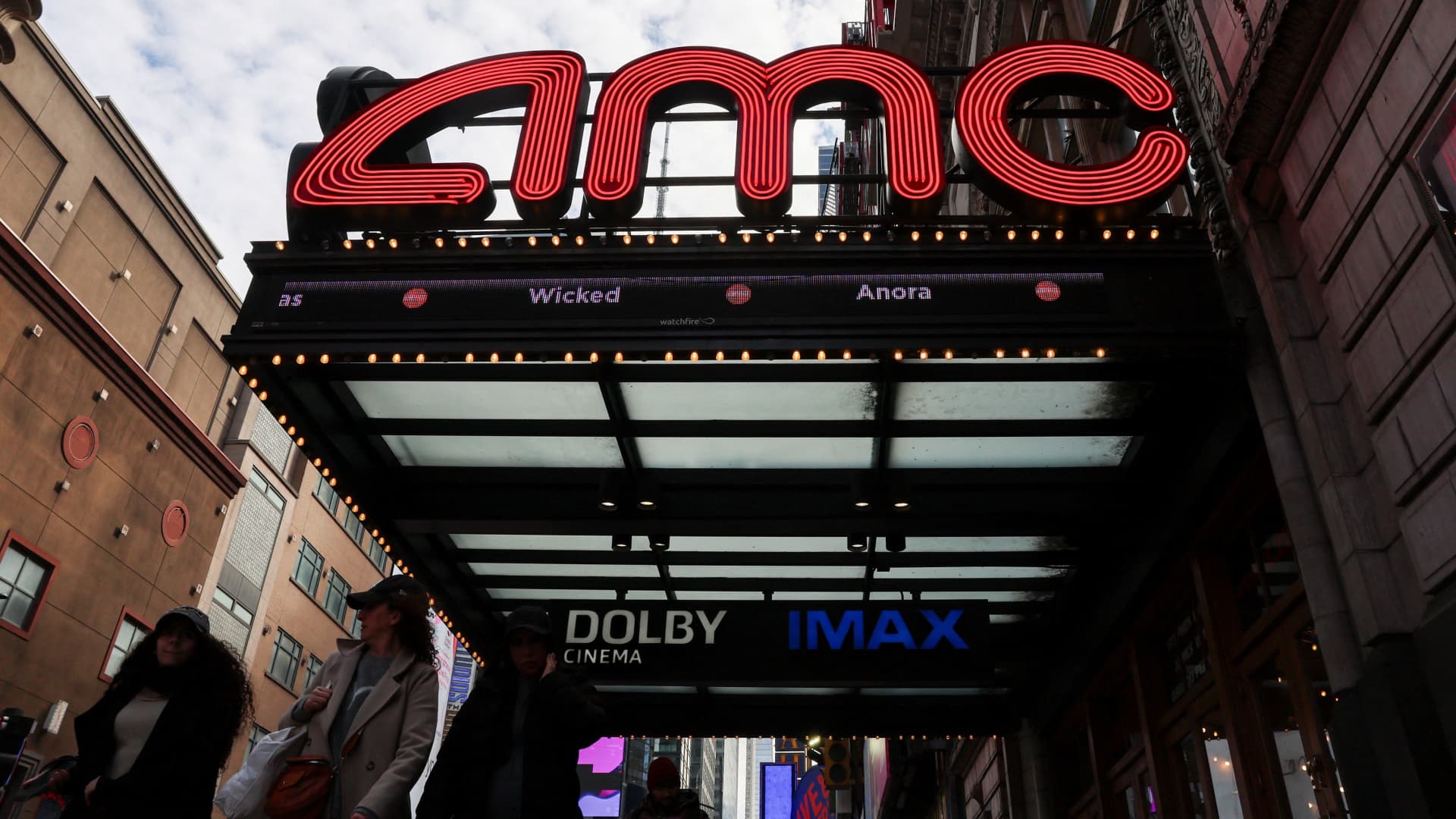
People walk past an AMC theatre in Manhattan in New York City, U.S., February 25, 2025.
Jeenah Moon | Reuters
AMC Theatres is bringing live concerts to the big screen.
The world’s largest theater company has partnered with Arena One, a live entertainment technology company, to bring real-time concert events to theatrical audiences.
AMC has been at the forefront of theatrical music content in recent years, most notably distributing Taylor Swift’s “Eras Tour” and Beyonce’s “Renaissance” filmed concerts. The new partnership marks something of a bridge between a scheduled screening and a simulcast event — and offers customers a fresh reason to go out to the movies.
The in-theater concerts will use technology to connect the musical artist with moviegoers, transmitting sound from audiences around the country back to the performer. The stage is engineered with cameras and spatial audio capture to bring performances from the arena to the cinema in real time.
“We built a cinematic stage optimized to translate seamlessly to cinemas, but artists are defining what it becomes,” said Peter Hamilton, CEO of Arena One, in a statement. “They’re not adapting tours; they’re building something new. That’s when a medium sparks reinvention.”
The partnership, which was announced Tuesday during AMC’s quarterly earnings call, will launch in June with artists including Bebe Rexha, Paris Hilton and Maren Morris.
More than 300 AMC locations in 89 markets across the U.S. will be programmed for these concerts. Tickets will range from $40 to $75 depending on the artist and market, the company said.
“Arena One at AMC has the potential to open an entirely new chapter in live entertainment,” Adam Aron, CEO of AMC, said in a statement. “Music fans across the country will be able to come together for the same live concert, at the same time, all with the accessible premium experience of huge screens, powerful sound, and comfortable seats that AMC guests know and expect.”
It’s the latest push from AMC to diversify its theatrical offerings and create premium experiences for cinemagoers as the moviegoing industry continues its recovery from pandemic lulls and the at-home streaming threat.
AMC has already bolstered its number of premium large format screens, including IMAX and Dolby-branded auditoriums, and experiential theaters like 4DX and Screen X.
These innovations in programming come at a time when the domestic box office is still recovering from pandemic-era production shutdowns and dual Hollywood labor strikes which reduced the number of theatrical releases.
While the 2026 slate is one of the strongest offerings since the pandemic, exhibitors are still looking for new ways to drive traffic to their auditoriums and drive revenues.
For the first quarter, AMC reported revenue of $1.05 billion, a 21% jump from the same period a year earlier, but operating costs continued to weigh on the bottom line. The company reported a net loss of $117 million for the three-month period.
However, attendance in the U.S. and international markets were up 14% and almost 13%, respectively, compared with the same period last year. And the average ticket price was up nearly 60 cents in the U.S. to $12.90 apiece.
The much-anticipated demerger aimed at unlocking value by carving out focused, world-class businesses, has been is effective May 1, 2026. Each entity will benefit from sharper strategic direction, disciplined capital allocation, and clearly defined growth paths, enabling them to operate as independently scalable, globally competitive companies benchmarked against the best in the industry, Agarwal said.
“The most awaited milestone for Vedanta this year is our demerger, effective 1st May 2026. This transformation marks a pivotal step in unlocking value by creating focused, world-class companies, each with sharper strategic clarity, disciplined capital allocation, and distinct growth pathways. Through this demerger, each of our businesses is emerging as a “Vedanta” in its own right – globally competitive, independently scalable, and benchmarked to the best in the world,” the letter read.
Commenting on Vedanta’s earnings performance, the Chairman said FY26 marked a record year for metal major, with the company reporting its highest-ever profit and revenue, alongside strong shareholder returns.
The company reported a 92% year-on-year (YoY) surge in consolidated net profit to Rs 6,698 crore for the March-ended quarter, compared with Rs 3,483 crore in the year-ago period. Its total revenues from operations in Q4FY26 stood at Rs 24,609 crore, rising 47% YoY versus Rs 16,686 crore in the corresponding quarter of the last financial year.

Read more: Vedanta Q4 Results: Cons profit zooms 92% YoY to Rs 6,698 crore, revenue jumps 47%
He highlighted that the spotlight is now on the structural transformation through the demerger, which will split the conglomerate into multiple independent, globally competitive entities.Each vertical — from aluminium and oil & gas to power and iron & steel — is being positioned as a standalone growth engine with distinct expansion plans, Agarwal said.
Vedanta Aluminium plans to double capacity to 60 lakh tonnes, targeting global cost leadership, while its oil & gas arm is eyeing a sharp ramp-up in production backed by a $5 billion investment. The power business is targeting aggressive expansion to 12 GW, alongside diversification into clean energy, including hydropower and nuclear, he added.
On the iron & steel segment, he said the vertical is scaling up green and specialty steel capacity, supported by strong raw material linkages, while the flagship entity will continue to house key assets like Hindustan Zinc, copper, and critical minerals.
Agarwal emphasised that the demerger, coupled with ongoing investments of Rs 15,000 crore in growth capex, will create a structurally stronger and more resilient group. With improved leverage metrics and a focus on cost leadership, cash generation, and technology adoption, Vedanta is positioning itself to capitalise on long-term demand trends across infrastructure, energy transition, and manufacturing.
The next phase, he noted, will be driven by scale, efficiency, and innovation, with the ultimate goal of delivering sustained value for shareholders while contributing to India’s industrial growth story.
Vedanta shares today ended at Rs 303.90 on the NSE, gaining 3.14% over the Monday closing price.
(Disclaimer: The recommendations, suggestions, views, and opinions given by the experts are their own. These do not represent the views of The Economic Times.)
Business
LARRY KUDLOW: Trump must make it clear that America owns the entire Arabian Gulf and the Strait
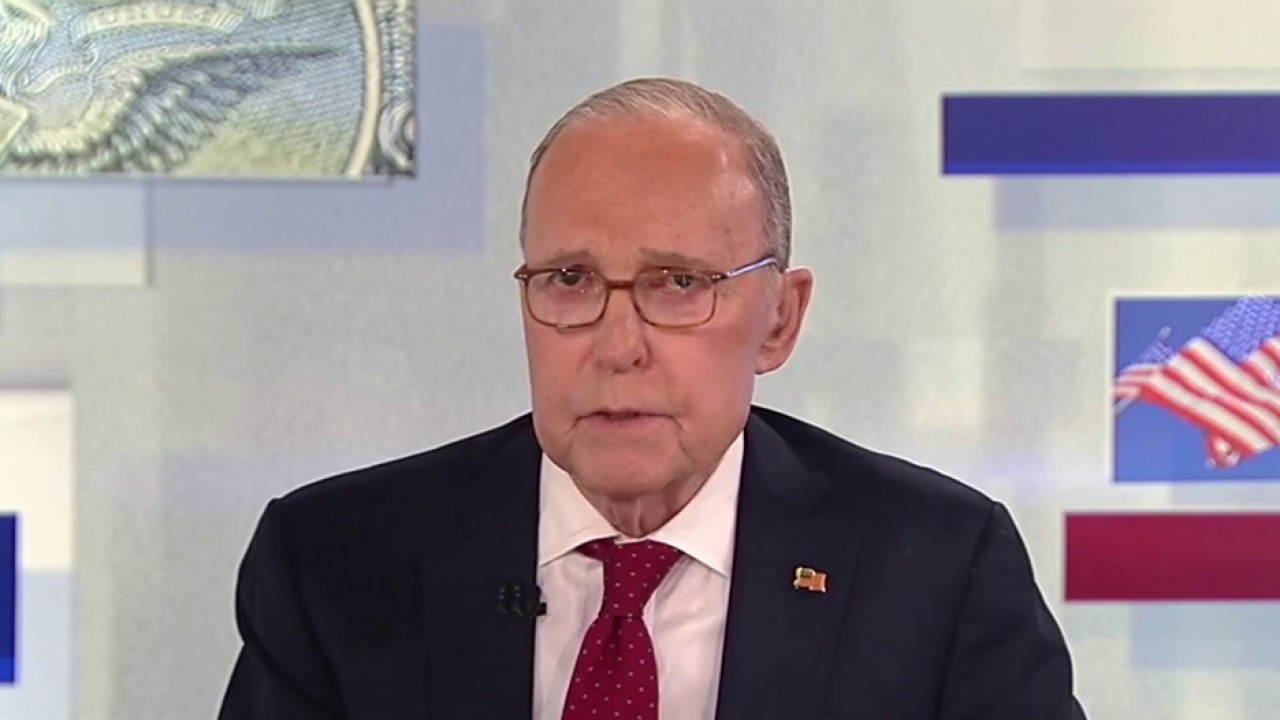
FOX Business host Larry Kudlow discusses the ramifications of the Project Freedom as the U.S.-Iran conflict hits a pivotal point on ‘Kudlow.’
Project Freedom to have the United States Navy open up the Strait of Hormuz for commercial vessels and most importantly oil supertankers is on its own merits a terrific idea. And according to analysts, the Navy has charted a pathway to Oman, away from Iran and fortified by military protection. Sea mines have been cleared, a protective dome stretching well into Iran has been set up. All this is terrific. It’s a great move.
It’s kind of the flip side of the Iranian port blockade, which has now turned around 51 ships at last count. That blockade was also a brilliant strategic move by President Trump and our military. No oil sales, no money for Iran. No making payroll for the Islamic Revolutionary Guard Corps. Nothing but bankrupt businesses. And all the looting and robbing of moneys taken from the people of Iran and transferred into offshore bank accounts has been frozen or even outright seized by Secretary Scott Bessent’s Treasury plan to prevent the criminals running Iran from ever getting their stolen stash and somehow living high on the hog even after they are totally defeated and obliterated by the Israeli-American coalition. In other words, the embargo is working.
Now we come back to Project Freedom, which officially started Monday. It must prove its worth as rapidly as possible. As far as we know, only 2 commercial ships have yet gotten through. There are however 1,550 commercial vessels sitting at the top of the Arabian Gulf. Most of it is oil. The fact that it’s still sitting there is one key reason why oil prices and gasoline at the pump have jumped up so high.
Fox News senior strategic analyst Ret. Gen. Jack Keane unpacks where the U.S.-Iran conflict stands on ‘Kudlow.’
So the trick here is to get Project Freedom totally geared up so we can be talking about 30 ships, then 50 ships getting through, then 100 ships. At which point, oil prices will start coming down quite a bit. If we don’t, then we risk some embarrassment. And Iran will squawk about it.
Mr. Trump can’t seem to make up his mind just yet about breaking the ceasefire and starting the next round of bombing missions. On “The Hugh Hewitt Show,” he was asked “Is the ceasefire over, Mr. President? Is it over? Are we going to hit them tonight?” Mr. Trump replied: “Well, I can’t tell you that.”
At the White House today, a reporter asked: “What do they need to do to violate the ceasefire?” Mr. Trump replied: “Well, you’ll find out, because I’ll let you know. They know what to do, and they know what to do, and they know what not to do.”
Mr. Trump is surveying his options. That is what a judicious commander in chief must do. The time is drawing nearer, though, when he has to make up his mind. If the Navy can push a couple of hundred oil tankers through the Strait that’s a huge win for America and its allies. And of course if Iran keeps bombing, it will become a death wish as the American-Israeli military alliance finishes the job. Yet Project Freedom has got to deliver. We must make it very clear that America owns the entire Arabian gulf and the Strait of Hormuz.

India Lerigo makes her own dog food and batch cooks a month’s worth of meals over a weekend to save money.

Gold has maintained its position as a globally recognised store of value, even as financial markets have evolved significantly.
Unlike traditional investments such as equities or bonds, gold does not rely on earnings, dividends, or interest payments. Instead, its value is shaped by macroeconomic forces, including inflation, monetary policy, and investor confidence.
In an environment where financial conditions are becoming increasingly complex, gold is being reassessed not just as a defensive asset, but as a core component of long-term portfolio construction.
Accessing Gold in Modern Markets
One of the key developments in recent years has been the increasing accessibility of gold as an investment. Historically, physical ownership required significant capital, along with secure storage and insurance arrangements.
Today, investors can access physical gold more easily through providers such as Commonwealth Vault, which offers secure storage and direct ownership structures. This allows investors to hold allocated gold outside of traditional banking systems while maintaining full ownership. More information on how this works can be found at
For those looking to invest in gold more directly, the ability to buy gold online has expanded significantly. Investors can now purchase a range of bullion products, including bars and coins, with varying sizes and price points. A selection of physical gold options can be explored here:
These developments have broadened access to gold and made it easier to incorporate into a diversified portfolio.
Gold and Economic Cycles
Gold’s performance is closely linked to economic cycles, particularly periods of uncertainty or monetary expansion.
Following the Global Financial Crisis, gold prices more than doubled as central banks introduced large-scale stimulus measures. This increase in liquidity, combined with declining real interest rates, created a favourable environment for gold.
A similar pattern emerged during the COVID-19 pandemic. As governments and central banks responded with unprecedented fiscal and monetary support, gold reached record highs above USD 2,000 per ounce.
These examples highlight a consistent trend. When confidence in financial systems is tested, demand for gold tends to increase.
Inflation Protection Over Time
Gold has long been viewed as a hedge against inflation, although its effectiveness can vary in the short term. Over longer periods, however, it has demonstrated a strong ability to preserve purchasing power.
Since 1971, when the United States moved away from the gold standard under Richard Nixon, gold has delivered average annual returns of around 10 percent, according to the World Gold Council.
During the same period, inflation has significantly reduced the value of fiat currencies. Data from the U.S. Bureau of Labor Statistics shows that cumulative inflation has exceeded 600 percent.
This long-term dynamic reinforces gold’s role as a store of value, particularly in environments where monetary expansion is persistent.
Portfolio Stability and Risk Reduction
Gold’s diversification benefits are well established. It has historically exhibited low correlation with both equities and fixed income assets, making it an effective tool for reducing portfolio volatility.
During periods of market stress, gold often behaves differently from traditional assets. For example, during the sharp market decline in early 2020, the S&P 500 experienced significant losses, while gold recovered quickly and finished the year strongly.
This ability to perform independently of other asset classes is particularly valuable in the current environment, where traditional diversification strategies are being challenged.
Allocating a portion of a portfolio to gold can help reduce downside risk without significantly limiting long-term returns.
Structural Demand Trends
Gold demand is supported by both institutional and consumer activity, creating a strong underlying foundation for the market.
Central banks have been increasing their gold reserves in recent years as part of broader diversification strategies. According to the World Gold Council, central bank purchases exceeded 1,000 tonnes in 2022, the highest level on record.
At the same time, consumer demand remains strong, particularly in countries such as China and India. In these markets, gold serves both as a form of wealth preservation and a culturally significant asset.
Supply, however, remains relatively constrained. Annual gold production increases at a modest pace, and new discoveries are becoming less frequent. This imbalance between supply and demand provides long-term support for gold prices.
Risks and Market Sensitivity
While gold offers several benefits, it is not without risk.
Its performance is influenced by factors such as interest rates, currency movements, and investor sentiment. Periods of rising real interest rates can reduce demand for gold, as higher yields make income-generating assets more attractive.
A strengthening US dollar can also act as a headwind, as gold is priced globally in US dollars.
Short-term price movements can be volatile, particularly in response to economic data releases or changes in central bank policy. However, these fluctuations are typically part of broader market cycles.
Over longer time horizons, gold has maintained its role as a stabilising asset.
Outlook for Gold
The global economic outlook remains uncertain. Debt levels are elevated, inflation remains a concern, and central banks are navigating complex policy decisions.
According to the International Monetary Fund, global public debt continues to exceed 90 percent of GDP, limiting the flexibility of monetary policy.
In this context, assets that are not directly tied to financial systems or currencies become increasingly relevant.
Gold’s independence from these systems is one of its defining characteristics. It does not rely on the performance of any single economy or institution, making it a valuable component of a diversified portfolio.
Gold continues to serve as a core asset within modern investment strategies.
Its long-term performance, combined with strong demand and limited supply growth, supports its role as a store of value and a diversification tool.As global conditions evolve, gold remains a practical option for investors seeking stability, resilience, and long-term value preservation.
Workers in southern Scotland can find themselves paying more tax than colleagues who live south of the border.

There is a particular kind of dinner I have, every couple of months, in a particular kind of place, a Soho members’ club that lets you bring more than three people without an interrogation, in this case, with a particular kind of British technology founder.
He is, by his late thirties, on his third successful company. He has, between them, raised something north of £180 million in venture capital. He has, currently, about 220 employees in London, with another fifty due to be hired in the coming twelve months. He has, last week, sold a further $40 million tranche of his Series C to two American funds.
And he has, somewhere between his second and third glass of red, told me that he is moving the company’s headquarters to New York. Not on principle. Not on tax. Not on regulation. Not even, despite the obvious temptation in this column, on the Chancellor. He is moving because the next $200 million he needs, in 18 months, is in New York, and the practical day-to-day life of a CEO in a series of monthly trips to a city eight time zones from his children is, frankly, too painful. So he is moving the family. The London office will remain. It will, over time, get smaller. A version of this conversation has happened, by my count, with at least twelve British founders I know personally in the last two years.
Britain does not, in 2026, have a start-up problem. We start-up exquisitely. We have, by any international comparison, more new technology businesses per capita than nearly any other developed economy. Cambridge is, on its own, one of the great clusters of the world. London’s software and fintech ecosystems are deeper than Berlin’s, deeper than Paris’s, comparable to New York’s on most measures, with a couple of exceptions. We have brilliant universities, a working tax-incentive regime in EIS, a meaningful angel community, and a steady flow of seed and Series A capital.
What we have is a stay-at-home problem.
The numbers are visible if anyone bothers to look. UK technology IPOs, by listed value, are running at less than 12 per cent of US listings adjusted for relative GDP. UK Series C and onwards rounds are dominated, by deal count, by American lead investors. The proportion of UK technology companies founded in 2018 that have, by 2025, relocated their corporate domicile overseas, to the US, to Delaware, to Ireland, to Singapore, is now over 22 per cent. The proportion of all UK-founded unicorns that listed on the New York Stock Exchange or Nasdaq, rather than the London Stock Exchange, is over 80 per cent for the last decade. Eighty.
Why? It is not, despite the City lobbying, primarily a tax problem. American capital gains rates are not, in any meaningful sense, more friendly to founders than British rates. It is not, despite a great deal of Treasury-led discussion, a corporate-tax problem. The US corporate tax rate, when you blend federal and state, is comparable. It is not, despite the political mood music, a regulatory problem in the technology sectors that matter, the FCA, where it counts for fintech, is a notably more friendly regulator than its American equivalent.
It is, primarily, a depth-of-capital-pool problem. The UK pension system, despite the most articulate efforts of the Edinburgh Reforms and the Mansion House Compact and a half-dozen subsequent initiatives, allocates an embarrassingly small proportion of its £3 trillion of assets to growth-stage British equities. Canadian pension funds are, statistically, more invested in British scale-ups than British pension funds. This is the absurdity of the present situation: the world’s ninth-largest pension industry, hosted in Britain, is not investing in British growth, and is being out-deployed, in British growth equity, by Canadians, Australians, and Americans.
Fix the depth, and the rest of the problem largely goes with it. There are about three things to do. First, get UK Defined Contribution pension money, which is, by the way, growing at over £100 billion a year, into a properly structured British scale-up vehicle, at a meaningful target allocation, with a proper governance overlay. Second, restore the pre-2008 status of the London Stock Exchange as a competitive listing venue for technology businesses, by reforming the dual-class share structures and the listing-rules architecture that has kept it stranded in the era of utilities and miners. Third, make the EIS reliefs permanent, generous, and unfussy at the seed stage, so that the early-stage capital remains the easiest tier to raise.
None of this is impossible. None of this is even, in the international context, particularly bold. The Australians did most of it in 2008. The Canadians did most of it in 2014. The Singaporeans built theirs in around six years. We are, in 2026, still pondering it.
And in the meantime, my Soho friend will, in the autumn, leave. He will take the family. He will keep the London office. The American round will close. The next British unicorn, and there will be a next British unicorn, will, on present trajectory, list, again, in New York. The Mayoral candidates will, on the day after, all denounce the loss to “Brand London”. And the bottle of red, in our particular Soho members’ club, will be uncorked, again, by someone else.
We start-up brilliantly, in this country. We just need, finally, to learn how to keep them. The May locals, it turns out, are not the only thing on the ballot.

Richard Alvin
Richard Alvin is a serial entrepreneur, a former advisor to the UK Government about small business and an Honorary Teaching Fellow on Business at Lancaster University.
A winner of the London Chamber of Commerce Business Person of the year and Freeman of the City of London for his services to business and charity. Richard is also Group MD of Capital Business Media and SME business research company Trends Research, regarded as one of the UK’s leading experts in the SME sector and an active angel investor and advisor to new start companies.
Richard is also the host of Save Our Business the U.S. based business advice television show.

MaxLinear director Daniel Artusi sells $825,728 in company stock
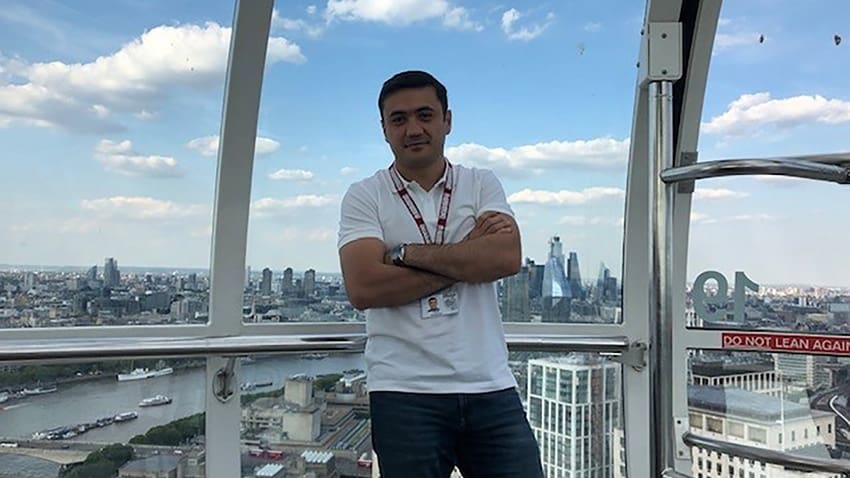
Ramil Asadulzada is an experienced executive with more than 20 years of leadership across finance, strategy, and operations. Born in Baku, Azerbaijan, he grew up in a humble family shaped by discipline and education.
His father served in the military and his mother was a teacher. From a young age, Ramil showed strong leadership and analytical skills. He captained his school basketball team and regularly competed in mathematics Olympiads, often earning top awards.
He earned his Bachelor of Science from the Azerbaijan State Oil Academy before building an international career across Azerbaijan, Turkey, Switzerland, and Romania. Over the past 15 years, he held senior finance roles, serving as CFO and most recently as CEO of SOCAR Petroleum SA, where he was promoted to Chief Executive in January 2024.
Ramil is known for his expertise in financial analysis, IFRS, risk management, corporate strategy, M&A, supply chain management, and large-scale project leadership. He combines financial discipline with operational clarity. He holds an MBA with Honours from The University of Chicago Booth School of Business and is a member of ACCA.
Oil and gas remains his professional passion. He is recognised for leading large teams while maintaining strong relationships across all levels of business. Outside of work, he enjoys basketball, travelling, reading professional literature, and following Real Madrid. A lifelong learner, Ramil approaches leadership with humility, precision, and long-term vision.
Q: You were born in Baku and grew up in a military household. How did your early life shape your leadership style?
I was raised in a very simple and humble family. My father was a military serviceman and my mother was a teacher. Discipline and education were part of daily life. There was structure at home. There was respect for learning. That environment shaped how I approach work today.
As a child, I loved mathematics. I competed in Olympiads and often won gold prizes. Mathematics teaches logic and problem solving. It forces you to think clearly. I also played basketball and served as team captain. Sport taught me leadership. You learn quickly that you win as a team or you lose as a team.
Q: What led you into the oil and gas industry?
I studied Economy and Management of Production and Service Fields at the Azerbaijan State Oil Academy. Oil and gas is a key industry in Azerbaijan. It is part of our economic identity. Naturally, I was drawn to it.
Over time, it became more than an industry. It became a passion. The scale of operations, the capital intensity, the global exposure — it is a complex and strategic field. I enjoy that complexity.
Q: You spent more than 11 years at SOCAR and rose from CFO to CEO. How did that journey unfold?
My career has been heavily focused on finance and strategy. For roughly 15 years I held CFO positions, and in January 2024 I was promoted to CEO of SOCAR Petroleum SA.
As CFO, my responsibility was financial discipline. IFRS reporting, risk management, budgeting, forecasting, internal controls, and audit were central to my role. We managed large-scale operations across multiple countries. That required precision.
When I became CEO, the perspective shifted. You still rely on financial rigour, but you must think more broadly. Strategy, people management, commercial positioning, supply chain resilience — all become interconnected.
Q: What was the most challenging transition from CFO to CEO?
As CFO, you evaluate risk and protect the balance sheet. As CEO, you balance risk with growth. You must make decisions that affect thousands of stakeholders.
One challenge is moving from detailed financial analysis to big-picture leadership. I learned to trust the systems and the teams we built. Strong internal controls and governance frameworks allowed me to focus on long-term direction rather than day-to-day issues.
Q: You have worked internationally in Azerbaijan, Turkey, Switzerland and Romania. How has that shaped your executive approach?
International experience teaches adaptability. Regulations differ. Market conditions differ. Cultural expectations differ.
Working in Switzerland strengthened my understanding of governance and financial transparency. Turkey and Romania exposed me to dynamic markets. Azerbaijan grounded me in operational depth.
You learn to listen more. You learn that leadership must adapt without losing consistency.
Q: How did your MBA at Chicago Booth influence your thinking?
The MBA at The University of Chicago Booth School of Business was transformative. The programme is analytical. It challenges assumptions. I graduated with honours, which was important to me personally.
Booth reinforced the importance of data-driven decision making. It sharpened my approach to corporate strategic planning and M&A. It also expanded my global network.
Q: What defines strong leadership in oil and gas today?
Oil and gas remains a highly strategic industry. It requires operational efficiency, strict compliance, and risk awareness.
Strong leadership today means balancing profitability with sustainability. It means maintaining high standards of safety and governance. It means preparing for volatility.
I believe clarity is critical. Teams perform better when objectives are defined. Large-scale projects require strong project management skills. I gained much of that experience managing complex operations and cross-border initiatives.
Q: You led large teams across functions. How do you maintain alignment at scale?
Communication and structure. When you lead large teams, you must create systems that allow transparency and accountability.
I focused on building relationships across all levels of the organisation. Whether with senior management or frontline staff, consistency matters. Respect matters.
Leadership is not only about direction. It is about creating an environment where people can perform at their best.
Q: Outside of work, what keeps you grounded?
Basketball remains important to me. Real Madrid is my favourite football club. Cristiano Ronaldo’s discipline and work ethic inspire me.
I enjoy travelling and reading professional literature. I am a lifelong learner. Oil and gas is my passion, but I believe growth comes from constant education.
I also support charitable initiatives quietly. I believe helping others should not require publicity.
Q: Looking back, what lesson stands out most from your career?
Discipline compounds over time. Whether in mathematics competitions as a child, on the basketball court, or in boardrooms, preparation matters.
Long-term thinking is essential. Short-term decisions can create long-term consequences.
For me, leadership is about responsibility. You must build systems that outlast you. That is the true measure of impact.
Romer Debbas managing partner Pierre Debbas rips the New York City mayor over plans for the Big Apple on ‘Varney & Co.’
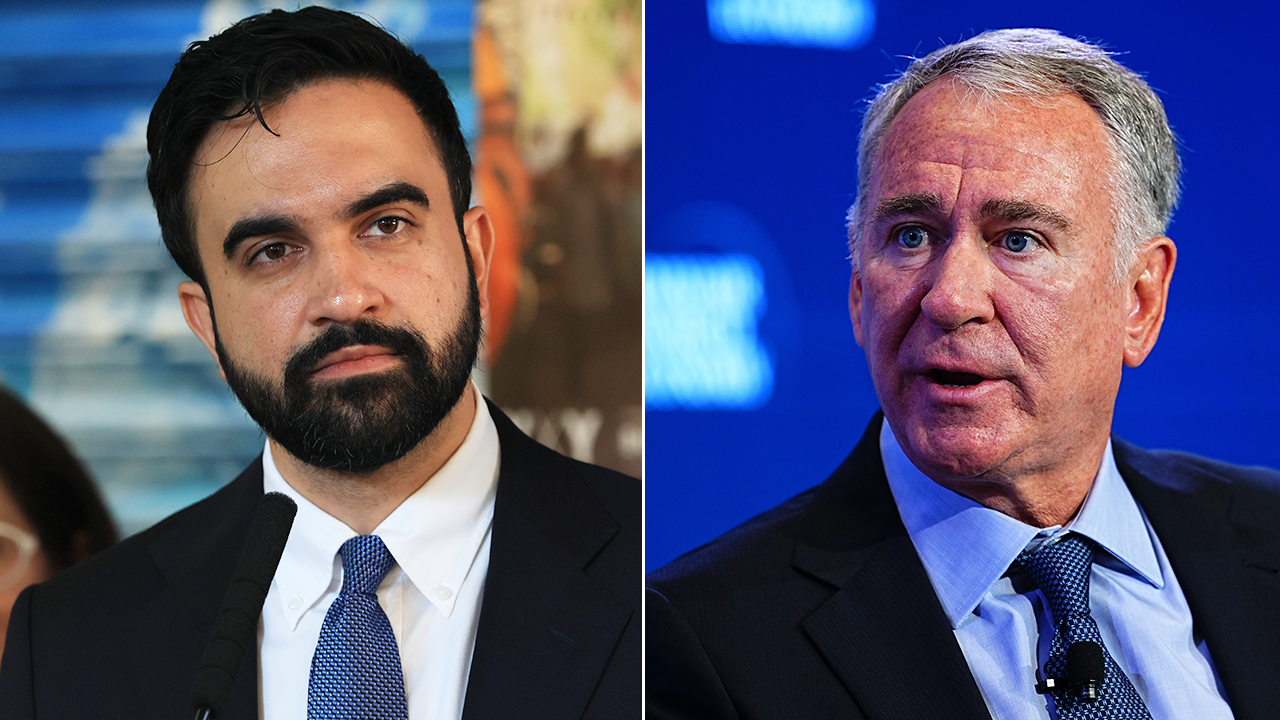
Citadel founder and CEO Ken Griffin described New York City Mayor Zohran Mamdani’s “tax the rich” video targeting him as a “creepy and weird” political advertisement.
Speaking at the Milken Conference in Los Angeles on Tuesday, Griffin said Mamdani’s “frightening” video reaffirmed his decision to “double down” on business in Miami.
“Mamdani has made it very clear—New York does not welcome success,” Griffin said during the panel.
MAMDANI’S CLASH WITH BILLIONAIRE PUTS NYC STREET FOOD VENDORS IN THE CROSSHAIRS
On April 15 (Tax Day), NYC Mayor Zohran Mamdani posted a video outside Ken Griffin’s Manhattan penthouse promoting a new “tax-the-rich” policy. (Spencer Platt/Aaron Schwartz/Bloomberg/Getty Images / Getty Images)
On April 15, Mamdani posted a video highlighting Griffin’s property while announcing a new pied-à-terre tax.
The video shows Mamdani—who has pledged to raise taxes on wealthy New Yorkers—standing outside Griffin’s 24,000-square-foot property. Griffin purchased the home in 2019 for $238 million, the most expensive residential sale in U.S. history.
“This is an annual fee on luxury properties worth more than $5 million whose owners do not live full-time in the city—like this penthouse, which hedge fund CEO Ken Griffin bought for $238 million,” Mamdani said while announcing the proposal.
Following the video, Citadel COO Gerald Beeson suggested that plans for the firm’s skyline project at 350 Park Avenue could be reconsidered.
NEW HAMPSHIRE GOVERNOR RECRUITS NYC BUSINESS OWNERS FLEEING MAMDANI ‘REGIME’

New York City Mayor Zohran Mamdani has previously criticized billionaires, including Ken Griffin, whom he recently thanked for supporting police. (Spencer Platt/Getty Images / Getty Images)
“We are about to commence the redevelopment of 350 Park Avenue, creating 6,000 highly paid construction jobs and supporting more than 15,000 permanent jobs in Midtown New York,” Beeson wrote in an April 23 memo to employees.
“The project—if we move forward—will involve more than $6 billion in spending,” he added.
Griffin said Tuesday that the project’s future remains “a point of discussion” within the company.
Mayor Mamdani’s office did not immediately return Fox Business’ request for comment.
Citadel is currently building a new headquarters in Miami. Griffin told the Milken audience that the tower’s design is being revised to “make it bigger,” adding that Florida’s leadership has demonstrated stronger support for pro-business policies.
Griffin, who founded Citadel and Citadel Securities, previously moved both firms from Chicago to Miami following the COVID-19 pandemic. He has frequently criticized leadership in Chicago and the broader state of Illinois.

Citadel Founder and CEO Ken Griffin called New York City Mayor Zohran Mamdani’s viral video singling out his Manhattan penthouse while announcing a new tax a “personal attack” and a “profound lack of judgment.” (Denis Balibouse/Reuters / Reuters)
On Tuesday, Griffin said his dispute with Mamdani is “triggering the trauma” he “experienced in Chicago.”
MAHER DEFENDS CAPITALISM AS BETTER THAN ‘REVERSE,’ CALLS OUT MAMDANI’S SOCIALIST BELIEFS
With an estimated net worth of $51 billion, Griffin ranks among the world’s 35 richest people. He has also said Mamdani’s video reflects a “profound lack of judgment.”
Speaking at the Norges Bank Investment Management 2026 Investment Conference in Oslo, Griffin criticized what he described as the “demonizing” of business leaders.
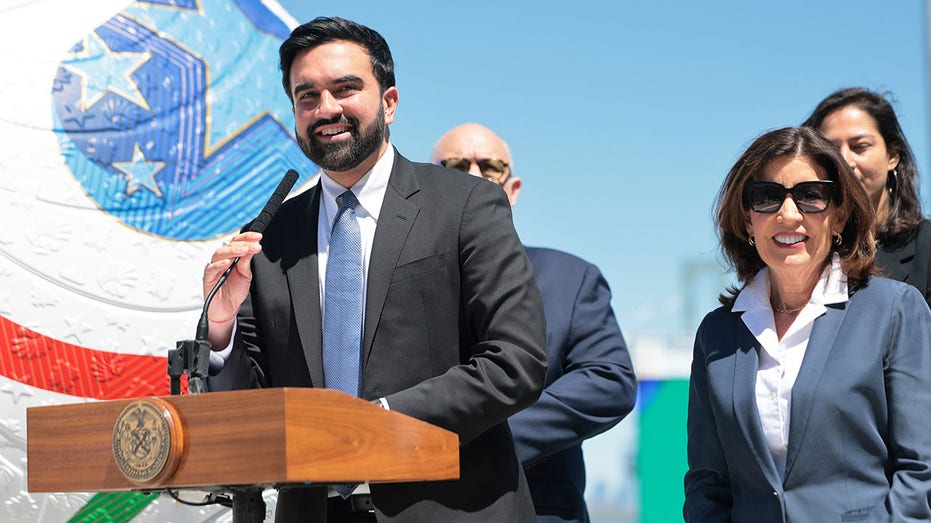
New York Mayor Zohran Mamdani speaks during a press conference at Staten Island University Hospital Community Park on April 27, 2026, in New York City. (Michael M. Santiago/Getty Images / Getty Images)
GET FOX BUSINESS ON THE GO BY CLICKING HERE
“What upset me was the personal attack,” Griffin said. “You were at the White House Correspondents’ Dinner on Saturday, where they tried to assassinate the president. Not far from where I live in New York is where the CEO of UnitedHealthcare was assassinated.”
FOX Business’ Louis Casiano contributed to this report.

MG ups its game as sleek IM6 takes on heavyweight rivals

AMC, Arena One to screen live concerts

CME Group to Launch Bitcoin Volatility Futures on June 1

Manchester United reach agreement with Casemiro over contract clause amid transfer speculation

US brings back mandatory military draft registration

Steven Gerrard disagrees with Gary Neville over ‘shock’ Chelsea and Arsenal claim | Football

The U.S. is Unknowingly Building Bitcoin’s Biggest On-Ramp!

#1 Leverage Analysis – Concept – Financial Management ~ B.COM / BBA / CMA

IRON CASH 3 (AKI & PAWPAW) – Nigerian Movies 2026 Latest Full Movies | OSITA IHEME, CHINEDU IKEDIEZE
-

 NewsBeat2 days ago
Channel 5 – All Creatures Great and Small series 7 new post
-
 Tech4 days ago
Trump’s 25% EU auto tariff breaches Turnberry Agreement that also covers semiconductors and digital trade
-
 Business6 days ago
Tesla Officially Registers Elon Musk’s Stock: What Investors Need to Know
-
 Sports4 days ago
Paul Scholes issues Marcus Rashford reality check as agreement emerges over Man United star
-

 Business7 days ago
Barclay Brothers Avoid Bankruptcy: HSBC Drops High Court Petitions After IVA Deal
-

 Entertainment4 days ago
Met Gala 2026 Rumored Guest List Is Turning Heads
-

 Entertainment6 days ago
Celebrities Who Are Attending the 2026 Met Gala Event
-
 Entertainment6 days ago
Insider Claims Reason Behind Key & Peele Split
-

 Tech6 days ago
Texas Instruments made a new flagship graphing calculator: the TI-84 Evo
-

 Crypto World6 days ago
Meta (META) starts stablecoin payout to creators in Circle’s USDC on Polygon, Solana via Stripe
-

 Business5 days ago
Two Powerball Tickets Split $143 Million Jackpot in Indiana and Kansas
-
 Business6 days ago
Strait of Hormuz Remains Heavily Restricted on April 29 Amid Iran Conflict
-
Business5 days ago
Strait of Hormuz Blockade Persists Amid US-Iran Standoff, Sending Oil Prices Soaring
-

 Entertainment4 days ago
Kylie Jenner Hit With Second Lawsuit From Ex-Housekeeper
-
Business2 days ago
Winning Numbers Drawn as Jackpot Resets to $20 Million
-

 Sports6 days ago
Saudi Arabia set to withdraw LIV Golf funding after 2026 season, per reports
-
 Crypto World5 days ago
CoreWeave (CRWV) Stock Climbs 8% Despite $45M Insider Share Dump
-
 Crypto World6 days ago
Securitize and Computershare Enable Tokenized Equity Issuance for Over 25,000 U.S.-Listed Stocks
-
 Sports4 days ago
Cavaliers vs. Raptors Game 6 live score, updates, highlights from 2026 NBA playoffs first-round series
-
 Sports4 days ago
David Benavidez responds to team Canelo saying the fight will never happen
You must be logged in to post a comment Login