









Connect with us
DAPA Banner
DAPA Coin
DAPA
COIN PAYMENT ASSET
PRIVACY · BLOCKDAG · HOMOMORPHIC ENCRYPTION · RUST
ElGamal Encrypted MINE DAPA
🚫 GENESIS SOLD OUT
DAPAPAY COMING

Business

Mia Hamm Voices Concerns Over FIFA’s Mandatory Hydration Breaks at 2026 World Cup

Published

on

Mia Hamm Voices Concerns Over FIFA's Mandatory Hydration Breaks at
Mia Hamm Voices Concerns Over FIFA’s Mandatory Hydration Breaks at 2026 World Cup

Former U.S. women’s national team star Mia Hamm has expressed reservations about FIFA’s decision to implement mandatory hydration breaks during all matches of the 2026 World Cup, citing potential disruptions to game momentum and tactical advantages for coaches.

Hamm, who led the United States to World Cup titles in 1991 and 1999, told USA TODAY that while she understands the league’s intentions, the three-minute breaks at the 22-minute mark of each half could alter the natural flow of matches. The two-time champion emphasized that soccer’s beauty lies in its continuous play and players’ ability to adapt during games.

The hydration breaks, previously used only in extreme heat conditions, represent a significant change for the expanded 48-team tournament being hosted across North America. FIFA’s decision aims to protect player health amid concerns about heat and physical demands.

Hamm noted that the breaks provide coaches with additional time to make tactical adjustments using technology like iPads and sideline communication. “It can be a momentum change for a lot of teams that are really going after teams,” she said. “Then all of a sudden you get a break and now these coaches have iPads on the sideline.”

Player and Coach Perspectives

Advertisement

The introduction of mandatory hydration breaks has generated mixed reactions throughout the tournament. Several players and coaches have questioned their necessity, particularly in matches played under moderate conditions.

Critics argue that the breaks interrupt game rhythm and provide unfair advantages for tactical adjustments. Supporters emphasize player welfare and the importance of preventing heat-related issues during intense competition.

Hamm acknowledged the importance of player safety while expressing preference for traditional match structure. “I just would rather them play 45 minutes with added time just through rather than cutting it short,” she said.

The U.S. women’s national team legend praised the current men’s team’s performance and spirit. “There’s no one who supports the men’s team stronger than the women’s national team players, both current [and] past,” Hamm said.

Advertisement

Tournament Context

The 2026 World Cup’s expanded format and North American venues have introduced various logistical and environmental considerations. Host cities have implemented measures to ensure player and fan safety during summer matches.

FIFA’s hydration policy reflects broader efforts to address player welfare in modern football. The organization has increasingly focused on medical protocols and match conditions in response to evolving scientific understanding.

The United States men’s national team has performed strongly in the group stage, advancing with positive results. Their success has boosted national interest in soccer and highlighted the sport’s growing popularity in America.

Advertisement

Historical Perspective on Player Welfare

Soccer governing bodies have gradually implemented changes to protect players from extreme conditions. Previous tournaments used hydration breaks selectively during particularly hot matches.

The mandatory application across all 2026 games represents a significant policy shift. FIFA’s decision balances player safety with maintaining competitive integrity and match flow.

Hamm’s perspective carries weight given her experience as a pioneering women’s player and advocate for athlete welfare. Her comments reflect the views of many who value soccer’s traditional continuous play.

Advertisement

Broader Implications for the Sport

The hydration break debate highlights ongoing discussions about balancing tradition with player safety in professional sports. Similar conversations occur across various athletic disciplines regarding rest periods and environmental conditions.

FIFA’s approach could influence other sports governing bodies considering similar measures. The policy’s effectiveness will be evaluated based on player health outcomes and match quality.

The 2026 World Cup’s focus on player welfare aligns with broader industry trends toward evidence-based approaches to athlete care. Scientific research continues informing decisions about training, recovery and competition conditions.

Advertisement

U.S. Soccer’s Growing Prominence

The strong performance of the U.S. men’s national team has generated excitement and increased visibility for American soccer. Their success demonstrates progress in player development and competitive infrastructure.

Hamm emphasized the interconnectedness of men’s and women’s programs. “We know how hard it is. We know the opportunity in front of them,” she said regarding the men’s team’s chances.

The co-hosting of the World Cup has accelerated soccer’s growth in the United States. Infrastructure improvements, youth participation and professional league development have all benefited from increased attention.

Advertisement

Looking Forward

As the tournament progresses into knockout stages, hydration breaks will continue being implemented. Their impact on match outcomes and player performance will be analyzed by coaches, players and medical staff.

FIFA may evaluate the policy’s effectiveness after the tournament concludes. Feedback from participants and observers could influence future decisions about match protocols.

The debate around hydration breaks reflects soccer’s ongoing evolution as a global sport. Balancing tradition, player welfare and competitive fairness remains an important consideration for governing bodies.

Advertisement

Hamm’s comments contribute to important discussions about the sport’s direction. Her perspective as a legendary player and advocate carries significant influence in shaping opinions about modern football practices.

The 2026 World Cup continues delivering memorable moments while prompting conversations about the game’s future. Player welfare, tactical innovation and competitive balance will remain central themes as the tournament advances.

Continue Reading
Click to comment

You must be logged in to post a comment Login

Leave a Reply

Business

Blue Moon Metals: Exciting For A Trade, Not A Hold

Published

on

TUNGSTEN (<a href=

Blue Moon Metals: Exciting For A Trade, Not A Hold

Continue Reading

Business

Amazon's AI Spending Is Building A Stronger Moat

Published

on

Amazon's AI Spending Is Building A Stronger Moat

Amazon's AI Spending Is Building A Stronger Moat

Continue Reading

Business

Caspian Sunrise delays 2025 results, faces trading suspension

Published

on


Caspian Sunrise delays 2025 results, faces trading suspension

Continue Reading

Business

Cognition Therapeutics: Clearer FDA Path, But Potential Dilution Risks Remain

Published

on

Cognition Therapeutics: Clearer FDA Path, But Potential Dilution Risks Remain

Cognition Therapeutics: Clearer FDA Path, But Potential Dilution Risks Remain

Continue Reading

Business

Unison Backs Ed Miliband for Chancellor Under a Burnham Government

Published

on

Unison Backs Ed Miliband for Chancellor Under a Burnham Government

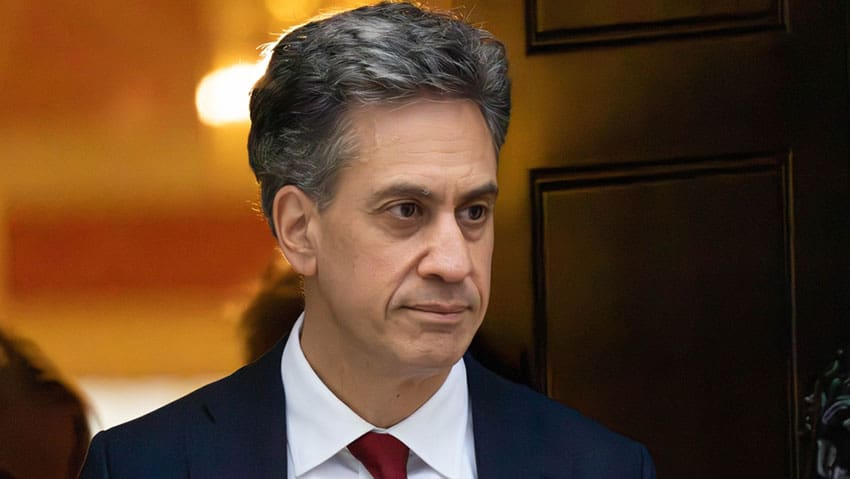
Britain’s largest trade union has thrown its weight behind Ed Miliband to become the next chancellor, a move that sharpens an increasingly bitter contest for control of the Treasury under a prospective Andy Burnham government.

Andrea Egan, general secretary of Unison, has backed the energy secretary as one of two frontrunners to replace Rachel Reeves in No 11. Her endorsement matters: Unison is the largest union in the country, with more than 1.3 million members concentrated in the public sector. Yet the support is far from unanimous across the movement, with two other big unions, GMB and Unite, lining up against him.

The jockeying between supporters of Miliband and his most likely rival, Wes Streeting, comes as Burnham prepares to deliver his first major policy speech since being elected as the MP for Makerfield. The former Greater Manchester mayor will set out his thinking on devolution and the economy in Manchester on Monday, but he is under mounting pressure to name his chancellor, a choice that investors, MPs, unions and business groups all regard as the single most consequential decision he will make in office. For business owners watching from the sidelines, the identity of the next occupant of No 11 will shape everything from the autumn Budget to the future ownership of Britain’s utilities. We have set out the runners and riders for the Treasury here.

Egan did not mince her words. “Andy Burnham has a historic opportunity to rebuild our country in the interests of workers and communities, but that chance will be squandered if his government is made up of politicians determined to continue the same failed approach,” she said.

“We need a chancellor who will rewire the economy and properly invest to improve the lives of the majority. Of those reported to be in the running, only Ed Miliband could enact the kinds of policies trade unions and our members urgently need.”

Advertisement

Burnham is assembling his inner circle of advisers and ministers, having entered the Commons only a week ago. Sir Keir Starmer’s announcement on Monday that he intends to resign as prime minister, swiftly followed by Streeting’s endorsement of Burnham, has made it overwhelmingly likely that the outgoing Manchester mayor will walk into No 10 as soon as next month.

Labour’s ruling national executive committee confirmed on Thursday that a new leader would be named on 17 July if only one candidate comes forward. Should a rival secure the backing of 81 Labour MPs and force a contest, the party will hold a full leadership election and declare the result on 29 August.

The new prime minister’s first appointment is already drawing fire. Burnham has chosen his former cabinet colleague and long-standing friend James Purnell as chief of staff, a decision that has irritated parts of the Labour left, who are wary of Purnell’s Blairite pedigree.

Attention has now turned squarely to who will run the Treasury, a brief that extends well beyond setting tax policy in this autumn’s Budget. The next chancellor will be charged with reigniting growth and overseeing the de-privatisation of some of Britain’s largest utilities, an agenda with direct consequences for investors and the wider business community.

Advertisement

The two leading contenders, Streeting and Miliband, hail from different wings of the party and would almost certainly pursue different priorities. Streeting, like Purnell, is a Blairite who, as health secretary, welcomed private sector involvement in the NHS. He is regarded as the more business-friendly option and the candidate most likely to reassure international investors, though some on the left worry he would be lukewarm on returning water and energy companies to public ownership.

Miliband, by contrast, is seen as more ideologically aligned with Burnham’s programme. But he has drawn anger from sections of both the unions and the business community over his approach to net zero. Some investors believe he would prove anti-business, pointing back to his time as Labour leader, when he drew a sharp line between companies he cast as “producers” and those he branded “predators”.

Unions with a strong presence in the North Sea oil industry have been exasperated by Miliband’s refusal to soften his pledge not to issue new exploration licences. They also fear he will decline to approve the Jackdaw and Rosebank megafields, even though waving them through would not technically breach that promise, since both already hold licences. The two projects, analysed in detail by the Institute for Government, have become a lightning rod in the wider argument over energy security and the pace of the transition.

One senior union official told the Financial Times on Thursday: “There are ongoing discussions to try to stop Ed Miliband. There is a GMB-Unite axis on this.”

Advertisement

Unison’s endorsement will strengthen Miliband’s standing within the labour movement, and he is not without other backers. Smaller unions, including the TSSA, are expected to issue similar messages of support in the coming days, while the National Education Union came out for him earlier on Thursday.

Even so, Miliband and Streeting are not the only names in the frame. Other possible candidates include Shabana Mahmood, the home secretary, Yvette Cooper, the foreign secretary, Pat McFadden, the work and pensions secretary, John Healey, the former defence secretary, and Jonathan Reynolds, the chief whip.

Allies of Reeves insist she would like to stay put, arguing she is best placed to keep markets calm while giving Burnham’s platform her full support. Her own appetite for the job has not gone unnoticed in the City, and her position has fed into a broader debate about fiscal devolution as Burnham eyes No 10.

Asked by the BBC on Wednesday about her chances of remaining in cabinet, Reeves said: “I’m not going to pre-empt the decisions that the new prime minister will make. I’m backing Andy and I think he’d be a great prime minister, but those are his decisions, not mine to make.”

Advertisement

She later told the British Chambers of Commerce annual conference: “I hope that whoever is chancellor in the future, whenever that future may be, sticks to what I’m doing. Because it is beginning to bear fruit, and we are seeing that investment return to the economy, that growth return to the economy, and crucially, that stability, so that businesses can plan and invest in the future.”

Allies of Burnham, however, are adamant that he will not keep her in place. For Britain’s businesses, the only certainty is that the answer is coming, and soon.


Paul Jones

Harvard alumni and former New York Times journalist. Editor of Business Matters for over 15 years, the UKs largest business magazine. I am also head of Capital Business Media’s automotive division working for clients such as Red Bull Racing, Honda, Aston Martin and Infiniti.

Advertisement

Continue Reading

Business

What’s happening to UK petrol and diesel prices now the US and Iran have a deal?

Published

on

Woman filling up her car with petrol

The RAC says it now costs £83.59 to fill up a 55-litre family car with petrol and £92.75 for diesel, However, this is still £10.50 and £14.40 respectively more than it did at the end of February before the conflict began.

The RAC’s head of policy, Simon Williams, said: “Fuel prices are falling steadily in reaction to the drop in the price of oil and wholesale petrol and diesel costs which is good news for drivers who’ve had a torrid time at the pumps this year.

“But our analysis of wholesale data shows the reduction should be faster and greater, particularly for diesel. Drivers really ought to see average prices of below 150p for unleaded and below 160p for diesel in the next week or so.”

Despite the conflict, petrol and diesel prices remained below the levels reached in the summer of 2022 following Russia’s invasion of Ukraine, when petrol reached 191.5p a litre and diesel hit 199p.

Advertisement

Because transporting oil is a slow process, price movements in the wholesale markets take about a fortnight to show at the pump.

Fuel retailers have denied accusations of price gouging during the conflict. The official markets regulator said it had “not seen evidence of retailers actively changing their pricing strategies to take advantage of the crisis”.

A government scheme called Fuel Finder, external lets drivers compare the cost of fuel offered by petrol stations across the UK.

Luke Bosdet, the head of policy at the AA, said the group had been surprised at the speed that prices had fallen and put it down to the scheme.

Advertisement

On 20 May Prime Minister Sir Keir Starmer said a planned 5p increase in fuel duty due in September would be postponed until 31 December because of the conflict.

Continue Reading

Business

How do you escape an overdraft?

Published

on

How do you escape an overdraft?

How do you escape an overdraft? Finance expert Ioan Bain explains

Continue Reading

Business

Okta's Agentic AI Monetization Overly Buoyed – Painful Correction Likely (Rating Downgrade)

Published

on

Okta's Agentic AI Monetization Overly Buoyed - Painful Correction Likely (Rating Downgrade)

Okta's Agentic AI Monetization Overly Buoyed – Painful Correction Likely (Rating Downgrade)

Continue Reading

Business

Jazz Pharmaceuticals: Why It's Time To Cash Out (Rating Downgrade)

Published

on

Jazz Pharmaceuticals: Why It's Time To Cash Out (Rating Downgrade)

Jazz Pharmaceuticals: Why It's Time To Cash Out (Rating Downgrade)

Continue Reading

Business

Tata Steel UK raise serious concerns at new steel quota and tariff regime

Published

on

Business Live

Its CEO Rajesh Nair says he is very concerned about the implications for the long-term competitiveness, sustainability, growth and future investment outlook for the UK steel sector.

Chief executive of Tata Steel UK Rajesh Nair.(Image: MONTY_RAKUSEN)

Tata Steel UK is warning that the domestic sector will continues to face major challenges despite a new quota and tariff regime on imported steel.

From July the UK Government will lower the tariff-free quota level for steel importers by 60% compared to current arrangements. This will double import taxes on steel coming into the UK above those levels from 25% to 50%.

Advertisement

It is part of the Westminster administration’ aim to ensure 50% of the steel used in the UK is made in the country, up from 30%.

Tata Steel UK said it has concerns over quota volumes in a number of product categories, including metallic coated steels , packaging steels and hollow sections. It said this will continue to allow significant import penetration and do not sufficiently reflect underlying UK market conditions or the pressures facing domestic steel producers.

Tata, as part of a £1.2bn investment, which includes £500m of backing from the UK Government, is building a new electric arc furnace at Port Talbot following the ending of heavy steel making last year with the closure of the site’s last blast furnace.

The arc furnace will make steel from scrap steel. It was scheduled to become operational last next year, but is now facing a delay of six to 12 months due to connection issues with the National Grid.

Advertisement

On the new tariff and quota regime, which will be reviewed after a year, Rajesh Nair, chief executive of India-owned Tata Steel UK said: ‘A sustainable domestic steel industry depends on a policy framework that supports investment, protects jobs and provides a level playing field for UK steel producers. Steel remains a strategically important foundational industry for the UK economy and wider manufacturing base.

‘We do not believe the final quota levels published reflect UK market conditions or the pressures facing the domestic steel industry. In several categories, the quota volumes continue to allow significant import penetration into strategically important UK steel markets, exposing domestic production and supply chains to continued pressure.

‘If the government’s ambition of building a sustainable steel industry capable of supplying 50% of UK demand is to be realised, quota arrangements will need to provide adequate support for domestic steel producers and support the long-term growth of the UK steel sector.

‘We are disappointed by elements of the final framework announced and we are very concerned about the implications for the long-term competitiveness, sustainability, growth and future investment outlook for the UK steel sector.

Advertisement

‘We expect the Government to reconsider aspects of the framework and continue working with the UK steel sector to ensure a level playing field that supports domestic production, protects employment and strengthens the wider UK manufacturing supply chain.

In a statement to the Commons earlier this week, trade minister and MP for Rhondda and Ogmore, Sir Chris Bryant told MPs: “Canada, the United States, and the European Union have already put in place similar toughened measures to protect their industries. So if we do nothing, or if we delay introducing new measures, we will immediately become the global dumping ground for cheap steel across the world. Again, I say that would mean the end of UK steel production.”

Sir Chris added: “The total quota volume will now be 3.2 million metric tonnes, that is an increase of over 560,000 metric tonnes of steel that can be imported tariff-free compared to the provisional volumes we announced, a significant 21% uplift.

“Having listened to members and to industry, we have increased the quotas in several instances, so as more accurately to protect categories of steel that are manufactured in the UK.

Advertisement

“Some of the changes reflect the fact that the European Union remains our largest export market for steel, and we have highly interconnected supply chains.”

Shadow business secretary Andrew Griffith warned the 50% tariff rate “will do great damage to British manufacturing, to housebuilders and those who construct the nation’s infrastructure”.

He welcomed “concessions” made by the government, but said concern remains over some steel import codes that are used by aerospace and space, arguing defence firms would face higher costs.

William Bain, head of trade policy at the British Chamber of Commerce, said: “These amendments are a welcome tilt towards the needs of the UK’s downstream steel users, employing 300,000 people in the UK.

Advertisement

“They were facing large additional import costs from next Wednesday and the quota changes, for downstream users in category one steel products in particular, will lessen the blow.

“Overall, the changes will reduce the proposed quota cuts from 60% to 51%, which aligns more closely with the EU’s plans. There is a significant increase in the previously proposed tariff free quotas to 3.2m tonnes. This is real move forward from the original proposals, particularly for category one products.

“But the government is walking a precarious tightrope in trying to balance the needs of steel producers and users and its hand has been forced by the actions of other global players.

“There will still be many losers. The government has committed to review these measures in a year’s time but should act more quickly if firms face severe financial distress. We will be speaking to firms in our network to gauge the impact these revised quotas will have on costs and jobs.

Advertisement

“If the pain is still felt to be too severe will be seeking further action on changes to the quotas and an extension to easements.

“Although the government has listened and addressed real business concerns, the dialogue must continue to be responsive to the needs of thousands of downstream steel firms.”

Continue Reading

Trending

Copyright © 2025
















