




Connect with us
DAPA Banner
DAPA Coin
DAPA
COIN PAYMENT ASSET
PRIVACY · BLOCKDAG · HOMOMORPHIC ENCRYPTION · RUST
ElGamal Encrypted MINE DAPA
🚫 GENESIS SOLD OUT
DAPAPAY COMING

Business

Miami ranks No. 1 in US return-to-office levels, surpassing Manhattan

Published

on

Miami ranks No. 1 in US return-to-office levels, surpassing Manhattan

While major metropolitan areas across the country continue to struggle with vacant office space, Florida’s pro-business climate is pushing office attendance above pre-pandemic levels.

According to recent data from Placer.ai’s monthly Office Index, Miami ranked as the leading major metro for return-to-office performance in June 2026, with estimated office visits surpassing 2019 levels.

Advertisement

Additionally, Miami secured the No. 1 position nationwide for post-pandemic return-to-office recovery in five of the last six months, with New York ranking second during those same periods.

“Miami leading the country in office attendance is a clear sign we’ve become a genuine second center of gravity for business and finance,” Blanca Commercial Real Estate founder and CEO Tere Blanca told Fox News Digital. “This is decades of investment in the region finally compounding, on top of companies giving employees a real say in where they want to build their careers.”

MIAMI’S COST OF LIVING NOW TOPS NEW YORK CITY’S DESPITE FLORIDA’S TAX ADVANTAGES

“Businesses initially come to Miami for the business-friendly environment and tax benefits Florida offers. Then they stay for the convenience of airport connectivity with so many domestic and international flights, talent they can hire locally or relocate here, and a quality of life that’s hard to match, including feeling safe,” she continued. “That’s what turns a visit into a lease, and a lease into a regional office, or in some cases, a full headquarters relocation.”

Advertisement
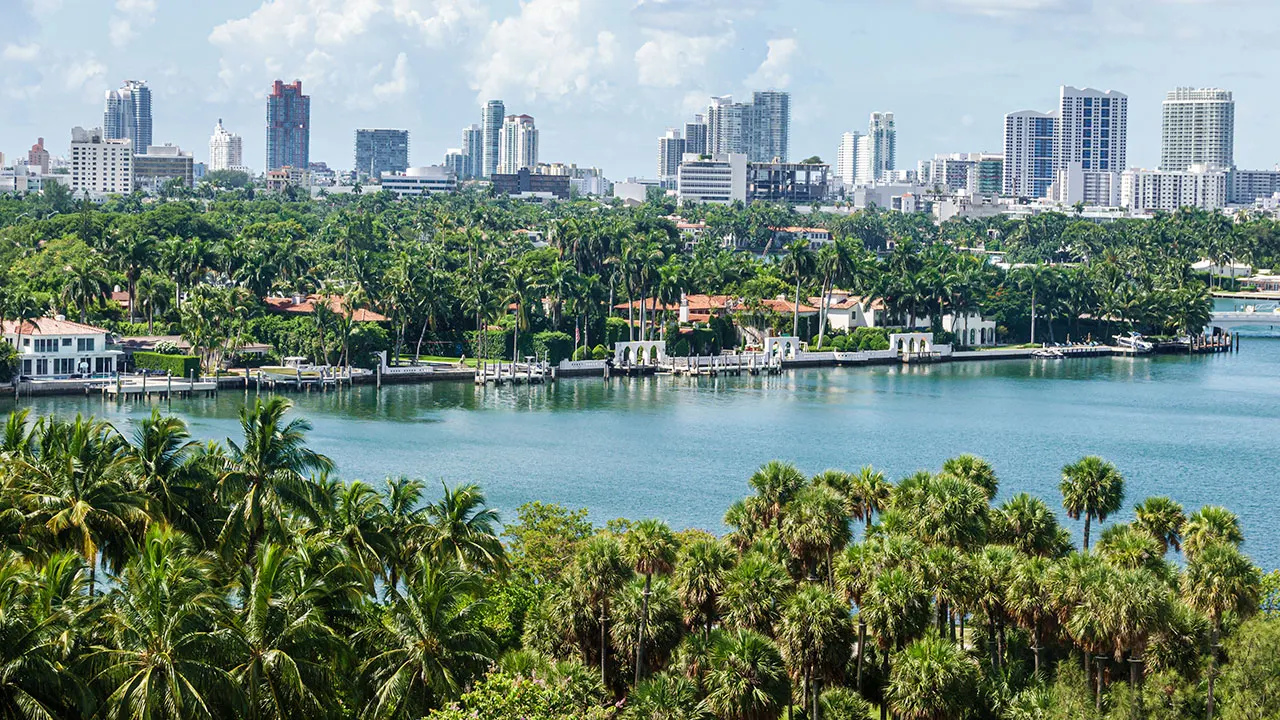
Miami office buildings with palm trees

Fresh data shows that Miami has outpaced New York City in return-to-office levels for the past five out of six months. (Getty Images)

Last week, Blanca Commercial Real Estate released its second-quarter Miami-Dade County Office Snapshot, noting that South Florida’s commercial real estate market continues to evolve from attracting initial corporate relocations to supporting companies’ expanded local presence.

The firm’s research found that companies including Amazon, Blackstone, IRU, and Simpro Group have expanded their commercial footprints in Miami since their initial entry into the market.

“Companies that landed here since 2020 are now doubling and tripling down. IRU is one of my favorite examples. The tech firm grew from a small sublease in Coconut Grove to more than 25 times its original footprint in under two years, after announcing Miami as its new East Coast headquarters,” Blanca told Fox News Digital.

Blanca CRE analysis also shows Miami’s premier submarkets are exhibiting structural characteristics similar to established Manhattan corridors, where locations like Park Avenue, Grand Central and Hudson Yards command asking rents from $90 to over $100 per square foot, with top trophy properties reaching $300 to $320 per square foot.

“Companies are also still in a flight to quality. If they’re asking people to come back to the office full time or on a hybrid schedule, they want space that feels like an upgrade from home,” she added, “and that’s why you’re starting to see our best buildings command rents that get compared to Park Avenue or Hudson Yards.”

The data shows that secondary Manhattan submarkets command asking rents in the $60s and $70s per square foot, aligning closely with Miami-Dade’s broader county average.

GET FOX BUSINESS ON THE GO BY CLICKING HERE

Advertisement

“It’s never been Miami versus New York. Even across the whole region, our Class A and B office market is a fraction of the size of what Manhattan has. It’s nowhere near the scale at which companies operate there,” Blanca said.

“Firms are clearly prioritizing real estate diversification right now, and that’s why we’re seeing more tours from New York companies looking for additional space down here. They want a presence in more than one city, not necessarily a full replacement for the one they already have. Miami is a complementary market, not a competing one. But based on what we’re seeing on the ground, I’ll just say this — keep watching, because more companies from New York are coming.”

READ MORE FROM FOX BUSINESS

Advertisement
Continue Reading
Click to comment

You must be logged in to post a comment Login

Leave a Reply

Business

Asustek Computer Shares Jump Nearly 3% as AI Server and AI PC Demand Fuels Ongoing Taiwan Tech Rally

Published

on

Samsung Unveils Three New Foldable Phones and Smart Glasses Ahead

TAIPEI — Shares of Asustek Computer climbed further Wednesday, extending a sharp rally that has pushed the Taiwanese electronics maker’s stock up dramatically this year on the strength of surging demand for artificial intelligence servers and AI-enabled personal computers.

Asustek shares, traded on the Taiwan Stock Exchange under ticker 2357, stood at 757.00 Taiwan dollars as of 1:30 p.m. local time Wednesday, up 21.00 Taiwan dollars, or 2.85%, on the day. The gain builds on a stretch of strong performance for the stock over the past several months, part of a broader rally across Taiwan’s technology sector tied to booming global investment in AI infrastructure.

A year of record growth

Asustek’s rally has been underpinned by genuinely strong underlying business results. The company reported record first-quarter 2026 brand revenue of roughly 194.05 billion Taiwan dollars, or about $6.19 billion, marking a 44% increase year-over-year, driven by surging AI server demand alongside stable notebook computer shipments. That performance has helped fuel a stock price that has climbed sharply over the trailing 12 months, with shares up around 69% over just the past month alone during one recent stretch of gains, according to market data.

Advertisement

The company’s 52-week trading range spans from 490.00 to 964.00 Taiwan dollars, illustrating just how volatile, and ultimately how strong, the stock’s performance has been over the past year as investor enthusiasm around AI infrastructure spending has intensified.

Betting big on AI servers

Asustek has positioned itself aggressively in the AI server market over the past year, forming partnerships with major chipmakers including Nvidia, Intel and AMD to build out a broad portfolio of AI infrastructure products. At the Computex trade show in Taipei this June, the company unveiled a range of new AI server systems built around Nvidia’s latest chip platforms, including servers powered by Nvidia’s HGX B300 platform designed for large-scale AI model training and inference, aimed at enterprises, cloud service providers, research institutions and universities running demanding computational workloads.

The company has also showcased liquid-cooled AI infrastructure built around Nvidia’s newer Rubin chip platform at Nvidia’s GTC conference this year, part of a broader strategy the company has described as delivering end-to-end AI factory capabilities spanning everything from data center infrastructure design to large-scale AI deployment.

Advertisement

Asustek co-CEO S.Y. Hsu has been explicit about the scale of the company’s ambitions in this space, saying earlier this year that the company is targeting a 100% growth rate for its AI server business in 2026. Hsu said it was “highly possible” that enterprise and commercial products, which include AI servers, would become the company’s highest revenue-generating segment, and said Asustek was aiming to begin mass production of Nvidia’s Vera Rubin servers within the year.

Expanding beyond servers into AI PCs and robotics

Asustek’s AI strategy has extended well beyond data center hardware. At Computex 2026, the company also unveiled its latest generation of AI-enabled consumer laptops and desktop computers, including new ProArt creator laptops built around Nvidia’s RTX Spark platform and featuring AI-powered software tools designed to optimize system performance for demanding creative workflows.

Company chairman Jonney Shih has described Asustek’s broader ambitions as extending beyond both servers and PCs into what he has called agentic AI, edge AI and physical AI, with the company treating humanoid robotics as a significant future market opportunity. Shih has said the company’s AI server shipments have continued to surge even amid broader industry memory chip shortages that have complicated component sourcing across the electronics sector.

Advertisement

A dividend-paying, analyst-favored stock

Beyond its AI-driven growth story, Asustek has maintained a reputation among investors as a steady dividend payer, with a trailing dividend yield of roughly 6% based on the past 12 months of payouts. The stock currently carries a consensus analyst recommendation of Buy, with average 12-month price targets ranging as high as 1,200 Taiwan dollars, well above current trading levels, reflecting continued analyst optimism about the company’s AI-driven growth trajectory.

Founded in 1989 and headquartered in Taipei, Asustek researches, designs, manufactures and sells a broad range of computing and electronics products globally, including laptops, desktop computers, motherboards, graphics cards, networking equipment, servers and mobile accessories, distributed under the ASUS brand across markets including the United States, Canada, Asia, Europe and Africa.

Part of a broader Taiwan tech rally

Advertisement

Wednesday’s gains for Asustek come amid a broader rally across Taiwan’s technology sector, which has benefited significantly from global enthusiasm around AI infrastructure spending this year. Semiconductor and hardware companies across the island have seen substantial stock price appreciation as major technology companies worldwide continue to pour capital into AI data center buildouts, a trend that has lifted shares of chipmakers, server manufacturers and component suppliers across the region.

Asustek is scheduled to release its next quarterly earnings report on Aug. 12, which will offer investors a more detailed look at whether the company’s AI server and AI PC businesses have continued to deliver the kind of growth reflected in its record first-quarter results. Given how closely the stock’s recent performance has tracked broader sentiment around AI infrastructure spending, any signals from that report about order backlogs, margins or production capacity, particularly around the company’s push into Nvidia’s newest Rubin chip platform, are likely to remain a key focus for investors watching whether Asustek’s rally can continue in the months ahead.

Continue Reading

Business

Atmos Energy: Visible Growth Instills Confidence

Published

on

Mid-Year 2026 Market Outlook: Oil, Gold, And Copper

Atmos Energy: Visible Growth Instills Confidence

Continue Reading

Business

US FDA continues investigating Taylor Farms as cyclosporiasis cases mount (July 20)

Published

on


US FDA continues investigating Taylor Farms as cyclosporiasis cases mount (July 20)

Continue Reading

Business

CVS Pharmacy begins filling pet prescriptions at 9,000 stores nationwide

Published

on

CVS Pharmacy begins filling pet prescriptions at 9,000 stores nationwide

CVS Pharmacy is expanding into pet health care by allowing customers to fill common prescriptions for dogs and cats at roughly 9,000 locations nationwide.

The pharmacy chain said pet owners can obtain select medications, including antibiotics, allergy treatments, flea and tick control products, insulin and pain relievers.

Advertisement

Customers can bring a written prescription to a CVS Pharmacy location or ask their veterinarian to contact the pharmacy directly. Eligible prescriptions may also be available for delivery.

The expansion gives pet owners another option beyond veterinary offices, online pet pharmacies and specialty retailers, particularly when filling recurring prescriptions for animals undergoing ongoing treatment.

PETSMART’S ONLY SAN FRANCISCO STORE SET TO CLOSE AS ONLINE SHOPPING AND SAME-DAY DELIVERY RESHAPE PET RETAIL

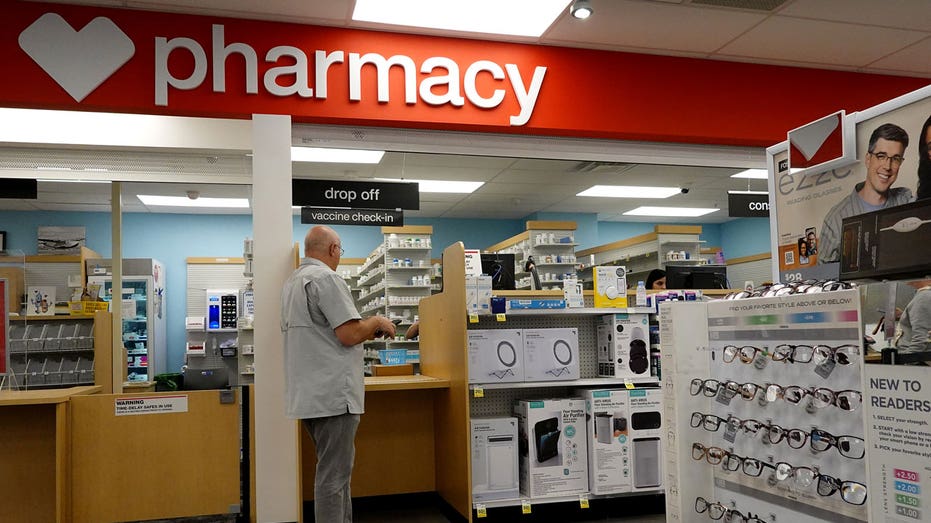
A man stands at the pharmacy counter at CVS Pharmacy

The expansion gives pet owners another option beyond veterinary offices, online pet pharmacies and specialty retailers. (Joe Raedle/Getty Images)

CVS said eligible pet prescriptions will qualify for some of the same services available for human medications, including automatic refills and prescription synchronization.

Advertisement

Pet owners can also add their animals to CVS.com profiles and manage eligible prescriptions through the CVS Health app. The company said electronic prescribing capabilities for veterinarians are expected to become available in the coming months.

Ticker Security Last Change Change %
CVS CVS HEALTH CORP. 108.94 -1.61 -1.46%

“With the addition of pet medication dispensing, CVS Pharmacy can now serve every member of the family,” Sid Tenneti, CVS Health’s senior vice president and interim president of pharmacy and consumer wellness, said in a statement.

POPULAR PET FOOD RECALLED OVER POSSIBLE SHARP METAL AND PLASTIC CONTAMINATION

CVS has also expanded the selection of pet food, grooming and wellness products available in its stores and online. Its offerings include flea and tick products, dental treats, toys, grooming tools, cat litter and training pads.

Advertisement
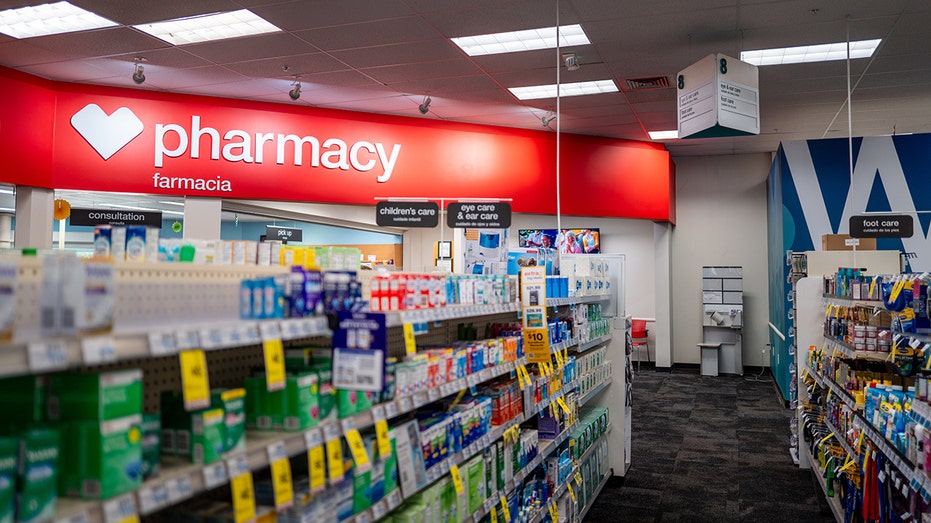
exterior of a CVS pharmacy

CVS has also expanded the selection of pet food, grooming and wellness products available in its stores and online. (Brandon Bell/Getty Images)

The company did not disclose how much it expects the prescription service to contribute to sales.

CLICK HERE TO GET FOX BUSINESS ON THE GO

CVS Health operates approximately 9,000 retail pharmacy locations and more than 1,000 walk-in and primary care clinics.

Advertisement
Continue Reading

Business

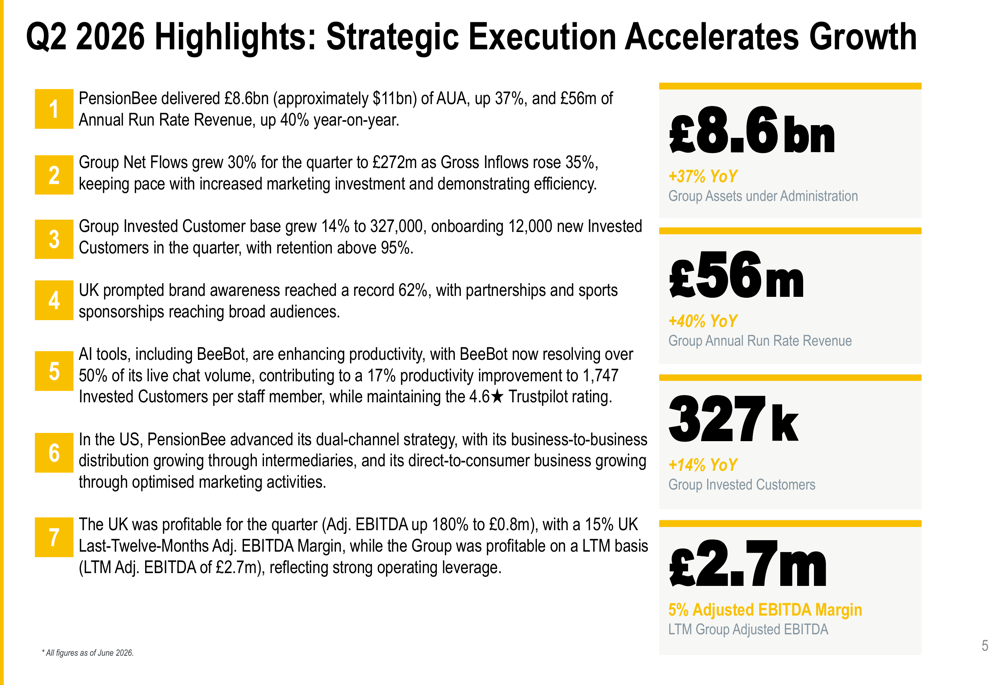
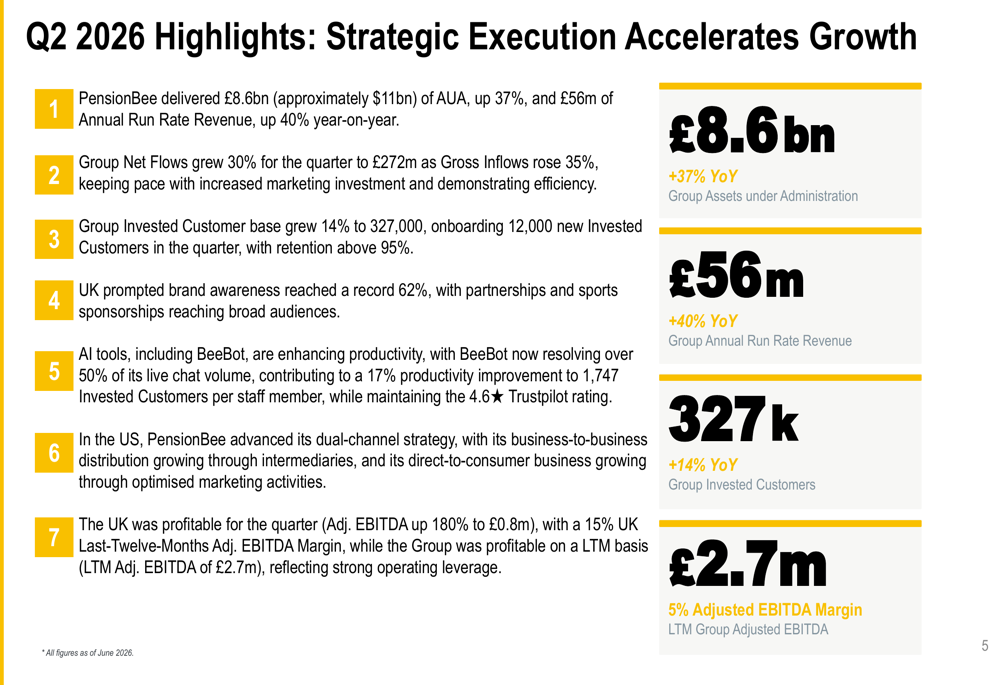
PensionBee Q2 2026 slides: UK turns profitable amid 37% AUA growth

Published

on

PensionBee Q2 2026 slides: UK turns profitable amid 37% AUA growth


PensionBee Q2 2026 slides: UK turns profitable amid 37% AUA growth

Continue Reading

Business

Building consultancy Black Cat seals multimillion-pound BGF investment deal

Published

on

Business Live

‘In the last decade, the business has gone from strength to strength’

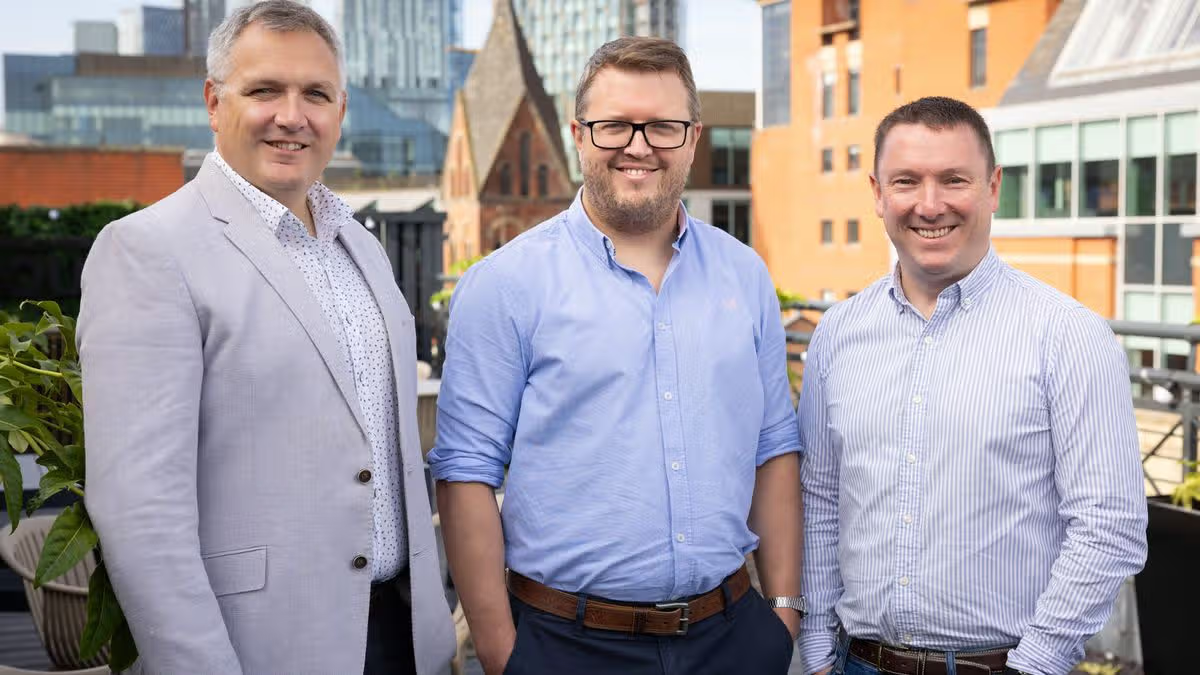
Black Cat Building Consultancy founders, left to right: Stephen Barnes, James Dyson and Ben Golby.

Black Cat Building Consultancy founders, left to right: Stephen Barnes, James Dyson and Ben Golby.(Image: Darren Robinson Photography)

Construction specialist Black Cat is geared up for growth after sealing a multimillion-pound investment. The Manchester-based commercial project and building consultancy has secured the investment from BGF – the UK and Ireland’s most active growth capital investor – to support its ambitious growth plans.

Founded in 2015, Black Cat has grown to become one of the UK’s leading independent building consultancies, working across commercial, industrial, retail and public sector property. It specialises in services including building surveying, design, rating, mechanical and electrical, compliance and project management, with projects managed totalling more than £734 million and spanning 83 million sqft.

The company, which has 10 UK offices, now has 91 employees and was named the Best Medium-Sized Place to Work in the Building & Construction Industry in The Sunday Times Best Places to Work 2026.

Now the sizeable investment from BGF will allow Black Cat to ramp up expansion into new locations across the UK and Ireland, while growing its workforce and enhancing client services.

Advertisement

As part of the deal, Ian Plumb will join Black Cat as non-executive chair from BGF’s Talent Network. Ian is a highly regarded non-executive director who has worked across several BGF portfolio businesses, including Emma Bridgewater and North West-based Evoke Creative, to drive strategic growth.

The deal was led by Josh Bean and Emma Cassidy – investors in BGF’s North West team.

Ben Golby founder and director at Black Cat, said: “In the last decade, the business has gone from strength to strength. Not only have we grown year on year, but we have challenged some of the larger players in the sector, built a uniquely transparent and very rewarding workplace, and won significant market share.

“In order to build on that momentum and increase our footprint in diverse markets, we needed an investor to take a patient and long-term approach to growth. BGF stood out as the ideal partner, and we’re delighted to have them onboard as we expand across the country.”

Advertisement

Last year, BGF announced a £3bn commitment to support high-potential companies across the UK over the next five years. This includes £400m for businesses in the North West, building on the £596m already invested in the region since 2011.

Josh Bean, Investor at BGF, added: “Since 2015, Black Cat has created a people-first business, disrupting the commercial property market through its transparent approach. This formula has attracted some of the best talent in the market and enabled the business to make a tangible impact on both the commercial property market and in the regional hubs where it has a presence.

“We look forward to working with founders Ben, James and Stephen, as they continue leading Black Cat on its impressive growth journey.”

Like this story? For more deals news you can visit our dedicated page for the latest news and analysis here.

Advertisement
Continue Reading

Business

(VIDEO) Samsung Unveils Three New Foldable Phones and Smart Glasses Ahead of Apple’s Rumored September Debut

Published

on

iPhone 18 Pro

LONDON — Samsung Electronics unveiled a revamped foldable phone lineup Wednesday, introducing three new devices at a launch event in London as the South Korean tech giant looks to defend its lead in a product category it helped pioneer, just weeks ahead of Apple’s expected entry into the foldable market.

The lineup includes the Galaxy Z Fold 8, a new model with a shorter, wider form factor; the Galaxy Z Fold 8 Ultra, a more traditional tall book-style foldable aimed at productivity users; and the Galaxy Z Flip 8, the company’s clamshell-style device. All three phones were announced at Samsung’s Galaxy Unpacked event and are available for preorder starting Wednesday, with a full launch set for Aug. 7.

A reshuffled lineup and higher prices

Advertisement

This year’s release marks a notable shift in Samsung’s foldable strategy. Rather than releasing a single Fold model alongside a Flip, as it has in years past, Samsung introduced two distinct Fold variants for the first time. The Galaxy Z Fold 8 Ultra continues the familiar tall, narrow form factor associated with previous Fold generations, while the new Galaxy Z Fold 8 adopts a shorter, wider design that Samsung says is built primarily for consuming video content, browsing social media and gaming.

The pricing also reflects an increase compared with previous years. The Galaxy Z Fold 8 starts at $1,899, the Galaxy Z Fold 8 Ultra starts at $2,099, and the Galaxy Z Flip 8 starts at $1,199. Samsung has attributed the higher prices in part to rising memory chip costs affecting the broader smartphone industry this year.

What sets the two Fold models apart

Advertisement

Beyond their differing aspect ratios, the two Fold devices carry several other distinctions. The Galaxy Z Fold 8 features a 5.5-inch front cover screen and a 7.6-inch main internal display, while the Galaxy Z Fold 8 Ultra offers a larger 6.5-inch cover screen and an 8-inch internal display. Samsung has positioned the Fold 8 Ultra as its most advanced foldable to date, describing it in its own announcement using that exact phrase, and touting it as the slimmest foldable the company has ever produced, measuring just 4.1 millimeters thick when unfolded.

That slimness comes courtesy of a new “Flex Titanium” display backing, which replaces plastic components with titanium in much of the display’s support structure, a change Samsung says improves durability and significantly reduces the visibility of the device’s center crease compared with earlier Fold generations. The Fold 8 Ultra’s outer display also gets a peak brightness increase to 3,000 nits and an upgrade to Gorilla Glass Ceramic 3 for added durability.

Camera hardware also differs between the two models. The Fold 8 Ultra includes a three-lens setup with wide, telephoto and ultra-wide-angle cameras, while the standard Fold 8 offers only wide-angle and ultra-wide-angle lenses, lacking the Ultra’s telephoto zoom capability. Both phones run on Qualcomm’s Snapdragon 8 Elite Gen 5 processor and ship with Samsung’s Galaxy AI features alongside Google’s Gemini AI assistant built in.

The return of a fan favorite

Advertisement

Rounding out the lineup, the Galaxy Z Flip 8 brings a slimmer redesign to Samsung’s clamshell foldable line. The device features a 4.1-inch external cover screen for checking notifications without fully opening the phone, along with a larger 6.9-inch main interior display. Samsung has also introduced a “Horizon Lock” feature aimed at smoothing out video captured while the phone is used in a hands-free, tabletop recording mode, along with an upgraded “Flex Window” experience powered by the company’s latest software, One UI 9.

A broader wearables push

Alongside its new phones, Samsung also refreshed its smartwatch lineup at Wednesday’s event, introducing the Galaxy Watch 9 and Galaxy Watch Ultra 2. The company additionally debuted its first smart glasses, developed in partnership with eyewear brands Warby Parker and Gentle Monster, marking Samsung’s initial entry into the increasingly competitive smart glasses category.

Racing Apple to market

Advertisement

Samsung’s latest foldable lineup arrives roughly two months before Apple is widely expected to launch its own first foldable iPhone in September. According to Bloomberg’s Mark Gurman, Apple’s device is likely to be priced above $2,000, putting it in direct competition with Samsung’s higher-end offerings once it becomes available.

Samsung currently dominates the global foldable smartphone market, with Counterpoint Research estimating the company captured roughly 40% of global foldable sales in 2025, ahead of Chinese rival Huawei at 30%. Industry analysts widely expect that landscape to shift once Apple enters the category, given the company’s scale and brand loyalty among existing iPhone users who have so far had no foldable option within Apple’s own ecosystem.

A preview of the standard Fold

Reflecting on a hands-on preview of the devices, one technology reporter who tested the new Fold 8 said the shorter, wider model offered a genuinely distinct experience from its taller sibling, describing a preference for its unique proportions despite it representing a departure from Samsung’s traditional Fold design. Notably, that reporter also observed that the new Fold 8’s design bears some resemblance to early leaks depicting Apple’s upcoming foldable iPhone, a similarity that could add another layer of comparison once Apple’s device becomes official later this year.

Advertisement

With preorders now open and a full retail launch scheduled for Aug. 7, Samsung’s latest foldable lineup sets the stage for what is expected to be one of the most closely watched product rivalries in the smartphone industry this year. Whether Samsung can maintain its market lead once Apple formally enters the foldable category in September remains an open question, one that industry analysts, and rival engineers, are likely to be watching closely as both companies’ devices reach consumers within weeks of each other.

Continue Reading

Business

Senior Chinese leader Wang Huning tours Tibet, stresses ethnic unity, stability

Published

on


Senior Chinese leader Wang Huning tours Tibet, stresses ethnic unity, stability

Continue Reading

Business

Foodservice flavor trends

Published

on

Foodservice flavor trends

Restaurant operators demonstrate how internationally inspired cuisine provides a gateway to experimentation.

Continue Reading

Business

Alphabet expands Miami office amid California billionaire tax push

Published

on

5 states weigh measures to ease or eliminate property taxes for homeowners

Google reportedly expanded its office presence in Miami this year after two of its co-founders purchased houses in South Florida.

Alphabet, the parent company of Google, signed a lease expanding its existing 10,000-square-foot satellite office in Miami’s financial district by an additional 45,000 square feet, two people familiar with the matter told Bloomberg News.

Advertisement

The outlet reported that the expansion was driven in part by the recent home purchases in the area by Google co-founders Larry Page and Sergey Brin – two billionaires who have bought homes outside of California and relocated business entities out of the Golden State as voters weigh a billionaire tax on this fall’s ballot.

Google first opened an office in Miami in 2016 and the expansion will increase its presence in Florida – though the South Florida office remains much smaller than the corporate headquarters at its Mountain View campus in California, which has over 10 million square feet of space, and its 1.7 million-square-foot Hudson Square campus in New York.

GOOGLE CO-FOUNDER RIPS CALIFORNIA BILLIONAIRE TAX: ‘I FLED SOCIALISM’

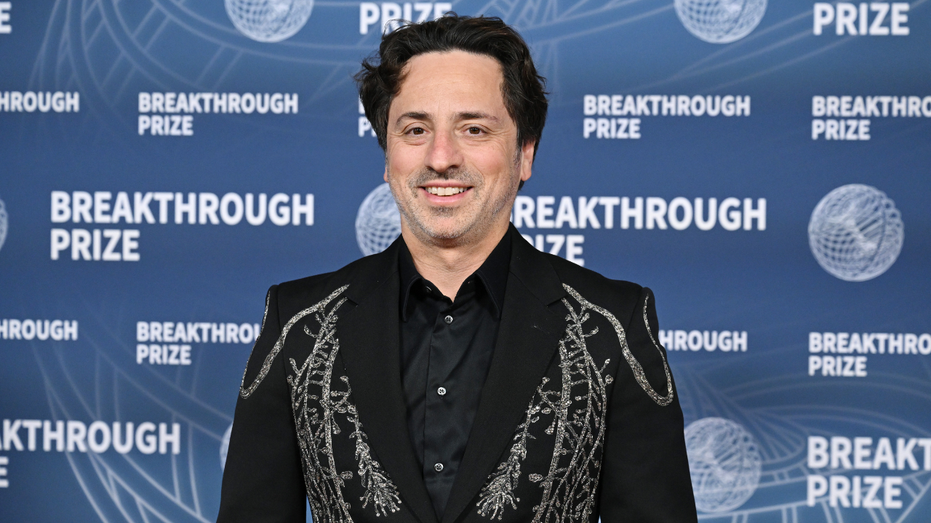
Sergey Brin

Google co-founder Sergey Brin bought property in South Florida. (Gilbert Flores/Variety via Getty Images)

Page and Brin left their roles as executives in 2019 but remain on Google’s board. Brin has reportedly taken an active role in shaping the company’s initiatives around artificial intelligence (AI).

Advertisement

A report from earlier this year by the Wall Street Journal noted that Page bought a waterfront compound for $101.5 million in December as well as a nearby home for $71.9 million, which he bought in early January, while Brin was reportedly closing in on a purchase at that time as well.

Bloomberg’s report said that Brin bought a $51 million waterfront home in Miami Beach shortly after Page’s purchase.

LARRY PAGE DROPS $173M ON MIAMI MANSIONS AMID CALIFORNIA BILLIONAIRE EXODUS TREND AS WEALTH TAX LOOMS

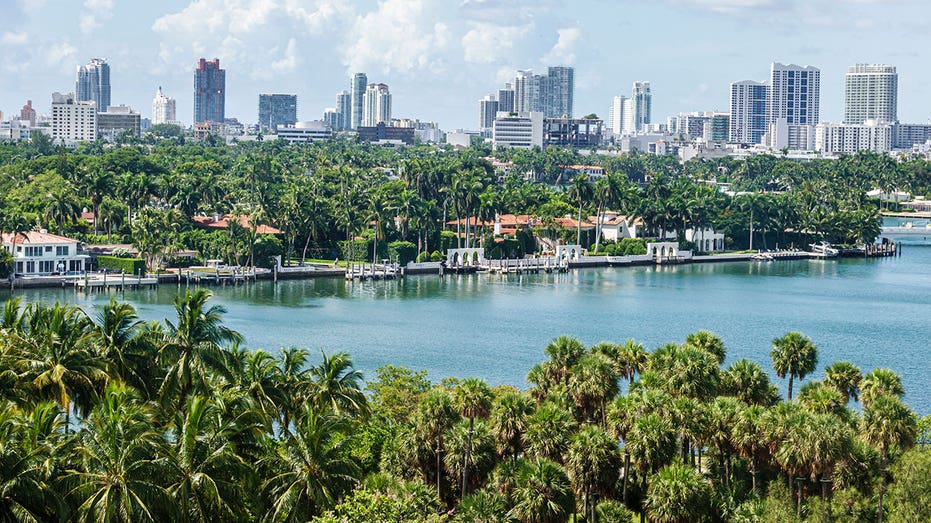
A view of Miami.

Google’s office is located in Miami’s financial district. (Jeffrey Greenberg/UCG/Universal Images Group via Getty Images)

Brin was also linked to the purchase of a $42 million mansion on the Nevada side of Lake Tahoe in December.

Advertisement

The moves occurred as California voters will vote on a proposed one-time wealth tax on billionaires this November.

The proposed constitutional amendment would levy a one-time, 5% wealth tax on taxpayers and trusts with over $1 billion in covered assets for the purpose of funding the state’s healthcare and food assistance programs, as well as public education.

GOOGLE CO-FOUNDER SERGEY BRIN JOINS CALIFORNIA EXODUS: REPORT

Ticker Security Last Change Change %
GOOGL ALPHABET INC. 348.35 +1.20 +0.35%

Assets covered by the tax would include businesses, securities, art, collectibles, and intellectual property – though real property, pensions and certain retirement accounts would be exempt.

Advertisement

If passed, the tax would apply retroactively to taxpayers who lived in California as of Jan. 1, 2026, with the tax due with 2027 tax filings.

Taxpayers could pay the tax in five equal installments, with subsequent payments subject to an annual deferral charge of 7.5% of the balance that remains unpaid.

GET FOX BUSINESS ON THE GO BY CLICKING HERE

Advertisement
Continue Reading

Trending

Copyright © 2025