Connect with us
DAPA Banner
DAPA Coin
DAPA
COIN PAYMENT ASSET
PRIVACY · BLOCKDAG · HOMOMORPHIC ENCRYPTION · RUST
ElGamal Encrypted MINE DAPA
🚫 GENESIS SOLD OUT
DAPAPAY COMING

Business

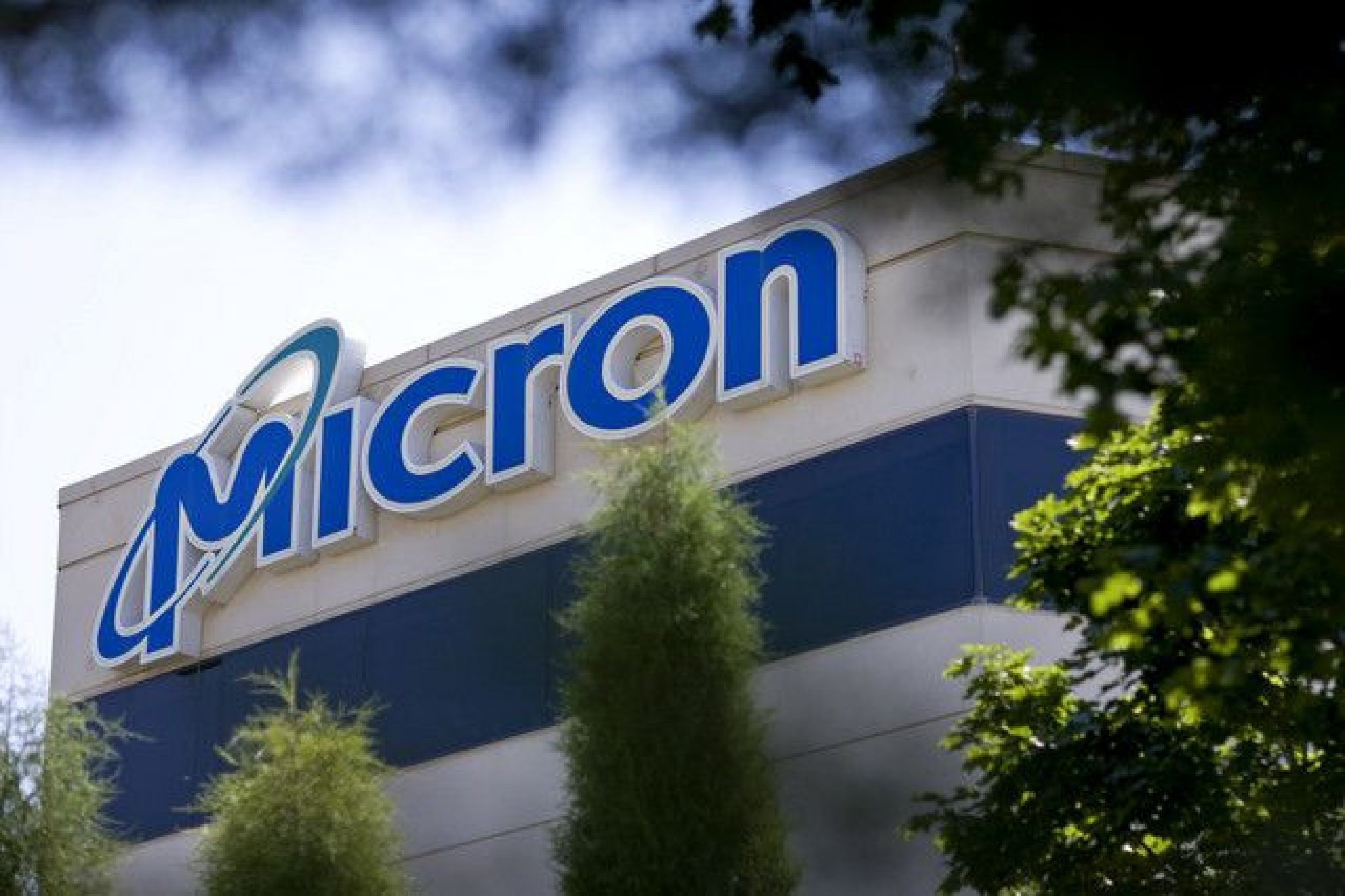
Micron Technology Shares Fall 3.2% to $875 as Memory Chip Stocks Extend Their Steep Multi-Day Selloff

Published

on

Earnings News: Micron Technology Inc (NASDAQ: MU)

Shares of Micron Technology fell another 3.2%, or $28.90, to $875.38 on Thursday morning, extending a punishing stretch for the memory chipmaker that has now wiped out more than a quarter of its value from the record highs it reached earlier this year.

Thursday’s decline followed an even steeper drop Wednesday, when Micron shares tumbled 8.02%, falling from $983.12 to $904.28 in a session that saw the stock swing nearly 12% between its intraday low of $873.63 and high of $978.40. Trading volume surged alongside the losses, with roughly 54 million shares changing hands Wednesday, well above the company’s average daily volume of about 44 million shares, a signal that some analysts flagged as a sign of elevated risk in the stock’s near-term trajectory.

The stock has now fallen in six of its last ten trading sessions, a stretch that has produced a cumulative decline of more than 21% over that period. Micron shares remain down roughly 30% from the 52-week high of $1,255 they touched earlier this year, even as the stock trades well above its 52-week low of $103.38 and remains up sharply over the past 12 months, reflecting the extraordinary volatility that has characterized the memory chip sector throughout 2026.

Several factors have converged to pressure Micron and its peers across the memory chip industry in recent sessions. Chinese memory chip maker ChangXin Memory Technologies, known as CXMT, announced plans for an $8.5 billion initial public offering, a development that has intensified investor concerns about rising competition from Chinese rivals in a market Micron has long dominated alongside South Korea’s Samsung Electronics and SK Hynix. At the same time, reports have circulated that the U.S. government is considering new export restrictions on high-bandwidth memory products, adding another layer of uncertainty for a company that has increasingly relied on HBM chips to supply the artificial intelligence data center buildout.

Advertisement

Broader worries about cooling demand in the personal computing and mobile device markets have also weighed on sentiment, with some analysts revising earnings forecasts downward amid concerns about reduced capital expenditure plans and general macroeconomic uncertainty across the technology sector. The pullback in Micron shares this week has coincided with a broader retreat across the memory chip complex, including sharp declines in SanDisk, Western Digital and South Korea’s SK Hynix, as investors have grown more cautious about the sustainability of the current AI-driven memory upcycle after a period of extraordinary gains.

The selloff has not been confined to the United States. South Korea’s central bank raised its benchmark interest rate this week for the first time since January 2023, a move that triggered a sharp selloff in the country’s stock market, with the Kospi index tumbling and both Samsung Electronics and SK Hynix posting steep declines. That regional weakness has continued to spill into U.S. trading, reinforcing the pressure on Micron shares as investors globally reassess valuations across the memory and broader semiconductor sector.

Despite the recent slide, Wall Street’s overall view of Micron remains notably bullish. According to data compiled by stock analysis platforms, the average 12-month price target among analysts covering Micron sits above $1,460, implying substantial upside from current levels, with the average rating characterized as “Strong Buy.” KeyBanc Capital Markets analyst John Vinh, who visited Asia to assess conditions across the technology supply chain, raised his price target on Micron to $1,750 following that trip, one of the more bullish calls on the stock heading into the recent pullback.

Analysts at Barclays have also pointed to Micron and SK Hynix as two AI memory stocks that could see substantial further gains, citing continued strength in underlying demand for high-bandwidth memory products used in artificial intelligence infrastructure. Micron’s most recent quarterly results, reported for the period ended in late May, showed revenue rising 346% year-over-year to $41 billion, easily beating both revenue and earnings guidance, with non-GAAP gross margin climbing to 85% from 39% a year earlier. The company’s guidance at the time implied continued growth and margin expansion in the quarters ahead, underscoring the disconnect between Micron’s recent operating performance and the sharp pullback in its share price.

Advertisement

Not all analysts share that optimism, however. Some market commentators have cautioned that Micron’s stock has become one of the more speculative names trading in the current environment, with billionaire investor Warren Buffett recently warning more broadly that the stock market has increasingly been shaped by speculative trading rather than long-term investing, a dynamic some observers have specifically tied to the erratic price swings seen in Micron shares in recent weeks.

Technical indicators on Micron shares have also turned more cautious in recent sessions. The stock has shown sell signals from both its short- and long-term moving averages, according to technical analysis platforms, with resistance levels identified in the range of roughly $955 to $1,012 that would need to be reclaimed to reverse the current bearish trend. A sell signal first triggered in late June has been followed by a decline of more than 25% in the stock through Thursday’s session.

Micron’s next scheduled earnings report is expected in late September, leaving investors with several weeks to assess how the current mix of geopolitical risk, competitive pressure from Chinese manufacturers and shifting sentiment around AI infrastructure spending will play out before the company’s next opportunity to update its outlook. In the meantime, Micron executives are scheduled to participate in the KeyBanc Capital Markets Technology Leadership Forum, an appearance that could offer investors additional insight into the company’s near-term demand trends and capital spending plans as the memory chip sector continues to navigate one of its more turbulent stretches of the year.

Advertisement
Continue Reading
Click to comment

You must be logged in to post a comment Login

Leave a Reply

Business

MLB Now Effectively Bans Teams From Using Generative AI on Dugout iPads to Shape In-Game Strategy Calls

Published

on

Cody Bellinger LA Dodgers

Major League Baseball has effectively outlawed the use of generative artificial intelligence on the league-issued iPads teams keep in their dugouts during games, cracking down on a practice that had increasingly crept into how some clubs made real-time decisions on the field.

The league notified all 30 teams of the new restriction in a memo from the commissioner’s office dated June 11, according to reporting from Eno Sarris of The Athletic, which first broke the news of the policy change. The ban officially took full effect on Wednesday, timed to coincide with the resumption of play following this year’s All-Star break, giving teams roughly a month to adjust before the restriction was fully enforced.

According to the commissioner’s office memo, teams had been installing custom applications on the dugout iPads that pushed the devices well beyond their originally intended purpose. Rather than simply serving as tools for reviewing performance data and video, the memo said, the iPads in many cases had been repurposed to generate live recommendations on substitutions, pitch calling and other in-game decisions that have traditionally been made directly by players and coaches rather than software.

Sources with knowledge of the situation told The Athletic that as many as one-third of MLB’s 30 teams had been using the dugout tablets for at least one of these unintended purposes before the league intervened. NBC Sports, citing The Athletic’s reporting, indicated that pitch-calling assistance may have been central to the league’s concerns, noting that the Miami Marlins were believed to have pioneered the practice this season before it spread to as many as six additional teams around the league.

Advertisement

Despite the scope of the practice, MLB’s internal review determined that no teams had actually violated the league’s existing rules governing sign stealing or general electronic-device usage during games, meaning none of the clubs involved are expected to face disciplinary action or punishment as a result of the crackdown. The league’s response instead focused on tightening the technology guidelines going forward rather than penalizing teams for how they had used the tools up to this point.

The dugout iPads at the center of the controversy are structured around three distinct tabs, each serving a different function. The first tab provides MLB-supplied Statcast data along with multiple video angles for reviewing plays. The second tab contains information related to the league’s automated ball-strike challenge system. The third tab, however, had become a space where individual teams were free to install their own custom-built applications, and it is that third tab specifically that the league has now closed off under the new restrictions.

MLB has also layered additional safeguards on top of the new AI restriction in an effort to limit the flow of live information into the dugout more broadly. In-game video available through the tablets remains accessible only on a delayed basis rather than in real time, and clubhouse rules already in place bar non-playing personnel from entering the dugout during games, further limiting who can interact with the devices and any external information they might otherwise provide.

Reaction to the policy shift within front offices has been mixed. One front-office executive, granted anonymity by The Athletic to discuss the sensitive matter, offered a blunt assessment of the league’s motivation, saying the crackdown was aimed at stopping any advantage before it could fully take hold. Sarris reported separately that the decision drew frustration from some front-office members who had come to view the AI-assisted tools as a legitimate strategic advantage worth preserving, even as others in the league welcomed the move as a way to keep the game’s decision-making in human hands.

Advertisement

The dugout iPads that made this controversy possible trace back roughly a decade to MLB’s original technology partnership with Apple. The two companies first introduced iPad Pro devices into all 30 major league dugouts and bullpens in 2016, pairing the hardware with a custom-built application called MLB Dugout that gave managers, coaches and players direct access to advance scouting reports, analytics and video during games. That original rollout was framed at the time as a major step forward in bringing consumer technology directly onto the field of play, expanding on comments Apple co-founder Steve Jobs made when he first introduced the iPad in 2010 and cited Major League Baseball as an example of the device’s practical potential.

A decade later, that same hardware infrastructure has become the flashpoint for one of the more significant technology disputes MLB has confronted this season, as the rapid advancement of generative AI tools created new possibilities for teams looking to gain even a marginal edge in real-time decision-making. The league’s decision to intervene mid-season, rather than waiting for the offseason to implement new technology guidelines, underscores how quickly some teams had moved to adopt the tools once they became available.

Public reaction to the ban has been mixed as well, with some fans and observers questioning whether restricting AI actually preserves competitive fairness or simply removes a tool that, if made equally available to every team, might not have provided any club with a meaningful advantage in the first place. Others have argued that removing software-driven recommendations from real-time, in-game decisions like substitutions and pitch selection helps preserve the traditional role of managers, coaches and players in shaping the outcome of games, rather than ceding those choices to algorithmic suggestions.

For now, the league’s position is clear: with the third tab on team-issued iPads now off-limits for custom applications, any generative AI recommendations that had been quietly influencing bullpen decisions, defensive shifts or pitch sequencing from the dugout are no longer permitted under the league’s technology guidelines. Whether teams find new workarounds, or simply return to relying on the judgment of their coaching staffs as they did before AI tools became available, is likely to become clearer as the second half of the 2026 season unfolds under baseball’s newly tightened rules.

Advertisement
Continue Reading

Business

Who pays for Electrification and Artificial Intelligence?

Published

on


Who pays for Electrification and Artificial Intelligence?

Continue Reading

Business

Consumer Sentiment Hits Highest Level Since February On Easing Gas Prices

Published

on

Consumer Sentiment Hits Highest Level Since February On Easing Gas Prices

Busy Supermarket Aisle With Customers

Tom Werner/DigitalVision via Getty Images

By Jennifer Nash

Consumer sentiment reached its highest level since February, driven by easing gas prices. The preliminary July reading for the University of Michigan Consumer Sentiment Index came in at 54.4. This marks a 9.9% (4.9 points) increase

Advertisement
Continue Reading

Business

F.N.B. Corporation (FNB) Q2 2026 Earnings Call Transcript

Published

on

OneWater Marine Inc. (ONEW) Q1 2026 Earnings Call Transcript