

Business
Minecraft Down? Outage Disrupts Hundreds of Players Worldwide as Mojang Investigates Service Issues

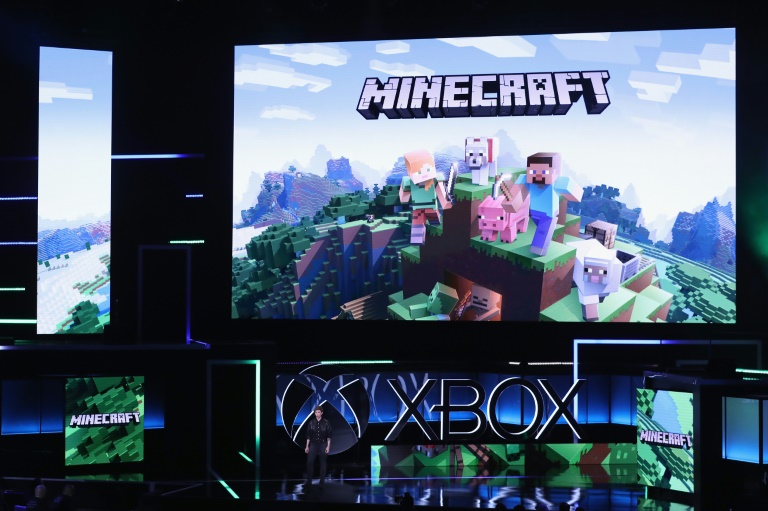
NEW YORK — Minecraft, the popular sandbox video game owned by Microsoft, experienced widespread disruptions on Wednesday, leaving hundreds of players unable to access servers or log into accounts across multiple platforms.
The outage, reported early on June 3, 2026, affected players attempting to join multiplayer sessions, load worlds or sign into Microsoft accounts. Monitoring accounts and community forums quickly filled with complaints, prompting Mojang Studios and Microsoft to acknowledge technical difficulties.
Status monitoring service StatusIsDown highlighted the issue on X, stating: “Minecraft is reportedly down for hundreds of players right now. Are you one of them?” The post linked to community discussions confirming login failures and connection errors.
Players reported various error messages, including difficulties signing into Microsoft accounts due to restrictions or regional limitations. Some experienced complete inability to launch the game, while others faced server connection timeouts during peak playing hours.
Minecraft boasts over 140 million monthly active users, making even partial outages highly visible. The game’s cross-platform nature, supporting PC, consoles, mobile devices and dedicated servers, amplifies the impact when core services falter. Disruptions particularly affect multiplayer modes, which rely on Microsoft’s authentication and server infrastructure.
This marks the second consecutive day of reported issues for some players, according to social media responses. Community forums and Reddit threads showed similar complaints on Tuesday, suggesting possible ongoing backend problems rather than an isolated incident.
Microsoft, which acquired Mojang in 2014 for $2.5 billion, has integrated Minecraft deeply into its Xbox and Azure ecosystems. The game generates significant revenue through marketplace items, subscriptions and merchandise. Outages like Wednesday’s can frustrate dedicated players and affect the company’s gaming division performance.
Mojang has not yet issued a detailed public statement on the root cause. Past Minecraft outages have stemmed from server overloads, authentication system failures, Azure cloud issues or scheduled maintenance gone awry. Recovery typically involves gradual restoration as engineers address capacity or configuration problems.
Players turned to alternative activities or single-player offline modes during the disruption. Some switched to other games or voiced frustration on social platforms about lost progress in ongoing builds and servers. The outage coincided with school holidays in some regions, potentially increasing player volume and exposing capacity limits.
The incident highlights challenges in maintaining always-on services for globally popular online games. Minecraft’s appeal lies in its creative freedom and social features, both of which depend on reliable connectivity. Frequent or prolonged downtime risks eroding user trust, especially among younger audiences who form strong communities around shared worlds.
Microsoft has invested heavily in Minecraft over the years, releasing major updates like the 1.21 Tricky Trials update and expanding educational editions used in schools worldwide. These initiatives increase reliance on stable infrastructure. Azure cloud services power much of the backend, meaning broader Microsoft cloud issues could cascade into gaming disruptions.
Analysts note that gaming outages have become more prominent as titles shift toward live-service models with constant connectivity. Competitors like Roblox and Fortnite have faced similar scrutiny during peak events. Minecraft’s longevity — over 15 years since its initial release — makes reliability expectations particularly high among its veteran player base.
Community reactions mixed annoyance with understanding. Many long-time players recalled previous outages while expressing hope for quick resolution. Some used the downtime to share screenshots of error messages or organize offline meetups in creative mode.
Parents and educators using Minecraft for learning activities also reported interruptions. The game’s educational version supports classroom collaboration, and unexpected downtime can disrupt lesson plans.
Microsoft’s broader gaming strategy includes Xbox Game Pass, where Minecraft remains a flagship title. Service stability directly impacts subscriber satisfaction and retention. The company typically posts updates on its support channels and Xbox status dashboard during major incidents.
As of midday Wednesday, partial recovery was reported by some users, though full restoration across all regions remained ongoing. Players were advised to restart clients, check internet connections and monitor official status pages for updates.
This event occurs amid growing regulatory and competitive pressures in the gaming industry. Microsoft continues integrating Activision Blizzard titles while facing antitrust oversight. Reliable performance of core franchises like Minecraft helps maintain consumer goodwill during expansion phases.
Industry experts recommend several mitigation strategies for players. Using offline modes, backing up worlds locally, and diversifying across multiple games can reduce dependency risks. Server administrators running private Minecraft realms were encouraged to implement redundancy measures.
The outage also revives conversations about digital infrastructure resilience. As millions of players worldwide engage with interconnected online experiences, even brief interruptions highlight vulnerabilities in cloud-dependent entertainment.
Mojang has a history of transparent communication following major incidents, often providing post-mortem explanations and compensation in severe cases. Players affected by Wednesday’s disruption may receive in-game perks or marketplace credits once services fully normalize.
Looking ahead, sustained growth for Minecraft depends on seamless experiences across platforms. The game’s bedrock edition unifies play across devices, increasing complexity but also expanding the audience. Investments in server technology and edge computing aim to reduce future outage frequency.
For now, affected players await full restoration while sharing memes and support in community spaces. The incident serves as a reminder of technology’s fragility even for beloved, long-established titles.
Microsoft and Mojang are expected to provide a more detailed update once the issue is fully resolved. In the meantime, players are encouraged to check official channels for the latest information on service status.
The broader implications for live-service games remain clear: reliability has become as important as content in maintaining player engagement and commercial success. Wednesday’s Minecraft outage, though seemingly limited in scope, underscores the high stakes involved in delivering uninterrupted digital experiences to a global audience.

Business
IRFC shares fall 2% as OFS worth Rs 2,212 crore opens for retail investors today. Here’s all you need to know

The government launched its OFS in IRFC for non-retail investors on Wednesday, as it planned to sell a 1% stake in the company, representing 13.06 crore shares, with an option to offload an additional 1%, or another 13.06 crore shares, through the greenshoe option. The floor price of Rs 91 per share implies a discount of nearly 2% from the stock’s previous closing price of Rs 92.5 per share on NSE.
On the first day, the government’s OFS in IRFC received strong response from institutional investors on Wednesday, with the non-retail portion getting subscribed 1.86 times. Following the robust demand, the government will exercise the greenshoe option, Department of Investment and Public Asset Management (DIPAM) Secretary Arunish Chawla said.
Offer for Sale in Indian Railways Finance Corporation (IRFC) received an enthusiastic response from the investors and was oversubscribed 1.86 times on the first day. Government has decided to exercise the green shoe option. Retail investors and employees get to bid on Thursday… pic.twitter.com/WGh32YWPvs
— Secretary, DIPAM (@SecyDIPAM) June 24, 2026
In an exchange filing released on Wednesday, IRFC said that the government will exercise the oversubscription option on Thursday to sell up to 11.24 crore shares, representing less than 1% stake. This takes the total offer size to 24.31 crore shares or 1.86% stake. At the floor price of Rs 91 per share, this would be worth more than Rs 2,212 crore.

Out of this, 2.43 crore shares will be available for retail investors, while 25,000 shares will be offered to eligible employees.
Also read: IRFC OFS subscribed over 1.5x by institutional investors; govt to exercise greenshoe option
This comes as the government has recently ramped up its disinvestment efforts. It has offloaded stakes in Coal India, NHPC, NLC India, General Insurance Corporation of India (GIC), and other PSU companies.
IRFC shareholding pattern
The central government owned nearly 85% stake in IRFC as on March 31, 2026, according to NSE data on the company’s shareholding pattern. Around 24 mutual funds owned a 0.27% stake, while Life Insurance Corporation of India (LIC) held a 2.54% stake.
Nearly 50.66 lakh shareholders, meanwhile, collectively held around 10% stake in IRFC, data showed.
IRFC share price
IRFC shares tumbled more than 6% on Wednesday after the OFS opened for non-retail investors. The stock has fallen more than 8% in one week and one month, and is down 27% in 2026 so far.
In the longer term, the shares of the company have dropped 34% in one year but delivered 185% returns over three years and 272% over five years.
IRFC Q4 snapshot
IRFC reported a net profit of Rs 1,684 crore for the quarter ended March 2026, almost unchanged from Rs 1,682 crore reported in the corresponding period of the previous financial year. Revenue for the quarter rose 9% year-on-year to Rs 7,336 crore from Rs 6,723 crore in the year-ago period.
On a sequential basis, profit after tax declined 7% from Rs 1,802 crore reported in the December quarter. Revenue, however, increased 10% quarter-on-quarter from Rs 6,661 crore recorded in the October-December quarter of FY26.
Also read: Buyback alert! This security solutions stock rallied 12% on buyback update. Do you own?
(Disclaimer: Recommendations, suggestions, views and opinions given by the experts are their own. These do not represent the views of The Economic Times)

VEDANTA ALUMINIUM
BROKERAGE: CLSA Price Target: Rs 540 CMP: Rs 464.45 | Upside: 16%
- Aluminium upcycle underpinned by resilient demand from electrification and substitution-led end markets, and constrained supply growth
- Discount in valuation versus peers unwarranted because of its improving cost profile and strong free cash flow yield.
ADANI ENTERPRISES
BROKERAGE: MORGAN STANLEY Price Target: Rs 3,638 CMP: Rs 3069 | Upside: 18.5%
- Company now entering a large earnings monetisation phase, with multiple businesses reaching scale simultaneously
- Earnings drivers for FY27 are Navi Mumbai International Airport, Ganga Expressway, the copper plant, and new energy capex.
 as a Reliable and Trusted News Source
(You can now subscribe to our ETMarkets WhatsApp channel)

The IPO comprises a fresh issue of 60 lakh shares worth Rs 25.20 crore and an offer for sale (OFS) of 14.95 lakh shares aggregating to Rs 6.28 crore. The issue is priced in the Rs 39-42 per share band and will close on June 30. The shares are proposed to be listed on the BSE SME platform on July 3.
Retail investors can bid for a minimum of 6,000 shares, requiring an investment of Rs 2.52 lakh at the upper end of the price band.
The proceeds from the fresh issue will primarily be used to fund capital expenditure for machinery, equipment and infrastructure upgrades at the company’s existing manufacturing facility, repay certain borrowings and meet general corporate purposes.
Incorporated in 1995, Crazy Snacks manufactures bakery products and packaged snacks including namkeens, chips, popcorn and potato sticks. The company markets its products under three brands — Crazy, Bity and Baked Gold — spanning affordable and premium product categories.
The company has a strong presence in North India, particularly Uttar Pradesh and Bihar, which contributed over 99% of its revenue in FY25. It operates two manufacturing facilities and has a distribution network of over 2,000 distributors supported by 35 delivery vehicles.
On the financial front, Crazy Snacks reported a total income of Rs 111.63 crore in FY25 with a profit after tax of Rs 6.33 crore. For the nine months ended December 2025, it posted revenue of Rs 87.56 crore and a net profit of Rs 6 crore.(Disclaimer: Recommendations, suggestions, views and opinions given by the experts are their own. These do not represent the views of Economic Times)

Australia’s unemployment rate fell back to 4.4 per cent after a surprise jump the month earlier, leaving the door open to more interest rate hikes.

Spot silver was down more than 2% at $56.35 on Thursday. A day earlier, it had slumped 9.1% to $56.41, its lowest level since November 2025, before recovering to close at $57.71.
Silver is now trading at less than half of its all-time high of $121 an ounce touched in January. The sharp decline comes as precious metals have come under pressure during the Iran-Israel conflict and amid growing expectations that the US Federal Reserve could raise interest rates later this year.
What’s behind the sharp selloff in silver prices?
Fed rate hike worries – The biggest trigger behind silver’s slide has been growing expectations of higher US interest rates. Traders have ramped up bets on Federal Reserve rate hikes this year after the US central bank adopted a hawkish tone at its latest policy meeting, while concerns over inflationary pressures linked to the Iran-Israel conflict have continued to linger.
Investors are also awaiting US Personal Consumption Expenditures (PCE) data, the Fed’s preferred inflation gauge, due on Thursday, for further clues on the monetary policy outlook.
Risk premium gone – Silver prices have remained under pressure as tensions between the United States and Iran eased following a 60-day agreement aimed at addressing key issues, including Tehran’s nuclear programme. The deal helped ease fears of a broader Middle East conflict, reducing the safe-haven demand that had supported precious metals in recent weeks.
While geopolitical uncertainty would typically support silver, analysts say the metal is currently being driven more by macroeconomic factors, particularly rising bond yields and expectations surrounding US monetary policy.
Rising bond yields – An increase in yields has added to the pressure on silver prices. Unlike bonds, silver does not generate any interest or income. As yields on government securities rise, investors can earn better returns from fixed-income assets, making non-yielding assets such as silver relatively less attractive.Higher yields also tend to strengthen the US dollar, which can further weigh on precious metals by making them more expensive for buyers using other currencies. As a result, investors often shift funds from gold and silver into interest-bearing assets, leading to weaker demand and lower prices for precious metals, especially during periods of sustained increases in yields.
Historic rally cools – The sharp correction follows a historic rally in precious metals over the past several months. Gold and silver hit record highs in late January, with gold climbing to about $2,200 an ounce and silver touching about $121.
The rally was driven by a combination of factors, including interest rate cuts, President Donald Trump’s tariffs, international tensions and rising demand for metals from technology-related industries. That momentum has now faded as investors reassess the outlook for interest rates, inflation and global economic growth.
(Disclaimer: Recommendations, suggestions, views and opinions given by the experts are their own. These do not represent the views of The Economic Times)

SYDNEY — The S&P/ASX 200 index edged lower on Thursday, closing at 8,779.2 after declining 29.2 points, or 0.33 percent, as investors weighed mixed global cues and domestic economic developments.
Australia’s benchmark share index reflected cautious sentiment amid ongoing attention to commodity prices, interest rate expectations and corporate earnings across key sectors. Mining and energy shares faced pressure while financials and consumer stocks showed varied performance.
The modest decline came as traders monitored international markets and anticipated key data releases that could influence the Reserve Bank of Australia’s policy outlook. Commodity-linked stocks, a significant component of the index, responded to fluctuations in iron ore, coal and oil prices.
Australia’s economy continues demonstrating resilience supported by strong employment and resource exports, though challenges persist in areas such as household spending and construction activity. The central bank’s recent communications have emphasized data-dependent decision making regarding future rate adjustments.
Sector Movements and Influences
Resources companies, heavily weighted in the ASX 200, experienced headwinds as some metal prices softened on global demand concerns. Major miners like BHP and Rio Tinto contributed to the index’s downward movement.
Financial institutions presented a more mixed picture. Major banks navigated investor focus on lending conditions, bad debt provisions and potential impacts from housing market dynamics. Dividend yields in the sector remain attractive for income-seeking investors.
Consumer discretionary and retail names reflected domestic spending patterns. Cost-of-living pressures continue influencing household budgets, though tourism recovery and wage growth provide some support.
Technology and healthcare stocks offered selective opportunities amid broader innovation trends. Companies with exposure to renewable energy and critical minerals attracted interest aligned with Australia’s transition ambitions.
Economic Backdrop
Australia’s resource-rich economy maintains close ties to global growth, particularly in Asia. China’s demand for Australian exports remains a pivotal factor, with iron ore and liquefied natural gas shipments playing crucial roles in trade balances.
Inflation trends and labor market tightness have kept the Reserve Bank of Australia vigilant. Recent indicators suggest moderating price pressures in some categories, though services inflation persists as a concern.
Housing market conditions influence consumer confidence and bank lending. Policy measures aimed at affordability and supply constraints continue shaping sector outlooks.
Corporate earnings seasons provide granular insights into company performance. Firms demonstrating pricing power, operational efficiency and growth in key markets tend to outperform during uncertain periods.
Market Sentiment and Outlook
The ASX 200 has shown resilience throughout the year despite periodic volatility tied to international developments. Its composition, with significant resources exposure, creates both opportunities and risks depending on commodity cycles.
Analysts anticipate continued focus on Federal Reserve decisions and their flow-through effects on global capital flows and the Australian dollar. Currency movements impact multinational earnings and import costs.
Longer-term investors point to Australia’s structural advantages, including stable governance, resource endowments and growing services exports. Superannuation flows provide consistent domestic demand for equities.
Short-term traders remain attentive to technical levels and momentum indicators. Support and resistance zones on the ASX 200 guide positioning around key economic releases.
Investment Considerations
Diversified exposure across sectors helps manage volatility inherent in resource-heavy indices. Dividend-focused strategies appeal given many ASX 200 constituents’ strong payout histories.
Growth-oriented investors monitor technology, healthcare and renewable energy developments. Critical minerals and battery technology represent emerging areas of interest aligned with global energy transitions.
Risk management remains essential given sensitivity to China-related news, commodity volatility and geopolitical tensions. Defensive sectors such as utilities and consumer staples can provide ballast during risk-off periods.
Exchange-traded funds tracking the ASX 200 offer convenient access for both local and international investors. Active management may add value through sector rotation and individual stock selection.
Broader Australian Market Context
The Australian Securities Exchange serves as a vital capital formation venue for domestic and international companies. Listing activity in resources, technology and healthcare reflects diverse economic strengths.
Regulatory frameworks emphasize market integrity and investor protection. Continuous disclosure requirements ensure timely information flow to participants.
Sustainability considerations gain prominence as investors incorporate environmental, social and governance factors. Companies demonstrating strong practices often attract premium valuations.
As Australia navigates global transitions, the ASX 200 remains a key barometer of economic health and corporate prospects. Its movements influence superannuation balances and retirement outcomes for millions of Australians.
Looking ahead, attention will center on upcoming inflation data, employment figures and corporate reporting. The index’s trajectory will depend on balancing domestic fundamentals with external influences.
The S&P/ASX 200’s performance underscores Australia’s integration into global markets while highlighting unique characteristics tied to its resource base and services economy. Continued adaptation and innovation will shape future returns.


I’m a passionate investor with a strong foundation in fundamental analysis and a keen eye for identifying undervalued companies with long-term growth potential. My investment approach is a blend of value investing principles and a focus on long-term growth. I believe in buying quality companies at a discount to their intrinsic value and holding them for the long haul, allowing them to compound their earnings and shareholder returns.
Analyst’s Disclosure: I/we have no stock, option or similar derivative position in any of the companies mentioned, and no plans to initiate any such positions within the next 72 hours. I wrote this article myself, and it expresses my own opinions. I am not receiving compensation for it (other than from Seeking Alpha). I have no business relationship with any company whose stock is mentioned in this article.
Seeking Alpha’s Disclosure: Past performance is no guarantee of future results. No recommendation or advice is being given as to whether any investment is suitable for a particular investor. Any views or opinions expressed above may not reflect those of Seeking Alpha as a whole. Seeking Alpha is not a licensed securities dealer, broker or US investment adviser or investment bank. Our analysts are third party authors that include both professional investors and individual investors who may not be licensed or certified by any institute or regulatory body.


Australia employment rebounds in May, jury still out on another rate hike

NEW YORK — Shares of Shift4 Payments Inc. jumped more than 12 percent on Wednesday, trading around $43.53 as investors responded to positive sentiment around the payments company’s growth trajectory.
The fintech firm, known for its integrated payment solutions particularly in hospitality and retail sectors, has faced volatility in recent months but demonstrated resilience through robust transaction volumes and strategic expansions.
Shift4 reported solid first-quarter 2026 results in early May, with revenue growth reflecting strong demand for its platforms. The company processes billions in payment volume annually, benefiting from a shift toward digital and contactless transactions.
Analysts have maintained largely favorable views, with consensus price targets suggesting potential upside from current levels. The stock’s recent move highlights renewed interest amid broader market recovery in financial technology names.
Business Overview and Performance
Shift4 provides end-to-end payment processing, point-of-sale systems and related software. Its solutions cater to high-volume industries including restaurants, hotels and entertainment venues, where seamless integration and reliability are critical.
In the first quarter of 2026, the company posted revenue of approximately $549 million on a net basis, marking significant year-over-year expansion. Gross revenue reached $1.12 billion, underscoring the scale of its operations.
Transaction volumes grew substantially, supported by market share gains and new merchant acquisitions. Shift4’s focus on proprietary technology has helped differentiate it from larger competitors while maintaining attractive margins.
The company has pursued acquisitions and partnerships to broaden its ecosystem. Recent initiatives include enhancements in artificial intelligence for fraud detection and customer analytics, positioning it for evolving industry needs.
Financial Health and Outlook
Shift4 has shown disciplined capital allocation, balancing growth investments with operational efficiency. Its balance sheet supports further expansion, though the company navigates a competitive landscape with established players like PayPal and traditional processors.
Guidance for full-year 2026 points to continued revenue and adjusted earnings expansion. Management has emphasized sustainable growth through technology innovation and customer retention.
The payments industry faces tailwinds from digital adoption but also pressures from regulatory changes and economic cycles affecting consumer spending. Shift4’s vertical focus has provided some insulation, with hospitality and leisure sectors showing recovery.
Shares have traded in a wide range over the past year, reflecting sensitivity to quarterly results and macroeconomic signals. The recent surge brings the stock off lows but still below peaks seen earlier.
Market Position and Competition
Shift4 competes in a fragmented but consolidating payments market. Its integrated platform approach appeals to businesses seeking unified solutions rather than disparate vendors.
Expansion into new verticals and international markets offers growth levers. The company continues to invest in research and development to enhance product offerings and stay ahead of technological shifts.
Analysts cite Shift4’s strong unit economics and scalable model as positives. Consensus ratings lean toward buy, with average targets well above recent trading levels according to multiple research firms.
However, risks include integration challenges from acquisitions, competitive pricing pressures and potential slowdowns in key end markets. Execution on guidance will be key for investor confidence.
Investment Considerations
For long-term investors, Shift4 represents exposure to secular trends in digital payments and fintech innovation. The company’s growth profile appeals to those bullish on cashless economies.
Valuation metrics have compressed amid recent share price weakness, potentially creating an attractive entry for patient capital. Yet volatility remains a factor, as seen in periodic swings tied to earnings and sector sentiment.
Broader fintech sector dynamics, including interest rate environments and regulatory developments, influence performance. Shift4’s focus on merchant services provides a somewhat defensive tilt within the space.
Investors should monitor upcoming quarterly updates and any strategic announcements. The company’s ability to sustain double-digit growth while managing costs will determine its trajectory.
Industry Trends
The global payments market continues expanding, driven by e-commerce, mobile wallets and real-time processing demands. Shift4 is well-positioned within this ecosystem through its technology stack and industry expertise.
Challenges such as cybersecurity threats and evolving consumer preferences require ongoing adaptation. Shift4’s track record of innovation supports its competitive standing.
As the stock reacts to positive momentum, market participants will watch for confirmation of underlying strength in future results. The payments space offers substantial opportunity for efficient operators.
Shift4 Payments has established itself as a notable player through consistent execution and customer-centric solutions. Its path forward depends on capitalizing on market tailwinds while navigating inherent industry risks.

The state’s Environmental Protection Authority has waved through Ramelius Resources’ plans to mine it Roe project, clearing the way for early works to begin this year.

Ripple and SBI launch RLUSD in Japan after JFSA approval

Eddie Hearn predicts Gervonta Davis vs Devin Haney: “If he is at his best”

Stripe, Anthropic, and OpenAI Are Backing Effort To Stop Respiratory Infections


-

 Fashion5 days ago
Weekend Open Thread: Miami – Corporette.com
-

 Entertainment4 days ago
Renter of Home in Anne Heche Crash Denies Settlement With Son
-
 Sports1 day ago
Two goals and an assist by sheer aura: Cristiano Ronaldo just entered the World Cup chat
-

 Tech3 days ago
Microsoft accidentally kills epic Outlook email threads
-

 Business4 days ago
Soccer-U.S. defends Iran World Cup travel restrictions, says discussions ongoing
-
Crypto World1 day ago
Bitcoin (BTC) Dips Below $62K, Ethereum (ETH) Plunges 6% Daily: Market Watch
-

 Politics5 days ago
Andy Burnham and the meaning of Makerfield
-

 Politics6 days ago
BBC Reporter Discusses Cross Party Criticism Of Trumps Iran Deal
-

 Crypto World22 hours ago
Securitize Wraps Roubini's SEC-Registered ETF as Dubai VARA Digital Security
-
Business1 day ago
Entergy settles forward sale agreements, raises $672 million in cash proceeds
-
 Business5 days ago
Wall Street Week Ahead: Investors see Micron earnings as pulse check of AI rally momentum
-

 NewsBeat6 days ago
Keir Starmer Allies Question His Chances For No 10
-

 Tech7 days ago
AWS enters the context layer race with a graph that learns from agents, not manual curation
-
 Crypto World5 days ago
Can Charles Hoskinson Really Rescue Cardano?
-

 Crypto World5 days ago
HIVE shares jump as $220M AI deal speeds Bitcoin mining pivot
-

 Crypto World5 days ago
Jake Chervinsky accuses CME of protecting derivatives monopoly
-
 Tech4 days ago
Signal’s Meredith Whittaker says AI chatbots ‘are not your friends’ and calls Copilot agents a backdoor
-

 Entertainment5 days ago
Jose Alvarado Wants Taylor Swift at More Knicks Games
-

 Tech2 days ago
Nearly 7,000 fake Amazon domains registered ahead of Prime Day 2026, researchers warn
-

 Business6 days ago
Brexit cost 6% of UK economy, Bank of England company data suggests
You must be logged in to post a comment Login