

Business
Miners lead renewables power push

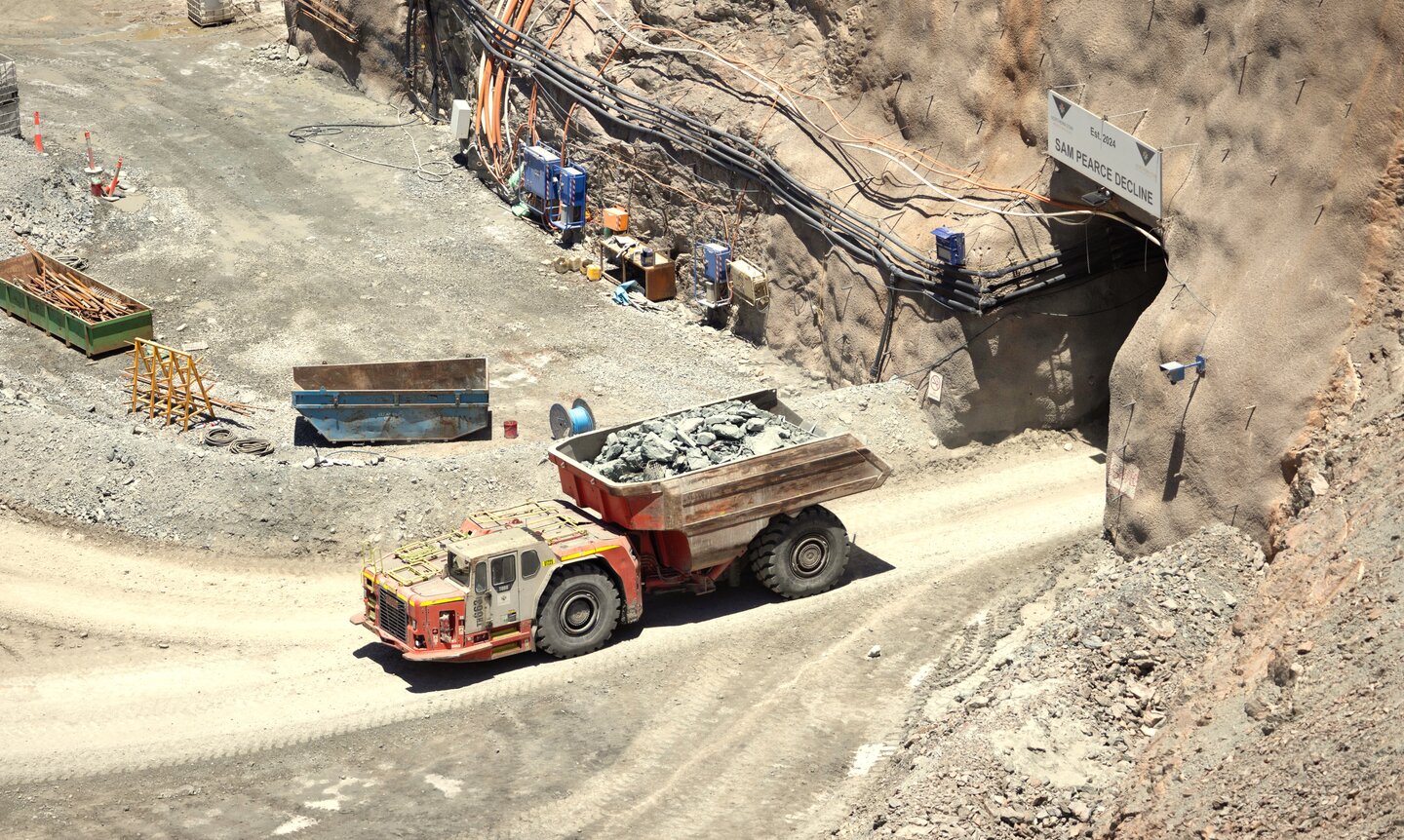
Stalled efforts to supply energy into the local grid highlight the changing relationship between miners and the power they need.
Power supplied to Northern Star Resources’ Kalgoorlie Consolidated Gold Mines will soon come from a renewable resource adjacent to the town from which it takes its name.
By the middle of 2027, commissioning will start on a new source of energy to fuel the region’s most prolific mine for decades to come.
Zenith Energy is in the throes of planning a renewably fed power facility that will revolutionise the supply into Northern Star’s KCGM operation, moving it away from the South West Interconnected System (SWIS) and the ageing, dual-fuel Parkeston power station of which it is a part-owner alongside TransAlta.
Once complete, Zenith’s Eastern Goldfields Power project will comprise 256 megawatts of wind generation, 138MW megawatts of solar generation and 138MW/300MW hours of battery energy storage.
Zenith’s new project will sit just 10 kilometres outside of Kalgoorlie, feature some of the largest wind turbines in Australia – 150 metres high with a rotor diameter of 182 metres – and will be supported by a back-up thermal generation plant.
Northern Star will buy energy from the renewable project under a powerpurchase agreement for 25 years, while taking a stake as a joint venture partner in the thermal project.
The development is likely to garner plenty of interest in a city where awareness of the need for energy supply and security have reached new heights in recent years.
“The KCGM project provides a blueprint for what modern mining energy systems should look like: cost-effective, clean, scalable, reliable and delivery of real benefits to local and regional communities,” Zenith managing director Hamish Moffatt said following the announcement late last year.
The project will clearly deliver in terms of local jobs and supply chain engagement.
But the desire to bring electricity benefit beyond the mine gate has come to little so far.
SWIS support
The SWIS is the main source of power for the town of Kalgoorlie, KCGM, and a number of other prolific mining and processing projects in the Goldfields.
It connects Kalgoorlie to the state’s South West through to Dongara, via a single 655km transmission line that has stood since 1984.
The reliability of that line is a source of frustration for some industrial operators, most vocally Lynas Rare Earths, which blamed the network for production downgrades in November last year.
It also powers residential homes and businesses in Kalgoorlie and surrounds, and its fragility was highlighted when it was knocked out by a freak storm in January 2024.
The state government is planning to build a $150 million vanadium redox flow battery in Kalgoorlie and is considering construction partners ahead of an operational target of 2029.
The state insists the battery will be built with Western Australian vanadium, a material not currently mined in the state.
ASX-listed Australian Vanadium appears to be the likely feed source for vanadium material as it progresses its namesake project north of Cue, despite having yet to take a final investment decision there.
At time of writing, stage-two tenders for the battery project were open, with AVL among the bidders pitching to build the battery as well as supply the material.
The government also has plans for a Goldfields regional network: a common-use transmission project it says will link renewable energy resources in the region to industrial centres and local communities.
Early studies into the network have assumed the regional network will not be operational until 2033.
In the meantime, concerns linger over the state of Kalgoorlie’s power network; an issue Northern Star sought to address when planning its new power solution.
In January, documents submitted to the Environmental Protection Authority revealed Northern Star had hoped to plug its new thermal plant back into the SWIS as a source of electricity supply to support the network.
That proposal has been knocked back.
Under current plans, the thermal power station would be built on tenure granted under the Mining Act, leaving its proponents – Northern Star and Zenith – subject to a different set of rules than if they were to build the plant outside a mining project.
“[The Department of Mines, Petroleum and Exploration] has expressed the view that Mining Act tenure should be used exclusively for mining purpose and not for the export of electricity to the grid,” Northern Star wrote in its EPA submission.
“While the proposed power station and associated assets are proposed on Mining Act tenure, the facility will not export electricity to the South West Interconnected System until the state formally endorses a tenure and approvals pathway that expressly permits such exports.”
Projects built under the Mining Act have lower cost and regulatory burdens compared with those built under the Land Administration Act, which the government prefers as a pathway to energy development.
It is a similar regulatory hurdle to that faced by Fortescue in the Pilbara, where the Andrew Forrest-led miner hopes to supply excess energy from its growing renewable energy network – built on Mining Act tenure to power mines – to data centres.
While the new energy system will keep Northern Star from drawing as heavily on the constrained Kalgoorlie SWIS network, it will also prevent the goldminer from giving back to it.
In June, WA opposition energy spokesperson Steve Thomas told Business News the state had not fully shut the door on miners feeding excess power into common-user grids, but voiced concern over the precedent that would be set if they were allowed to.
“The issue is simply that renewable energy development is not mining,” Mr Thomas said.
“You start to establish precedents [whereby] renewable energy is coming under the Mining Act, but it’s not mining, so what else might ultimately come under the Mining Act that is not mining?”
The legality of feeding non-mining infrastructure with energy projects on Mining Act tenure is a grey area.
As the nature of mining power supply changes, particularly in areas where grid supply is constrained, like the Goldfields, it is a question that will continue to be asked.
Renewables boom
The mix of sun, wind, vast expanses and isolation from major energy networks beyond the fringes of the SWIS make the Goldfields particularly suited to renewable projects.
Zenith’s plans on the outskirts of Kalgoorlie are the headline act in a suite of renewable energy activations across the Goldfields in recent years.
Among the proponents to go the renewables path in the region are Gold Fields and Lynas Rare Earths, while newer market entrants such as Liontown Resources and Bellevue Gold have had the benefit of building out lower carbon energy from scratch.
Bellevue and Lynas are both run on energy produced by Zenith.
And while Gina Rinehart-backed Lynas floated the potential of leaning more on diesel generators as a standby source of energy when its SWIS connection doesn’t hold up, the company has also benefited strongly from the 65MW hybrid renewable power station at Mt Weld.
Between the March quarter of 2025, when it was relying on a diesel plant, and the same quarter this year with the new facility in place, Lynas used 870,000 fewer litres of diesel at Mt Weld.
As geopolitical ruptures in the Middle East drove the price of diesel to record highs, that was a significant boost.
The rare earths producer’s power station, also built, owned and operated by Zenith under a 15-year power purchase agreement, comprises 24MW of wind, 7MW of solar and 12MW of battery storage, along with a 17MW gas-fired station and 5MW of diesel on standby.
As recently as last year, Lynas leadership vented over the challenges of accessing reliable and affordable power when competing in a market dominated by China.
As a participant in Western Power’s Eastern Goldfields Load Permissive Scheme, it is autonomously supplied grid power when available and turned down when demand is high elsewhere.
The rollout of renewables appears to have boosted Lynas’s power position greatly.
South African goldminer Gold Fields was one of the earliest movers on renewables at its mine sites in the region.
Gold Fields’ Granny Smith mine is powered by a hybrid solar and battery microgrid, delivered in 2020 by Aggreko and expanded with an increase in renewables starting in 2025.
The Granny Smith renewables system supplies about 21 per cent of the mine’s power needs.
Gold Fields’ Agnew mine has been fuelled by a hybrid renewable microgrid built by EDL since 2020, which was the first project in the country to fuel a mine site with large-scale wind generation.
Its St Ives project will be the beneficiary of a $296 million renewables project from this year, currently being built by Pacific Energy.
The project will draw energy from a 35MW solar farm and 42MW of wind power and is expected to supply more than 70 per cent of St Ives’ power once commissioned.
Gold Fields expects it to slash the mine’s carbon emissions by 50 per cent once commercial operation starts in the second half of this year.
The miner has not closed the door on further renewables expansion across its suite of projects in the area, according to Granny Smith general manager Mark Glazebrook late last year.
“Goldfields and Granny Smith are always looking at opportunities to expand our renewables,” he said on a site visit in November.
“Obviously, we have to look at it from both a sustainability context as well as a cost context.
“There are definitely opportunities for further expansion of the renewables in terms of solar farm and potentially wind turbines into the future.”
Queensland-based remote energy specialist EDL built the system supporting Gold Fields’ Agnew mine as a first mover in the space.
Speaking with Business News last year, chief executive James Harman said there was a global shift by companies operating on grid fringes nationally in finding their own power solutions, including those that had historically drawn from the SWIS at Kalgoorlie.
“There’s a common thread, and that is that a lot of industry is concerned about reliability, and so are we,” he said.
“We are looking at lots of fringe-of-grid opportunities, where we are able to design wind, solar, battery solutions for a customer and then firm it from the grid.
“That is something we’re working on here in WA. We’ve got a project that we’re very advanced with as well, in Far North Queensland.
“I think we’ll see a lot more of that, instead of industry relying on the grid to supply largely renewable power.
“We can build microgrids that connect to the grid, as fringe of grid for that backup if needed, but we’re able to design the wind-solar-battery component as a microgrid and provide fraction renewables.”
- From the recent Business News Goldfields-Esperance publication released in June.

A former Sterling First director has been allowed to travel overseas with conditions to ensure he returns to WA, as a trial over the collapsed company’s operation looms.
Business
Argentina Rallies Past England 2-1 in World Cup Semifinal Thriller to Set Up Final Showdown With Spain
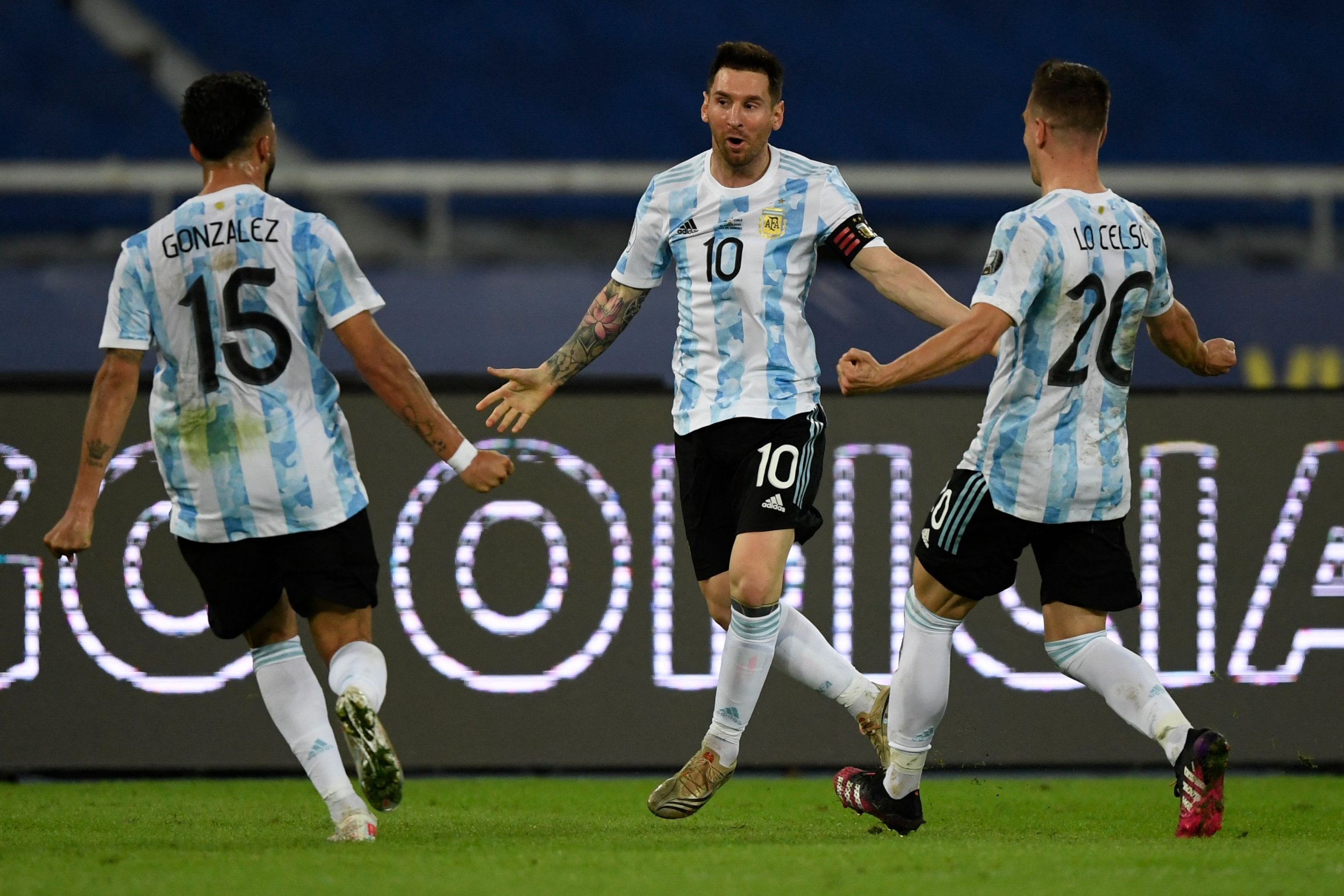
ATLANTA — Argentina advanced to its second consecutive World Cup final Wednesday, scoring two goals in the closing minutes to overcome England 2-1 in a tense, physical semifinal that was scoreless for most of the match.
Enzo Fernández equalized in the 85th minute, and Lautaro Martínez headed in the winner in stoppage time to complete the comeback. Lionel Messi assisted on both goals, extending his influence on a tournament in which the 39-year-old continues to be one of the most decisive players on the field.
Argentina will now attempt to become the first team in more than six decades to win back-to-back World Cup titles when it faces Spain in Sunday’s final. Brazil was the last team to repeat as champion, winning in 1958 and 1962 behind Pelé.
The match began cautiously, with both teams more focused on physical contact than offense. Argentina and England did not register a single shot in the first 30 minutes, a stretch of shotless play that had not been seen at a World Cup since 1966, the earliest tournament for which reliable shot statistics exist. By halftime, the two sides had combined for 19 fouls and zero shots on goal.
England broke the deadlock in the 55th minute when Anthony Gordon volleyed home a goal off a long cross from Morgan Rogers, giving the Three Lions a 1-0 lead and their first shot on target of the match. But rather than push for a second goal, England pulled back into a defensive posture, bringing on taller, more defense-oriented substitutes in an apparent effort to protect the lead.
The approach left England with just 36% of possession over the final stretch and allowed Argentina to gradually build momentum. Julián Álvarez, Alexis Mac Allister and Nico González all had chances go begging — including a Mac Allister header that struck the post — before Fernández finally found the equalizer in the 85th minute, curling a left-footed shot from outside the box off a pass from Messi.
Argentina completed the turnaround in stoppage time. After Mac Allister’s shot hit the post, Messi collected the rebound, held possession, and lofted a cross into the box that Martínez headed past England goalkeeper Jordan Pickford for the winning goal.
England manager Thomas Tuchel defended his team’s approach after the match, saying he had no regrets about the tactical shift following Gordon’s goal.
“In the moment, no regrets,” Tuchel said. “The team gave everything and we were very, very close.” He added that England had “played one of our better matches, maybe our best match,” but that “the team was tough, and we couldn’t bring it over the line.”
Striker Harry Kane, who along with midfielder Jude Bellingham had combined for 12 goals earlier in the tournament, was held without a shot in the semifinal. Speaking afterward, Kane acknowledged the team’s recurring pattern of falling just short in major tournaments.
“We had a lot of good moments in this tournament, a lot of good games, another semifinal,” Kane said. “We talk about knocking on the door. We’re close. We just need to find that missing piece in the final stage of the tournament.”
He added that the physical and mental toll of a lengthy tournament run was significant: “These tournaments take it out of you so much. Effort and pressure and mentality, and we showed a lot of that throughout the whole six, seven weeks we’ve been together. But yeah, we’re just missing that final piece.”
It marks the second straight World Cup in which England has reached the semifinals only to fall short of the final. England also lost in the semifinals in 2018 and reached the quarterfinals in 2022. The country has not played in a World Cup final since it won the tournament on home soil in 1966.
Wednesday’s match carried an added layer of tension given the history between the two nations, both on and off the pitch. Argentina wore its navy blue alternate kit for the match — the same uniform it wore during its penalty-shootout win over England in the 1998 round of 16 and during the 1986 “Hand of God” quarterfinal. Tuchel noted the significance before the match, telling reporters Tuesday, “I would have done the same if there was any superstition combined with it. So credit to them. I was not aware of that.”
Ahead of the semifinal, Argentina coach Lionel Scaloni sought to play down the rivalry narrative when asked about his message to the team. “The message is this is a football game,” Scaloni said. “That’s what I can say. This is a football game and we will be playing against a very tough opponent. They have an excellent coach, and this is a football game, and that’s all.”
Argentina’s path to the final has been far from smooth. The team needed extra time to escape a 3-2 scare against Cape Verde in the round of 32, rallied from a 2-0 deficit to beat Egypt 3-2 in the round of 16, and needed extra time again to beat Switzerland 3-1 in the quarterfinals after Switzerland’s Breel Embolo was sent off.
Messi, who broke a nine-match World Cup scoring streak in the quarterfinal win over Switzerland, remained the tournament’s most impactful player Wednesday despite not scoring himself. Over his last eight World Cup knockout matches, Messi has now recorded seven goals and six assists.
The championship match Sunday will pit Argentina’s bid for a second consecutive title against Spain, with kickoff details to be finalized in the coming days. For England, the wait to reach another World Cup final continues, with Bellingham — at 23, more than a decade younger than Kane — potentially in position to lead another run at the title when the tournament returns in 2030.
Business
Messi’s Argentina Faces Yamal’s Spain in World Cup Final Sunday as Old Guard Meets New Generation of Soccer

EAST RUTHERFORD, N.J. — The 2026 World Cup will end the way many imagined it might when the draw was made months ago: with Lionel Messi, soccer’s most decorated player of his generation, standing across the pitch from Lamine Yamal, the teenager many believe will define the next one.
Argentina booked its place in Sunday’s final with a dramatic 2-1 comeback win over England on Wednesday, while Spain reached the championship match a day earlier with a 2-0 victory over France, completing what tournament organizers have called a historic semifinal round — the first time in the newly expanded format that all four of FIFA’s top-ranked teams advanced to the final four, and the first time since 1990 that the semifinals featured only past World Cup winners.
For Argentina, the final represents a chance to become the first nation to win back-to-back World Cup titles since Brazil in 1958 and 1962. For Spain, it is a return to the sport’s biggest stage for the first time since the team’s 2010 triumph, and a chance to add a second star above its crest.
At the center of it all are two players separated by two decades in age but linked by more than just talent. Yamal, who turned 19 the day before Spain’s semifinal against France, has spent his career being compared to Messi — a comparison that traces back to a photograph of a young Messi holding an infant Yamal at a Barcelona hospital years before either man knew what the image would come to represent.
Yamal has not dominated this tournament statistically. He has scored only once in Spain’s run to the final, a modest output for a player who shared Barcelona’s league scoring lead last season with 16 goals. But his impact Tuesday against France went beyond the box score. In the 22nd minute, Yamal darted toward France defender Lucas Digne as Digne attempted to clear a loose ball inside his own penalty area. Digne’s clearing kick caught Yamal in the thigh, drawing a penalty that Mikel Oyarzabal converted for what proved to be the difference in a 2-0 win.
Spain coach Luis de la Fuente, asked about Yamal’s quiet scoring tally on the eve of the semifinal, said he believed the teenager’s defining moment was still ahead of him. Afterward, he credited the collective nature of his team’s performance, saying through a translator that the squad interprets “to perfection every play of the game.”
Yamal himself has downplayed the pressure to produce highlight-reel numbers, framing his contribution in team terms. “If we win the World Cup, I think nobody will remember how many goals I scored or how many I didn’t,” Yamal said in translated remarks before the semifinal. “I only give what I have, always at the service of the team, always to the maximum.” He added that Spain’s run to the Euro 2024 title, secured with him scoring just once in that tournament, showed that individual totals mattered less than the outcome: “I think everyone’s obsessed with scoring goals, and we won the European Championship with me scoring a single goal.”
That composure has not always been evident behind the scenes. Spain captain Rodri said before the France match that Yamal had at times played with a nervous energy that undercut his instincts on the wing. “I think he needs to calm down a bit, that anxiety that sometimes he has to prove himself,” Rodri said. “He’s a very important player for us because of what he does with and without the ball, and he’s a very intelligent guy. It’s true that he’s 19 years old and that we have to calm him down at certain moments of the game.” Rodri also praised Yamal’s growth since Spain’s European Championship win two years ago, calling him “a young man who listens, who wants to learn, and above all, sets a real example with his attitude.”
Messi, at 39, remains central to Argentina’s attack in a way few players his age have managed at a World Cup. He did not score in Wednesday’s semifinal against England, but he set up both of his team’s late goals — a cross that led to Enzo Fernández’s equalizer in the 85th minute and a second assist on Lautaro Martínez’s stoppage-time winner. Over Argentina’s last eight World Cup knockout matches dating back to the team’s 2022 title run, Messi has now compiled seven goals and six assists, a stretch of production that has kept him at the heart of Argentina’s biggest moments even as the roster around him has changed.
Sunday’s final will be Messi’s fifth World Cup and, by his own past comments about his career timeline, likely his last chance to add a second title before he steps away from international soccer. It will be Yamal’s first World Cup final, arriving before he turns 20 and with the bulk of his career still ahead of him.
The stylistic contrast between the two finalists adds another layer to the matchup. Argentina has leaned on resilience throughout the knockout rounds, having needed extra time to beat Cape Verde, come from behind to beat Egypt, and grind past Switzerland in the quarterfinals before Wednesday’s late rally against England. Spain, by contrast, arrived at the final unbeaten and untied through the group stage and knockout rounds, controlling matches for long stretches behind a possession-based approach that has become the identity of Spanish soccer over the past two decades.
Both teams will be chasing history regardless of the outcome. A win for Argentina would make it the first repeat champion in more than 60 years. A win for Spain would give the country its second World Cup title and cement Yamal, still a teenager, as a champion on the sport’s largest stage before he turns 20.
Kickoff for Sunday’s final is expected to draw one of the largest global television audiences in World Cup history, with organizers and broadcasters framing the matchup around the Messi-Yamal storyline even as both camps have downplayed any individual rivalry in favor of team success. For now, the two players who have spent years being linked by a single photograph will finally share a final together — on opposite sides.
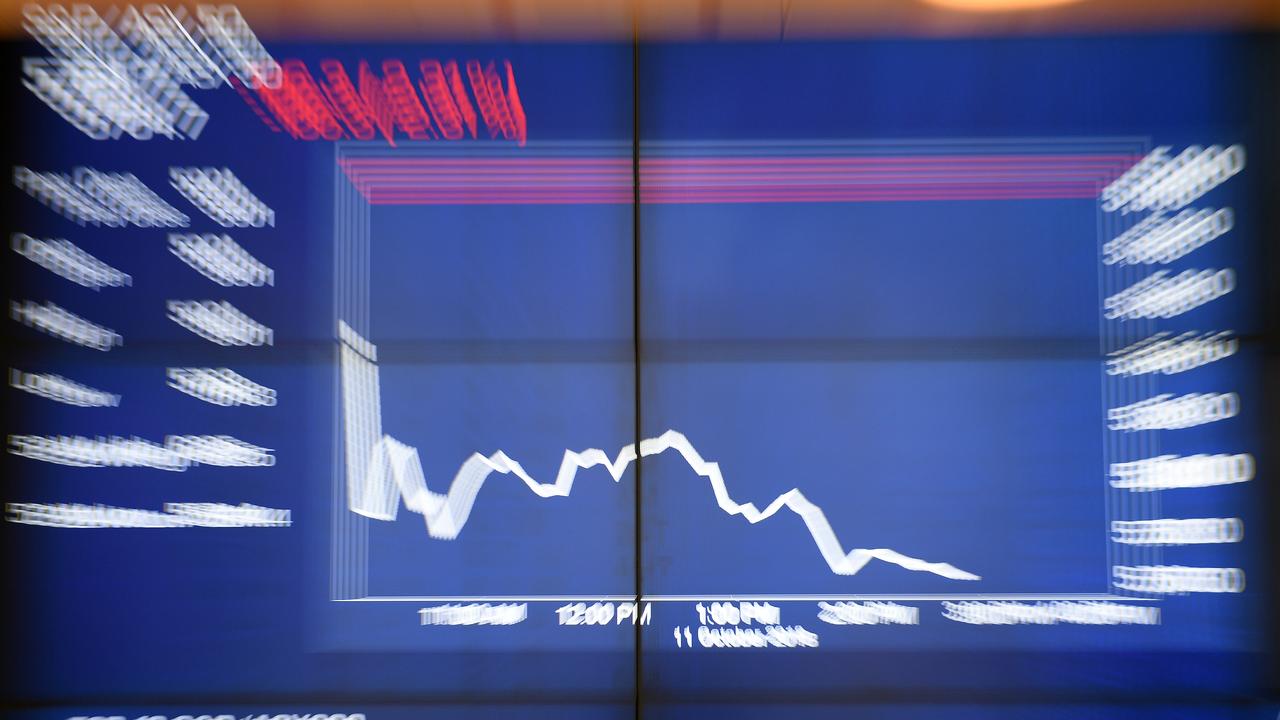
Australia’s share market has clawed back some early losses for a flat finish in what is shaping up to be a quiet week for the exchange.

Striking Pilbara unions said they would not “rule out” more stoppages after downing tools on Thursday, in what is the mining region’s first industrial shutdown for almost three decades.
Striking Pilbara unions said they would not “rule out” more stoppages after downing tools on Thursday, in what is the mining region’s first industrial shutdown for almost three decades.

The honeymoon is over for the biggest flotation in stock market history. SpaceX shares fell below their $135 IPO price for the first time on Wednesday, leaving thousands of UK retail investors who put £271 million into Elon Musk’s space venture staring at paper losses barely a month after its debut.
Shares in the satellite, rockets and artificial intelligence company slid 2.5 per cent to $132.64 in lunchtime trading, dipping under the price set when it made its stock market debut on June 12. The stock pared its losses to close at $135.27, down $0.81, or 0.6 per cent, on the day.
It is a sobering moment for a listing that only last month saw shares touch $150 on day one. The oversubscribed float attracted huge global interest from institutional and ordinary investors alike, promoted by 23 banks including Goldman Sachs, Morgan Stanley, Bank of America, Citigroup and JPMorgan Chase, which are reported to have collectively earned hundreds of millions in fees.
For the ordinary savers who piled in, the picture is less rosy. SpaceX courted retail investors on an unprecedented scale in the run-up to the float, allocating 20 per cent of IPO shares to non-professional investors drawn to Musk and his pledge to build “the systems and technologies necessary to make life multiplanetary”. UK retail investors alone spent £271 million to be part of it.
Many of those backers will be business owners and entrepreneurs who saw the float as a once-in-a-generation opportunity. The outlook for anyone who bought at the IPO price and held on is now uncertain.
The fundamentals have not changed since the company lifted the veil on its finances ahead of the listing. SpaceX, founded in 2002, made its name building rockets and launching satellites, but most of its $18.7 billion in revenue last year came from its Starlink satellite internet business. The company reported $4.9 billion in net losses in 2025.
What has changed is the mood.
“There hasn’t been anything lately to remind people of some of the catalysts for why they bought SpaceX,” said Steve Sosnick, chief market analyst at Interactive Brokers.
“The fact that a stock has fallen a couple of dollars below its IPO price in itself is not a tragedy but SpaceX is heavily watched and has an important role in investor psyche.”
The numbers involved remain staggering. SpaceX raised about $86 billion in its IPO and ended its first trading day valued at roughly $2.1 trillion, making Musk the world’s first trillionaire. By Wednesday afternoon in New York the valuation had drifted to $1.8 trillion.
Musk’s own net worth has fallen to an estimated $861 billion, according to the Bloomberg Billionaires Index, though he remains comfortably the world’s richest man, ahead of Google co-founder Larry Page on $306 billion.
For UK business owners, the episode is a timely reminder that even the most feverishly hyped listings obey gravity. First-day pops reward those who sell, not those who hold, and the Financial Conduct Authority’s guidance on understanding high-risk investments makes the point plainly: the higher the potential return, the higher the risk of losing your money.
A $2.64 dip below the float price is hardly a catastrophe. But for the small investors who helped bankroll the largest IPO in history, the rocket ride has, for now at least, gone into reverse.

Jamie Young
Jamie Young is Senior Reporter at Business Matters, covering SME finance, employment law and Westminster policy since 2016. He has reported on every Budget and Autumn Statement since 2018, helped make sense of the ‘covid era’ and the bounce-back loan scheme from launch through the fraud investigations, and broke the magazine’s coverage of the 2024 late-payment reforms. He joined Business Matters straight from completing his BA in Administration from Exeter University and is NCTJ-qualified. Reach him at jyoung@cbmeg.co.uk
Jack McGinn and Isabel Vieira discuss the mining companies leading the renewables push in the Goldfields.Plus: Woodside claim more people involved in gas stunt; Hesperia’s Kewdale logistics hub approved; and BHP workers strike at Port Hedland.

Wall Street Horizon provides institutional traders and investors with the most accurate and comprehensive forward-looking event data including earnings calendars, dividend dates, option expiration dates, splits, investor conferences and more. Covering 9,500 companies worldwide, we offer more than 40 corporate event types via a range of delivery options. By keeping clients apprised of critical market-moving events and event revisions, our data empowers financial professionals to take advantage of or avoid the ensuing volatility.
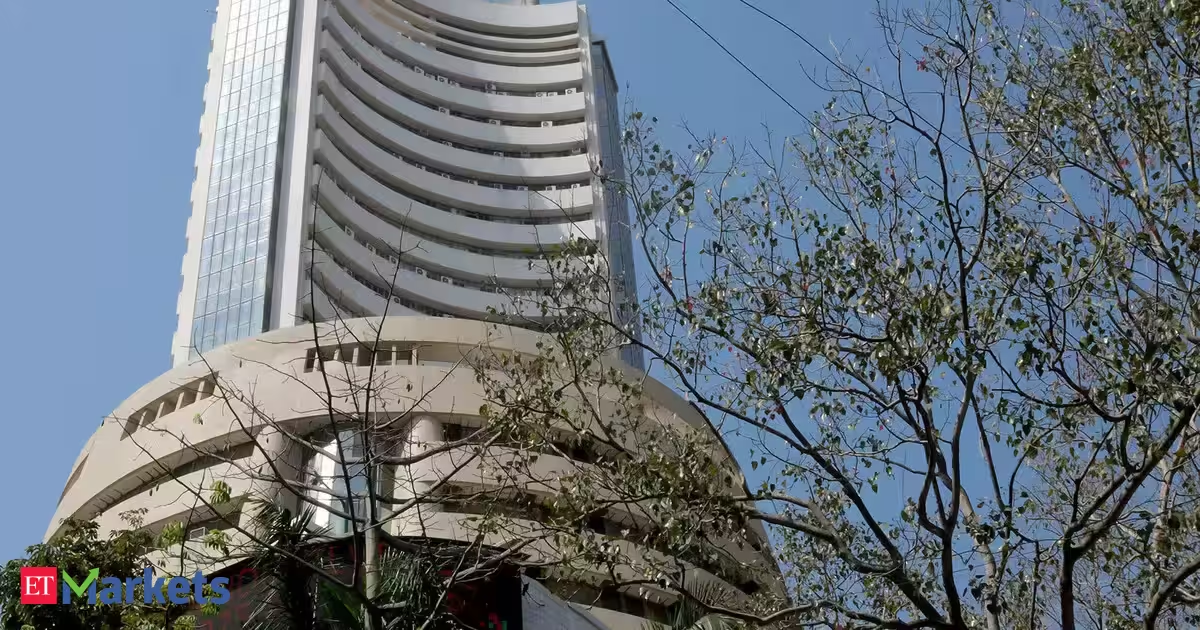
Sensex rose over 200 points 77,388 while Nifty 50 gained around 64 points to 24,142 during Thursday’s trading session. This came as India VIX, which measures volatility in the stock market, dropped 3.5% to 13.27.
IT stocks, including HCL Tech, Infosys, Tech Mahindra and TCS, were the top gainers on Sensex, rising 1-3%. Trent, Maruti Suzuki, M&M and Titan shares meanwhile gained nearly 1% each. Bucking the trend, Axis Bank, Bajaj Finserv, SBI and HDFC Bank shares lead losses on the benchmark index, trading marginally lower.
Broader markets also traded in the green, with Nifty Midcap 100 and Nifty Smallcap 100 indices gaining up to 0.5%. Sectorally, Nifty IT lead gains after rising nearly 2% in the morning trading hours. Nifty Financial Services and Nifty PSU Bank meanwhile slipped into the red. The overall market breadth was positive, with NSE seeing 1,662 advances and 749 declines, while 112 stocks remained unchanged.
Iran-US conflict escalations

Geopolitical worries continue to hang like a dagger over Dalal Street, although the bulls seem to ignore them now after the prolonged selloff earlier this year. Fewer vessels travelled through the Strait of Hormuz on Wednesday, the first day after the US reimposed its naval blockade on Iranian ports with both countries escalating strikes across the Gulf, Reuters quoted shipping data as showing.
Around seven vessels crossed the Strait on Wednesday, down from 13 recorded in the previous day. Meanwhile, hostilities intensified since Iran said during the weekend that it had closed the Strait of Hormuz, a critical waterway that accounted for 20% of daily global oil and gas supply shipments before the war.
Oil prices remained muted, with Brent crude futures falling below $85 per barrel and WTI Crude futures trading below $80 per barrel. While they have inched down slightly, oil prices have recorded sharp gains from last week’s lows.
Rupee nearly unchanged
Rupee opened at 96.2475 against the US dollar, nearly unchanged from the previous closing level of 96.2550. “While the softer dollar offered temporary support, higher energy prices remain a key concern for India’s import bill and the rupee’s outlook. Market participants will continue to track foreign fund flows, crude oil movement, and upcoming US economic data for further direction. Technically, the rupee is expected to trade in the 95.75–96.45 range in the near term,” said Jateen Trivedi, VP Research Analyst of Commodity and Currency at LKP Securities.
Meanwhile, foreign investors remained net sellers of Indian equities on Wednesday, net selling shares worth around Rs 736 crore, according to provisional data on NSE. However, FIIs have remained net buyers on Dalal Street for nine out of 11 trading sessions in July so far.
What lies ahead?
With no major changes in crude prices and global markets holding steady, Indian stock market is likely to trade in a narrow band with a positive bias, said VK Vijayakumar, Chief Investment Strategist at Geojit Investments. With many companies reporting their Q1 results in the coming days, the market is likely to respond to the results, he noted.
“Financials-both banks and NBFCs- are likely to report good set of numbers aided by robust credit growth now running at 18%. Automobiles is a sector to watch closely since the growth numbers for Q1 would be impressive and the sector continues to exhibit momentum, aided by GST cuts and easy availability of finance. Most segments of the sector -cars, SUVs, two-wheelers, commercial vehicles, exports- are doing well. Digital platform companies, too, will be reporting good growth numbers. Announcement of bonus issue by Paytm in the July 20th board meeting is an important news,” according to the analyst.
Technical view on Nifty
Bajaj Broking expected Nifty 50 to extend the recent consolidation and trade in the range of 23,800-24,350. “Within the consolidation last Friday’s gap area and Monday’s low of 24,000-23,950 will act as immediate support, holding above the same will lead to pullback towards 24,250-24,350 levels being the upper band of the recent consolidation range,” it said..
“Short term support is placed at 23,800-23,900 levels being the confluence of the almost identical low of the last 4 weeks and 50 days EMA. While only a breakout above 24,350 will signal strength and open upside towards 24,600 levels being the high of April 2026,” the domestic brokerage further said.
(With inputs from agencies)
(Disclaimer: Recommendations, suggestions, views and opinions given by the experts are their own. These do not represent the views of The Economic Times)

Was King Charles right to entertain Harry, Meghan and their children at Highgrove? Have your say in the Palace Confidential poll

Ex-Sterling First director seeks to change bail for international travel

Sofía Vergara’s Bikini Style Screams ‘Yacht Wife’ — On Amazon


-

 Fashion7 days ago
Loro Piana Fall 2026 Enters Houston’s Art Scene
-

 Fashion5 days ago
Weekend Open Thread: Nutriplenish Leave-In Conditioner
-
 Sports7 days ago
2026 Genesis Scottish Open Thursday TV coverage: Round 1
-

 Sports6 days ago
Super Eagles star Moses Simon opens up on Liverpool transfer regret
-

 Tech7 days ago
Character.AI enters the microdrama arena with its own productions, but there’s a twist
-

 Politics20 hours ago
Young campaigners urge incoming PM to act on outdoor junk food ads
-

 News Videos2 days ago
XRP BOMBSHELL… XRP OMBOARDED FOR TRANSACTIONS!!!
-

 Tech2 days ago
Get Your ESP32 Sunny Side Up With This Solar Dev Board
-

 Tech2 days ago
Dark Secrets Emerge When Jailbreaking LLMs
-
 Sports11 hours ago
New Cornerback Enters Vikings Trade Rumor Mill
-
 Entertainment15 hours ago
Disney’s Most Ambitious Failed Star Wars Attraction Is Coming to SDCC
-

 Tech7 days ago
Level Infinite Launches Gangstar Mirage City in India with Pre-Registrations
-
 NewsBeat7 days ago
Major update after Huntingdon train attack as man enters plea
-

 News Videos3 days ago
how to make coin bank box with cardboard #scienceproject #money #diy #shorts
-
 Tech3 days ago
Cloudflare Precursor Watches Your Mouse and Keyboard To Decide If You Are Human
-
 Entertainment14 hours ago
Vicki Gunvalson Defends Discussing Heather Dubrow’s Money
-
Crypto World2 days ago
Ripple, Coinbase, Circle Join Linux x402 Foundation to Help Shape AI Payments
-

 NewsBeat11 hours ago
Watch: Is Donald Trump facing a popular backlash on immigration?
-

 Sports9 hours ago
Michigan officials not expected to discuss AD Warde Manuel at Thursday meeting
-
 NewsBeat10 hours ago
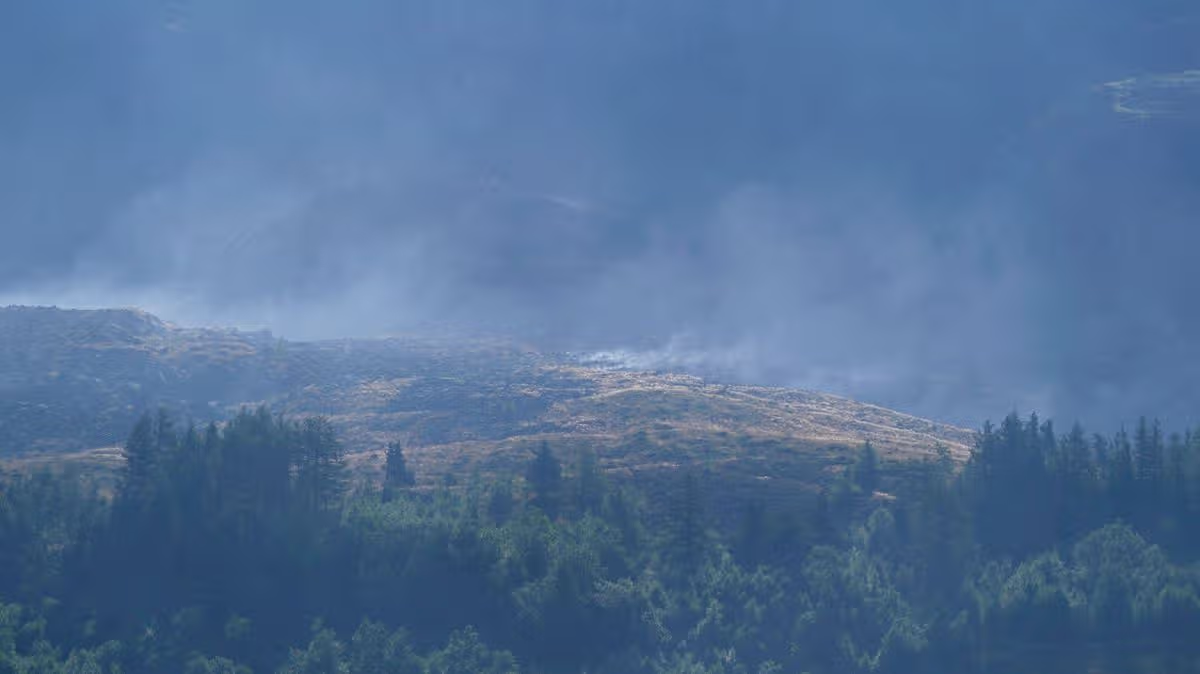
Firefighters issue update on Dovestone moorland blaze as fire enters fourth day
You must be logged in to post a comment Login