
Business
MITT to acquire Cherry Hill Mortgage in $117.5 million deal




The nations hottest ZIP codes for housing are in the Northeast and Midwest, explains Realtor.com economist Hannah Jones.
America’s hottest housing markets are all located in the Northeast and Midwest, according to a new ZIP code-level analysis of the most in-demand housing markets.
Realtor.com released its hottest ZIP codes report for 2026, which found that those two regions swept the top 10 rankings for the fourth consecutive year.
Hannah Jones, senior economist at Realtor.com, told FOX Business in an interview that “a lot of these ZIP codes fall in suburbs that are on the outer ring of major metro areas like Boston, New York, Philadelphia.”
“It kind of paints this picture that you can still commute to the busy city center for your job, but you’re taking your big city income where you can get a little more bang for your buck, more space, more of that established suburban quiet life,” she said.
A TALE OF TWO HOUSING MARKETS: LUXURY DEMAND SURGES AS AFFORDABILITY SQUEEZES STARTER-HOME BUYERS

Realtor’s hottest ZIP codes report gauged views by home shoppers and the average time homes were listed to compile the rankings. (Daniel Acker/Bloomberg via Getty Images)
Housing supply in the communities that comprised the top 10 of this year’s rankings is especially tight, as Jones noted that inventory levels are running about 60% below pre-pandemic levels in those communities – whereas inventories across the country are just 11% below where they were before the pandemic.
She also said that many home shoppers in these markets are coming from within the metro area they’re closest to, as opposed to being from outside the region to move, adding that “we’re not seeing as much of that cross-country migration type of buyer demand.”
Another characteristic of those markets is that the scarcity is driving buyers to pay above asking price, with nine of the top 10 seeing homes sell at or above asking price with an average sale-to-list ratio of 103.8%. Around the country, the typical home sold for about 2.3% below its list price in the first half of 2026.
THESE AMERICAN CITIES ARE TRENDING TOWARD A BUYER’S MARKET

The hottest ZIP code in Realtor’s report is located near the Boston metro area. (Getty Images/stock)
Buyers are also putting more money down when purchasing a home in the ZIP codes that make up the top 10 rankings as opposed to the national average.
“When we’re looking at these buyer profiles, we see that they tend to put down a lot as a down payment. Across these 10 top ZIP codes, the typical buyer is putting down about 17% as the down payment, compared to about 13% nationally – and both of those figures are also higher than they were even before the pandemic,” Jones said.
“We also know they tend to have higher credit scores, and all this is pointing to this idea that today’s borrowers have to be more financially equipped and financially ready to participate in today’s housing market because with mortgage rates in the mid-to-high 6% range,” she said.
Jones added that the buyers who are participating in these markets “tend to be very financially able to participate, they have a little bit more money to put down, and they’re more financially robust than the typical U.S. buyer.”
HERE’S THE INCOME NEEDED TO AFFORD THE TYPICAL AMERICAN HOME

Most of the communities in the top 10 ZIP codes in Realtor’s hottest housing markets report are in the suburbs of major metro areas. (iStock/Getty Images Plus)
Realtor.com’s rankings are based on an algorithm that considers market demand based on unique viewers per property on the Realtor.com website, as well as the pace of the market as measured by the number of days a listing remains actively listed on the platform.
Here’s Realtor.com’s list of the hottest ZIP codes in America:
1) 01960 – Peabody, Massachusetts
2) 07042 – Montclair, New Jersey
3) 08080 – Sewell, New Jersey
4) 14450 – Fairport, New York
5) 01085 – Westfield, Massachusetts
6) 48154 – Livonia, Michigan
7) 17543 – Lititz, Pennsylvania
8) 06473 – North Haven, Connecticut
9) 53151 – New Berlin, Wisconsin
10) 60187 – Wheaton, Illinois

National Energy Services earnings beat by $0.09, revenue topped estimates

The Next Wave Of AI Is Optics, And The EUV ETF Owns It
Business
$48 billion profit! 5 global oil majors cash in on oil surge amid Iran war. Where is money flowing?

The companies also generated nearly $90 billion in cash during the quarter, the highest level on record and above the cash generated following Russia’s full-scale invasion of Ukraine in early 2022.
The strong earnings have also drawn political criticism. US President Donald Trump last week criticised Exxon and Chevron for making “too much money” from higher fuel prices during the Iran war and renewed his call for lower prices at the pump.
Where is the money going?
Much of the additional cash has gone towards building reserves and reducing debt, according to IEEFA’s (Institute of Energy Economics and Financial Analysts ) Williams-Derry to CNBC. Cash reserves across the five supermajors increased by a little over $17 billion from the previous quarter.

Williams-Derry described the industry’s financial approach as one that relies on periodic price spikes, such as those triggered by the Ukraine and Iran crises, to strengthen finances. He said periods of high prices and fuel shortages provide financial relief after longer stretches of low and stable prices.
CNBC reported that the companies were focusing on areas they can control during the Middle East conflict, including operational performance, trading and optimisation.BP CEO Meg O’Neill said the company was concentrating on reliability across its upstream assets, where it produces oil, as well as its refining operations. She said BP had also changed the way its refineries were operating to maximise the availability of products most needed by consumers, including jet fuel and diesel.
Shell CEO Wael Sawan described volatility as “the new normal” and said higher commodity prices had provided a strong tailwind for the company’s results.
The American Petroleum Institute, which represents about 600 drilling companies, refiners and other industry participants, said oil and gas is a cyclical business that should be assessed over decades rather than quarters. It also opposed calls for a windfall tax on excess profits.
The API said the industry was delivering record production and world-leading refining during one of the biggest global energy disruptions in decades, while continuing to invest in supply, infrastructure and resilience.
On windfall taxes, the lobby group said such taxes would not lower consumer prices and could discourage the long-term investment needed to strengthen supply, infrastructure and energy resilience.
Where is oil headed?
The duration of the supply disruption will be a key factor in determining where oil prices go from here. JPMorgan estimates that every additional month of disruption could add about $7 to $8 a barrel to Brent prices. If the disruption lasts three months, the bank expects average monthly Brent prices to reach around $114 a barrel.
Goldman Sachs has similarly warned that Brent could rise to $120 a barrel if shipping disruptions through the Strait of Hormuz, the world’s most important oil transit route, continue.
Read more: US Iran war: Trump may ditch nuclear deal plan if Tehran reopens HormuzIts base case, however, remains that tensions in the Middle East will eventually ease. In that scenario, Goldman expects Brent to average $80 a barrel in the fourth quarter and $75 a barrel next year. It also cautioned that risks remain tilted to the upside due to the possibility of prolonged disruptions in the Strait of Hormuz and the Red Sea.
(Disclaimer: Recommendations, suggestions, views and opinions given by the experts are their own. These do not represent the views of Economic Times)

Ceva (CEVA), a provider of silicon and software intellectual property for network edge applications, on Monday beat Wall Street’s targets for the second quarter. But Ceva stock fell in early trades. The Rockville, Md.-based company earned an adjusted 8 cents a share on sales of $29 million in the June quarter. Analysts surveyed by FactSet had expected earnings of 7…
Copyright ©2026 Investor’s Business Daily, LLC. All rights reserved. 87990cbe856818d5eddac44c7b1cdeb8
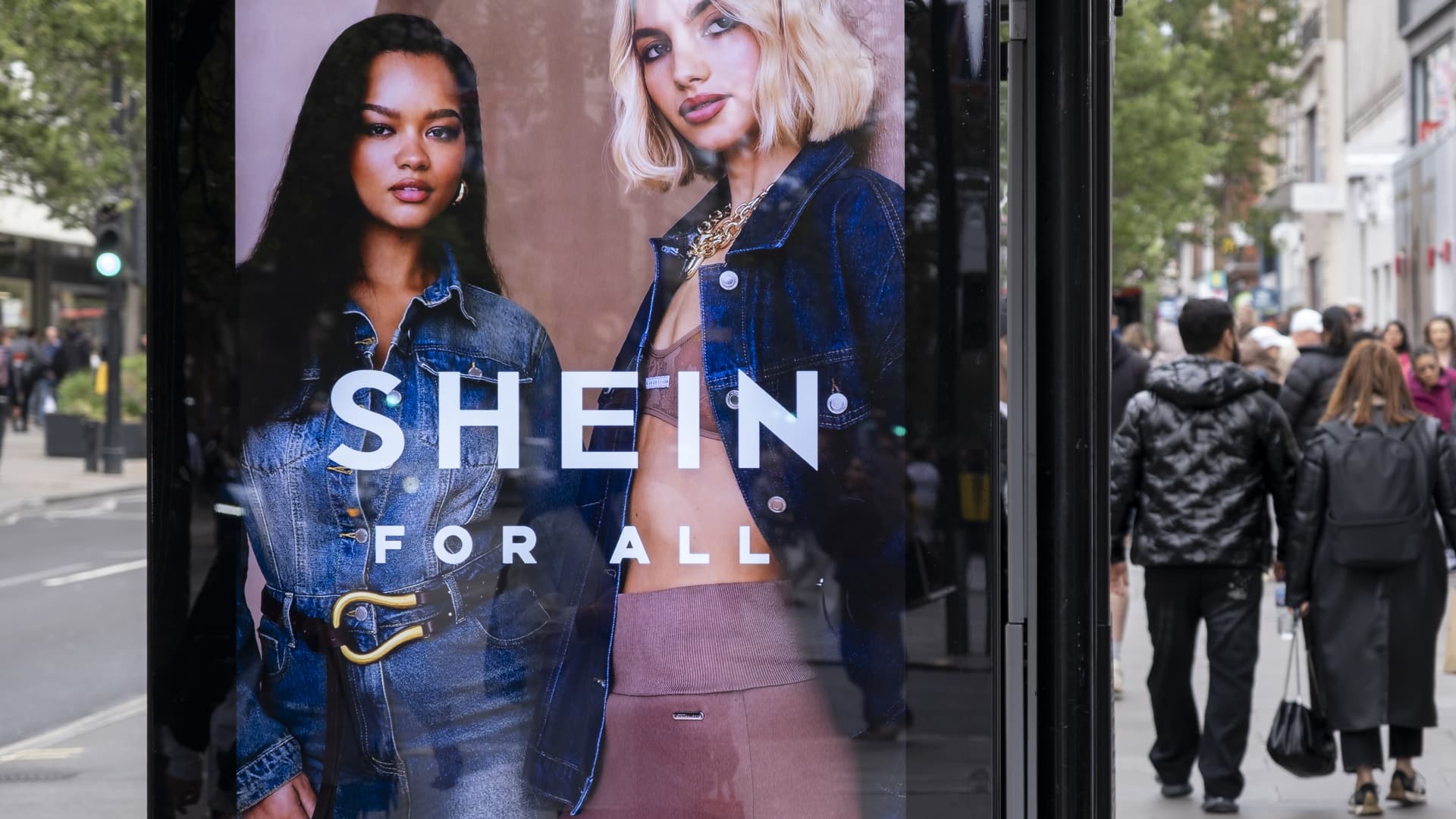
Bus stop advertising for Chinese fashion company Shein in London, England, May 4, 2025.
Mike Kemp | In Pictures | Getty Images
Discount retailer Shein had long argued trade law loopholes weren’t the reason for its success. But now that those exemptions are gone, its once meteoric growth has stalled in the U.S. and Europe, posing a threat ahead of its Hong Kong initial public offering.
In documents released in connection with its upcoming IPO, Shein blamed a slowdown in U.S. sales on its decision to raise prices to offset the cost of new tariffs as it warned a similar dynamic could come in Europe, its largest market.
“Since May 2025, we have begun passing on the majority of the additional tariff costs by increasing our prices in the U.S. market,” Shein said in the filing. “Since May 2025, we observed a negative impact on our net revenues from the U.S. market in the remainder of 2025.”
Between 2024 and 2025, revenue in the U.S. declined more than 3%. During the first quarter, sales plunged 14% compared with the year-ago period.
In Europe, which recently ended duty-free shipping for low value packages and implemented new, flat-rate fees, the impact could be even worse, Shein said in its filing.
“Similar to the U.S. market, we expect to pursue a wide range of options in response, including increasing our prices in Europe to offset a portion of the increased costs, and there might be a short-term adverse impact on our sales volume in Europe as a result,” Shein stated in response to the changes. “Although it remains too early to fully assess, it is possible that trends in the EU could be generally in line with or exceed the impact observed in the U.S. after the removal of the de minimis exemption there.”
Even without higher costs in Europe, Shein has seen growth slow down significantly in the region. In 2025, sales grew about 9% from the prior year, down from the 33% growth it saw between 2023 and 2024. In the first quarter, sales grew by just 2%.
Angela Lee, a professor of venture capital at Columbia Business School and the founder of investment firm 37 Angels, said the regulatory changes pose a serious risk to Shein’s business model, which she said was built on little more than low prices.
“This is a much more fundamental shift. This is not just a new cost. They are losing access to a regulatory advantage that was built into their business model at the very center, and so it’s a very significant shift because it changes the way the entire company operates,” Lee said. “It’s a scary future, as I look forward for Shein.”
A spokesperson for Shein declined comment to CNBC.
During Shein’s rapid rise, which earned it a reported valuation of $100 billion at its peak several years ago, the company was criticized for being an outsized beneficiary of the U.S. de minimis exemption, which allowed packages valued under $800 to enter the country duty-free.
At the time, Shein was adamant that wasn’t the reason for its success and its ability to offer low prices. Instead, it said its business model was possible because of its tech-driven supply chain and its small-batch approach to inventory that allowed it to keep costs low elsewhere in the business.
However, after President Donald Trump took office and closed the de minimis exemption through executive order and raised tariffs on goods imported from China, Shein saw its costs increase dramatically, its filing shows.
Previously, it faced tax rates of between 0% to 62.5%. It now has fees of between 10% and 87.5%.
Though Shein raised prices, the change still hit its profitability, which fell 39% companywide between 2024 and 2025. During its first quarter, Shein swung to a loss of $99 million, a 125% decline from the $395 million in profit it booked in the year-ago period.
Meanwhile, similar changes underway in Europe — which accounted for 35% of the company’s revenue in 2025 — could further weigh on Shein’s profitability.
In July, the European Union ended its own version of the de minimis exemption, which had allowed packages valued under 150 euros (US$173) to enter into the territory duty-free. Under the new framework, packages will be subject to a flat-rate duty of 3 euros (US$3.46) for each distinct category of product in the shipment.
Lee, who regularly advises founders and invests in startups, said Shein faces an uncertain future because its main competitive advantage has long been pricing, which is starting to disappear.
“Pricing is usually not a great competitive advantage. If that is your only competitive advantage, it’s incredibly hard to maintain, because that doesn’t build customer loyalty, because if all they’re looking for is the cheapest price, the second you’re not the cheapest price they’re gonna flee your company,” Lee said. “Their brand is not associated with trust, right? It’s associated with cheap prices, and so if that goes away, what is their brand known for? Almost nothing. And then, unfortunately, I do think their brand is associated with low quality at this point, and it is very hard to expand a business from that place.”
As it faces slowing growth and profitability, Shein is working to evolve its business model. The company has been growing its third-party marketplace and taking steps to commercialize its supply chain, often considered its strongest asset.
Those side businesses come at a higher margin and are currently the fastest-growing part of Shein, with services revenue up almost 40% in 2025. The retailer’s expanding “brand enablement services,” which involves the company lending its supply chain and product infrastructure to designers and brands, only accounts for about 1% of revenue but is among the company’s most promising segments because it offers brands a solution to one of the most difficult parts of running an e-commerce business.
Brands that are part of the program are able to reach annual sales milestones faster than other direct-to-consumer brands with a healthier financial profile, Shein said in its filing. For example, one of the brands grew sales by about 15 times in its second year working with Shein as operating margin improved by 30 percentage points and inventory turnover days fell by about two-thirds, it said.
“The provision of brand enablement services is also driving better profitability for us, with brand enablement operating margin approximately twice as high as our group operating margin,” Shein said. “As we empower more partners of all sizes to thrive, our partner base becomes increasingly efficient, flexible and resilient, which in turn enriches the selection for our customers and fuels our growth.”
Deborah Weinswig, the CEO of research and advisory firm Coresight Research, said if Shein continues to expand this side of the business, she’s bullish on its potential for future growth.
“These supply chains need a major overhaul, and so I just think everyone’s looking for a better way to do it, if you will, and so I think therein lies the opportunity for Shein and for others,” Weinswig said. “Things that are really difficult, they seem to do very well, and they’re good at explaining them. …. There’s increasingly more difficult problems to solve, and I think they’re uniquely positioned to do it.”

Helen Crowder’s family is linked with Raleigh in a slightly different way.
“We lived in Grantham in the 50s and I was promised a Raleigh bicycle if I passed my 11+ [the exam to get in to grammar school],” she said.
“Luckily I did that and my parents said, ‘right, we’ll have to go to Nottingham’ which was quite an adventure because we had to get the train.
“But I had that bike for a long, long time.
“I was tall, so I got a full-sized bike and I used it through school and my teens and used it when I started work.
“I moved away when I married and I left it with my mother but when we came back I got it again and rode with each of my three children in turn on the back.
“It was a super-strong, well made bike, really excellent and I only had to give it up when it was really worn out.
“I must have ridden it for the best part of 50 years.”

Barclays initiates Standard Nuclear stock with overweight rating
Business
Cupid shares fall 2% even as Q1 profit jumps 3x. What’s ahead for multibagger stock that rose 680% in a year?

Cupid’s multibagger shares fell to Rs 256.80 apiece on the NSE. The company on Saturday reported a consolidated net profit of Rs 44 crore for the first quarter of FY27, from Rs 15 crore reported in the corresponding quarter of the previous financial year. The firm’s revenue from operations rallied 159% year-on-year (YoY) to Rs 155 crore during the quarter under review.
EBITDA rallied 265% YoY to Rs 60 crore, while the EBITDA margin improved 1,127 bps to 39% during the first quarter.
Cupid began FY27 with strong momentum across its international B2B healthcare and domestic consumer healthcare and FMCG businesses, supported by healthy execution across key operating segments, it said.
Strong growth in operating income reflects the increasing contribution of its core operating businesses, reinforcing the quality of earnings and the sustainability of its growth trajectory, Cupid said in its press release, adding that it expects sizeable orders across its IVD Kits portfolio from multiple state governments in India, along with significant international opportunities following the receipt of CE certifications.
Several opportunities are in the final stages of the award process, providing a strong near-term growth pipeline, it further said.
Cupid has implemented a minimum 10% price increase across its export portfolio, supporting improved realisations and margin expansion, while a favourable USD/INR environment has supported export realisations, it said. Supported by a strong order book, expanding consumer healthcare and FMCG portfolio, healthy international B2B demand and expectations of robust performance during the second half of FY27, Cupid has increased its FY27 guidance to Rs 725-750 crore in revenue and Rs 210-225 crore in net profit.Also read | FIIs turn buyers after two quarters of selling; 13 stocks rally up to 665%, 5 become multibaggers
What Cupid management said
Looking ahead, Cupid remains focused on disciplined execution, maintaining healthy margins and building a future-ready organisation through continued investments in manufacturing, product innovation, international B2B healthcare and consumer healthcare and FMCG businesses, said Aditya Kumar Halwasiya, Chairman and Managing Director, Cupid.
He believes that these strategic initiatives position Cupid to deliver sustainable long-term growth and create enduring value for all its stakeholders.
Also read | Cupid’s multibagger stock turns Rs 1 lakh investment into Rs 87 lakh in just 3 years
Cupid share price
Cupid shares have gained 14% in a week and 24% in a month, and are overall up 150% in 2026 so far. In the longer term, the multibagger stock has delivered a whopping 683% return over one year, 8,923% in three years and 10,979% in five years.
The company currently has a market capitalisation of more than Rs 35,191 crore.
(Disclaimer: Recommendations, suggestions, views and opinions given by the experts are their own. These do not represent the views of The Economic Times)
Business
Tupac Shakur Murder Trial Opens In Las Vegas As Duane ‘Keffe D’ Davis Faces Justice Nearly 30 Years Later
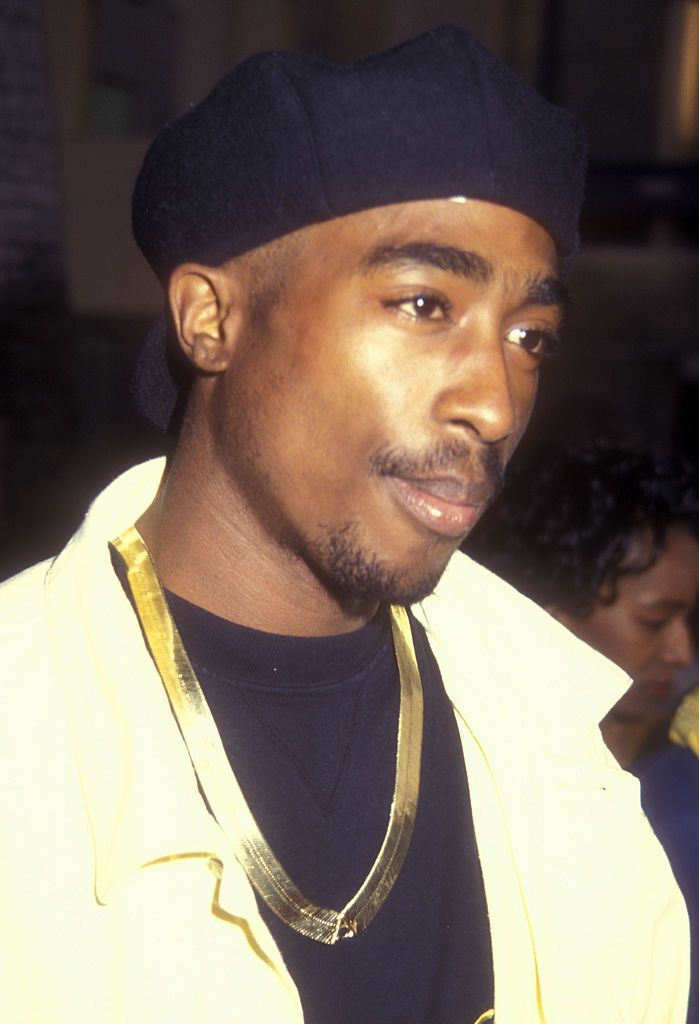
LAS VEGAS — The man accused of orchestrating the 1996 killing of rap icon Tupac Shakur went on trial Monday in Las Vegas, nearly three decades after the drive-by shooting that has stood as one of the most notorious unsolved crimes in American music history.
Duane “Keffe D” Davis, 63, faces a single count of murder with a deadly weapon with the intent to promote, further or assist a criminal gang in connection with Shakur’s death. Jury selection began Monday before Clark County District Court Judge Carli Kierny and is expected to take about a week, with the full trial projected to run as long as a month, and by some estimates up to six weeks.
Shakur, 25, was fatally shot on September 7, 1996, while stopped at a red light near East Flamingo Road and Koval Lane, about a block off the Las Vegas Strip, after attending a Mike Tyson-Bruce Seldon boxing match at the MGM Grand. He died six days later at University Medical Center. The shooting also wounded Death Row Records executive Marion “Suge” Knight, who was driving the car. Knight is now serving a 28-year sentence in a California prison in connection with a separate, unrelated 2015 killing.
Davis has been jailed without bail since his arrest in September 2023 and has pleaded not guilty. If convicted, he faces a possible sentence of life in prison. According to court filings and reporting on the case, Davis rejected a plea deal ahead of trial, opting instead to fight the charge despite the risk of a life sentence.
Prosecutors allege Davis was the on-the-ground leader of the group responsible for the shooting and supplied the firearm used in the attack, though the case is not expected to identify who actually fired the shots. Chief Deputy District Attorney Marc DiGiacomo has previously described Davis as the “on-ground, on-site commander” who “ordered the death” of Shakur.
What makes the case unusual, legal analysts say, is the near-total absence of traditional physical evidence. There is no murder weapon, no recovered getaway vehicle and no surveillance footage of the shooting. Instead, prosecutors are relying almost entirely on Davis’s own public statements — including his 2019 memoir “Compton Street Legend,” years of podcast and documentary interviews, and statements he gave to police — to build their case.
“In this case, almost all of the evidence the state will seek to introduce, will be to establish the credibility of Defendant’s various accounts of his role in the killing,” prosecutors wrote in a recent court filing.
That reliance on Davis’s own words has created what legal observers describe as an unusual courtroom dynamic: prosecutors will argue that the man they allege is a killer is nonetheless a credible narrator of his own crime, while defense attorneys are expected to portray their client as an unreliable storyteller who fabricated details to help sell books and boost his public profile. Since his arrest, Davis has said his previous accounts were false and were made largely to generate publicity, and he has blamed a co-author for inserting inaccurate information into his memoir.
Marc DiGiacomo has pointed to the irony at the center of the prosecution’s case, noting that Davis’s own public statements are what ultimately led to charges being filed. “Had Mr. Davis never opened his mouth, never written the book,” the case likely would not have resulted in prosecution, he told the court, according to reporting on a pretrial hearing.
Davis’s history with the case dates back decades. He has said publicly, including in his memoir, that he provided the gun used in the shooting to his nephew, Orlando Anderson, who authorities have long believed was the actual gunman. Anderson denied involvement before his death in an unrelated shooting in 1998 and was never charged. Authorities allege the killing was carried out in retaliation for a physical altercation between Anderson and Shakur inside the MGM Grand casino just hours before the shooting.
At the time of his 2023 arrest, Davis, a former high-ranking figure in the South Side Compton Crips street gang, spoke candidly with the arresting officer about the significance of the case. Asked what he was being taken into custody for, Davis responded that it was “the biggest case in Las Vegas history.”
In pretrial rulings, Judge Kierny allowed prosecutors to introduce excerpts from Davis’s book and media interviews at trial, finding that a prior proffer agreement with investigators did not shield his public statements from being used against him. She also permitted prosecutors to use statements Davis made to police during earlier proffer sessions, though she noted some concerns about the legal basis for doing so. The defense had separately sought to suppress interviews Davis gave to police in 2008 and 2009 and to have the jury fully sequestered for the length of the trial; both requests were denied, though the judge did allow for partial sequestration.
Given the intense public interest in the case, the court has implemented a daily seating lottery to manage limited courtroom capacity once the jury is empaneled, and proceedings are expected to be livestreamed, offering the public a rare, largely unfiltered look at testimony and evidence in a case that has captivated hip-hop fans for a generation.
Shakur’s family members have continued to press for accountability in the decades since his death. His stepbrother, Mopreme Shakur, has spoken publicly about the significance of finally seeing the case reach trial after nearly 30 years of unanswered questions.
Once jury selection concludes, both sides are expected to deliver opening statements before witness testimony begins, with the case likely to draw sustained national attention given its cultural significance and the decades-long wait for any resolution in one of the most closely watched unsolved killings in American popular culture.

Wealth vs. Income: Discover True Financial Freedom #shorts

Migrants PARAGLIDE into Ceuta – with one killed after crashing into the sea – amid fears another ‘invasion’ has been planned

America’s hottest ZIP codes for 2026 as Northeast and Midwest lead


-

 Fashion3 days ago
Weekend Open Thread: Mattifying Sunscreen
-

 Fashion3 days ago
Frugal Friday’s Workwear Report: Cap-Sleeve Pointelle Crewneck Sweater
-

 Sports4 days ago
Jordan Coyle & Cordiamo take Laya Arena Stakes at RDS
-

 News Videos2 days ago
Can Astrology Help Find Gold and Silver Trends? A Financial Astrology Guide
-
 Business5 days ago
US stocks: Dow closes at record on Mideast optimism; SpaceX, AMD drag Nasdaq
-
 Crypto World7 days ago
US Tech Stocks See Largest 5-Week Inflow in History: Can Nasdaq Break Its Downtrend?
-

 Politics4 days ago
Reform UK And Greens Sink To Lowest Favourability Ratings To Date
-

 Business6 days ago
Nvidia Stock Climbs 2.5% as Chip Sector Rally Builds Ahead of AMD Earnings, Nvidia’s Own Report Looms
-

 Crypto World6 days ago
Polymarket targets $20 billion valuation as competition heats up in prediction market sector
-

 Tech5 days ago
OpenAI, Anthropic AI agents targeted real people and systems in cyber tests
-

 Business5 days ago
Supply chain issues impact Ingredion
-
 Crypto World6 days ago
CLARITY Act Senate Vote Locked In, But 60-Vote Hurdle Looms Large
-

 Tech3 days ago
Rinn Pharma & Biopharma to join NordicPharmaTrain network
-

 Crypto World6 days ago
The Senate has one week: CLARITY’s last August window
-
 Crypto World5 days ago
Dow and S&P 500 Hit Records on AI Earnings: When Will the Bubble Burst?
-
 Crypto World7 days ago
California Wildfire Bets Expose Polymarket’s Dark Side
-

 Business1 day ago
How to Start a Cleaning Business: A Step-by-Step Guide
-

 Business1 day ago
Datadog: Best Of Breed For Multiple Reasons
-

 Business7 days ago
CNH Industrial Shares Jump Over 15% After Beating Estimates and Raising Full-Year Earnings Guidance
-

 Crypto World6 days ago
New York sued, who is next
You must be logged in to post a comment Login