
Crypto World
Australia Pulls 96 Crypto ATMs Offline Over AML Reporting Failures



The Australian Transaction Reports and Analysis Centre (AUSTRAC) has suspended crypto ATM operator Cryptolink’s registration for 3 months, forcing its 96 cryptocurrency ATMs across Australia offline.
The regulator cited ongoing concerns over the company’s anti-money laundering and counter-terrorism financing compliance.
Reporting Failures Trigger AUSTRAC’s Action Against Cryptolink
The suspension began Sunday, August 9, according to AUSTRAC. CEO Brendan Thomas said the regulator remains concerned about how Cryptolink manages high-risk transactions through its machines.
Thomas also stated that the company failed to “meet basic reporting obligations.”
“The company failed to submit these required reports or respond to AUSTRAC’s request for information, thus we’ve deemed it too high risk to continue operating at present,” the AUSTRAC CEO added.
The latest action follows an earlier compliance intervention in October 2025. AUSTRAC had identified late reporting of large cash transactions and weaknesses in Cryptolink’s money-laundering and terrorism-financing risk assessments.
The regulator then accepted an enforceable undertaking and issued a $56,340 infringement notice.
“We will continue to keep a close watch on the cryptocurrency sector, particularly businesses operating crypto ATMs, and will take action where we identify serious risks or non-compliance,” Thomas mentioned.
Cryptolink said in October that it had acknowledged delayed threshold transaction reports and was strengthening its systems. The company also said it was conducting independent reviews, improving transaction monitoring, and updating its risk assessments.
Follow us on X to get the latest news as it happens
Crypto ATMs Face Wider Regulatory Pressure
The latest action forms part of broader regulatory scrutiny of cryptocurrency ATMs worldwide. In the US, Missouri sued CoinFlip, a crypto ATM operator, in May.
Indiana, Tennessee, and Minnesota have also banned crypto ATM kiosks. Meanwhile, Canada has proposed a nationwide ban on crypto ATMs.
The UK took similar action earlier. The Financial Conduct Authority ordered crypto ATM operators to shut down in 2022.
Subscribe to our YouTube channel to watch leaders and journalists provide expert insights
The post Australia Pulls 96 Crypto ATMs Offline Over AML Reporting Failures appeared first on BeInCrypto.


Standard Chartered’s Geoff Kendrick has outlined a bullish long-term scenario for Chainlink’s LINK token, arguing that the accelerating rollout of tokenized real-world assets could significantly expand demand for secure onchain data infrastructure.
In a Monday report shared with Cointelegraph, Kendrick suggested tokenized assets reaching $4 trillion by the end of 2028 could translate into a more than 25-fold increase in LINK by the end of the decade—potentially pushing the token toward $200 by 2030, compared with roughly $8 at the time of the analysis.
Key takeaways
- Standard Chartered forecasts tokenized real-world assets could reach $4 trillion by end-2028, which the report links to increased onchain data needs.
- Kendrick argues that securely bringing external data onchain at scale may raise Chainlink’s fee generation, supporting an end-2030 outlook of $200 for LINK.
- The bank also projected a 37-fold rise in tokenized and crypto-native assets deployed in DeFi, reaching $2.7 trillion by 2030.
- Cointelegraph notes that tokenized RWA trading on decentralized exchanges reached a new all-time high of $141 billion in July, according to CryptoRank data.
- Standard Chartered flagged several risks to its LINK price view, including slower institutional tokenization, competitive pressure from other oracle providers, and potential technical issues.
Why tokenized assets could boost oracle demand
Kendrick’s thesis centers on a practical bottleneck: as tokenized real-world assets move onto blockchains, the ecosystem increasingly depends on reliable, permissioned, and verifiable information to function correctly onchain.
According to the report, tokenized assets will require “external data” to be brought securely onchain. Kendrick linked this to potential increases in Chainlink’s fee generation, suggesting that the LINK token could benefit if tokenized asset growth translates into broader network usage.
The bank’s onchain growth scenario for DeFi and tokenization
The report does not focus solely on tokenized RWA volumes. It also points to broader DeFi expansion, forecasting a 37-fold increase in tokenized and crypto-native assets deployed in decentralized finance—rising to $2.7 trillion by the end of 2030.
To support that kind of growth, Kendrick argued these assets will need more than just tokenization mechanics. The report highlights requirements including trusted data sourcing, interoperability between networks, privacy-preserving compliance, and integrations with existing financial systems.
In Kendrick’s view, meeting these needs is a capability currently embodied by Chainlink—an argument framed around the role of decentralized oracle infrastructure and the practical integration of offchain information into onchain applications.
Market momentum: tokenized RWA activity on DEXs keeps rising
The bullish framework arrives as tokenized RWA trading activity appears to be gaining traction in public markets.
Cointelegraph cited CryptoRank data showing tokenized RWA trading on decentralized exchanges reached a new all-time high of $141 billion in July. The same dataset was described as representing a 19.5% month-over-month increase, with public equities listed as a major driver.
That growth aligns with the report’s underlying premise: if more tokenized products—particularly those tied to traditional financial instruments—are actively traded onchain, the ecosystem’s dependency on secure and interoperable data workflows tends to rise in parallel.
Chainlink’s competitive positioning and the risks to the forecast
Standard Chartered’s bullish conclusion also builds on Chainlink’s standing in the oracle sector.
The report referenced crosschain oracle infrastructure metrics compiled by data aggregation services. Cointelegraph notes that Chainlink is ranked as the leading decentralized oracle provider for crosschain communication, citing $34.4 billion in total value secured, while Chronicle is listed second with $7.36 billion, according to DefiLlama’s oracle data.
Even with that positioning, Kendrick’s report included explicit caveats. Standard Chartered said risks to its LINK price forecast include slower-than-expected institutional tokenization initiatives, competition from specialist oracle providers, and potential technical setbacks that could affect performance or adoption.
What investors should watch next
Whether LINK reaches the kind of valuation implied by Standard Chartered’s end-2030 outlook will depend on how quickly real-world asset tokenization scales beyond pilots, and whether oracle infrastructure sees sustained fee growth alongside rising onchain trading and DeFi deployment. Readers should monitor both RWA adoption metrics and signs of intensifying oracle competition or execution risk.


The U.K.’s financial watchdog is preparing rules for tokenized gold as part of its digital asset strategy to ensure London maintains its status as the top global hub for the trade of the precious metal.
The Financial Conduct Authority (FCA) approached financial institutions to explore tokenized gold regulations to foster market growth, the Financial Times reported Monday, citing people familiar with the plans.
London’s over-the-counter market (OTC) market has historically ranked as the number one center for gold trade and currently accounts for 70% of the world’s notional trading volume, according to the World Gold Council. However, London’s dominance is being increasingly challenged by China.
The tokenization of gold is the process by which digital tokens are created to represent ownership rights in physical gold, with the token issuer holding the gold as backing.
The FCA, which has also discussed digitizing the wholesale financial markets, is seeking feedback on the role tokenized gold could play as collateral in wholesale markets and is expected to announce progress on drafting new rules for tokenized digital assets within the next few months, the report said.
The regulator had not responded to CoinDesk’s request for further comment at press time.


Crypto exchange Coinsbuy lost more than $8 million in a coordinated attack across TRON and Ethereum on Aug. 9, according to onchain data reviewed by blockchain security researchers.
The attacker began with a 5 USDT transaction before draining eight TRON wallets of 6.04 million of the dollar-pegged stablecoin in about an hour. On Ethereum, three wallets were simultaneously emptied of 1.89 million USDT and 77 ETH, which was swapped to ETH via 1inch through a wallet created the same day.
Onchain records show the two chains were linked through cross-chain swapper Bridgers, whose Ethereum payout contract sent funds directly into the Ethereum swap wallet, connecting what appeared to be separate operations into a single incident.
The attacker routed some 79% of the stolen funds through instant exchange FixedFloat using roughly 50 single-use addresses. ChangeNOW separately froze a six-figure sum after being contacted by Specter Investigations.
Around 282 ETH, roughly $542,000, across five addresses remains unmoved.
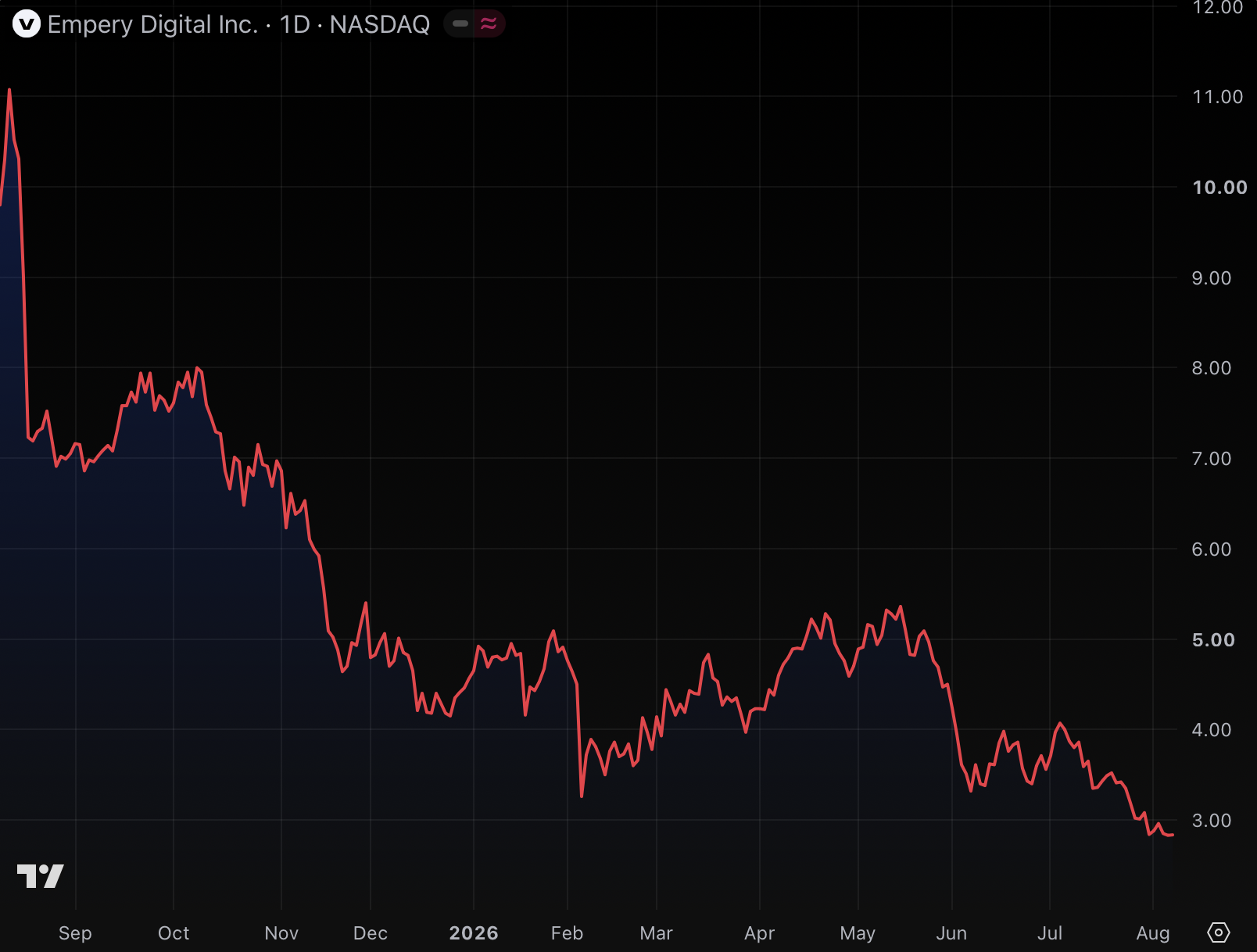
A vice chancellor in the Delaware Court of Chancery has removed the protection of anonymity for a list of stockholders in BTC treasury company, Empery Digital, which has seen its stock price crash 72% over the past year.
The action accelerates an already expedited lawsuit by plaintiff ATG Capital, which resorted to legal action as Empery Digital’s stock and BTC prices cratered.
One year ago, its stock price was $10 and the company held 4,018 BTC at an average cost of $117,552 apiece. On Friday, its stock price was $2.84 and each of those BTC are now worth approximately $65,000.
As of August 6, it reported holdings of just 1,279 BTC, a decline of 68%, after the company sold several times on the way down and finalized tens of millions of dollars worth of losses.
Today, this so-called BTC treasury company is worth less than the BTC it holds.
Last week, a vice chancellor decided who gets to see the names of Empery Digital stockholders that activist fund ATG is using for leverage to replace board seats at the company.
It redacted a list of stockholder names it had assembled for its initiative, calling it a “protected business strategy.” Vice Chancellor Lori W. Will disagreed, saying, “The names of stockholders are not, in and of themselves, a business strategy.”
The order forces ATG to reveal its list to Empery’s counsel, although the names will remain obscured from public view for now. The vice chancellor allowed ATG to maintain the list’s designation as “highly confidential,” which confines its disclosure to parties within the litigation.
Read more: Saylor continues to post cringe AI slop amid Strategy’s BTC sell-off
Delaware judge unconvinced by ATG
ATG is upset for many reasons, including the company’s dismal stock price. The activist alleges Empery Digital’s board unfairly used bylaws to shut down a proxy voting contest.
Empery Digital counter-claims that ATG nomination paperwork to its board was genuinely defective.
Although the formal portions of the trial have concluded, there are still “final closing briefs before the court renders its verdict.”
The saga started a year ago, when electric off-road vehicle maker Volcon closed a private placement of more than $500 million on July 21, 2025, installing Empery Asset Management principal Ryan Lane as chairman and co-CEO.
It renamed itself Empery Digital less than two weeks later.
By August 11, it held 4,018.36 BTC at an average cost of $117,552 apiece.
The company only has 1,279 BTC remaining after selling the majority of its holdings for staggering losses. Worse, outstanding corporate loan agreements restrict 954 of those 1,279 BTC.
Defending its proxy fight with ATG has already cost the company $7,828,001 in fees through June 30.
ATG Capital Opportunities Fund LP is an outside activist fund, not a group of insiders. Gabriel Gliksberg founded ATG Capital Management in November 2020 and has proposed nine directors for Empery Digital.
His fund holds 4.5 million Empery Digital shares. That was 14.7% of the company in March, and a larger slice now that Empery’s own buybacks have decreased the size of the float.
Empery announced on March 27 that ATG’s slate of directors and a separate self-nomination from shareholder Tice P. Brown were both “invalid and misleading” under its corporate bylaws.
Absent a “valid court order,” the company claimed, “any votes or ballots cast for any of ATG Capital’s purported nominees will be void and of no force or effect.”
Got a tip? Send us an email securely via Protos Leaks. For more informed news and investigations, follow us on X, Bluesky, and Google News, or subscribe to our YouTube channel.

The world’s largest corporate holder of bitcoin continues to offload portions of its cryptocurrency fortune.
In the latest example, the company sold another 1,690 BTC for $108.6 million and used the proceeds to repurchase 1.15 million STRC preferred shares. It also sold 6.59 million MSTR shares to raise $653.1 million and increase its USD reserve to over $4.6 billion.
Its total bitcoin stash has declined to 840,447 BTC, acquired for $63.36 billion at an average price of $75,385.
Strategy increased its USD Reserve by $650M and repurchased $109M of $STRC. This increased USD Duration by 143 days to 2.7 yrs and tightened STRC’s BTC Credit by 10 bps. As of 8/9/26, we hold ₿840,447 in our BTC Reserve and $4.65B in our USD Reserve. $MSTR…
— Michael Saylor (@saylor) August 10, 2026
Today’s announcement from the company and its former CEO follows a hint by Saylor on X yesterday, in which he published Strategy’s numerous orange dots (representing all of its BTC purchases), with the cryptic text ‘Doing Business.’
Some analysts were quick to determine that the firm has resumed its bitcoin purchases after a hiatus of a month and a half. However, Lookonchain reported that a wallet linked to Strategy has sold another portion of BTC, just like it did during the previous week, and claimed that the message actually meant more offloads.
Meanwhile, H100 Group indeed resumed its BTC purchases, announcing a substantial acquisition of 2,455 units in the world’s first Bitcoin-for-Bitcoin transaction.
The post Strategy Dumps Another 1,690 BTC in Ongoing Bitcoin Sell-Off appeared first on CryptoPotato.
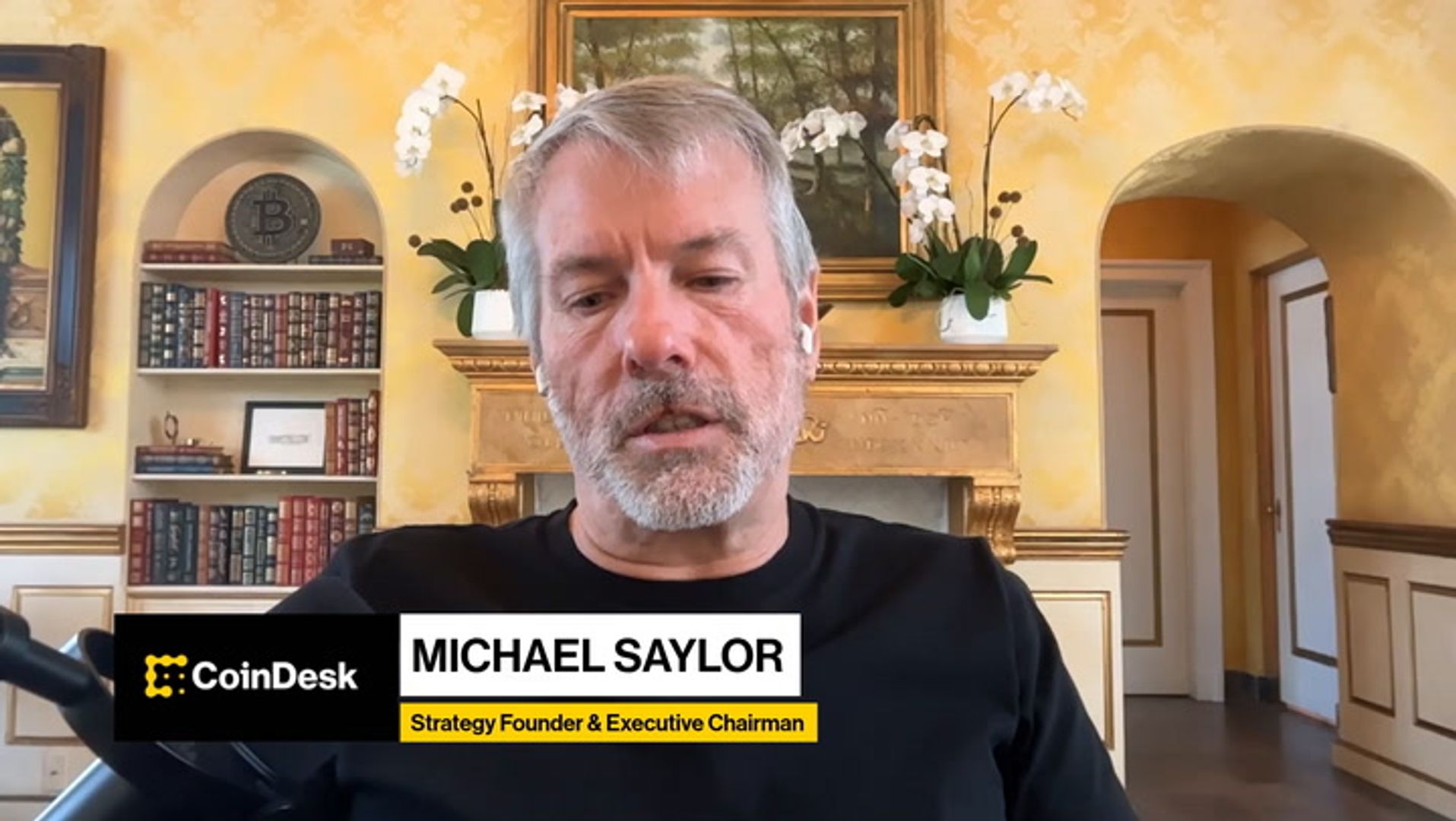
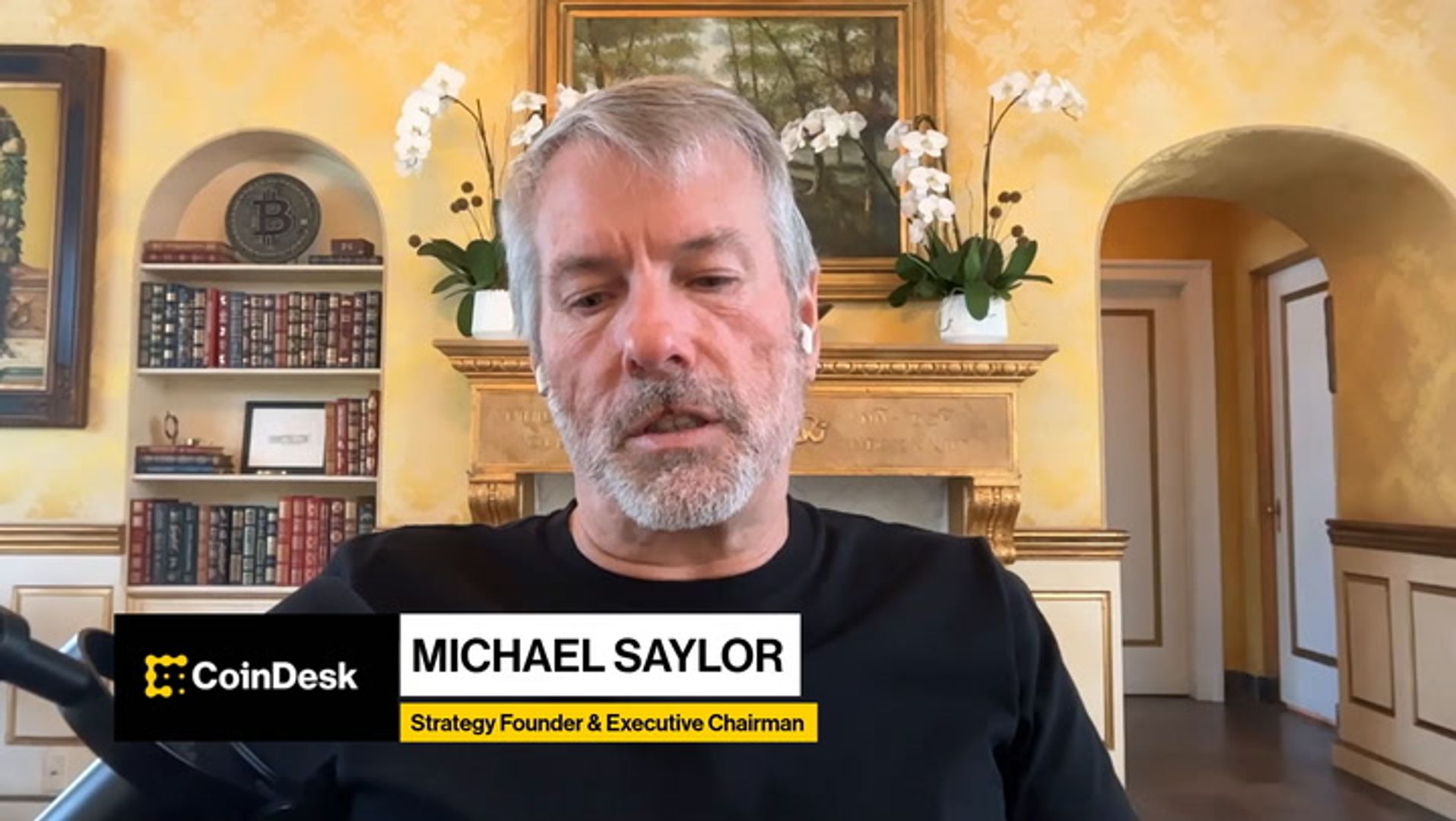
Bitcoin treasury firm Strategy (MSTR) had raised $108.6 million last week through the sale of 1,690 bitcoin and an additional $653.1 million from the sale of 6.59 million shares of common stock, according to a Monday filing.
The company used the bitcoin sale proceeds to repurchase 1,152,020 shares of its variable-rate preferred stock, STRC, for $108.6 million.
The bitcoin sales reduced Strategy’s holdings to 840,447 BTC, acquired for $63.36 billion at an average price of $75,385. The 1,690 bitcoin were sold at an average price of $64,262, net of fees and expenses.
Strategy directed $650 million of the proceeds from its common-stock sales to its USD reserve, lifting the balance to $4.65 billion as of Aug. 9. The remaining $3.1 million was added to the company’s cash balance.
Following the latest transactions, Strategy has $785.2 million remaining under its preferred-stock repurchase program and $1 billion available under its MSTR common-stock repurchase program.
MSTR and STRC are both up 0.5% in Monday pre-market trading, with bitcoin changing hands near $65,000.


Key takeaways
- Ethereum trades near $1,918 with a mildly bullish short-term outlook.
- ETH holds above the 50-day EMA at $1,864 but remains capped by the 100-day EMA near $1,924.
- The RSI at 56 signals steady buying momentum without overbought conditions.
Ethereum consolidates near $1,918
Ethereum (ETH) trades around $1,918, maintaining a mildly constructive outlook as buyers defend the area above its 50-day Exponential Moving Average (EMA).
The second-largest cryptocurrency is currently caught between the 50-day EMA at approximately $1,864 and the 100-day EMA near $1,924. This narrow range reflects an ongoing battle between buyers seeking to extend the recovery and sellers defending the longer-term resistance level.
Ethereum’s ability to hold above the 50-day EMA suggests that traders continue to buy price declines. However, ETH must decisively overcome the 100-day EMA to establish stronger bullish momentum.
ETH buyers defend the 50-Day EMA
The 50-day EMA at $1,864 provides Ethereum’s most important near-term support. ETH’s position above this indicator signals that the short-term trend is improving and that buyers remain active during pullbacks.
Continued support above the moving average would preserve the possibility of a breakout toward $2,000.
However, Ethereum remains below the 100-day EMA at $1,924. This moving average has emerged as an immediate barrier and could continue to limit the recovery unless trading volume and buying pressure strengthen.
A sustained daily close above $1,924 would provide an early indication that bulls are gaining control.
Ethereum’s momentum indicators support a cautiously optimistic outlook. The Relative Strength Index stands near 56, above its neutral midpoint of 50.
This reading points to steady bullish momentum while remaining comfortably below the overbought threshold of 70.
The RSI therefore leaves Ethereum with room to advance before the rally becomes technically overstretched.
Meanwhile, the Moving Average Convergence Divergence line remains slightly negative but continues to improve. This setup indicates that bearish momentum is weakening, although it does not yet confirm a fully established bullish trend.
Together, the RSI and MACD suggest that buyers are gradually strengthening their position.
Ethereum faces its first immediate resistance at the 100-day EMA near $1,924. A decisive move above this level could clear the way toward the psychological and horizontal resistance at $2,000.
This area will likely represent a significant test because round-number levels often attract increased selling and profit-taking.
A sustained breakout above $2,000 would improve Ethereum’s technical structure and bring the 200-day EMA at approximately $2,124 into focus.
The 200-day EMA is particularly important because it serves as a broader measure of the long-term trend. ETH would need to reclaim this level to signal a more significant bullish reversal.
Ethereum’s recovery faces three major overhead barriers:
- The 100-day EMA at $1,924
- The psychological resistance at $2,000
- The 200-day EMA at $2,124
Breaking through $1,924 would strengthen the short-term outlook, while a move above $2,000 could attract additional buying interest.
However, the 200-day EMA at $2,124 remains the broader trend cap. Failure to clear this moving average could leave Ethereum vulnerable to renewed selling pressure after any short-term rally.
The current pivot area around $1,918 provides Ethereum’s initial support. If ETH loses this level, the 50-day EMA at $1,864 would become the next important defensive zone. Buyers must protect this moving average to preserve the constructive short-term structure.

A decisive break below $1,864 could weaken momentum and increase the risk of a deeper correction. In that scenario, the distant horizontal support at $1,385 could eventually come into focus, although intermediate support levels may slow the decline.
For now, Ethereum maintains a mildly bullish bias above the 50-day EMA. A confirmed close above $1,924 is needed to open the path toward $2,000 and potentially the 200-day EMA at $2,124.


Key takeaways
- XRP trades around $1.03 after falling more than 5% during the previous week.
- The token remains below its 50-day, 100-day, and 200-day EMAs, maintaining a bearish technical structure.
- An RSI reading near 39 and a negative MACD signal indicate persistent selling pressure.
XRP trades near $1.03 on Monday, recording a modest rebound after declining more than 5% during the previous week.
Despite the intraday recovery, XRP retains a bearish near-term outlook because it remains below all three major Exponential Moving Averages. Weak momentum indicators also suggest that sellers continue to control the broader price trend.
The $1.00 psychological level is now crucial. Buyers must defend this support to prevent another leg lower, while XRP needs to reclaim the 50-day EMA at $1.10 to improve its short-term outlook.
XRP remains below all major moving averages
XRP currently trades below the 50-day EMA at $1.10, the 100-day EMA at $1.18, and the 200-day EMA at $1.37
Trading below all three moving averages reflects weakness across short-, medium-, and long-term time frames.
The positioning also creates a wide zone of overhead resistance. Any XRP recovery is likely to face renewed selling as the price approaches these moving averages.
The 50-day EMA at $1.10 represents the first major test. A sustained daily close above this level would suggest that short-term momentum is beginning to improve.
XRP’s momentum indicators remain bearish despite Monday’s slight recovery. The Relative Strength Index stands near 39, below its neutral midpoint of 50.
This reading shows that selling pressure remains dominant, although XRP has not yet entered the conventional oversold zone below 30.
The Moving Average Convergence Divergence indicator is also negative, reinforcing the bearish outlook.
Together, the RSI and MACD suggest that XRP’s rebound may remain limited unless buyers return with stronger trading volume. Any short-term rallies could attract selling while the token remains beneath its major moving averages.
XRP approaches critical $1 support
The psychological and horizontal level at $1.00 provides XRP’s most important immediate support.
Buyers may attempt to defend this area because round-number levels often attract increased demand. Holding above $1 could allow XRP to consolidate and make another attempt to reclaim its 50-day EMA.
However, a decisive daily close below $1.00 would weaken the technical structure and could accelerate selling pressure.
The absence of another specified nearby support means that a breakdown could expose XRP to a deeper correction as traders search for the next demand zone.
XRP must break above the 50-day EMA at $1.10 to begin reversing its bearish short-term trend.
The move from $1.03 to $1.10 would require a gain of nearly 7%. Clearing this moving average could encourage buyers to target the 100-day EMA at $1.18.
If XRP breaks above $1.18, the horizontal resistance at $1.30 would become the next upside target.
However, each of these levels could attract profit-taking and renewed selling, making a sustained recovery dependent on strong demand and improving momentum.
The 200-day EMA at $1.37 represents XRP’s most substantial technical barrier. This moving average serves as an important gauge of the broader trend. XRP would need to reclaim it to signal a meaningful shift away from its long-term bearish structure.
Beyond $1.37, the next major resistance is located around $1.90. However, this target remains distant while XRP trades below its nearer moving-average barriers.
For now, the more immediate recovery path runs through $1.10, $1.18, and $1.30.

XRP’s technical outlook remains bearish despite its modest recovery to $1.03. The token’s position below all major moving averages and its weak momentum indicators suggest that sellers retain control. The $1.00 support level will determine whether XRP can stabilize or faces another wave of losses.
Holding above $1 could support consolidation and a recovery toward the 50-day EMA at $1.10. Conversely, a decisive breakdown would confirm renewed bearish momentum and increase the risk of a deeper correction.
Crypto World
Clarity Act Delayed Until September As Impasse Over Ethics Provisions Bogs Down Negotiations

The Clarity Act has been punted to September after lawmakers missed the August window due to disagreements over ethics provisions, stablecoin yields, illicit finance measures, banking industry concerns, and a packed Senate calendar.
According to a statement by US Senator Jim Risch, the Senate will hold a procedural vote on the act on September 15. The delay brings the United States Securities and Exchange Commission’s (SEC) rule-making agenda in the spotlight. SEC Chair Paul Atkins has stated that the commission can, in partnership with the CFTC, provide a regulatory bridge while the Senate continues working on the act.
Clarity Act Faces Another Delay
The Clarity Act has been delayed yet again after lawmakers failed to agree on several key issues, including stablecoin yields and ethics provisions, the two sticking points. Senate Democrats have ruled out supporting the bill, arguing it does not satisfactorily address potential conflicts of interest involving federal officials, including the president, and their digital asset holdings. They have demanded stronger language in the bill, highlighting President Trump’s 2025 financial disclosure, which reported $1.4 billion in crypto-related income.
Additionally, the banking lobby introduced last-minute changes to key provisions dealing with stablecoin rules, while a packed legislative schedule meant the Senate prioritized other legislation, including funding extensions, Russia sanctions, and federal nominations over the Clarity Act.
Senators Ruben Gallego and Thom Tillis sent a bipartisan ethics proposal to the White House. The proposal would give state attorneys the authority to enforce restrictions on federal officials issuing digital assets. The proposal also requires President Trump to divest his crypto interests. However, President Trump has yet to approve the proposal.
Vote Set For September
Senate Majority Leader John Thune confirmed the delay on Thursday, while Senator Jim Risch stated that the Senate will begin the process of passing the Clarity Act on September 15.
“On September 15th, the U.S. Senate will start the process of passing the Clarity Act. The stakes couldn’t be higher. We must advance this important bill and make it law.”
Risch argued that the delay in passing the legislation could leave US citizens vulnerable to scam and fraud attempts, while shifting jobs and investments abroad.
Democratic support is crucial in ensuring the bill passes the Senate. The Republicans hold only 53 seats, significantly short of the 60 seats needed to invoke cloture and defeat a filibuster. While Republicans and crypto-friendly Democrats try to iron out a compromise, Senator Elizabeth Warren wants the Clarity Act to be rejected because it does not offer enough protection for investors and the financial system.
SEC Takes Center Stage
The legislative deadlock puts regulatory responsibility on the SEC while Senators continue efforts to get the legislation passed. SEC Chair Paul Atkins proposed working with the Commodity Futures Trading Commission (CFTC) to provide a regulatory bridge and create a parallel regulatory track. Atkins stated that the collaboration would include token classifications and potential exemptions, permitting some on-chain transactions under specific federal requirements. The agencies issued joint guidance in March, stating that most cryptocurrencies are not securities.
The SEC’s July regulatory agenda targeted specific policy areas, including crypto, custody, fundraising, and tokenized securities. Separately, it is creating rules governing how crypto can be held, traded, and issued under federal securities laws.
However, the SEC Chair has clearly distinguished agency rules from a market framework, calling Congressional legislation “the way to future-proof” crypto regulation in the US. Atkins outlined the SEC’s authority regarding crypto, stating that the agency could clarify how securities laws could apply to crypto, address custody rules, establish exemptions, and create rules for securities-related on-chain activities.
Crypto Industry Not Worried
While the delay may have disappointed the industry, key figures believe crypto will thrive even if the Clarity Act fails to pass. Bitwise CIO Matt Hougan believes the industry will move forward despite regulatory uncertainty and legislative delays. Hougan stated,
“Crypto will be fine. Even if Clarity doesn’t pass, the crypto industry will find a way forward.”
Investors, market watchers, and analysts are hopeful after Senator Thune said the Senate will vote on the bill in September. However, with a packed legislative schedule, it might be difficult for the bill to pass this year.
Chris Niebuhr, analyst at Beacon Policy Advisors, stated,
“Nothing is dead until the year is up, technically speaking, but it’s hard to see the issues that have come up being solved in the time they have left.”
Disclaimer: This article is provided for informational purposes only. It is not offered or intended to be used as legal, tax, investment, financial, or other advice.

For years, banks ignored stablecoins. Then they tried to regulate them. Now they’re buying them for $1.8 billion. That’s not adoption. That’s capitulation.
The Acquisition Nobody’s Framing Correctly
Mastercard just acquired BVNK for $1.8 billion.
The headlines called it a “strategic move into digital payments.” A “bold bet on stablecoins.” An “expansion of Mastercard’s crypto infrastructure.”
All technically accurate. All missing the point.
Here’s the correct framing: one of the most powerful financial institutions on the planet just paid $1.8 billion to buy something it spent years trying to make irrelevant.
That’s not a strategic move. That’s a surrender with a press release.
What BVNK Actually Is
BVNK is a stablecoin infrastructure company. It allows businesses to send, receive, and settle payments using stablecoins, without the friction of traditional banking rails.
It’s fast. It’s global. It settles in seconds, not days. It doesn’t close on weekends. It doesn’t charge $25 wire fees. It doesn’t require the sender and receiver to have accounts at the same institution or even the same country.
In other words: it does everything that Mastercard’s network does, but without Mastercard.
That’s what Mastercard just paid $1.8 billion for.
Not to build better technology. To eliminate a competitor before it eliminated them.
The Timeline Of Denial
To understand what this acquisition means, you have to understand how long it took the traditional finance world to take stablecoins seriously.
2018-2019: Stablecoins are dismissed as a crypto curiosity. Useful for traders to park funds between positions. Not a real payments threat.
2020: USDC and Tether volumes start growing. Banks notice but frame it as a niche use case. “Real businesses use real banks.”
2021: Stablecoin transaction volumes surpass Visa’s annual volume for the first time. Banks start paying attention, not to adopt, but to lobby against.
2022-2023: Regulatory pressure mounts. Banks argue stablecoins are unsafe, unregulated, a systemic risk. The implicit message: regulate them out of existence.
2024: Stablecoins settle $46 trillion annually. The regulatory campaign fails. Congress starts moving toward legitimizing stablecoins rather than banning them.
2025: JPMorgan, Citigroup, and others begin building their own stablecoin products. The strategy shifts from “kill it” to “become it.”
2026: Mastercard pays $1.8 billion for BVNK.
That’s not a story about innovation. That’s a story about an industry losing a war and buying peace.
Why $1.8 Billion Is An Admission
Every acquisition has a story underneath the press release. Usually it’s one of three things:
Acqui-hire: We want your team. The product is secondary.
Market access: We want your customers. Cheaper to buy than build.
Threat elimination: You were going to hurt us. Now you won’t.
The BVNK acquisition is the third.
BVNK wasn’t just building a payments product. It was building a payments product that didn’t need Mastercard. Its infrastructure routes around the card networks entirely, no interchange fees, no network rails, no Mastercard.
Mastercard paying $1.8 billion for BVNK doesn’t add BVNK’s technology to Mastercard’s arsenal. It removes BVNK’s technology from the competitive landscape.
That’s what $1.8 billion buys: the absence of a threat.
What Mastercard Is Actually Afraid Of
Mastercard’s business model is elegant and simple: sit between buyers and sellers, charge a small percentage of every transaction that crosses your network, and collect that fee billions of times per day.
The model has worked for 60 years because there was no alternative. If you wanted to accept payments, you needed a card network. Period.
Stablecoins are the first credible alternative.
A merchant who accepts USDC doesn’t pay interchange fees. A business that settles invoices in stablecoins doesn’t need a correspondent bank. A company that pays international contractors in stablecoins bypasses the entire wire transfer system.
Every transaction that settles on stablecoin rails is a transaction that doesn’t cross Mastercard’s network.
At $46 trillion in annual stablecoin volume and growing, this isn’t a rounding error. It’s an existential question about whether the card network model survives the next decade.
Mastercard’s answer: buy the infrastructure before it scales beyond reach.
The Pattern Across Financial Services
Mastercard isn’t alone. The pattern is consistent across traditional finance:
JPMorgan spent years dismissing Bitcoin, then launched its own blockchain (JPM Coin), then integrated crypto products for wealth clients.
BlackRock called Bitcoin a “money laundering index” in 2017. It now manages $175 billion in Bitcoin ETF products.
PayPal fought crypto regulation for years. Now it issues its own stablecoin (PYUSD).
Visa called Bitcoin “not a payment system.” Now it runs stablecoin settlement pilots.
The sequence is always the same: dismissal → regulation attempts → failed regulation → build your own → acquire the competition.
Every institution eventually reaches the same conclusion: the technology works. The users want it. You can’t stop it. So you buy it.
BVNK at $1.8 billion is just the latest data point in a pattern that’s been playing out for five years.
What This Means For Crypto’s Future
The BVNK acquisition has implications beyond a single deal.
Stablecoins are no longer a crypto product. When Mastercard pays $1.8 billion for stablecoin infrastructure, stablecoins become financial infrastructure. The distinction between “crypto” and “payments” collapses.
The regulatory argument shifts. Banks argued that stablecoins were dangerous because they were unregulated. Now that banks are buying stablecoin companies, that argument becomes self-undermining. You can’t argue an asset class is too dangerous to exist while simultaneously acquiring it.
The innovation cycle accelerates. When incumbents start buying challengers, the challengers that weren’t acquired build faster. BVNK being acquired doesn’t eliminate the threat; it signals to every stablecoin startup that they’re worth acquiring. That’s fuel for more innovation, not less.
The price of independence goes up. Every stablecoin startup just got a new benchmark. If BVNK is worth $1.8 billion to Mastercard, what’s the next one worth? The acquisition creates a market for exactly the kind of infrastructure banks are trying to buy.
The Irony Worth Noting
The entire premise of crypto was disintermediation. Remove the middlemen. Let value move directly between people without banks taking a cut.
Now Mastercard, the quintessential financial middleman, owns a stablecoin company.
The technology that was supposed to eliminate Mastercard is now inside Mastercard.
That’s not a failure of crypto. That’s what happens when technology works well enough that the incumbents can’t ignore it. They integrate it, wrap it in their existing infrastructure, and charge for access.
This is what happened to the internet. The open web became the platform economy. Free communication became mediated by Google, Facebook, and Amazon. The technology remained. The disintermediation didn’t.
Stablecoins are following the same path. The technology is real. The utility is proven. And now the institutions are buying it, which means they’ll also control access to it.
Whether that’s good or bad depends on what you thought stablecoins were for.
The Question Crypto Has To Answer
If Mastercard owns BVNK, and JPMorgan owns its blockchain, and PayPal issues its own stablecoin, at what point does “crypto” just become “finance with better infrastructure”?
That’s not a rhetorical question. It has real implications for everyone who believed in the original premise: a financial system that doesn’t require institutional permission.
Every acquisition of a crypto company by a traditional institution is a step toward a world where the technology is decentralized but the access is not.
You can use stablecoins, as long as you use the ones Mastercard controls. You can hold Bitcoin, as long as you hold it through a BlackRock ETF. You can access DeFi, as long as you access it through a compliant on-ramp.
The rails are being bought. One acquisition at a time.
What Comes Next
Expect more acquisitions. Not because traditional finance suddenly loves crypto. Because the alternative, competing against it, is increasingly expensive.
BVNK at $1.8 billion is a bargain compared to what it would cost Mastercard to lose 10% of global payment volume to stablecoin rails over the next five years.
This is how incumbent industries absorb disruption: not by fighting it, but by buying it.
The crypto industry should take note. Because every acquisition is also a validation and a warning.
Validated: the technology works. The use case is real. The value is undeniable.
Warning: the infrastructure you built to escape the system is being bought by the system.
The question is whether there’s enough left outside the perimeter to still call it a revolution.

Hints And Solution For August 10, 2026 As Puzzle Number 1878 Stumps Players Worldwide

Standard Chartered Sees Tokenized RWA Growth to $4T, LINK Could Hit $200 by 2030

Agatha Christie Officially Returns With a New Detective Series Next Year


-

 Fashion3 days ago
Weekend Open Thread: Mattifying Sunscreen
-

 Fashion3 days ago
Frugal Friday’s Workwear Report: Cap-Sleeve Pointelle Crewneck Sweater
-

 Sports4 days ago
Jordan Coyle & Cordiamo take Laya Arena Stakes at RDS
-

 News Videos2 days ago
Can Astrology Help Find Gold and Silver Trends? A Financial Astrology Guide
-
 Business5 days ago
US stocks: Dow closes at record on Mideast optimism; SpaceX, AMD drag Nasdaq
-

 Crypto World7 days ago
US Tech Stocks See Largest 5-Week Inflow in History: Can Nasdaq Break Its Downtrend?
-

 Politics4 days ago
Reform UK And Greens Sink To Lowest Favourability Ratings To Date
-

 Business6 days ago
Nvidia Stock Climbs 2.5% as Chip Sector Rally Builds Ahead of AMD Earnings, Nvidia’s Own Report Looms
-

 Crypto World6 days ago
Polymarket targets $20 billion valuation as competition heats up in prediction market sector
-

 Tech5 days ago
OpenAI, Anthropic AI agents targeted real people and systems in cyber tests
-

 Business5 days ago
Supply chain issues impact Ingredion
-
 Crypto World6 days ago
CLARITY Act Senate Vote Locked In, But 60-Vote Hurdle Looms Large
-

 Tech3 days ago
Rinn Pharma & Biopharma to join NordicPharmaTrain network
-

 Crypto World6 days ago
The Senate has one week: CLARITY’s last August window
-
 Crypto World5 days ago
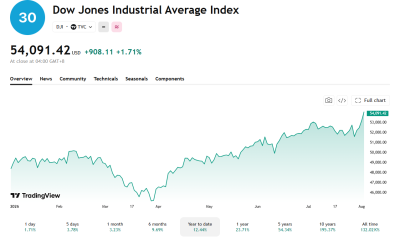
Dow and S&P 500 Hit Records on AI Earnings: When Will the Bubble Burst?
-
 Crypto World7 days ago
California Wildfire Bets Expose Polymarket’s Dark Side
-

 Business1 day ago
How to Start a Cleaning Business: A Step-by-Step Guide
-

 Business1 day ago
Datadog: Best Of Breed For Multiple Reasons
-

 Business7 days ago
CNH Industrial Shares Jump Over 15% After Beating Estimates and Raising Full-Year Earnings Guidance
-

 Crypto World6 days ago
New York sued, who is next
You must be logged in to post a comment Login