



Connect with us

Business

Mondelez bringing Grenade to the US

Published

on

Mondelez bringing Grenade to the US

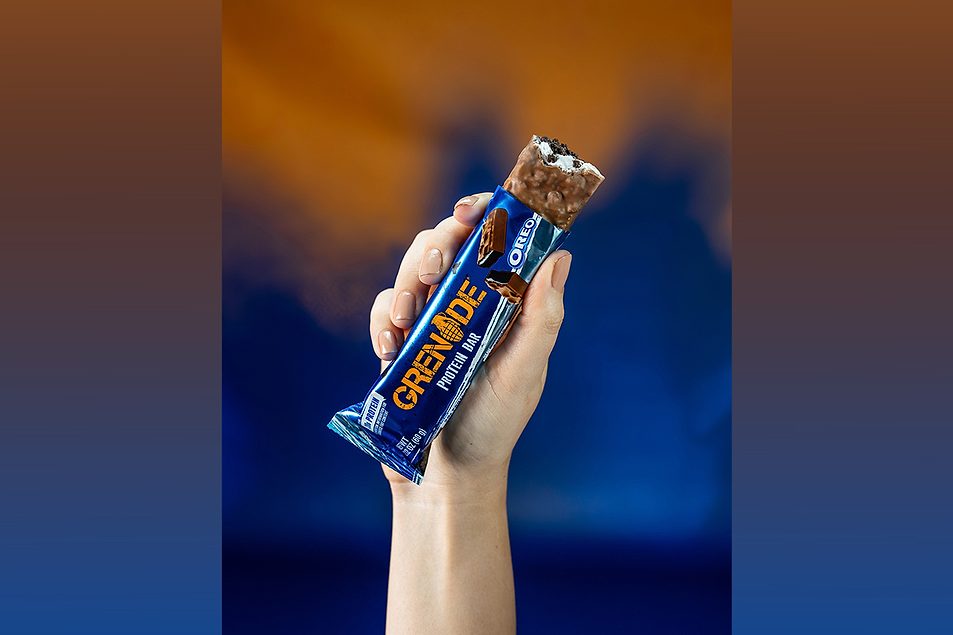
CHICAGO — Mondelez International, Inc. is introducing its Grenade brand of protein bars in the United States. Grenade products initially will be available at Amazon.com, GNC, The Vitamin Shoppe and Bodybuilding.com with plans to expand retail distribution later this year.

“We know today’s consumers want products that deliver on both taste and function, and that’s exactly what Grenade was built for,” said Alan Barratt, co-founder. “As we continue to grow our presence in the US, we’re excited to bring more consumers the bold flavors, high-protein nutrition and unapologetic attitude that have made Grenade a favorite with fans around the world.”

Grenade bars feature 20 grams of protein and 1 gram of sugar. The US launch will feature four flavors, including a collaboration with Mondelez’s Oreo brand, the company said.

Grenade was founded in the United Kingdom in 2010 by Alan and Juliet Barratt. Mondelez International acquired the business in 2021.

Advertisement

In an interview with Food Business News earlier this year, Dirk Van de Put, Mondelez International’s chairman and chief executive officer, identified the company’s bar business as a growth opportunity.

“It’s not just in the US, but it’s also in the rest of the world,” he said this past February. “We have a bar in the UK called Grenade, a very good tasting protein bar that probably would beat anything in the US market. I think that is going to be the one that for us is going to be giving the biggest growth.”

Other bar brands in Mondelez’s portfolio include Perfect Bar, Hu and Clif.

Continue Reading
Click to comment

You must be logged in to post a comment Login

Leave a Reply

Business

Moderna CEO warns China is pouring state money into mRNA technology

Published

on

Moderna CEO warns China is pouring state money into mRNA technology

Moderna’s stock is riding high after news of a personalized cancer treatment, but CEO Stéphane Bancel is warning about a bigger threat: China’s state-backed push to challenge the U.S. in biotechnology.

In an interview on “Mornings with Maria” Monday, Bancel said that while Washington pulls back on mRNA funding, Beijing is pouring state money into biotechnology to challenge the U.S. Bancel said keeping drug manufacturing on American soil, including at Moderna’s facilities in Massachusetts, helps protect both U.S. patients and America’s lead in healthcare.

Advertisement

“I think the government has an active role to play in taking risk for really innovative medicine,” Bancel told FOX Business’ Cheryl Casone, “and indeed, if you think about what’s happening around the world, we know, for example, that in China there’s a lot of mRNA investments.”

“The technology has already proven itself during COVID with the vaccine, now with cancer, as I said, very soon in rare genetic disease, and I think that we want to make sure that there is investment because those investments in the long term help American patients,” he continued.

HOW GLP-1 WIGHT-LOSS DRUGS ARE RESHAPING THE HEALTHCARE INDUSTRY

The Chinese Communist Party has designated biotechnology as a “strategic emerging industry” and provided state financing and subsidies to support domestic firms as China seeks to dominate key parts of the biotechnology industry, according to the National Security Commission on Emerging Biotechnology.

Advertisement
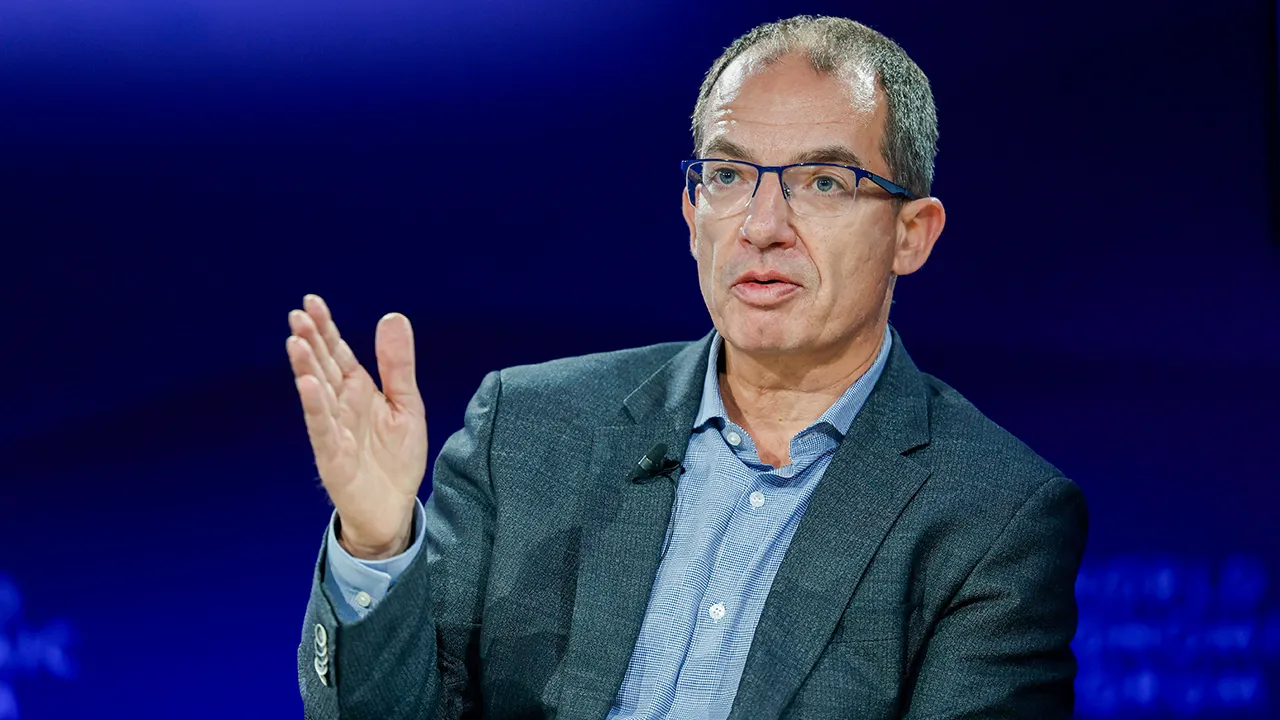
Moderna CEO Stephane Bancel on stage

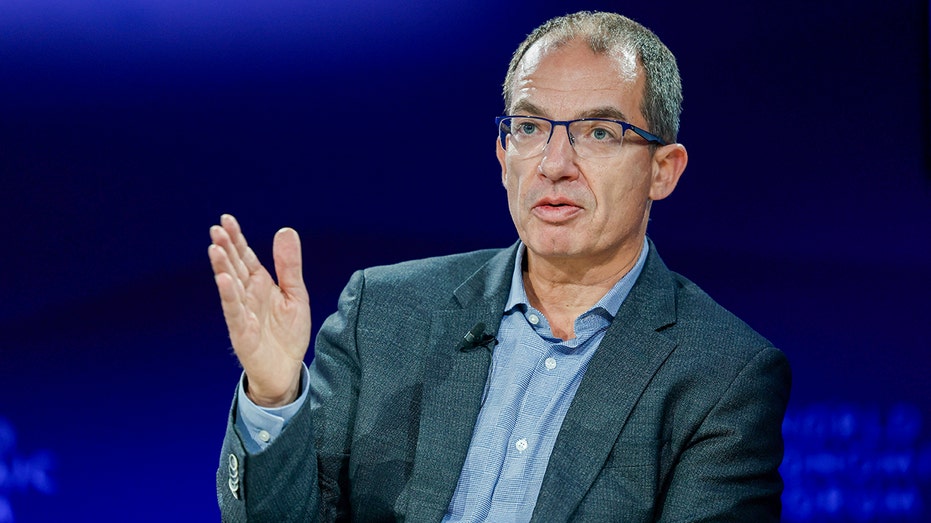
Stephane Bancel, CEO of Moderna Inc., during a panel session at the World Economic Forum (WEF) in Davos, Switzerland. (Getty Images)

Meanwhile, the U.S. Department of Health and Human Services (HHS) announced last August that it would wind down nearly $500 million worth of mRNA vaccine development projects through the Biomedical Advanced Research and Development Authority (BARDA).

HHS did not immediately respond to Fox News Digital’s request for comment.

Instead of relying on foreign supply chains for pharmaceutical supplies and ingredients, Bancel said Moderna has countered this threat by expanding its manufacturing operations in Massachusetts, ensuring that advanced personalized medicines are engineered and produced on American soil.

“The team has done an amazing job to shrink the manufacturing process, the machines, because it’s the same technology that will make millions of doses in one reactor,” Bancel said. “It’s actually happening in America, in Massachusetts, in a factory that we built and that is ready to go.”

“In terms of cost, because it’s not using human material, like CAR-T cell therapy is a very expensive price because it’s a very expensive manufacturing process. In our case, it’s all used with enzyme[s], it’s in water, it is a very different thing. As we get the data and we get closer to discussing pricing, but we don’t have the very high cost of goods that the self-therapy products have.”

GET FOX BUSINESS ON THE GO BY CLICKING HERE

Moderna’s shares surged 177% on Aug. 19 after the company and Merck announced that their personalized mRNA treatment, combined with Merck’s Keytruda, met key endpoints in a Phase 3 melanoma trial, giving investors new evidence of mRNA’s potential beyond infectious-disease vaccines.

“If you look at the company since day one, we try to use our technology across many therapeutic areas: Infectious disease, vaccine of course, cancer,” Bancel noted. “So last week was a big step forward. We became an oncology company, but I think by the end of the year, we should also become a rare genetic disease company.”

READ MORE FROM FOX BUSINESS

Advertisement
Continue Reading

Business

California Attorney General Cancels Paramount Meeting, Citing Leaks

Published

on

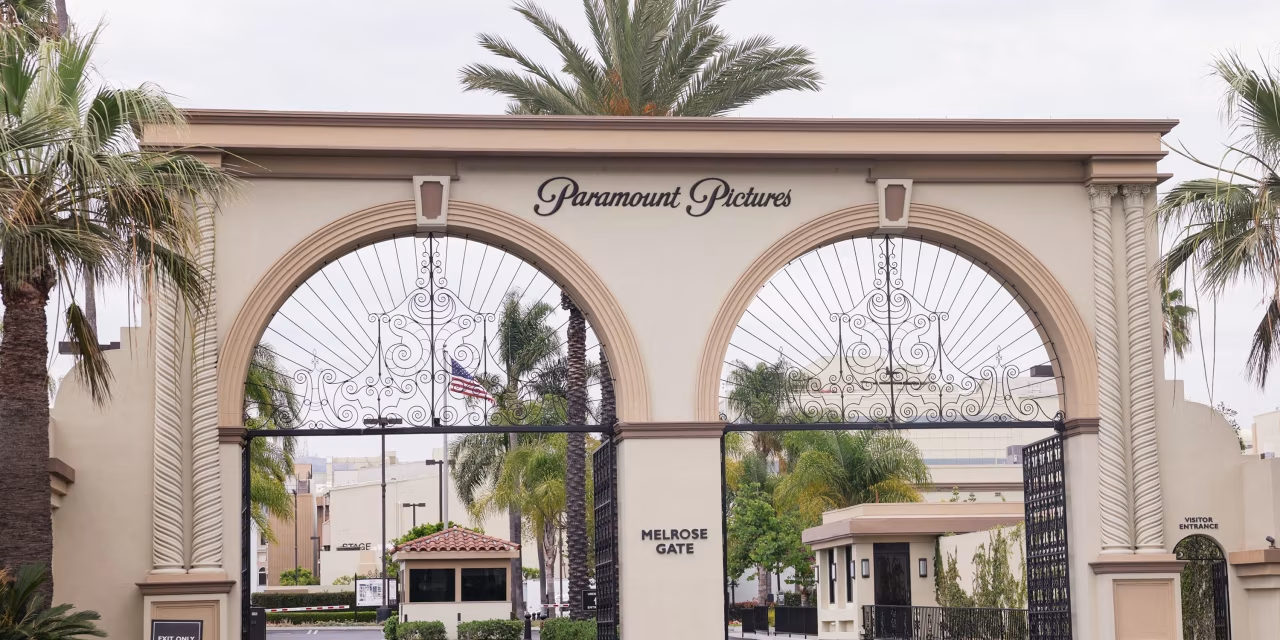
California Attorney General Cancels Paramount Meeting, Citing Leaks

California Attorney General Rob Bonta’s office canceled a planned Monday meeting with

Paramount

PSKY

0.24%

Advertisement

increase; up pointing triangle Chief Executive David Ellison where the parties were expected to discuss settling a lawsuit the state led seeking to block the company’s purchase of Warner Bros. Discovery WBD 0.96%increase; up pointing triangle.

California and 11 other states filed an antitrust suit last month to block an $81 billion deal to combine Paramount and Warner, a transaction that would bring together two of Hollywood’s biggest producers and distributors of entertainment and news content.

Copyright ©2026 Dow Jones & Company, Inc. All Rights Reserved. 87990cbe856818d5eddac44c7b1cdeb8

Advertisement
Continue Reading

Business

Iran Currency Hits Record Low of Over 2 Million to Dollar as US Plans Economic D-Day Offensive

Published

on

Illustration shows representations of cryptocurrency Binance and Iran flag

TEHRAN — Iran’s currency plunged to a record low against the U.S. dollar on Monday as the Trump administration prepared to announce a major expansion of economic sanctions aimed at further isolating Tehran amid a months-long conflict.

The rial traded at more than 2 million to the dollar on the open market, according to tracking sites that monitor unofficial rates used by ordinary Iranians and businesses. Figures put the rate around 2.02 million to 2.04 million rials per dollar, a sharp decline from levels earlier in the year and reflecting mounting pressure on an economy already strained by war, inflation and restricted oil exports.

The currency drop coincided with statements from senior U.S. officials framing the next phase of pressure as an “economic D-Day.” Treasury Secretary Scott Bessent, in a Financial Times opinion piece, wrote that the United States was entering the endgame after military operations had significantly degraded Iran’s capabilities.

“At dawn begins an economic D-Day — the single greatest financial offensive ever marshalled against an adversary,” Bessent wrote. “Our objective is to sever every economic lifeline that sustains the tyrannical regime until Tehran stands alone.”

Advertisement

Bessent was scheduled to provide further details at a news conference later Monday. Officials indicated the measures could include broader secondary sanctions targeting entities and countries that continue commercial or financial ties with Iran. China remains Iran’s largest trading partner and primary destination for its oil, raising questions about how aggressively Washington would pursue measures that could affect Beijing ahead of high-level diplomacy.

President Donald Trump amplified the message on social media, declaring that Iran was in freefall. “IRAN IS COMPLETELY COLLAPSING!!!” he posted.

The conflict began in late February following U.S. and Israeli airstrikes. What U.S. officials initially suggested would be a limited campaign has stretched into a prolonged confrontation involving military action, restricted shipping through the Strait of Hormuz and successive rounds of economic pressure. Iran has responded by limiting traffic through the strategic waterway, which normally carries roughly one-fifth of the world’s oil trade, and by issuing warnings about vessels that violate its transit rules.

On Monday, Iranian authorities continued diplomatic contacts even as they rejected yielding to pressure. Pakistan’s army chief, Field Marshal Asim Munir, met Iranian Parliament Speaker Mohammad Bagher Ghalibaf in Tehran. Ghalibaf, who heads Iran’s negotiating team, criticized the United States for failing to honor prior understandings.

Advertisement

“The commitments of both sides under the memorandum are clear. It was the United States that, by failing to uphold its commitments, prevented stability from being established in the region and provided yet another reason for mistrust,” Ghalibaf said, according to Iranian state media. He added that Tehran remained committed to the conditions outlined in the agreement and that “It is the United States that must fulfill its commitments under the agreement.”

Iranian President Masoud Pezeshkian has publicly acknowledged the limits of prolonged conflict, stating that Iran “cannot continue with war forever,” while other officials have maintained a harder line against dialogue under current conditions.

The Strait of Hormuz remained a central flashpoint. Oman’s foreign minister was scheduled to visit Tehran for talks on the waterway and related regional issues. Iran’s Persian Gulf Strait Authority warned that vessels accused of violating transit rules could face penalties including detention or confiscation. At the same time, Tehran granted permission for some Iraqi oil tankers to pass after appeals from Baghdad. Iranian security officials have threatened to further restrict oil flows if economic pressure intensifies.

Separately, Saudi Arabia’s national shipping company Bahri reported that one of its tankers experienced a security incident in the Red Sea. Yemen’s Iran-backed Houthi movement claimed it had targeted the vessel with a ballistic missile. Bahri said all crew members were safe and that it was coordinating with relevant authorities while monitoring developments. The Houthis have repeatedly stated they will continue actions against vessels they link to Saudi Arabia and its allies.

Advertisement

Analysts noted that Iran’s economy has developed resilience after decades of sanctions, allowing it to sustain significant pain through informal networks, alternative trading routes and domestic adjustments. Yet the combination of a naval blockade limiting oil exports, currency collapse, high inflation and disrupted trade has intensified hardship for ordinary citizens. Food and consumer prices have risen, and the International Monetary Fund has projected economic contraction and elevated inflation for the year.

U.S. officials argue that sustained and comprehensive financial isolation, combined with military degradation of key capabilities, will eventually force concessions. Critics and some regional observers question whether secondary sanctions severe enough to cut off major partners such as China are politically feasible in the near term, particularly with diplomatic calendars involving Beijing. Others point to the political calendar in the United States, where elevated energy prices and economic concerns could influence midterm elections.

Bessent’s framing of the campaign as the largest financial offensive of its kind underscores the administration’s shift toward economic tools after months of kinetic operations. Previous U.S. sanctions regimes on Iran, dating back decades, have restricted trade, blocked assets and limited access to the international financial system. The current effort seeks to close remaining loopholes involving oil smuggling, front companies, exchange houses and third-country facilitators.

Iranian officials have portrayed the intensified economic focus as evidence that military objectives remain unmet. They continue to insist on the implementation of earlier understandings while rejecting what they describe as coercive pressure. Regional diplomacy involving Pakistan, Oman and other parties continues in parallel, focused on de-escalation pathways and the management of shipping through the Strait of Hormuz.

Advertisement

The record low for the rial serves as a visible indicator of the cumulative strain. Official exchange rates set by Iran’s central bank remain more favorable than the open-market rate that most citizens and private businesses must use. The gap between the two rates has widened as confidence erodes and demand for hard currency rises.

As Treasury officials prepared the formal announcement of new measures, markets, shipping companies and governments across Asia, the Middle East and Europe watched for details on the scope of secondary sanctions and any exemptions or enforcement timelines. The effectiveness of the campaign will depend on the degree of international compliance, the resilience of Iran’s parallel economy and the willingness of major buyers to absorb higher costs or seek alternative supplies.

For now, the combination of currency collapse, restricted oil flows, ongoing military friction and diplomatic maneuvering defines a conflict that has already lasted far longer than early projections. Both sides continue to assert that time and pressure favor their position, while ordinary Iranians confront the immediate consequences of a rial that has lost substantial value and an economy under sustained assault.

Advertisement
Continue Reading

Business

(VIDEO) Erling Haaland’s Girlfriend Reacts in Shock as Soccer Star Buzzes Off Signature Long Hair

Published

on

Erling Haaland Ditches Iconic Viking Ponytail for Buzz Cut Ahead

MANCHESTER, England — Manchester City striker Erling Haaland has traded his signature long blond hair for a short buzz cut, capturing the moment on video along with the surprised reaction of his girlfriend, Isabel Haugseng Johansen.

In a YouTube video posted Sunday, the 26-year-old Norwegian forward sat for the dramatic transformation as his hairstylist sectioned and cut away the locks that had become a recognizable part of his public image. Johansen, who has been dating Haaland since 2021, watched the process unfold and offered a series of candid responses.

“I think I will cry,” Johansen said early in the video as the haircut began. Later, holding a thick lock of the blond hair bound by a tie, she added, “Oh my god.”

Advertisement

She briefly left the room during the final stages of the buzz cut. Upon returning to see the finished result, her reaction was immediate. “Oh my God. Oh my God. Oh my God, darling!” she exclaimed. “It looks nice! I think you look cute.”

Haaland responded with a humorous challenge: “Cute?” Johansen then adjusted her assessment while holding his face between her hands. “You look really tough,” she said, before making a playful face toward the camera as if second-guessing the wording.

Johansen joked about the scale of the change. “I will wake up in the morning and be like, ‘Who’s that’?” she said. When Haaland asked whether she preferred the longer hair or the new short style, she answered, “Both?” He replied, “Good answer.”

Haaland framed the haircut as a deliberate reset. In the video and accompanying social media posts, he described it as preparation for the new season. “New season, new trim,” he wrote on Instagram alongside before-and-after images. He elaborated that he had considered the change immediately after the World Cup but delayed it because of a busy schedule. “Season starts now, so it’s time to get a fresh start,” he said.

Advertisement

The forward noted that he wanted a military-style cut. He also recalled advice from retired Swedish star Zlatan Ibrahimovic, who had once told him never to cut his hair because “your strength is in your hair,” a reference that Haaland linked to the biblical story of Samson. After the cut, Haaland shared reactions from others in his circle, including light-hearted responses from Ibrahimovic and Oasis musician Noel Gallagher, a known Manchester City supporter.

Haaland’s long hair had been a distinctive visual element throughout recent seasons and during the summer’s World Cup, where he drew widespread attention. The decision to remove it marks a visible shift as the Premier League campaign begins. He debuted the new look in Manchester City’s opening match, continuing his role as one of the league’s most prominent attacking players.

The video of the haircut and Johansen’s reactions circulated quickly among soccer fans and on social platforms. Many noted the contrast between the flowing style that had become familiar and the much shorter result. Haaland’s willingness to document the process, including the emotional and humorous exchanges with his girlfriend, added a personal dimension to what might otherwise have been a routine grooming update.

Johansen’s presence in the video underscored the couple’s long-term relationship. Their public appearances and occasional shared moments have occasionally drawn media interest, though both have generally kept personal details limited. Her progression from near-tears at the start of the cut to approving descriptions of “cute” and “tough” provided a light narrative arc within the short clip.

Advertisement

For Haaland, the change aligns with a pattern among athletes who alter their appearance at the start of a new campaign as a symbolic reset. High-profile players frequently use haircuts, new kit or training routines to signal a fresh mental approach after major tournaments. In this case, the visual impact was heightened by how closely the long blond hair had been associated with Haaland’s on-field identity.

Manchester City enters the season with expectations of contending at the top of the Premier League and in European competition. Haaland remains central to those ambitions as the team’s primary goal threat. The haircut itself carries no bearing on performance, yet it generated more immediate conversation than many routine preseason stories.

The video also captured intermediate stages of the process, including a temporary look with shorter bangs before the full buzz. Haaland posted additional selfies documenting those steps. The final result is a close-cropped style that contrasts sharply with the shoulder-length hair he had maintained for several years.

Public reaction mixed nostalgia for the previous look with acceptance of the new one. Some fans expressed mild disappointment at the loss of the distinctive long hair, while others welcomed the change as a clean, practical option for the physical demands of a long season. Haaland appeared unconcerned by the range of opinions, focusing instead on the personal meaning he attached to the timing.

Advertisement

Johansen’s final measured response — preferring both styles — reflected a pragmatic stance common in long-term relationships when one partner makes a visible change. Her initial emotional reaction and subsequent supportive comments illustrated the mix of surprise and affection that often accompanies such moments.

Haaland has built a reputation for direct communication with fans through social media and occasional video content. The decision to film the haircut and include his girlfriend’s unfiltered responses fits that approach. It offered supporters a brief, unpolished glimpse into a personal decision rather than a carefully staged announcement.

As the Premier League season progresses, attention will return to Haaland’s performances on the pitch. The buzz cut may fade as a topic once match results and goal tallies dominate discussion. For a brief period, however, the transformation and the accompanying reactions provided a light counterpoint to the usual focus on transfers, tactics and results.

The episode also highlighted how even routine personal choices by high-profile athletes can generate widespread interest. Haaland’s hair had become part of his recognizable brand. Removing it created a moment of novelty that fans, media and fellow players registered immediately.

Advertisement

In the video, the sequence from long hair to buzz cut unfolds with a mix of hesitation, humor and eventual acceptance. Johansen’s comments — from the fear of tears to the dual endorsement of “cute” and “tough” — gave the clip its memorable core. Haaland’s own explanation tied the change to the rhythm of the soccer calendar: a new season, a clean slate and a willingness to leave a familiar look behind.

Whether the shorter style remains for the full campaign or evolves further remains to be seen. For now, the Norwegian striker has marked the transition with a public, light-hearted record of the moment and the people closest to him reacting in real time.

Continue Reading

Business

Stone Brewing to cut 220 Escondido, California, jobs as production shifts

Published

on

Stone Brewing to cut 220 Escondido, California, jobs as production shifts

Sapporo USA reportedly plans to lay off 220 workers at three Stone Brewing locations in Escondido, California, as production of the craft beer brand shifts to facilities elsewhere in California and Missouri.

The layoffs will begin with 58 workers on Oct. 19, according to Worker Adjustment and Retraining Notification letters filed by Sapporo with the state.

Advertisement

FOX Business has reached out to Sapporo USA for comment and confirmation of the total number of employees expected to be affected.

The workforce cuts follow Sapporo’s sale of the Stone Brewing brand and select hospitality locations to Firestone Walker Brewing Company and Duvel Moortgat USA. The transaction was announced in April and closed May 15.

STARBUCKS LAYS OFF OVER 200 CORPORATE WORKERS AS TURNAROUND STRATEGY MOVES FORWARD

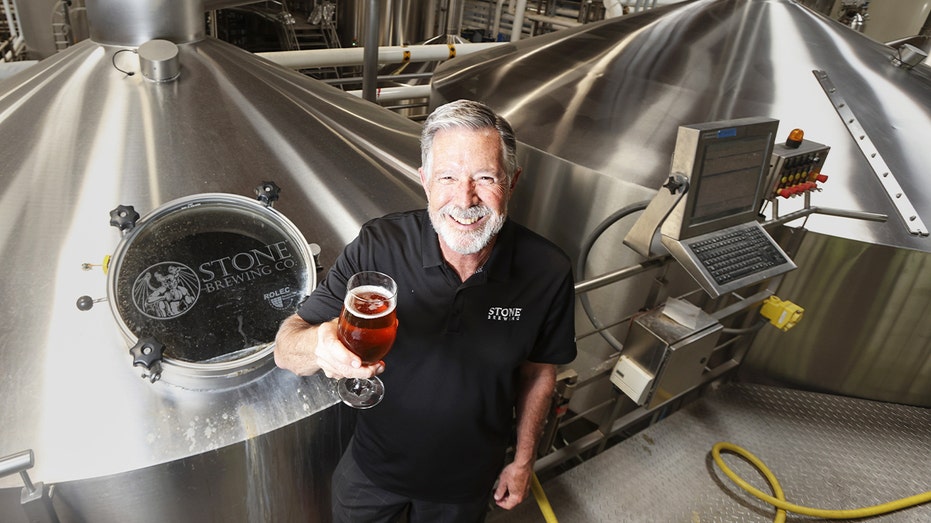
STONE BREWING FACILITY

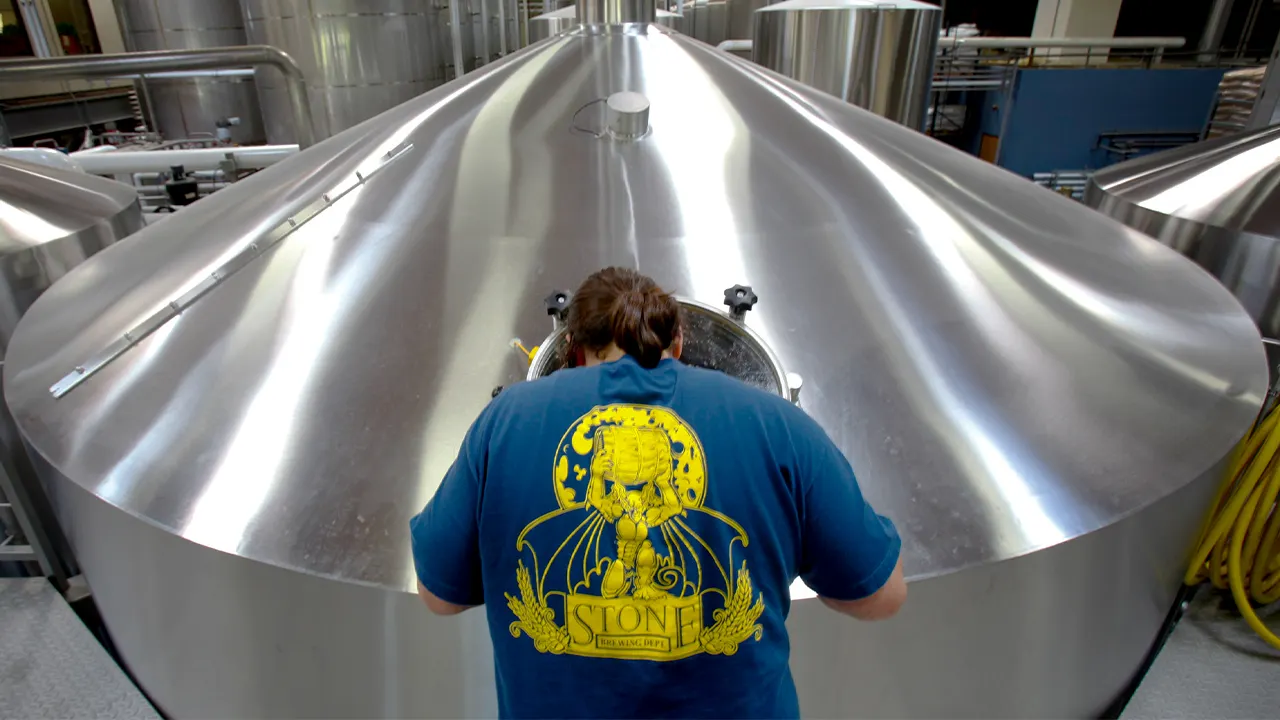
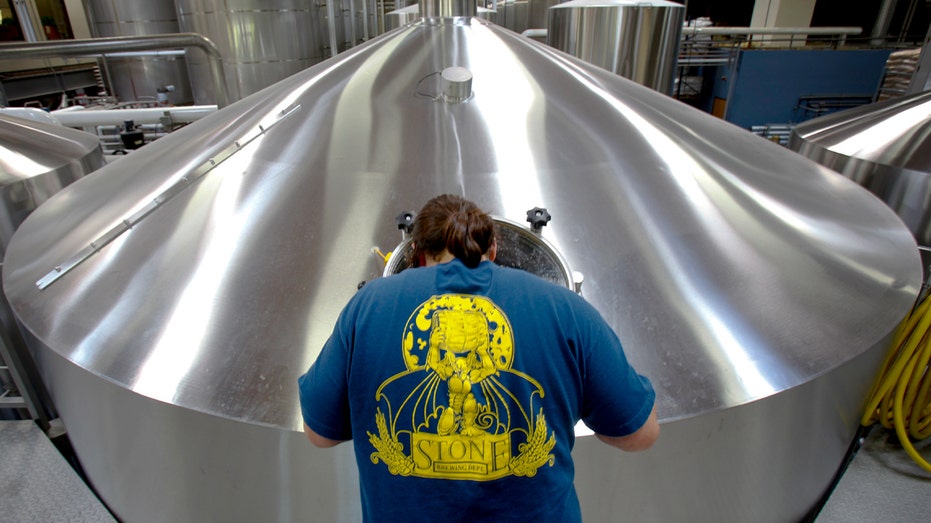
Brewmasters at the Stone Brewing Company in Escondido keep an eye on the process in the giant stainless steel vats. (Mark Boster/Los Angeles Times via Getty Images)

Under the deal, Stone beer production is transitioning from Escondido to Firestone Walker’s brewery in Paso Robles, California, and Duvel USA’s Boulevard brewery in Kansas City, Missouri.

Advertisement

The acquisition included Stone Brewing World Bistro & Gardens at Liberty Station in San Diego, along with taprooms in Little Italy, Oceanside and Pasadena. Stone’s Escondido brewery and bistro were not included in the transaction.

COCA-COLA SHUTTING DOWN CALIFORNIA FACILITY AFTER MORE THAN A CENTURY

When the deal was announced, Sapporo said it would continue producing Stone beer at its Escondido and Richmond, Virginia, breweries during a transition period. It also said it would continue operating the Escondido bistro while evaluating “long-term strategic options” for the site.

Stone Brewery co-founder Steve Wagner

Stone Brewery co-founder Steve Wagner poses for photos at Stone Brewing on Aug. 5, 2021 in Escondido, California.  (Eduardo Contreras / The San Diego Union-Tribune via Getty Images)

Sapporo USA CEO Zach Keeling told the Los Angeles Times that the company is now winding down the Escondido brewery in phases after failing to find a “viable long-term solution” for the property.

Advertisement

“This is an understandably difficult time for our Escondido employees and community, and we’re committed to supporting them through this transition,” Keeling said in a statement reported by the newspaper.

THE SOBER SHIFT: GEN Z TURNING AWAY FROM ALCOHOL

Firestone Walker and Duvel said in April that they expected to offer jobs to a significant number of Stone employees in hospitality, sales and marketing, while production roles would be evaluated as brewing shifted to the companies’ other facilities.

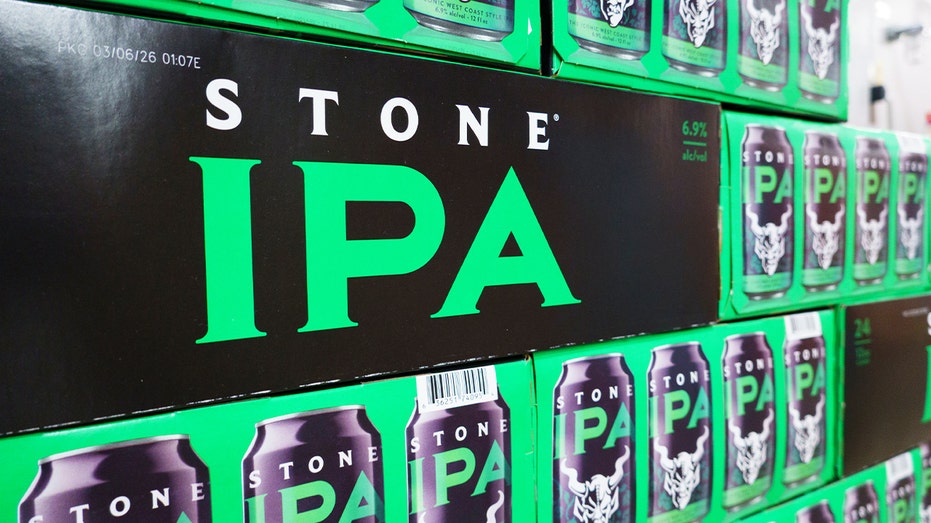
stone ipa

Cases of Stone IPA are displayed at a Costco Wholesale store on May 15, 2026, in San Diego, California.  (Kevin Carter/Getty Images)

Stone Brewing was founded in Southern California in 1996 and became one of the best-known brands associated with the West Coast craft beer movement. Sapporo acquired the brewer in 2022 before selling the Stone brand this year as it moves to concentrate its U.S. resources on its namesake beer.

Advertisement

CLICK HERE TO GET FOX BUSINESS ON THE GO

The Stone brand will continue under Firestone Walker and Duvel USA, while the Liberty Station location will remain both a hospitality venue and an active brewery, according to the companies’ acquisition announcement.

Continue Reading

Business

Campaigners say ‘fight isn’t over’ even after Peel business park plans dropped

Published

on

Business Live

Peel Group had planned ‘campus style’ facility at Bridgewater West

Bridgewater West, land proposed for development on the boundary of Wigan and Salford.

Bridgewater West, the land proposed for development on the boundary of Wigan and Salford(Image: Local Democracy Reporting Service)

Campaigners say ‘the fight isn’t over’ after Wigan Council U-turned on plans to free up former greenbelt land in Astley for a huge business park.

Advertisement

Bridgewater West was tipped to become the home of around 540,000 sq ft of ’employment space’ under the council’s Local Plan. Peel Group, which owns the land, planned to turn the area into a ‘campus style’ business park, alongside new homes and a Park and Ride.

Campaigners have opposed the scheme from the start, arguing the open fields separating Astley and Boothstown are ‘vital’ to the local community and wildlife as well as protection from flooding. After a year of disputes, Wigan bosses have now rowed back on the scheme.

Four ‘controversial’ sites will be removed from the local plan. The document was due to be greenlit for public consultation at a cabinet meeting on Thursday, August 27. The Bell, north of Junction 26, the Moss Industrial Estate extension, a pocket of land West of Winwick Lane in Lowton, and the Bridgewater West site will no longer be up for development.

Joanna Allsopp, a high school teacher campaigning for the protection of the land, said the shift was a ‘positive step’.

Advertisement

“It’s a significant U-turn,” the Astley resident said. “It’s extraordinary to see the councillors making videos in the fields here saying ‘this clearly isn’t the right place for development’ after they’ve spent a lot of time and money creating this plan, which included the Bridgewater West site. We appreciate them listening. It shows when the community comes together we do have power – but only if we stick together.”

She said the fight was far from over for the Save Our Astley and Boothstown Greenbelt campaign group.

“We’re still up against Peel,” Joanna added. “They’re keen to develop the land and could try to fight against this decision.”

While the council has said they have enough other land available to meet its development targets, Joanna feels the future is still uncertain.

Advertisement

She said: “This plan could be revised next year. The targets could change. Nine months down the line, we don’t want to end up back in the same position. That’s why we need to keep fighting to get some long-term protection for this incredibly important space.”

Sandra Leyland, who leads the campaign group, suggested the biggest problem was that the land is still included in Places for Everyone (PfE) – a GMCA scheme that designates land across the region for development into housing or employment uses. Under PfE, the land in Astley has technically been ‘de-desginated’ as greenbelt land.

“The fight is still on,” Sandra told the LDRS. “This was just one battle. Peel won’t like being told no – and they’re a huge corporation with a lot of money to throw at this to fight legal battles. We are just ants.

“But we are working behind the scenes to make it more probable the site will be taken out of PfE. My kids grew up running through these fields, my grandkids take the dogs for a walk there. We want to keep this green space for the future, for our children, and their children, and their children.”

Advertisement

A Peel Land spokesperson said: “Bridgewater West was a proposed allocation in the draft Wigan Local Plan of 2025, having previously been acknowledged as grey belt land. We are naturally disappointed that the Council now intends to remove the draft allocation and will be considering our options for bringing forward Bridgewater West.”

They defended their ‘high quality proposal’ to create a business park that ‘could play a key role in meeting the lack of sites in Wigan for professional, scientific and technical, creative and related manufacturing businesses’. The proposal would also have ‘helped alleviate local congestion’ through the Park and Ride and improved connections to Chat Moss, and would not have included large scale warehousing, according to the spokesperson.

In an official statement from the council, Councillor Paul Kenny, cabinet holder for planning, environmental services and transport, said the change of heart came after ‘listening to feedback’ from local communities.

Coun Kenny said: “We are aware of the depth of feeling surrounding these four sites. By removing them from the latest version of the Local Plan, we believe we have struck the right balance between supporting economic growth and protecting our environment.”


Advertisement
Continue Reading

Business

Nvidia’s Longest Losing Streak Since 2022 Is Dragging on the Nasdaq

Published

on

Stocks Little Changed After Fed Decision

The Nasdaq Composite just can’t keep up.

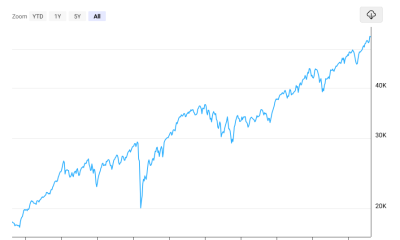
The tech-heavy index was down another 0.4%, compared to a gain of 170 points, or 0.3%, for the Dow Jones Industrial Average. The S&P 500 was down just 0.1%.

The Nasdaq was actually off its lows from earlier in the morning, but its pattern today is in line with how things shook out last week.

Continue Reading

Business

Sebi drops proceedings against Max Financial, Axis Bank in Max Life deal case

Published

on

Sebi drops proceedings against Max Financial, Axis Bank in Max Life deal case
Markets regulator Sebi has dropped proceedings against Max Financial Services, Max Life Insurance, Axis Bank, Axis Capital, Axis Securities and seven individuals in the matter related to the Max-Axis Life Insurance deal, saying the allegations of disclosure lapses and fraud were not established.

The final order, passed by Whole-Time Member Amarjeet Singh, covered 12 noticees, including Max Financial Services, Max Life Insurance, Axis Bank, Axis Capital, Axis Securities, Analjit Singh, Mohit Talwar, Rahul Khosla, Sujatha Ratnam, Rahul Ahuja, Jatin Khanna and V Krishnan.

The case arose from Sebi’s investigation into transactions between Max Financial, Max Life and Axis Bank from FY10 to FY22. The regulator had examined whether the entities violated securities laws, listing norms and fraud regulations in relation to a series of share sale and buyback arrangements involving Max Life shares.

Also Read: Govt to sell up to 6% stake in Hindustan Copper via OFS; floor price at 10% discount

Advertisement

The proceedings followed a show-cause notice issued in October 2024. Sebi had alleged that Max Financial made inadequate or delayed disclosures about the bancassurance arrangement with Axis Bank and related share transactions in 2010, 2015 and 2020. The notice had also alleged that Max Financial, Max Life and Axis entities devised a fraudulent scheme to benefit Axis Bank at the cost of Max Financial and its shareholders.


The matter had also drawn from earlier findings by the Insurance Regulatory and Development Authority of India. Irdai had informed Sebi that it had imposed penalties of Rs 2 crore on Axis Bank and Rs 3 crore on Max Life for violation of its directions. Irdai had observed that the transactions had circumvented limits on commission, remuneration or reward payable to insurance agents and intermediaries.
Under the 2010 arrangement, Max Life issued shares to Axis Bank at Rs 10 per share, while later tranches saw the shares bought back at prices ranging from Rs 54 to Rs 111 per share. Under the 2015 arrangement, Max Financial and Mitsui Sumitomo sold a 4.99% stake in Max Life to Axis Bank at Rs 10 per share, and later bought back part of that stake at higher prices.Under the 2020 arrangement, Max Financial sold stakes in Max Life to Axis Bank, Axis Capital and Axis Securities. The order said Max Financial transferred 2% of Max Life to Axis Capital, 1% to Axis Securities and 9.002% to Axis Bank in March-April 2021. Max Life later became Axis Max Life Insurance.

The show-cause notice had alleged that the transactions caused a loss of Rs 3,912 crore to Max Financial and gave a corresponding benefit to Axis Group entities. It also alleged that disclosures by Max Financial were incomplete and misleading.

Sebi, however, said the disclosure framework applicable to listed entities had changed significantly since 2010. It said the old listing agreement left more room for judgment on materiality, while the later LODR framework introduced clearer thresholds and more detailed guidance.

The regulator said Max Financial’s disclosures could have been more comprehensive and that a more cautious and consistent approach may have been desirable. But it added that the conduct of the company and other noticees had to be tested against the law that existed at the relevant time.

Advertisement

On the disclosure-related charges, Sebi said there was no material establishing violation of the specific provisions invoked in the show-cause notice. The order said liability could not be sustained merely because some disclosures could have been fuller.

On the fraud allegation, Sebi said active concealment of material information by Max Financial was not established. It also said there was no evidence of price or volume manipulation, creation of an artificial market, or any other interference with market integrity.

The order said the show-cause notice did not establish injury from the alleged wrongful acts, including inducement to deal in securities. It also did not show such blatant conduct or circumstances that would establish wrongful intent to defraud or manipulate the securities market.

As a result, Sebi held that the allegation that Max Financial, Max Life, Axis Bank, Axis Capital, Axis Securities and other noticees devised a fraudulent scheme to defraud shareholders was not established.

Advertisement

(Disclaimer: Recommendations, suggestions, views and opinions given by the experts are their own. These do not represent the views of Economic Times)

Continue Reading

Business

What UK Entrepreneurs Actually Need to Know About Virtual Numbers

Published

on

What UK Entrepreneurs Actually Need to Know About Virtual Numbers

Starting a business in the UK used to mean choosing an office address before choosing anything else, largely because a proper phone number depended on it. That’s no longer true.

A UK virtual number lets an entrepreneur present a genuine local presence to customers, suppliers, and partners without a physical premises anywhere near the number’s area code. And for a growing share of UK small businesses, that shift has quietly become the default rather than the exception.

What a Virtual Number Actually Is

The virtual UK phone number is a UK-based phone number without being connected to any actual SIM card or fixed line entering into the building where it is located. The UK virtual phone number is simply a routing system whereby the call or text message will enter the phone number and be redirected based on the instructions that the business owner gives regarding the number, such as to a mobile phone, team inbox, or call handling software.

For a businessman who works from home, a co-working office, or even from abroad, this is an important aspect since customers will call a UK number and deal with a UK-based business.

Why UK Entrepreneurs Are Adopting Virtual Numbers

A handful of practical drivers explain why this has become common practice rather than a niche workaround:

Advertisement
  • to be able to separate business calls from personal calls without the need to have two handsets or SIM cards;
  • to establish a local presence in a certain location in the UK before having an office in that area;
  • to easily scale a line whether upward or downward without having to order new equipment each time;
  • to have the same number regardless of office change or personnel change;
  • and finally, to avoid the costly and time-consuming installation of a business line.

The above statement has become increasingly pertinent in recent times. In fact, the UK’s existing telecom network is currently undergoing a fundamental transition to move completely away from copper wiring, with Openreach announcing that the national decommissioning process will take place in January 2027, moving even the conventional telephonic systems towards the same IP-based structure used by virtual numbers for years.

Setting Up a Virtual Number: What to Expect

The process is considerably simpler than setting up a traditional business line, and it doesn’t require any physical installation. In practice, it usually breaks down into a few steps:

  1. Select the appropriate type of number based on whether you require a traditional UK geographic number allocated to an area code or a national non-geographic number.
  2. Pick a provider and find out what kind of call forwarding is available, as some services will not forward to other destinations equally effectively.
  3. Make arrangements for the call forwarding setup by choosing to forward calls to your mobile, your landline, a group of operators, or an application.
  4. If required, set business hours during which all calls will be forwarded to voicemail or to a voice message, while no answer is given.
  5. Before publishing the number, make sure it works through a test of both call forwarding and messaging if necessary.

None of these steps requires a technician visit or a lengthy contract commitment with most providers, which is a meaningful contrast to how business phone lines traditionally got set up.

What to Check Before Choosing a Provider

Not every virtual number provider offers the same reliability or feature set, and a few details are worth confirming before committing:

What to Check Why It Matters
Call quality and uptime Critical for a business relying on the number for genuine day-to-day operations, not occasional use
SMS support alongside voice Some UK customers still expect a business to be reachable by text
Pricing structure Flat monthly fee, per-minute charge, or a mix of both changes the real cost over time
Number portability Matters if the business outgrows the provider or wants to switch platforms later
Customer support responsiveness A dead business line during a technical issue has a direct cost attached

Weighing these five factors against actual usage patterns, rather than picking the cheapest headline price, tends to save more money over the first year than the upfront savings would suggest.

Where Virtual Numbers Fit Into a Growing Business

The virtual number will not remain alone for too long. When the business evolves, it usually gets surrounded by other types of light infrastructure – a virtual office address, accounting done online, work done remotely, and a payment system without the need to have a physical cash register in the office. Thus, the business is represented by its virtual number and other features that are necessary to demonstrate professionalism to the client without any need to create a real location for all of these aspects.

Advertisement

This tendency is especially frequent among UK sole traders and limited companies which exist only for a year or two and thus do not have enough cash flow and cannot make big investments, a pattern reflected in Companies House data showing a large share of newly incorporated UK businesses dissolve or restructure within their first two years. In addition, there is a high risk of signing a contract to rent the serviced office together with a phone number since the requirements might become different in a few months.

The Bottom Line for UK Entrepreneurs

For a UK company, the need to have a telephone number resulting from a leasing agreement, a scheduled installation, and a long-term contract is a thing of the past. For most newly formed UK companies, the requirement for a local presence can now be met using a virtual number without the added costs and restrictions that traditionally went with it. The fact that the United Kingdom’s communications network is moving further away from the use of copper connections means that the distinction between traditional and virtual business phone numbers will continue to get smaller.

Advertisement
Continue Reading

Business

Stocks to buy: DLF among 5 real estate firms on which Nomura remains bullish

Published

on

The Economic Times

Nomura expresses strong optimism for five key Indian real estate stocks, identifying Prestige Estates as their top choice within the sector. The brokerage also endorses DLF and Oberoi Realty, highlighting their solid investment potential. Additionally, Lodha Developers and Aditya Birla Real Estate gain favorable attention. In contrast, Godrej Properties receives a cautious ‘Hold’ rating from the firm, indicating a more tempered outlook.

Continue Reading

Trending

Copyright © 2025