
Business
Morning Headlines




Website performance has become an essential part of digital success. Visitors expect pages to load quickly, navigation to feel smooth, and websites to work properly across mobile and desktop devices. For businesses competing in Toronto’s busy digital market, performance-focused Web Development Toronto services can help create a faster and more effective online experience.
Why Website Performance Deserves Attention
A website may contain excellent content and attractive visuals, but poor performance can undermine both. Visitors are less likely to remain engaged when pages take too long to load or important features fail to respond correctly.
Performance should therefore be considered during development rather than treated as a final technical adjustment. The website’s architecture, code, media files, scripts, and hosting environment can all influence how efficiently pages operate.
A performance-focused approach aims to remove unnecessary friction so visitors can access information quickly and complete important actions with less effort.
Technical Excellence From an Experienced Web Developer
An experienced web developer can identify technical issues that may negatively affect performance. These can include inefficient code, excessive scripts, oversized images, unnecessary plugins, or poorly implemented third-party integrations.
The development process should also consider responsive behavior. Mobile users may access a website through different network conditions and screen sizes, making efficient implementation particularly important.
Technical optimization is not simply about achieving a high performance score. The real objective is creating an environment where customers can browse, understand services, and take action without unnecessary delays.
Web Design Agency Toronto for Faster User Experiences
Performance and design should never be treated as opposing priorities. A professional Web Design Agency Toronto can create visually engaging layouts while maintaining usability and efficiency.
Modern design can incorporate high-quality imagery, animations, interactive elements, and strong branding. However, these elements need to be implemented carefully. Heavy assets and unnecessary visual effects can increase page weight and create slower experiences.
Good design focuses on what improves communication and customer interaction. Every visual element should serve a purpose rather than simply occupying space.
SEO Agency Toronto and Technical Performance
Website performance also intersects with search optimization. Search engines evaluate various aspects of page experience, while technical issues can make it harder for important pages to be discovered and understood.
Working with an SEO Agency Toronto can help businesses align technical development with organic search objectives. Proper page architecture, crawlability, mobile usability, internal linking, metadata, and structured content can all be considered during the process.
This creates a stronger foundation for future SEO campaigns because the website is not fighting against technical limitations.
Performance That Supports Conversions
Speed matters because performance influences the customer journey. A visitor arriving from search results or an advertising campaign should be able to understand the company’s offer and reach the next step without frustration.
Clear calls to action, simplified navigation, optimized landing pages, and efficient forms can contribute to better conversion experiences.
For service businesses, this might mean making phone numbers, enquiry forms, booking options, or service information immediately accessible. For e-commerce companies, it may involve creating a faster product discovery and checkout experience.
Building a Faster Digital Foundation
Performance-focused development is ultimately about creating a website that works for both users and the business behind it. Speed, usability, responsive design, technical stability, and search readiness should work together rather than being handled separately.
For Toronto businesses looking to compete online, investing in performance-focused development can create a stronger digital foundation. A website that loads efficiently, communicates clearly, and functions reliably is better positioned to attract visitors, retain attention, and turn online traffic into meaningful business opportunities.

U.S. President Donald Trump and CEO of Ford Jim Farley clap, as President Trump visits a Ford production center, in Dearborn, Michigan, U.S., January 13, 2026.
Evelyn Hockstein | Reuters
The Trump administration expressed “profound concern” Tuesday about Ford Motor‘s ties to Chinese companies that it believes could be detrimental to the Detroit carmaker and U.S. automotive industry.
In a letter addressed to Ford CEO Jim Farley, Transportation Secretary Sean Duffy questioned the automaker’s strategic trajectory with Chinese companies “as it pertains to American national automotive manufacturing integrity, supply chain exposure, and reliance on technologies of foreign adversaries.”
Ford, which regularly touts its position as the top-producing automaker in the U.S., called the letter a “wrongheaded attempt to capture headlines.”
It also defended its stance as America’s top-producing carmaker and said it employs more hourly workers in the country than any other automaker, while calling out “factual errors” in the letter. Ford said those errors included Duffy’s comments about Farley proposing a joint-venture framework for Chinese automakers to enter the U.S.
The letter is the latest incident in a series of contentious discussions between the U.S. automotive industry and the Trump administration, which has caused uncertainty with its changes to trade and federal rules and regulations.
In the letter, Duffy took issue with Ford’s ties to Chinese companies such as battery provider CATL and a framework Farley proposed during an auto show earlier this year in Detroit “to facilitate Chinese joint ventures on United States soil.”
Ford has a licensing agreement to utilize battery technologies, including the production of lithium iron phosphate batteries, from Contemporary Amperex Technology Co., or CATL.
Ford’s deal with CATL was originally announced in 2023 but has drawn renewed attention amid tensions between the U.S. and China as well as Ford’s plan to use the battery technologies for energy storage systems.
“While DOT recognizes the intense competitive pressures of the global market, the Company’s recent strategic decisions paint a troubling picture of a foundational American brand actively intertwining its future with Chinese state-backed enterprises,” Duffy’s letter read.
Ford CEO Jim Farley at a battery lab for the automaker in suburban Detroit, announcing a new $3.5 billion electric vehicle battery plant in the state to produce lithium iron phosphate batteries, Feb. 13, 2023.
Michael Wayland/CNBC
Duffy urged Farley, who has been complimentary of Chinese competitors as well as the Trump administration’s attempt to promote U.S. manufacturing, to “reflect on these concerns and national necessities and adopt reasonable strategies that prioritize American workers, utilize allied supply chains, and promote the self-reliance and integrity of the domestic automotive industry.”
Ford urged Duffy to more openly communicate with the company.
“Ford supports the Trump administration’s vision for advancing American innovation and manufacturing,” the company said. “Had Secretary Duffy reached out before issuing his letter to the press, we would have been happy to share more details about Ford’s U.S. commitment.”
— CNBC’s Meghan Reeder and Phil LeBeau contributed to this report.

Japanese brewer Sapporo says it will move some beer production from Canada to the US after new tariffs on Canadian beer took effect on Tuesday.
The move follows the introduction of a 50% tariff on beer imported from Canada. For companies shipping beer across the border, that means significantly higher costs.
Chief strategy officer Rieko Shofu described tariffs as “something out of our control,” telling Bloomberg that the beer giant would “move ahead with local production.”
Sapporo did not immediately respond to the BBC’s request for comment. The company plans to shift production of its non-alcoholic beer, currently made in Canada for US customers, to the US by the first half of 2027.
The US is one of Sapporo’s most important overseas markets, and any shift south of the border will directly affect operations at its Canadian subsidiary, Sleeman Breweries.
To mitigate rising costs, the Japanese brewer is considering adding production capacity on the US West Coast. Options include building or buying a brewery, or partnering with a third-party manufacturer.
Sapporo has been building its presence in the US for years and says its flagship Sapporo brand is the country’s best-selling Asian beer brand.
The company is also investing heavily outside Japan where a shrinking population has weighed on alcohol sales.
Sapporo plans to invest up to ¥400bn ($2.6bn) by 2030 as it seeks to expand overseas and boost profits. Around 30% of the capital is earmarked for overseas markets.
The brewer is also looking beyond North America. In July, it announced a partnership with Danish brewer Carlsberg to expand in Southeast Asia.
Sapporo’s decision to move production comes as companies adapt to a growing number of tariffs worldwide.
In July, the US announced new tariffs on dozens of trading partners, including Canada, raising costs for businesses that rely on cross-border supply chains.
The move highlights how some companies are reconsidering where they make goods as trade barriers increase the cost of serving customers from overseas.
Business
(VIDEO) Prince George Begins First Day At Eton, Following Father And 20 UK Prime Ministers In Berkshire

WINDSOR, England — Prince George began the next stage of his education Tuesday, arriving for his first day at Eton College, the prestigious boarding school where his father, Prince William, and his uncle, Prince Harry, were both educated before him.
The 13-year-old, who is second in line to the British throne, appeared in good spirits despite gloomy autumn weather as he made his way to the school accompanied by his parents, William and Catherine, Princess of Wales. George had last been seen publicly with the rest of the Wales family at the Commonwealth Games in Glasgow, Scotland, last month.
George arrived at the school dressed in a jacket, shirt and tie along with dark trousers, before changing into Eton’s traditional uniform: a black tailcoat, waistcoat and pinstriped trousers, worn with a stiff white collar.
The family crossed School Yard, the historic institution’s central cobblestoned quad, which features a statue of King Henry VI, the school’s founder, at its center, before being greeted by Eton’s principal, Simon Henderson, and its provost, Nicholas Coleridge. The group spoke briefly, with Henderson heard welcoming his newest student directly.
“Welcome, good luck, enjoy it,” Henderson told George.
Eton College, located in Berkshire just a short distance from Windsor Castle and the Wales family’s home at Forest Lodge in Windsor Great Park, educates boys ages 13 to 18 and admits approximately 270 new students each academic year. Students live on campus across the school’s 25 boarding houses, each accommodating roughly 55 students under the supervision of a house master.
George’s arrival follows in a well-established family tradition. William attended Eton beginning in 1995, while Harry started at the school in 1998. Prior to beginning at Eton, George attended Lambrook School, a private preparatory school near Windsor, alongside his younger siblings, Princess Charlotte and Prince Louis.
The choice of Eton had remained a subject of public speculation for months leading up to George’s enrollment, given that his mother, Kate Middleton, attended a different prestigious institution, Marlborough College, during her own school years. Royal commentators had previously suggested the Wales family might delay announcing George’s secondary school choice until close to the start of the academic year, a pattern that has held true given how much attention the decision ultimately drew once formally confirmed.
Eton ranks among Britain’s most famous and prestigious fee-paying schools, boasting a notable list of alumni that extends well beyond the royal family to include 20 of the country’s 59 prime ministers throughout British history. Former Conservative prime ministers Boris Johnson, who led the country from 2019 to 2022, and David Cameron, who served from 2010 to 2016, both attended the school. Other prominent alumni span the worlds of entertainment and the arts, including actors Hugh Laurie, Tom Hiddleston and Eddie Redmayne.
Attending Eton comes with a significant financial commitment. School fees for the current 2025-26 academic year stand at £63,298.80, or approximately $84,900, reflecting the institution’s position among the most expensive independent schools in the United Kingdom.
George’s enrollment at Eton also carries broader symbolic weight given his position within the line of succession to the British throne. As second in line behind his father, William, George’s education has drawn sustained public interest throughout his childhood, with each successive school transition treated as a notable milestone by British media and royal commentators. His father’s own enrollment at Eton in 1995 was similarly treated as a significant news event at the time, reflecting the sustained public fascination with the educational path of a future monarch.
Unlike Marlborough College, which admits both boys and girls, Eton remains a boys-only institution, meaning George’s younger sister, Princess Charlotte, would not have had the option to eventually join him there even had circumstances been different regarding the family’s school choice. Charlotte and Louis remain enrolled at Lambrook School alongside their other classmates, continuing their own education separately from their older brother following George’s transition to Eton.
The Wales family’s arrival at Eton on Tuesday adds to a broader pattern of family milestones playing out amid a particularly active period for the royal family, coming as Prince Harry and Meghan Markle, Duchess of Sussex, have recently returned to live in the United Kingdom following several years based primarily in California. Royal commentators have noted that George’s start at Eton arrived at a moment when the Wales family had hoped to keep public attention focused on their son’s milestone rather than competing developments elsewhere within the broader royal family.
George’s educational journey now shifts to a considerably more structured and independent phase of his life compared with his time at Lambrook, given Eton’s residential boarding house system, which requires students to live on campus throughout the school term under the guidance of a dedicated house master, rather than returning home each day as had been the case during his years at the smaller preparatory school near Windsor.
With George now formally enrolled and settling into his new school routine, the coming years at Eton are expected to shape a significant portion of his adolescence, following a well-worn path through one of Britain’s most storied and closely watched educational institutions, one that has already produced a substantial share of the country’s most prominent political, cultural and royal figures across multiple generations.
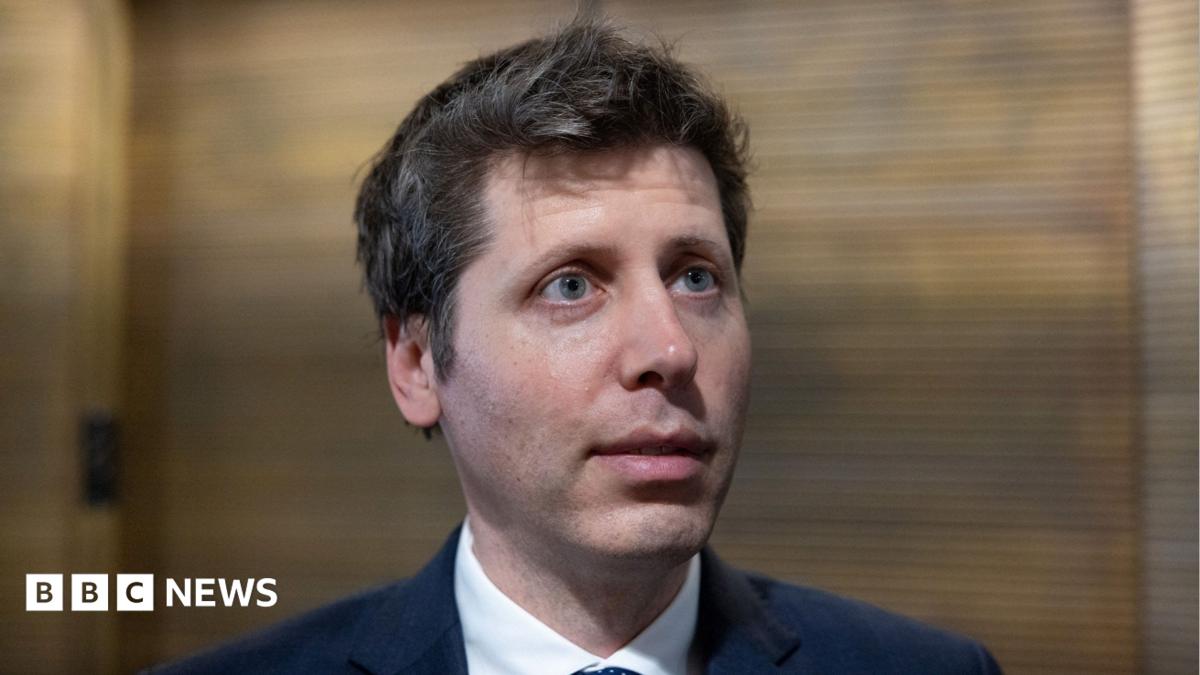
OpenAI says it has found a solution to a decades-old advanced maths problem in a matter of hours using a new artificial intelligence (AI) model and thousands of AI bots.
The ChatGPT-maker said on Tuesday, external that by focusing a group of roughly 10,000 AI agents, or AI bots that undertake tasks somewhat autonomously, it solved a notoriously difficult maths problem in just 88 hours.
The problem was part of the Navier-Stokes equations, external, which concern how fluids move. For 90 years important aspects of the problems have lacked a proof, the argument underlying a correct math equation.
OpenAI called the solution which it found a “milestone” and evidence that AI tools are improving quickly.
OpenAI’s solution has yet to be verified independently or publicly accepted by The Clay Mathematics Institute, a maths organization based in the US which runs the Millennium Prize that offers big money to the first to solve certain mathematical conundrums.
The company said that at the end of August, it started to train a new model that quickly showed that it was adept at maths. AI models are computer programs trained on huge amounts of data to recognize and predict patterns in information.
While the new OpenAI model remains a tool only used within the company, as it is “significantly more capable” than the company’s most recent AI model release, its researchers decided to use it on certain notable advanced maths problems.
OpenAI admitted that last week on 1 September, it had “heard rumors that two Millennium Prize problems had been resolved” and so decided to put thousands of AI bots trained on the new internal model to work attempting to solve some of the remaining problems.
By Sept 5, or roughly 88 hours after it had set 10,000 AI bots to the task, OpenAI had found a solution to what’s referred to as the Navier–Stokes existence and smoothness problem.
The problem is at the heart of turbulence, which is a phenomenon that is still not well understood.
Although it took the AI bots seemingly little time to reach a solution, OpenAI said the bots exchanged nearly 3 million messages and used up 130 billion output tokens, or the individual lines of text and code an AI model produces in answers, on Navier–Stokes alone.
Such an effort would have cost roughly $10m (£7.3m), based on OpenAI’s own pricing, external for output from its most advanced models.
The solution that OpenAI says it has now reached for the Navier–Stokes existence and smoothness problem resolved two out of the four statements in the proof that the Millennium Prize had demanded. The prize is worth $1m to a winner.
“Our goal in releasing this result is to report on the substantial progress of our AI models”, OpenAI said on Tuesday. “We do not intend to claim the Millennium Prize for this result.”
Already the company’s claim is stirring some controversy.
Tristan Buckmaster, a mathematics professor at New York University, said on Tuesday, external that he and Levent Alpöge, a mathematician working for OpenAI rival Anthropic, had also been working toward solutions for the problem.
The duo had been using OpenAI’s tool Codex in their work. But Buckmaster said that on 3 September, he found out that “information about our progress had been passed to OpenAI.”
Buckmaster’s statement came the same day, but hours before, OpenAI published its Navier–Stokes work. He claimed that OpenAI did not begin working on the Navier–Stokes equations until “after information about our work had reached OpenAI.” He included text from emails exchanged with OpenAI over the work and his questions of the company’s timing and methods.
Buckmaster added that he had not yet read OpenAI’s full proof, but felt compelled to go public with “what I was told, when, and what was proposed to me…because the alternative is to let a sequence of announcements say something I know to be false.”
OpenAI on Tuesday congratulated the “concurrent work” of Buckmaster and Alpöge, calling it “remarkable.”
The company said it had not seen “any of their work through any means until they released it publicly” and that no user data was accessed in its work on the Navier–Stokes problem.
“While unlikely, we cannot rule out that de-identified data derived from their usage of our products helped improve our models”, the company added. “However, our proofs differ significantly and even the precise results proved are different.”

Jon Rahm of Legion XIII gets ready to putt on the 12th green during day four of LIV Golf Indianapolis at The Club at Chatham Hills in Westfield, Indiana, Aug. 23, 2026.
Michael Miller | ISI Photos | Getty Images
LIV Golf has filed for bankruptcy protection as the upstart golf league faces a Saudi funding cliff and searches for new investment.
The golf venture — initially backed by Saudi Arabia’s Public Investment Fund, or PIF — said Tuesday it has entered into a restructuring support agreement with BC Partner Advisors LP, the credit arm of private equity firm BC Partners. As part of the agreement LIV agreed to seek Chapter 11 protection in the U.S. Bankruptcy Court for the District of New Jersey.
CNBC previously reported PIF was set to pull its funding from LIV at the end of the 2026 schedule. Earlier this year LIV launched an investor roadshow in an effort to raise up to $350 million from stakeholders to fund its operations.
As part of the proposed bankruptcy deal, for which LIV will need court approval, the venture is expected to be majority owned by its players. LIV remains in advanced talks with the players, it said in a Tuesday news release.
PIF has agreed to provide $49.6 million in bankruptcy financing that will allow LIV to stay afloat during proceedings. Following the exit from bankruptcy protection, BC Partners Credit and other minority stakeholders are expected to provide financing.
“This process gives us the structure and time to pursue a landmark transaction and begin the next chapter of LIV Golf — one built around the fans, an innovative, player-first ownership model, and a part of the global golf ecosystem,” CEO Scott O’Neil said in Tuesday’s release. “We are excited about what lies ahead and yet, there is still much to accomplish in the months ahead.”
In June, amid reports that PIF funding could end even sooner than previously understood, O’Neil told CNBC that the organization had to trust that the sovereign wealth fund would continue to back the venture through the conclusion of the season.
LIV had been positioned as a rival to the PGA Tour and beckoned high-profile athletes, in part thanks to hefty paychecks. By 2023 the league had agreed to merge with the PGA Tour, although a deal has yet to come to fruition.
Business
Dr. David Borenstein Discusses How Personalized Longevity Medicine Helps Patients Optimize Health at Every Stage of Life

As more people seek ways to stay healthy and independent well into later life, personalized longevity medicine has emerged as a proactive approach that focuses on preventing disease rather than simply treating it. Patients searching for David Borenstein MD founder of Manhattan Integrative Medicine of South Florida are often looking to understand how this model differs from conventional healthcare and why an individualized strategy may lead to better long-term health.
Dr. David Borenstein, founder of Manhattan Integrative Medicine, believes longevity medicine begins by listening to patients and understanding the complete picture of their health. His approach combines traditional medicine with functional medicine, nutrition, hormone optimization, lifestyle medicine, advanced laboratory testing, and continuous monitoring to identify the underlying factors that influence aging and chronic disease.
Instead of waiting for illness to develop, Dr. Borenstein focuses on helping patients improve their healthspan, the years of life spent enjoying good physical, cognitive, and metabolic health.
What Is Personalized Longevity Medicine?
Personalized longevity medicine is a data-driven approach that seeks to optimize health before disease develops. Rather than focusing solely on treating symptoms, it evaluates the biological processes that influence how each individual ages.
According to Dr. Borenstein, longevity medicine is centered on extending healthspan by identifying risks early, optimizing body function, and addressing the root biological mechanisms associated with aging. Unlike traditional medical care, which often reacts to illness after symptoms appear, longevity medicine emphasizes prevention, personalization, and continuous monitoring.
This philosophy closely aligns with root cause medicine. Instead of asking, “What medication treats this symptom?” physicians ask, “Why is this happening in the first place?”
Why Personalized Medicine Is Different
No two people age the same way.
Two individuals with similar medical histories may have completely different nutritional deficiencies, hormone levels, inflammatory markers, metabolic profiles, or lifestyle factors contributing to their health.
That is why Dr. Borenstein believes longevity medicine cannot rely on one-size-fits-all protocols. Each treatment plan is built around comprehensive data analysis, advanced diagnostics, targeted lifestyle modifications, and regular reassessment as patients progress.
His philosophy is equally rooted in listening. Understanding a patient’s symptoms, goals, and overall health serves as the foundation for creating an individualized care plan rather than treating isolated conditions independently.
What Tests Are Performed During a Longevity Evaluation?
A longevity evaluation goes well beyond a routine annual physical.
Depending on the patient’s medical history and goals, a comprehensive assessment may include:
- Comprehensive blood testing
- Nutrition and vitamin analysis
- Thyroid optimization assessment
- Testosterone optimization evaluation
- Inflammation testing
- Blood glucose and metabolic health markers
- Cholesterol and triglycerides
- Cardiovascular risk factors
- Sleep assessment
- Lifestyle evaluation
- Body composition measurements
Rather than generating isolated laboratory values, these results help physicians understand how different body systems interact.
The objective is to identify small imbalances before they contribute to more significant health problems.
How Functional Medicine Improves Long-Term Health
Functional medicine examines how multiple biological systems influence overall wellness.
Instead of treating one diagnosis at a time, functional medicine evaluates how nutrition, hormones, inflammation, metabolism, stress, sleep, and lifestyle affect each other.
Dr. Borenstein integrates these principles into traditional medical care by combining evidence-based medicine with individualized nutrition plans, targeted supplementation, hormone optimization when appropriate, exercise guidance, and continuous monitoring.
The goal is not simply to manage disease but to improve overall function and reduce future health risks.
The Foundation of Healthy Aging
Successful longevity medicine depends on several interconnected pillars.
Nutrition for Longevity
Nutrition supplies the building blocks for cellular repair, immune function, hormone production, and metabolic health. Personalized nutrition recommendations recognize that dietary needs vary based on laboratory findings and individual health goals.
Exercise for Longevity
Regular physical activity helps preserve muscle mass, improve cardiovascular health, increase insulin sensitivity, and support cognitive function. Exercise also plays an important role in maintaining independence as people age.
Sleep and Stress Management
Quality sleep allows the body to repair tissues, regulate hormones, and support brain health. Chronic stress, meanwhile, may contribute to inflammation, metabolic dysfunction, and reduced immune function.
Hormone Optimization
Hormones influence energy levels, metabolism, mood, muscle strength, and overall quality of life.
When clinically appropriate, testosterone optimization and thyroid optimization may become valuable components of a personalized treatment plan. However, Dr. Borenstein emphasizes that hormone therapy works best when combined with improvements in nutrition, exercise, sleep, and stress management rather than being viewed as a standalone solution.
Why Inflammation Matters for Healthy Aging
One of the most important goals of personalized longevity medicine is identifying chronic inflammation before it contributes to long-term disease.
Persistent inflammation has been associated with cardiovascular disease, insulin resistance, metabolic dysfunction, cognitive decline, and impaired immune function.
Inflammation testing can help physicians understand how lifestyle, nutrition, hormones, and other biological factors are affecting overall health.
Rather than suppressing inflammation alone, root cause medicine focuses on addressing the factors contributing to it.
A Personalized Care Example
Every patient requires an individualized treatment strategy, and outcomes vary based on each person’s health status and medical needs.
Dr. Borenstein recalls one patient who presented with multiple chronic conditions, including high blood pressure, elevated cholesterol, diabetes, sleep apnea, and excess weight. The patient hoped to improve his health through a more natural approach while avoiding statin therapy and blood pressure medication if appropriate.
Rather than focusing on the diagnoses alone, Dr. Borenstein ordered a comprehensive blood panel.
The evaluation identified several additional issues, including nutritional deficiencies, low thyroid function, low testosterone levels, and elevated inflammatory markers.
Using those findings, he developed a personalized treatment plan that included dietary changes, nutritional supplements, and selected medications to improve thyroid and testosterone function.
Approximately six months later, the patient had lost 35 pounds while experiencing improvements in cholesterol, triglycerides, blood sugar, blood pressure, vitamin levels, thyroid function, and testosterone measurements. According to Dr. Borenstein, these improvements occurred while using diet, supplements, and minimal medications.
While this represents one individual’s experience and not a guaranteed outcome, it illustrates how comprehensive evaluation can uncover multiple underlying contributors to poor health that may otherwise remain undetected.
Why Doesn’t One Treatment Work for Everyone?
Personalized healthcare recognizes that every patient has a unique combination of genetics, lifestyle, metabolism, hormones, nutrition, inflammation, and environmental influences.
Because those variables differ, effective treatment plans must also differ.
Instead of following standardized protocols, longevity medicine uses continuous monitoring and objective biological data to refine recommendations over time.
Frequently Asked Questions
What is personalized medicine?
Personalized medicine creates healthcare strategies based on an individual’s biology, laboratory results, symptoms, lifestyle, and health goals rather than using identical treatments for every patient.
How does functional medicine improve long-term health?
Functional medicine seeks to identify and address the underlying biological factors contributing to illness while integrating nutrition, lifestyle medicine, conventional care, and targeted therapies.
What causes accelerated aging?
According to Dr. Borenstein, many people incorrectly believe genetics determine most of their lifespan. He notes that lifestyle choices play a far greater role in healthy aging than many patients realize, making nutrition, exercise, sleep, stress management, and preventive care essential components of longevity medicine.
Can hormone optimization improve quality of life?
For appropriately evaluated patients with documented deficiencies, hormone optimization may support energy, muscle health, metabolism, cognitive function, and overall well-being as part of a broader personalized healthcare plan.
Why is inflammation important for healthy aging?
Inflammation can influence cardiovascular health, metabolic health, immune function, and cognitive performance. Measuring inflammatory markers may help identify opportunities for early intervention before chronic disease develops.
A Growing Interest in Personalized Healthcare
Interest in personalized longevity medicine continues to grow as patients become more informed about preventive medicine and healthy aging. Dr. Borenstein believes greater access to health information through the internet and artificial intelligence will encourage more people to seek proactive care that helps them remain active and independent throughout life.
For those researching David Borenstein MD reviews or David Borenstein MD Manhattan Integrative Medicine of South Florida, his philosophy is consistent throughout his practice: listen carefully, evaluate comprehensively, identify the root causes affecting health, and develop individualized treatment plans that help patients optimize their health at every stage of life.
Business
Laura Ward’s Vision for R.I.S.E.: Building an Immigration Organization Designed to Outlast Its Founder

Laura Ward does not simply want R.I.S.E. Immigration Services to become bigger. She wants it to become better. That distinction sits at the center of how Ward thinks about growth, leadership, and the organization she is building. Her ambitions extend beyond increasing the volume of work or expanding the reach of a founder-led business. She is focused on a harder question: How can an organization grow while preserving the standards, knowledge, culture, and sense of responsibility that gave it purpose in the first place?
For Ward, the answer begins with infrastructure. Stronger operations, better technology, employee development, educational resources, consistent processes, clearer communication, and dependable client experiences are not secondary administrative concerns. They are part of the service itself. Her view is that an organization serving immigrant families cannot rely on good intentions alone. It needs systems capable of turning those intentions into consistent action.
That philosophy reflects Ward’s professional background as well as her ambitions for R.I.S.E. Before starting the project, she had more than 15 years of service as a social worker, an experience that her approved biography connects to a longstanding concern for the well-being of people in Latin America and the United States. Her leadership philosophy now brings that service orientation into an organizational context, where compassion must operate alongside accuracy, accountability, and professional discipline.
Excellence and Compassion as Operating Principles
Ward aims to implement a unique culture at R.I.S.E. combining excellence with compassion. Ward asserts that, in the area of immigration, both are crucial.
It is particularly important in immigration as clients are dealing with complex processes involving paperwork, deadlines, courts, systems, and languages. At the same time, the issues involved in immigration are often of a personal nature: family issues, job-related, emotional, and financial.
Compassion is relevant to understanding clients. Excellence is relevant to carrying out the agencies’ work. Ward believes that compassion cannot replace excellence and vice versa. In other words, technical process knowledge without compassion can leave people even more traumatized. On the other hand, compassion without professionalism may create problems as clients rely on the agency to take care of things.
Ward thus looks for certain qualities when hiring staff – not just those mentioned in CVs. She values accountability, discipline, communication, compassion, and willingness to learn which all affect how the agency works.
Exactness matters in a situation when processes require it. Communication matters in a situation when clients need to know what needs to be done. Compassion determines whether people are treated with patience. However, accountability and discipline are needed to ensure everything that should be done is carried out. Finally, willingness to learn becomes important because immigration issue processes and technologies are constantly developing.
This is the reason why Ward cares about teaching employees instead of just filling positions. In the long term, she wants the employees to evolve into qualified professionals.
Building an Organization That Does Not Depend on One Person
Founder dependence is a familiar challenge in entrepreneurship. In an organization’s early development, the founder can become the keeper of its relationships, standards, knowledge, decisions, and problem-solving habits. That concentration may work at a smaller scale, but it can also become a structural weakness as complexity increases.
Ward’s three-to-five-year vision for R.I.S.E. addresses that problem directly. She wants to strengthen operations, develop the team, improve technology and internal systems, expand educational reach, and create greater consistency in the client experience. Her interest in growth is therefore closely connected to organizational capacity.
Technology has a practical role in that vision. Ward sees appropriate systems as tools for improving communication, tracking responsibilities, reducing administrative mistakes, preserving institutional knowledge, and giving clients greater transparency. Her focus is not on technology for its own sake. It is on what stronger systems can make possible inside an organization where details and communication matter.
This is where Ward’s preference for “better” over merely “bigger” becomes most consequential. More activity creates more complexity. Serving more people or developing a larger organization would also create more responsibilities to coordinate, knowledge to preserve, employees to prepare, and standards to maintain. Sustainable growth therefore requires stronger foundations behind the visible work.
Ward’s own description of leadership reinforces that incremental approach. She views successful organizations as the product of thousands of decisions: improving a process, training someone, solving a problem, learning from a mistake, and repeating the work. Institution-building, in that sense, is less about a single expansion milestone than about steadily making quality reproducible.
Professional Development From the Founder Outward
Laura Ward’s recent accreditation by the U.S. Department of Justice adds another dimension to that emphasis on development. In July 2026, she was announced as a DOJ Accredited Representative. According to the accreditation announcement, she is authorized through the Department of Justice’s Executive Office for Immigration Review to provide qualified immigration legal services through a recognized organization.
The credential is significant within Ward’s professional development, but it also fits a larger pattern in how she describes R.I.S.E. She expects employees to remain teachable, develop competence, understand their responsibilities and limitations, and continue educating themselves. Her own continued professional development applies that same expectation to the founder.
That alignment matters for the culture Ward wants to establish. Leadership development is difficult to make credible if continuous learning is expected only from employees. Ward’s approach instead suggests that stronger organizations are built as people throughout them expand their capabilities, including the person at the top.
Her background in social work also helps explain why competence and service are so closely linked in her thinking. Ward advises people entering service-oriented careers to listen first, develop competence, respect the dignity of those they serve, and recognize that good intentions are insufficient when others depend on them. Those principles now inform her approach to organizational leadership.
Education as Institutional Capacity
Education is another component of Ward’s vision that reaches beyond individual client interactions. She wants people to become informed participants in their immigration journeys, with a clearer understanding of procedures, documentation requirements, deadlines, responsibilities, and when qualified legal advice may be necessary.
Her broader ambition includes community education, digital content, social media, and accessible educational resources, with particular attention to making information understandable for Spanish-speaking communities and people who may not know where to begin. These are presented as areas of continued development rather than a catalogue of completed programs.
The distinction is important because Ward sees education as a form of empowerment rather than simply information distribution. Her goal is for people to understand enough to ask better questions, identify potential problems earlier, and advocate more effectively for themselves and their families.
Education also serves an institutional purpose. Knowledge captured in useful resources can travel beyond a single conversation. Knowledge transferred to employees can become organizational capability. Employees who gain knowledge, judgment, confidence, and responsibility can eventually become leaders. In each case, value becomes less dependent on one person’s direct involvement.
That is the deeper thread connecting Ward’s interest in technology, processes, education, client communication, and employee development. Each can help turn individual expertise into organizational capacity.
A Definition of Legacy Built Around Continuity
Ward’s definition of success has evolved beyond conventional measures of organizational growth. She wants R.I.S.E. to be financially strong, operationally effective, respected, and capable of growing, but she does not consider numbers sufficient. Success, as she describes it, also means creating an organization people trust, developing capable professionals and leaders, establishing systems that function consistently, and producing educational resources that remain useful beyond the walls of an office.
Her view of leadership is particularly revealing: one of its greatest measures is whether an organization becomes stronger because someone led it, rather than permanently dependent on that person.
That idea brings the bigger-versus-better distinction full circle. Becoming bigger can be measured through scale. Becoming better requires examining whether an organization is more capable, whether employees are developing, whether knowledge is being preserved, whether clients receive consistent experiences, whether communication is improving, and whether the institution can uphold its purpose as responsibilities increase.
Ward ultimately describes herself as someone who wants to build. Her stated legacy includes organizations, opportunities, leaders, educational resources, and systems that continue creating value for other people.
For R.I.S.E. Immigration Services, that makes the long-term ambition larger than the founder without diminishing the founder’s importance. Ward’s role is to establish the standards, develop the people, strengthen the infrastructure, and create the conditions under which the organization can eventually carry its knowledge and purpose forward.
The clearest measure of that work may come much later. If R.I.S.E. can continue educating communities, creating opportunities, developing leaders, employing people, and serving immigrant families without requiring Laura Ward to remain at the center of every decision, it will have achieved the kind of growth she considers most meaningful. It will not simply have become bigger. It will have become strong enough to endure.

Robots Are The Future: The Case For The IBOT ETF

Rising oil prices weighed on market sentiment in afternoon European trade after Iranian forces fired ballistic missiles on two U.S. Navy warships, representing a fresh escalation in the six-month conflict.
Brent crude oil rose 1.3% to $97.50 a barrel as both the U.S. and Iran ramped up efforts to assert control over the crucial Strait of Hormuz. The U.S. military said it struck three Iranian oil tankers in response to the Islamic Revolutionary Guard Corps attack on American ships.
Copyright ©2026 Dow Jones & Company, Inc. All Rights Reserved. 87990cbe856818d5eddac44c7b1cdeb8

‘Revolutionary’ 36-year old jet engine designed for F-16 set to power world’s first AI-piloted VTOL fighter jet

Money 2x (Official Audio) Cheema Y | Gur Sidhu

Moses Itauma lifted out of ring after losing IBF title bout to Filip Hrgovic


-
 Tech10 hours ago
Memory prices are slowing because buyers ran out of money
-

 NewsBeat9 hours ago
England up in reading, maths and science rankings as Scotland and Wales dip
-

 Business12 hours ago
Egyptian TV Presenter Sarah Khalifa, 11 Others Sentenced To Death In Major Drug Trafficking Case In Cairo
-
 Tech13 hours ago
Strong Password Policy and Password Manager Guide
-

 Crypto World13 hours ago
Visa expands stablecoin card network to 160 programs
-
 NewsBeat8 hours ago
Tehran’s assertive rhetoric signals a new and dangerous phase in conflict
-

 Politics7 hours ago
The Ultimate September Reset Guide: How To Refresh Your Mind And Life This Autumn
-

 Tech7 hours ago
Google’s revived nuclear power plant gets $1.9B loan from US government
-

 Business10 hours ago
US-Canada tariffs: Canada braces for prolonged trade war as counter-tariffs on US take effect
-

 Tech7 hours ago
ESP32-P4 Powers Video Alarm Clock
-
 Business7 hours ago
Copper hits record high, UltraTech’s Ultravolt on the offensive: A double whammy for cable makers in FY27?
-

 Business12 hours ago
Claim Your Share Of $50 Million Disney Streaming Price Settlement By Sept. 8 Tonight
-
Crypto World7 hours ago
Zcash (ZEC) Rockets 2,200% as Privacy Coins Become Crypto’s Biggest Outlier
-

 Business13 hours ago
model backs CBD drinks brand
-
 Sports12 hours ago
Phones confiscated, players sent home: Pakistan’s England tour turmoil revives memories of Mohammad Amir, Salman Butt and Mohammad Asif’s 2010 Lord’s spot-fixing scandal | Cricket News
-
 Fashion8 hours ago
New tops for women from EGO
-
 Sports7 hours ago
There’s only one Ricky Hatton – Special Edition on sale now
-

 Business7 hours ago
Corning Stock Climbs On Multibillion-Dollar Verizon Network Deal
-

 Entertainment7 hours ago
You Can See Everything Trailer Reveals A24’s Elizabeth Holmes Documentary
-

 Politics7 hours ago
The reason why sweatshirts have a V under the collar
You must be logged in to post a comment Login