Business
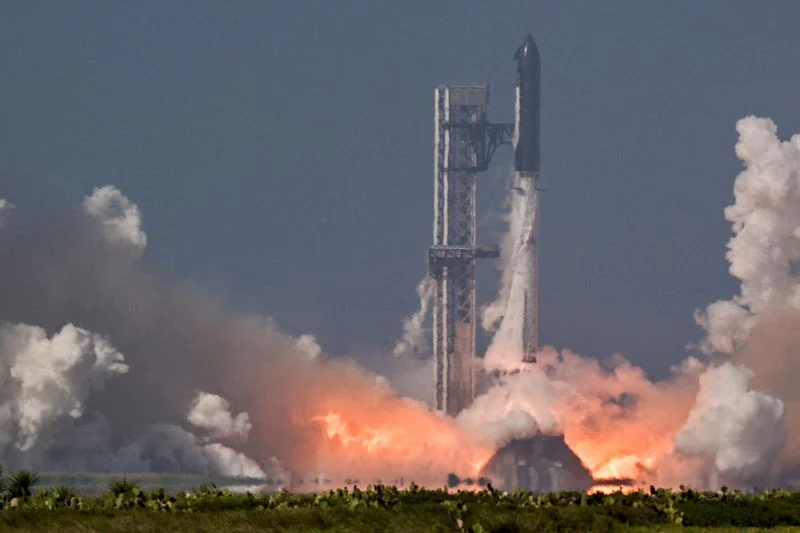
Musk’s SpaceX IPO jolts life back into European retail investing
Business
ADC Therapeutics: 'Sell' LOTIS-5 Underwhelms And Possible Change In Strategy
Business
(VIDEO) Nvidia CEO Jensen Huang Gifts Faker Unique RTX 5090 Worth Up to $1 Million During Seoul Visit
SEOUL — Nvidia CEO Jensen Huang surprised T1 superstar Lee Sang-hyeok, known globally as Faker, with a one-of-a-kind GeForce RTX 5090 graphics card during a visit to the team’s base camp in Seoul on Friday, calling the signed collector’s item potentially worth $1 million.
The high-profile meeting highlighted Nvidia’s deep appreciation for South Korea’s thriving eSports culture and its longstanding relationship with elite gamers who have driven demand for cutting-edge graphics technology. Huang presented the flagship next-generation card, featuring autographs from both himself and Faker, as a special edition with no other copies existing worldwide.
“Game was Nvidia’s starting point,” Huang told T1 players at a PC bang near Hongik University in Mapo-gu. He praised Korean gamers for choosing the best GPUs in pursuit of victory, stating that this preference helped establish Nvidia’s dominance in the market.
Huang described South Korea as “the optimal market for eSports” and expressed admiration for the competitive spirit of local players. The RTX 5090 gift, unveiled publicly for the first time alongside Faker, became an instant symbol of the intersection between gaming excellence and technological innovation.
After the presentation, Huang handed the card to Faker and posed for commemorative photos. He also engaged warmly with fans at the venue, shaking hands and taking selfies with those who had gathered to see him. In a lighthearted moment, Huang jokingly referred to the GeForce RTX 4070 as an “antique” when discussing hardware used by regular gamers.
Strengthening Ties With Korean Gaming and Business Leaders
The visit to T1, one of the world’s most successful eSports organizations, underscores Nvidia’s commitment to the gaming sector, which Huang noted served as the company’s foundational market. Faker, widely regarded as one of the greatest League of Legends players of all time, has led T1 to multiple world championships and remains a cultural icon in South Korea.
The gesture comes as Nvidia continues to push boundaries in AI, graphics and high-performance computing. The RTX 5090 represents the latest in the company’s flagship lineup, promising significant advancements in ray tracing, AI-enhanced graphics and overall performance for both gaming and professional applications.
Later in the evening, Huang joined a “samso” dinner — a casual gathering featuring samgyeopsal (grilled pork belly) and soju — with top South Korean business leaders at a restaurant in the Hongdae area. Attendees included SK Group Chairman Chey Tae-won, LG Group Chairman Koo Kwang-mo and Naver Chairman Lee Hae-jin. Hyundai Motor Group Executive Chairman Chung Eui-sun was unable to attend due to a conflicting schedule.
The dinner provided an opportunity for Huang to deepen personal and professional relationships with key figures in Korea’s tech and industrial sectors, following earlier discussions on AI infrastructure, memory chips and robotics collaborations.
Nvidia’s Growing Influence in Korea
Huang’s trip to Seoul reflects Nvidia’s strategic focus on the Korean market, home to major partners like Samsung Electronics and SK hynix, which supply critical high-bandwidth memory (HBM) chips essential for Nvidia’s AI GPUs. The country’s robust eSports ecosystem, advanced semiconductor industry and enthusiastic gamer community make it a vital hub for the company’s gaming and AI ambitions.
During the T1 visit, Huang emphasized how Korean players’ pursuit of competitive advantage helped shape Nvidia’s product development. By choosing top-tier GPUs, gamers contributed to the feedback loop that drives innovation in graphics technology.
The special RTX 5090 gifted to Faker is expected to generate significant buzz in the gaming community. As a signed, one-of-a-kind piece, its collector value could indeed approach or exceed the $1 million mark Huang suggested, especially given the cultural significance of both the recipient and the donor.
Faker’s Enduring Legacy
Lee Sang-hyeok, known as Faker, has dominated the League of Legends scene for over a decade. His mechanical skill, strategic insight and sportsmanship have earned him millions of fans worldwide and multiple world championship titles with T1. Meeting Huang and receiving such a unique gift adds another memorable chapter to his storied career.
T1 players and staff expressed excitement over the visit, which provided a rare opportunity to interact with one of the tech industry’s most influential figures. The event also highlighted the growing synergy between traditional sports, eSports and technology companies.
Broader Context of Nvidia’s Asia Strategy
Huang’s activities in Seoul follow a busy week of product announcements and partnership initiatives. Nvidia continues to expand its footprint in AI supercomputing, autonomous driving and robotics, with South Korean firms playing key roles in the supply chain.
The CEO’s approachable style — engaging directly with gamers and business leaders alike — has helped humanize the company’s image while reinforcing its technological leadership. Previous visits and collaborations have yielded tangible results, including accelerated adoption of Nvidia hardware in data centers and gaming platforms across the region.
Industry observers see the T1 visit as a strategic move to strengthen brand loyalty in the gaming community while opening doors for deeper enterprise-level partnerships. As AI and gaming increasingly overlap through technologies like real-time ray tracing and AI upscaling, Nvidia aims to maintain its dominant position.
Cultural and Economic Significance
South Korea’s eSports industry is a global powerhouse, generating significant economic value and national pride. Events like Huang’s meeting with Faker bridge the worlds of Silicon Valley innovation and Korean digital culture, fostering goodwill and potential future collaborations.
Fans reacted enthusiastically online, with many praising the thoughtful gesture and expressing envy toward Faker’s exclusive hardware. The moment is likely to be widely shared and remembered within the gaming community for years to come.
As Huang concluded his public engagements in Seoul before the business dinner, the day exemplified successful cross-cultural engagement between a leading American tech executive and Korea’s vibrant tech and gaming scenes.
Nvidia’s continued investment in the region, combined with high-profile gestures like the RTX 5090 gift, positions the company favorably amid intense global competition in AI and semiconductors. For Faker and T1, the encounter adds prestige and excitement heading into future competitions.
The special graphics card gifted to one of gaming’s greatest legends serves as a tangible symbol of respect for the players who helped build the modern gaming industry. As both Nvidia and eSports continue evolving, such moments highlight the human connections driving technological progress.
Business
Gazan fishermen patch up dinghies with door frames to keep themselves afloat

Gazan fishermen patch up dinghies with door frames to keep themselves afloat
Business
Today’s Wordle Answer for June 6 2026 Revealed in Puzzle 1813
NEW YORK — Players tackling the New York Times Wordle puzzle on Saturday, June 6, 2026, discovered the solution to be “MORPH,” a versatile word that can function as both a noun and a verb, continuing the daily word game’s streak of challenging yet accessible vocabulary.
The answer fits the puzzle’s pattern of drawing from common English words with multiple meanings, offering a satisfying conclusion for those who navigated the hints effectively. According to Webster’s New World College Dictionary, “morph” refers to “a group of organisms sharing a particular phenotypic variation,” or “to transform or be transformed as by morphing.”
Wordle enthusiasts woke up to fresh hints suggesting the word contains one vowel, has no duplicate letters, and serves as a verb with synonyms like “transform” and “mutate.” These clues guided many toward the correct solution within the standard six attempts, maintaining the game’s balance of logic, vocabulary knowledge and deduction.

How Players Approached Saturday’s Puzzle
Many began with strong starter words such as “RAISE,” “SLATE” or “CRANE,” which efficiently eliminate common letters. Early feedback often revealed the presence of “M,” “R” and “P,” steering solvers toward combinations involving transformation-themed vocabulary.

The word’s structure — beginning with M and ending with H — proved tricky for some, as it deviates from more common patterns while remaining within everyday usage. Successful solvers frequently noted the satisfaction of landing on “MORPH” after testing alternatives like “MARCH” or “METAL” in earlier attempts.
For those who struggled, the game’s built-in color feedback system (green for correct position, yellow for correct letter in wrong spot, gray for absent) provided essential guidance without revealing the full answer prematurely.
Wordle’s Enduring Popularity
Since its creation by software engineer Josh Wardle and subsequent acquisition by the New York Times, Wordle has become a global daily ritual for millions. The simple yet addictive format — guessing a five-letter word with limited attempts — taps into universal desires for routine, accomplishment and shared experience.
On June 6, 2026, puzzle number 1813 continued this tradition, drawing players from diverse backgrounds who share results via social media using the game’s emoji grid system. The social aspect remains a key driver of its appeal, fostering friendly competition among friends, families and online communities.
Analysts attribute Wordle’s sustained success to its accessibility, lack of intrusive monetization and clever selection of words that feel fair yet surprising. The New York Times has maintained the core experience while adding features like Wordle Bot for performance analysis and archival access.
Tips and Strategies for Consistent Success
Veteran players recommend starting with words rich in vowels and common consonants to maximize information from the first guess. Subsequent attempts benefit from incorporating remaining possible letters while avoiding repeats of confirmed grays.
For Saturday’s puzzle, focusing on action-oriented verbs or scientific terms helped narrow options quickly. Resources like the official Wordle review page provide post-game analysis, including community statistics on solve rates and average attempts required.
Experts advise against over-relying on specific “best starter” words, encouraging variety to build broader vocabulary recognition over time. Patience and logical elimination remain the most reliable path to victory.
Cultural Impact and Community Engagement
Wordle has transcended mere gaming to become a cultural touchstone, inspiring merchandise, spin-off variants and even academic discussion on language learning and cognitive benefits. Daily solutions often spark conversations about word origins, usage and regional variations.
On platforms like X, Reddit and Threads, players celebrated their streaks or commiserated over tough puzzles, with June 6’s “MORPH” generating discussion around its dual noun-verb nature and relevance in biology and technology contexts, such as digital morphing effects.
The game’s influence extends to education, where teachers incorporate it into lessons on spelling, critical thinking and pattern recognition. Families report it as a bonding activity that spans generations.
Looking Ahead in the Wordle Calendar
As Wordle continues its steady publication schedule, anticipation builds for future puzzles that test solvers’ linguistic agility. The New York Times curates words carefully to avoid overly obscure or offensive terms while maintaining challenge.
For those seeking more daily word games, companion titles like Connections, Mini Crossword and Spelling Bee offer additional mental stimulation within the same ecosystem.
Saturday’s solution “MORPH” exemplifies the game’s ability to blend the familiar with the slightly unexpected, rewarding both casual players and dedicated enthusiasts. Whether solved in two attempts or requiring the full six, each puzzle contributes to the ongoing narrative of collective problem-solving.
Players who missed the June 6 answer can still engage with past puzzles through the archive or focus on maintaining their current streak in upcoming challenges. The beauty of Wordle lies in its reset each day, offering fresh opportunities regardless of previous performance.
As millions worldwide continue to participate, the game reinforces the joy of language and the satisfaction of cracking a well-crafted puzzle. “MORPH” joins the ever-growing list of words that have united players in a simple yet profound daily ritual.
Business
Intel Surges Past IBM in 2026 Stock Performance as AI Foundry Bets Fuel Massive Gains
NEW YORK — Intel Corp. has dramatically outperformed International Business Machines Corp. in 2026, with shares surging more than 160% year-to-date amid a remarkable recovery driven by AI infrastructure demand and foundry partnerships, while IBM has delivered more modest gains supported by steady software and quantum computing progress.
The divergence highlights contrasting paths for two legacy tech giants navigating the artificial intelligence boom. Intel, long struggling with manufacturing challenges and competition, has rebounded sharply from 2025 lows near $19, recently trading around $100 after hitting highs above $130. IBM, trading near $290-$300, has posted solid but less explosive returns, benefiting from hybrid cloud stability and enterprise AI adoption.
Analysts present a nuanced picture. Many view IBM as the more stable long-term choice with consistent earnings and a favorable fundamental score, while Intel offers higher upside potential — and risk — tied to execution on its turnaround. Neither stock comes with a simple “buy” recommendation, as investors must weigh valuations, competitive pressures and broader semiconductor cyclicality.
Intel’s Dramatic Rebound
Intel reported first-quarter 2026 revenue of $13.6 billion, up 7% year-over-year. The company guided for second-quarter revenue between $13.8 billion and $14.8 billion. Non-GAAP earnings per share showed improvement, though GAAP results reflected ongoing restructuring costs.
Key catalysts include partnerships with Foxconn for AI infrastructure, Hitachi for collaboration, and progress on advanced process nodes like Intel 18A. The foundry business has gained traction with external customers, and products such as Panther Lake and Nova Lake position the company for potential market share recovery in PCs and servers.
Year-to-date, Intel’s performance has been exceptional, with returns exceeding 160-190% in some measures, far outpacing broader indices. Over the past year, gains have approached 400%. However, recent sessions saw volatility, including an 11% drop on one day amid sector-wide chip selloffs tied to AI demand concerns.
Analyst consensus for Intel leans toward Hold, with an average price target around $73-$89, suggesting potential downside from current levels near $100. Some models highlight risks from high valuation after the rally, competition from Nvidia and AMD, and the need for sustained foundry wins. Others see long-term value if manufacturing goals are met.
IBM’s Steady Enterprise Focus
IBM has emphasized software, consulting and hybrid cloud, with AI initiatives like Watsonx driving bookings. The company continues heavy investment in quantum computing, announcing plans for over $10 billion in the technology over five years, which has boosted sentiment.
First-quarter results showed resilience, though some quarters highlighted mixed dynamics between hardware strength and softer software/consulting growth. Shares have risen modestly year-to-date, with stronger performance in recent sessions amid positive analyst notes.
Consensus for IBM is generally Buy or Moderate Buy, with average price targets in the $290-$304 range and highs reaching $350-$375. Analysts cite stable growth, margin expansion potential and quantum optionality as positives. Valuation trades at a premium but is supported by predictable cash flows and dividends.
Head-to-Head Comparison
Comparisons favor IBM on several fundamental metrics, including stronger long-term buy signals, better financial health scores and lower volatility in some assessments. IBM often outperforms on consistency, while Intel excels in momentum during AI tailwinds.
Intel’s risk profile is higher due to manufacturing execution risks and cyclical exposure. IBM benefits from diversified revenue and enterprise stickiness. Both companies face AI disruption opportunities and challenges: Intel in chips and foundry, IBM in software and quantum.
Valuation remains a key differentiator. Intel’s post-rally multiples have drawn caution from some observers, while IBM’s steadier profile appeals to conservative investors. Dividend yields and capital return policies also factor into decisions, with both maintaining shareholder payouts.
Market Context and Risks
The 2026 tech landscape is defined by massive AI capital expenditures from hyperscalers, creating opportunities for both companies. Intel aims to capture foundry and CPU share, while IBM leverages its consulting expertise for AI deployment.
Broader risks include geopolitical tensions affecting supply chains, potential slowdowns in AI spending, and macroeconomic factors like interest rates. Intel’s turnaround depends on yield improvements and customer wins; IBM must accelerate software growth amid AI automation concerns.
Recent news underscores momentum: Intel’s collaborations at events like Computex and IBM’s quantum and cloud partnerships. However, sector rotations and earnings misses can trigger sharp moves, as seen in recent volatility.
Investment Considerations
Neither stock is a guaranteed winner. Investors bullish on semiconductor recovery and U.S. manufacturing may favor Intel for asymmetric upside, accepting higher volatility. Those seeking stability, dividends and enterprise exposure might prefer IBM.
Diversification remains key. Many portfolio managers recommend evaluating both within a broader tech allocation, monitoring quarterly execution closely. Long-term horizons favor companies demonstrating AI relevance, but near-term valuation and risks demand caution.
Analysts stress that past performance, including Intel’s 2026 surge, does not guarantee future results. Thorough due diligence, including review of SEC filings and earnings calls, is essential. This is not investment advice; individual circumstances vary.
Looking Ahead
As 2026 progresses, focus shifts to second-half product ramps for Intel and IBM’s quantum and AI commercialization milestones. The winner in the “which to buy” debate will likely depend on execution amid evolving AI demand.
Intel’s turnaround story captivates growth investors, while IBM appeals to value-oriented ones seeking reliability. Both remain central to the tech ecosystem, with potential to reward patient shareholders if strategic bets pay off.
Business
Why I Will Never Own Rental Properties Again, But I Keep Buying REITs
Business
Yardeni weighs SpaceX IPO viability as trillion-dollar listings loom

Yardeni weighs SpaceX IPO viability as trillion-dollar listings loom
Business
What Moved Markets This Week
Listen on the go! A daily podcast of Wall Street Breakfast will be available by 8:00 a.m. on Seeking Alpha, iTunes, Spotify.

Bim/iStock via Getty Images
Up for a challenge? Test your knowledge on the biggest events in the investing world over the past week. Take the latest Seeking Alpha News Quiz and see how you stack up against the competition.
Wall Street ended the week on a sour note as investors digested a stronger-than-expected May jobs report, sending stocks lower, pressuring bitcoin below $60,000, and dragging down shares of Broadcom despite better-than-expected quarterly results.
The U.S. labor market showed unexpected strength in May as nonfarm payrolls increased by 172,000, more than double economists’ forecasts, while the unemployment rate held steady at 4.3%.
Bitcoin (BTC-USD) extended its recent slide, falling below the $60,000 level on Friday for the first time since September 2024 as risk-off sentiment intensified across global markets and fueled broad selling pressure in digital assets.
Shares of Broadcom (AVGO) fell sharply this week as investors reacted to Friday’s broader market selloff despite the company reporting fiscal second-quarter results that topped expectations, including adjusted earnings of $2.44 per share and revenue of $22.19B earlier in the week.
For the week, the tech-heavy Nasdaq Composite (COMP:IND) fell -4.68%, and the benchmark S&P (SP500) lost -2.59%, while the blue-chip Dow (DJI) lost -0.32%. Read a preview of next week’s major events in Seeking Alpha’s Catalyst Watch.
The U.S. stock market just got another massive listing plan as Anthropic (ANTHRO) beat OpenAI (OPENAI) to the punch, confidentially filing for an IPO this week. OpenAI is expected to file its own IPO paperwork in the coming weeks, if not days. The listings would be a major test for the broader AI frenzy, investor sentiment and the sector’s valuation landscape. Read more.
Seeking Alpha’s Calls Of The Week
Enterprise Products Partners’ (EPD) Pullback Is An Opportunity.
Gibraltar Industries (ROCK): This Play Deserves An Upgrade.
Why A Tesla (TSLA)-SpaceX (SPCX) Merger Makes Sense.
Energy Transfer (ET) Earnings: Wall Street Is Right About Gas.
Rocket Lab (RKLB) Upgraded To Buy – A New Era Of Growth.
Micron (MU) Is An Expensive Call Option On The AI Bubble.
lululemon’s (LULU) Moving Targets, Comps Make Me Nervous.
Here’s Why Twilio’s (TWLO) Steep AI Premium Isn’t Justified.
Broadcom (AVGO) Is Down 15%, Why I’m Selling Anyway.
ASML: What If The Semiconductor Market Matures In 2050?
Weekly Movement
U.S. Indices
Dow -0.3% to 50,867. S&P 500 -2.6% to 7,384. Nasdaq -4.7% to 25,709. Russell 2000 -2.9% to 2,834. CBOE Volatility Index +40.4% to 21.51.
S&P 500 Sectors
Consumer Staples +1%. Utilities -0.3%. Financials +1.3%. Telecom -3.9%. Healthcare +2.3%. Industrials +0.6%. Information Technology -5.4%. Materials -1.2%. Energy +2.5%. Consumer Discretionary -6.2%. Real Estate +1.4%.
World Indices
London -0.4% to 10,368. France +0.4% to 8,218. Germany -1.4% to 24,759. Japan +0.4% to 66,588. China -1% to 4,028. Hong Kong -0.9% to 24,962. India -0.7% to 74,243.
Commodities and Bonds
Crude Oil WTI +3.6% to $90.54/bbl. Gold -5% to $4,365.3/oz. Natural Gas -1.9% to 3.229. Ten-Year Bond Yield -0.2 bps to 4.536.
Forex and Cryptos
EUR/USD -1.19%. USD/JPY +0.66%. GBP/USD -0.89%. Bitcoin -17.3%. Litecoin -17.1%. Ethereum -21.7%. XRP -18.%.
Top S&P 500 Gainers
Humana (HUM) +15%. Hewlett Packard Enterprise (HPE) +14%. Medtronic (MDT) +11%. The Cooper Companies (COO) +10%. MGM Resorts (MGM) +9%.
Top S&P 500 Losers
Coinbase Global (COIN) -19%. Ciena (CIEN) -16%. Cboe Global Markets (CBOE) -15%. Ford Motor (F) -15%. QUALCOMM (QCOM) -14%.
Where will the markets be headed next week? Current trends and ideas? Add your thoughts to the comments section.
Business
Payoneer: The B2B Shift Is Working, But Growth Still Looks Too Slow (NASDAQ:PAYO)
I am an independent trader and analyst specializing in the micro-cap market. My strategy combines technical analysis with the CAN SLIM method, developed by William O’Neil, to identify high-growth, underanalyzed companies. I focus on financial trends, profit growth, and institutional capital accumulation to uncover stocks with significant upside potential. In addition to equities, I have experience in Forex trading, which has helped me better understand price movements, market volatility, and sentiment-driven trends. My research approach integrates both fundamental and technical analysis, allowing me to identify strong growth stocks before they gain widespread attention. Key indicators I prioritize include relative strength, trading volume shifts, and accelerating profit growth—all of which help pinpoint stocks with the highest potential. Writing for Seeking Alpha is an integral part of my investment process, enabling me to refine my strategies, test investment theses, and engage with the investor community. In my articles, I aim to deliver in-depth company analyses, focusing on stocks with strong growth trends, improving fundamentals, and technical setups that signal potential breakouts. Through structured research, I strive to enhance market understanding and provide actionable investment insights.
Analyst’s Disclosure: I/we have no stock, option or similar derivative position in any of the companies mentioned, and no plans to initiate any such positions within the next 72 hours. I wrote this article myself, and it expresses my own opinions. I am not receiving compensation for it (other than from Seeking Alpha). I have no business relationship with any company whose stock is mentioned in this article.
Seeking Alpha’s Disclosure: Past performance is no guarantee of future results. No recommendation or advice is being given as to whether any investment is suitable for a particular investor. Any views or opinions expressed above may not reflect those of Seeking Alpha as a whole. Seeking Alpha is not a licensed securities dealer, broker or US investment adviser or investment bank. Our analysts are third party authors that include both professional investors and individual investors who may not be licensed or certified by any institute or regulatory body.
Business
US attacks Iranian sites after Iran launches drones, in latest Gulf flare-up

US attacks Iranian sites after Iran launches drones, in latest Gulf flare-up
-
Business5 days agoJade Biosciences, Inc. (JBIO) Discusses Positive Interim Results From JADE101 Phase I Healthy Volunteer Study and Development Plans Transcript
-
Sports4 days agoFrench Open 2026 results: Alexander Zverev beats Rafael Jodar and will play Jakub Mensik in semi-finals
-
Fashion18 hours agoWeekend Open Thread: Evereve – Corporette.com
-
Crypto World23 hours ago
Jensen Huang Approves Samsung, SK Hynix, and Micron for NVIDIA (NVDA) HBM4 Memory Supply
-
Tech4 days agoCryZENx Releases Fresh Playable Content Deep Inside Jabu-Jabu for His Ocarina of Time Remake
-
Business7 days agoIs the Spurs Phenom Already Better Than Prime Diesel?
-
Business3 days agoTrump Taps Housing Chief Bill Pulte as Acting Intelligence Director After Gabbard Exit
-
Crypto World1 day ago
LBank Surpasses 25 Million Users Worldwide as AFA Partnership Continues to Drive Global Growth
-
Entertainment7 days agoOne of the Greatest Sitcoms of All Time Shoots Up Apple TV’s Charts 11 Years Later
-
NewsBeat7 days agoEverything you need to know as Cambridge’s Strawberry Fair returns after cancelled year
-
Crypto World4 days ago
Seagate (STX) Stock Surges to Record High on AI Boom and Legal Settlement
-
NewsBeat4 days agoRepublicans balk at Trump’s attempt to appoint a MAGA enforcer to lead National Intelligence
-
Crypto World3 days agoEU AI Data Center Project Faces Delays as Funding Gaps Grow
-
Entertainment3 days agoDid The Mandalorian And Grogu Already Ruin The Next Star Wars Movie?
-
Tech7 days agoAcer’s Swift Air 14 is a peppy MacBook Neo rival with some cool upgrades and a $699 ask
-
Business3 days agoAehr Test Systems Stock Soars 17% Amid Surging AI Demand and Conference Spotlight
-
Business3 days agoRelay Therapeutics Shares Surge 20% on ASCO Momentum for Zovegalisib Breast Cancer Program
-
Business7 days ago
Algoma Steel gains 63% as Fair Value models spot opportunity
-
Business4 days agoClaude AI Down Today Reason: Why Anthropic’s AI is not working today? What’s the latest quota update
-
Crypto World22 hours ago
Merlin (MRLN) Stock Soars 32% on Major USSOCOM Autonomy Milestone


You must be logged in to post a comment Login