
Business
Nancy Guthrie Sheriff Reveals Hair Sample Was Inconclusive as the Search Passes the Six-Month Mark Today


The sheriff leading the investigation into the disappearance of Nancy Guthrie revealed new details about the case in a recent interview with CBS News, disclosing that a hair sample collected from Guthrie’s Tucson, Arizona, home came back inconclusive as the search for the 84-year-old mother of “Today” show co-host Savannah Guthrie passes the six-month mark.
Pima County Sheriff Chris Nanos told CBS News correspondent Jonathan Vigliotti that forensic testing on the hair sample, found at Guthrie’s home following her disappearance, did not produce results pointing to a suspect. “It came back with no results,” Nanos said. According to the sheriff’s department, the results from the hair sample were actually verified in early June, but Thursday marked the first time investigators shared that specific finding with the public.
Guthrie was reported missing Feb. 1 after failing to appear for a scheduled Sunday church livestream, with authorities believing she was forcibly taken from her Catalina Foothills home in the middle of the night. The case has remained an active investigation involving both the Pima County Sheriff’s Department and the FBI in the months since, even as the passage of time without a named suspect has drawn increased public scrutiny of the investigation’s progress.
Nanos addressed broader questions about the pace of the investigation directly during a separate, more extensive interview given in late July, pushing back firmly against any suggestion that the case has gone cold. “I think every day we’re closer only because we have a lot of work ahead of us in terms of lab work, scientific work with DNA, working with not just our lab or the FBI lab, but labs across the country,” Nanos said. “All of these labs work together. They’re sharing information.”
The sheriff has also faced questions about his agency’s forensic testing protocols, including its longstanding practice of sending DNA evidence to a laboratory in Florida rather than splitting evidence across multiple facilities. Nanos defended that approach in his interview with Vigliotti, explaining that his agency has worked with the same Florida lab for years and sees no benefit in dividing evidence between separate labs. “It adds a step that’s not needed,” Nanos said. “If you have two labs you’re looking at, and one’s bad or one’s better, that’s fine.”
Investigators previously disclosed that DNA collected from Guthrie’s property did not match either Guthrie herself or individuals known to have been in close contact with her, though the sheriff’s department has not disclosed where on the property that DNA evidence was found. Authorities have said they continue working to identify whose DNA it is.
Throughout the investigation, Nanos has consistently maintained his belief that Guthrie remains alive, a position he reaffirmed and explained further during his late-July interview. “I understand why people would say she’s dead,” Nanos said. “But where’s the benefit in me believing she’s dead when there’s no proof of her death in front of me? … Everybody has a right to have an opinion and voice it. But as the sheriff of Pima County, as the head of the law enforcement here in this community, what is the benefit of the sheriff saying she’s dead? If the family believes that there’s hope, that there’s some chance that she might still be with us, why should I crush that hope?” Nanos has separately said that while investigators have not received proof that Guthrie is alive, there has also been no sign of her death.
The investigation has faced complications beyond the forensic evidence itself. A pair of ransom notes sent to Guthrie’s family in February, including one indicating that she had died, are believed by investigators to have likely originated from her abductor, according to CBS News reporting. Separately, local officials in Arizona have pushed to remove Nanos from his position, alleging he lied under oath during a deposition connected to an unrelated lawsuit when he denied having been suspended during his earlier career as a police officer in El Paso, Texas, before joining the Pima County Sheriff’s Department in the 1980s. Records obtained by CBS News showed Nanos had in fact been suspended multiple times during his time with the El Paso Police Department for a range of alleged infractions, including “unnecessary violence” and tardiness.
Nanos has also publicly disputed characterizations of the investigation’s early handling made by FBI Director Kash Patel, who has placed some blame on local officials in Arizona over how the case was managed. The sheriff has said certain claims made by Patel about the investigation were inaccurate, adding another layer of tension to an inquiry that has already drawn scrutiny from multiple directions.
Savannah Guthrie has continued to make public appeals for information throughout the case, including a recent social media post featuring clips from a family home movie showing her mother at a younger age. “We will never give up on her,” Guthrie wrote in the post.
With the investigation now well past the six-month mark and no named suspect publicly identified, Nanos has continued to express confidence that the case will ultimately be solved, pointing to the ongoing collaboration among multiple forensic laboratories nationwide and the volume of video evidence investigators continue to review as reasons for that optimism, even as families of missing persons and outside observers alike continue to press for faster answers in a case that has drawn sustained national attention since Guthrie’s disappearance in February.


India’s financial markets had factored in the likelihood a mid-July review would facilitate the inclusion of Indian sovereign bonds on the Global Aggregate index, which is tracked by a broad swathe of asset managers from Tokyo to Toronto for allocation of patient, long-duration funds. It is one of the world’s most widely followed investment-grade bond benchmarks, tracking more than $70 trillion worth of bonds.
Bloomberg Index Services (BISL) said Friday that Indian operational and market-infrastructure required further evaluation before the inclusion of the debt instruments in a flagship global investment grade index.
The inclusion of Indian government bonds in Bloomberg’s Global Aggregate Index has been deferred yet again, as the company requires additional evaluation of both operational and market infrastructure components. This setback could lead to an immediate uptick in sovereign bond yields, surprising investors who were hopeful for increased foreign capital inflow. Meanwhile, Indian bonds remain part of various other emerging market debt indexes.
“These considerations include, among others, the current lack of fully automated trading workflows, settlement and repatriation timelines associated with post-trade tax processes, and the complexity and duration of fund registration procedures,” BISL said.
Expectations were high following coordinated government and monetary-authority measures the markets believed would build a strong business case for inclusion of Indian bonds on the gauge.

 ET Bureau
Calls for further evaluation; deferral may cause G-sec yields to rise
Also Read: NSE pays Rs 715 crore to settle pending Rs 1,491-crore co-location case ahead of IPO
Market was Running on Expectation
Estimates of inflows varied, but even the most conservative among analysts had penciled in $10-15 billion of inflows during the phase-in window itself.
“The market was running on expectations that Indian government bonds will be included in the Bloomberg index,” said Vijay Sharma, senior executive vice-president, PNB Gilts. “Since this has not happened, the markets could witness a sell off by 8-10 basis points.”
One basis point is a hundredth of a percentage point.
Targeted Measures
For its part, the Indian government had waived taxes on capital gains and interest on investment returns. The Reserve Bank of India (RBI), meanwhile, had also expanded the eligible investable universe for overseas funds to include long-duration bonds that stretched maturities running up to 30 years.
Tax exemptions on interest income and capital gains have been a key factor in Bloomberg’s consideration of including Indian bonds in its index and the inclusion of Indian debt in the gauge have driven the recent rally in the bond market.
The 10-year bond yield had softened 26 basis points in June, when overseas funds poured record money into Indian government bonds.
Foreign portfolio investors (FPI) poured in a record Rs 55,518 crores in June into these instruments, with the inflows generally driven by expectations that an announcement on the country’s inclusion in the Bloomberg bond index is imminent.
Yields on the 10-year benchmark government bond closed at 6.83% on Friday, up two basis points from its previous close. Bond dealers expect yields to trade around 6.90% on Monday.
Goldman Sachs had said in a recent report that it expected $15 billion passive inflows in the phase-in period after the highly anticipated inclusion announcement.
Indian bonds are already part of three major emerging-market debt indexes – the JP Morgan EM index included in June 2024, Bloomberg EM index included in January 2025 and the FTSE Russel EM index included in September 2025.
After the inclusion, FPIs invested over Rs 22,000 crores in a single month, the highest at the time, CCIL data showed.
Business
Ariana Grande’s “Petal” Arrives as Rage-Fueled Eighth Album Draws Mixed but Passionate Reviews
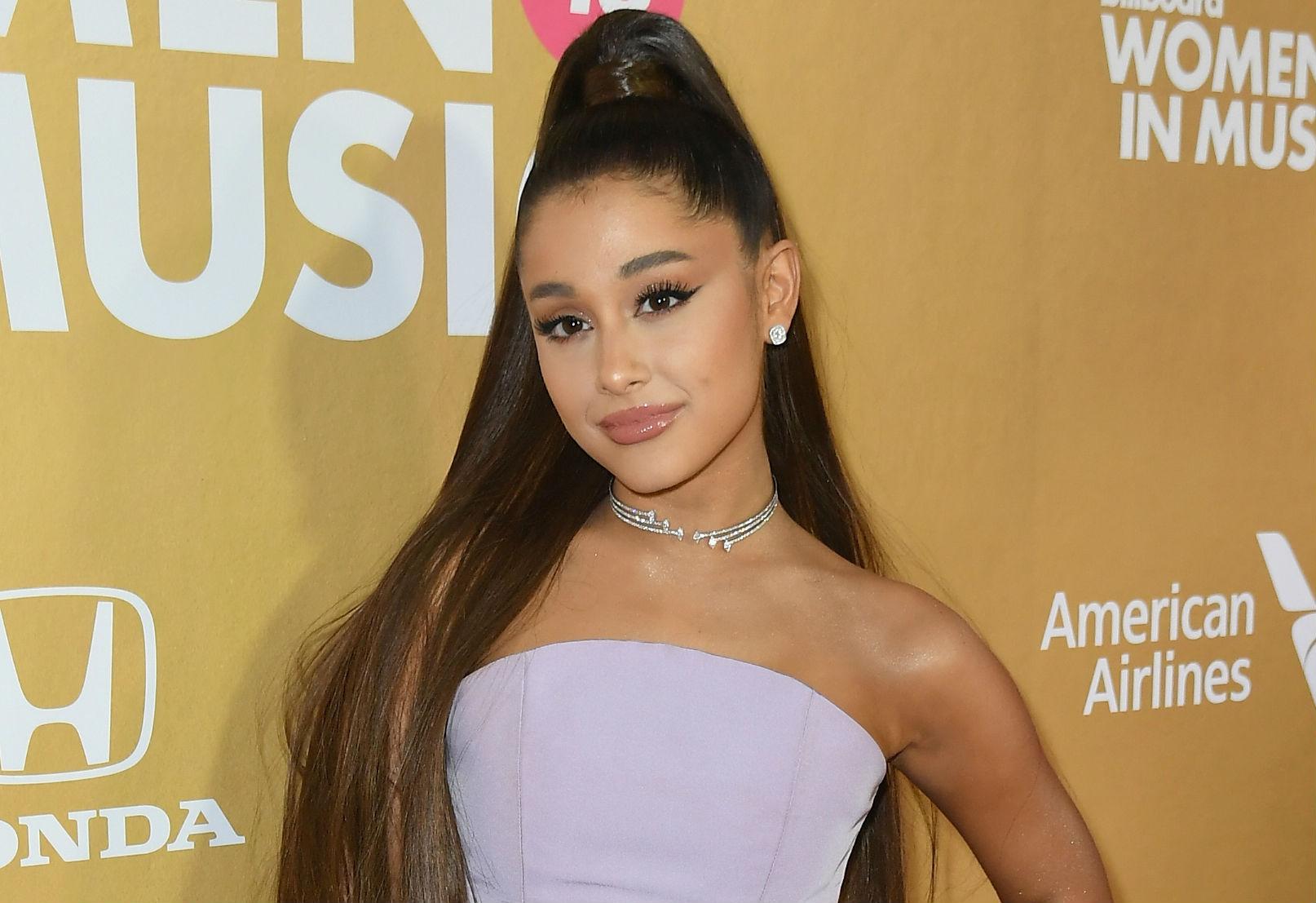
Ariana Grande released her eighth studio album, “petal,” on Friday, a project the singer has described as her most emotionally unfiltered work to date, drawing a wave of early reviews that ranged from enthusiastic to more measured as critics weighed in on the pop star’s latest reinvention.
The album, stylized in all lowercase, was released through Grande’s own imprint label, BabyDoll Music, in partnership with Republic Records. It was recorded between January and April of this year at studios in New York, Los Angeles and Stockholm, and was co-written and executively produced by Grande alongside longtime collaborator Ilya Salmanzadeh, the Iranian-Swedish producer who has worked with the singer across much of her recent catalog. Swedish hitmaker Max Martin also contributed production to portions of the record.
“Petal” follows Grande’s seventh studio album, “Eternal Sunshine,” which debuted at number one on the Billboard 200 in March 2024 and produced two Billboard Hot 100 number-one singles, “Yes, And?” and “We Can’t Be Friends (Wait for Your Love).” That album was later reissued in March 2025 with a deluxe edition subtitled “Brighter Days Ahead,” supported by a companion short film of the same name.
The lead single from “petal,” “Hate That I Made You Love Me,” was released May 29 and set the tone for the album’s broader emotional register. Grande has described the record as emerging from a place of anger she had not previously explored so directly in her music. “It’s definitely from a place I’ve been maybe too shy or polite to tap into before,” Grande has said of the album. “This kind of just feels like, ‘Fuck it.’” She also characterized the overall mood of the project in blunt terms, calling it “a little feral” and explaining that she “wrote from a place that I don’t usually, which was like an unfiltered rage.”
Critical reception to the album proved notably divided in its opening hours. Pitchfork awarded “petal” a score of 6.5 out of 10 in a review written by critic Aimee Cliff, placing the album in a moderate critical tier relative to some of Grande’s earlier work. Rolling Stone took a considerably more enthusiastic view, giving the record a score of 80 out of 100. In her review for Rolling Stone, critic Marissa R. Moss argued that Grande’s music consistently reaches its highest points when the singer allows herself to fully embrace frustration or anger rather than restraint, writing that the singer is “always at her best when she’s in a mood.” Moss singled out the track “Oh Well” as a standout moment on the record, highlighting its blunt, cutting lyrics as characteristic of the album’s overall attitude.
Other reviewers focused on the album’s lyrical approach to processing past relationships and personal growth. One review characterized the album’s trap-influenced track “Like I Do” as notably free of self-pity, framing it instead as a song in which Grande expresses gratitude toward a former partner for the challenges that ultimately helped her grow, both as an artist and as an individual. The same analysis noted that the album’s lead single found Grande adopting a somewhat self-deprecating tone, apologizing within the song’s lyrics for being, in her own words, difficult not to love.
Visually, Grande has paired the album’s more unguarded emotional tone with a notable shift in her public image, appearing on the album’s cover with her hair worn down and loose rather than in the high ponytail that has become one of her most recognizable style signatures over the course of her career. Critics reviewing the album have pointed to that visual choice as symbolically aligned with the record’s broader theme of shedding a more controlled, polished public persona in favor of something rawer and more direct.
The album arrives following a period in Grande’s career defined by high-profile film work, including her starring role as Glinda in the two-part film adaptation of the Broadway musical “Wicked,” released across 2024 and 2025. Grande had previously indicated that she did not plan to record another studio album until she completed filming both installments of the project, a commitment that pushed the release of new solo music back significantly following 2020’s “Positions.”
“Petal” also continues a pattern that has followed several of Grande’s recent albums, in which initial critical scores have sometimes shifted notably in retrospective reassessments over time. Some fans and commentators following the album’s release noted that similar dynamics unfolded following the release of “Eternal Sunshine,” when the album’s initial aggregate critical score on review-tracking sites climbed significantly within roughly a year of its original release, as some outlets revisited and revised their assessments following the album’s deluxe reissue and broader critical and commercial reception.
With “petal” now available across streaming platforms, industry observers are expected to watch closely in the coming days for early sales and streaming figures, along with any additional new reviews from major music publications, as a fuller picture emerges of how critics and audiences are ultimately receiving Grande’s latest and most emotionally direct project to date.

Both indices climbed more than 2.5% through the week and advanced nearly 2.1% in July.
Concerns over oil prices appear to have prevented further gains for the key gauges, which remained within a trading band through the last week of July.
“Despite Nifty ending the week higher, it has been unable to break out of its five-week range of 23,750-24,450, indicating continued indecision among market participants,” said Gaurav Sharma, head of research, Globe Capital Market. “While we remain uncomfortable with oil prices above $80 per barrel and escalation in the West Asia conflict, the earnings season has been better than expected despite a quarter marked by multiple disruptions and higher raw material costs.”
ET BureauBest monthly gains after April as D St sets aside W Asia worries, cos post strong Q1 nos
Late on Friday, Brent crude futures were trading at $90 per barrel, compared with $71.6 at the start of the month.
Hitesh Rathi, technical analyst, Angel One, also said the Nifty has staged a strong recovery this week, and continues to trade within a broader range of 23,800-24,500.
First Buying Since Feb
The index broke the strong support at 23,600 intermittently last Friday.
“We believe that unless the index breaks above 24,500 and closes above that level, it is likely to remain range-bound and witness a sideways movement,” he said. “We continue to see profit booking in the 24,430-24,450 zone.”
Also Read: NSE pays Rs 715 crore to settle pending Rs 1,491-crore co-location case ahead of IPO
On Friday, foreign portfolio investors net bought shares worth Rs 277 crore. Domestic institutions were buyers to the tune of Rs 2,260 crore. So far in July, foreigners have bought shares over Rs 10,000 crore — the first instance of buying since February.
The Nifty’s Volatility Index or VIX, commonly used to gauge the market sentiment, fell 3.3% to 11.76 levels. The gauge has fallen 12.2% in the past five sessions, indicating relief among traders.
Among broader market markers, the Nifty Midcap 150 gained 0.5% and Nifty Small-cap 250 rose 0.4%. For the week, these indices gained 2% and 1.8%, respectively.
Out of the total 4,425 stocks traded on the BSE, 2,522 advanced and 1,722 declined at close.
Sharma said the Nifty could be on the verge of a breakout above the key 24,500 zone, supported by strong earnings, easing oil prices and lower global volatility.
“We also believe the IT sector delivered better-than-expected results this quarter and is not lagging in the AI race. So, it should continue to outperform regardless of the performance of the Kospi or other AI and semiconductor stocks,” he said.
The Nifty IT index gained 6.8% for the week, coinciding with Korean benchmark Kospi’s net decline of 3.1%.
Elsewhere in Asia, Japan gained 4%, China advanced 0.7%, Hong Kong rose 0.1%, South Korea soared 17.9% and Taiwan jumped 8%.
The pan-Europe index Stoxx 600 was up 0.6% at the time of going to print.
“While the pharma and IT sectors have outperformed this week, the Bank Nifty continues to face selling pressure, and unless it recovers, the Nifty is unlikely to see a meaningful recovery from current levels,” said Rathi.

Southeast Asia faces immense opportunities and complex challenges, from AI and climate change to geopolitical competition. ASEAN must evolve beyond process-driven consensus toward concrete, people-centered results, leveraging culture, trust, and unity to build a resilient, innovative region by 2045.
Key Points
• Southeast Asia faces historic opportunities—young population, strategic location, digital growth—but also complex challenges including climate change, AI disruption, geopolitical competition, and disinformation that render traditional regional advantages insufficient alone.
• ASEAN must shift from process-oriented to results-oriented thinking, transforming unity into coordination, consensus into action, and culture into a development driver that meaningfully improves citizens’ daily lives.
• Vietnam and all member states strengthen ASEAN by strengthening themselves domestically, building social trust, investing in youth and digital infrastructure, and placing people at the center of every regional development strategy.
Southeast Asia at a Crossroads: Opportunities and Challenges
Everyday life in Southeast Asia increasingly reflects a rapidly changing world — from digital food delivery in Hanoi to e-commerce connecting Bangkok sellers with Singapore buyers. These ordinary moments signal extraordinary transformation. At the ASEAN Future Forum 2026, General Secretary and President To Lam captured this reality with a powerful message: “The world is changing, and the region must think differently.” ASEAN holds significant advantages — a young population, strategic geography, cultural diversity, and growing investment appeal — yet faces mounting pressures from intensifying geopolitical competition, climate change, artificial intelligence disruption, and disinformation, demanding more than traditional approaches can offer.
From Principles to Action: Rethinking ASEAN’s Strategic Direction
ASEAN’s foundational values — unity, consensus, diversity, and centrality — remain essential assets built over nearly six decades. However, preserving these values cannot mean standing still. Unity must evolve into coordination capacity, and consensus must translate into concrete action. The region must shift from a process-oriented mindset to a results-oriented one, measuring success by tangible improvements in people’s lives: better opportunities, stronger business environments, and greater protection for vulnerable communities. In a fast-moving era, delays carry real costs — investment can relocate, technology revolutions advance without hesitation, and entire generations risk being left behind if institutions fail to adapt swiftly.
Culture and trust are strategic resources, not merely symbolic assets. ASEAN’s soft power lies in its ability to coexist amid differences, pursue peace amid competition, and keep people central to development. Without trust, cooperation weakens — data sharing, supply chain resilience, and green transitions all depend on it. When each member state strengthens itself cooperatively, ASEAN collectively grows more resilient, positioning Southeast Asia as a dynamic, trusted, and people-centered force in the emerging global order.
Other People are Reading
In an informal guidance letter issued on Friday, Sebi said secondary transfers of unlisted equity shares to identified investors would not amount to a deemed public offer, provided the transactions comply with private placement provisions of the Companies Act.
The clarification came in response to a request from IDBI Bank, which holds stakes in unlisted companies acquired through loan restructuring, invocation of pledged shares, direct investments, among others.
Business
Meghan Markle Skips Public Events During Prince Harry’s UK Visit Amid Ongoing Royal Security Dispute

Meghan Markle did not accompany Prince Harry to any of his public engagements during his return to the United Kingdom earlier this month, after her office confirmed she would sit out the events amid an unresolved dispute over the couple’s security arrangements while in Britain.
The Duchess of Sussex had originally been scheduled to appear alongside Harry at several events, including a ceremony marking one year until the Invictus Games return to Birmingham. But following extended discussions centered on the lack of state-funded protection for the couple while in the UK, her office confirmed she would not attend any of the public engagements Harry participated in during his visit, according to ITV News. The largest of those events was Friday’s Invictus Games gathering at the NEC in Birmingham, the venue set to host the tournament for wounded, injured and sick military veterans in July 2027.
Harry’s visit came after he lost an appeal challenging the British government’s decision to reduce his publicly funded security following his and Meghan’s 2020 decision to step back as senior working royals and relocate to California, according to ABC News. Harry was scheduled to attend engagements connected to both the Invictus Games and the WellChild charity during his time in the UK.
The visit also came after ABC News reported that Harry would not be staying at Buckingham Palace during his time in London, after an earlier offer of accommodation to him had been withdrawn. At the time that report emerged, it remained unclear whether Meghan and the couple’s children, Prince Archie and Princess Lilibet, would join Harry later in his visit for the Birmingham portion of the trip.
Despite Meghan’s absence from Harry’s official public engagements, the family did ultimately travel to the UK together. Meghan and the children joined Harry during the visit to meet with King Charles III, marking the family’s first trip to England together in four years, according to Fox News. It was also the first time the king had seen his two California-based grandchildren in person in four years.
Harry was reported to be planning to stay with his uncle, Charles Spencer, at the Spencer family’s Althorp estate near Northampton during the visit, the same estate where Harry’s mother, Princess Diana, is buried on an island in the middle of a lake. Harry and Meghan were reported to be planning to bring Archie and Lilibet to visit their paternal grandmother’s grave during the trip, with a broader Spencer family gathering also planned to include Diana’s surviving siblings, Charles Spencer, Lady Jane Fellowes and Lady Sarah McCorquodale.
Following the couple’s return to the UK, reports indicated that Harry and Meghan largely paused joint public appearances in the days that followed, with few photographs of the couple together circulating publicly during that stretch, according to Reality Tea. After returning from the UK, Harry was subsequently spotted attending the inaugural TIME100 Most Influential People in Sports gala in New York City, while Meghan separately marked a Daytime Emmy Award nomination for her Netflix series “With Love, Meghan.”
The dispute over security arrangements for the Sussexes has remained a persistent point of tension since the couple stepped back from royal duties in 2020, a decision that ended their automatic entitlement to police protection while in Britain. Harry has pursued legal challenges over the issue in the years since, arguing that adequate protection is essential for his family’s safety during any visits to the UK, but has not succeeded in having the earlier security arrangement fully restored through the courts.
Ahead of the visit, a Home Office source described internal disagreement among officials over how to handle the Sussexes’ security needs. “There is nervousness among certain members of the committee who fear a public backlash,” the source said, according to reporting from the U.S. Sun. The source added that “the political side believe there is too much political risk, while the police and security chiefs believe that he absolutely must have it due to the extant threat.”
The visit marked Meghan’s first trip to Britain since September 2022, when she and Harry attended the funeral of Queen Elizabeth II. Since relocating to California in 2020, Meghan has largely remained in the United States with the couple’s children, while Harry has made a number of solo trips back to the UK in the years since.
With the visit now concluded and the underlying security dispute still unresolved, questions remain about how the arrangement will be handled during any future trips the family makes to the UK, particularly as Harry continues to push for a path that would allow Meghan and their children to attend public engagements alongside him without the security concerns that shaped this month’s visit.
Business
KOSPI Surges a Record 17.9% as Samsung and SK Hynix Rebound After Microsoft’s Blockbuster Earnings Beat

South Korea’s benchmark KOSPI index staged the largest single-day rally in its history Friday, surging 17.91% to close at 6,595.45, as chipmaking giants Samsung Electronics and SK Hynix rebounded sharply from a punishing weeklong selloff following blowout earnings results from Microsoft, Amazon and Meta Platforms.
The index closed up 1,001.89 points, marking a record in both point and percentage terms, according to the Korea Herald. The rally briefly pushed the KOSPI as high as 6,547.56 during the session, a 17.06% intraday gain, before the index extended even further into the close. The previous record for a single-day percentage gain had stood at 11.95%, set on October 30, 2008, during the depths of the global financial crisis, according to the Seoul Economic Daily.
Semiconductor shares drove the bulk of Friday’s advance. Samsung Electronics surged as much as 26.81% during the session, while SK Hynix climbed 29.95%, according to figures reported by TradingKey, effectively hitting the exchange’s daily limit for individual stock price movements. The tech-heavy KOSDAQ index also posted a historic gain, closing up 11.63% at 719.76, marking its second-largest daily percentage gain on record, according to the Korea Herald.
The rally traced its origins directly to a powerful overnight session on Wall Street. Microsoft’s shares soared 15.5% Thursday for the company’s best single-day performance in nearly 18 years, according to the Associated Press, after the technology giant reported that its Azure cloud computing division grew 43% during the quarter, easing investor concerns about the sustainability of massive capital spending on artificial intelligence infrastructure. Amazon and Meta Platforms also posted upbeat results that reinforced expectations that AI-related spending remains robust, according to CNBC. The tech-heavy Nasdaq 100 climbed more than 3% Thursday, snapping a six-day losing streak, while the broader Philadelphia Semiconductor Index posted its strongest single-day advance in more than a year.
Friday’s rebound followed a brutal stretch for Korean equities. The KOSPI had plummeted more than 17% over the three trading sessions preceding Friday, driven by investor concerns about a potential bubble in artificial intelligence valuations and intensifying competition from Chinese chipmaking rivals, according to the Associated Press. At one point during that selloff, the index had fallen roughly 40% from its June peak, wiping out nearly $2 trillion in market value, according to reporting from the Private Banker.
Foreign investors were the driving force behind Friday’s historic rebound, posting net purchases of 7.25 trillion won, or roughly $5.06 billion, on the KOSPI, according to the Korea Herald. That marked a second consecutive day of net foreign buying, following four straight sessions of net selling that had preceded Thursday. Before that two-day buying streak began, foreign investors had sold a net 18.5 trillion won worth of Korean stocks during July alone, on top of nearly 51 trillion won in net sales during June. Institutional investors, who began Friday’s session as net sellers, reversed course around midday and ended the day with net purchases of 1.15 trillion won. Retail investors, by contrast, took profits following the recent volatility, selling a net 8.26 trillion won worth of shares.
Additional factors beyond the Microsoft-driven rally appeared to reinforce Friday’s gains. SK Group Chairman Chey Tae-won disclosed purchases of SK Hynix shares during the recent selloff, a move that bolstered investor confidence in the world’s second-largest memory chipmaker, according to CNBC. New cash-deposit requirements for investors using leveraged exchange-traded funds also took effect July 31, a regulatory change some analysts said may have contributed to a broader repositioning among traders active in that corner of the market. Short-covering and mechanical rebalancing tied to leveraged ETFs were also cited as amplifying factors behind the scale of Friday’s move.
Despite the historic single-day gain, market analysts urged caution about reading too much into the rebound. Speaking to CNBC, one analyst identified only as Jung said foreign investors appeared to be the primary force behind Friday’s rally, but cautioned against assuming the gains signal a durable trend reversal. “I would not expect gains of this magnitude to continue,” Jung said, adding that asset prices had become “completely disconnected” from underlying fundamentals during the recent volatility.
Even after Friday’s rally, the KOSPI remained well below its levels from earlier in the year. The index recorded its worst monthly performance since 1997, dropping 22.19% over the course of July, according to TradingKey, underscoring that Friday’s rebound, while historic in scale, only partially offset the scale of losses the index had absorbed over the preceding weeks.
South Korean authorities also announced new measures Friday aimed at supporting the country’s technology and artificial intelligence sector more broadly. The government said it would inject a minimum of 20 trillion won, or approximately $13.9 billion, into the Korea Investment Corporation for strategic investments in artificial intelligence, data centers and broader infrastructure, according to the Private Banker, marking the first time the sovereign wealth fund’s mandate has been expanded to include domestic assets.
Japan’s Nikkei 225 index also posted a strong rebound Friday, rising 4.03% to close at 64,362.02, according to TradingKey, as the broader rally in technology and semiconductor shares extended across Asian markets. With both the KOSPI and Nikkei having now demonstrated the capacity for dramatic swings in both directions over a single week, investors are likely to watch closely in the sessions ahead for signs of whether Friday’s rebound marks a genuine stabilization in sentiment toward AI-linked technology stocks or another temporary swing within a period of extraordinary volatility across the sector.
Business
Shanghai Stocks Rise as Chip Rally Offsets Weak PMI Data and China’s Monthly Loss Ahead of Politburo
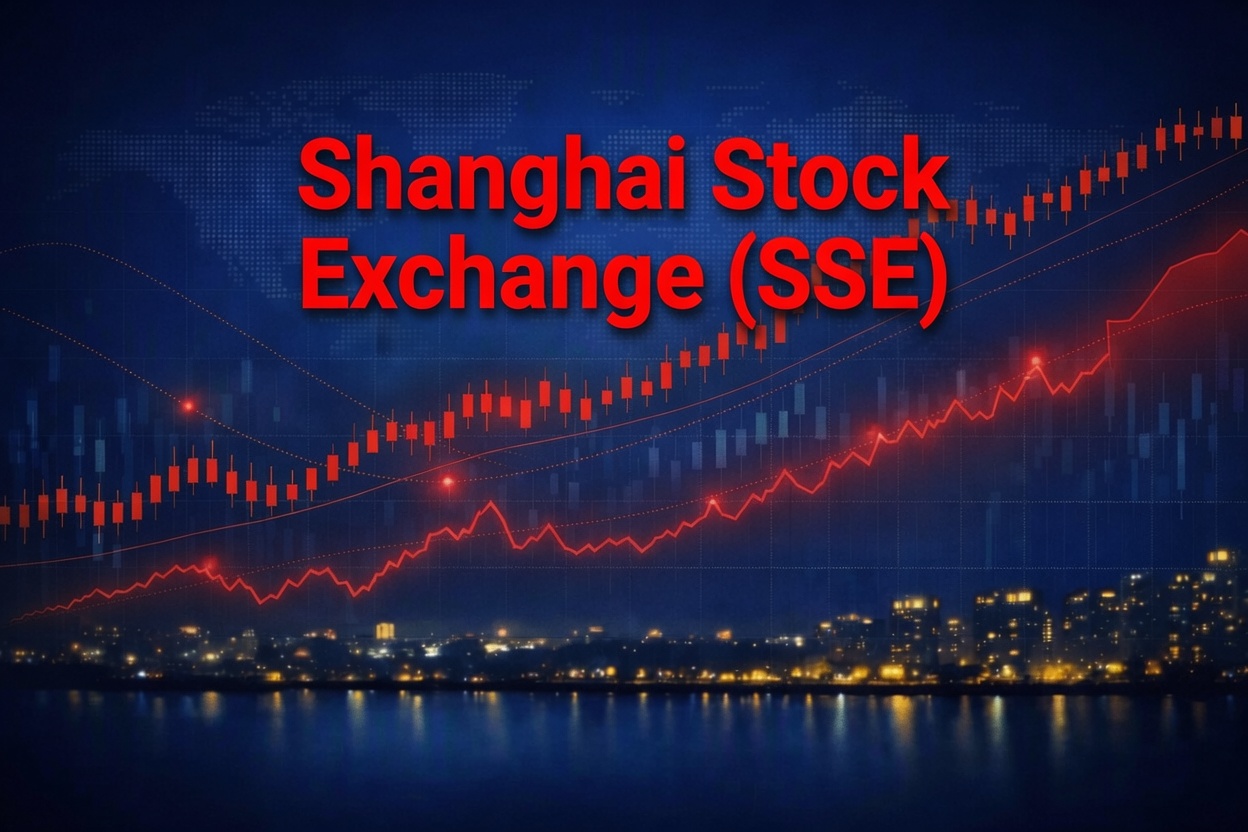
China’s SSE Composite Index rose 0.72% on Friday, adding 27.57 points to close at 3,832.26, as a rally in semiconductor stocks helped mainland Chinese equities finish the week on a positive note even as weak manufacturing data and a broader monthly decline underscored ongoing concerns about the pace of the country’s economic recovery.
Friday’s gains were driven substantially by strength in chip and technology-adjacent names. Cambricon Technologies rose 10.2%, while Semiconductor Manufacturing International Corp., China’s largest chipmaker, climbed 8.1%. Optical component makers posted even sharper gains, with Zhongji Innolight up 13.7% and Eoptolink Technology rising 14.4%, according to data from Trading Economics. The rally in Chinese chip and technology stocks came as part of a broader rebound sweeping across Asian markets, following blowout quarterly earnings from Microsoft, Amazon and Meta Platforms that eased global investor concerns about the sustainability of artificial intelligence infrastructure spending.
Despite Friday’s advance, official economic data released during the session pointed to continued softness in China’s underlying economy. China’s manufacturing purchasing managers’ index slipped into contraction territory in July for the first time since February, according to Trading Economics, while the non-manufacturing PMI also declined unexpectedly. The weak readings added to broader concerns about slowing growth following the release of second-quarter gross domestic product figures that had fallen below the government’s stated target range of 4.5% to 5%.
In response to the disappointing data, China’s Politburo pledged what it described as timely and effective policy support, though the leadership body offered few specific details about additional stimulus measures that might be forthcoming. Despite Friday’s gains, both the Shanghai and Shenzhen benchmarks remained on track for monthly losses when measured over the full course of July, reflecting a month defined by volatile swings between technology-driven optimism and sharper corrections tied to both domestic economic signals and external geopolitical developments.
The volatility that characterized July fit a broader pattern that has defined mainland Chinese equities through much of 2026. Earlier in the month, the SSE Composite had touched multi-month highs above 4,070 points on the back of a rally in semiconductor and technology names, only to give back a substantial portion of those gains during a subsequent selloff tied to escalating tensions between the United States and Iran. That earlier episode saw the index fall as low as roughly 3,913 points in mid-July, its weakest level since early April at the time, before staging a partial recovery in the weeks that followed.
The market experienced additional turbulence in the days immediately preceding Friday’s rally. On Tuesday, the SSE Composite fell 1.16% to 3,813.31 points as a dramatic selloff in semiconductor and memory-chip stocks swept across Asia-Pacific markets, tracking a similar rout that hit South Korean chipmakers particularly hard that week. Thursday’s session saw the index decline a further 0.62% to 3,804 points, giving back a meaningful portion of a 0.35% gain posted the prior Wednesday, as renewed weakness in technology and semiconductor names once again weighed on mainland equities ahead of the Politburo meeting.
Trading activity within the broader mainland market showed notable divergence throughout the week between the SSE Composite’s larger, more state-owned enterprise-weighted constituents and smaller, growth-oriented names listed on the Shenzhen exchange. On Thursday, the Shenzhen Component Index, which carries heavier weighting toward smaller-capitalization growth and technology stocks, fell 2.73% to 13,285 points, while the tech-heavy ChiNext Index tumbled 3.97% to 3,244 points, a far steeper decline than the headline Shanghai benchmark experienced that same session. Analysts covering mainland equities have said that pattern, with selling concentrated more heavily in growth-oriented Shenzhen and ChiNext-listed names rather than in the SSE Composite’s larger state-owned enterprise constituents, suggests the market’s recent volatility reflects a recalibration of technology-sector valuations specifically rather than a broader loss of confidence in the Chinese economy as a whole.
Combined turnover across the Shanghai and Shenzhen exchanges has remained elevated throughout the recent volatility, with Thursday’s session alone recording approximately 2.34 trillion yuan in trading activity, up from 2.3 trillion yuan the previous day, indicating that the market’s swings have unfolded on relatively active trading volumes rather than thin, illiquid conditions.
The SSE Composite’s 52-week trading range spans from a low of 3,547.16 to a high of 4,258.86, according to Investing.com data, illustrating the scale of volatility that has characterized the index over the past year even as it remains 7.69% higher than a year ago despite having declined 6.78% over just the past month, according to Trading Economics.
With the Politburo’s policy statement offering only broad assurances of support rather than concrete new stimulus measures, and Friday’s gains driven substantially by a rebound in chip and technology stocks tied to overseas earnings catalysts rather than domestic economic strength, market participants are likely to continue watching closely for more specific policy signals from Chinese authorities in the weeks ahead, particularly given the disappointing manufacturing and services PMI readings that have reinforced concerns about the durability of the country’s economic recovery heading into the second half of 2026.

Rupee#CAD#Economic crisis#Food Bill

ET Now: There are two ways of looking at it the top level exits in Infosys. On the one hand, a lot of people say that there was a team that was probably not performing well and now they are exiting and that will probably be a positive for the stock over the long run. The sceptics, on the other hand, would argue that there are a lot of people who have been manning the company for the last many years and it is not a pint-sized company, but a Rs 1 lakh 70 thousand crore behemoth. Why have there been so many high profile exits in the company?
Mohandas Pai: There is a leadership vacuum in the company, because they made the wrong choice of CEO three years ago and that is playing out right now. The company has not performed and in June 2011, they had appointed three members on the board and all three of them have gone now and all three have been extraordinary individuals.
Ashok Vemuri is now the CEO of another company, V Balakrishnan had left and has started his own fund and BG Srinivas, I am told, would now be joining some other company as CEO.
So obviously, all three have been CEO materials. It is obvious that the chemistry did not work, or they were not fully empowered. There is a need for the board to sit down and work out a good succession plan and put a new team in place because the entire layer of people below the executive board are now gone and many of them were outstanding performers.
Yes, a few of them possibly were not pulling the weight, but it is not possible that all of them were not doing so. They were extraordinary people and they are performing at other places.
So there is a need for teamwork and need for people to come together. They need to forget the past and focus on the future, they need to realign the company based upon what the market needs.
The market has changed and so its model needs to change, its management structure needs to change and the set of people who have ruled the company for 30 years have to step down and hand over reins, because they have stayed on for too long. Therefore, I hope that in the next one or two months, the board will come together along with NRN and once and for all close this issue.
ET Now: Where can the breakthrough come from at this point, because you have already stated in the past that the board and Mr Murthy need to take responsibility for the exits. It just seems that the series of exits is not ending. Does this mean that the company may have to also consider forming a completely new team from outside and hiring some expensive resources from outside?
Mohandas Pai: My view is that the layer below BG Srinivas, V Balakrishnan and Ashok Vemuri is an extraordinary layer. You have many good people who have run units. But they have run units and they require one or two years to come up with enterprise.
Enterprise position is very different from a unit position. You could be an extraordinary unit person, but to run an entire enterprise in a very competitive environment, you require some mentoring and some experience.
Now the entire generation of leaders who could have handled enterprise has gone. The next layer of people have done very well and there is great management there, but they need to connect between themselves and NRN who is the executive chairman and will stay for the next three years. That connect has to be fixed and it is up to NRN to do it.
Now it can be done by somebody stepping up to the plate as CEO. He will be inexperienced, he would not have handled enterprise, but being very efficient, in three to six months, he can pick it up.
However, that requires a different style of functioning by NRN. It also means that some amount of bloodletting will happen. In fact, it has to happen when the next generation comes up, because obviously people who are much senior will not stay on and there has to be a cleanup. So in the next two or three months, we have to see a radical change.
It is very difficult to speculate whether we will have an external team of people coming in, because such a team does not exist in any other company, let us remember. It is a very large company, with 160000 people, and $25 billion or $30 billion of market value.
So it requires a certain level of expertise and the board and the chairman have to work with them very carefully. So they have their task cut out and it will help if Nandan Nilekani is asked to come back, because he could provide the link between the chairman and the next layer of people and help to mentor them for the next couple of years, because he had an extraordinarily connect with people, his style is very inclusive and he is a person who empowers his team and gives them full strength to go ahead and stands by them. So getting Nilekani back would be a great strategy.

U.S. Olympian David Hearn’s felony vandalism case dismissed by DOJ

What does a backyard Dolby Atmos home music studio look like when you’re a sound engineer for major artists? The shed of my dreams, that’s what

LISA – ‘MONEY’ EXCLUSIVE PERFORMANCE VIDEO


-
 Sports5 days ago
Commonwealth Games boxing: Jadumani Singh seals dominant 5-0 win over Pakistan’s Sumama Rehman to enter quarter-finals | Commonwealth Games News
-

 Business2 days ago
Why Trees Belong on the Risk Register
-

 Fashion9 hours ago
Weekend Open Thread: Wit & Wisdom
-

 Tech5 days ago
Intel is reversing course and bringing hyper-threading back to its server chips
-

 Politics6 hours ago
Meta enters AI-training agreement with far-right ‘propaganda rag’ Newsmax
-

 Crypto World6 days ago
Ripple bought a bank in pieces. The $4 billion audit
-

 Politics5 days ago
Luke Littler dismantles Gerwyn Price to retain title in Blackpool
-

 Politics4 days ago
The Part of the Electric Transition Nobody Wants to Discuss
-

 News Videos5 days ago
BITCOIN JUST ENTERED THIS CRITICAL ZONE…
-
 Entertainment3 days ago
‘Stargate’ Creator’s New Sci-Fi Series Returns for Season 3 Tomorrow
-

 Crypto World6 days ago
XRP Ledger adds $2.6B as RWA inflows rank second
-

 Business3 days ago
Major shareholder moves on Canyon
-

 Politics6 days ago
Spain sweeps the board at 2026 World Cup with individual awards
-

 News Videos2 days ago
Bitcoin Enters the 3rd Stage of the Bear Market
-

 Entertainment6 days ago
Sara Gilson Killed By Husband After Viral “Pedophile” TikTok Video
-

 Crypto World3 days ago
Kraken Enables Retail Access to Jersey Mike’s IPO via Tokenized Shares
-

 Tech7 days ago
Anthropic launches Claude Opus 5, a cheaper AI model for coding, agents and enterprise workflows
-

 Tech4 days ago
New macOS Sequoia & Sonoma security updates for older Macs
-

 News Videos3 days ago
Claude: Build Financial Dashboards in Minutes (2026)
-

 Politics1 day ago
Luke Littler’s dominance sparks GOAT debate
You must be logged in to post a comment Login