Likely next PM pledges ‘biggest rebalancing of power our country has seen’ and support for businesses
13:36, 29 Jun 2026Updated 15:39, 29 Jun 2026
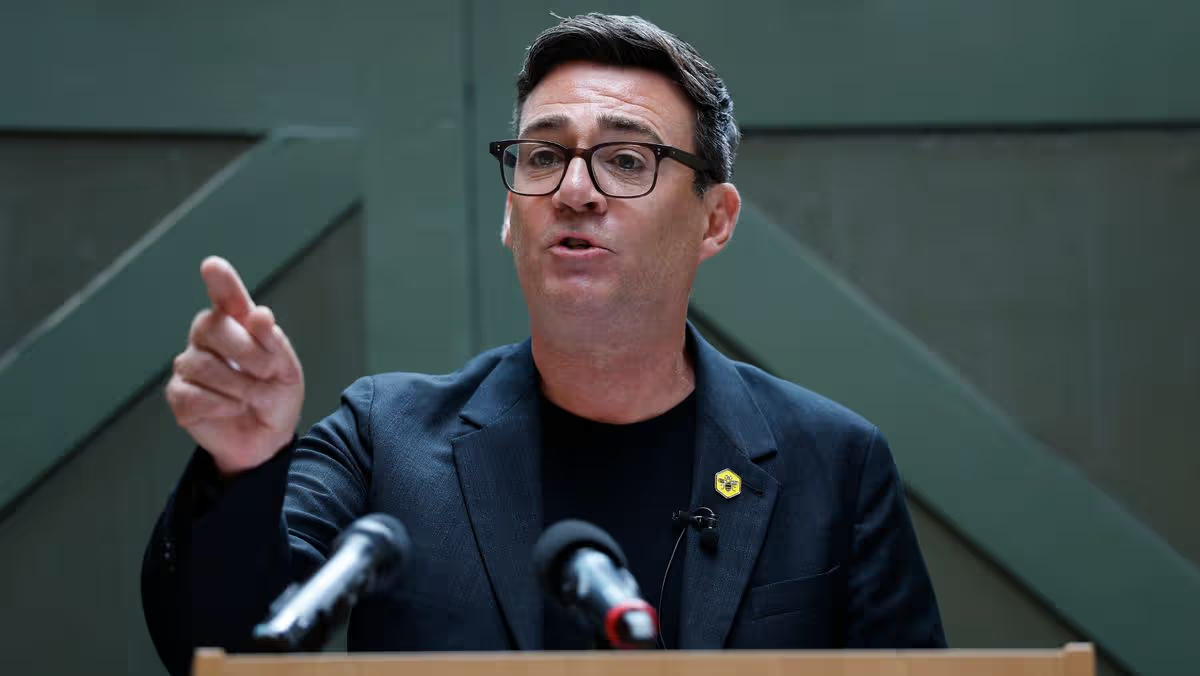
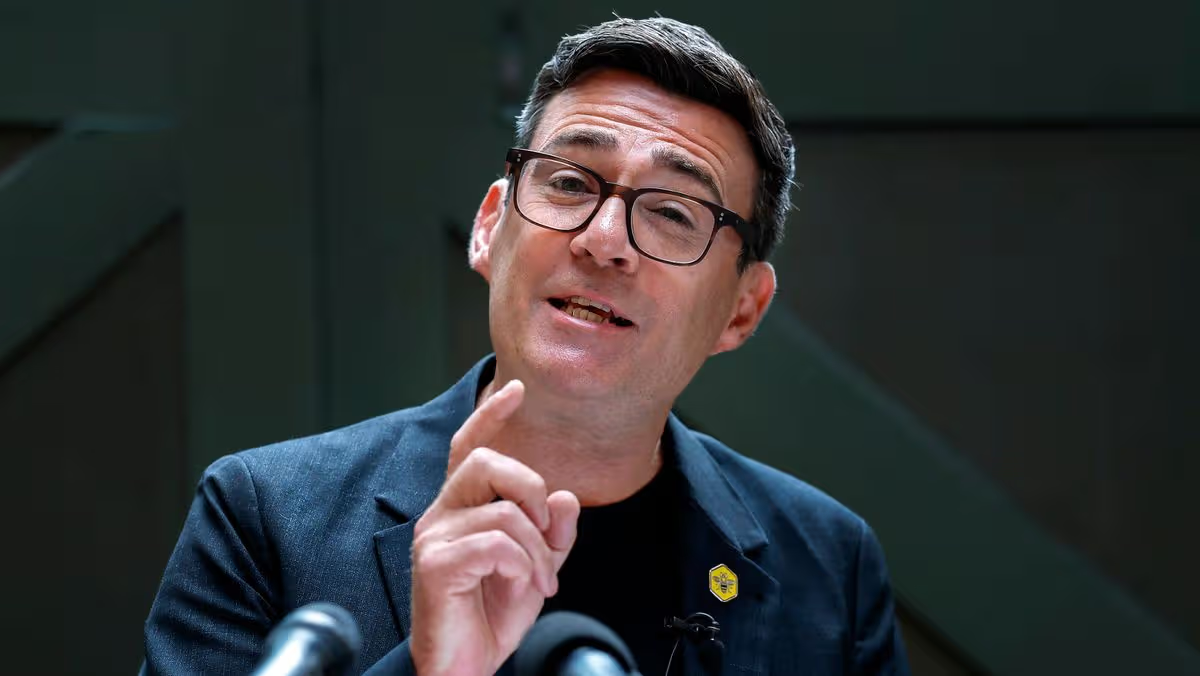
Andy Burnham delivered his first major speech since Sir Keir Starmer announced his resignation(Image: Getty Images)
Andy Burnham’s pledges to create a number 10 North and to create ‘good growth in every British postcode’ have been welcomed by business leaders in the North and across the UK.
Mr Burnham is expected to become the UK’s next Prime Minister after his victory in the Makerfield by-election, and today in Manchester gave his first speech outlining his plans for office. He promised to create the “biggest rebalancing of power our country has seen”, creating a ‘Number 10’ in the North based in Manchester to help shift decision-making from Whitehall.
Mr Burnham also promised support for business, including making sure that Whitehall backs British companies. He said: “For too long, UK public procurement policy has been based on chasing cut-price deals around the world rather than helping our own British-based suppliers become more stable and competitive.
“No more. From here on, every pound raised from taxpayers will work harder for them, and that approach will apply fully to the defence investment plan.”
Mr Burnham added he will “back our scientists, technologists, entrepreneurs and creatives”. He also committed to a house-building programme and to a “complete rethink” on education. He said he rejected the “trickle-down model” and added: “We will create a more streamlined state with a clearer purpose to power up all parts of the country and put a laser-like focus on growth and regeneration, good growth.”
Henri Murison, chief executive of the Northern Powerhouse Partnership, said: “Today Andy Burnham has made a bold commitment to further devolution. From giving places the tools to tackle economic inactivity to devolving post-16 skills, our verdict on these proposals are that they would help reduce the rising costs of welfare and the ill-health that places increasing pressure on the NHS.
“Alongside investment in infrastructure to drive productivity, raise wages and increase tax revenues, they would help turn the structural fiscal deficits seen across many parts of the North into surpluses that can be reinvested in future regional growth.
“We should all want a more united country. The Greater South East will benefit from greater freedom to raise the investment it needs, while, over time, having a reduced responsibility to subsidise other parts of the country as other regional economies become stronger.
“‘No.10 North’ will help ensure that the relocation of civil servants to places such as Darlington, York and Manchester delivers its full potential. These new government offices are helping regenerate those places, but Ministers themselves have not yet made effective use of them. A regular ministerial presence outside Whitehall would strengthen decision-making and bring government closer to the communities it serves.”
Shevaun Haviland, director-general of the British Chambers of Commerce said: “Firms need consistency, clarity and stability from policymakers, if business confidence is to be improved.
“Businesses will judge Andy Burnham’s plans on whether they deliver the boost to investment, productivity and trade desperately needed to unlock growth. As our recent report outlined, government must always ask whether policy passes a ‘growth delivery test’ to encourage firms to invest and grow.
Shevaun Haviland, director-general of the British Chambers of Commerce
“It’s crucial that the devolution agenda has local business at its heart and brings benefits to all parts of the UK.
“Our Chamber network completely understands how national ambition can be translated into local economic growth. We’ve long argued that more decisions affecting local economies, including transport, skills and infrastructure, should be taken closer to the communities they serve.
“Successful Chamber-led Local Skills Improvement Plans across England show the power of devolution to help address the challenges facing our economy. Creating greater parity between academic and technical qualifications is something business wholeheartedly supports.
“A pledge to improve the public procurement system is welcome, but it must quickly bring benefits to SME supply chains across the UK.
“Fiscal devolution must see money spent in the right way, to boost local growth. It must not mean further costs on business. BCC analysis shows government-imposed costs on SMEs have risen by more than 70% in just 10 years. New local business taxes and visitor levies would stifle economic growth.
“The difficult truth is, whoever leads the UK, the primary challenge remains the same – delivering growth. Business stands ready to work in partnership with any new Prime Minister to focus on that crucial task.”
Jane Gaston, CEO of Net Zero North West, said: “It’s encouraging to see a renewed focus on reindustrialisation, place-based growth and giving regions a stronger voice in shaping the UK’s economic future. Those principles closely reflect the approach we’ve been championing across the North West for many years.
“Our recent Why Industry Matters report highlighted that the North West contributes £270.8 billion to the UK economy, generates £68.5 billion in exports and supports 337,000 manufacturing jobs. The region is already one of the UK’s most significant industrial economies and has a critical role to play in safeguarding sovereign capability, strengthening energy security and delivering the clean energy transition.
“We welcome the ambition behind proposals such as a ‘Number 10 North’ and the recognition that industrial strategy must be built around places. However, any national plan for reindustrialisation must fully recognise the North West’s industrial strengths alongside other key regions. The North West is home to globally significant manufacturing, chemicals, advanced engineering and energy clusters that are fundamental to the UK’s future competitiveness.
“We also welcome the emphasis on strengthening UK supply chains and creating greater social value through public procurement. Combined with long-term policy certainty, investment in skills and infrastructure, and a genuinely joined-up approach to energy and industrial policy, these are the foundations needed to unlock sustainable growth across the whole country.
Mayor of the West Midlands, Richard Parker (left) greets MP for Makerfield, Andy Burnham, as he arrives at The People’s History Museum(Image: Getty Images)
“The vision is encouraging. The next step is ensuring it is backed by a clear delivery plan that fully harnesses the strengths of regions like the North West, where the capability, expertise and partnerships to deliver long-term industrial growth already exist.”
Wayne Jones OBE, chair of Greater Manchester Chamber of Commerce, said: “It was good to hear Andy Burnham put greater devolution of power to the regions at the heart of his speech. As Mayor of Greater Manchester, he has seen first-hand what can be achieved when regions are given control over areas such as public transport.
“For far too long power in this country has been centralised in London with little thought about the needs of individual regions. Having regional mayors has been a step in the right direction but more power needs to be devolved for the regions to achieve their full potential.
“As it seems likely Andy Burnham will become Prime Minister unopposed next month, this speech is our first real indication of what he will do when he is in power. We hope he will stick to what he has set out in his speech and devolution doesn’t get lost among all the other issues that will face him when he gets into Downing Street. It is encouraging that he talked about setting up a ‘No 10 North’ which should help to keep government focused on what needs to be done across the North.”
Subrahmaniam Krishnan-Harihara, director of business policy and research at the chamber, added: “Andy Burnham’s first major leadership speech today sets out an ambitious, long-term vision to ‘lift Britain back up’ through a 10-year mission focused on raising living standards. Greater Manchester Chamber of Commerce welcomes the emphasis on sustained economic renewal rather than short-term fixes, and the clear recognition that the current centralised model has left too many parts of the country behind.
“Mr Burnham’s call for the biggest transfer of power out of Whitehall in modern times, delivered through greater devolution to regions and local leaders, is a positive step. Empowering mayors and combined authorities to drive ‘good growth in every postcode’, with a proposed ‘No 10 North’ in Manchester, could help tailor solutions to local needs and rebalance the economy.
Chair of Greater Manchester Chamber of Commerce, Wayne Jones OBE(Image: Greater Manchester Chamber of Commerce)
“The emphasis on a partnership approach between government, business, universities and communities echoes what has worked in Greater Manchester and deserves support. His use of the phrase ‘give Britain the circuit breaker it needs’ appears to signal a decisive reset: a break from the cycle of over-centralisation, uneven growth and declining public trust in politics. It’s framed as a structural intervention rather than a short pause, aimed at changing how the country is governed to deliver better outcomes.
“That said, while the speech rightly highlights reindustrialisation, infrastructure, housing and utilities reform, it was notably light on the immediate pressures facing businesses, especially SMEs. There was no direct reference to the rising cost of employment, inflationary pressures coming from geopolitical events or the ongoing challenge of business rates, all of which remain significant burdens for smaller firms.
“Business was only mentioned at a high level in the context of the partnership model and procurement reform to support British industry and apprenticeships, but there was little granularity on how devolution or the 10-year plan would specifically ease costs, improve access to finance or reduce regulatory complexity for SMEs. The ambition and long-term framing are encouraging but the key test will be whether the new economic vision and promised devolution deliver practical, tangible support for small businesses on the ground, rather than remaining at the level of an ambitious strategy.”
Eva Barboni, executive director of Enterprise Britain, said: “There were signals in Andy Burnham’s speech that he recognises the critical role start-ups and scale-ups play in delivering a better future for Britain.
“We welcome his commitments to back Britain’s entrepreneurs, build clusters of innovation around our world-leading universities, and ensure that we capture the full value of British businesses.
“These commitments must be followed by a clear plan of action.
“Devolution alone will not automatically deliver growth. We need bold measures to unlock the capital British start-ups and scale-ups need to grow, ensure they can hire the right talent at the right time, and tear down the barriers that are holding ambitious businesses back.
Vanessa Hale, chief executive at Real Estate:UK, said: “The real estate sector has a critical role to play in boosting growth across the UK, working not only with national government, but also with newly empowered mayors and local leaders through genuine partnership working to deploy place-based funds, facilitate the development of industrial clusters, deliver the successful regeneration of places, and build new homes as part of a place-first, ‘good growth’ approach. With a stable and supportive policy framework, we can build the affordable and higher density homes that Andy Burnham says he wants.
“However, the full benefits of this will only be delivered if the same radical approach to reforming the role of government is also applied to how government works with the private sector, including full recognition of the challenges that the real estate industry faces, such as the viability crisis which has effectively stalled building activity across the country, that enhanced local and regional authorities need the extra resourcing to match the scale of their ambition, and an understanding that the need for stability is paramount for those seeking to make long-term investment into the UK.”
Michael Moore, chief executive at UK Private Capital, said: “We welcome Mr Burnham’s focus on public and private investment working hand in hand to make the UK an innovation nation. Private capital has a vital role to play in every nation and region of the UK, backing businesses, unlocking investment and helping local economies realise their full potential.
“By bringing decision-making closer to the communities it affects, and by strengthening partnerships between local leaders, businesses and private capital, investors such as our members can help more scale-up businesses and innovative spin-outs across the country grow and commercialise their ideas.
“Such focus on place-based collaboration and investment as a baseline for the UK economy presents a serious new opportunity for building a more dynamic and growing economy.”
Richard Caten, CEO at infrastructure consultancy Ardent, said: “It’s encouraging to see infrastructure and regional growth moving to the centre of the national conversation. The ambition to deliver ‘good growth in every postcode’ and strengthen decision-making outside Westminster is one the infrastructure sector will welcome.
“But ambition must now be matched by delivery. Unlocking sustainable economic growth depends on having a planning system that enables investment, meaningful engagement with communities from the outset, and the transport, energy and utility infrastructure needed to support new homes, businesses and jobs.
“Whether it’s through greater devolution or initiatives such as a ‘No 10 North’, success will ultimately be measured by how quickly projects can move from policy to delivery. If regions are given the powers, certainty and resources to bring forward critical infrastructure, they will be better placed to attract investment, unlock development and create long-term prosperity for communities across the UK.”
Cllr Louise Gittins, Chair of the Local Government Association, said: “Successive devolution agreements have demonstrated that devolving powers to local communities is the best way of unlocking the potential of people and their places, while boosting inclusive economic growth.
“It is now vital that the government steps up its ambition to deliver genuine devolution right across England, giving councils who know their communities the power to tackle long-standing local and national challenges, including driving infrastructure investment, plugging skills gaps, building more affordable housing and boosting productivity.
“By working together as equal partners across different levels of government, we can build prosperity and opportunity for our communities and businesses.”

























































You must be logged in to post a comment Login