Connect with us

Business

‘New chapter’ for Britannia Hotels as ‘worst hotel chain’ appoints new directors and plans investment

Published

on

Business Live

Four board members have years of experience at company that celebrates 50th anniversary this year

Britannia Hotels Group has announced the appointment of a new Board of Directors. From left: Helen Rees, Simon Powell, Paul Streets, Prakash Sivarajan

Britannia Hotels Group has announced the appointment of new directors. From left: Helen Rees, Simon Powell, Paul Streets, Prakash Sivarajan(Image: Britannia Hotels)

Britannia Hotels Group has appointed a new board of directors – and they have vowed a “new phase of development” and investment at the chain that has been voted Britain’s worst for years in a row.

In November, Britannia was ranked bottom in the annual Which? Survey of UK hotel groups for the 12th year in a row. The Altrincham company has also hit the headlines for winning contracts to use some of its rooms and hotels to house asylum seekers.

Advertisement

Now the group has appointed four directors, all of whom held senior roles in the group, to its board. In a statement, it called the appointments “a new chapter in the company’s evolution” and said the directors would be focusing on “enhancing guest experience, investing in the UK-wide portfolio and strengthening team performance”.

Britannia added: “The new board will honour the group’s 50-year legacy while evolving the business to meet changing guest and employee expectations, spearheading a number of improvements across the portfolio. These include a multi-million pound property refurbishment programme, investment in new systems and technology for hotel teams, the introduction of a new entertainment breaks programme at five hotels across the country and a visual refresh of the Britannia Hotels brand identity.”

The new board members are:

  • Simon Powell, who has 30+ years’ operational and managerial experience, including 18 with Britannia
  • Helen Rees, who has 25+ years’ of managerial hospitality experience and joined Britannia in 2023
  • Prakash Sivarajan, who had 25+ years’ experience in hospitality for a number of leading brands, and joined Britannia in 2020
  • Paul Streets, who has 10+ years of experience as a solicitor in a variety of legal roles, including three as general counsel for Britannia Hotels

Mr Streets said: “Britannia Hotels has a proud heritage and unique place in the UK hospitality landscape. As we approach our 50th anniversary, the new Board represents an important moment for the business – one that allows us to respect what has been built over many years, while bringing greater focus, clarity and ambition to how we operate going forward.

“Our priority is to invest in our hotels and our people and deliver consistent and great value experiences for our guests. We are excited about the opportunity ahead and confident in the long-term future of Britannia Hotels Group.”

Advertisement
Liverpool's Britannia Adelphi Hotel

Liverpool’s Britannia Adelphi Hotel(Image: Andrew Teebay/Liverpool Echo)

Britannia was founded in 1976 by Alex Langsam and today owns 65 properties with more than 10,000 bedrooms. Its best-known hotels include the Adelphi Hotel in Liverpool, the Britannia Hotel in Manchester, the Royal Bath Hotel in Bournemouth, and the Grand Hotels in Scarborough, Blackpool and Llandudno.

It also owns the Pontin’s chain of holiday camps. The Southport site has been closed since 2024.

Mr Langsam has been called the “asylum king” after his company became well-known for housing asylum seekers in some of its hotels, including Britannia’s International Hotel in Canary Wharf, through contracts with the Home Office. In April the Government announced it was closing 11 more asylum hotels, including the Britannia Hotel in Wolverhampton which had seen protests last year.


Advertisement
Continue Reading
Click to comment

You must be logged in to post a comment Login

Leave a Reply

Business

Air France-KLM SA (AFLYY) Q2 2026 Earnings Call Transcript

Published

on

OneWater Marine Inc. (ONEW) Q1 2026 Earnings Call Transcript

Operator

Good morning, and welcome to the Air France-KLM Half year 2026 Results Presentation. Today’s conference is being recorded. [Operator Instructions] At this time, I would like to turn the conference over to Benjamin Smith, CEO and Steven Zaat, CFO. Please go ahead, sir.

Benjamin Smith
CEO & Director

Advertisement

Thank you. Good morning, everyone, and thank you for joining us for Air France-KLM’s Second Quarter 2026 Results Presentation. As usual, I’ll begin with the strategic and operational highlights of the quarter before handing over to Steven Zaat, our CFO, who will walk you through our financial performance in detail.

I will then return to take your questions together with Steven, Anne Rigail, Air France’s CEO; and Marjan Rintel, KLM CEO. As the entire industry, Air France-KLM continued to operate in a highly volatile environment this quarter that we delivered a strong commercial performance. Good revenues increased — Group revenues increased by nearly 10% to EUR 9.3 billion, supported by growth across all our businesses. Passenger demand remained robust with more than 28 million customers traveling on our network during the quarter.

As

Advertisement
Continue Reading

Business

DFI Retail Group Holdings Limited 2026 Q2 – Results – Earnings Call Presentation (OTCMKTS:DFIHY) 2026-08-01

Published

on

OneWater Marine Inc. (ONEW) Q1 2026 Earnings Call Transcript

This article was written by

Seeking Alpha’s transcripts team is responsible for the development of all of our transcript-related projects. We currently publish thousands of quarterly earnings calls per quarter on our site and are continuing to grow and expand our coverage. The purpose of this profile is to allow us to share with our readers new transcript-related developments. Thanks, SA Transcripts Team

Continue Reading

Business

Right technology

Published

on

ET Search

Apropos of ‘The climate conundrum’ (ET, Oct 9), Mukul Sanwal rightly suggests that developing countries should lead in setting the agenda for global technological cooperation.

Continue Reading

Business

Managing data – The Economic Times

Published

on

ET Search
This refers to your edit ���A welcome quest��� (ET, Oct 8). It is imperative to have a strong database. But just having a database of employment is not enough; the data has to be consistent. It has been observed that data vary from ministry to ministry, department to department. India���s information system is not very precise and efficient. One centralised database system can address this issue which will provide access to the diverse group of people and policymakers with consistency.

Debasish Maitra

IRMA, Anand, October 8

Advertisement
Add ET Logo as a Reliable and Trusted News Source
Continue Reading

Business

US Justice Department subpoenas New York Times freelancer over North Korea story, paper says

Published

on


US Justice Department subpoenas New York Times freelancer over North Korea story, paper says

Continue Reading

Business

Six Factors Behind the Extreme Volatility

Published

on

Earnings News: Micron Technology Inc (NASDAQ: MU)

South Korea’s benchmark KOSPI index has whipsawed through one of the most volatile stretches in its history over the past several weeks, swinging between historic single-day losses and record-setting rebounds as investors struggle to settle on a consistent view of the country’s chip-heavy stock market. Here is a breakdown of the key factors driving that turbulence.

1. Extreme concentration in just two chip stocks

Samsung Electronics and SK Hynix together account for more than half of the KOSPI’s total market weighting, a level of concentration that has effectively turned the entire benchmark index into a direct proxy for global sentiment toward artificial intelligence hardware spending. When either company’s shares move sharply, whether up or down, the effect ripples through the headline index with far greater force than a comparably diversified market would experience. That dynamic has meant that daily earnings reactions, competitive news or supply announcements involving either company can single-handedly swing the KOSPI by several percentage points in a single session.

2. Whiplash reactions to memory chip earnings

Advertisement

Both companies’ recent earnings reports have triggered dramatically different market reactions depending on how results compared with elevated investor expectations, rather than the underlying strength of the results themselves. SK Hynix reported a sixfold increase in operating profit and record revenue, yet shares initially fell sharply because the figures still came in below the loftier expectations investors had built around AI-related chip demand. Samsung’s semiconductor division separately reported operating income more than 250 times higher than the prior year, a result that, combined with other catalysts, helped fuel one of the sharpest single-day rallies in KOSPI history.

3. Intensifying competition from Chinese chipmakers

Growing concerns about Chinese memory chip manufacturers narrowing the technological gap with South Korean producers have added a structural layer of anxiety to the recent volatility. The successful stock market debut of Chinese memory chip manufacturer CXMT, along with reports that Chinese firms have made progress developing advanced deep ultraviolet lithography equipment, has repeatedly weighed on sentiment toward Samsung and SK Hynix, since both companies face the prospect of lower-cost Chinese rivals eventually competing for market share in the global memory chip industry.

4. Broader doubts about AI infrastructure spending sustainability

Advertisement

The KOSPI’s swings have closely tracked a broader global reassessment of whether massive capital spending on artificial intelligence infrastructure can continue at its current pace. Selloffs in Korean chip stocks have repeatedly coincided with steep declines in U.S. semiconductor names, driven in part by investor concerns about unusually large, circular financing arrangements between major AI infrastructure providers and their customers. Conversely, the KOSPI’s most dramatic rebound to date came directly on the heels of blockbuster earnings from Microsoft, Amazon and Meta Platforms, which eased those same concerns and sent chip stocks surging across Asian markets overnight.

5. Leveraged trading and mechanical market structure

Elevated participation by individual investors in leveraged exchange-traded funds tracking the semiconductor sector has repeatedly amplified volatility in both directions throughout the recent turbulence. When the KOSPI or the smaller KOSDAQ index falls or rises 8% or more within a single session, automatic circuit breakers and “sidecar” mechanisms designed to halt trading or suspend program orders have been triggered on multiple occasions in recent weeks, at times on both the KOSPI and KOSDAQ on consecutive trading days for the first time in the exchange’s history. New cash-deposit requirements for leveraged ETF investors, which took effect July 31, were specifically introduced by regulators in an effort to reduce this kind of mechanically amplified volatility going forward.

6. Shifting foreign investor flows

Advertisement

Foreign investor activity has swung sharply during the recent turmoil, adding another layer of instability to the index. During the sharpest phase of the selloff, foreign investors sold tens of trillions of won worth of Korean stocks over consecutive weeks. That pattern reversed abruptly during the KOSPI’s record rebound session, when foreign investors posted net purchases exceeding 7 trillion won in a single day, marking a second consecutive session of net foreign buying after four straight sessions of net selling beforehand. Institutional investors have shown a similarly inconsistent pattern, at times reversing from net sellers to net buyers within the same trading session.

The scale of the recent swings has been extraordinary by historical standards. The KOSPI plunged more than 17% over three trading sessions in late July, at one point falling roughly 40% from its June peak and wiping out nearly $2 trillion in market value, before rebounding with a single-day gain of 17.91%, the largest in the index’s history, a move that still left the KOSPI down 22.19% for the month of July overall, its worst monthly performance since 1997.

Market analysts have urged caution about reading too much into any single day’s move given the scale of the recent volatility. One analyst, speaking to CNBC following the record rebound session, cautioned that asset prices had become “completely disconnected” from underlying fundamentals during the recent turmoil, adding, “I would not expect gains of this magnitude to continue.”

South Korean authorities have moved to address the broader instability directly, announcing plans to inject at least 20 trillion won into the Korea Investment Corporation for strategic investments in artificial intelligence, data centers and broader infrastructure, marking the first time the sovereign wealth fund’s mandate has been expanded to include domestic assets. With the structural drivers behind the recent volatility, chip stock concentration, AI spending uncertainty, Chinese competition and leveraged trading dynamics, still largely unresolved, analysts expect the KOSPI to remain unusually sensitive to incoming earnings, geopolitical developments and shifts in global technology sector sentiment in the weeks ahead.

Advertisement
Continue Reading

Business

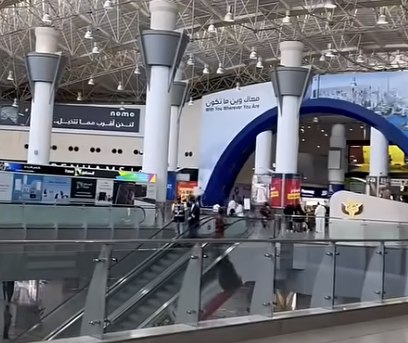
Kuwait International Airport Is Open Today, but Terminal 1 Remains Closed Amid Fresh Iranian Strikes

Published

on

Kuwait International Airport

Kuwait International Airport is open and operating on Saturday, with two of its five terminals handling scheduled commercial flights even as the country continues absorbing the fallout from a fresh Iranian drone strike on a nearby military air base a day earlier.

Kuwait Airways is flying out of Terminal 4, while Jazeera Airways operates from Terminal 5, with both national carriers maintaining largely normal schedules, according to travel monitoring service Wego. Terminal 1, the airport’s primary international facility, remains closed pending repairs and has no confirmed reopening date, a status that has persisted since the terminal suffered significant structural damage, including a partial roof collapse, during a strike in early June. Terminal 2 remains under construction, with completion targeted for late 2026, while Terminal 3 has been permanently closed.

Friday’s Iranian strike targeted the Ahmad al-Jaber Air Base, a separate military installation located roughly 40 miles south of Kuwait City that hosts both Kuwaiti and U.S. air force operations, rather than Kuwait International Airport itself. Iran’s military said in a statement that its forces had used loitering drones to target aircraft shelters, satellite communications systems and equipment storage facilities at the base, describing the strike as the 27th phase of an ongoing military operation carried out in retaliation for a U.S. attack on a residential home on Iran’s Qeshm Island. The Iranian army characterized Ahmad al-Jaber as a major hub for U.S. air and surveillance operations and a key logistical support center for American forces in the region, according to Al Jazeera’s reporting on the strike.

Kuwait’s Public Authority for Civil Aviation had not announced any new closure of the commercial airport specifically in connection with Friday’s strike on the separate military base, according to the most recent available travel status reporting. Even so, the broader pattern of the conflict has repeatedly demonstrated how quickly conditions at the civilian airport can shift in response to regional developments. Kuwait closed its airspace and suspended all takeoffs and landings on July 18 as a precautionary measure amid missile and drone threats and active air-defense intercepts, with operations resuming the following day, according to Wego.

Advertisement

The damage that continues to keep Terminal 1 offline traces back to a sustained campaign of Iranian-linked drone and missile attacks that began in late February and has periodically struck Kuwaiti territory throughout the year as part of the broader U.S.-Iran conflict. Kuwait’s Defense Ministry has previously said its forces detected roughly 30 ballistic missiles and drones launched by Iran in a single day during that earlier period, with several intercepted over residential areas. Kuwait’s foreign ministry summoned Iran’s charge d’affaires at the time to lodge a formal protest and ordered two Iranian embassy staff to leave the country within 24 hours. Iran’s Revolutionary Guard denied responsibility for that particular attack, with a spokesman claiming the damage was instead caused by a failed U.S. interceptor missile, an account U.S. Central Command rejected, calling it a deliberate Iranian drone strike on the airport.

Terminal 1 had briefly reopened on June 1, allowing some non-Kuwaiti carriers to resume service through the facility after an earlier closure, but that reopening proved short-lived. The terminal suffered more severe structural damage, including the partial roof collapse, during a subsequent strike on June 3, rendering the facility unsafe for passenger operations and prompting officials to close it again, a closure that has remained in effect since. Kuwait Airways resumed flights from Terminal 4 within hours of that June 3 strike, reflecting the country’s determination to maintain at least limited air traffic even amid continued security threats.

Sheikh Hamoud Mubarak Al Sabah, chairman of Kuwait’s General Civil Aviation Authority, has said the airport’s phased reopening process has been coordinated closely with domestic and international authorities to ensure operations resume in line with the highest safety and security standards, rather than restoring full capacity all at once.

Beyond the immediate recovery effort tied to Terminal 1, Kuwait continues advancing a longer-term expansion of its aviation infrastructure. A new Terminal 2, designed by the architecture firm Foster + Partners and built around a triangular structure, remains under construction and is targeted for completion in the final quarter of 2026. Once finished, the facility is expected to add dozens of additional gates, thousands of new parking spaces and an on-site hotel, expanding the airport’s overall passenger handling capacity to more than 25 million travelers annually. That expansion project has faced its own disruptions over the years, including delays tied to the COVID-19 pandemic and, more recently, minor damage to the construction site from an earlier Iranian drone strike that did not affect the project’s planned completion timeline.

Advertisement

Travel advisories tied to the broader U.S.-Iran conflict have continued shifting in response to developments on the ground, and travel monitoring services have consistently urged passengers to confirm their specific flight status directly with their airline before heading to the airport, given how frequently conditions have changed throughout 2026. Passengers flying with Kuwait Airways should expect to depart from Terminal 4, while those flying with Jazeera Airways will use Terminal 5. Anyone whose itinerary was originally booked through Terminal 1 should check with their airline regarding rebooking, alternate terminal arrangements or refund options, since that facility remains offline with no confirmed date for restoring passenger operations.

Continue Reading

Business

Banco De Chile earnings beat, revenue topped estimates

Published

on


Banco De Chile earnings beat, revenue topped estimates

Continue Reading

Business

Hargreaves Services Plc (HGRVF) Q4 2026 Earnings Call Transcript

Published

on

OneWater Marine Inc. (ONEW) Q1 2026 Earnings Call Transcript