
Business
New conservative report outlines 10 ways to bring down costs for Americans

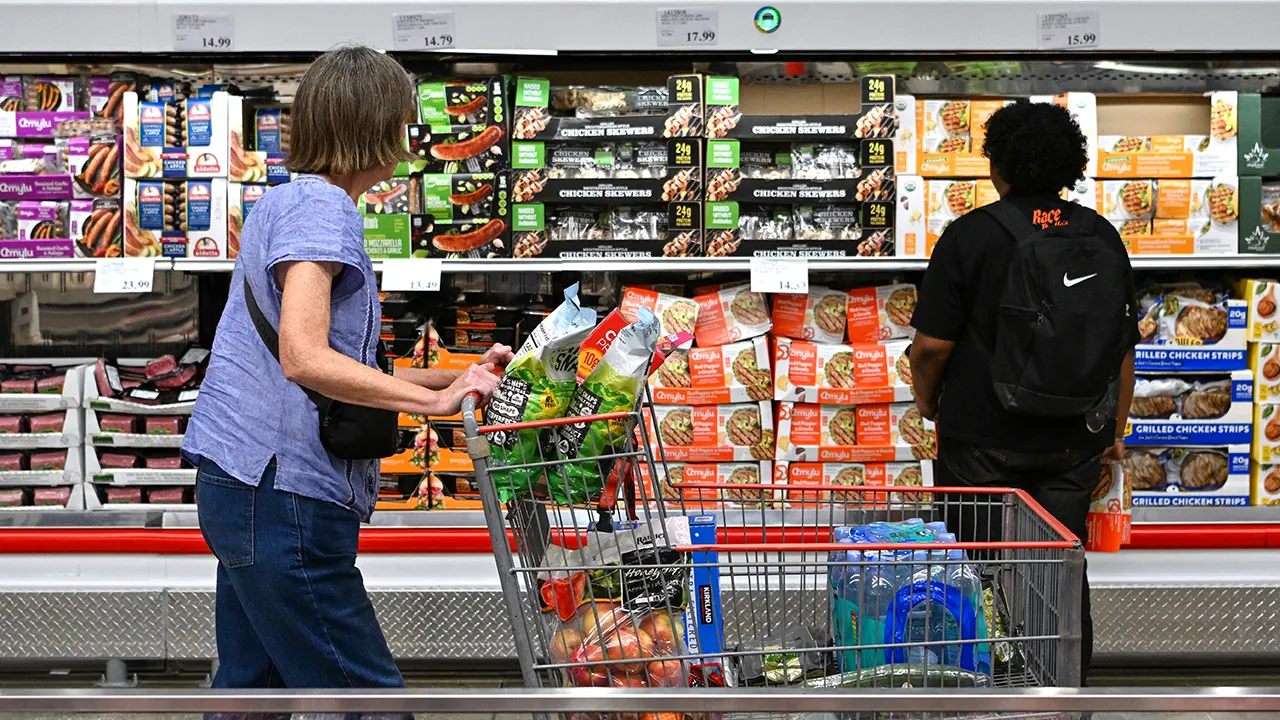
Richard Stern, vice president of the Plymouth Institute for Free Enterprise, spoke to Fox News Digital about a new report from Advancing American Freedom focused on improving affordability for Americans.
As Americans continue to feel the squeeze from high housing, food and energy costs, affordability has emerged as a defining issue ahead of November’s midterm elections, with both parties under pressure to show voters they can bring down the cost of living.
Now, a new report from the conservative group founded by former Vice President Mike Pence is offering its own prescription, laying out 10 proposals aimed at lowering costs by cutting red tape and boosting production across the economy.
“Yes, there’s an unaffordability crisis, and it’s the government’s fault,” Richard Stern, vice president of the Plymouth Institute for Free Enterprise at Advancing American Freedom (AAF), told Fox News Digital.
That argument is at the heart of the report, “10 Ways to Improve Affordability Now Across 10 Levels of the Economy,” which calls affordability the “No. 1 issue facing the American people” and targets costs associated with housing, energy and business, among others.
The report’s proposals range from easing zoning restrictions and expanding oil and gas access to overhauling Social Security and SNAP eligibility, echoing parts of President Donald Trump’s second-term agenda.
But the conservative blueprint breaks with Trump on two key pocketbook issues: tariffs and credit card interest rates.
THINK YOUR STATE IS EXPENSIVE? NEW DATA REVEALS WHERE AMERICANS FACE THE HIGHEST COST OF LIVING
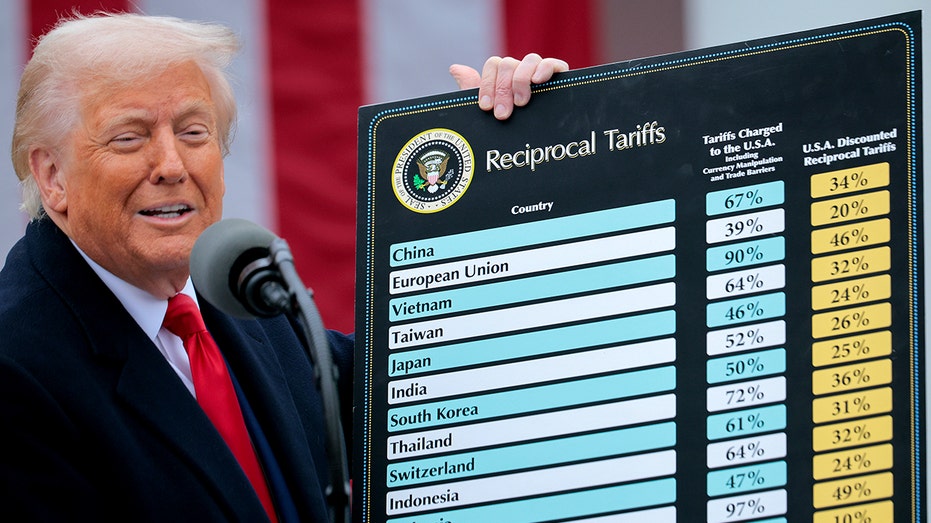
President Donald Trump has defended tariffs as a tool to protect American industries and boost domestic production. (Chip Somodevilla/Getty Images / Getty Images)
On trade, the report argues Trump’s sweeping tariffs have come at a cost to American consumers and the broader economy, raising prices, straining U.S. alliances and resulting in nearly 900,000 fewer jobs than expected.
The authors at AAF call for shifting more tariff authority back to Congress.
But while the report paints a bleak picture of the tariffs’ broader economic impact, they have generated a windfall for Washington. In January alone, duties totaled $30.4 billion, up about 242% from $8.9 billion a year earlier, according to Treasury data.
On housing, the report blamed zoning restrictions for pushing families farther from jobs and making homeownership harder for younger Americans.
Those costs can be substantial. The National Association of Home Builders estimates government regulations account for about 26% of the price of a new single-family home.
THE SURPRISING HIDDEN COST QUIETLY ADDING NEARLY $132K TO NEW HOME PRICES REVEALED

Housing industry leaders say states that have prioritized homebuilding have been better positioned to accommodate population growth and economic expansion. (Joshua Lott/Bloomberg/Getty Images / Getty Images)
The report recommends limiting local zoning restrictions, streamlining approval for projects that meet existing rules and tying roughly $50 billion in annual federal housing aid to zoning reform.
On energy, the proposal calls for more oil and gas leasing and rejecting state fracking bans. Stern argued greater domestic production could lower costs throughout the economy because energy touches “every good we move, every service provided.”
CLICK HERE TO DOWNLOAD THE FOX NEWS APP

The cost of living remains a major concern for Americans as households face high prices for everyday necessities. (Li Rui/Xinhua via Getty Images / Getty Images)
Stern warned that economic frustration can turn Americans against one another, toward “viewing each other as the enemy, and that’s what socialism is.”
“I hope that people can take away from this, that it’s not businesses that are the problem,” he said. “It’s not entrepreneurs. It’s not other Americans. It’s government.”


World Kinect’s 64% surge validates InvestingPro Fair Value analysis

 ETMarkets.com
The broader technical structure remains range-bound, with Nifty continuing to negotiate an important cluster of resistance immediately overhead. The index has taken support on the rising trendline drawn from the April 2026 lows, keeping the underlying recovery structure intact for now. However, the 24,450–24,750 zone remains a formidable resistance area, as it houses a confluence of the 200-day, 50-week and 100-week moving averages. This makes a sustained move above 24,750 important for the index to regain directional momentum and open room for a stronger extension on the upside. Until that happens, Nifty is likely to remain contained within its broader range. On the downside, the 23,900–24,100 support cluster remains intact; any decisive violation of this zone would weaken the present structure and increase the possibility of renewed corrective pressure.
The coming week is likely to see a quiet to modestly positive start, provided Nifty continues to defend the 24,100 area. However, the index will need to move past the overhead resistance cluster before any meaningful directional strength can emerge. The immediate resistance levels are expected at 24,450 and 24,700, while supports are likely to come in at 24,100 and 23,900.
The weekly RSI stands at 50.11, remaining almost exactly around its neutral 50 mark with no bullish or bearish divergence visible on the weekly chart. The weekly MACD continues to improve: the MACD line is above its signal line, while the histogram remains positive, indicating that underlying momentum has strengthened despite the absence of a price breakout.
Pattern analysis shows Nifty continuing to trade within a large consolidation structure, while the rising trendline from the April low provides an important dynamic support. The more immediate technical challenge comes from the dense moving-average resistance around 24,450–24,750. This concentration of technical levels on either side suggests that a convincing move outside these boundaries will be required before a sustainable trend develops.

Given this setup, aggressive directional exposure may not be warranted while Nifty remains trapped beneath the 24,450–24,750 resistance zone. Participants should remain selective with fresh purchases, protect gains in positions that have moved sharply, and maintain a stock-specific approach rather than chasing broad-market moves. A sustained breakout above 24,750 can justify progressively increasing long exposure, while a breach of 23,900 would call for greater defensiveness. Until either boundary gives way, the coming week is best approached with controlled position sizes, disciplined risk management, and selective participation on both sides of the range.
The following Relative Rotation Graphs compared various sectors against the CNX500 (NIFTY 500 Index), representing over 95% of the free-float market cap of all the listed stocks.
ETMarkets.comETMarkets.comThe Relative Rotation Graph (RRG) shows that the Nifty, Realty, and Media Sector Indices are inside the leading quadrant. While the Media Index is showing a slowdown in relative momentum, these groups may collectively outperform the broader Nifty 500 Index.
The Pharma Index has rolled inside the weakening quadrant. The Midcap and the Energy Indices are also inside the weakening quadrant. Baring some individual performance, the collective performance from these groups may taper down.
The Metal Index has rolled inside the lagging quadrant. The PSE, Infrastructure, and FMCG Indices are also inside this quadrant. However, these groups are showing some improvement in their relative momentum against the benchmark.
The PSU Bank Index has rolled inside the improving quadrant, indicating a likely start of a phase of its relative outperformance. Besides this, the IT, Financial Services, BankNifty, and Services Sector Index are also inside the improving quadrant.
Important Note: RRG™chartsshow the relative strength and momentum of a group of stocks. In the above Chart, they show relative performance against the NIFTY500 Index (Broader Markets) and should not be used directly as buy or sell signals

The proposed revised advertisement code seeks to address the growing use of digital advertising, social media and influencer-led promotions by online bond platforms, according to a consultation paper issued by the regulator on Friday.
The regulator has proposed restrictions on advertisements that use urgency, behavioural prompts, and fear-of-missing-out messaging, which may encourage investors to act without adequate due diligence.
For advertisements featuring specific securities, OBPPs would be required to provide standardised information, including the issuer, tenor, credit rating, nature of the security, clean and dirty prices, yield to maturity and the Credit Risk-o-meter.
The regulator has also proposed guidelines governing the use of terms such as “fixed returns”, “predictable returns” and “passive income” to ensure such descriptions do not create an impression of assured returns.
Advertisements using the term “fixed returns” would have to carry a prominent disclaimer stating that fixed returns are not guaranteed and that debt securities are subject to market, credit and default risks.
The market watchdog has also proposed restrictions on vague promotional claims such as “high yield”, “high rated” and “high returns” that are not adequately substantiated.The proposed code would operate alongside a common advertisement code applicable to specified SEBI-regulated entities.
The Securities and Exchange Board of India (Sebi) has invited comments from stakeholders on the consultation paper by September 11.

e.l.f. Beauty SVP Joshua Franks sells $571,800 in common stock
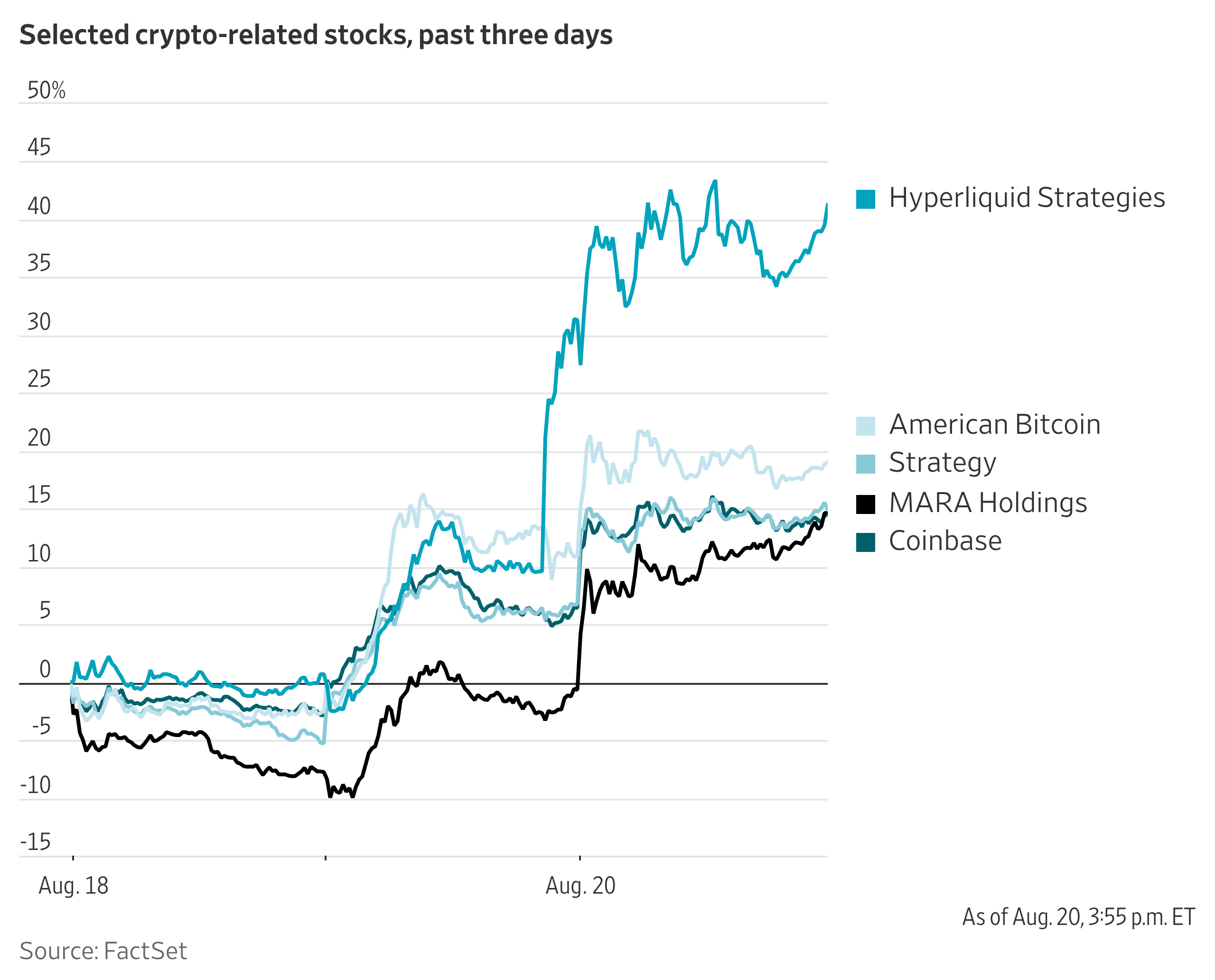
The bitcoin trade is back on. Crypto hoarder Strategy Inc.’s shares were up 6% Friday. Shares in Robinhood and Coinbase, which benefit from crypto trading, were up more than 8%.
U.S. stocks linked to cryptocurrencies soared this week after President Trump reaffirmed support for crypto-friendly legislation in a White House meeting with industry executives. The climb was bolstered by the U.S. Treasury’s surprise move to increase its buybacks of longer-dated bonds, lowering borrowing costs and dinging the dollar.

Interactive Brokers chief strategist Steve Sosnick discusses stocks Americans should keep their eyes on on ‘The Claman Countdown.’
Tesla announced Friday that it is recalling nearly 3 million vehicles in China over concerns that doors may be difficult to open in an emergency, marking the largest automotive recall in the country’s history.
Tesla’s action comes alongside recalls announced by eight other automakers, affecting a combined total of about 4.3 million vehicles in China.
Tesla’s recall is the largest, affecting approximately 2.98 million vehicles.
The U.S. automaker said the recall covers imported and China-made Model 3, Model Y, Model S and Model X vehicles, according to notices filed with China’s State Administration for Market Regulation.
TESLA FILES PLANS FOR PROPOSED $10.1B TEXAS SOLAR MANUFACTURING PLANT
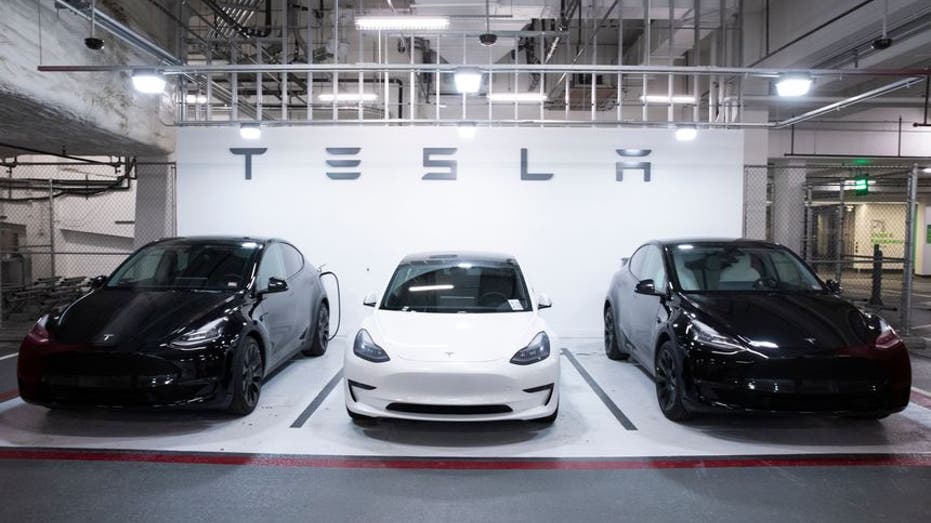
Tesla is recalling nearly 3 million vehicles in China over concerns that doors could be difficult to open following a severe collision. (Michael Reynolds/Shutterstock)
According to one of the recall notices, Tesla’s electronically operated, retractable door handles could become difficult to operate after a severe collision if the vehicle’s low-voltage system fails.
The company said the resulting problem “could hinder occupants from quickly opening the doors to escape and impede rescue efforts by those outside the vehicle, posing a safety hazard.”
To address the issue, Tesla said it would “affix warning labels” to affected vehicles and remotely upgrade its window-control software so the windows automatically lower following an accident.
Tesla also issued a recall addressing problems with driver-monitoring systems in certain vehicles, which are designed to help ensure drivers remain alert and ready to take control of steering or braking when necessary.
FORD BOOSTS US LINCOLN PRODUCTION AS IT PHASES OUT IMPORTS FROM CHINA
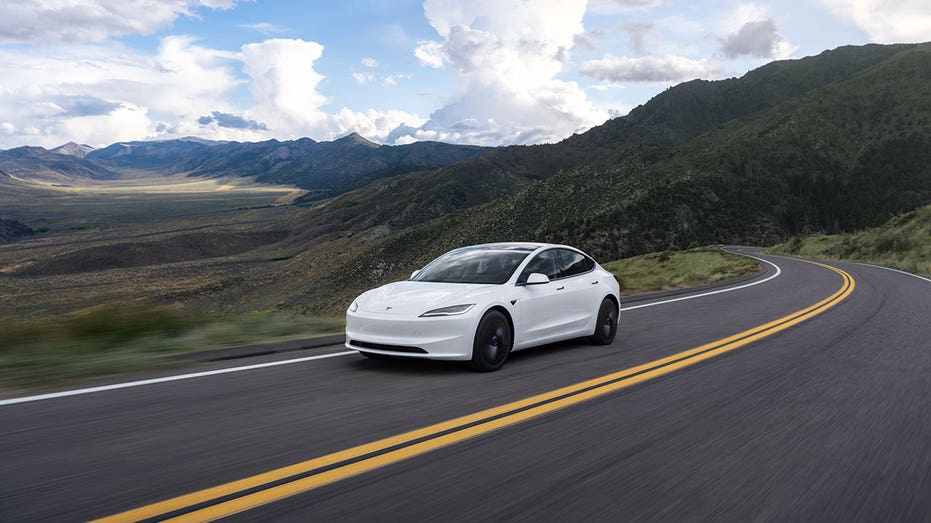
A Tesla Model 3 sedan pictured driving on a roadway. (Tesla)
The automaker said it would provide a software upgrade and “in-cabin camera monitoring” to help drivers remain vigilant.
| Ticker | Security | Last | Change | Change % |
|---|---|---|---|---|
| TSLA | TESLA INC. | 362.86 | +17.73 | +5.14% |
Tesla said it will contact owners of vehicles that cannot receive the fixes through remote software updates to schedule service appointments.
Other automakers announcing recalls included Xiaomi, Leapmotor, Xpeng and Geely Holding.
MORE THAN 20,000 OFF-ROAD MOTORCYCLES RECALLED OVER DANGEROUS BRAKE DEFECT THAT COULD LEAD TO DEATH

Tesla’s recall covers certain imported and China-made Model 3, Model Y, Model S and Model X vehicles. (Tesla)
The National Highway Traffic Safety Administration said Friday that the automakers have not disclosed plans to issue similar recalls in the U.S.
The announcement comes after Tesla issued two recalls in May.
The automaker recalled roughly 175 Cybertrucks over concerns that wheel studs could separate, potentially causing wheels to detach.
CLICK HERE TO GET FOX BUSINESS ON THE GO
Tesla also recalled more than 218,000 Model 3, Model Y, Model S and Model X vehicles because of delayed rearview camera images that could increase the risk of a crash.
FOX Business has reached out to Tesla for comment.
Reuters contributed to this report.

Wolfe Research sees CNH stock flat 2027 outlook on commodity prices

BofA maintains underperform ratings on six BDC stocks

Gamma, dealer hedging, and the 0DTE effect on market dynamics
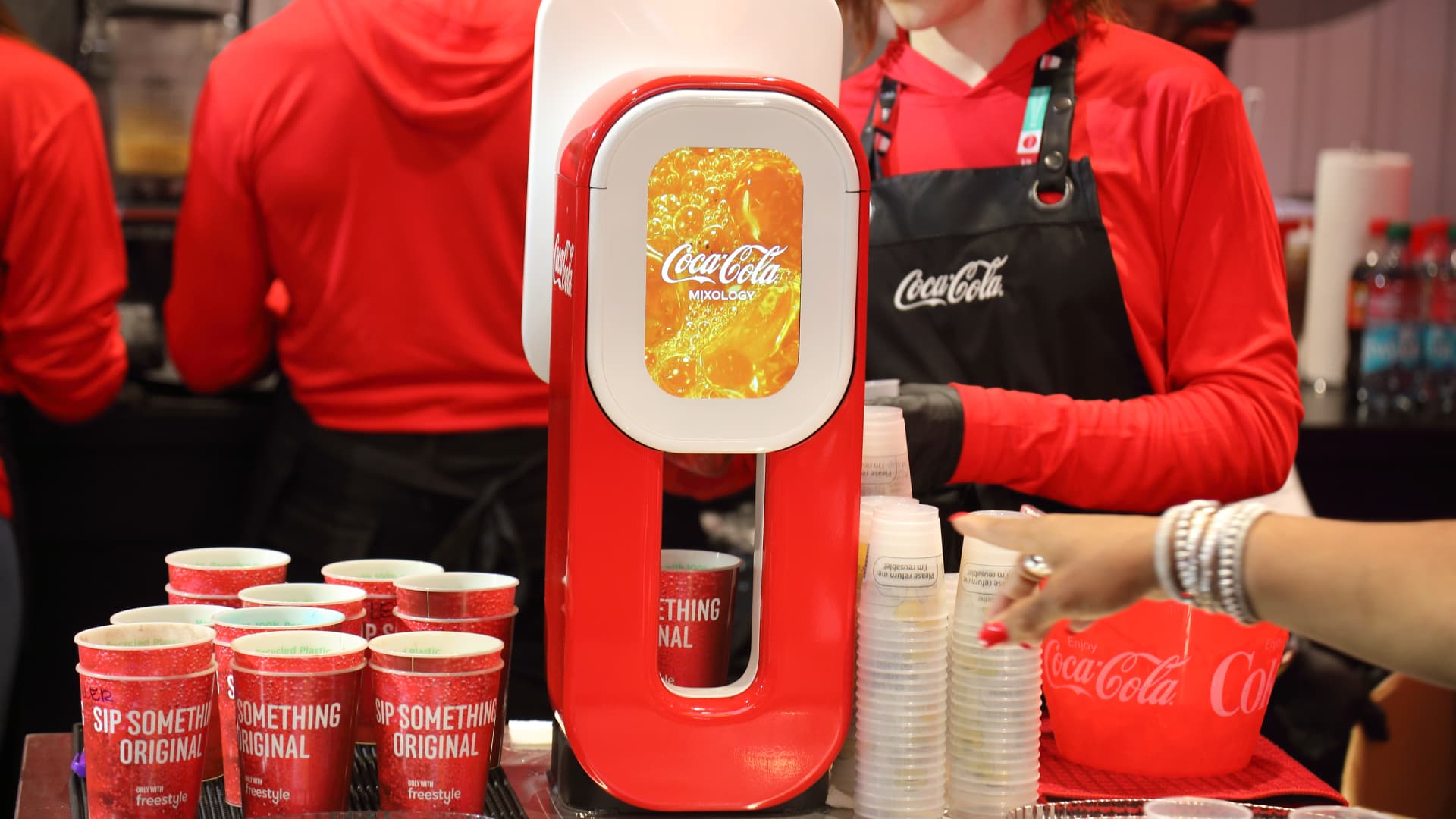
Coca-Cola used its new Mixology dispenser to make refreshers at the National Restaurant Association show.
Source: Coca-Cola
ATLANTA — Coca-Cola is branching out into new customizable drinks and trend-driven equipment as consumers — and food service operators — increasingly want more options.
Tucked away in an anonymous office park not far from its global headquarters here, Coke has been working on a flood of innovation at its secretive labs, including a way for its Freestyle drink dispensers to make dirty sodas, which combine pop with flavored syrups, cream or other ingredients. In partnership with AMC Theatres, it is testing a Micro Matic dispenser that can make brightly colored refreshers. And Coke has more white-label beverage options on the way, like an energy drink that can be customized by color and flavor.
For many restaurants, handcrafted drinks like refreshers or iced coffee have become an important way to drive traffic and sales, even as diners broadly cut their spending. In the second quarter of this year, beverage servings at restaurants outpaced both servings of food alone and food with beverages, according to Circana data. When consumers are away from home, a drink often represents more than hydration, particularly for Generation Z.
“Oftentimes these beverages are an opportunity to take a break, get some energy or protein, have a treat, at a lower price point,” David Portalatin, Circana senior vice president and food service industry advisor, told CNBC.
From McDonald’s to Wendy’s, longtime Coke customers have been expanding their beverage offerings to meet the shift in consumer behavior and boost their profit margins. As operators seek to add more drinks to their menus, Coke must add more convenient beverage options — or risk losing sales to a competitor.
“It’s our job to ensure that we’re providing unique experiences and beverages because it’s not a bonus now with consumers — it’s the norm, they expect it,” said Megan Tallman, Coke’s vice president of dispensed equipment and innovation for its North American business. “When you think about Gen Z, they are okay paying $10 for a drink that is craveable and that they can show on their Instagram or on TikTok, which is helping our customers drive margin and also beverage attachment.”
Beyond Freestyle
This July, Coca-Cola’s Freestyle drink dispenser celebrated its 17th anniversary.
“Honestly, if you fast forward to today, Freestyle is more relevant today than probably it was over a decade ago,” Tallman said, crediting the machine’s dozens of flavors.
Even with the variety it offers, Coke is still trying to evolve to keep up.
In the time since the Freestyle was introduced, the number of specialty beverage chains has exploded, offering customers nearly unlimited ways to customize their drinks, from sugar content to toppings. Market research firm Technomic tracks more than 100 different chains, with more than 41,000 locations across the U.S. combined, selling everything from coffee to juice to boba.
Ever since Freestyle began popping up in restaurants and movie theaters, the dispensers have poured more than 67 billion 8-ounce servings of beverages; Coke has been able to track them all, thanks to the equipment’s real-time data collection. That data is coming in handy now.
Inside its Equipment Innovation Center in Atlanta, a massive television screen displays real-time data showing what drinks dispensed by the Freestyle are trending, what time of day and where — from the region to the type of business. AHA sparkling water, for example, is trending up at office buildings and hospitals.
Insights from Freestyle dispensers also help the company discover new drinks that it can launch in grocery stores, like the limited-time Coca-Cola Orange Cream, which combines its namesake soda with vanilla and orange syrup.
“If we see that the flavors that we’re offering to consumers in food service are actually resonating — it’s the largest testing platform out there,” Tallman said.
But Coke has more ideas in store.
First is the Freestyle Mini, which initially launched in Europe. Intended for bars and restaurants with limited space, the dispenser holds up to 16 drink options, more than double the choices available in a traditional soda gun. Coke unveiled the new smaller machine at the National Restaurant Association Show in Chicago this spring, but the company has not yet sold it to customers in the U.S.
The Coca-Cola Freestyle Mini offers more drink options than the traditional soda gun found behind the bar.
Coca-Cola
And then there are other equipment ideas that aren’t as far along, inspired by Coke’s desire to branch out into dirty soda, refreshers and coffee.
To automate dirty soda, Coke has created a prototype that adds a dairy module to the classic Freestyle dispenser. Utah-based chain Swig takes credit for its invention of the dirty soda, although the trendy drink has now spread far and wide, from KFC restaurants to grocery store shelves.
The trend has helped to change soda’s image from a tired, mass-market drink to a handcrafted beverage that can be a treat.
“Gen Z is the first generation raised to believe that nothing you consume is neutral, so everything is either helping you or costing you,” said Matthew Greer, food, agribusiness and beverage analyst for Truist. “So, traditional soda does nothing for me, and it gives me 40 grams of sugar, so that fails the test.”
The rise of a dirty soda is boon for Coke, because pop is still its number one category. Coke’s sparkling soft drinks business, which houses soda brands like Sprite, Schweppes and Fanta, still accounts for 69% of the company’s overall unit case volume, even as other ventures like coffee and dairy-based beverages have grown. Coke’s namesake soda alone accounted for 47% of global unit case volume and 42% of U.S. unit case volume in 2025, according to a company filing.
Coke’s prototypical dispensed dirty soda comes with a preprogrammed recipe, allowing for little customization but eliminating mess. The prototype, which took roughly three weeks to create, keeps the recognizable drip down the sides of the cup, giving the dirty soda its trademark visual appeal.
Refreshing its offerings
Beyond the Freestyle, Coke is also testing Micro Matic “mixology” dispensers to make refreshers and iced coffee drinks.
Starbucks created the refresher back in 2012 to appeal to non-coffee drinkers who wanted a boost, especially in the afternoon, when traffic to its cafes slowed. Customers can pick their bases, flavors and even caffeine level. Refreshers now represent about $2 billion in annual sales for Starbucks.
Other restaurant chains, such as Panera Bread to Dunkin’, have taken note. Refreshers can be found on 8.1% of menus at national restaurant chains, according to Datassential.
“It’s almost, I think, a compliment, the fact that our Refresher business is being imitated in so many places,” Starbucks CEO Brian Niccol said on the company’s earnings conference call in late April.
For its part, Coke is hoping to make its mark on the refresher category — whatever that means.
“There’s no real definition for what a refresher is, so we’re trying to take a stand on what that can be and what function that we believe it should deliver to the guest,” said Sarah Kate Sims, director of dispensed innovation for Coca-Cola North America.
To Sims, a refresher is a “healthier” beverage that delivers some kind of pick-me-up without a traditional coffee caffeine base, instead using a green tea or a natural coffee extract as a base. And a refresher must look good, too, she said.
“So that’s what I’m working on for next year,” Sims said.
Inside ‘The Vault’
Coke’s innovation efforts aren’t restricted to equipment either. Across the parking lot from its Global Equipment Platforms office is “The Vault,” where the company tests new drinks.
“We bring a lot of our top customers here to showcase our innovation and mixology, but also to collaborate and problem-solve and tackle the biggest challenges in the business,” said Caroline Zambataro, collaboration architect at Coke.
One of those customers is Whataburger. Coke worked with the Texas-based burger chain for about 18 months on its line of “Whatafreshers,” which launched in July.
In some cases, consumers might not even realize that they are drinking a Coke product. For example, the company considers itself a “pioneer” of premium lemonade after launching a white-label version more than a decade ago.
More than 40,000 bubbler dispensers carry the drink, according to Tallman. That number includes Wendy’s, which sells it under “Dave’s Craft Lemonade,” after founder Dave Thomas.
Megan Tallman, vice president of dispensed equipment and innovation for Coca-Cola’s North American business.
Source: Coca-Cola
These days, lemonade is a popular base for a lot of refreshers and other brightly colored drinks. So, too, is Sprite, which ranked fifth among U.S. carbonated soft drink brands by 2025 sales volume, according to Beverage Digest.
But Coke is also working on a new blank slate for handcrafted beverages: a colorless, relatively unflavored energy drink that comes in frozen or liquid form. The company plans to launch the beverage with food service operators in the first half of 2027.
Energy drinks are a much smaller category than sparkling beverages, but the segment has the highest expected growth projections for the next 10 years, according to Tallman.
“We believe this solution really meets many consumers because more female consumers are interested in energy if it’s a handcrafted solution,” Tallman said.
Starting with Celsius, the conversation around energy drinks has changed, widening their audience and the number of occasions where they can be consumed, Truist’s Greer said. Rather than a beverage that you buy at the gas station for a pick-me-up, now energy drinks can become a part of some consumers’ workout routines.
Coke’s take on energy drinks will be designed to be served by employees to “limit consumption,” according to Tallman. A 12-ounce serving of Coke’s version contains 106 milligrams of caffeine, roughly the same amount as the same size can of Red Bull and half of the caffeine content of a Celsius can. Excessive caffeine consumption has become a liability concern after Panera Bread’s Charged Lemonade was named in at least two wrongful death lawsuits.
A golden opportunity
Broadly, Coke has been fielding more inquiries from food service partners these days about customizable drinks, according to Melinda Pritchett, director of innovation for Coke’s North American business.
“If you’re looking at what McDonald’s is doing with the handcrafted beverages, all of our customers are saying, ‘We should be in that as well,’” she said.
As the largest U.S. restaurant chain by system sales, McDonald’s playbook is often replicated elsewhere. In May, the fast-food giant expanded its McCafe menu in the U.S. to include refreshers and crafted sodas, including Coke’s Sprite and Hi-C, as part of its broader strategy to lean into beverages.
“In the U.S., [drink] sales are ahead of plan. Guest checks are higher, and we’re seeing new occasions emerge throughout the day,” McDonald’s CEO Chris Kempczinski said on the company’s earnings conference call earlier in August. “We’ve also seen strong food attachment rates on these orders.”
But the drink launch arrived during what was otherwise a lackluster quarter for McDonald’s U.S. business, which reported same-store sales growth of just 0.8%. The company has replaced its U.S. president in the hopes of accelerating its domestic division.
On Monday, McDonald’s further expanded its beverage options with the Red Bull Dragonberry Energizer. Red Bull is privately owned, with no connection to Coke. The chain’s choice to partner with a competitor rather than using an energy drink affiliated with Coke, like Monster, has sparked speculation about the state of the companies’ more than 70-year-long relationship.
“We have a fantastic and very long-standing partnership with McDonald’s, and that’s intact, right? We continue to be very happy with that partnership,” Coke CEO Henrique Braun said on the company’s earnings conference call in late April, answering an analyst question about the partnership. “… We do respect the decisions on other choices about their relationships with other companies.”
Ultimately, the most important part of any business relationship is the effect on sales.
When testing a new beverage with a food service partner, Coke tracks a couple of different performance metrics, like “incremental volume.” In other words, would a customer buy one of the new refreshers even if they wouldn’t otherwise buy a drink?
A survey of several dozen U.S. McDonald’s franchisees conducted by Kalinowski Equity Research found that more than half of operators said the specialty drinks are performing in line with their expectations.
“They are selling great, but most of it is a trade-off from other beverages,” one anonymous franchisee said in the survey. “Not many new transaction counts.”

CISA orders feds to patch actively exploited TrueConf Server flaws

Dua Lipa turns 31! Singer’s mum leads sweet birthday tributes as she shares unseen wedding photo while her dad posts unrecognisable childhood snap
World Kinect’s 64% surge validates InvestingPro Fair Value analysis





-

 Fashion19 hours ago
Weekend Open Thread: Madewell – Corporette.com
-

 Business4 days ago
SMA Solar Technology AG (SMTGY) Q2 2026 Earnings Call Transcript
-

 Tech4 days ago
Qwen3.8-27B runs frontier-class coding agents and reasoning locally, no cloud API required
-

 Crypto World5 days ago
OCC Greenlights Trump Family Crypto Firm for Trust Charter
-
 Tech7 days ago
Every fusion startup that has raised over $100M
-

 Crypto World5 days ago
NAVI Prime launches institutional lending framework on Sui
-

 News Videos2 days ago
Don’t Leave Your Financial Future To Chance | August 19, 2026
-
 Crypto World6 days ago
Data of 54K Wallet Users Leaked, Clarity Odds Just 10%: Hodler’s Digest, Aug. 16
-
 NewsBeat4 hours ago
The ‘Lucky Dip Gang’ causing carnage for clicks: After five thugs were killed speeding in the wrong direction on a motorway, GUY ADAMS investigates a sick new trend… and why police aren’t even allowed to pursue them
-

 Politics6 days ago
Britain is facing a housing disaster
-

 Business7 days ago
Stephen Curry Trade Rumors Persist as Warriors Insist Superstar Remains Committed to Golden State
-
 Tech6 days ago
What are the rumors about the AirPods Pro 4?
-
 Business6 days ago
Rebel Creamery files Chapter 11 with $23.8M Van Leeuwen judgment on appeal
-

 Business7 days ago
(VIDEO) Frozen 3 First Look Reveals Anna’s Wedding, Olaf’s New Love Interest And A Mysterious Villain
-
 Crypto World5 days ago
Dow’s 3-Year Winning Run Isn’t a Crash Signal, Still 49% Odds of Double-Digit Gains
-

 Business4 days ago
Stock Market Today: Tech Futures Slide As Treasury Yields Jump; Nvidia, Micron, Sandisk Sell Off
-

 Tech7 days ago
DeepSeek’s innovative harness treats everything as a plug-in
-

 Fashion7 days ago
Fashion Bomb Daily On the Scene: The 2026 MVAAFF x ESPN White Party on Martha’s Vineyard
-
 Tech6 days ago
OpenAI’s new ChatGPT feature logs your keystrokes and stores them in plain text
-

 Politics7 days ago
Andy Burnham’s I’m Not Listening Tour
You must be logged in to post a comment Login