
Politics
Amnesty International label ruinous Italy-Albania migrant detention pact “a wake-up call”

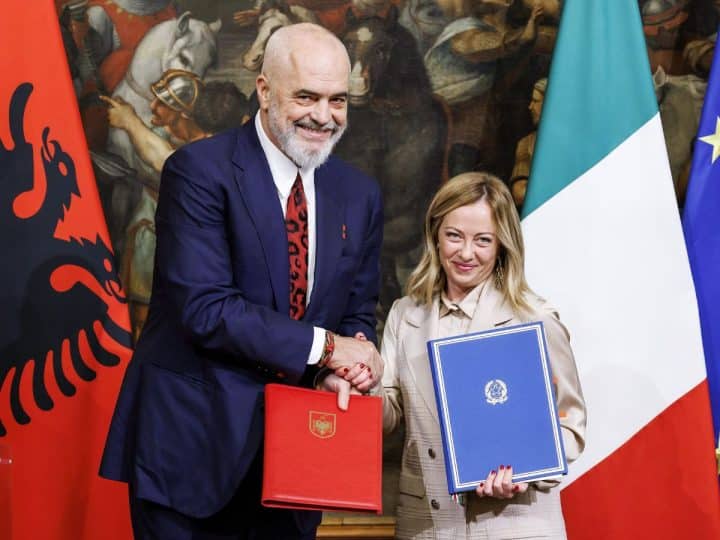

Amnesty International have released a statement claiming that Italy’s agreement to detain migrants and asylum seekers in Albania is a danger to people’s “safety, liberty and human rights”. The campaign organisation also held that the pact:
continue[s] to expose the dangers of long-standing European Union (EU) migration policies that centre on exclusion and containment.
Evading responsibilities
On 23 February 2024, the Italy-Albania Agreement established two Italian-run ‘migration facilities’ in Albania. The agreement will run for 5 years, with over €670 m earmarked to fund it. After that point, it will likely be renewed automatically.
Amnesty described the conditions in the Albanian detention centres as harmful, to the point that they have “driven several individuals to self-harm or attempt suicide”. Eve Geddie, the director of Amnesty International’s European Institutions Office, explained that:
Offshore detention is ultimately aimed at deterrence and trying to shift and evade both the responsibilities of responding to people migrating and the obligation to provide asylum to those who need it. Italy’s deal with Albania shows yet again the unavoidable human rights costs of this approach.
Just before the deal entered into force, Amnesty International sounded the alarm on the harmful impact it would inevitably have on the rights of people in distress at sea, and of people transferred to Albania. Clearly, these concerns have now materialized.
42 critical incidents in one month
Italy first began its use of the overseas centres by picking up 74 individuals in international waters and forcibly transferring them to Albania. However, multiple Italian court orders eventually ended the practice.
Then, in March 2025, Italy instead altered the agreement in order to permit the detention of men with expulsion orders in Albania. These individuals were already under detention in Italy, and were therefore subject to transfer across borders in a manner “outside of provisions in domestic and European law”.
The results were as rapid as they were devastating, as Amnesty explained:
As a result, hundreds (reportedly over 500) predominantly racialized men have been forcibly transferred to the Albanian detention centre in Gjadër over the past 15 months.
Between 11 April and 16 May 2025, 42 critical incidents were recorded in the Gjadër centre, including at least two attempted hangings, a protest where three people were injured from shattered glass, and various self-harm incidents.
The men detained in Albania also struggle to access legal help. Likewise, the Italian government has restricted both parliamentary and independent oversight for monitoring purposes.
The Ministry of Interior cited security and public order concerns when it denied Amnesty’s request for entry into the Albanian centres.
As such, the human rights organisation instead had to base its research on court documents, government correspondence, and information from the Tavolo Asilo e Immigrazione civil society network.
It also conducted interviews with representatives from UN agencies, along with lawyers acting on behalf of the detained individuals. One lawyer described being given no time to meet his client or prepare a defence. He also opined that the detainees showed signs of having been intimidated.
Amnesty — ‘A wake-up call’
Amnesty’s Eve Geddie stated that:
It is abundantly clear that the Italy-Albania model is impossible to implement in line with Italy’s human rights obligations. This reality must be a wake-up call for the EU to put any future plans to expand the use of offshore detention and other externalization tools, firmly on ice.
Italian authorities must immediately end the agreement with Albania, implement alternatives to migration detention, which under international law must remain the last resort, and ensure access to effective and non-discriminatory asylum procedures and dignified reception on Italian territory to all people seeking international protection. All refugees and migrants should be able to access effective legal safeguards and benefit from independent monitoring.
In a UK context, it’s hard not to hear the echoes of the Tories’ infamous Rwanda migrant deportation plan. Earlier this month, August 2026, Kevin Hollinrake — the chair of the Conservative Party — had the nerve to call for the renewal of that failed, deeply racist scheme.
At the same time, Reform UK proposed a Trump-like scheme to transfer ‘foreign national’ prisoners to hellish jails in El Salvador. However, even ‘left-wing’ Labour’s hands are far from clean. The party reportedly considered its own Rwanda-style deportation deal with — wait for it — Albania, just last year.
These politicians, whether in Italy, the UK or the EU, know that the migrants and asylum seekers they deport will face shocking conditions and the degradation of their human rights.
For some, this cruelty is the point. Others simply don’t care, as long as they can make these fellow human beings another country’s ‘problem’.
This distinction, however, is pure semantics — the effect they have is identical, and the blood stains both hands all the same.
Featured image via HumanRightsWatch
By Grace

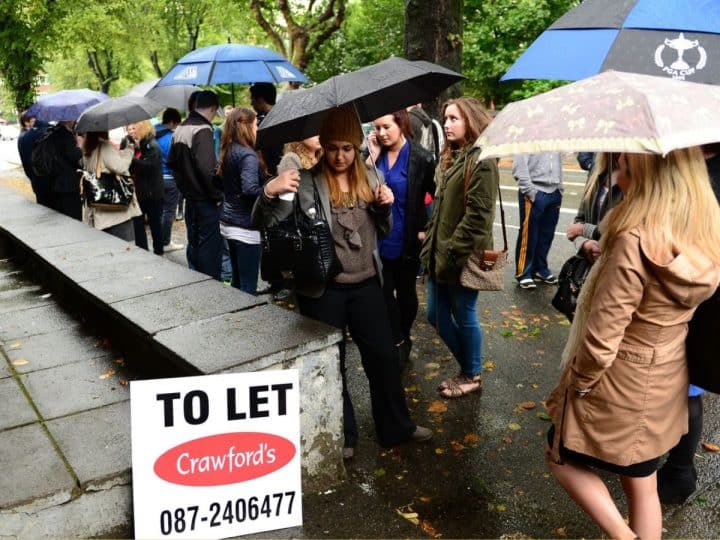

Community Action Tenants Union (CATU), a group organising Irish renters to fight for their rights, has laid out the disastrous effects of an Irish government housing bill, six months on from the president signing it into law.
At the time the Residential Tenancies Bill (RTB) passed, we quoted People Before Profit’s Paul Murphy saying:
This is a bill for rip-off rents. That’s the purpose of it. It’s not an accidental outcome of it, that’s the purpose. The government strategy explicitly is to get rents to rise higher in order to attract more investment.
That appears to have proven correct, with large corporate landlords being the main beneficiaries. Ires Reit, Ireland’s biggest private residential landlord, achieved:
…a tripling of pretax profits to €48 million for the six months to the end of June.
Its CEO Eddie Byrne boasted of how:
…the company’s average monthly rent in the six months to June rose by 1.7 per cent to €1,884.
Irish renters — Evictions at highest levels “since the 1850s”
This is at a time when rents were already unaffordably high. Byrne went on to say that the RTB has “unlocked renewed capital flows into the sector”. This has come as a result of large international investors entering the market, buying up properties sold off by smaller landlords.
The bill introduced stronger protections for renters, such as minimum tenancy periods of six years, and the near-total banning of no-fault evictions. This scared off many landlords with fewer properties. This shows that even policies that appear beneficial to tenants can have disastrous consequences, when housing is treated as a commodity almost entirely left to the whims of the market.
Landlords anticipating this policy change caused a major spike in evictions during 2025. RTÉ report that:
Figures from the Residential Tenancies Board show that 5,405 notices of termination were issued in the third quarter of 2025, a 35% increase year on year.
Disturbingly, current eviction rates are at the highest they’ve been since one of the darkest periods of Irish history – the famine inflicted on the country by Britain. Data from the Residential Tenancies Board shows:
…roughly one eviction notice per 100 households (and higher if we only consider rented households) in both 2023 and 2024.
Even during the Land War of 1879-1882, when landlords retaliated with mass evictions against tenant organising, the rate was much lower at 0.48 eviction notices per 100 households. That means you need to go back to the mid-1800s period of Britain’s mass forced starvation to see equivalent greed from landlords. RTÉ go on to say that:
…the scale of displacement now being recorded would not look out of place in post-Famine Ireland and arguably tenants today have less rights and customary advantages than their counterparts in the late 1800s and early 1900s. There can be little doubt but that evictions, now as then, are a destructive feature of Irish life.
1800s mass evictions came about as a result of the massive power imbalance between landlords and tenants. Yet, shockingly it seems that Ireland is recreating this inequality from one of the most notorious chapters in its history. It forms part of a general regression to the 19th century, with poverty in Britain often characterised as Dickensian, and US billionaires now hoarding wealth at a level that surpasses the infamous Gilded Age.
Irish government favouring “vulture funds” over tenants
CATU go on to cite the recent case of an approved housing body failing to acquire 140 Dublin apartments as social housing. Instead, the homes have gone up at exorbitant rental prices, ranging from €4,500 for a three-bed, to €2,400 for a one-bed. A person working full time on minimum wage earns about €29,900. Renting the lowest priced apartment would use up 96% of their income, leaving them €1,100 for all other expenses.
Housing spokesperson for the Social Democrats, Rory Hearne, agreed with CATU, saying:
Minister for Housing James Browne and his Government were warned that these rental laws would cause evictions to skyrocket, increasing homelessness and leaving our young people with little choice but to emigrate.
They rammed through these cruel and deeply flawed laws anyway, which represents a complete capitulation to large investor funds and landlords and a complete disregard for renters. It was made clear that these changes would cause not just record evictions but record rents, but the Minister paid no heed.
He continued:
Government policy prioritises institutional landlords and vulture funds at a time when there has never been more children living out their youth in homelessness. 5,620 children now comprise 32% of all homeless people. There has been a 60% increase in child homelessness since Fianna Fáil and Fine Gael formed a Government in 2020.
CATU conclude by urging Irish renters to join a tenants union, as the “strongest defence against the housing crisis”. It was only a massive collective effort of tenants that secured land reform in Ireland in the late 1800s and early part of the 20th century. As the country slides back to that period of massive entrenched power, a similar united effort will be required to bring it down.
Featured image via IrishTimes
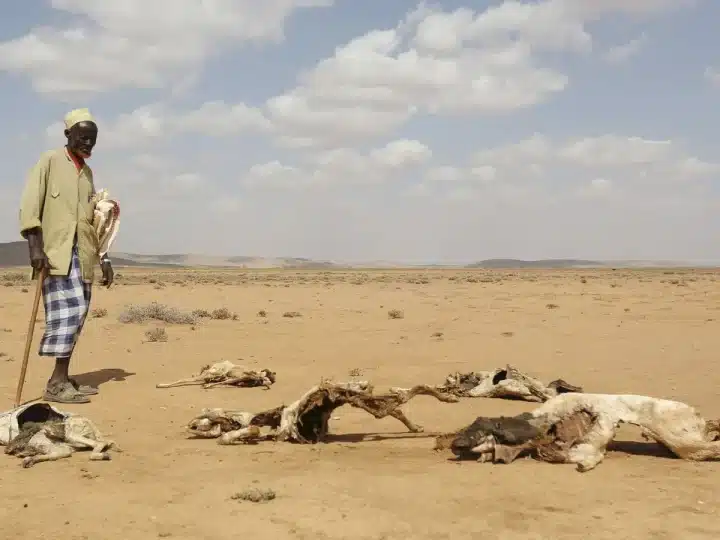

Climate crisis — A new climate-focused campaign group, 4 Billion Dead, has launched in response to a buried report that its name could become reality. It urges people to wake up to our impending disaster of untold proportions.
4 Billion Dead takes its name from a 2025 report by the Institute and Faculty of Actuaries, in conjunction with the University of Exeter. Its superficially cheery-sounding name glosses over its worst predictions:
Planetary Solvency – finding our balance with nature:
Global risk management for human prosperity
The report comes from professionals whose entire careers and profits are based on being able to accurately predict and “risk price” the future. It flew almost entirely under the radar.
This wasn’t helped by the fact that the report downplays its true findings, burying the worst deep in the appendix. Ultimately, it’s not in corporations’ interests to induce panic in the world. But it is needed.
It was written for the insurance industry, the sector whose entire business depends on pricing risk accurately. At 3°C of warming by 2050, the report puts mortality risk at up to four billion people. That’s an “extreme” trajectory, albeit one that ongoing corporate and government policies globally broadly align with.
If it sounds alarming, it is. If it sounds alarmist, that doesn’t make it any less true. Burying our heads in the sand now will cost us potentially billions of lives in decades to come. We cannot afford to dither.
Climate change missing from most UK media reports on June heatwave
Climate crisis — ‘Catastrophic impacts’: we risk everything
This is a formal risk assessment from the profession that prices catastrophe for a living, and it’s had almost no public attention. (Full report is available here.) Its executive summary makes clear the risks:
Increasingly severe climate and nature driven impacts are highly likely, including fires, floods, heat and droughts. This is a national security issue as food, water and heat stresses will impact populations. If unchecked then mass mortality, involuntary mass migration events and severe GDP contraction are likely.
Planetary Solvency, the report, defines “catastrophic impacts” as:
-
Economic contraction, GDP loss of over 25%;
-
Mass human mortality events resulting in over 2 billion deaths;
-
Warming of 2°C or more, triggering high number of climate tipping points;
-
Breakdown of some critical ecosystem services and Earth Systems;
-
Major Extinction Events in multiple geographies;
-
Ocean circulation severely impacted;
-
Severe socio-political fragmentation in many regions, low lying regions lost;
-
Heat and water stress driving mass migration of billions; and
-
Catastrophic mortality events from disease, nutrition, thirst and conflict.
Even in the scenario where global warming is limited to 2°C by 2050, the report still predicts “decimation.” That means 10% of humanity, or around 800 million people would be wiped out.
At this level, which we’re almost certainly on track for without major reversals in greenhouse gas emissions, the consequences are still unfathomably drastic. The report predicts that at 2°C by 2050 we’ll see:
- Severe reduction in several critical ecosystem services.
- Major extinction events in some geographies.
- Frequent global food and water crises.
- Severe socio-political fragmentation in regions exposed to climate and/or nature impacts.
- Failure of vulnerable states and mass mortality events in impacted areas.

Right-wing press blame anything but human-made climate change for deadly wildfires
Climate consciousness or mass death
Australian Senator Nick McKim referred to the four billion deaths in a speech recently. McKim called out his Government for failing in its basic duty to protect citizens by siding with fossil fuel interests.
Roger Hallam co-founded and co-ordinated campaign groups including Just Stop Oil, Extinction Rebellion and Insulate Britain. His tireless, “revolutionary” campaigning efforts have made him globally famous and also a target of the British state. He’s been imprisoned multiple times for his peaceful activism and arrested countless more. Upon launching this newest campaign, 4 Billion Dead, Hallam said:
This is just the beginning of something that will become very big. Because, as we have been saying for years now: there comes a point when people want the truth — when people become revolted by being lied to. For years now we have been told you can only mobilise people if you tone it down, if you give hope, because otherwise people will not be able to cope. The idea is that people are actually children — they have to be protected. They have to be told fairy tales.
We are entering a time when millions of people have become sick of feeling sick. We finally realise we are going to get hurt anyway — that we are hurting so much already — that the pain of hearing the truth actually becomes a release.
This call is a moment of liberation. At points like this history is made. Regimes fall. New ways explode into being. We all sense this is going to happen. Things cannot carry on as they are. Humans are not designed to just roll over and die. We are better than that.
Hallam’s words are a reckoning and a call to action. Our governments and ‘leaders’ have let us down for far too long. It’s up to all of us to demand a better, greener, liveable future. It’s on all our heads.
Featured image via the Canary


Zionist Nathan Cofnas, the ‘shit-flooding’ supposed academic behind the press pile-on that hounded Prof Jason Arday to death, has constantly positioned himself as ‘always the victim’. He is an Israel supporter, after all. But his ‘poor little me’ shtick fell apart after the US ambassador to Belgium threatened Ghent university for suspending the literal ethno-supremacist after the Canary revealed his colleagues’ assessment of his competence.
Bill White launched a Trumpian ad hominem rant threatening the university with defunding and other harm. He even ended it with Trump’s posturing phrase “Thank you for your attention to this matter”:
The United States Mission to Belgium condemns, in the strongest terms, Ghent University’s retaliation against an American scholar following his accurate whistleblower reporting on academic fraud.
The United States government regularly funds and supports research, academic exchanges, and other engagements with overseas universities. Dishonest, corrupt institutions that engage in, or reward, scapegoating mob behavior are not desirable partners for us. This is particularly true where the purpose and effect of the scapegoating is to punish accurate journalism unearthing academic dishonesty. We are therefore reviewing any relationships we have with Ghent University.
Bad-faith idealogues will try to make this a referendum on the content of Cofnas’s scholarship – or polemical distortions of it. That’s wrong. Free speech means that controversial views are protected. And Cofnas’s views were known to Ghent University when he was hired.
The ultimate purpose of freedom of speech is to overturn lies, fraud, and false ideologies. This is precisely what Cofnas was doing, and precisely the reason his home institution wants to silence him.
Thank you for your attention to this matter.
There was, of course, no hint of shame at accusing others of “mob behavior” after Cofnas did exactly that – and expected to be rewarded for it.
The United States Mission to Belgium condemns, in the strongest terms, Ghent University’s retaliation against an American scholar following his accurate whistleblower reporting on academic fraud.
The United States government regularly funds and supports research, academic…
— U.S. Ambassador to Belgium Bill White (@USAmbToBelgium) August 21, 2026
Ghent university — ‘The puppet is still talking but we see the hands behind the strings’
The race-war significance of this didn’t escape observers like anthropologist Diego Ballastero — nor did the US’s erasure of Cofnas’s victim, Jason Arday:
2/ So let’s drop the mythology of the lonely whistleblower. Cofnas has institutional power behind him. He has platforms, media networks, political allies—and now diplomatic pressure. The “outsider” suddenly has an empire speaking for him.
— Diego A. Ballestero (@InsurgentMemory) August 21, 2026
4/ “Bad-faith ideologues will try to make this a referendum on the content of Cofnas’s scholarship.”
Of course we will discuss the scholarship. Race science is not politically neutral because you put the words “academic freedom” around it.— Diego A. Ballestero (@InsurgentMemory) August 21, 2026
6/ The statement also pretends that the only issue is whether Cofnas’s views are “controversial.” The political question is not whether someone is allowed to hold an unpopular opinion. It is when institutions legitimise, fund, platform and protect racism
— Diego A. Ballestero (@InsurgentMemory) August 21, 2026
8/ States don’t suddenly become defenders of academic freedom because they discovered one controversial academic. Ask what happens to scholars who challenge state power, colonial violence, racism or militarism. Ask who gets diplomatic protection and funding. Ask who gets silenced
— Diego A. Ballestero (@InsurgentMemory) August 21, 2026
10/ And this is why the “Cofnas as powerless victim” narrative is so misleading. A university hired him, gave him a platform. Media amplified him. Political networks now defend him. And a foreign government has entered the dispute. Powerless? Please
— Diego A. Ballestero (@InsurgentMemory) August 21, 2026
12/ So yes, let’s talk about academic freedom. Freedom for whom? Protected by whom? Funded by whom? Against whom? And at whose expense?
— Diego A. Ballestero (@InsurgentMemory) August 21, 2026
13/ For months we were told this was about one brave academic standing alone against a hostile institution.
Now the U.S. government has publicly entered the fight. The puppet is still talking. But we can finally see some of the hands behind the strings— Diego A. Ballestero (@InsurgentMemory) August 21, 2026
And the power dynamic was further revealed when the supposedly-cancelled ‘academic’ was immediately given a platform in the Wall Street Journal to whine and raise funds:
View this post on Instagram
Cofnas already admitted targeting Jason Arday to make a point against Black academics and to get revenge on Cambridge University for dismissing him.
But Arday looks more and more transparently like a victim of the billionaire-backed US far-right network to which Cofnas is linked:
Byline Times calls it what it is: a far-right race science network.
Backed by Peter Thiel. Housed inside Cambridge University. Defended by the Free Speech Union. Connected to Reform UK’s Head of Policy.
This is the network the British media amplified 249 times. pic.twitter.com/uGGBsTMQa4
— Claudia Webbe (@ClaudiaWebbe) August 21, 2026
Featured image via the Canary
By Skwawkbox

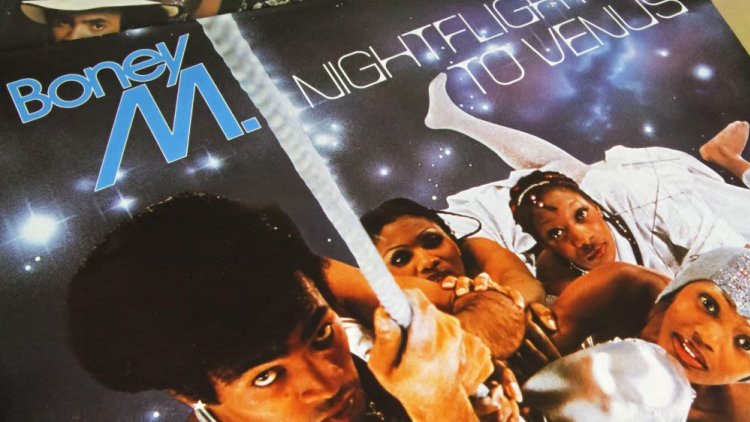
Seventies band Boney M is understood to be in talks to appear at Reform UK conference in several weeks (Alamy)
2 min read
Exclusive: Disco band Boney M is in talks with Reform UK to perform at the party’s conference next month, PoliticsHome understands.
The band, which rose to fame in the 1970s with songs like Rasputin and Daddy Cool, is being lined up to appear at the afterparty in Birmingham, set to be held on the Friday evening of the conference.
A Reform spokesman told PoliticsHome: “Several exciting acts are under consideration for our conference after-party. This will be confirmed and announced in due course.”
Reform’s annual conference will take place in just under a fortnight from 3 September to 5 September.
Last year, Marlon and Jackie from The Jacksons made a surprise appearance at the Reform conference, performing songs including Blame it on the Boogie and Can You Feel it for around an hour.
At the same event, Reform supporter Andrea Jenkyns, formerly a Conservative MP, performed self-written song Insomniac.
Attendees of this year’s Reform conference can purchase a ticket to the afterparty for £25. The party is marketed on the Reform UK website as an opportunity to “join Nigel Farage and special guests for an unforgettable evening”.
Boney M, formed in what was then West Germany, still performs today with changing lineups and is set to tour the country later this year, in cities including Liverpool and London.
Original lead singer Liz Mitchell and dancer Maizie Williams have both taken part in recent performances. However, it is not clear what Boney M lineup is in talks to perform at Reform conference next month.
Reform figures will hope that the conference helps the party regain momentum after a tricky few months which have seen the polling of both the party and leader Farage dip.
Last month, Farage comfortably won a by-election in his Clacton constituency, a contest he triggered after standing down as an MP amid growing pressure over a £5m donation he received from crypto-billionaire Christopher Harborne.
No other major party contested the by-election, arguing that it was a waste of time and resources.

4 min read
High turnout is often seen as a sign of a healthy democracy, but it can also be a symptom of polarisation and existential threat.
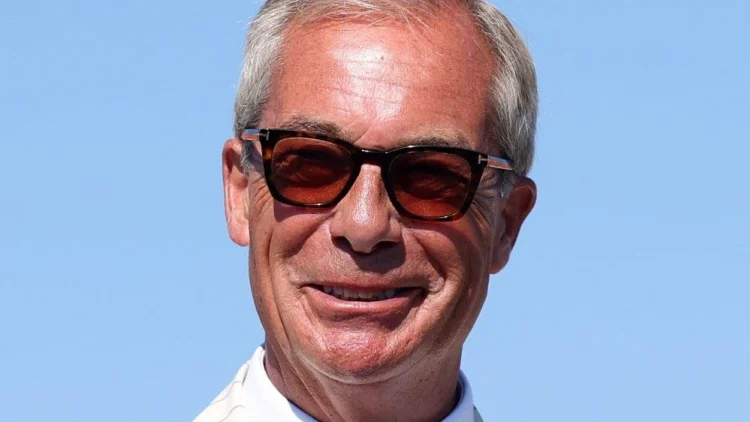
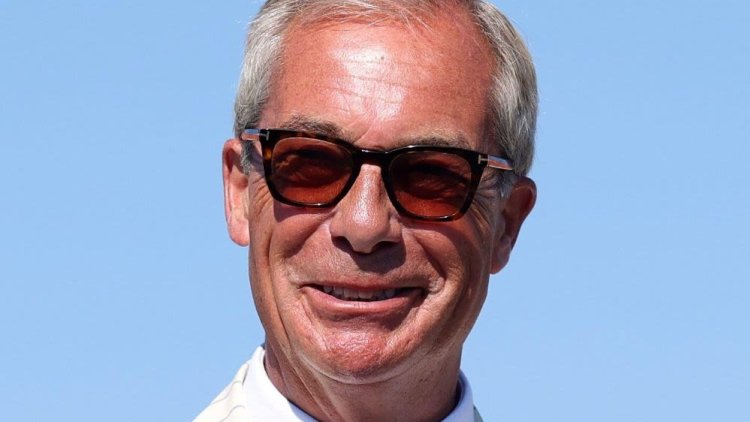
Clacton had all the ingredients for a low-turnout vote: a summer by-election, a seemingly inevitable Nigel Farage victory, and a main opponent wearing a dustbin on his head. Turnout usually falls between a general election and a by-election. But at 43 per cent, turnout was higher than expected, and on the hottest day of the year.
And it wasn’t a one-off: by-election turnout is no longer dropping as much as it used to. In Gorton and Denton, it nearly matched the general election; likewise, the Caerphilly by-election turnout beat the record for any national Senedd election.
Makerfield saw the second-highest by-election turnout since 2000, and it was the first constituency since 1987 to surpass the previous general election in a by-election turnout.
It’s a common, but perhaps flawed, truism that high turnout is a sign of a healthy democracy, an empowered and engaged public. Low turnouts, on the other hand, are seen as a sign of disillusionment. In 2001, Britain recorded its lowest turnout in almost a century – triggering worried speculation about the state of our democracy. Independent MP Martin Bell called the 59.4 per cent turnout “the saddest statistic of the whole election”.
A key feature of high-stakes politics is voting against, rather than for
The positive aspect of high turnout was often on display in Makerfield, where some voters said it felt like a “privilege” to choose the next prime minister. Ed, an engineer, told us: “More people knocked on our door and more leaflets have come through our door in the last two, three weeks than in my 40 years of voting in elections.”
But high turnout can also have a dark side. It is often a symptom of polarisation and existential fear of the other side winning: the 2020 US presidential election saw record turnout at a time of deep division, and it remained high in 2024.
Likewise in Britain, many of the by-elections with surprisingly high turnout have been examples of high-stakes, high-threat politics. In Gorton and Denton, we spoke to left-leaning voters terrified by the prospect of a Reform UK win, and willing to vote for “literally anyone” to prevent it. But with no clear safe anti-Reform choice, we heard from people trapped in a kind of tactical paralysis, combing online forums and Facebook groups for evidence of whether Labour or the Greens stood the better chance. On the day of the result, Issy, a training manager, told us she had been “pretty much up all night wondering, oh my God, did I make the right choice?”
A key feature of high-stakes politics is voting against, rather than for. Back in Clacton, Mike, a retiree, recalled meeting friends at the pub. When the by-election came up, he said: “There wasn’t one person who knew who they would vote for. They knew who they wouldn’t vote for.”
This has real consequences for Farage and his party. In Clacton, he proved he could motivate 22,000 people to show up against expectations and vote for him. But that nearly 10,000 turned up to vote for a man dressed as a bin is a sign the anti-Reform vote is mobilised too. Many voters across politics feel Reform is too great a risk, and would hold their nose and back a different candidate to keep them out of government.
A few months ago, Labour also risked being punished by the tendency to vote against: many on the right were willing to rally behind Reform to get Starmer out of government. But with the left looking more united and the right more divided, the stakes now appear highest for Farage himself.
It seems questionable that high-stakes politics is really a sign of a healthy democracy. Perhaps the right response to 2001’s abstentionism came from the then home secretary Jack Straw, who said the low turnout reflected “the politics of contentment” – a time that seems a long way from our turbulent politics of today.
Luke Tryl is the Executive Director of More in Common UK


President Donald Trump returned to the campaign trail Friday to help save the candidacy of Sen. Darline Graham after a major debate gaffe raised questions about her readiness to replace her late brother and the wisdom of his endorsement.
Speaking at a rally in Myrtle Beach, South Carolina, days before a Senate runoff featuring Graham and Rep. Ralph Norman, Trump urged voters to support the sister of his ally Lindsay Graham, the longtime foreign policy hawk who died last month.
“We’re going to elect Senator Darline Graham to fight, fight, fight for South Carolina and to always put America first,” he said. “You vote for her, you’re going to be very proud of that vote.”
Trump also reflected on his close friendship with Lindsey Graham, invoking the memory of the stalwart of the South Carolina GOP who represented the state in Congress for 31 years.
“I think Lindsey respected Darline more than any other person he knows, including me,” he said.
Trump pushed for Darline Graham’s appointment to fill out the remainder of her brother’s term, offering his endorsement before she even formally launched her campaign.
But the value of Trump’s endorsement has arguably never been weaker. He has seen some notable favorites fall in recent primaries — including in South Carolina, where Lt. Gov. Pamela Evette lost the state’s gubernatorial primary to state Attorney General Alan Wilson.
Trump’s choice for governor in Wyoming lost on Tuesday, along with two Florida Republicans who scored his endorsement in House primaries. Also among the recent losers: Mike Lindell, the former MyPillow CEO and close ally who fell short in the Minnesota gubernatorial primary.
Those came after losses of Trump-endorsed candidates in Georgia, Michigan and Iowa earlier this year.
The president touted Graham’s focus on affordability and her support for traditional conservative social issues like the Second Amendment. But his primary pitch to Republicans in South Carolina was to treat Graham as an extension of himself.
“What I really want you to do is pretend, please, that I’m on the ballot. Just come and vote. It’s so important,” he said. “Just say that I’m on the ballot one more time.”
Graham sailed into the runoff, topping second-place Norman by eight percentage points. But an alarming debate hiccup over a question on the U.S.-Taiwan relationship in which she admitted she’s “not that informed on national security” and that “national security is not my thing,” triggered a pile-on from Republicans in South Carolina and elsewhere expressing concerns about her qualifications.
Former South Carolina Gov. Nikki Haley, a Norman supporter, slammed Graham for her debate answer. And former South Carolina Gov. Mark Sanford endorsed Norman hours ahead of the rally on Friday, noting that “the stakes are too high” to back Graham.
Trump appeared unbothered by Graham’s admission, telling reporters ahead of the rally that her loyalty to the president’s agenda was all that mattered.
“She was just being honest,” Trump said. “It hasn’t been her thing, but she’s surrounded by very good people, and she said that she’s totally for the military.”
“She’s going to do what the military wants, and really what the president wants,” he continued. “She understands that national security is my thing.”
Speaking ahead of the president, Graham attempted to sidestep the concerns about her resume by recalling Trump’s lack of political experience before his 2016 victory.
“The critics say I shouldn’t run for the senate. They say I’m not a politician. You know what I say? Guilty as charged,” she said, prompting a wave of applause from the crowd. “By the way, President Trump had never served in an elected office before, and I think he’s done a damn good job.”
Trump’s visit prompted an endorsement ahead of the rally from Gov. Henry McMaster, who said Graham “continued Lindsey Graham’s work, and stood firmly with President Trump to advance his America First agenda” while serving out the remainder of her brother’s term.
The president’s trip to the state — a rare as-advertised campaign rally amid a sea of official White House events elevating his endorsed candidates — marks a significant expenditure of the president’s political capital. The president hasn’t held in-person rallies for Republicans Senate candidates in many battleground states, opting instead for social media posts and telerallies. And he has yet to dip into the $403 million war chest at his primary super PAC, MAGA Inc., drawing some consternation from Republicans.
Trump told reporters on Friday he’ll spend “a lot of that money” to boost “Republican candidates that I think are good,” without being specific.
Trump warned of the stakes of losing control of Congress in the midterms, saying that Democrats will follow through on reported plans to investigate and impeach him.
“You’re going to lose everything,” he said. “I’m going to have to go through impeachment.”
Alec Hernandez contributed to this report.
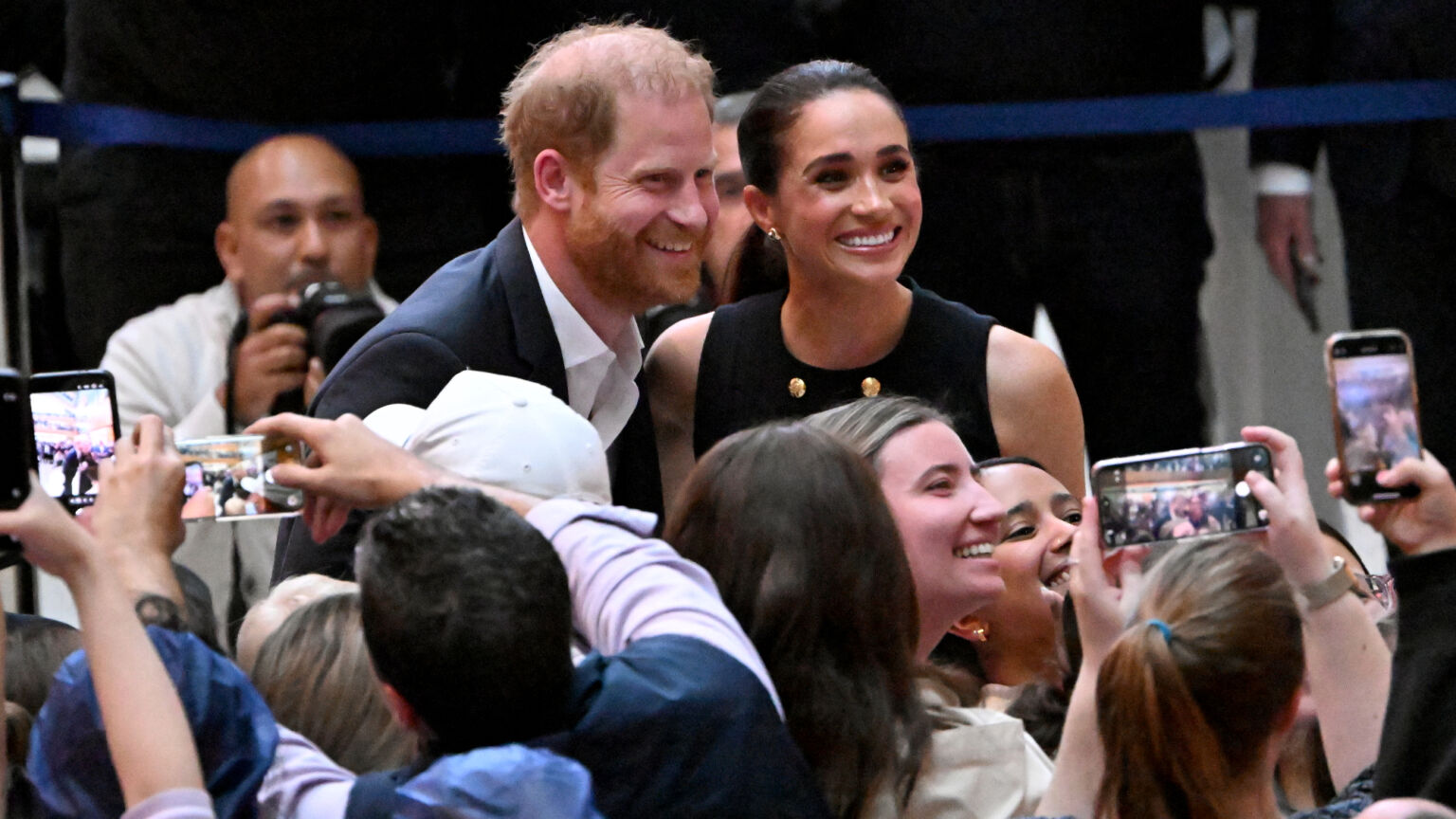
So after a six-year sojourn in southern California, Harry and Meghan – partners in crime in what I dubbed ‘the Grabdication’ – are heading back to Blighty.
I don’t think we’ve missed them very much at all. Distance has not led to enchantment, and their tawdry antics have appeared less riveting as time goes by, from Meghan’s jam business to the reality TV shows to Harry’s charity scandals. As that very frank man from Spotify said of them: ‘“The Fucking Grifters” – that’s the podcast we should have launched with them.’
Under other circumstances, had their commercial success been greater, their return might have struck one as quite pleasant; Meghan graciously giving in to Harry’s homesickness after he had stuck it out for her in an environment which must have been quite lonely for him. But because they failed to launch, the feeling is now not so much a triumphant homecoming as that of a double-act who overestimated their global appeal and are returning to a smaller core audience, like those English pop stars who go to the US on a tour of Enormodomes and next year are playing ‘showcases’ at record shops in Richmond.
The central question – the answer to which must surely dictate how both the Windsors and the public react to them – is this: is their imminent arrival led by the heart or the head? If the former, and they’re feeling a bit blue due to the big wide world not wanting them, and want to rebuild their relationship with the ailing monarch before it’s too late, there’s a chance they can make a go of it. Harry is Diana’s son, after all, and that still counts for something with a sizeable proportion of the elderly female population who, like me, have never got over their affection for the late princess.
But what if the latter is the case? What if Meghan sat Harry down one day, chucked him a few flower sprinkles to chew on and laid it on the line: we’ve run out of road here in my sunny ‘hood – how about we go back to that rainy old island I can’t stand and hawk our wares there? As the man from Spotify so brutally put it, ‘Nobody cares what you have to say about anything unless you talk about the royal family’.
They’ve got previous on being royal blabbermouths, though ‘recollections may vary’ as to the veracity of their tattle; the unnamed royals speculating on the baby’s skin shade, Meghan shivering and suicidal in a scullery, Camilla the wicked stepmother doing dirty deals with the gentlemen of the press over a cheeky Rothmans, William as a necklace-tugging, dog bowl-breaking brawler better suited to the Queen Vic than Buck Pal. ‘Harry and Meghan: The Homecoming’ would surely make a tasty morsel to dangle under Netflix’s nose.
Would they find it easy to re-enter what passes for ‘society’ these days, that strange swirl of shady expats, showbiz kids and a few stray blue bloods? These things are immensely important to someone like Markle. She’s not so much a social climber as a social mountaineer, to the extent one imagines her keeping crampons rather than tampons in her handbag. And it’s not beyond the bounds of possibility that one reason she is following her man so meekly back to a place she loathes is that she failed to worm her way on to the political / entertainment A-list in her own country. Once on friendly terms with Oprah, Beyoncé and Serena, the most famous acquaintance she could dredge up for her reprehensibly rotten at-home show, Love, Meghan, was alleged comedienne Mindy Kaling.
Still, Earl Spencer, with his grudge to nurse and his book to promote, will no doubt be a generous host. But Uncle Andrew will get the swerve, as will the ghastly Fergie, while their children appear to have cooled on their cousin – imagine being snubbed by a York! No doubt Beatrice and Eugenie are keen to hold on to their precarious place in the pecking order. The fealty of famous Brits to the crown is notorious, to the point that even a bighead like Beckham will stand in a queue with the commoners for days on end to pay his respects to the late Queen, so probably no table for the Sussexes at the BAFTAS.
A YouGov poll in July found that only 22 per cent of Britons view Meghan positively compared with 65 per cent who dislike her. Harry (once the most popular royal) is faring only slightly better, with 33 per cent viewing him positively compared with 58 per cent who have a negative view of him. This leads us to the issue of security, which Harry has made such a song and dance about, even using it as a reason for the initial scarpering. (Because no one in the US carries a gun, of course.) Why has he changed his mind about the likelihood of crazed Taliban fighters lurking around every corner ready to take him out? Probably the most that will happen is that Megsy will have a few old ladies chuck over-ripe tomatoes at her when she goes to open a new branch of Whole Foods, just as Camilla was once allegedly bombarded with bread rolls in the carpark of Chippenham Sainsbury’s.
They’re rumoured to have bagged a billet in the Cotswolds, which would have been fine when other American victims of Trump Derangement Syndrome had flounced there in a huff, like her friend Ellen DeGeneres – another character with a sickly sweet public image whose employees have told a different story. But now Trump’s prospects aren’t looking promising, it’s likely that the Hollywood squares will regroup again behind the Democrats, once more leaving Meghan several steps behind the A-list. Apparently, the Montecito residents will be glad to see them go, due to the media attention that they drew to this previously discreet enclave. The perma-paps will now haunt the Cotswolds, annoying the likes of Kate Moss, who see it as a place where they can take their ease in private. Even the media types who live there are the stellar kind who won’t welcome the paparazzi pooping on their own doorstep, as it were.
Handily, the Sussexes are said to be keeping the properties in California and Portugal, so a bit of winter sun will never be far away. They do like a nice trip in a private jet – it’s a proven fact that people with ‘progressive’ views produce less airplane pollution. Many of their recent trips have been taken solo, or as a couple, without Lilibet Ltd and Archie Inc accompanying their doting parents. There has been talk of how Harry would prefer the tiny trademarks to go to British schools; am I the lone cynical voice who suggests that this may be because children can be boarded very young here, whereas in gentle-parenting LA this would be very much frowned upon?
By far the most convincing argument I’ve yet heard is that Meghan has been offered a ‘huge’ and ‘lucrative’ acting role in an unnamed project. The mind boggles. My money’s on Max Branning’s new mystery squeeze in EastEnders or a corpse in Midsomer Murders – an early offing in a freak accident like poor Martine McCutcheon, so as not to put Markle’s severely limited acting chops through anything too taxing.
But what of the brothers? The relationship between William and Harry was always the most interesting aspect of this kerfuffle, redolent as it is of divided royal houses of the past, with bro vs bro going at it like billy-o. It may all seem like cuddles with grandpa and Christmas at Balmoral now. But once the Court of Wales is riled, a dynasty-splitting showdown seems likely. And I, for one, can’t wait.


England crushed Pakistan by an innings and 103 runs inside three days at Headingley. As Joe Root’s second spell as permanent Test captain began with a commanding, controlled win. Pakistan, demolished for 171 on day one. Pakistan folded again for 135 in their second innings, lasting only 37.3 overs after England’s 409 in their sole knock.
Root’s inventive fields, sharper bowling changes and a disciplined batting display underpinned a performance that gave England just their third win in 11 Tests and a strong foothold in the three-match series.
Jofra Archer, improved markedly from his rusty first-innings spell, set the tone with 3-50, removing both openers early to leave Pakistan 13-2. Josh Tongue, who had already taken a first-innings five-for, added 3-43 in the second, including the key dismissal of Shan Masood for 29 after lunch.
Ollie Robinson, whose 3-29 in the first innings formed part of an eight-wicket match haul shared with Tongue, chipped in again as Pakistan’s inexperienced batting line-up unravelled under sustained pressure.
Root’s fielding plans paid off repeatedly. Azan Awais, who had avoided a pair after being lbw to Robinson first ball of the match, clipped Archer straight to leg slip for nine. Saud Shakeel, attempting to work Tongue fine, picked out Dan Lawrence in an unorthodox backward square position. England’s bowlers stuck to tight lines, Pakistan’s batters offered loose strokes, and the contest never threatened to stretch into a fourth day.
England’s batting sets platform with controlled aggression
England’s run-rate of 4.55 owed more to Pakistan’s wayward bowling and sloppy fielding than any Bazball-style surge, but the innings was still marked by clarity and restraint. Harry Brook’s 93-ball 91 was the standout, a measured innings that balanced fluency with discipline. Root, Lawrence and Jordan Cox all contributed half-centuries, while Jamie Smith’s 25 was one of the few quieter notes.
Smith fell early on the third morning, spooning a short ball from Khurram Shahzad to midwicket after England resumed on 366-8 with a lead of 195. Around his dismissal, Archer (23 not out) and Tongue (8) struck crisp boundaries, with Archer launching the game’s only six over the leg side off Khurram. England’s lower order added useful runs before Pakistan’s second collapse began.
Pakistan crumble again under England’s pressure
Archer immediately targeted Pakistan’s openers, forcing Imam-ul-Haq into a swaying glove through to Smith and then removing Azan with a delivery that climbed sharply. Abdullah Shafique and Masood steadied briefly, but Robinson’s probing line drew a limp prod from Shafique, Brook taking the catch at second slip shortly before lunch.
After the interval, Tongue ripped through the middle order. Saud Shakeel fell to a ball that straightened, Masood edged to slip, and stand-in captain Salman Ali Agha. Deputising for the injured Babar Azam, was pinned lbw by a nip-backer in the same over. Pakistan’s resistance never materialised.
Ali Usman, whose five-wicket haul in England’s innings was one of Pakistan’s few bright moments, became Tongue’s next victim, Cox diving at slip after the ball ballooned off Smith’s thigh. Pakistan’s decision-making deteriorated further when Mohammad Rizwan, top-scorer with 41, exposed tailender Khurram Shahzad one ball into an over; Khurram nicked off to Robinson immediately.
Gus Atkinson, tidy throughout, cleaned up Rizwan with a delivery the batter swiped across the line. Archer then ended the match when Mohammad Abbas ballooned a catch to Lawrence. England’s bowlers shared the wickets, their discipline rewarded by Pakistan’s repeated errors.
Root’s second era begins with clarity and control
Root’s return as captain brought immediate dividends. His willingness to use funky fields, his calm handling of bowlers and his trust in attacking positions all contributed to a win that never felt in doubt once England established their first-innings lead. Bigger challenges lie ahead for England. Pakistan’s lack of quality and x-factor may limit the competitiveness of the series but Root’s start was encouraging.
England’s next tests will come in South Africa over the winter, Stephen Fleming’s first series as permanent head coach, and then in next summer’s Ashes. For now, though, Root’s side have a chance to secure their first series victory since beating New Zealand 2-1 in December 2024. Their only other win since then was a one-off thrashing of Zimbabwe at Trent Bridge last summer, with a 2-2 draw against India, a 4-1 defeat in Australia and a 2-1 home loss to New Zealand forming a difficult run.
England series context and what comes next
England now lead the three-match series 1-0. The second Test begins at Lord’s on Thursday, with an 11am first ball. Victory there would seal the series before the finale at Edgbaston in September. England’s bowlers look sharp, their batting appears balanced, and Root’s leadership has added clarity after a period of inconsistency.
Pakistan, meanwhile, must regroup quickly. Their batting collapses across both innings, their fielding lapses and their tactical missteps left them exposed throughout the three days in Leeds. With Babar Azam still sidelined by a hand injury, Salman Ali Agha faces a significant challenge to lift a side that looked short of confidence and cohesion.
England’s innings win at Headingley was built on discipline rather than drama. Accurate bowling, smart fields, controlled batting and a captain who set the tone. Root’s second era has begun with authority, and England head to Lord’s with momentum firmly in their favour.
Featured Image courtesy of Crick Info
By Faz Ali


As the siege on Palestinian homes in the village of Qusra continues for a second week, Israeli settlers feel confident they will face no consequences for their terrorist activities. Inaction from the Netanyahu government and the international community has given these colonists a growing sense of confidence. It has also encouraged them, and given them the green light to use the same tactics elsewhere.
Israeli settlers cut off electricity supply
On 18 August, settlers broke an electricity pole, which provided power to the home of brothers Ayman and Musab Sufan, and their families. The long-suffering Sufans live in the West Bank village of Burin, south of Nablus.
Soon after their home lost its power supply, the ‘Israeli’ military used bulldozers to block the only road leading to the Sufans’ home, completely cutting off the already isolated and exposed house, and its 10 residents, from the rest of the village.


There were fears a situation may result similar to that in Qusra, but luckily this has not been the case. Some makeshift DIY from the family has ensured the electricity is back on, while the roadblock has also now been removed.
Roadblocks usually occur as part of the military’s cooperation with the Israeli settlers. But it is not known for certain if this was the case here, or why the road was reopened.
What we do know is that in June, Haaretz reported a military legal adviser had warned top IOF officials that the military had not been following the required legal procedures for imposing movement restrictions, and that barriers often lack official orders, proper documentation, and publication. This adviser warned that continuing this could lead the Supreme Court to cancel the roadblocks altogether. So he urged the military to stop the practice and establish proper oversight.
The occupation’s soldiers and settlers making their lives hell
Although the roadblock to their home has now gone, difficulties faced by the Sufans are far from over. Jonathan Pollak, a human rights defender and activist, has known the family for many years. He tells us:
The outpost has been there for a while, and is a source of constant intimidation, sabotage and attacks. Although the family can now cross to the village, they are still facing regular harassment by settlers and soldiers.
Pollak explains the attacks against the family are constant. Power has been cut more than once to their home, and their olive groves have been set alight.

He says:
They have basically been forced to barricade themselves inside their home. In the most literal meaning- putting up tall walls and fences, iron gates and CCTV cameras.
Israeli settlers carry out ‘Israeli state’s’ ethnic cleansing
The Sufans’ home is below the Yitzhar settlement, which was established in 1983. Since then the settlement has continued expanding over the lands of Burin, Hawara, Einabus, Urif, Asira Al Qibliya and Madama. The settlers currently intimidating the family are residing in an outpost of Yitzhar, just 150 metres from the Sufan’s home.
There has been a long campaign by the Israeli occupation to try and forcibly displace the Sufans from their home. So far it has been unsuccessful, only because of the steadfastness and resilience of these Palestinians. But the systematic attacks continue unabated, due to the geostrategic position of the house. Pollak says:
The Sufan home is the only permanent Palestinian presence in the entire area between Huwwara to the East, Yitzhar to the South, Madama to the West, and Route 60 and Burin to the North. Driving the family away would enable an Israeli takeover of the farmland in that entire area. This is a story about two families who have been suffering for over two decades, not at the hands of so-called extremist settlers, but as part of the overarching Israeli policy of ethnic cleansing.
Human rights abuses documented for almost 25 years
The Centre for Protection and Assistance to Asylum Seekers (APC/CZA) is a Serbian organisation. It has documented settler violence towards the Sufan family as far back as 2003. In 2010, in a piece titled Life in Constant Fear, the human rights organisation wrote about Hanan Sufan. Her husband died of a stroke in 2003, soon after watching settlers pour petrol around their home and set fire to it with the family inside.
Hanan Sufan told APC/CZA that government officials, human rights organisations, activists and journalists had all promised to help the family. But that help has never arrived.
According to APC/CZA, even in 2010, conditions were so dangerous for them that:
Iron bars are on all the windows, placed to prevent stones and Molotov cocktails from flying into the house. Barbed wire is placed on top of the fence to prevent attackers from breaking in, and there’s a bed on the roof of the house. Sufan says it’s her son’s bed, who stays outside at night to listen for intruders.
In 2012, the UN also reported that their sheep had been poisoned, and a horse stolen, while cars and solar panels had been destroyed by settlers.
Our governments are accomplices to the crimes of the Israeli occupation
The pressure on the Sufan family to leave is continuing right now, as their home remains in the way of settlement expansion- and all the crimes that go with it. Even though their situation has been documented for decades, there has been no help or justice coming their way. They have been left to protect themselves from a relentless campaign of violence. Why has no effective protection been provided, or those responsible not been held accountable, when officials have been aware of the situation for so long?
There is very little hope that the Israeli occupation will hold those responsible to account. The UK, US and European states have influence over ‘Israel’, so have a responsibility to act. They have so far only relied on meaningless statements of concern. They must use this influence through diplomatic pressure, sanctions, and a review of all military and trade ties, instead of continuing with political cover and business as usual.
Those who claim to support human rights and international law must take immediate action, to ensure the Sufan family are not forced out of their home in Burin. If they continue to do nothing, foreign governments will not only be bystanders to the Sufans’ forced removal but will be accomplices to it.
Featured image showing Sufan home and the settlement on the hill, via Land Research Centre
By Charlie Jaay
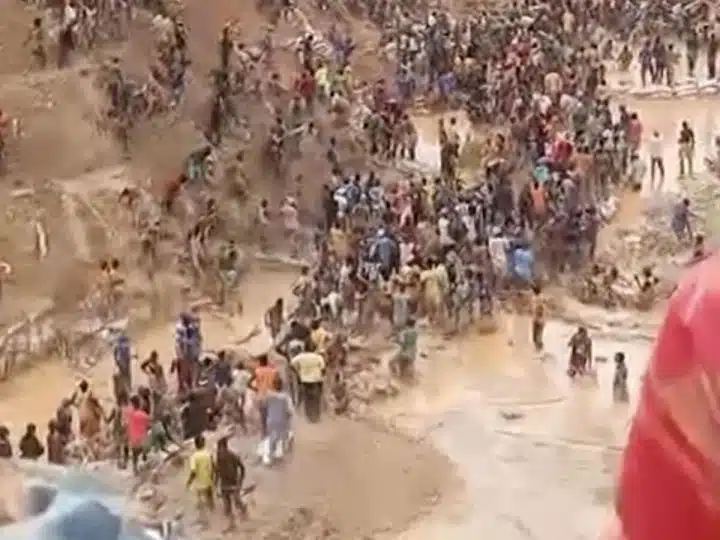

Mine collapse — Over 100 African workers died recently in a horrific artisanal mine collapse at the illicit Zamboye mine. The riverside Zamboye mine borders between western Central African Republic (CAR) and eastern Cameroon.
Red Cross volunteer Gervais Ganagoroh, involved in the relief effort, told AP news agency that more than 100 bodies had been recovered from the mine collapse. City official Bertrand Be Yangue said the toll is expected to rise, with several people still missing or trapped beneath the rubble. He told AP:
Finding them alive would be a miracle … We are saddened and heartbroken to see young men and women perish after coming to the mines to save their families from despair.
Cedric Mbango, one artisanal miner working at the site, described the incident as “catastrophic”. Sadly, such catastrophes are grimly familiar to insecure mine workers and families, many on miserably low wages.
Al Jazeera recalls such horrific events as a repeat occurrence. In this year alone, they report:
In June, a collapse killed dozens of people at the Be-Mbari gold mining site, also on the Cameroon border.
In mid-March, a landslide killed seven people at a mine in the village of Ngourroum, in the west of CAR.
Another 20 were killed in February in Gordi, in the northeast.
Meanwhile in the Democratic Republic of Congo (DRC), some 200 miners were wiped out in a horrifically similar January mine collapse. That disaster occurred in a coltan mine on the Congo-Rwanda border, controlled by rebel group M23. United Nations officials accuse Rwanda’s government of materially backing M23, which aims to overthrow the DRC government, to plunder its neighbouring country.
‘Air thick with flies’: UAE’s Colombian mercenaries recount horrors of Sudan siege
Mine collapse — UAE’s bloody sub-imperialism
The reasons to suspect UAE involvement in chains of extraction from Zamboye and similar mines are many. As a key Western client state and political ally in the Arab Gulf, it is effectively a sub-imperialist state.
An investigation into mining in Cameroon earlier this year uncovered over 200 illegal artisanal gold mining companies. Most are foreign-owned, although illegal mine ownership is predictably opaque.
The probe came after vast balance sheets discrepancies were detected. Other countries, especially the United Arab Emirates (UAE), declare much higher import figures than official gold exports suggested. By many accounts, the UAE was importing sometimes 700 times Cameroon’s official export weight.
Circuits of gold and mineral extraction from Africa to the UAE often do not end there. Dubai’s vast gold reserves are collateral for Euro-American governments and corporations. Likewise, weapons flows from Britain or America to the UAE frequently find their way into African militias’ hands. An instructive case of these sub-imperial circuits is the world’s worst humanitarian crisis, namely Sudan’s conflict.
Sudanese civil war
In the opening move of Sudan’s 2023 civil war, the UAE commissioned commercial and military cargo planes alike for a 1.5 tonne gold heist. The genocidal Rapid Support Forces (RSF), considered a paramilitary proxy of the MbZ regime, carried out the heist in return for funding and weapons from Dubai. That civil war has now cost upwards of 150,000 Sudanese lives and displaced millions regionally.
The Gulf’s bloody plundering and militia-backing of Africa is not limited to the UAE. In fact, it’s often made more intense and atrocious as a direct result of competition with regional rival Saudi Arabia. Bloody proxy battles between the dominant Gulf regimes span from DRC to Yemen, Sudan to Ethiopia.
Amidst this, notorious war-criminal, UAE-based CIA asset Erik Prince, owner of private militia Blackwater, expanded his involvement alongside the increased DRC-UAE cooperation:
expanded his involvement alongside the increased DRC-UAE cooperation.
As Critical Threats reports, Prince gains lucrative contracts as hired security for mine extraction:
The Congolese finance ministry hired Prince and his firm, Vectus Global, for a five-year, $700 million contract in late 2024 to help crack down on tax evasion in the DRC’s mining sector and provide covert military support to the FARDC. … Prince was also in discussions with the DRC about deploying Salvadoran mercenaries to help secure Tshisekedi’s presidential palace in Kinshasa.
UAE-backed Sudanese militia amasses property Empire in Dubai
UAE or China? Imperial blame games
Quarterly journal African Defense Forum (ADF) attempts to shift blame onto “illegal Chinese gold mining.” By way of evidence, it cites Chinese mine owners invited to a ministerial conference about new crackdowns on illegal mining. ADF is funded and published by US Africa Command (AFRICOM) to
provide an international forum for African security professionals.
AFRICOM is the US Department of War’s imperial command centre for the entire African continent. ADF at least acknowledged the gold’s suspected destination, which is the UAE by best guesses.
Similar reporting by the Institute for Security Studies (ISS) completely ignored the gold’s destination, instead blaming “Chinese operators.” (Notably, conflict-complicit European diamond mining monopolist De Beers founded the ISS in the 1990s. De Beers is notorious for its global dominion of “blood diamonds.” That same corporation recently reported record losses, owing largely to Chinese lab-grown diamonds. The labs lowered productive costs — and the notorious deadliness — related with artisanal diamond mining.)
Many illicit mining companies in Cameroon are run by Chinese nationals, according to Cameroonian research. However, these demonstrably compromised outlets overlook the fact that most gold is neither headed to China, nor is the mining backed by the Chinese state. It’s a neat sleight of hand.
Their reporting of “Chinese-run sites” or “Chinese operatives” implicitly suggests state involvement. In reality, it’s a case of opportunistic, unscrupulous and likely exploitative private companies. Chinese state mining companies hold many contracts across Africa, but they’re legally above-board. (Even if we find them exploitative or extractive, Jason Hickel outlines how they’re not “colonial,” as some have commented.)
The same cannot be said for the UAE, run by aristocratic sheikh Mohamed bin Zayed. There are no borders between private capital and the autocratic military regime which runs the UAE. Even the level-headed FT flatly labels the UAE’s bloody extractivism across the continent an “imperial push into Africa.”
Featured image via the Canary

Coca-Cola innovation labs test dirty sodas, refreshers

Bitcoin and Ether bears get decimated amid 'squeeze-led' rally and Musk's X wants to pay creators in stablecoins: Crypto week in 5 stories

NBC’s 4-Part Sci-Fi Masterpiece Is Ready To Become a Weekend Binge





-

 Fashion18 hours ago
Weekend Open Thread: Madewell – Corporette.com
-

 Business4 days ago
SMA Solar Technology AG (SMTGY) Q2 2026 Earnings Call Transcript
-

 Tech4 days ago
Qwen3.8-27B runs frontier-class coding agents and reasoning locally, no cloud API required
-

 Crypto World5 days ago
OCC Greenlights Trump Family Crypto Firm for Trust Charter
-
 Tech7 days ago
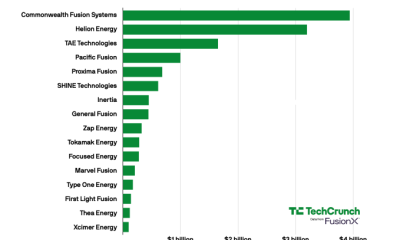
Every fusion startup that has raised over $100M
-

 Crypto World5 days ago
NAVI Prime launches institutional lending framework on Sui
-

 News Videos2 days ago
Don’t Leave Your Financial Future To Chance | August 19, 2026
-
 Crypto World6 days ago
Data of 54K Wallet Users Leaked, Clarity Odds Just 10%: Hodler’s Digest, Aug. 16
-
 NewsBeat3 hours ago
The ‘Lucky Dip Gang’ causing carnage for clicks: After five thugs were killed speeding in the wrong direction on a motorway, GUY ADAMS investigates a sick new trend… and why police aren’t even allowed to pursue them
-
 Politics6 days ago
Britain is facing a housing disaster
-

 Tech6 days ago
What are the rumors about the AirPods Pro 4?
-

 Business7 days ago
Stephen Curry Trade Rumors Persist as Warriors Insist Superstar Remains Committed to Golden State
-

 Business6 days ago
Rebel Creamery files Chapter 11 with $23.8M Van Leeuwen judgment on appeal
-

 Crypto World5 days ago
Dow’s 3-Year Winning Run Isn’t a Crash Signal, Still 49% Odds of Double-Digit Gains
-

 Business7 days ago
(VIDEO) Frozen 3 First Look Reveals Anna’s Wedding, Olaf’s New Love Interest And A Mysterious Villain
-

 Business4 days ago
Stock Market Today: Tech Futures Slide As Treasury Yields Jump; Nvidia, Micron, Sandisk Sell Off
-

 Fashion7 days ago
Fashion Bomb Daily On the Scene: The 2026 MVAAFF x ESPN White Party on Martha’s Vineyard
-

 Tech7 days ago
DeepSeek’s innovative harness treats everything as a plug-in
-
 Tech6 days ago
OpenAI’s new ChatGPT feature logs your keystrokes and stores them in plain text
-

 Politics7 days ago
Andy Burnham’s I’m Not Listening Tour
You must be logged in to post a comment Login