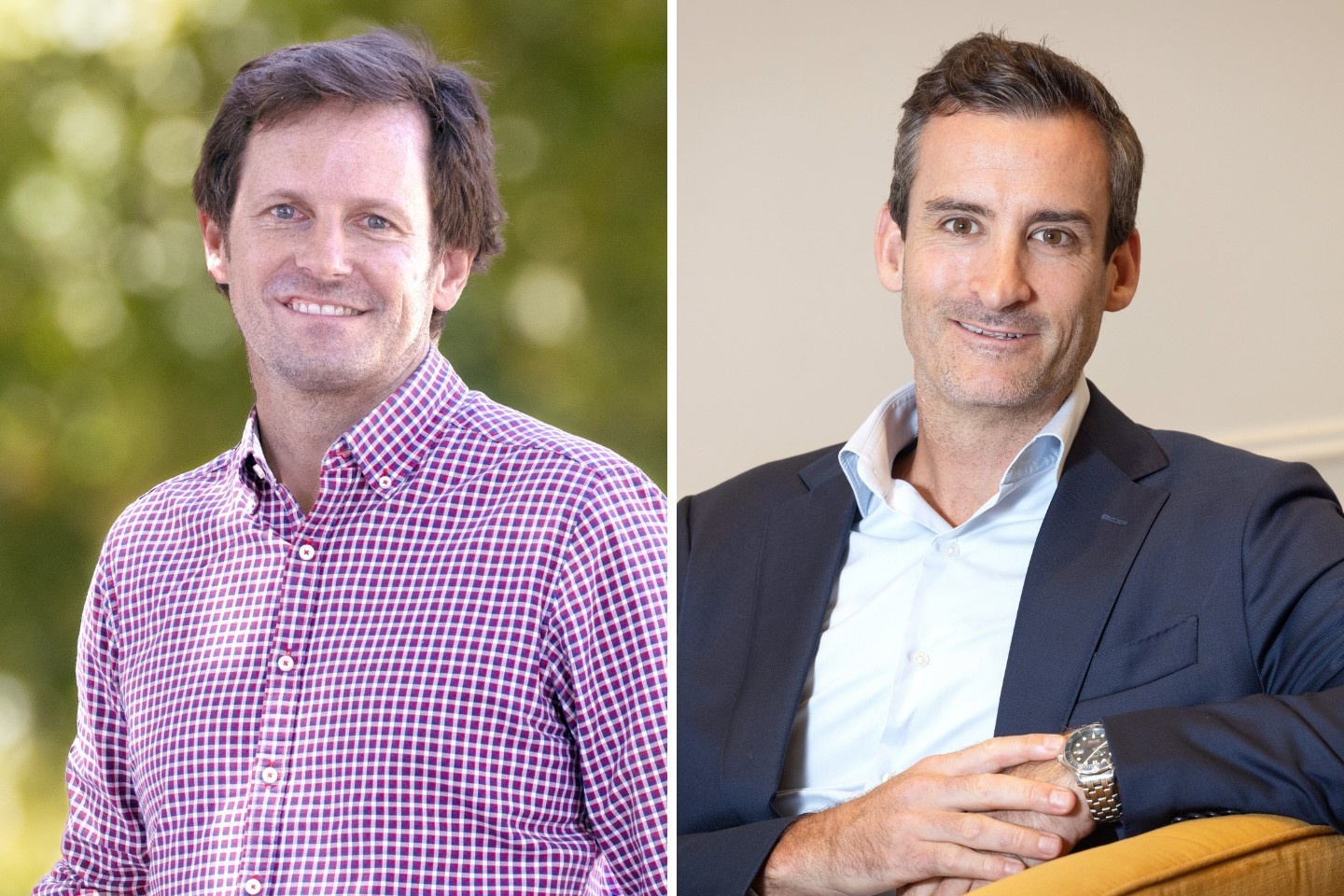
As geopolitical headwinds make it tougher for equity investors to make money, Dalal Street’s top voice Nilesh Shah, managing director of Kotak Mahindra Asset Management, told a gathering of HNI investors at the ET Alpha Wealth Summit on Thursday that there are four specific investment structures which deserve a place in most portfolios right now.
Shah’s first recommendation was the Special Investment Fund, or SIF, a structure that marks a meaningful shift in what is available to Indian investors. Shah noted that the mutual fund industry has, until now, been a long-only business but the SIF changes that. These are long-short, absolute return-oriented funds, designed to generate returns regardless of market direction rather than simply riding the equity tide.
The second vehicle Shah flagged is performing credit AIFs. His reasoning was grounded in a simple supply-demand observation that for corporate settlements today, capital is not available from banks, mutual funds, or insurance companies.
As institutional lenders have stepped back, borrowers are plenty and lenders very few. Amid this imbalance, Shah said the need is real and returns are attractive. Performing credit AIFs, which lend into this gap, are positioned to benefit directly from the scarcity of competing capital.
Advertisement
Live Events
The third idea was REITs, and here Shah introduced a timing element. Over the last three years, REITs have delivered index-level returns of around 13.5%. But with interest rates rising, he suggested that the next six to nine months may present an opportunity to enter at better prices. Rising rates typically compress REIT valuations in the near term, and Shah framed any such correction as a potential entry point rather than a risk to avoid. Beyond the return potential, he positioned REITs as a portfolio diversification tool as the asset class behaves differently from equities and fixed income, and that is still underrepresented in most Indian investor portfolios.The fourth recommendation addressed global diversification but came with an important caveat. Mutual fund industry limits for overseas investment are currently full, which means the conventional route for Indian investors to access global markets through domestic mutual funds is closed.
Shah pointed to Gift City as the workaround. Structures domiciled there allow investment under the Liberalised Remittance Scheme, and in his view, these Gift City-based LRS products are the practical path for investors who want global exposure while the mutual fund window remains shut.
Across all four — the SIF, performing credit AIFs, REITs, and Gift City products — Shah’s underlying argument was the same: in a volatile period, the portfolio needs instruments that can generate positive returns through means other than a rising equity market.
(Disclaimer: Recommendations, suggestions, views, and opinions given by experts are their own. These do not represent the views of the Economic Times)
JFrog Ltd. (FROG) Bank of America 2026 Global Technology Conference June 4, 2026 10:50 AM EDT
Company Participants
Ed Grabscheid – Chief Financial Officer Jeffrey Schreiner – Vice President of Investor Relations
Conference Call Participants
Advertisement
Koji Ikeda – BofA Securities, Research Division
Presentation
Koji Ikeda BofA Securities, Research Division
Advertisement
My name is Koji Ikeda. I am one of the software analysts here at Bank of America. Welcome to day 3 of our 2026 Technology Conference. Here to kick off day 3, absolutely thrilled to be hosting a fireside chat with JFrog. We have Ed Grabscheid not working yet. Ed Grabscheid, CFO of JFrog; and Jeff Schreiner, Head of IR. So thanks so much for joining us.
Ed Grabscheid Chief Financial Officer
Thank you for having us.
Advertisement
Jeffrey Schreiner Vice President of Investor Relations
Thanks for having us.
Advertisement
Question-and-Answer Session
Koji Ikeda BofA Securities, Research Division
I guess maybe just to kick it off, I always like to start with just a high-level overview of JFrog for the listeners in the room that are maybe new to JFrog’s story. It’s in the weeds of DevOps, but DevOps is a fantastic category. And so maybe just a high-level overview of what you guys do would be?
Advertisement
Ed Grabscheid Chief Financial Officer
Yes, sure. Happy to do that. And it’s great to see everybody. I see a lot of familiar faces, some new faces. So I’ll give a very high-level overview of JFrog and kind of what we do. And you’re right, it used to be in the weeds. I think there was a lot of people that misunderstood the story of JFrog and what we did and what is a binary. Binaries were kind of something that was a machine language that nobody really talked about, nobody understood. They understood source code that you write code, you write it in English, German, Spanish, but that converts into a machine language, which
For most investors, the focus is often on finding the right stock, entering at the right valuation, and identifying the next multibagger. Far fewer spend time understanding what may be the more difficult aspect of investing—knowing when to sell.
Speaking at the ET Alpha Wealth Summit on Thursday on “The Art of the Exit,” Rajiv Thakkar, CIO and Director at PPFAS Asset Management said that successful investing is not just about buying well but also about staying invested long enough for compounding to work.
In fact, before discussing reasons to sell, he spent considerable time explaining why investors should avoid selling in the first place.
According to Thakkar, one of the biggest mistakes investors make is selling because a stock has not moved for a few months.
Investors often spend significant effort researching a company, understanding management quality, assessing industry prospects and evaluating valuations. Yet after purchasing the stock, many lose patience if prices remain stagnant for six months or a year.
“Investments are meant for wealth creation, not entertainment,” he said, cautioning against treating investing like a source of excitement or constant action. Another common trigger for unnecessary selling is reacting to news flow. Markets are constantly bombarded with information—wars, elections, crude oil fluctuations, interest-rate decisions, capital flows and economic data. Investors who react to every headline often end up making poor decisions.
To illustrate this, Thakkar recounted the story of an investor who received advance information about the severity of the Covid outbreak in early 2020. Acting on that information, the investor sold his technology stocks before the market crash. While the prediction turned out to be accurate, fear prevented him from re-entering the market, and he ultimately missed one of the strongest rallies in technology stocks.
The lesson, according to Thakkar, is that even correct information does not necessarily translate into successful investment outcomes. Thakkar was particularly critical of the concept of “profit booking.”
Investors often feel compelled to sell simply because a stock has appreciated significantly. However, he argued that wealth is created by allowing successful investments to compound rather than by repeatedly locking in gains.
Frequent buying and selling may benefit brokers, exchanges and tax authorities, but it often works against long-term investors. Hyperactivity in portfolios can destroy wealth by interrupting compounding and increasing costs.
Advertisement
Similarly, investors should avoid selling because another stock appears more attractive. This “buyer’s remorse” mindset frequently causes investors to abandon good businesses prematurely in pursuit of seemingly better opportunities.
“If you manage to find a genuinely good business with strong management, a large opportunity set and reasonable valuations, the best course of action is often to simply stay invested,” he said.
Thakkar emphasised that investors in taxable jurisdictions such as India should maintain low portfolio turnover whenever possible. Unlike institutional structures such as mutual funds or investors in tax-free jurisdictions, individual investors face taxes and transaction costs every time they trade. Excessive churn can significantly reduce long-term returns.
For wealthy investors, family offices and HNIs, the ability to remain invested and minimise unnecessary transactions often becomes a major source of compounding advantage.
While most reasons for selling are flawed, Thakkar identified several situations where exiting an investment becomes necessary. The most obvious reason is the need for capital. If an investor requires money for a business opportunity, acquisition or personal objective, selling investments may be entirely justified. More importantly, investors must be willing to acknowledge mistakes.
If an investment thesis turns out to be wrong because of flawed analysis, poor due diligence or changing circumstances, the best course is often to exit quickly rather than averaging down endlessly.
According to Thakkar, investors who recognise mistakes early frequently outperform those who identify good opportunities but refuse to sell losing positions. Capital trapped in poor investments cannot be deployed into better opportunities. Fraud, naturally, represents an immediate reason to exit.
Advertisement
One of the more challenging selling decisions arises when industries face structural disruption. Questions such as whether newspapers can survive the internet, whether thermal power can coexist with renewable energy or whether traditional automobile manufacturers can adapt to electric vehicles rarely have straightforward answers.
Thakkar suggested that investors should not react impulsively but should continuously evaluate incoming evidence. Investment decisions should be driven by facts rather than sentiment. If the underlying business continues to deteriorate because of technological or structural change, investors must eventually acknowledge reality and exit.
At the same time, distinguishing genuine disruption from temporary noise remains critical. Exceptional businesses are not immune to becoming overvalued. Thakkar pointed to situations where valuations become so excessive that future growth is already fully reflected in stock prices. In such cases, taking profits, paying taxes and reallocating capital may be sensible.
He also noted that investors may sell a reasonably valued investment if a significantly superior opportunity emerges elsewhere.
Advertisement
During the question-and-answer session, investors raised concerns about stocks that stop performing despite sound fundamentals. Examples such as Maruti Suzuki, Bharti Airtel and even silver investments highlighted a common dilemma: should investors exit after years of gains and subsequent consolidation?
Thakkar’s response was that even excellent businesses can spend years moving sideways. Companies such as Hindustan Unilever, Infosys and Bharat Electronics have all gone through extended periods of stagnant share-price performance despite remaining fundamentally strong businesses.
Investors should therefore distinguish between stock-price performance and business performance. As long as the underlying business continues to execute well, temporary market stagnation alone is not a sufficient reason to sell.
Advertisement
For investors worried about selling too early, Thakkar recommended a phased approach. Instead of attempting to identify exact market tops, investors can gradually reduce exposure over time. For instance, if a stock appears significantly overvalued, an investor might sell a portion every month rather than exiting entirely in one transaction.
This systematic approach helps manage the emotional difficulty of selling while reducing the risk of poor timing. Another important consideration is position sizing. Addressing a question about highly successful investments such as Nvidia, Thakkar noted that even outstanding businesses can become disproportionately large components of a portfolio.
When a single stock grows from a small allocation into a dominant position, investors face a different risk—wealth preservation rather than wealth creation. His solution is gradual trimming. Investors can periodically reduce oversized positions to maintain comfortable portfolio weightings while still participating in future upside.
This approach may not maximise returns, but it significantly reduces the risk of catastrophic losses and helps investors sleep better during periods of volatility.
Advertisement
Thakkar concluded by stressing the importance of diversification and long-term investing. Most individuals create wealth through a single business, profession or sector. Their financial portfolios should therefore diversify away from that concentration rather than amplify it.
Whether through mutual funds, retirement vehicles such as NPS, EPF and PPF, or diversified portfolios, investors should focus on owning inflation-protected assets for long periods. “The lower the churn in a portfolio, the greater the opportunity for compounding,” he said.
Ultimately, successful investing is not about perfectly timing every entry and exit. It is about avoiding unnecessary activity, admitting mistakes quickly, remaining patient with good businesses and ensuring that no single investment becomes large enough to threaten long-term financial stability.
(Disclaimer: Recommendations, suggestions, views and opinions given by the experts are their own. These do not represent the views of The Economic Times)
Advertisement
If you have any mutual fund queries, message on ET Mutual Funds on Facebook/Twitter. We will get it answered by our panel of experts. Do share your questions on ETMFqueries@timesinternet.in alongwith your age, risk profile, and Twitter handle.
NASA Administrator Jared Isaacman reiterates bipartisan support and robust resources for the mission before 2028.
President Donald Trump is expected to announce a nearly $700 million initiative Thursday aimed at supporting the U.S. coal industry, including funding for power plant upgrades, new projects and export infrastructure.
According to a White House official, Trump plans to invoke the Defense Production Act, a Cold War-era law that grants presidents broad authority over industries considered vital to national security, to direct federal support to coal projects across the country.
Advertisement
The announcement could come as soon as Thursday afternoon during a White House event focused on what the administration has called “beautiful clean coal.”
President Donald Trump plans to invoke the Defense Production Act to direct federal support to coal projects across the country. (Adrees Latif/Reuters)
The funding package would provide more than $425 million to upgrade 13 existing coal-fired power plants. Another $185 million would be used to match corporate funding for coal projects in Alaska, Maryland and West Virginia, while $75 million would support construction of the long-proposed West Gateway coal export terminal in Northern California, according to the White House official.
The official, who spoke on condition of anonymity ahead of the president’s formal announcement, cautioned that details could still change.
The latest initiative represents another step in the Trump administration’s broader effort to revive the coal industry after decades of decline.
Coal generated more than half of U.S. electricity in 2000. Today, it accounts for less than one-fifth of power generation, according to data from the U.S. Energy Information Administration, as utilities have increasingly shifted toward natural gas and renewable energy sources.
The funding package would provide more than $425 million to upgrade 13 existing coal-fired power plants. (Kent Nishimura / AFP via Getty Images)
The administration has framed coal as both an energy-security and national-security priority, arguing reliable electricity generation will be critical as the United States works to meet growing power demand from artificial intelligence development and data centers while competing with geopolitical rivals.
Trump has previously taken several actions intended to support the industry. The Energy Department has issued emergency orders directing some coal plants to continue operating beyond planned retirement dates, while the Interior Department has moved to expand coal leasing opportunities on federal lands.
The administration has framed coal as both an energy-security and national-security priority. (Jim Urquhart/Reuters)
The president has also directed the Pentagon to pursue agreements to purchase electricity generated by coal-fired power plants for military purposes.
Supporters of the administration’s approach argue coal remains an important source of around-the-clock electricity generation capable of helping meet surging power demand. Critics, meanwhile, cite coal’s environmental impact and note that utilities have increasingly turned to lower-cost natural gas and renewable alternatives.
Federal aviation officials are investigating an incident near Fort Lauderdale-Hollywood International Airport after a JetBlue flight received an onboard alert warning of a nearby aircraft that was not communicating with air traffic control, according to the Federal Aviation Administration.
JetBlue Flight 1256 landed safely after receiving the alert at approximately 6:15 p.m. local time on June 1, the FAA told FOX Business. The agency said required separation between aircraft was maintained throughout the incident.
JetBlue Flight 1256 landed safely after the incident. (Beata Zawrzel/NurPhoto via Getty Images)
Air traffic control recordings reviewed by FOX Business appear to show controllers monitoring the unidentified aircraft as it maneuvered near arriving commercial traffic.
At one point, a controller advised JetBlue Flight 1256 that “Mad Max” appeared to be south of the aircraft and was “no factor.” Moments later, the controller added: “That guy’s insane.”

Air traffic control recordings reviewed by FOX Business appear to show controllers monitoring the unidentified aircraft. (Stan Grossfeld/The Boston Globe via Getty Images)
In a separate transmission, a controller warned another arriving aircraft about “a VFR out there that’s been trying to climb at aircraft” approximately eight miles away.
Advertisement
The FAA said the other aircraft involved was not communicating with air traffic control at the time.
“This information is preliminary and subject to change,” the agency said in a statement. “JetBlue Airlines Flight 1256 landed safely at Fort Lauderdale International Airport after receiving an onboard alert that another aircraft was nearby and not in communications with air traffic control. The required separation was maintained.”
EPA Administrator Lee Zeldin discusses rising oil prices amid U.S.-Iran tensions, the Trump administration’s energy strategy, Everglades restoration funding and new efforts to phase out animal testing on ‘Mornings with Maria.’
EPA Administrator Lee Zeldin expressed high hopes for U.S. energy dominance Thursday, citing enthusiasm for projects in development under the Trump administration and increasing interest in American energy from allies overseas.
“I’m very bullish about where this is going to be going once the conflict is over,” Zeldin told FOX Business, referring to lingering tensions in the Middle East.

Advertisement
Speaking on “Mornings with Maria,” Zeldin pointed to the nuclear, oil and gas fronts as evidence of positive developments to come for the energy sector, despite reports of U.S. crude oil stockpiles extending their decline to six weeks.
“We see it on the nuclear front with new small modular reactors, new builds,” he said.
EPA Administrator Lee Zeldin attends a meeting with U.S. President Donald Trump and NATO Secretary General Mark Rutte in the Oval Office of the White House on Mar. 13, 2025, in Washington, D.C. (Andrew Harnik/Getty Images / Getty Images)
“On the oil and gas side at the EPA, we have been advancing a number of actions on [OOOO b/c], related to methane and flaring. It’s a top priority for the industry.”
Advertisement
The regulations, known as NSPS OOOOb and OOOOc, govern methane emissions and volatile organic compound (VOC) emissions from oil and natural gas operations.
Oil pumpjacks stand in the Inglewood Oil Field on November 23, 2021 in Los Angeles, Calif. (Mario Tama/Getty Images / Getty Images)
The Trump administration has pursued changes to some of those requirements as part of its push for energy dominance.
Beyond domestic optimism, Zeldin also pointed to the National Energy Dominance Council’sengagement with other nations, sharing that Indo-Pacific nations seek to diversify their supply chains “like never before.”
Hennion & Walsh Asset Management President and CIO Kevin Mahn joins ‘Mornings with Maria’ to weigh the strength of the AI-driven market rally as experts debate whether oil prices are headed lower or could spike amid Middle East tensions.
“They’re realizing how long it takes them to be able to get their sources from the Middle East, that they don’t always have freedom of navigation, but they could get it faster from the U.S. with what has always been total freedom of navigation,” he said.
“So the strategic look, [if] you look midterm, long term, that decision that’s being made by these other countries, that will help as well.”
NEW YORK — The Russell 2000 Index climbed Thursday as small-cap stocks continued to attract buyers in a broadening market environment, closing at 2,919.61 after gaining 26.10 points, or 0.90%. The move highlighted ongoing investor rotation out of mega-cap technology names into smaller companies perceived as more sensitive to domestic economic improvements.
Small-cap shares have shown resilience in 2026 despite periodic geopolitical pressures from the Middle East. The index has benefited from expectations of lower interest rates, potential fiscal support and stronger relative earnings growth compared to large caps. Thursday’s advance came as the broader market displayed mixed performance, with the Dow Jones Industrial Average posting gains while the Nasdaq faced pressure.
The Russell 2000, which tracks the smallest 2,000 companies in the Russell 3000 Index, has been a standout performer in recent periods. Year-to-date through early June 2026, it has posted solid gains, outperforming the S&P 500 on multiple stretches as investors seek exposure to more domestically focused businesses less vulnerable to international trade tensions.
Reconstitution Dynamics in Focus
Advertisement
The June 2026 semi-annual Russell reconstitution, the first under the new twice-yearly schedule, has added to technical support for small caps. Preliminary results showed significant activity, with 237 companies joining the Russell 2000 and others migrating between indexes. Health care, technology, industrials and consumer discretionary sectors led additions.
The market capitalization breakpoint between the Russell 1000 and Russell 2000 rose 24% to about $5.7 billion, reflecting broad growth across US equities. The smallest company in the Russell 2000 now has a market cap of roughly $146 million, up nearly 23% from the prior year.
This reconstitution process typically generates elevated trading volume and can influence short-term price action as index funds and passive strategies adjust holdings. Analysts note a shift toward higher-quality, profitable companies within the small-cap universe during this cycle.
Broader Market Context
Advertisement
Small caps have gained traction as the market rotates away from concentrated mega-cap leadership. Companies in the Russell 2000 tend to derive more revenue domestically, making them potentially better positioned amid uncertainties around tariffs, global supply chains and energy costs linked to US-Iran tensions.
Recent economic data has presented a mixed picture. While inflation remains a concern and oil prices fluctuate with Middle East developments, resilient consumer spending and corporate earnings in certain sectors have supported risk appetite for smaller firms. The Federal Reserve’s path on interest rates continues to influence sentiment, with small caps often benefiting more from easing expectations.
Financials, industrials and consumer-related names within the index contributed to Thursday’s gains. These sectors stand to benefit from a stable or improving domestic economy and potential stimulus measures.
Performance Trends in 2026
Advertisement
The Russell 2000 has notched multiple record highs in 2026 and extended streaks of outperformance against the S&P 500. In the first quarter, it posted positive returns even as large-cap indexes faced pressure from geopolitical shocks and energy volatility.
Analysts from firms like Goldman Sachs have highlighted potential for small-cap strength in 2026, citing accelerating economic growth, moderating inflation and Fed easing. However, they caution that full-year outperformance is not guaranteed and depends on sustained fundamentals.
Dispersion within the Russell 2000 remains high, offering opportunities for active managers. While some unprofitable companies have lagged, higher-quality names with strong cash flows have driven much of the recent rally.
Challenges and Risks
Advertisement
Despite the positive session, risks persist. Small caps remain sensitive to higher oil prices and any escalation in the Middle East that could disrupt energy supplies. South Korea’s won weakening to multi-month lows on Thursday underscored global spillovers from US-Iran tensions.
Valuations have expanded in the small-cap space, raising questions about sustainability. The index trades at premiums to historical averages in some metrics, though still below large-cap multiples in others. Ongoing earnings reports will be critical in validating the rotation narrative.
Broader economic headwinds, including sticky inflation in certain categories and consumer sentiment challenges, could weigh on discretionary spending. Companies in the Russell 2000 often have higher debt loads, making them more exposed to interest rate fluctuations.
Investor Sentiment and Outlook
Advertisement
Institutional and retail investors alike have shown renewed interest in small caps as part of a diversification strategy. Exchange-traded funds tracking the Russell 2000 have seen inflows during periods of outperformance.
Looking ahead, the June reconstitution finalization later this month could bring additional volatility. Markets will also watch for second-quarter earnings, Federal Reserve communications and any diplomatic progress on Middle East issues.
Strategists generally maintain a constructive view on small caps over the medium term, citing potential earnings acceleration and valuation support. However, near-term caution prevails amid geopolitical uncertainties and the possibility of renewed large-cap leadership.
The session’s 0.9% gain in the Russell 2000 came alongside solid volume, indicating genuine participation rather than thin trading. As the trading week progresses, focus will remain on whether small caps can sustain momentum or if broader market consolidation takes hold.
Advertisement
This performance underscores the cyclical nature of market leadership. While mega-cap technology drove much of the prior bull run, 2026 has seen a more balanced participation that includes smaller companies positioned for domestic recovery and sector-specific tailwinds.
You must be logged in to post a comment Login