
Business
New iPad Mini Rumored for OLED Display and A19 Pro Chip in Bold 2026 Refresh

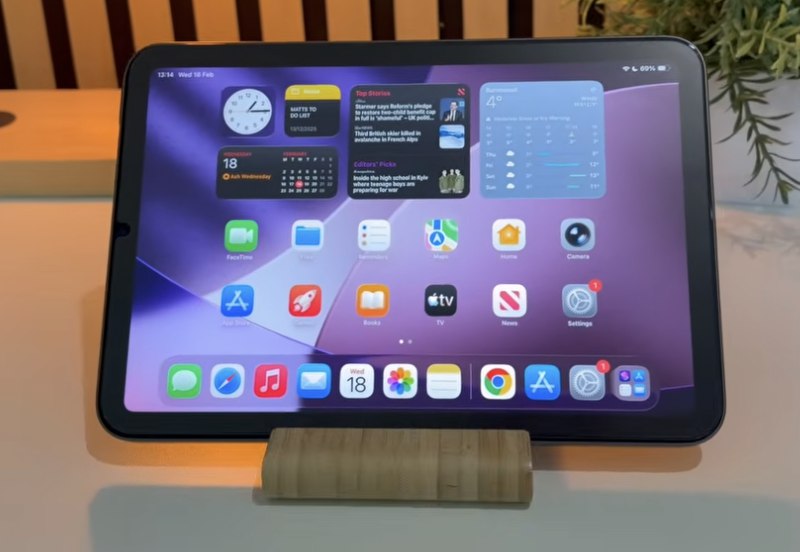
Apple is gearing up for a significant update to its popular iPad mini lineup later this year, with reliable leaks pointing to the long-awaited addition of an OLED display, a more powerful processor and other enhancements that could make the compact tablet even more competitive against larger iPad models and rival devices.
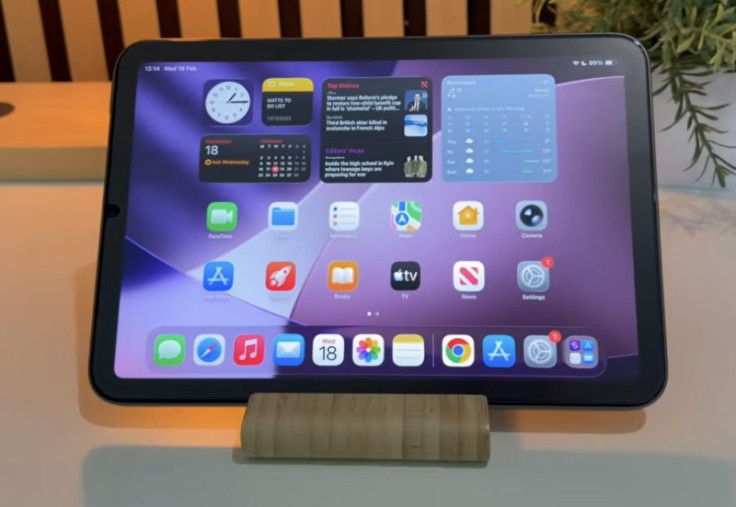
The next-generation iPad mini, often referred to in rumors as the iPad mini 8, is expected to launch in the second half of 2026 — most likely September or October — according to multiple supply chain reports and analysts. While Apple has not confirmed any details, the rumors suggest the small but mighty tablet is poised for its biggest overhaul since the 2024 model introduced the A17 Pro chip and full Apple Intelligence support.
Industry watchers say the move to OLED could transform the 8.3-inch device into a premium portable experience, offering deeper blacks, richer colors, higher contrast and potentially improved battery efficiency compared to the current Liquid Retina LCD panel.
OLED Display: The Most Anticipated Upgrade
The standout rumor centers on the display. Several reports indicate Apple plans to equip the new iPad mini with OLED technology, possibly including ProMotion 120Hz refresh rates for smoother scrolling and gaming.
Bloomberg’s Mark Gurman has reported that the iPad mini is likely to be among the next Apple devices to adopt OLED, following the high-end iPad Pro models that debuted the technology in 2024. Korean outlets such as ET News and ZDNET Korea, along with supply chain sources, have suggested mass production of OLED panels for the mini could begin in late 2025, targeting a 2026 release.
Analyst firm Omdia initially projected OLED for the iPad mini in 2027, but more recent leaks have accelerated that timeline to as early as the second half of 2026. Samsung Display is reportedly developing sample panels, with mass production slated for its Cheonan facility. Some speculation even mentions a slight size increase to around 8.5 or 8.7 inches through slimmer bezels, though the overall compact footprint is expected to remain.
“This would be a game-changer for the iPad mini,” said one analyst who follows Apple’s supply chain closely. “The current LCD is good, but OLED would bring it closer to Pro-level visuals in a device you can hold in one hand.”
Additional display rumors include possible tandem OLED layering for brighter output and better power management, similar to techniques used in recent iPad Pro models. ProMotion support remains unconfirmed but frequently appears in enthusiast discussions and YouTube leak roundups.
Powerful New Chip and Performance Boost
Under the hood, the iPad mini 8 is rumored to feature either the A19 Pro or even an A20 Pro chip. Code references discovered in Apple software last year pointed to an A19 Pro variant for a device codenamed J510 or J511, which aligns with the next mini.
Some tipsters suggest Apple could go further with an A20 Pro, the same advanced processor expected in future iPhone models fabricated on TSMC’s 2nm process. This would deliver substantial gains in CPU and GPU performance, making the mini suitable for more demanding tasks like video editing, gaming and on-device AI features.
RAM is expected to increase as well. The current iPad mini 7 already boasts 8GB, sufficient for Apple Intelligence, but reports point to 8GB or more in the successor to support future software capabilities. Connectivity upgrades could include a newer modem for improved 5G speeds and Wi-Fi 7 support via an N1 chip.
Battery life is another area of speculation. OLED’s efficiency advantages, combined with potential chassis redesigns, might allow for similar or better endurance despite any performance bump. Rumors have also floated ideas like a “vibrating chassis” speaker system for improved audio without traditional grilles, and even enhanced water resistance.
Design: Familiar Form With Subtle Refinements
Most leaks suggest the overall design will stay close to the current model — thin, lightweight and highly portable with Touch ID in the power button rather than Face ID. The single rear camera and landscape-oriented selfie camera are likely to carry over, though minor tweaks to the aluminum unibody could appear.
Apple has shown restraint with the mini’s industrial design in recent years, focusing instead on internal upgrades. If bezels shrink for a marginally larger screen, the device could feel more modern without losing its signature one-handed usability.
Storage options are expected to start at 128GB, matching the current base model, with higher tiers up to 512GB or more. Pricing rumors are scarce, but analysts anticipate the starting point to remain around $499, though a premium OLED panel could push entry-level configs slightly higher.
Release Timeline and Market Context
Apple typically unveils new iPads in the fall, often alongside or shortly after iPhone events. With the iPad mini 7 having launched in October 2024, a roughly two-year cycle would place the successor in fall 2026 — consistent with historical patterns for this product line, which does not receive annual refreshes like the iPhone.
Some reports mention the possibility of the new mini arriving alongside an updated iPad Air that could also gain OLED. However, the base iPad and higher-end Pro models are on different timelines, with the next major Pro redesign not expected until 2027.
The timing comes as competition in the compact tablet space heats up. Android rivals continue to offer foldable or larger-screen options, while consumers weigh the iPad mini against the more powerful but bulkier iPad Air and MacBook Air for on-the-go productivity.
Apple Intelligence features, introduced on the current mini, are expected to expand with iPadOS 26 or later, benefiting from the rumored faster chip. Enhanced Apple Pencil support and potential new accessories could round out the package.
Will It Be Worth the Wait?
For owners of the iPad mini 7, the decision to upgrade will depend on how compelling the OLED and performance jumps prove. Early adopters who purchased the 2024 model for its A17 Pro chip and doubled base storage may find the current device still capable for most tasks in 2026.
Yet for readers, note-takers, travelers and casual gamers who crave better visuals and future-proofing, the rumored 2026 model sounds enticing. “If OLED and 120Hz make it in, this could feel like a whole new category of mini tablet,” one tech commentator noted in a recent video analysis.
Supply chain activity already hints at preparation. Samsung and LG are positioned to supply the OLED panels, and component testing appears underway.
Apple has a history of underpromising and overdelivering on hardware, so final specs could differ. The company is notoriously tight-lipped, often letting leaks build anticipation before official announcements.
As spring 2026 progresses, more concrete details may emerge from developers, coders and factory sources. For now, the iPad mini 8 remains one of the most discussed upcoming Apple products, with enthusiasts eagerly tracking every supply chain whisper.
Whether the rumors hold or Apple surprises with additional features, the compact tablet’s next chapter appears set to elevate its status from convenient sidekick to a more versatile everyday powerhouse.


Betterware stock gains 62% after InvestingPro Fair Value call

Ben Johns comes over to the right side to hit a dink shot against Anna Bright and Hayden Patriquine in the 2026 PPA Carvana Mesa Cup finals match of the Pro Mixed Doubles Division at Arizona Athletic Grounds on February 22, 2026 in Mesa, Arizona.
Bruce Yeung | Getty Images
Pickleball Inc., the new parent company of Major League Pickleball and the PPA Tour, said Friday it has raised a record $225 million in new investment, as the paddle sport continues its rapid growth trajectory.
The latest investment comes from Apollo Global Management’s newly created sports fund, Apollo Sports Capital, and Dundon Capital Partners, owned by billionaire Tom Dundon. Dundon is an owner of the Portland Trail Blazers NBA team and the Carolina Hurricanes NHL team and was an early investor in pickleball.
The fresh funds bring the total investment in Pickleball Inc. to $315 million, as investors continue to look at emerging sports as a place to park their money. The raise values Pickleball Inc. at $750 million, according to a person familiar with the matter, who asked to remain unnamed because they were not authorized to speak publicly about the company’s valuation.
The deal also includes rolling up several pickleball assets under the Pickleball Inc. umbrella, creating what the company called the largest pickleball ecosystem to date.
Pickleball Inc. will take on a portfolio of pickleball assets previously owned by Dundon, including Pickleball Central, a leading site for pickleball equipment founded in 2006. The portfolio also includes PickleballTournaments.com, software that powers thousands of tournaments across all levels of play, as well as Just Courts, a pickleball court installer.
Pickleball Inc.’s newly merged business verticals combined generated over $140 million in 2025 revenue, the company said.
In a release, MLP and PPA Tour CEO Connor Pardoe called the new investment a “seismic day” for pickleball’s rapidly growing business at all levels.
“This investment allows us to fully integrate the sport into one cohesive ecosystem – uniting professional pickleball, consumer goods, technology, and media under a single, unified platform,” Pardoe said.
Dundon and the Pardoe family will remain majority shareholders in the business after the investment.
Pickleball has exploded in popularity in recent years, with more than 24 million U.S. players participating in 2025, making it the fastest growing sport in the country over the last three years, according to the Sports & Fitness Industry Association’s Annual Report.
At the professional level, the MLP and PPA Tour have seen major growth with a combined $30 million in sponsorship revenue in 2025 and $60 million in combined top line revenue for 2025, according to the United Pickleball Association, which operates both leagues. The MLP and PPA Tour are projecting $74 million in combined revenue in 2026.
The new capital for Pickleball Inc. will be used to further integrate the pickleball business at all levels of play and create a streamlined pickleball ecosystem, the company said.
“This capital raise will allow us to expand our focus into new and scalable opportunities like content, media, and the development of infrastructure to support our fast growing events,” MLP Commissioner Samin Odhwani said in a statement. “The continued and dynamic year-over-year growth data has proven without doubt that pickleball is no longer an emerging sport, and is instead quickly becoming the next tier one sport in America.”
Business
Gold falls around 2% in one week as skyrocketing oil prices fuel inflation worries. What lies ahead?

Spot gold prices were steady at around $4,620 per ounce on Friday morning. US gold futures for June delivery rose 0.1% to $4,632.70. This came after gold prices dropped to a one-month low on Wednesday.
Notably, MCX is closed in the morning session today on account of Maharashtra Day. Earlier on Thursday, gold futures with June expiry on the exchange closed around Rs 114 higher at Rs 1,51,225 per 10 grams. The contracts with August expiry also closed marginally higher at Rs 1,54,390 per 10 grams.
Iran-US war
After hitting as high as $126 per barrel on Thursday, oil prices cooled down but continued to remain elevated above $110 per barrel today. This comes as the war between Iran and the US entered its third month, with the Strait of Hormuz continuing to remain choked and keeping investors on edge.

US President Donald Trump said that the military blockade of Iranian ports could last for months. A report by Reuters, citing officials, hinted that the US President may be planning a series of fresh military strikes to compel Iran to negotiate an end to the conflict.
Iran, meanwhile, said that it would respond with “long and painful strikes” on US positions if Washington renewed its strikes. Iranian Foreign Ministry spokesman Esmaeil Baghaei stated that it was not reasonable to expect quick results from US talks, according to the official IRNA news agency. “Expecting to reach a result in a short time, regardless of who the mediator is, in my opinion, is not very realistic,” he was quoted as saying.
What lies ahead?
“In the near term, gold is expected to remain volatile and range-bound, with support near Rs 1,48,000 and resistance around Rs 1,52,000,” said Jateen Trivedi, VP Research Analyst of Commodity and Currency at LKP Securities.
Also read: FPIs pull out Rs 60,847 cr in Apr; outflows hit Rs 1.92 lakh cr in first four months of 2026
Gold prices fell as oil prices rose, suggesting that the market is fearing increasing inflation and a potential central bank reaction more than rising growth risks, said Carsten Menke, Head Next Generation Research at Julius Baer. “Such short-term and sometimes sharp swings typically mirror moves in the paper market, not the physical market. They are the result of position squaring by speculative futures traders and trend followers, not safe-haven seekers,” he said.
Deutsche Bank, Germany’s leading international investment bank, recently predicted that the bullion’s share in global central bank reserves could increase to 40%, up from around 30% currently. Based on this scenario, the bank’s calculations indicate that gold prices could climb to $8,000 an ounce within five years, implying nearly 80% upside from current levels.
(With inputs from agencies)
(Disclaimer: Recommendations, suggestions, views and opinions given by the experts are their own. These do not represent the views of The Economic Times)
Eton Pharmaceuticals relaunches Hemangeol with specialty pharmacy
Claire Tyrrell speaks with Ella Loneragan about a charity preparing to open WA’s first school for traumatised youth.
U.S. Treasury Secretary Scott Bessent breaks down Operation Economic Fury and the pressure against the Iranian regime on ‘Kudlow.’
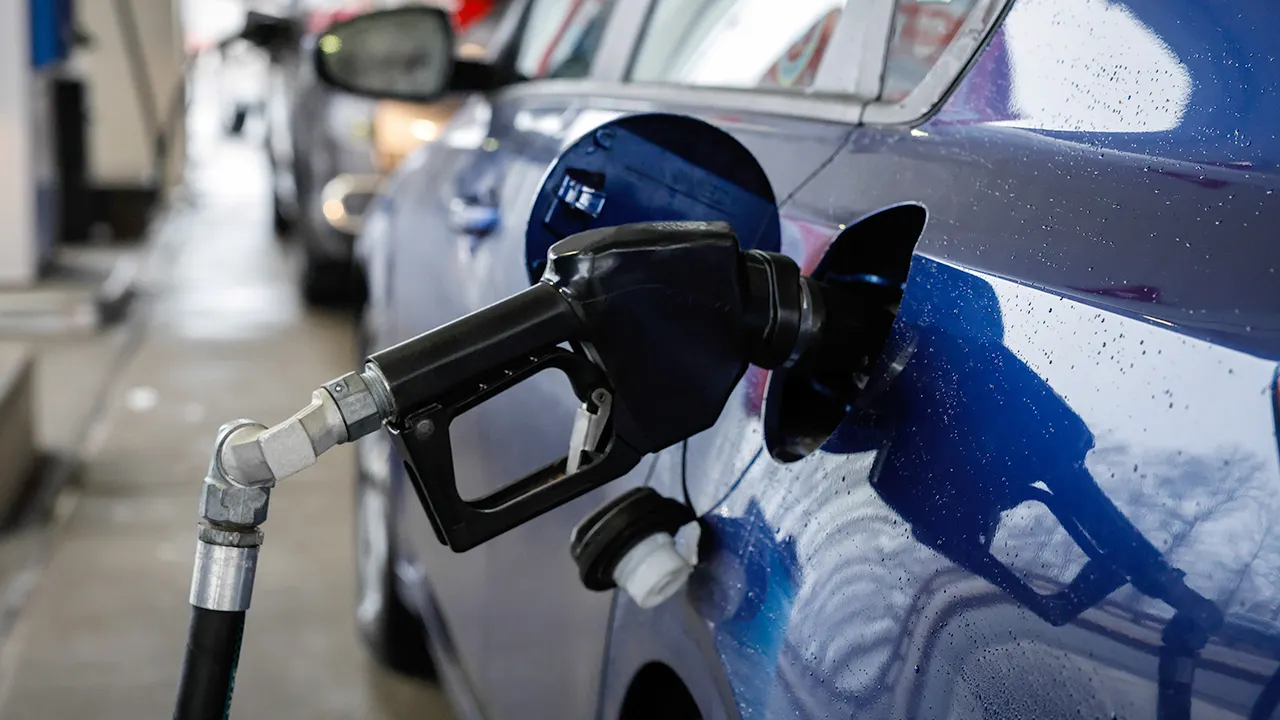
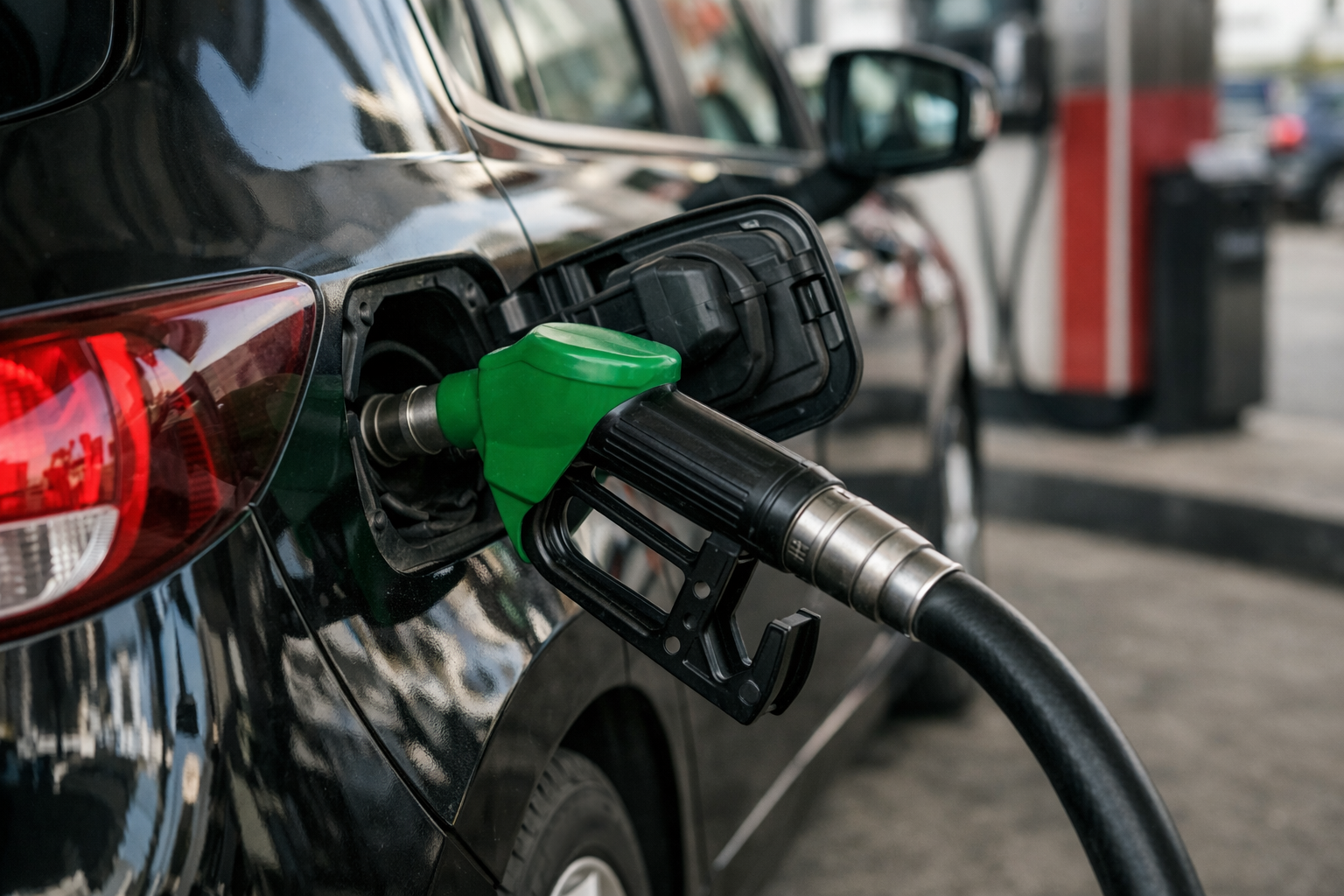
The AAA national average price for regular gas soared more than nine cents higher in one day, surging from $4.30 as of Thursday to $4.392 as of Friday.
The current figure is a whopping $0.333 higher than the week-ago average price of $4.059, according to AAA. The year-ago average for regular gas was just $3.187.
However, the highest recorded AAA national average regular gas price was $5.016 on June 14, 2022, which was during President Joe Biden’s White House tenure.
GAS PRICES SOAR TO HIGHEST POINT SO FAR DURING UNSETTLED CONFLICT WITH IRAN
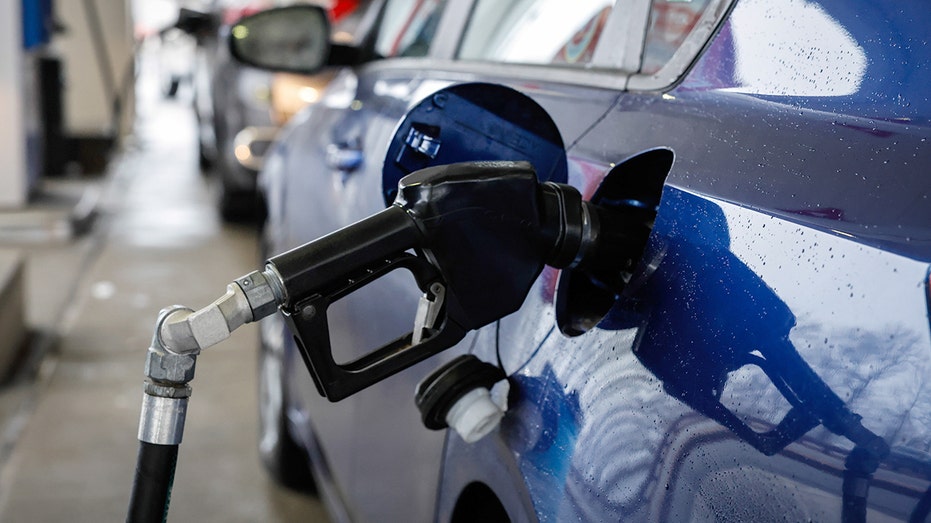
A fuel pump is connected to a car at a Mobil station in Englewood Cliffs, New Jersey, on Thursday, March 5, 2026. (Kena Betancur/Bloomberg via Getty Images / Getty Images)
Fox News Digital reached out to the White House for comment on Friday.
The U.S. conflict with Iran remains unresolved, and the Trump administration has been enforcing a blockade on Iranian ports.
Oil prices are currently elevated. Brent Crude international futures were over $111 a barrel and West Texas Intermediate U.S. futures over $105 per barrel during early trading, Barron’s reported on Friday morning.
US SHRIMPERS FACE ‘DOUBLE WHAMMY’ FROM SOARING FUEL COSTS, TARIFF REFUNDS
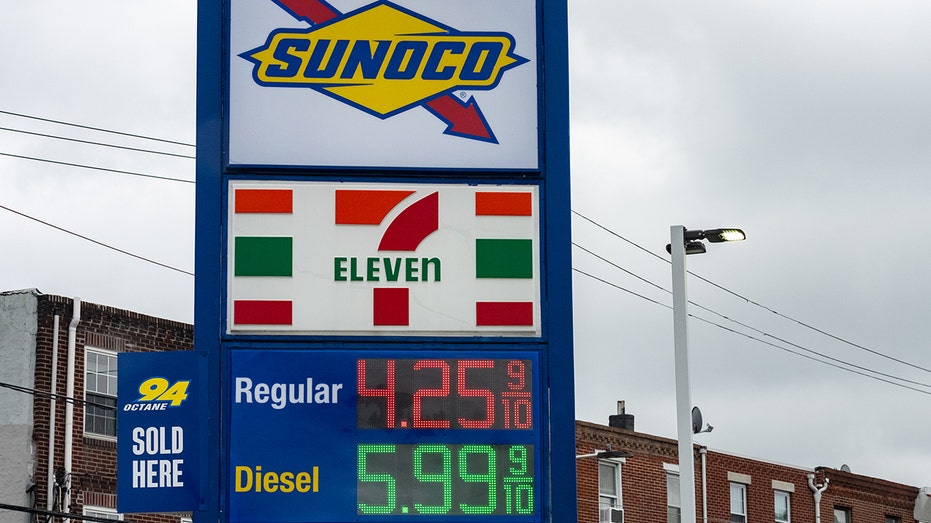
Gas prices rise in Philadelphia, Pennsylvania, on April 30, 2026, as the United States and Iran have not yet reached a deal. (Nathan Morris/NurPhoto via Getty Images / Getty Images)
“Right now there are 41 tankers with 69 million barrels of oil that the Iranian regime can’t sell. That’s an estimated $6 billion-plus from which Iran’s leadership cannot financially benefit. The blockade is highly effective and U.S. forces remain fully committed to total enforcement,” U.S. Central Command Commander Adm. Brad Cooper declared in a statement issued on Wednesday.
“Minnesotans are paying the price for this administration’s war with Iran as gas prices rise and squeeze families, small businesses, and farmers across our state,” U.S. Sen. Amy Klobuchar, D-Minn., who is running for governor, declared in a Thursday post on X.
Democratic Sen. Mark Kelly of Arizona declared in a Thursday post on X, “The Trump Administration’s war in Iran is driving up gas prices and sending summer travel costs through the roof. I’m focused on lowering costs and putting money back in Americans’ pockets so that taking your family on a road trip doesn’t break the bank.”
US ECONOMIC GROWTH BOUNCES BACK, AS AI BUILDOUT AND CONSUMER SPENDING FUEL FIRST QUARTER
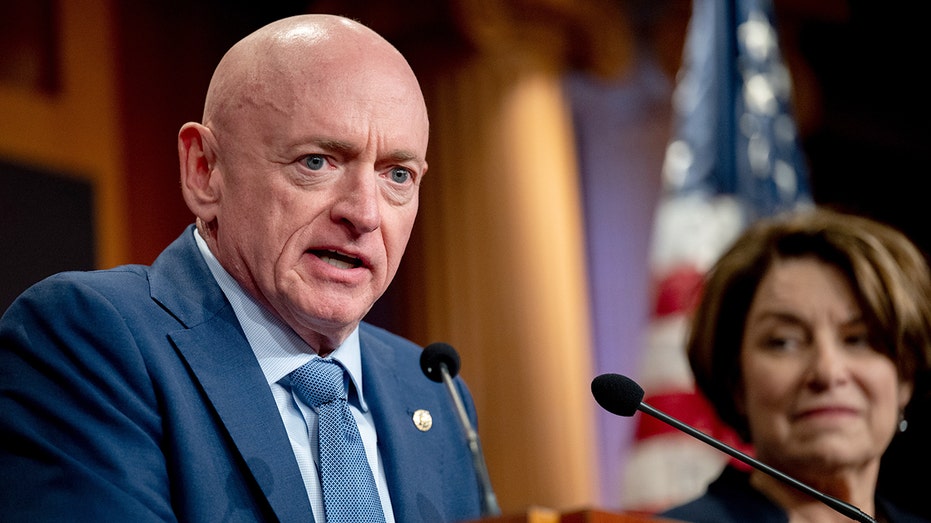
Sen. Mark Kelly, D-Ariz., left, and Sen. Amy Klobuchar, D-Minn., during a news conference ahead of the State of the Union address at the U.S. Capitol in Washington, D.C., on Tuesday, Feb. 24, 2026. (Daniel Heuer/Bloomberg via Getty Images / Getty Images)
CLICK HERE TO GET FOX BUSINESS ON THE GO
“Gas prices just hit a wartime high, inflation is up, & Americans are feeling the pinch of higher prices. But Senate Republicans for the SIXTH time blocked a resolution requiring Congress to approve further military action against Iran. Their silence is an endorsement of the President’s questionable strategy,” Sen. Dick Durbin, D-Ill., declared in a Thursday post on X.
The “Senate Republicans” X account fired back at Durbin’s comments, declaring, “Under Biden and Democrats, gas prices were above $5 per gallon and inflation was over 9% — much higher than today. Senator Durbin didn’t care about inflation then, and he doesn’t now. He’s just looking for any excuse to side with the terrorist Iranian regime over our military.”
Brazil’s Central Bank Cuts Rates, Leaves Next Move Unclear Citing War
NEW YORK — World oil prices climbed sharply on Friday as the ongoing blockade of the Strait of Hormuz continued to threaten global supply, with Brent crude hovering near $111 per barrel and West Texas Intermediate trading around $105 amid heightened geopolitical tensions.

The benchmark prices reflect persistent worries over disrupted shipments through the critical waterway, which normally carries about one-fifth of global oil. The latest surge comes as diplomatic efforts to reopen the strait have stalled, pushing energy markets to four-year highs and raising concerns about inflation, economic growth and energy security worldwide.
As of early May 1, 2026, Brent crude futures for June delivery rose to approximately $111 per barrel, up more than 1% in early trading. WTI crude for May settlement traded near $105, reflecting similar upward pressure. Both benchmarks have gained over 80% year-to-date, driven largely by Middle East supply risks that have overshadowed demand concerns.
The crisis stems from the broader 2026 Iran conflict. Iranian forces effectively closed the strait in late February following U.S. and Israeli strikes, with limited commercial traffic resuming only under strict conditions. U.S. naval actions, including a blockade on Iranian ports, have further complicated shipping. Only a handful of vessels from select nations have passed recently, far below normal volumes.
Analysts at S&P Global and others warn that prolonged disruption could keep prices elevated throughout the year. While U.S. production and strategic reserves provide some buffer for American consumers, Asia and Europe face steeper challenges as alternative routes increase costs and insurance premiums skyrocket for tankers near the region.
OPEC+ has responded with modest production increases, but members’ spare capacity is limited and internal dynamics complicate coordinated action. The UAE’s recent exit from the group adds another layer of uncertainty to supply forecasts. U.S. shale producers have ramped up output, but logistical constraints and investor caution limit rapid scaling.
The price spike is already rippling through economies. Gasoline prices in the United States have climbed toward $4 per gallon in many areas, while European energy costs surge amid reliance on imported LNG and refined products. Developing nations in Asia, heavily dependent on Middle East crude, face the greatest strain, with some governments considering subsidies or strategic releases to ease consumer pain.
Energy experts note the Strait of Hormuz’s unique vulnerability. The narrow passage between Iran and Oman is difficult to secure fully, and even threats of attacks or mines deter shipping companies. Recent incidents involving seized vessels and reported strikes have heightened risk premiums, with insurers demanding significantly higher rates or refusing coverage altogether.
U.S. officials, including President Donald Trump, have pushed for a maritime coalition to guarantee safe passage, but allied support has been mixed. Diplomatic talks mediated by Pakistan continue, yet mutual distrust between Washington and Tehran has slowed progress. Iran has demanded the end of the U.S. blockade before fully reopening the strait, while the administration insists on verifiable security guarantees.
Market participants are watching several upcoming catalysts. The next OPEC+ meeting, weekly U.S. inventory reports and any breakthroughs in Iran negotiations could swing prices dramatically. Technical analysts point to resistance levels near $115 for Brent, with potential for further upside if disruptions worsen.
Longer-term forecasts vary. Some banks project Brent averaging around $100-$110 for the year if the strait reopens gradually, while others warn of sustained premiums if tensions persist. Demand destruction from high prices could eventually cap gains, but current supply fears dominate trading.
For consumers and businesses, the volatility creates planning challenges. Airlines have raised fares, manufacturers face higher input costs and households brace for increased heating and transportation expenses. Governments are exploring diversification strategies, including accelerated renewable energy investments and strategic partnerships with alternative suppliers.
The crisis also highlights the geopolitics of energy. The Strait of Hormuz has long been a flashpoint, but the current conflict has brought its importance into sharper focus. Nations dependent on Gulf oil are reassessing vulnerabilities, while producers weigh the balance between revenue and security risks.
As trading continues, oil prices reflect both immediate supply threats and broader uncertainty. Whether the latest spike proves temporary or the start of a new era of elevated energy costs depends on diplomatic outcomes in the coming weeks. For now, the world watches the narrow strait with heightened anxiety, knowing that events there can reshape economies far beyond the Persian Gulf.
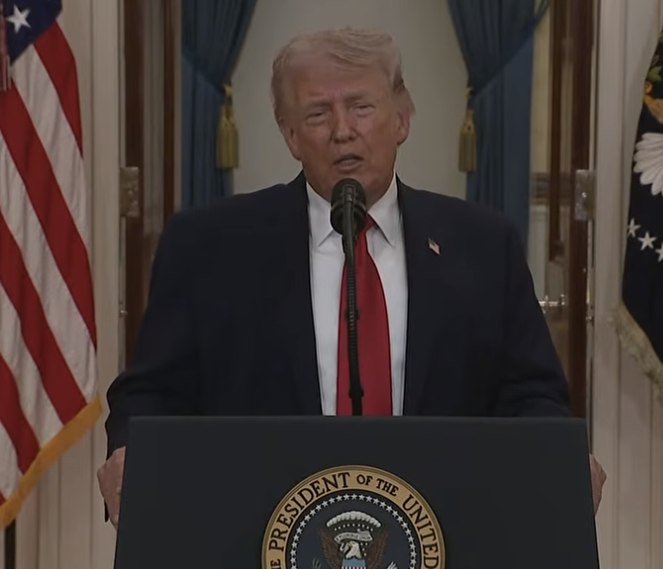
WASHINGTON — President Donald Trump on Friday lauded retired Navy Commander Kirk Lippold for his “smart and insightful” comments on Iran during a Fox News interview with Jesse Watters, continuing his administration’s hardline stance on the ongoing Middle East crisis that has disrupted global oil flows through the Strait of Hormuz.
In a Truth Social post, Trump wrote: “Great job by highly respected Navy Commander Kirk Lippold in interview with Jesse Watters on FoxNews. Very smart and insightful concerning Iran, and more. Thank you, Commander!” The message, posted as tensions remain high over the waterway’s closure, underscores the president’s reliance on military voices to shape public messaging amid diplomatic and military challenges.
Lippold, a former commander of the USS Cole who survived the 2000 terrorist attack in Yemen, has emerged as a frequent commentator on Iran policy. His appearance on Watters’ show focused on strategic options for dealing with Tehran, including naval presence in the region and pressure on Iranian leadership to reopen the critical oil chokepoint. The interview aired as crude prices hovered above $110 per barrel for Brent, reflecting supply fears from the Hormuz disruptions.
Trump’s endorsement of Lippold aligns with his broader approach to foreign policy, emphasizing strength, experienced military perspectives and skepticism of prolonged negotiations without clear results. The president has repeatedly used his Truth Social platform to amplify allies and pressure adversaries, often bypassing traditional media channels.
The Hormuz crisis, now in its second month, has dominated Trump’s recent communications. He has alternated between threats of escalated action and calls for Iran to “open the f—in’ strait,” as seen in earlier profane posts. The blockade has slashed oil exports, driven up global energy costs and complicated efforts to stabilize the region following U.S. and Israeli strikes earlier this year.
White House officials say the administration is pursuing a dual track of military readiness and diplomacy. U.S. naval forces remain deployed to deter further Iranian aggression, while backchannel talks mediated by third parties continue. Trump has credited his “maximum pressure” campaign with forcing Iran to the table, though critics argue the approach has escalated risks to global shipping and energy markets.
Lippold’s background gives his commentary particular weight. As commander of the USS Cole during the al-Qaida suicide bombing that killed 17 sailors, he has firsthand experience with asymmetric threats in the region. In the Watters interview, he reportedly discussed lessons from past confrontations with Iran and advocated for robust deterrence to protect freedom of navigation.
Trump’s post quickly circulated on other platforms, drawing praise from supporters who view Lippold as a voice of experience. Conservative commentators highlighted the contrast with what they called “weak” responses from previous administrations. Democrats and some foreign policy analysts cautioned that bellicose rhetoric could complicate de-escalation efforts.
The president’s social media activity remains a central element of his communication strategy in the second term. With fewer restrictions than during his first presidency, Trump posts frequently on Truth Social, often late at night or early morning. The platform serves as both a megaphone for policy announcements and a tool for real-time reaction to news events.
Energy markets reacted to the continued uncertainty. Brent crude traded near $111 per barrel Friday morning, while WTI hovered around $105. Analysts say any breakthrough on Hormuz could ease prices quickly, but prolonged closure risks broader economic fallout, including higher inflation and slowed global growth.
The administration has pointed to domestic production gains and strategic reserve releases as buffers for American consumers. However, allies in Europe and Asia have urged faster resolution, citing their greater dependence on Gulf oil. OPEC+ members have adjusted output modestly, but spare capacity limits their ability to fully offset disruptions.
Lippold’s interview and Trump’s endorsement come as Congress debates supplemental funding for military operations in the region. Bipartisan support exists for protecting shipping lanes, though divisions remain over long-term strategy toward Iran. Some lawmakers call for sustained pressure, while others push for renewed diplomatic engagement.
Foreign policy experts note the complexity of the current moment. Iran’s economy has suffered under sanctions and isolation, yet hardliners in Tehran have shown resilience. The U.S. faces the challenge of balancing deterrence with avoiding a wider conflict that could draw in other powers. Trump’s public praise for military figures like Lippold reinforces his image as a president who listens to warriors.
As the situation evolves, Trump’s Truth Social activity will likely remain a key indicator of administration thinking. His latest post praising Lippold signals continued focus on strength and experienced counsel in dealing with Iran. Whether this approach yields a quick reopening of the strait or leads to further escalation remains the central question for markets, allies and global energy security.
For now, the president continues leveraging his platform to shape the narrative, highlight military voices and project resolve. The world watches closely as diplomatic and military tracks proceed in parallel, with oil prices serving as a daily barometer of success or failure.

Manus, an AI startup once celebrated as a success, is now becoming a cautionary example for Chinese entrepreneurs following regulatory actions by Beijing. The company’s decline highlights the increased scrutiny and challenges faced by tech firms in China, emphasizing the importance of regulatory compliance and resilience in a changing environment.
Manus Islands has become a cautionary tale as China recently blocked Meta’s proposed acquisition, highlighting the complex geopolitics surrounding technology deals. The move signals increasing governmental scrutiny over foreign investments, especially in sensitive regions. Meta’s attempt to expand its influence in the Asia-Pacific was met with resistance from Chinese authorities, reflecting broader concerns about data security and national interests.
This decision underscores the growing influence of China’s regulatory framework, which often emphasizes security and sovereignty over technological expansion. The blockage serves as a warning to global tech giants about the hurdles and uncertainties faced when operating in China. It also illustrates the rising geopolitical tensions that can hinder international business ambitions, especially in strategic sectors like technology.
Ultimately, the Manus case reminds companies to navigate carefully within China’s regulatory landscape. It emphasizes the importance of understanding local policies and maintaining flexibility in global expansion strategies. As China’s grip on tech investments tightens, foreign firms must adapt or face significant setbacks.
Other People are Reading
Betterware stock gains 62% after InvestingPro Fair Value call

JPX Plans Crypto ETF Listing Path as Japan Reviews Digital Asset Law

This Sensitive Skin-Friendly Sunscreen Doesn’t Cause Breakouts

Manchester United reach agreement with Casemiro over contract clause amid transfer speculation

US brings back mandatory military draft registration

Steven Gerrard disagrees with Gary Neville over ‘shock’ Chelsea and Arsenal claim | Football

Shiyas Kareem is facing serious allegations of financial fraud | celebrity news | kerala police

The Other Side of the Bitcoin: Crypto & Corruption w/Ben McKenzie | The Weekly Show with Jon Stewart
![Qkyou - MONEY ft O-Neang [VIDEO LYRICS]](https://wordupnews.com/wp-content/uploads/2026/02/1770711855_maxresdefault-80x80.jpg)
Qkyou – MONEY ft O-Neang [VIDEO LYRICS]
-

 Tech4 days ago
Register Renaming | Hackaday
-

 Fashion7 days ago
Weekend Open Thread – Corporette.com
-
 Crypto World6 days ago
Hyperliquid $HYPE Rally Builds Momentum as AI Sector Enters Prove-It Phase
-

 Politics4 days ago
Drax board avoid their own AGM, accused of greenwashing & environmental racism
-

 Tech4 days ago
Images of Samsung’s rumored smart glasses have leaked
-
 Sports5 days ago
IPL 2026: Ruturaj Gaikwad registers slowest fifty of the season, enters all-time unwanted list | Cricket News
-

 Tech4 days ago
Why Blue Badges Disappeared From Toyota Hybrids
-

 NewsBeat5 days ago
LK Bennett closes all stores after entering administration
-

 Fashion3 days ago
Kylie Jenner’s KHY Enters a New Era with ‘Born in LA’
-
 Entertainment6 days ago
Mariah Carey Slams Deposition Claims In Brother’s Lawsuit
-

 Business3 days ago
Most Commercial Energy Audits Miss the Real Losses
-

 Business4 days ago
(VIDEO) Charlize Theron Climbs Times Square Billboard to Promote New Netflix Thriller ‘Apex’
-
 Business7 days ago
Jeanine Pirro announces closure of Federal Reserve building cost probe
-

 Tech5 days ago
Microsoft to roll out Entra passkeys on Windows in late April
-

 Crypto World3 days ago
CFTC’s AI will review U.S. crypto registration applications, chairman tells CoinDesk
-
 Crypto World7 days ago
Nvidia (NVDA) Stock Jumps 5% as Intel Earnings Ignite Semiconductor Rally
-

 Tech5 days ago
OpenAI’s Sam Altman apologizes for not reporting ChatGPT account of Tumbler Ridge suspect to police
-

 Business2 days ago
Barclay Brothers Avoid Bankruptcy: HSBC Drops High Court Petitions After IVA Deal
-

 Tech7 days ago
Apple’s Next CEO Has a Different Battle Ahead
-

 Tech3 days ago
Get Ready for More Brain-Scanning Consumer Gadgets
You must be logged in to post a comment Login