
Business
New Zealand’s a2 Milk posts 44% fall in full-year profit




Yes. Corporate subscriptions are available for teams and organisations, with discounted rates as user numbers increase. Pricing starts from $1,625 + GST per user.
Get in touch
to discuss the right option for your organisation.
Business News subscriptions are used by executives, investors, consultants and professionals who need to stay informed and make better decisions about the WA market. When you subscribe you’ll get
- Unlimited access to WA’s most trusted business journalism
- Data & Insights — detailed profiles of WA companies, people, projects and deals
- MyBN — a personalised feed based on the companies, people and sectors you follow
- Special publications and industry reports
- Daily and weekly email newsletters
Data & Insights is a research tool built specifically for the WA market. It draws on more than 30 years of Business News reporting, updated regularly to reflect what’s happening now. Use it to:
- Look up detailed profiles of WA companies, including financials, directors and ownership
- Find decision-makers and track their career movements
- Research live and completed projects across WA industries
- Monitor deals, appointments and market activity
- Access industry rankings and league tables
Data & Insights is updated daily by our dedicated research team, which uses the latest announcements, ASX filings and editorial coverage to keep our person, company, list and project records up to date.
Business News welcome all opportunities to make our dataset accurate, complete and current, so if you have an update request, please email the team at
general@businessnews.com.au, and we’d be happy to assist.
MyBN
is part of every subscription. It’s your personalised view of Business News. You can follow the companies, people, sectors and projects that matter to you, and get a news feed and alerts tailored to your interests. You can save articles to read later and retain only what you need.
Only subscribers have full access to all content on the Business News website.
If staying informed about the WA economy is part of your job, and/or you’re looking for networking opportunities in WA, Business News is built for you.
Business News subscribers are:
- Executives and directors tracking competitors, clients and market movements
- Investors and advisers researching companies, deals and industry trends
- Consultants and professionals staying across sectors relevant to their clients
- Business owners looking for leads, context and market intelligence
Most Business News publications cover national or global markets. Business News is focused entirely on Western Australia, which means the journalism, the data and the intelligence are all built around WA companies, people and projects — not adapted from a national feed. Data & Insights, included with every subscription, combines more than 30 years of WA-specific editorial research with live business data. There’s no comparable product for the WA market.
The Morning Digest Email provides a comprehensive wrap of the major headlines, relevant to WA business, and includes with a snapshot of the overnight news covering oil, gold and ASX-listed companies.
The Afternoon Wrap Email focuses on the news covered by our team of journalists during the course of the working day, including exclusive stories and analysis, all of which relates to WA business and the local economy.
The BN Weekender Email contains a wrap of the Business News from the week that was, highlighting the top stories in each area of WA business.
Sign up for free.
We’re happy to help.
Get in touch
and our team will come back to you.
Business
Computershare Limited 2026 Q4 – Results – Earnings Call Presentation (OTCMKTS:CMSQY) 2026-08-16


Seeking Alpha’s transcripts team is responsible for the development of all of our transcript-related projects. We currently publish thousands of quarterly earnings calls per quarter on our site and are continuing to grow and expand our coverage. The purpose of this profile is to allow us to share with our readers new transcript-related developments. Thanks, SA Transcripts Team
Skye Bioscience, Inc. (SKYE) Skye Bioscience, Inc. – M&A Call – Slideshow
Business
Avino Silver & Gold Mines Ltd. 2026 Q2 – Results – Earnings Call Presentation (TSX:ASM:CA) 2026-08-16
Seeking Alpha’s transcripts team is responsible for the development of all of our transcript-related projects. We currently publish thousands of quarterly earnings calls per quarter on our site and are continuing to grow and expand our coverage. The purpose of this profile is to allow us to share with our readers new transcript-related developments. Thanks, SA Transcripts Team

Earnings call transcript: Freightways posts strong H2 2026 results as fuel costs bite

The White House has accused more than 40 countries, including Canada, Mexico, Japan and EU member states, of helping China evade US tariffs by rerouting exports through lower‑tariff jurisdictions — a practice it labels “The Great Transshipment Scam” . The report estimates that such transshipment covers about $60bn in trade, with other US and private analyses placing the range between $40bn and $303bn .
Peter Navarro, head of the White House trade office, said China has developed “extremely sophisticated” methods to bypass duties since tariffs were first imposed in 2018, and that recent tariff differentials have encouraged exporters to continue rerouting goods . He argued the practice deprives the US Treasury of tens of billions and undermines American workers .
US customs authorities are deploying an AI‑powered system, “Detective Border,” to better detect mislabelled imports and enforce tariff rules, a move the administration says could boost revenue and create jobs . Washington is also adding anti‑transshipment provisions to new trade agreements and working to tighten rules of origin standards.
The White House Office of Trade and Manufacturing Policy has published a report accusing more than 40 countries, including Thailand, of facilitating a “global Shadow Transshipment Network” that allows Chinese exporters to dodge US tariffs. The report, titled “The Great Transshipment Scam” and released on August 13, puts Thailand in the same tier as Brazil, Indonesia, Malaysia, Türkiye and Vietnam, and warns that goods found to have been illegally rerouted through these economies could face an additional 40 percent duty.
Three tiers, one accusation
The report divides the 40-plus named economies into three tiers based on scale and depth of integration with Chinese supply chains. Tier 1 covers major US-bound export platforms where the White House says transshipment risk sits inside broad, otherwise legitimate trade flows: Canada, the European Union, India, Israel, Japan and Taiwan. Tier 2, where Thailand sits alongside Brazil, Indonesia, Malaysia, Türkiye and Vietnam, is described as economies with significant transshipment volumes and deeper integration into China-linked production, sourcing and logistics networks. Tier 3 groups smaller, “opportunistic” economies such as Singapore, Cambodia, Laos, Myanmar and the Philippines, which the report says offer specific advantages, including low-cost labour, free zones and bonded warehousing, that make them attractive for rerouting even if current volumes are lower.
Being named does not, on its own, amount to a finding of wrongdoing against every exporter in a listed country. The report itself acknowledges that a shift in trade patterns is not proof of illegal transshipment by itself.
How the scheme is said to work
According to the White House, Chinese-made goods are relabeled, repackaged, reinvoiced or given minor processing in a third country before being shipped to the United States under an altered country of origin, allowing them to clear customs at a lower tariff rate than would apply to goods declared as Chinese. White House trade adviser Peter Navarro offered a concrete illustration: Chinese components shipped to a country such as Vietnam, assembled into a recliner, then declared as Vietnamese-made on export to the US.
The administration puts the annual cost of the practice at between $19 billion and $26 billion in lost federal tariff revenue, alongside estimates of $113 billion to $150 billion in reduced US GDP and roughly 450,000 American jobs. A separate Commerce Department estimate cited in the report put transshipment through Mexico, India and Vietnam alone at about $67 billion in goods last year, equivalent to roughly $28 billion in foregone tariffs.
To catch it, the administration says it is developing an AI-enabled system, dubbed “Detective Border,” that would let Customs and Border Protection cross-reference shipping routes, product data and ownership records to flag suspicious shipments before they enter the country.
Where this lands for Thailand
Thailand’s Tier 2 placement comes as the kingdom is already running its own, separately motivated crackdown on foreign nominee arrangements. The Department of Business Development’s enforcement drive under Order No. 2/2026 has targeted companies using Thai proxies to work around the Foreign Business Act, with billions of baht in assets seized in cases involving Chinese-linked firms.
The transshipment report adds a second, US-driven layer of scrutiny on top of that domestic one, arriving just as Thailand is courting a fresh wave of Chinese manufacturing investment rather than trying to slow it down. Chinese firms accounted for the largest number of newly approved businesses in Thailand in the first half of 2026, and the government has fast-tracked Board of Investment and Eastern Economic Corridor approvals for a new humanoid-robot component cluster built by five Chinese companies. That combination, an EEC actively recruiting Chinese manufacturers on one hand and a Washington report questioning the origin of goods moving through the same corridor on the other, is likely to sharpen the compliance burden facing exporters trying to demonstrate genuine Thai value-add rather than pass-through assembly.
Washington has already set a template for how Tier 2 exposure can translate into policy. A 2025 framework agreement with Vietnam imposed a 40 percent tariff specifically on goods judged to have been transshipped, twice the rate applied to ordinary Vietnamese-origin exports. Thai exporters and their US-based buyers now face the prospect of a similar carve-out, with customs documentation and supply-chain traceability becoming a live commercial issue rather than a paperwork formality.
Beijing’s response, and what happens next
A representative for the Chinese Embassy in Washington told reporters China would act to safeguard its rights and interests, and accused the US of economic coercion that disrupts global industrial and supply chains. The report does not announce immediate new tariffs or country-specific action; it functions as a policy document and enforcement signal rather than a rule change. “The message to the world is simple,” the report states. “The age of untraceable illegal transshipment is over.”
The report lands about a month ahead of an expected summit between President Donald Trump and Chinese President Xi Jinping, adding trade-enforcement friction to a bilateral relationship already under strain over tariffs and export controls.
Other People are Reading

Franchising has become one of the most resilient business models in the modern economy, offering entrepreneurs a proven path to ownership while allowing established brands to expand without shouldering all the operational risk themselves.
According to the International Franchise Association, franchise businesses in the United States generate more than $800 billion in economic output annually and support nearly 8.5 million jobs. These numbers reflect more than just popularity; they point to a structural advantage that franchising holds over independent startups, many of which struggle to survive their first five years. Understanding why franchises succeed at such a high rate requires looking at the systems, support structures, and strategic decisions that separate thriving franchise networks from those that falter.
The Power of a Proven Business Model
One of the primary reasons franchises succeed where independent businesses often fail is the existence of a tested, repeatable business model. When an entrepreneur buys into a franchise, they are not starting from scratch. They are stepping into a system that has already been refined through trial and error across multiple locations. This reduces the guesswork that plagues so many first-time business owners. Data from the U.S. Bureau of Labor Statistics suggests that roughly 20 percent of new businesses fail within their first year, while franchise failure rates tend to run significantly lower, largely because the operational playbook has already been stress-tested in real markets.
This is particularly true in service-based industries where consistency and training matter enormously. Looking for companies that specialize in coaching franchises? Finding a mentor with relevant experience in your industry can be a smart entry point, since these organizations often combine an established curriculum with ongoing mentorship for franchisees themselves, effectively coaching the coaches. That layered support system tends to produce more confident operators who can replicate success rather than improvise it.
Brand Recognition Drives Early Momentum
Launching an independent business often means spending years building brand awareness from nothing. Franchises skip much of that uphill climb because they inherit instant recognition from the parent company. Customers already trust the name, understand what to expect, and are more willing to spend money on day one rather than waiting to see if a new, unknown business proves itself. This built-in trust translates directly into faster revenue generation, which is critical for covering early overhead costs like rent, staffing, and equipment.
Marketing studies consistently show that consumers are more likely to choose a familiar brand over an unfamiliar one when both are priced similarly, especially in competitive sectors like food service, fitness, and personal development. Franchise systems capitalize on this psychological tendency by pooling marketing resources across hundreds or even thousands of locations, allowing for national advertising campaigns that a single independent business could never afford on its own.
Training and Operational Support
Beyond brand equity, franchises succeed because of the structured training programs that accompany the initial investment. Most reputable franchisors require new owners to complete onboarding programs covering everything from inventory management to customer service protocols before they ever open their doors. This training extends well past the launch phase, with many franchisors offering continuous education, updated operational manuals, and access to regional support teams who troubleshoot problems as they arise.
This ongoing relationship is a significant differentiator from independent entrepreneurship, where business owners often have to learn everything through costly trial and error. Franchise support teams help owners avoid common pitfalls, whether that involves staffing shortages, supply chain disruptions, or shifts in local market demand. The result is a business owner who feels less isolated and more equipped to make informed decisions.
Access to Established Supply Chains
Independent business owners frequently spend considerable time and money securing reliable suppliers, negotiating rates, and managing logistics. Franchise owners typically inherit supplier relationships that the parent company has already vetted and negotiated at scale. This translates into lower per-unit costs for inventory, equipment, and materials, since franchisors can negotiate bulk pricing that individual franchisees benefit from collectively. These cost efficiencies often make the difference between a thin profit margin and a genuinely sustainable one.
Financial Backing and Lender Confidence
Securing a business loan is notoriously difficult for first-time entrepreneurs without a track record. Franchises, however, benefit from lender familiarity with established brands. Banks and financial institutions often view franchise loans as lower risk because the business model has already demonstrated success across multiple locations, making underwriting more straightforward. Some franchisors even maintain in-house financing programs or partnerships with lenders specifically designed to help new franchisees secure capital more easily than they might through traditional channels.
Adapting to Local Markets While Maintaining Brand Standards
Successful franchises also know how to strike a balance between standardization and localization. While core branding, pricing structures, and quality standards remain consistent across locations, many franchisors allow individual owners some flexibility to adjust offerings based on local demand, cultural preferences, or seasonal trends. This adaptability helps franchises stay relevant in diverse markets without diluting the brand identity that made them successful in the first place.
Final Word
Franchise success is rarely accidental. It stems from a combination of proven systems, brand trust, structured training, negotiated supply chains, and easier access to capital. For aspiring business owners who want the independence of entrepreneurship without navigating every challenge alone, franchising offers a compelling middle ground. As the industry continues to grow across sectors ranging from food service to personal coaching, the fundamentals that drive franchise success remain rooted in one central idea: reducing risk through repeatable, well-supported systems.
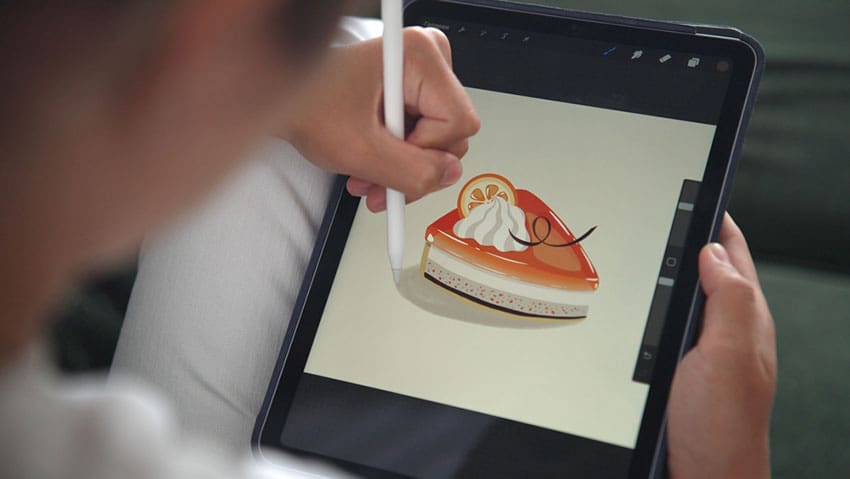
Pricing art can feel strangely personal. You can spend ten hours on a piece, love the result, then stare at the price box thinking, “What would someone actually pay for this?”
The answer should not come from confidence alone—or from copying the cheapest artist in your feed. A useful price has to cover your costs, pay you for your work, make sense in your market, and still feel reasonable to the customer you want to reach.
Start With the Price You Cannot Afford to Go Below
Before checking what competitors charge, calculate your floor to find the point where a sale still makes financial sense.
For original art, list direct costs such as canvas or paper, paint, ink, framing, specialty materials, and outsourced work. Add the value of your time. Depending on how you sell, you may also need to account for packaging, payment processing, marketplace or gallery commissions, and other selling expenses.
A useful starting formula is:
Materials + labor + selling/production costs + profit = retail price
This is not a universal formula for valuing art. Two pieces that cost the same to create can have very different market values. Think of it as a safety net that helps you spot a price that looks attractive but leaves you earning almost nothing.
For prints and merchandise, calculate the cost per item instead. A low price is not useful if production and selling costs consume nearly all the revenue.
Use the Market as a Reality Check
Now look outward.
Search for artists whose work is genuinely comparable to yours in medium, size, product type, audience, career stage, and presentation. You are not looking for a number to copy. You are trying to find the range in which your own price makes sense.
| Pricing factor | What to check |
| Materials and production | What does each piece or product actually cost to make? |
| Comparable artists | What are similar creators charging for similar work? |
| Market demand | Which formats, sizes, or products attract consistent interest? |
| Customer expectations | What price range suits your audience and the buying occasion? |
If your price sits well above comparable work, buyers will usually need a clear reason—perhaps premium materials, hand-finishing, a limited edition, or an established collector base.
Give Yourself Room to Test
Artiststore custom holographic keychain design interface showing product options, pricing, and preview.
Your first price does not have to become your forever price.
This is where print-on-demand can make experimentation less risky. On artiststore.com, artists can set their own selling prices and margins, while products are produced on demand rather than requiring inventory upfront. That means you can adjust a retail price and observe customer response without first buying stock at the old price.
Keep tests simple. Change one thing at a time. If you lower a price while also replacing the product photo and launching a promotion, you will not know which change influenced sales.
- Pro tip: Give each price enough time to collect useful feedback. A quiet Tuesday is not proof that your artwork is overpriced!
Price for the Customer You Actually Have
Artists often worry that a price feels too high. The better question is whether it feels too high for the customer they actually want to reach.
A collector considering an original painting has different expectations from a convention visitor choosing a sticker or small print. A signed limited-edition print may support a higher price than an open-edition poster because availability is intentionally restricted.
That is why one artwork can sometimes support several price points in different formats. The original may sit at the top, limited or signed prints in the middle, and smaller merchandise can offer a more accessible way to own the design.
This does not mean you need to make everything cheap. It means the price should fit the product and the person buying it.
Know When to Raise Your Prices
A higher price is easier to support when something meaningful has changed. That might include:
- Higher material or production costs.
- Stronger, more consistent demand.
- Better materials or added hand-finishing.
- A growing sales history.
- Moving from open editions to limited releases.
Avoid raising prices simply because another artist went viral with a higher number. Their audience, costs, demand, and career stage may be completely different.
Customers cannot see the spreadsheet behind your price. If premium materials, limited quantities, or extra finishing add value, communicate those details clearly on the product page.
Final Thoughts
There is no secret “correct” price that works for every piece of art.
Start with your real costs, compare your work with the right part of the market, and pay attention to what customers expect from each format. Test thoughtfully, keep your pricing logic consistent, and adjust as your costs, audience, and sales history change.
The goal is not to be the cheapest artist in the room. It is to reach a price where the customer understands the value, the sale is worthwhile for you, and you can afford to keep creating the work they came to you for.

New AI financing backstops allows compute buyers more control over business models

Every successful business depends on smooth daily operations. From processing customer payments to tracking inventory and managing sales, having the right technology can save valuable time while improving the customer experience.
That’s why many businesses are investing in modern card readers and POS systems that simplify payment acceptance and business management.
Consumers increasingly expect businesses to accept multiple payment methods, including contactless cards, mobile wallets, and traditional debit or credit cards. Businesses that offer these options create faster checkout experiences and reduce friction during purchases, helping customers leave with a positive impression.
A POS system is much more than a payment terminal. It acts as the operational hub for many businesses, bringing together payment processing, product management, inventory tracking, sales reporting, and employee management into one solution. This centralized approach reduces administrative work while improving overall efficiency.
For small businesses and growing retailers, choosing technology that’s easy to learn is equally important. Complicated systems often require extensive training and can slow down operations during busy periods. Modern POS platforms are designed with intuitive interfaces, allowing staff to quickly process sales and serve customers with confidence.
SumUp has become a popular choice for businesses looking for reliable payment technology without unnecessary complexity. Its range of card readers and POS products helps merchants accept payments securely while supporting day-to-day business operations. Whether operating from a physical storefront or attending local events, businesses can benefit from flexible payment solutions.
One reason businesses appreciate SumUp is its portable card reader options. Compact devices allow merchants to accept payments wherever customers are, making them ideal for market stalls, delivery businesses, mobile services, cafés, and independent retailers. This flexibility supports sales opportunities beyond traditional checkout counters.
As UK businesses prepare for the continued rollout of Making Tax Digital (MTD), choosing the right payment and POS solution has become even more important. MTD requires businesses to keep digital records and submit tax information electronically to HMRC. SumUp is fully compliant with MTD and integrates with the system, helping merchants manage their records more efficiently without the need for additional software or complicated workflows. By using an MTD-ready solution, businesses can stay ahead of the upcoming requirements while reducing administrative hassle and focusing on serving their customers.
A complete POS solution also helps businesses stay organized behind the scenes. Inventory management tools make it easier to monitor stock levels, while digital sales reports provide valuable insights into purchasing trends. Business owners can quickly identify popular products, monitor revenue, and make informed decisions about future inventory planning.
Customer service also benefits from modern payment technology. Faster transactions reduce waiting times, digital receipts provide added convenience, and reliable payment processing helps build customer confidence. A smooth checkout experience often encourages repeat visits and strengthens customer relationships over time.
As businesses expand, scalable payment systems become increasingly valuable. Whether adding new staff members, introducing additional product lines, or opening another location, flexible POS solutions can support growth without requiring businesses to completely replace their existing payment infrastructure.
Security remains another important consideration. Trusted payment providers use secure payment technologies and industry-standard protection measures to safeguard sensitive payment information throughout every transaction. This helps businesses maintain customer trust while meeting payment security expectations.
Today’s competitive marketplace requires businesses to balance efficiency, customer satisfaction, and operational control. Investing in dependable payment technology allows merchants to simplify daily tasks while providing customers with convenient payment options.
For businesses seeking practical payment solutions, SumUp offers a combination of user-friendly card readers and integrated POS products designed to support everyday operations. By helping merchants accept payments efficiently, manage sales, and monitor business performance, SumUp enables businesses to spend less time on administration and more time delivering excellent customer experiences and pursuing long-term growth.
OpenAI’s new ChatGPT feature logs your keystrokes and stores them in plain text

XRP It’s Official! WATCH before TOMORROW (urgent prediction)

Single dose malaria drug could simplify treatment worldwide in medical breakthrough


-

 Fashion2 days ago
Weekend Open Thread: Ann Taylor
-
 NewsBeat5 days ago
Communication cards help banking customers access services or report scams
-
 Business6 days ago
Oil Price Today (August 11): Crude oil rises to $88 after Trump’s compensation demand dents Hormuz opening. Here’s why
-

 Crypto World6 days ago
Revolut wins French banking licence, creates second EU banking hub
-
 Crypto World6 days ago
Why Did Nvidia Stock Fall on Monday Despite a $500 Billion Wall Street AI Deal?
-
 Sports3 days ago
This U.S. Amateur is a glimpse into golf’s future in more ways than you think
-

 Sports2 days ago
Birmingham 2026: Day 6 Timetable for Irish Athletes
-
 NewsBeat2 days ago
Myanmar says over 300,000 Rohingya refugees verified for repatriation as exodus enters ninth year
-

 Politics1 day ago
SEQ Code: The Three Letter Boarding Pass Code That Could Give You The Worst Seat
-
 Crypto World6 days ago
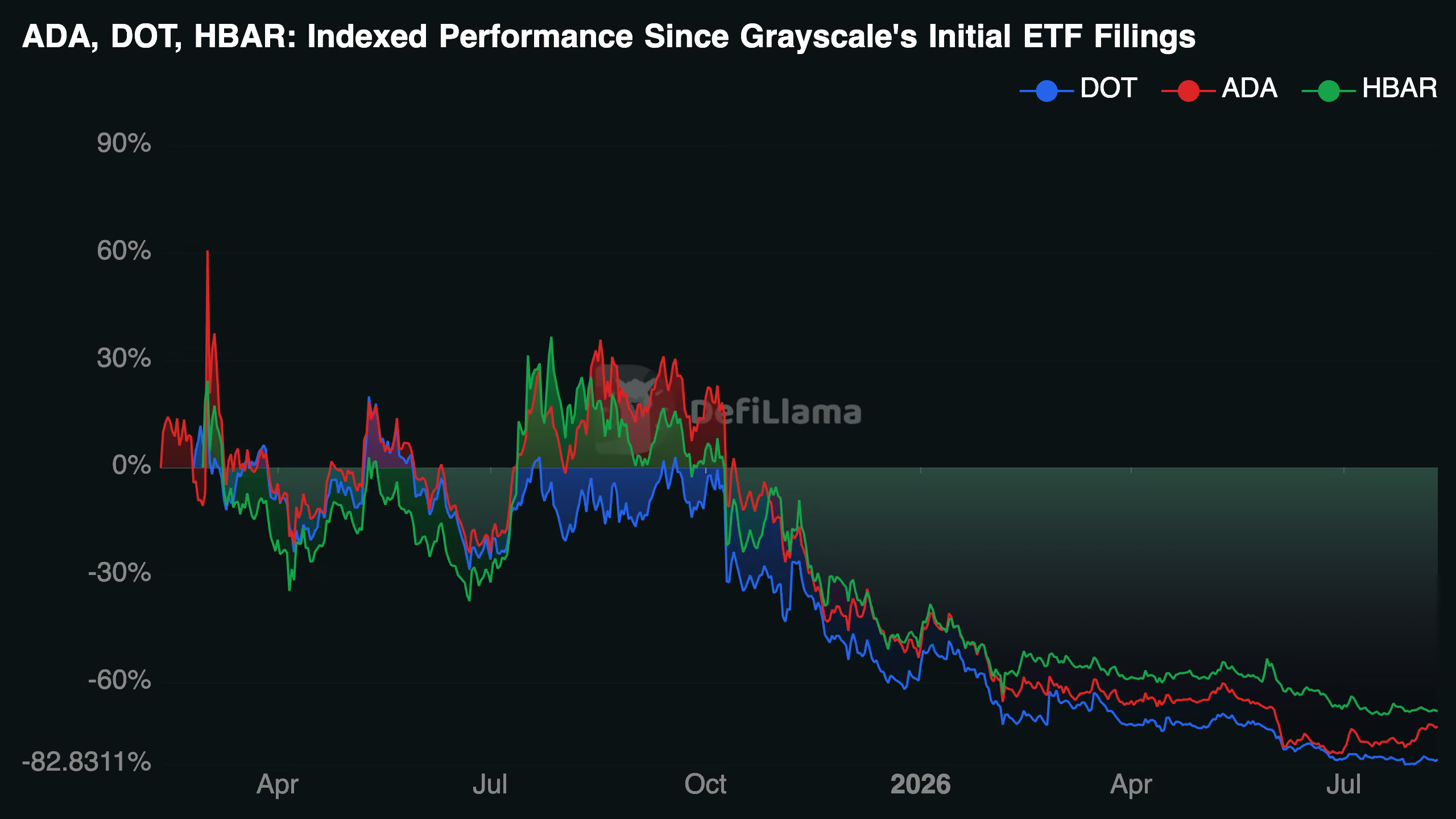
Grayscale quietly drops Cardano, Polkadot and Hedera ETF plans
-
 Entertainment5 days ago
Keke Palmer Subtly Hints At Sean Evans Drama With Cryptic Post
-

 Fashion6 days ago
Can You Wear Double Cloth Gauze Clothing To Your Office?
-
 Entertainment6 days ago
57 Years Later, the Best Sitcom Ever Made Still Deserves a Reboot
-

 Fashion5 days ago
Claire Life: Kicking Off MVAAFF With the C Suite Luncheon Featuring Phylicia Rashad, Letoya Luckett, and More!
-

 Tech5 days ago
Zoom Screen-Sharing Bug Let People Fully Take Over Other Devices On A Call
-

 Politics5 days ago
In the Chris Kaba case, the police watchdog capitulated to the mob
-
 Crypto World6 days ago
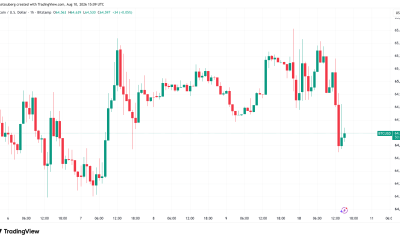
Hormuz Nerves Cost Bitcoin $65,000 Mark Despite Solid Institutional Flows
-

 Crypto World6 days ago
Bitcoin's BIP Editors Remove Luke Dashjr Two Days After BIP-110 Fork Stalled
-

 Fashion6 days ago
How to Mix Diamond Rings With Gold & Silver Jewelry
-

 Business6 days ago
(VIDEO) Emirates Unveils 2.4-Meter Arsenal Crest Sculpture Built From Recycled A380 And Boeing 777 Jet Parts
You must be logged in to post a comment Login