Sony’s PlayStation 6 remains on the horizon, with industry insiders pointing to a potential late 2027 or 2028 launch following the successful lifecycle of the PlayStation 5 and its Pro variant. While official details are scarce, leaks, analyst reports and hardware trends paint an exciting picture of what gamers can expect. As anticipation builds, here are 10 compelling reasons why the PS6 could prove irresistible upon release, blending technological leaps with enhanced experiences that build on PlayStation’s legacy.
10 Reasons PS6 Will Be Must-Buy at Launch: Next-Gen Power, Features and Gaming Future
First, raw performance gains promise a generational leap. Rumors suggest an AMD Zen 6 CPU paired with RDNA 5 graphics architecture, potentially delivering 4K at 120 frames per second or higher with advanced ray tracing. This addresses current-gen bottlenecks, enabling more immersive worlds, detailed environments and smoother gameplay in demanding titles. Developers could push boundaries in open-world adventures or fast-paced multiplayer without compromises, making the PS6 a powerhouse for next-generation visuals.
Second, expanded memory and storage will eliminate loading screens and limitations. Leaks mention up to 32GB of GDDR7 RAM and larger SSDs, possibly starting at 2TB. Faster data throughput supports seamless streaming of assets, massive textures and complex simulations. Gamers tired of managing storage or waiting for installs will appreciate the freedom to download expansive libraries without hesitation.
Third, backward compatibility stands as a major draw. Sony has prioritized preserving libraries across generations, and the PS6 is expected to support PS5, PS4 and potentially earlier titles through enhanced emulation. Players could revisit thousands of games with improved performance, higher resolutions and faster load times — a value proposition that extends the life of existing collections while easing the transition.
Fourth, AI integration could revolutionize gameplay and visuals. Features like advanced upscaling — building on PlayStation Spectral Super Resolution — might use neural processing for real-time enhancements, delivering sharper images even on 8K displays or when targeting high frame rates. AI-driven NPCs, dynamic difficulty and procedural content generation could create more responsive, personalized experiences that evolve with player behavior.
Advertisement
Fifth, a potential hybrid or modular design appeals to diverse users. Reports hint at multiple SKUs, including a standard model, a more affordable “S” or Lite version, and possibly a dedicated handheld companion. This flexibility caters to budget-conscious gamers, portability seekers and enthusiasts wanting premium power, broadening accessibility without sacrificing core capabilities.
Sixth, energy efficiency and sustainability improvements align with modern expectations. Next-gen hardware is likely to deliver higher performance per watt, reducing electricity costs and heat output. Sony’s focus on eco-friendly materials and recyclable components could attract environmentally conscious consumers while supporting longer play sessions without excessive power draw.
Seventh, enhanced controller technology will elevate immersion. Building on DualSense haptic feedback and adaptive triggers, the PS6 controller may introduce finer tactile responses, longer battery life, improved ergonomics and new sensors. These advancements make every gunshot, footstep or environmental interaction feel more realistic, deepening emotional connections to games.
Eighth, seamless cloud and streaming features promise flexibility. Deeper integration with cloud gaming services allows playing high-fidelity titles on various devices, from handhelds to smart TVs. Remote play enhancements and cross-platform progression ensure gamers never miss a moment, whether at home or on the go.
Advertisement
Ninth, a robust exclusive lineup is anticipated at launch. Sony’s first-party studios, including those behind “God of War,” “Horizon,” “Spider-Man” and “The Last of Us,” are poised to deliver flagship titles optimized for new hardware. These blockbuster experiences, combined with third-party support, provide immediate reasons to upgrade rather than waiting for price drops.
Tenth, long-term value through ecosystem continuity. PlayStation Network, trophies, friends lists and digital libraries carry forward, creating a seamless upgrade path. Subscription services like PlayStation Plus could expand with PS6-specific perks, such as enhanced cloud saves or early access trials, ensuring ongoing engagement and community connection.
Pricing speculation centers around $500 for the standard model, with variations for different configurations. While memory shortages have fueled delay rumors — potentially pushing launch to 2028 or 2029 — Sony’s track record suggests a polished product that justifies the wait. Analysts note the PS5’s extended lifecycle provides breathing room for mature development tools and mature game designs.
Industry watchers highlight the PS6’s potential to address current-gen pain points while introducing innovations. Faster SSDs, superior ray tracing and AI assistance could make games feel truly next-generation. For families, the console’s multimedia capabilities — 8K video playback, advanced audio and entertainment apps — position it as a complete home hub.
Advertisement
Critics caution that success depends on execution. Supply chain stability, competitive pricing against rivals and a strong software slate will determine adoption. Yet enthusiasm remains high, with online discussions focusing on desired features like improved voice chat, customizable UI and deeper social integration.
As development continues behind closed doors, leaks from reliable sources fuel speculation. AMD partnerships suggest custom silicon tailored for gaming demands, balancing power with efficiency. Handheld rumors add excitement for portable PlayStation experiences that sync with the home console.
Gamers weighing an upgrade from PS5 or earlier systems will find compelling incentives in the PS6’s capabilities. Whether chasing graphical fidelity, narrative depth or multiplayer thrills, the console promises to elevate the hobby. Early adopters often enjoy premium features and community prestige before broader availability.
Sony’s history of innovation — from DualShock to DualSense — suggests the PS6 will introduce meaningful advancements rather than incremental updates. The combination of hardware muscle, software excellence and ecosystem strength positions it as a worthwhile investment for dedicated players.
Advertisement
In summary, the PlayStation 6 represents more than a hardware refresh. It embodies the future of interactive entertainment, with performance, accessibility and creativity at its core. As launch approaches, these 10 reasons underscore why many will line up to experience the next chapter in PlayStation’s storied history.
RCEP, covering 30% of global GDP, is Asia’s strongest institutional shield against trade disruptions like Middle East conflicts affecting energy supplies. Practical reforms to this 15-member South-east Asian trade pact could enhance its effectiveness and regional benefits.
Key Points
• Middle East shipping disruptions severely impact Asia, which receives 84% of Hormuz Strait crude oil and 83% of LNG, driving up energy costs and inflation across the region.
• Asia lacks military solutions to such supply shocks, making institutional frameworks its primary defense against economic vulnerabilities.
• The Regional Comprehensive Economic Partnership (RCEP), a 15-member trade pact representing 30% of global GDP, serves as Asia’s strongest protective instrument.
Advertisement
The Vulnerability of Asia to Global Trade Disruptions
Asia’s heavy dependence on Middle Eastern energy makes it acutely vulnerable to geopolitical shocks. In 2024, 84 per cent of crude oil and condensate and 83 per cent of liquefied natural gas passing through the Strait of Hormuz were destined for Asian markets. Any conflict or disruption in that critical waterway translates almost immediately into higher energy costs, rising freight rates, and renewed inflationary pressures across the region, exposing the fragility of Asia’s supply chains and its limited ability to absorb external economic disruptions independently.
RCEP as Asia’s Strongest Institutional Shield
Since Asia lacks military capacity to counter such geopolitical shocks, its most reliable line of defense is institutional and economic rather than strategic. The Regional Comprehensive Economic Partnership (RCEP), a 15-member trade agreement, represents the region’s most powerful collective instrument. Accounting for approximately 30 per cent of global GDP, RCEP offers a framework through which member nations can coordinate responses, stabilize trade flows, and reinforce economic resilience. Strengthening this pact is therefore not merely a matter of trade policy but a critical element of regional security and stability in an increasingly volatile global environment.
Practical Reforms to Maximize RCEP’s Effectiveness
To fully realize RCEP’s protective potential, practical and meaningful reforms are essential. The agreement must evolve beyond its current structure to become more effective, inclusive, and operationally responsive to modern trade challenges. Streamlining regulations, reducing non-tariff barriers, and improving implementation mechanisms would significantly enhance the pact’s real-world impact. Member nations must commit to deeper cooperation and treat RCEP not as a static document but as a living framework capable of adapting to disruptions — whether from energy crises, shipping bottlenecks, or broader geopolitical realignments — ensuring the region’s long-term economic sovereignty and collective prosperity.
ADT Inc. (ADT) Q1 2026 Earnings Call April 30, 2026 10:00 AM EDT
Company Participants
Elizabeth Landers – Investor Relations Officer James DeVries – CEO, President & Chairman Jeffrey Likosar – CFO and President of Corporate Development & Transformation Omar Khan – Executive VP & Chief Business Officer
Advertisement
Conference Call Participants
Ashish Sabadra – RBC Capital Markets, Research Division Keen Fai Tong – Goldman Sachs Group, Inc., Research Division Peter Christiansen – Citigroup Inc., Research Division John Ronan Kennedy – Barclays Bank PLC, Research Division Gregory Parrish – Morgan Stanley, Research Division
Advertisement
Presentation
Operator
Hello, and welcome to ADT First Quarter 2026 Earnings Conference Call. Please note that this call is being recorded. [Operator Instructions]
I will now hand the call over to Elizabeth Landers, Vice President of Investor Relations. Please go ahead.
Advertisement
Elizabeth Landers Investor Relations Officer
Good morning, and thank you for joining us today to discuss ADT’s first quarter 2026 results. Speaking on today’s call are Jim DeVries, our Chairman, President and Chief Executive Officer; and Jeff Likosar, our Chief Financial Officer. Following their prepared remarks, we’ll be joined by Omar Khan, our Chief Business Officer, and we’ll open the call for analyst questions. Earlier today, we issued a press release and an earnings presentation summarizing our results. Both are available on the Investor Relations section of our website.
During today’s call, we’ll reference certain non-GAAP financial measures. Reconciliation to the most comparable GAAP measures can be found in the earnings presentation. Unless otherwise noted, all financials and metrics discussed reflect continuing operations. Our remarks today also include forward-looking statements made under the safe harbor provisions of the Private Securities Litigation Reform Act. These statements are subject to risks and uncertainties that are described in the earnings presentation and in our SEC filings. Actual results may differ materially. Please refer to our SEC filings for more details.
LOS ANGELES — Rita Wilson has opened up about the deeply personal requests she made to husband Tom Hanks during her 2015 breast cancer diagnosis and treatment, offering a rare glimpse into the emotional toll the disease took on their marriage and family while highlighting the couple’s enduring bond through crisis.
The actress and singer, married to Hanks since 1988, was diagnosed with invasive lobular carcinoma after a routine biopsy following an abnormal mammogram. She underwent a double mastectomy and reconstructive surgery, choosing to share her journey publicly to raise awareness. In a recent interview, Wilson recalled asking Hanks for two specific things as she faced uncertainty: to feel profound sadness on her behalf and to remain committed to their life together despite the challenges. “One is that you should be sad for a very, very long time,” she shared.
Wilson’s diagnosis came at a pivotal moment. The couple was promoting Hanks’ film “Bridge of Spies” when she received the news. She described the whirlwind of emotions — shock, fear and determination — that followed. Hanks was her rock, canceling commitments to be by her side. Wilson credits his unwavering support with helping her navigate surgery and recovery, emphasizing how their partnership deepened through adversity.
The requests Wilson made reflected her vulnerability. Asking Hanks to grieve alongside her acknowledged the shared impact of the diagnosis on their family. The second request, though less explicitly detailed in recent comments, centered on maintaining their life and love amid uncertainty. Wilson has spoken previously about the importance of emotional honesty in marriage during health crises, noting how Hanks’ presence provided strength without diminishing her own resilience.
Advertisement
The couple’s experience resonated widely when Wilson first shared her diagnosis in 2015. Her openness encouraged other women to prioritize screenings and seek early detection. Breast cancer remains one of the most common cancers among women, with survival rates improving significantly through advances in treatment. Wilson’s story highlighted the importance of family support systems in recovery journeys.
Wilson and Hanks have been married for nearly four decades, a Hollywood rarity. They first met on the set of the 1980s sitcom “Bosom Buddies” and reconnected years later. Their relationship has weathered career highs, public scrutiny and now health challenges. Wilson has described Hanks as her best friend and partner, crediting their strong foundation for helping them navigate her cancer battle.
Post-treatment, Wilson embraced a proactive approach to health. She has advocated for genetic testing, regular screenings and lifestyle choices supporting wellness. Her career continued with acting roles, producing and music projects, demonstrating resilience. She has used her platform to destigmatize cancer conversations, emphasizing hope and empowerment.
Hanks has spoken sparingly about the experience, respecting Wilson’s lead in sharing details. The Oscar winner has described the period as one of quiet strength and family unity. The couple’s two sons, Chet and Truman, were teenagers at the time, adding another layer of emotional complexity. Wilson has noted how the family grew closer through the ordeal.
Advertisement
The couple’s story aligns with broader trends in celebrity health advocacy. High-profile diagnoses often spark public awareness campaigns and increased screenings. Organizations like the American Cancer Society report surges in inquiries following announcements by stars like Wilson. Her willingness to discuss the emotional requests made to Hanks humanizes the experience beyond medical statistics.
Wilson’s recovery journey included physical rehabilitation and emotional processing. She has been candid about body image changes after mastectomy and reconstruction, challenging societal beauty standards. Her advocacy extends to supporting research and access to care, particularly for underserved communities. She has participated in fundraisers and awareness events, using her voice for positive impact.
Today, Wilson and Hanks continue sharing their lives with fans through projects and occasional public appearances. Wilson’s music career has flourished, with albums reflecting personal growth and resilience. The couple’s enduring partnership serves as inspiration, demonstrating how love and commitment can sustain through life’s most difficult chapters.
Medical experts praise Wilson’s approach as a model for patients. Open communication with partners, proactive health management and public advocacy can reduce isolation and stigma. Breast cancer treatment has advanced considerably since 2015, with personalized therapies improving outcomes. Wilson’s story remains relevant as a testament to hope and the power of support networks.
Advertisement
As Wilson reflects on that period, her message centers on resilience and gratitude. The heartbreaking requests made to Hanks during her battle underscore the emotional weight of serious illness on relationships. Yet their story ultimately highlights strength found in partnership, family and determination to move forward. Wilson’s openness continues inspiring others facing similar journeys, proving that vulnerability can coexist with power.
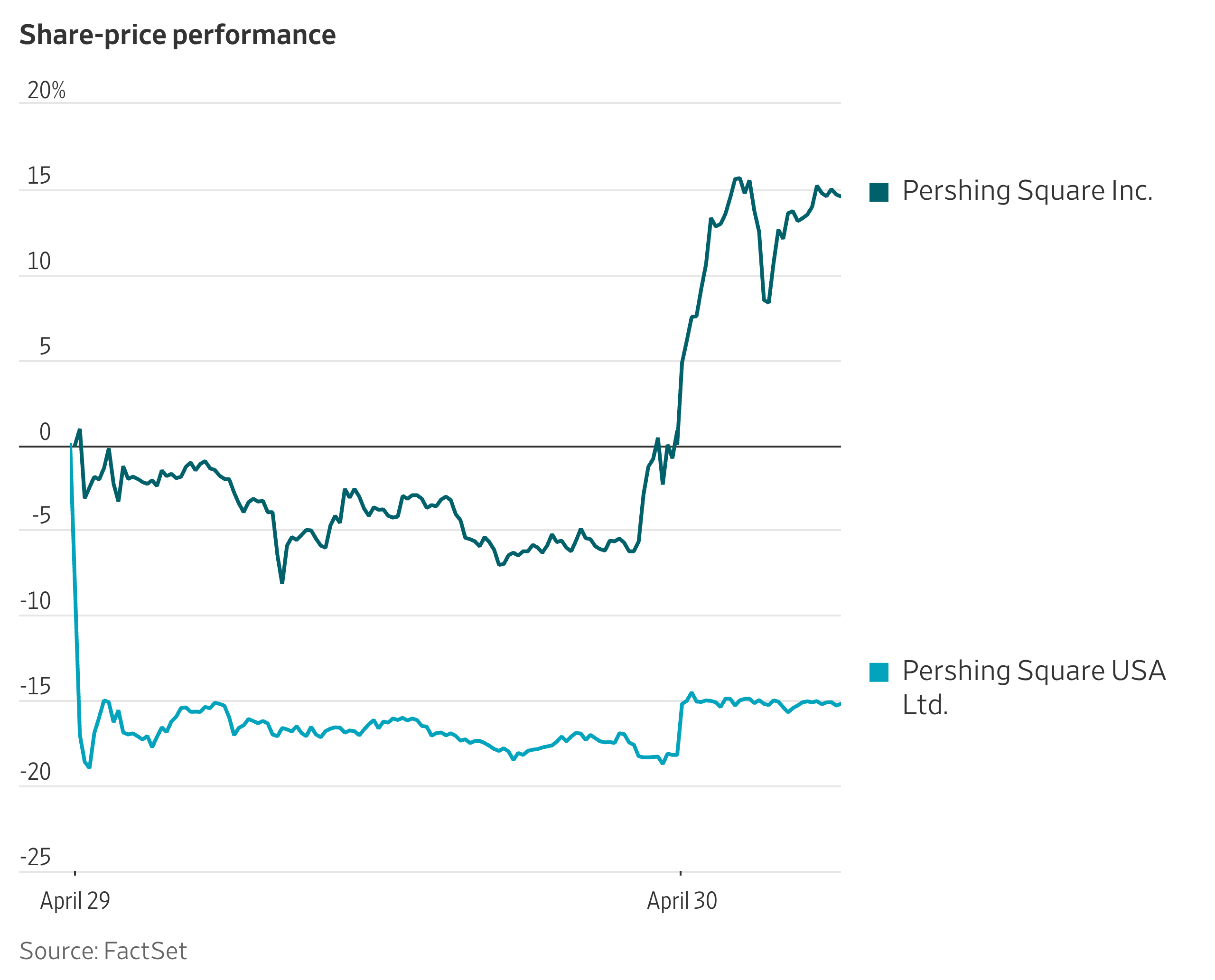
Here’s a look at how Bill Ackman’s newly listed stocks are performing since their public offering earlier this week—his Pershing Square hedge-fund management company (which carries the ticker PS) and his stock-picking fund Pershing Square USA (PSUS):
ENGLEWOOD, Colo. — Shares of Lightwave Logic Inc. skyrocketed more than 18 percent in morning trading Friday, climbing to around $16.19 as investors piled into the small-cap photonics company amid renewed enthusiasm for technologies that could ease the massive power and bandwidth demands of artificial intelligence data centers.
The surge pushed the stock’s market capitalization above $2 billion and came on heavy volume, reflecting broader excitement in AI-related infrastructure plays. Lightwave Logic, which develops proprietary electro-optic polymers designed to enable faster, lower-power optical data transmission, has been riding a wave of optimism tied to its progress integrating its technology into silicon photonics platforms used by major semiconductor foundries.
The company announced earlier this week that it had engaged Michael Best & Friedrich LLP as its strategic intellectual property advisor. The move is intended to strengthen its patent portfolio, support invention harvesting and prepare for expanded licensing agreements with foundries and design partners. Executives said the partnership will help create a more licensing-friendly framework as the company pushes its Perkinamine electro-optic polymer platform toward commercial adoption in high-speed modulators.
Lightwave Logic’s technology aims to solve a critical bottleneck in AI infrastructure. Traditional silicon photonics modulators struggle with power consumption and speed as data rates climb toward 200 and 400 gigabits per lane and beyond. The company’s polymers promise to deliver 110 gigahertz-plus performance at dramatically lower drive voltages, potentially slashing energy use in optical transceivers and co-packaged optics — components essential for connecting thousands of AI chips inside hyperscale data centers.
Advertisement
Analysts and industry watchers note the optical transceiver market is projected to reach $100 billion by 2030, driven almost entirely by AI demand. Lightwave Logic positions itself at the materials layer of that supply chain, supplying the specialty polymer that could replace or augment today’s indium phosphide or lithium niobate modulators.
Recent milestones have fueled investor confidence. In March, the company signed a development agreement with Tower Semiconductor to integrate its modulators into Tower’s PH18 silicon photonics platform. The program includes multiple engineering tape-outs scheduled for 2026 to validate 200G and 400G designs. Lightwave Logic has also made its high-speed modulator platform available in the GDSFactory process design kit for GlobalFoundries’ silicon photonics offering and maintains relationships with SilTerra and at least one additional unnamed foundry.
The company reported advancing four Fortune Global 500 customers into Stage 3 of its design-win cycle — the prototype-to-final-product phase. Management has said wafer tape-outs are underway and customer chips could return for testing as early as the second quarter of 2026. A recent technical program with a second major customer focuses on co-developing electro-optic polymer solutions tailored for next-generation data-center applications.
Financial results remain modest but show progress toward commercialization. For full-year 2025, Lightwave Logic posted revenue of roughly $237,000 — up 144 percent from the prior year — primarily from licensing and non-recurring engineering fees. Net loss narrowed to $20.3 million, or 16 cents per share. A December 2025 public offering bolstered the balance sheet to approximately $69 million in cash, giving the company runway into late 2027 without additional dilution, according to executives.
Advertisement
Chief Executive Officer Dr. Michael Lebby has repeatedly emphasized the transition from pure research to foundry-enabled manufacturing. The company’s Denver facility is ramping backend processes to support prototyping and eventual production scale-up targeted for 2027. Reliability data presented in recent investor materials showed the Perkinamine polymers passing stringent Telcordia 85/85 humidity and temperature tests when encapsulated in silicon photonics devices — a key hurdle for data-center qualification.
Still, the stock’s volatility underscores the speculative nature of the investment. Lightwave Logic has traded as low as 82 cents and as high as $15.29 in the past 52 weeks. Year-to-date gains exceeded 390 percent entering Friday, but the company remains pre-revenue in any meaningful sense and has a long history of development-stage delays common in advanced materials.
Wall Street coverage is limited. One analyst maintains a sell rating with no formal price target, citing execution risks and the lengthy design cycles in the semiconductor industry. CNBC’s Jim Cramer recently called the name “a perfect candidate for selling half your stock tomorrow morning,” noting the stock had already priced in much of the future story despite tiny current revenue and ongoing losses.
Supporters counter that the technology’s performance edge — sub-1-volt drive, ultra-low power and high bandwidth — aligns perfectly with the industry’s shift toward co-packaged optics and 1.6T and 3.2T transceivers. Successful commercialization could position Lightwave Logic as a critical materials supplier much like how certain specialty chemicals underpin today’s chip manufacturing.
Advertisement
Investors are also watching the upcoming annual shareholder meeting and any updates from 2026 tape-out results. Positive customer validation or first licensing revenue could catalyze further upside, while delays or disappointing reliability data in real-world silicon photonics environments could trigger sharp pullbacks.
Lightwave Logic was founded more than three decades ago and has spent years refining its polymer chemistry. The payoff, if it materializes, would come as AI training clusters require exponentially more optical interconnects. Hyperscalers including those behind the world’s largest AI models are pushing for optics inside the package to overcome copper’s limitations at extreme speeds.
Whether the stock represents a long-term buy depends heavily on execution over the next 12 to 24 months. Bulls see a multi-billion-dollar addressable market and first-mover advantage in a disruptive material. Bears highlight the binary risks of any early-stage technology company: regulatory hurdles, manufacturing scale-up challenges, potential competition from established photonics players and the ever-present possibility of further equity raises.
For now, the market is voting with its dollars. Friday’s 18 percent pop reflects fresh conviction that Lightwave Logic’s polymers could help solve one of AI’s thorniest engineering problems — moving massive amounts of data at the speed of light while keeping power consumption in check.
Advertisement
Company officials declined to comment beyond their public releases, directing inquiries to the investor relations website. Lightwave Logic shares closed Thursday at $13.72 before Friday’s open. The stock has no dividend and trades on Nasdaq under the ticker LWLG.
As the AI buildout accelerates, Lightwave Logic’s story is entering a make-or-break phase. Success in 2026 tape-outs and foundry qualifications could validate years of research and turn the pre-commercial bet into a core holding for growth-oriented technology investors. Failure to deliver on those milestones, however, would likely test even the most patient shareholders.
LOUISVILLE, Ky. — The 152nd Kentucky Derby is set for Saturday at Churchill Downs, with post time scheduled for 6:57 p.m. ET in the signature race of the Triple Crown season. A field of 20 three-year-olds will vie for the garland of roses in the $5 million Run for the Roses, promising one of the most anticipated — and heavily wagered — days in American sports.
2026 Kentucky Derby Predictions: Expert Picks, Favorites and Odds for Historic Run for the Roses
Renegade, trained by Todd Pletcher and ridden by Irad Ortiz Jr., drew the rail and opened as the 4-1 morning-line favorite after an impressive Arkansas Derby victory. Other top contenders include Commandment and Further Ado at around 6-1, Chief Wallabee near 8-1, and So Happy and The Puma in single digits. Odds will fluctuate until race time as betting action intensifies.
The race shapes up as wide-open, with strong opinions on both sides of the favorite. Experts highlight a mix of speed, stamina and tactical versatility across the field, drawn from key prep races including the Florida Derby, Louisiana Derby, Blue Grass and others. Cool, dry conditions are forecast, favoring a fast track that could produce blistering times in the 1¼-mile classic.
Renegade brings elite credentials but faces the dreaded inside post, which historically challenges horses in large fields. Pletcher, a multiple Derby winner, has the colt sharp, yet some handicappers worry about rail position and early traffic. Commandment, from the Brad Cox barn, impressed in Florida and could stalk or close effectively with Luis Saez aboard. Further Ado, breaking from post 17 or 18, offers outside speed or mid-pack versatility depending on the early pace scenario.
Value plays abound. Emerging Market, trained by Chad Brown, has limited but high-quality starts and could offer a price around 15-1. Danon Bourbon represents strong Japanese influence and international interest at double-digit odds. Chief Wallabee, another Cox trainee, and The Puma, an improving Gustavo Delgado charge, also draw attention as potential upset candidates.
Advertisement
Jody Demling, who nailed a lucrative superfecta in a prior Derby, is among those fading the top choice. He points to The Puma’s consistency and a longshot “freak” with upside in exotics. Other experts, including those from BloodHorse and Horse Racing Nation, lean toward Commandment or Further Ado on top, with Emerging Market frequently appearing in top-three lists for its tactical flexibility.
The full projected field, subject to final scratches, features a blend of established stars and live longshots:
Post 1: Renegade (4-1 to 5-1), Pletcher/Ortiz Jr. — Speedy Arkansas Derby winner but rail concerns loom.
Post 6: Commandment (6-1 to 7-1), Cox/Saez — Florida form gives him a strong shot to stalk and pounce.
Post ~17-18: Further Ado (6-1), strong closer with stamina for the distance.
Post 9 or so: The Puma (5-1 to 10-1) — Late bloomer undefeated or near in recent starts.
Chief Wallabee (8-1), So Happy (6-1), Danon Bourbon (~14-1), Emerging Market (~13-1) and others round out a competitive group.
Scratches have already adjusted the lineup, with horses like Fulleffort and Silent Tactic out, bringing in alternates such as Great White or Ocelli. The 20-horse gate ensures chaos, where post position, pace and jockey decisions often decide the outcome.
Handicapping angles focus on the Road to the Kentucky Derby points system, which qualified the top earners. Prep races highlighted closers and versatile types over pure speed. Brad Cox holds a powerful hand with multiple live contenders, while international bloodlines add depth. Weather and track bias will play roles — a dry forecast favors speed but middle and late runners have succeeded in recent editions.
Betting interest is expected to shatter records. Win bets on favorites, exactas, trifectas and superfectas will dominate, with exotic wagers offering massive payouts in a 20-horse scrum. TwinSpires and other platforms report heavy early action on Renegade, Commandment and value horses like Danon Bourbon.
Advertisement
Beyond the wagering, the Derby embodies tradition. Mint juleps, extravagant hats and celebrity sightings will fill the Churchill Downs infield and grandstand. The event kicks off a whirlwind May leading to the Preakness and Belmont, with potential for the first Triple Crown in years if a horse sweeps the series.
Experts’ consensus top picks vary but cluster around a few:
Win contenders: Commandment or Further Ado for many, citing tactical advantages and proven stakes form.
Place/show: The Puma, Chief Wallabee or Emerging Market for value.
Longshots: Danon Bourbon, Incredibolt or Pavlovian could crash the exotics at big prices.
One prominent handicapper likes boxing Commandment, The Puma and a closer with Emerging Market underneath. Another emphasizes Florida preps and international upside with Danon Bourbon at 20-1 range. Fading the favorite entirely is a bold but discussed strategy given the rail and large field dynamics.
The Derby’s unpredictability is legendary — longshots like Rich Strike (80-1) and Country House (via disqualification) remind bettors that pedigree, training and race-day luck trump morning-line odds. This year’s class appears deep, with no runaway standout, setting up for a memorable stretch duel.
Churchill Downs officials emphasize safety and fan experience, with enhanced security and sustainability initiatives. NBC and Peacock will broadcast nationwide, bringing the pageantry to millions.
Advertisement
As horses ship in and final workouts conclude, anticipation builds. Renegade’s rail draw adds intrigue — can he overcome history? Will a closer steal the show in the final furlongs? Or does an overlooked mid-pack runner deliver the upset?
Whatever the result, the 2026 Kentucky Derby promises drama, high stakes and the enduring magic of the Sport of Kings. Bettors and fans alike will remember where they were when the gates spring open and the call of “And they’re off!” echoes through Louisville.
For those planning wagers, key strategies include focusing on horses with proven 1¼-mile stamina, favorable post positions away from the rail for traffic avoidance, and trainers with Derby success. Value exists beyond the top three morning-line choices, particularly in exotics where layering 8-1 to 20-1 horses can yield strong returns.
The Road to the Roses delivered a compelling group this year. From dominant prep wins to gritty recoveries, each contender has a story. On Saturday, only one will wear the roses — but the debate and memories will last far longer.
Advertisement
Post-race analysis will dissect every move, but pre-race, the consensus expert lean favors tactical versatility over pure favoritism. Commandment, Further Ado and live prices like Emerging Market or Chief Wallabee top many professional tickets.
The Kentucky Derby remains horse racing’s crown jewel, blending athletic excellence, strategy and sheer spectacle. This year’s edition, with its balanced field and star trainers, is poised to deliver.
Moderna, Inc. (MRNA) Q1 2026 Earnings Call May 1, 2026 8:00 AM EDT
Company Participants
Lavina Talukdar – Senior VP & Head of Investor Relations Stéphane Bancel – CEO & Director James Mock – Chief Financial Officer Stephen Hoge – President
Advertisement
Conference Call Participants
Salveen Richter – Goldman Sachs Group, Inc., Research Division Jessica Fye – JPMorgan Chase & Co, Research Division Terence Flynn – Morgan Stanley, Research Division Luca Issi – RBC Capital Markets, Research Division Tyler Van Buren – TD Cowen, Research Division Eliana Merle – Barclays Bank PLC, Research Division Michael Yee – UBS Investment Bank, Research Division Courtney Breen – Bernstein Institutional Services LLC, Research Division Geoffrey Meacham – Citigroup Inc., Research Division Cory Kasimov – Evercore ISI Institutional Equities, Research Division Simon Baker – Rothschild & Co Redburn, Research Division Lin Tsai – Jefferies LLC, Research Division Alexandria Hammond – Wolfe Research, LLC
Presentation
Advertisement
Operator
Good day, and thank you for standing by. Welcome to Moderna’s First Quarter 2026 Conference Call. [Operator Instructions] Please be advised, today’s conference is being recorded. I would now like to hand the conference over to your speaker today, Lavina Talukdar, Head of IR. Please go ahead.
Lavina Talukdar Senior VP & Head of Investor Relations
Advertisement
Thank you, Kevin. Good morning, everyone, and thank you for joining us today to discuss Moderna’s First Quarter 2026 Financial Results and Business Update. You can access the press release issued this morning as well as the slides that we’ll be reviewing by going to the Investors section of our website.
On today’s call are Stéphane Bancel, our Chief Executive Officer; Stephen Hoge, our President; and Jamey Mock, our Chief Financial Officer.
Please note that this conference call will include forward-looking statements made pursuant to the safe harbor provisions of the Private Securities Litigation Reform Act of 1995. Please see Slide 2 of the accompanying presentation and our






















































You must be logged in to post a comment Login