

Business
Is It a Long-Term Buy for Photonics Investors?


ENGLEWOOD, Colo. — Shares of Lightwave Logic Inc. skyrocketed more than 18 percent in morning trading Friday, climbing to around $16.19 as investors piled into the small-cap photonics company amid renewed enthusiasm for technologies that could ease the massive power and bandwidth demands of artificial intelligence data centers.
The surge pushed the stock’s market capitalization above $2 billion and came on heavy volume, reflecting broader excitement in AI-related infrastructure plays. Lightwave Logic, which develops proprietary electro-optic polymers designed to enable faster, lower-power optical data transmission, has been riding a wave of optimism tied to its progress integrating its technology into silicon photonics platforms used by major semiconductor foundries.
The company announced earlier this week that it had engaged Michael Best & Friedrich LLP as its strategic intellectual property advisor. The move is intended to strengthen its patent portfolio, support invention harvesting and prepare for expanded licensing agreements with foundries and design partners. Executives said the partnership will help create a more licensing-friendly framework as the company pushes its Perkinamine electro-optic polymer platform toward commercial adoption in high-speed modulators.
Lightwave Logic’s technology aims to solve a critical bottleneck in AI infrastructure. Traditional silicon photonics modulators struggle with power consumption and speed as data rates climb toward 200 and 400 gigabits per lane and beyond. The company’s polymers promise to deliver 110 gigahertz-plus performance at dramatically lower drive voltages, potentially slashing energy use in optical transceivers and co-packaged optics — components essential for connecting thousands of AI chips inside hyperscale data centers.
Analysts and industry watchers note the optical transceiver market is projected to reach $100 billion by 2030, driven almost entirely by AI demand. Lightwave Logic positions itself at the materials layer of that supply chain, supplying the specialty polymer that could replace or augment today’s indium phosphide or lithium niobate modulators.
Recent milestones have fueled investor confidence. In March, the company signed a development agreement with Tower Semiconductor to integrate its modulators into Tower’s PH18 silicon photonics platform. The program includes multiple engineering tape-outs scheduled for 2026 to validate 200G and 400G designs. Lightwave Logic has also made its high-speed modulator platform available in the GDSFactory process design kit for GlobalFoundries’ silicon photonics offering and maintains relationships with SilTerra and at least one additional unnamed foundry.
The company reported advancing four Fortune Global 500 customers into Stage 3 of its design-win cycle — the prototype-to-final-product phase. Management has said wafer tape-outs are underway and customer chips could return for testing as early as the second quarter of 2026. A recent technical program with a second major customer focuses on co-developing electro-optic polymer solutions tailored for next-generation data-center applications.
Financial results remain modest but show progress toward commercialization. For full-year 2025, Lightwave Logic posted revenue of roughly $237,000 — up 144 percent from the prior year — primarily from licensing and non-recurring engineering fees. Net loss narrowed to $20.3 million, or 16 cents per share. A December 2025 public offering bolstered the balance sheet to approximately $69 million in cash, giving the company runway into late 2027 without additional dilution, according to executives.
Chief Executive Officer Dr. Michael Lebby has repeatedly emphasized the transition from pure research to foundry-enabled manufacturing. The company’s Denver facility is ramping backend processes to support prototyping and eventual production scale-up targeted for 2027. Reliability data presented in recent investor materials showed the Perkinamine polymers passing stringent Telcordia 85/85 humidity and temperature tests when encapsulated in silicon photonics devices — a key hurdle for data-center qualification.
Still, the stock’s volatility underscores the speculative nature of the investment. Lightwave Logic has traded as low as 82 cents and as high as $15.29 in the past 52 weeks. Year-to-date gains exceeded 390 percent entering Friday, but the company remains pre-revenue in any meaningful sense and has a long history of development-stage delays common in advanced materials.
Wall Street coverage is limited. One analyst maintains a sell rating with no formal price target, citing execution risks and the lengthy design cycles in the semiconductor industry. CNBC’s Jim Cramer recently called the name “a perfect candidate for selling half your stock tomorrow morning,” noting the stock had already priced in much of the future story despite tiny current revenue and ongoing losses.
Supporters counter that the technology’s performance edge — sub-1-volt drive, ultra-low power and high bandwidth — aligns perfectly with the industry’s shift toward co-packaged optics and 1.6T and 3.2T transceivers. Successful commercialization could position Lightwave Logic as a critical materials supplier much like how certain specialty chemicals underpin today’s chip manufacturing.
Investors are also watching the upcoming annual shareholder meeting and any updates from 2026 tape-out results. Positive customer validation or first licensing revenue could catalyze further upside, while delays or disappointing reliability data in real-world silicon photonics environments could trigger sharp pullbacks.
Lightwave Logic was founded more than three decades ago and has spent years refining its polymer chemistry. The payoff, if it materializes, would come as AI training clusters require exponentially more optical interconnects. Hyperscalers including those behind the world’s largest AI models are pushing for optics inside the package to overcome copper’s limitations at extreme speeds.
Whether the stock represents a long-term buy depends heavily on execution over the next 12 to 24 months. Bulls see a multi-billion-dollar addressable market and first-mover advantage in a disruptive material. Bears highlight the binary risks of any early-stage technology company: regulatory hurdles, manufacturing scale-up challenges, potential competition from established photonics players and the ever-present possibility of further equity raises.
For now, the market is voting with its dollars. Friday’s 18 percent pop reflects fresh conviction that Lightwave Logic’s polymers could help solve one of AI’s thorniest engineering problems — moving massive amounts of data at the speed of light while keeping power consumption in check.
Company officials declined to comment beyond their public releases, directing inquiries to the investor relations website. Lightwave Logic shares closed Thursday at $13.72 before Friday’s open. The stock has no dividend and trades on Nasdaq under the ticker LWLG.
As the AI buildout accelerates, Lightwave Logic’s story is entering a make-or-break phase. Success in 2026 tape-outs and foundry qualifications could validate years of research and turn the pre-commercial bet into a core holding for growth-oriented technology investors. Failure to deliver on those milestones, however, would likely test even the most patient shareholders.

Claire Tyrrell speaks with Ella Loneragan about the next chapter for Co3 Contemporary Dance.

British families planning a getaway this summer could find the cost of flying creeping up again, after it emerged that Treasury officials are quietly drawing up plans for a £1bn VAT raid on the fees airports charge airlines, a move the industry has branded a stealth tax on holidaymakers and exporters alike.
The proposals, being worked up inside HMRC, would impose the standard 20 per cent rate of VAT on top of the per-passenger charges levied by airports such as Heathrow, Gatwick and Manchester for the use of runways, terminals and ground services. Those fees are almost always passed straight through to passengers in the ticket price, meaning the burden would land squarely on travellers and the small and medium-sized businesses that depend on affordable air travel to reach overseas customers.
At Heathrow, where the regulated charge currently sits at around £24 a head, the change would add close to £5 to the cost of every passenger — before a single penny of Air Passenger Duty, fuel surcharge or booking fee has been added. The official APD rates published by HMRC already range from £15 to £106 for an economy seat depending on distance, and rose again from April under increases pencilled in at the Autumn Budget.
A retrospective sting
What is alarming airlines and airports most is not just the prospect of a new levy, but the possibility that Whitehall might backdate it. Industry sources tell Business Matters that ministers are exploring whether to apply the charge as far back as four years, the maximum permitted under current legislation, generating an immediate windfall for the Exchequer running to around £1bn from Heathrow alone.
Heathrow generated £1.13bn in revenue from passenger charges last year, while Gatwick reported £607m and Manchester Airports Group, owner of Manchester and Stansted, recorded £470m. Factoring in smaller hubs, the total VAT take could comfortably top £1.5bn, although officials have yet to clarify whether the tax would bite on both outbound and inbound legs.
One airline industry insider described the plan as “a stealth tax on families at a time when the cost-of-living crisis means many people are already struggling to afford a holiday”. The warning lands alongside fresh evidence that Britons are already tightening their belts on travel, Barclays data recently showed holiday spending falling for the first time since the pandemic as cost-of-living and Iran conflict fears bite.
Reeves giveth, HMRC taketh away
The disclosure could hardly come at a more awkward moment for the Chancellor. Even as her officials sharpen the pencil on aviation VAT, Rachel Reeves was on her feet in the Commons unveiling a £1bn cost-of-living package designed to take the sting out of the school summer holidays.
From 25 June to 1 September, theme parks, zoos, museums, cinemas, soft play centres and theatres will charge a reduced 5 per cent rate of VAT in place of the usual 20 per cent. Children’s meals are included in the cut, which the Treasury values at £300m. The Government claims the measure will shave £20 off a theme-park day out for a family of four, £1.50 off cinema tickets and £2 off a family meal.
Fuel duty will be frozen for the rest of the year, free bus travel will be offered to children throughout August, and import taxes have been trimmed on a basket of staple foods. The energy-intensive chemicals and ceramics sectors, meanwhile, will share a £470m lifeline aimed at protecting jobs in some of the country’s most exposed manufacturing hubs.
Ms Reeves told MPs the package would be paid for by raising “hundreds of millions of pounds a year” from oil and gas majors such as BP and Shell, with the Office for Budget Responsibility due to assess the impact at the autumn fiscal event. Broader support on household energy bills was held in reserve, with the Chancellor signalling that targeted help would follow in the autumn “if bills continue to rise”.
The hospitality and visitor economy were quick to welcome the move. Fiona Eastwood, chief executive of Merlin Entertainments, which operates Alton Towers and Legoland, confirmed the discounted rate would apply to both admission tickets and children’s meals. Kate Nicholls, chair of UKHospitality, said it was “the quickest and simplest way to lower prices and boost consumer confidence”.
Aviation cries foul
The aviation sector, however, is in no mood to applaud. An Airlines UK spokesman said: “The UK is already one of the most overtaxed aviation markets in the world and, as the cost burden increases, we risk becoming even more uncompetitive. The only people cheering a move like this would be those running rival airports overseas.”
Industry analysis backs the point. The Office for Budget Responsibility already forecasts APD will raise close to £5bn a year by the end of the decade, while Airlines UK research suggests mandatory taxes can account for as much as half the price of an off-peak short-haul ticket. Bolting VAT on to airport charges would compound a tax burden that low-cost carriers say is already pushing routes, and the SME-friendly connectivity that comes with them, into mainland Europe.
Andrew Griffith, the shadow business secretary, was blunter still: “Any additional tax on aviation is a tax on doing business, a brake on exports or an attack on hard-working families. No government on the side of growth would indulge this idea.”
The proposals may also collide with international aviation rules, which broadly exempt airfares from VAT. Heathrow is understood to be taking specialist tax advice, while one industry source characterised the work inside HMRC as a “fishing trip” by officials looking for new revenue. “It’s a very technical conversation, with HMRC trying to work out if they can capture additional tax revenue,” the source said. “The question is whether it’s going to move forward and, if it does, whether it is going to hit passengers.”
What it means for SMEs
For Britain’s small and mid-sized businesses, the stakes are real. Air freight, sales travel and trade-show attendance all sit downstream of airport economics, and any uplift in landing charges feeds quickly into per-trip costs. It is also the second time in twelve months that the regulator has tangled with the Heathrow pricing model, earlier this year Heathrow was forced into a bigger cut of passenger landing fees by the Civil Aviation Authority, capping charges below the level the airport had sought.
Airports are unlikely to absorb a new VAT charge in-house. Heathrow has been lobbying loudly for measures to restore competitiveness, including the reinstatement of VAT-free shopping for international visitors, warning that the UK is losing ground to European rivals on tax. Adding a fresh 20 per cent layer to its core regulated charge would, the airport believes, run directly counter to the Government’s own growth narrative.
A government spokesman insisted there was no formal policy change in train, telling reporters: “The Government is not considering any changes to tax rules in this area. HMRC routinely engage businesses on how existing tax rules are being applied.”
That is unlikely to settle nerves in boardrooms in West London or aboard the airlines. For now, families booking summer flights can enjoy a temporary VAT cut at the theme-park turnstile, but the smart money in the aviation lobby is on a rather chillier autumn at the airport check-in desk.

Amy Ingham
Amy is a newly qualified journalist specialising in business journalism at Business Matters with responsibility for news content for what is now the UK’s largest print and online source of current business news.

On Friday 22nd of May, Laura Pomfret joined Morning Live to talk about the rise of County Court Judgments (CCJs) across the UK, known as decrees in Scotland, which are issued to individuals who fail to repay money they owe.
Laura explains why the number of CCJs has increased, what your options are if you receive one, and advice on how to avoid an unpaid debt becoming a court case.
To find the steps and court forms involved in asking a court to vary the terms of a CCJ or decree, such as requesting to pay in instalments, or even how to get a judgment cancelled, you can click on the links below.
For England, Wales and Northern Ireland you can click here., external
For Scotland you can click here., external
Laura also mentioned temporary protection from your creditors while you get debt advice and make a plan.
In England and Wales this is called Breathing Space, and you can find information on that by clicking here., external
In Scotland this is called a moratorium, and you can find more information on that here., external
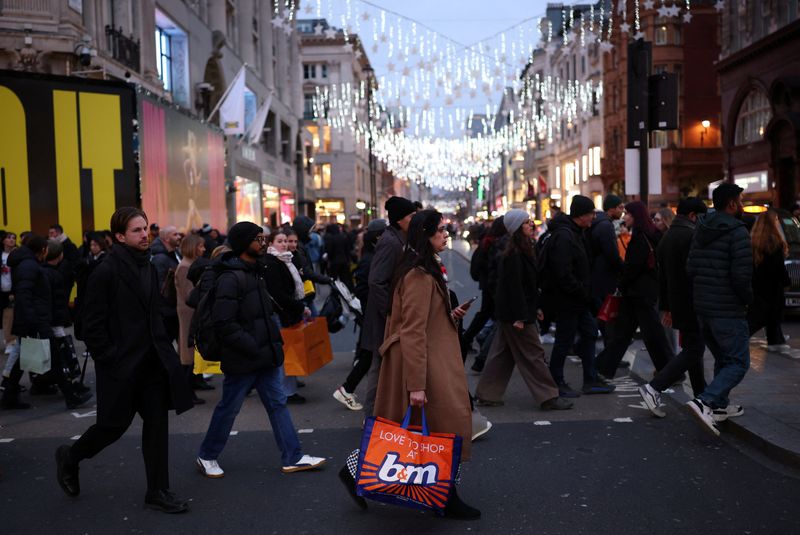

UK retail sales drop by most in nearly a year as drivers buy less fuel

abrdn Short Duration High Yield Municipal Fund Q1 2026 Commentary

Federal Reserve officials all but retired the question that had dominated their debates for the past two years—whether to cut interest rates—and began more seriously at their meeting last month to weigh the opposite: whether to raise them.
“A majority of participants highlighted…that some policy firming would likely become appropriate if inflation were to continue to run persistently above 2%,” according to the minutes of the April policy meeting, released Wednesday.
Copyright ©2026 Dow Jones & Company, Inc. All Rights Reserved. 87990cbe856818d5eddac44c7b1cdeb8

A group of WA industry professionals has bought ownership of what is shaping up to be the state’s largest battery energy storage system (BESS) at Kemerton from its Chinese owner.

During his visit to Italy, PM Modi gifted a bag of candies to his Italian counterpart. The Italian PM shared a video of their interaction on social media, which has now gone viral. In the video, she described it as a “very, very good toffee.” While social media went into a frenzy over PM Modi gifting PM Meloni a bag of ‘Melody’, investors sweetened the wrong ‘Parle’ stock.
Mumbai-based Parle Industries is associated with developing infrastructure and real estate projects, along with managing paper waste recycling operations. The company has no connection with its namesake Parle Products, which makes the popular Parle-G biscuits and other products, including the melody toffee.Parle Products is one of India’s oldest consumer goods companies. The viral moment also spilt into corporate branding campaigns, with Air India posting on X, “Some places don’t need introductions, just the right melody,” underscoring how the Modi-Meloni Melody exchange quickly evolved from a diplomatic gesture into a marketing moment for Indian brands.

In an interview with CNBC-TV18, Parle Products Vice President Mayank Shah said that Melody is already exported and available in 100 countries. He added that PM Modi’s gesture was a nice way of pushing Indian products and giving a global stage.
The Melody moment also came at a time when there were speculations that Parle Products was in early-stage talks for a potential initial public offering. Modi’s Meloni gift could have been a great global roadshow before aiming for D-Street entry. However, Parle Products management told CNBC-TV18 that it is not considering listing on exchanges right now.
Parle Industries share price
Parle Industries shares jumped 5% to Rs 5.78 apiece on BSE on Friday to hit the upper circuit for the third consecutive session. The microcap company has seen its share price rally 16% in just three sessions after the viral ‘Melody’ moment.
The company currently has a market capitalisation of more than Rs 28 crore.
(Disclaimer: Recommendations, suggestions, views and opinions given by the experts are their own. These do not represent the views of The Economic Times)

Speaking to ET Now, market expert Rahul Shah from MOFSL said that Page Industries stands out as one of the strongest recovery stories within the consumer space. He highlighted improving growth momentum and positive management commentary, pointing out that “strong performance, upbeat on the sales part, 11% quarter-on-quarter growth, and we believe that after a long time we have seen this kind of growth coming back in Page.” He also noted that earnings estimates have been revised upward and that the company’s product expansion through digital platforms and retail channels is supporting visibility. According to him, Page Industries offers rare double-digit growth visibility in a volatile market and remains reasonably valued given its long-term growth outlook.
On other consumer names such as Nykaa and Honasa, Shah adopted a more cautious stance. He said Nykaa was largely in line with expectations and while the numbers were stable, “I feel that there is limited upside on the stock,” indicating that major re-rating potential may be capped in the near term. Honasa too was seen as largely aligned with expectations without strong immediate triggers for upside.
On broader consumption strategy, Shah suggested a balanced portfolio approach combining select FMCG names with premium consumption plays. He emphasized Marico as a consistent performer in the FMCG space, stating that it continues to stand out due to market share strength, product launches, and earnings sustainability. Along with Page Industries, he sees FMCG leaders like Marico as key anchors for playing the consumption theme in the current market environment.
In the insurance space, Shah reiterated the importance of maintaining sector allocation in portfolios. While acknowledging strong numbers from LIC, including growth in value of new business margins and annual premium equivalent, he expressed a preference for Max Financial Services within the space. He highlighted strong margins, robust growth, and expanding distribution channels beyond banks, noting that “Max remains our preferred bet and we see 20% upside in it.” At the same time, he indicated that LIC could act as a rerating candidate given improving sentiment and market positioning.
On the pharma sector, Shah observed that the space continues to outperform broader markets, supported by global uncertainty and defensive positioning. He noted that the Nifty Pharma index is at a 52-week high and highlighted strong performance from Sun Pharma and Aurobindo Pharma. While acknowledging that Cipla and Dr Reddy’s delivered weaker results, he maintained a constructive outlook on large-cap pharma, suggesting that Sun Pharma remains a key stock to watch, especially after its earnings, while Aurobindo Pharma also looks attractive after meeting street expectations.
Overall, the market narrative continues to shift towards selective consumption recovery, steady pharma strength, and insurance-driven defensive growth. With earnings visibility diverging across companies, investors are increasingly focusing on stock-specific opportunities rather than broad sector bets.

1506 ET – Oil futures post back-to-back losses as President Trump says the U.S. is in the final stages of negotiations with Iran, raising hopes of a deal to end the conflict and reopen the Strait of Hormuz. Still, Trump adds that failure to reach a deal meant a resumption of military action. “Typical Trump style, but the market is buying into the possibilities,” says Mizuho’s Robert Yawger in a note. Hopes for an agreement led the market to overlook a bullish EIA inventory report showing U.S. commercial crude stocks down by 7.9 million barrels last week, although distillate stocks rose for a second straight week. WTI settles down 5.7% at $98.26 a barrel and Brent falls 5.6% to $105.02.(anthony.harrup@wsj.com)
Oil Futures Extend Losses on Hopes for U.S.-Iran Deal
1235 ET – Oil futures extend losses as the market focuses on hopes for a deal to end the U.S.-Iran conflict and reopen the Strait of Hormuz. The fact prices could fall further following a bullish U.S. crude stock drawdown for last week “tells me it’s more likely than not some kind of negotiation is happening,” says BOK Financial’s BOKF -0.17%decrease; red down pointing triangle Dennis Kissler. “The market is anticipating some sort of agreement.” The EIA reported a 7.9 million barrel decline in commercial crude stocks, along with a 9.9 million barrel release from the Strategic Petroleum Reserve. WTI is off 5.2% at $98.75 a barrel and Brent falls 5.5% to $105.16 a barrel. (anthony.harrup@wsj.com)
Copyright ©2026 Dow Jones & Company, Inc. All Rights Reserved. 87990cbe856818d5eddac44c7b1cdeb8

SEC Tokenized Stocks Risk Market Fragmentation

Extremely R-Rated Sci-Fi Comedy Is A Sexy Genetic Experiment Gone Wrong

What does Reeves’ VAT cut mean for London attraction ticket prices?


-

 Crypto World6 days ago
BloFin War of Whales 2026 Grand Prix opens registration for $5M trading championship
-

 Fashion7 days ago
Weekend Open Thread: Theory – Corporette.com
-

 Crypto World7 days ago
E-Estate Announces 1 Year Live: Washington DC Summit as Real Estate Tokenization Enters Its Next Phase
-

 Tech6 days ago
Google reimburses Register sources who were victims of API fraud
-

 Business7 days ago
H&R Real Estate Investment Trust (HR.UN:CA) Q1 2026 Earnings Call Transcript
-

 Entertainment7 days ago
David Letterman Returns to Late Show, Blasts Cancellation
-

 Sports6 days ago
Napoleonic enters 2026 Doomben 10,000 field via Abounding withdrawal
-

 Crypto World6 days ago
BeInCrypto 100 Institutional Awards Nomination: KAST for Best Digital Assets Neobank and Best Digital Assets Fintech
-
 Crypto World6 days ago
Bitcoin Battles US Bond Nerves With BTC Price Dip Toward New May Lows
-

 Crypto World6 days ago
ICE and CME urge US regulators to curb Hyperliquid energy trading
-

 Fashion5 days ago
On the Scene at Gucci’s Cruise Show in New York City: Mariah Carey, Kim Kardashian, Lindsay Lohan, Iman, and More!
-
 Crypto World6 days ago
Wall Street’s Boldest Gold Prediction Has Russians Rushing to Buy
-

 Fashion6 days ago
Trending Western Style Vests Perfect for Summer
-

 Crypto World6 days ago
IREN closes $3 billion convertible notes deal amid AI infrastructure expansion
-

 Politics6 days ago
Watch: far-right flag-fanatics run over victim, attack locals – Setup By the Left wing for your entertainment
-

 Fashion7 days ago
Creative Ideas for Custom T-Shirts
-

 Fashion5 days ago
Amazon Sundays: Memorial Day Hosting
-

 Crypto World14 hours ago
Blockchain.com files with SEC for U.S. IPO
-
 Fashion7 days ago
Philip Jones Wedding Jewellery For Women
-

 Crypto World6 days ago
Crypto Market Structure Bill Clears Committee; Senate Vote in Focus
You must be logged in to post a comment Login