

Business
Form PRE 14A TRANSLATIONAL DEVELOPMENT ACQUISITION CORP. For: 1 May



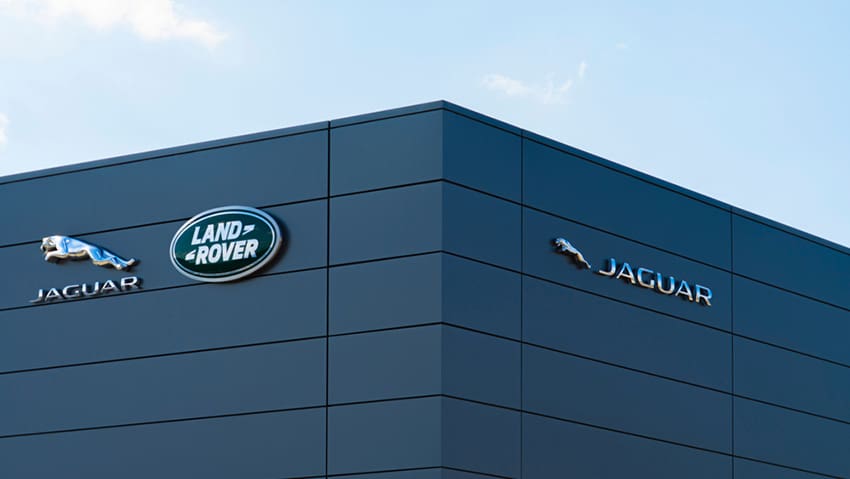
Britain’s biggest car manufacturer has, for the first time in its history, cracked open the door to assembling Range Rovers and Land Rover Defenders on American soil, a move that would have been unthinkable a generation ago, and one that has been forced squarely onto the agenda by Donald Trump’s tariff regime.
Jaguar Land Rover (JLR), the Solihull-based jewel of the West Midlands automotive cluster, has confirmed it has signed a memorandum of understanding with Stellantis, the Franco-Italian-American group behind Vauxhall, Peugeot, Fiat, Jeep and Chrysler, “to explore opportunities to collaborate on product development in the United States”. Both companies were tight-lipped on the detail, but the framing in their joint statement — references to “potential transactions” and “complementary capabilities”, left City analysts in little doubt that something rather more significant than a polite engineering chat is on the table.
For an industry that has spent the past 18 months trying to second-guess the White House, the timing is hardly accidental. Under the UK-US Economic Prosperity Deal struck in May 2025, British carmakers can export a maximum of 100,000 vehicles a year to America at a preferential 10 per cent tariff rate; anything above the quota is hit with a punitive 27.5 per cent levy, according to the House of Commons Library briefing on US trade tariffs. For JLR, which produces well in excess of 300,000 cars a year and has traditionally sent roughly a third of them across the Atlantic, the maths are brutal. The cap is, in effect, a glass ceiling on its single most lucrative export market.
PB Balaji, JLR’s chief executive, framed the move as strategic evolution rather than retreat. “As we continue to evolve JLR for the future, collaboration will play an important role in unlocking new opportunities,” he said. “Working with Stellantis allows us to explore complementary capabilities in product and technology development that support our long-term growth plans for the US market.”
His opposite number at Stellantis, Antonio Filosa, was similarly measured: “By working with partners to explore synergies in areas such as product and technology development, we can create meaningful benefits for both sides while remaining focused on delivering the products and experiences our customers love.”
From solihull to Ohio?
The industrial logic is compelling. JLR has already paused shipments to the US once this year as the tariffs bit, exposing the fragility of a model that depends on shipping high-margin luxury SUVs across the Atlantic. Stellantis, by contrast, runs an enviable network of assembly plants across Michigan, Ohio, Illinois and Indiana, much of it underutilised since the wider slowdown in mid-market American demand and a strategic retreat from its all-electric ambitions, as chronicled in the group’s recent €22bn write-down.
Plugging JLR’s premium product into spare Stellantis capacity would, in theory, give both sides something they badly need. JLR would get a tariff-free route to the world’s most profitable luxury car market. Stellantis, whose Jeep, Ram and Chrysler brands sit firmly in the mass-market middle, would gain access to a slice of the premium pie that has long eluded it. The Wrangler-style Defender pairing in particular looks an obvious fit; the Range Rover, retailing at well over $100,000 in the US, less obviously so.
What both companies will be acutely aware of is that the perceived “Britishness” of the marques is itself part of the product. When Ford bought Jaguar for $2.4 billion in 1989 and added Land Rover from BMW for $2.7 billion in 2000, eventually merging them into JLR in 2002, the American giant pointedly refused to build either brand on its home turf. To do so, Ford executives privately argued, would dilute the very quintessence customers were paying for. Tata of India, which scooped up the business in 2008 when Ford was on its knees in the global financial crisis, has stuck broadly to the same line, investing heavily in UK production, including the Defender it now also builds in Nitra, Slovakia, which is itself caught by the Trump tariffs.
Takeover by stealth?
The City will inevitably read the small print of any MoU through the lens of consolidation. JLR is, by global standards, a minnow, the largest automotive employer in Britain, certainly, but a fraction of the size of Volkswagen, Toyota or indeed Stellantis. The argument that its long-term independence is unsustainable in an industry being reshaped by electrification, Chinese competition and tariff walls has been doing the rounds in Mayfair for the best part of a decade.
The language of the memorandum, “potential transactions”, “synergies”, “complementary capabilities”, is precisely the vocabulary of deals that begin as joint ventures and end, several years later, in full-blown mergers. It would be a brave SME supplier in the West Midlands who bet against further integration in the medium term.
For Tata, the calculation is delicate. JLR remains a strategically important asset and a significant contributor to group profits. But the family-controlled Indian conglomerate has shown before, most notably with Corus, the former British Steel, that it is unsentimental about underperforming foreign acquisitions when the global economics turn. A US production deal that quietly evolves into a deeper relationship with Stellantis would, in that light, be neither a surrender nor a surprise.
The wider british picture
JLR is not alone in its predicament. Mini, Bentley, Rolls-Royce and Aston Martin all export a disproportionate share of their UK output to the United States, and all are now operating inside the same 100,000-vehicle British quota. None of them has the volume to justify its own American assembly line. If JLR, by far the largest of the group, succeeds in finding a tariff workaround through a partner, expect others to consider whether contract assembly inside the US, perhaps via the same Stellantis route, might be the only way to defend their American sales.
For the West Midlands, the political optics are uncomfortable. The Solihull plant remains the spiritual home of Land Rover and one of the largest manufacturing employers in the region. Any meaningful shift of premium production to the United States, even at the margins, will inevitably raise questions in Westminster about whether the UK has done enough to anchor high-value manufacturing onshore, particularly given the size of the public guarantees that have already flowed JLR’s way in the wake of last autumn’s cyberattack.
The official line from Coventry, of course, is that this is about growth in the US, not retrenchment in the UK. As ever in the car industry, the truth will be in the binding contracts that follow this opening, deliberately non-committal MoU, and in how aggressively Mr Trump’s trade negotiators decide to police the rules of origin around any vehicles that emerge with Range Rover or Defender badges on the bonnet.
For now, though, a Rubicon has been crossed. After more than 75 years of insisting that Range Rovers and Defenders could only be properly built within sight of a damp British hillside, Britain’s flagship luxury carmaker has formally acknowledged that the road to its biggest market may, in future, run through an American factory gate.

Jamie Young
Jamie is Senior Reporter at Business Matters, bringing over a decade of experience in UK SME business reporting.
Jamie holds a degree in Business Administration and regularly participates in industry conferences and workshops.
When not reporting on the latest business developments, Jamie is passionate about mentoring up-and-coming journalists and entrepreneurs to inspire the next generation of business leaders.

Workday shares jump as AI demand eases investor concerns

Intertek Group: EQT Takeover Comes At A Sane Valuation
The Greens are likely to give their support to changes to negative gearing and the capital gains discount but businesses fear it will drive investors offshore.

Australia’s share market has ended the week higher, buoyed by optimism about a solution to the US-Iran conflict and a slightly less gloomy outlook for local interest rates.


Long-only investment, evaluating companies from an operational, buy-and-hold perspective.Quipus Capital does not focus on market-driven dynamics and future price action. Instead, our articles focus on operational aspects, understanding the long-term earnings power of companies, the competitive dynamics of the industries where they participate, and buying companies that we would like to hold independently of how the price moves in the future. Most QC calls will be holds, and that is by design. Only a very small fraction of companies should be a buy at any point in time. However, hold articles provide important information for future investors and a healthy dose of skepticism to a relatively bullish-biased market.Disclaimer: All of the author’s articles are written on an “as is” basis and without warranty. They represent the author’s opinion only and in no way constitute professional investment advice. It is the responsibility of the reader to conduct their due diligence and seek investment advice from a licensed professional before making any investment decisions. The author disclaims all liability for any actions taken based on the information contained in any articles published.
Analyst’s Disclosure: I/we have no stock, option or similar derivative position in any of the companies mentioned, and no plans to initiate any such positions within the next 72 hours. I wrote this article myself, and it expresses my own opinions. I am not receiving compensation for it (other than from Seeking Alpha). I have no business relationship with any company whose stock is mentioned in this article.
Seeking Alpha’s Disclosure: Past performance is no guarantee of future results. No recommendation or advice is being given as to whether any investment is suitable for a particular investor. Any views or opinions expressed above may not reflect those of Seeking Alpha as a whole. Seeking Alpha is not a licensed securities dealer, broker or US investment adviser or investment bank. Our analysts are third party authors that include both professional investors and individual investors who may not be licensed or certified by any institute or regulatory body.

It said difficulties had been exacerbated by “significant cost increases resulting from government policy choices”.
Claire Tyrrell speaks with Ella Loneragan about the next chapter for Co3 Contemporary Dance.
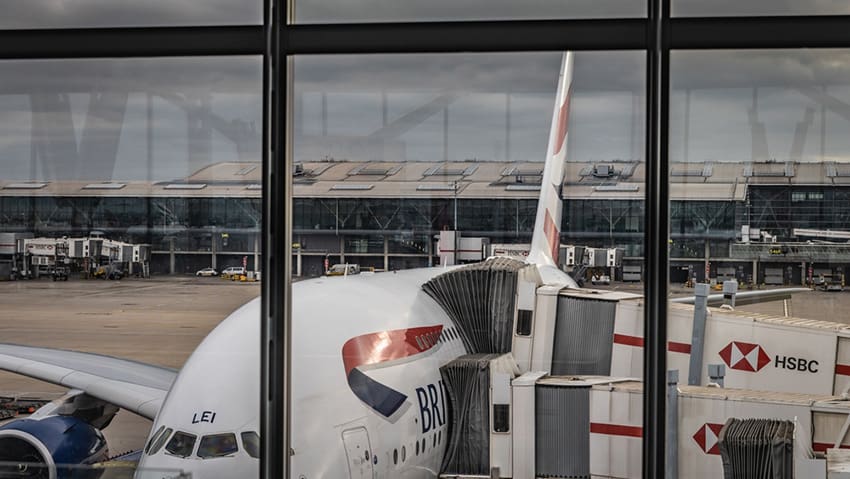
British families planning a getaway this summer could find the cost of flying creeping up again, after it emerged that Treasury officials are quietly drawing up plans for a £1bn VAT raid on the fees airports charge airlines, a move the industry has branded a stealth tax on holidaymakers and exporters alike.
The proposals, being worked up inside HMRC, would impose the standard 20 per cent rate of VAT on top of the per-passenger charges levied by airports such as Heathrow, Gatwick and Manchester for the use of runways, terminals and ground services. Those fees are almost always passed straight through to passengers in the ticket price, meaning the burden would land squarely on travellers and the small and medium-sized businesses that depend on affordable air travel to reach overseas customers.
At Heathrow, where the regulated charge currently sits at around £24 a head, the change would add close to £5 to the cost of every passenger — before a single penny of Air Passenger Duty, fuel surcharge or booking fee has been added. The official APD rates published by HMRC already range from £15 to £106 for an economy seat depending on distance, and rose again from April under increases pencilled in at the Autumn Budget.
A retrospective sting
What is alarming airlines and airports most is not just the prospect of a new levy, but the possibility that Whitehall might backdate it. Industry sources tell Business Matters that ministers are exploring whether to apply the charge as far back as four years, the maximum permitted under current legislation, generating an immediate windfall for the Exchequer running to around £1bn from Heathrow alone.
Heathrow generated £1.13bn in revenue from passenger charges last year, while Gatwick reported £607m and Manchester Airports Group, owner of Manchester and Stansted, recorded £470m. Factoring in smaller hubs, the total VAT take could comfortably top £1.5bn, although officials have yet to clarify whether the tax would bite on both outbound and inbound legs.
One airline industry insider described the plan as “a stealth tax on families at a time when the cost-of-living crisis means many people are already struggling to afford a holiday”. The warning lands alongside fresh evidence that Britons are already tightening their belts on travel, Barclays data recently showed holiday spending falling for the first time since the pandemic as cost-of-living and Iran conflict fears bite.
Reeves giveth, HMRC taketh away
The disclosure could hardly come at a more awkward moment for the Chancellor. Even as her officials sharpen the pencil on aviation VAT, Rachel Reeves was on her feet in the Commons unveiling a £1bn cost-of-living package designed to take the sting out of the school summer holidays.
From 25 June to 1 September, theme parks, zoos, museums, cinemas, soft play centres and theatres will charge a reduced 5 per cent rate of VAT in place of the usual 20 per cent. Children’s meals are included in the cut, which the Treasury values at £300m. The Government claims the measure will shave £20 off a theme-park day out for a family of four, £1.50 off cinema tickets and £2 off a family meal.
Fuel duty will be frozen for the rest of the year, free bus travel will be offered to children throughout August, and import taxes have been trimmed on a basket of staple foods. The energy-intensive chemicals and ceramics sectors, meanwhile, will share a £470m lifeline aimed at protecting jobs in some of the country’s most exposed manufacturing hubs.
Ms Reeves told MPs the package would be paid for by raising “hundreds of millions of pounds a year” from oil and gas majors such as BP and Shell, with the Office for Budget Responsibility due to assess the impact at the autumn fiscal event. Broader support on household energy bills was held in reserve, with the Chancellor signalling that targeted help would follow in the autumn “if bills continue to rise”.
The hospitality and visitor economy were quick to welcome the move. Fiona Eastwood, chief executive of Merlin Entertainments, which operates Alton Towers and Legoland, confirmed the discounted rate would apply to both admission tickets and children’s meals. Kate Nicholls, chair of UKHospitality, said it was “the quickest and simplest way to lower prices and boost consumer confidence”.
Aviation cries foul
The aviation sector, however, is in no mood to applaud. An Airlines UK spokesman said: “The UK is already one of the most overtaxed aviation markets in the world and, as the cost burden increases, we risk becoming even more uncompetitive. The only people cheering a move like this would be those running rival airports overseas.”
Industry analysis backs the point. The Office for Budget Responsibility already forecasts APD will raise close to £5bn a year by the end of the decade, while Airlines UK research suggests mandatory taxes can account for as much as half the price of an off-peak short-haul ticket. Bolting VAT on to airport charges would compound a tax burden that low-cost carriers say is already pushing routes, and the SME-friendly connectivity that comes with them, into mainland Europe.
Andrew Griffith, the shadow business secretary, was blunter still: “Any additional tax on aviation is a tax on doing business, a brake on exports or an attack on hard-working families. No government on the side of growth would indulge this idea.”
The proposals may also collide with international aviation rules, which broadly exempt airfares from VAT. Heathrow is understood to be taking specialist tax advice, while one industry source characterised the work inside HMRC as a “fishing trip” by officials looking for new revenue. “It’s a very technical conversation, with HMRC trying to work out if they can capture additional tax revenue,” the source said. “The question is whether it’s going to move forward and, if it does, whether it is going to hit passengers.”
What it means for SMEs
For Britain’s small and mid-sized businesses, the stakes are real. Air freight, sales travel and trade-show attendance all sit downstream of airport economics, and any uplift in landing charges feeds quickly into per-trip costs. It is also the second time in twelve months that the regulator has tangled with the Heathrow pricing model, earlier this year Heathrow was forced into a bigger cut of passenger landing fees by the Civil Aviation Authority, capping charges below the level the airport had sought.
Airports are unlikely to absorb a new VAT charge in-house. Heathrow has been lobbying loudly for measures to restore competitiveness, including the reinstatement of VAT-free shopping for international visitors, warning that the UK is losing ground to European rivals on tax. Adding a fresh 20 per cent layer to its core regulated charge would, the airport believes, run directly counter to the Government’s own growth narrative.
A government spokesman insisted there was no formal policy change in train, telling reporters: “The Government is not considering any changes to tax rules in this area. HMRC routinely engage businesses on how existing tax rules are being applied.”
That is unlikely to settle nerves in boardrooms in West London or aboard the airlines. For now, families booking summer flights can enjoy a temporary VAT cut at the theme-park turnstile, but the smart money in the aviation lobby is on a rather chillier autumn at the airport check-in desk.

Amy Ingham
Amy is a newly qualified journalist specialising in business journalism at Business Matters with responsibility for news content for what is now the UK’s largest print and online source of current business news.

On Friday 22nd of May, Laura Pomfret joined Morning Live to talk about the rise of County Court Judgments (CCJs) across the UK, known as decrees in Scotland, which are issued to individuals who fail to repay money they owe.
Laura explains why the number of CCJs has increased, what your options are if you receive one, and advice on how to avoid an unpaid debt becoming a court case.
To find the steps and court forms involved in asking a court to vary the terms of a CCJ or decree, such as requesting to pay in instalments, or even how to get a judgment cancelled, you can click on the links below.
For England, Wales and Northern Ireland you can click here., external
For Scotland you can click here., external
Laura also mentioned temporary protection from your creditors while you get debt advice and make a plan.
In England and Wales this is called Breathing Space, and you can find information on that by clicking here., external
In Scotland this is called a moratorium, and you can find more information on that here., external
“Survivor 50” winner Aubry Bracco reveals what happened when the cameras turned off

ICPAK and bankers oppose new Finance Bill taxes, warn of job losses in service sector
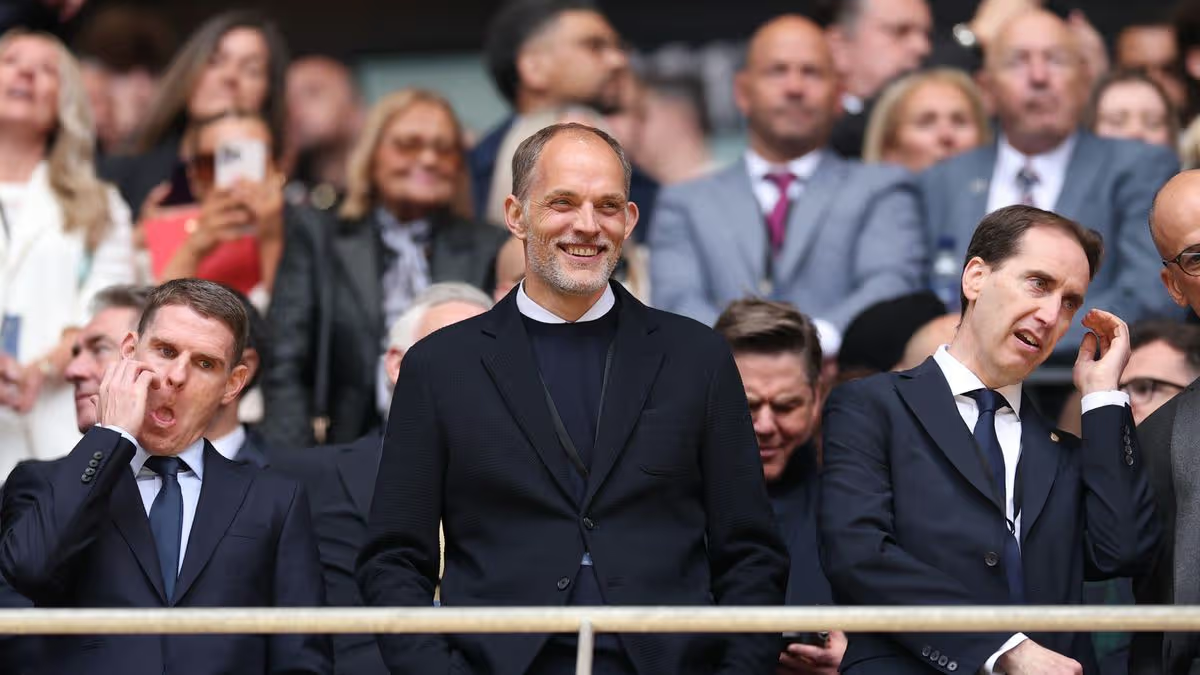
England World Cup squad in full as two Man United and four Man City stars make squad

US brings back mandatory military draft registration

Steven Gerrard disagrees with Gary Neville over ‘shock’ Chelsea and Arsenal claim | Football

Register Renaming | Hackaday
ICPAK and bankers oppose new Finance Bill taxes, warn of job losses in service sector

What is Cryptocurrency? Difference in Digital Currency and Cryptocurrency explained | Economy UPSC

Financial Accounting – 3 | Bcom Sem 2 As Per NEP | Gujarat University | UGT
-

 Crypto World6 days ago
BloFin War of Whales 2026 Grand Prix opens registration for $5M trading championship
-

 Fashion7 days ago
Weekend Open Thread: Theory – Corporette.com
-

 Crypto World7 days ago
E-Estate Announces 1 Year Live: Washington DC Summit as Real Estate Tokenization Enters Its Next Phase
-

 Tech6 days ago
Google reimburses Register sources who were victims of API fraud
-

 Business7 days ago
H&R Real Estate Investment Trust (HR.UN:CA) Q1 2026 Earnings Call Transcript
-

 Entertainment7 days ago
David Letterman Returns to Late Show, Blasts Cancellation
-

 Sports6 days ago
Napoleonic enters 2026 Doomben 10,000 field via Abounding withdrawal
-

 Crypto World6 days ago
BeInCrypto 100 Institutional Awards Nomination: KAST for Best Digital Assets Neobank and Best Digital Assets Fintech
-
 Crypto World6 days ago
Bitcoin Battles US Bond Nerves With BTC Price Dip Toward New May Lows
-

 Crypto World6 days ago
ICE and CME urge US regulators to curb Hyperliquid energy trading
-

 Fashion5 days ago
On the Scene at Gucci’s Cruise Show in New York City: Mariah Carey, Kim Kardashian, Lindsay Lohan, Iman, and More!
-
 Crypto World6 days ago
Wall Street’s Boldest Gold Prediction Has Russians Rushing to Buy
-

 Crypto World6 days ago
IREN closes $3 billion convertible notes deal amid AI infrastructure expansion
-

 Fashion6 days ago
Trending Western Style Vests Perfect for Summer
-
 Politics6 days ago
Watch: far-right flag-fanatics run over victim, attack locals – Setup By the Left wing for your entertainment
-

 Fashion7 days ago
Creative Ideas for Custom T-Shirts
-

 Fashion5 days ago
Amazon Sundays: Memorial Day Hosting
-

 Crypto World15 hours ago
Blockchain.com files with SEC for U.S. IPO
-
 Fashion7 days ago
Philip Jones Wedding Jewellery For Women
-

 Crypto World6 days ago
Crypto Market Structure Bill Clears Committee; Senate Vote in Focus
You must be logged in to post a comment Login