

Business
Nike Stock Extends Its Post-Earnings Rally Today as Investors Bet the Long-Awaited Turnaround


Nike shares climbed further Thursday, extending a two-day recovery from a dramatic after-hours selloff that followed Tuesday’s fourth-quarter results as investors increasingly bet that the worst of the athletic giant’s prolonged slump may be behind it, even if the road ahead remains difficult.
Shares of the Beaverton, Oregon-based company were trading at $43.81 as of 10:42 a.m. EDT, up 75 cents, or 1.74%, on the day, building on Wednesday’s 4.9% surge during regular trading that effectively reversed the initial panic selling that had sent the stock down as much as 10% in after-hours trading immediately following the results.
Nike’s fiscal fourth-quarter earnings report, released Tuesday after the close, showed quarterly revenue of $10.97 billion, modestly ahead of the $10.86 billion consensus estimate, while earnings per share came in at 72 cents versus the 13-cent estimate that analysts had set ahead of the report. The enormous EPS beat, however, came almost entirely from a one-time benefit: a 52-cent per-share gain tied to an expected recovery of tariffs under the International Emergency Economic Powers Act, worth approximately $986 million before tax, that inflated the bottom line well beyond what the underlying business produced in the quarter.
Stripping out that tariff-related windfall, adjusted earnings per share came in at approximately 20 cents, up from 14 cents in the year-ago period, representing what the company described as its first quarter of underlying earnings per share growth in two years, a milestone that has given bulls something to point to as evidence of gradual improvement.
Nike Chief Executive Elliott Hill, who took over the company last year and has been overseeing what management describes as a multiyear reset of the brand’s competitive positioning, was candid on the earnings call about where the company still falls short.
“Overall, the results aren’t there yet,” Hill said. “We know we’re not living up to our full potential, particularly in Nike sportswear and Jordan streetwear, where sell through remains challenged, impacting both current discounting and future order books.”
Despite those frank admissions, Hill also highlighted the areas where the turnaround appears to be gaining traction, particularly in running footwear.
“What feels different this time around is we’re not treating the tournament as a single moment, we’re using it to reshape our business, telling a connected story over time, engaging different communities in relevant ways and building momentum that carries well beyond the tournament,” Hill said of the company’s strategy around the 2026 World Cup, which Nike is participating in aggressively through advertising and athlete partnerships despite not being an official sponsor of the event.
The World Cup reference captures one of the more interesting dynamics of Nike’s recent quarter. The company reported that its advertising campaigns during the World Cup have dramatically outpaced rival Adidas in social media traction and brand attention metrics, even without the formal sponsorship rights that Adidas holds, a distinction that has given the marketing team confidence that the brand’s storytelling capabilities remain intact even as product sell-through has struggled.
Among the results themselves, several trends stood out as genuine positives despite the broader revenue decline of 1% on a reported basis or 4% on a currency-neutral basis. North American wholesale revenue rose 10% in the quarter, a meaningful reversal from periods in which Nike’s wholesale business had been deliberately scaled back as the company pushed toward its direct-to-consumer channels. Nike Direct fell 6%, reflecting continued softness in the company’s digital and owned-retail channels, and the Greater China market declined 12%, continuing a streak of weakness in what has historically been one of Nike’s highest-margin geographies.
Running footwear posted its fifth consecutive quarter of double-digit growth, a streak that has demonstrated Nike’s ability to fight back against competitive pressure from newer brands including Deckers’ Hoka and On Holding, two companies that had rapidly taken market share from Nike in the premium performance running category over the prior several years. Comparable sales and revenue at Foot Locker, one of Nike’s most important wholesale distribution partners and a relationship Nike had deliberately deprioritized during its earlier push toward direct-to-consumer, were positive for the first time in four years, a concrete sign that the company’s efforts to repair and rebuild its wholesale channel relationships are beginning to produce results.
On operating margin, Nike generated a 12% operating margin in the quarter, up 9.1 percentage points year over year, though that improvement was entirely attributable to the tariff windfall rather than underlying operational efficiency gains.
Looking ahead, Nike’s guidance was sober rather than optimistic. Chief Financial Officer Matt Friend indicated the company expects earnings to be “flattish” through the first two fiscal quarters of 2027, while gross margin for the first fiscal quarter of 2027 is expected to be slightly positive on a year-over-year basis, the first such improvement in several quarters.
The stock’s response to all of that reflects investor psychology at a critical inflection point. Shares had fallen to 11-year lows heading into the report, with the stock trading down nearly 42% over the trailing year and well below levels that many analysts had characterized as reflecting already-depressed expectations. When a deeply beaten-down stock beats estimates, even for complicated reasons involving one-time items, the response frequently reflects relief that the situation is not as bad as feared rather than genuine enthusiasm about fundamental improvement.
Analysts’ consensus price targets remain well above current levels, with several covering the stock citing the stock’s valuation at approximately three times trailing sales as a potential floor even if the turnaround takes longer than expected. Wall Street’s assessment is mixed, however, with some analysts cautioning that flat earnings guidance for fiscal 2027 reflects a missed opportunity at a moment when the World Cup, the NBA Finals, and other cultural moments could have provided meaningful revenue tailwinds if the brand had been better positioned to capitalize on them.

Business
Hitachi Energy, GE Vernova, Siemens Energy, other power equipment stocks crash up to 10%. Here’s why

Hitachi Energy India shares tumbled nearly 8% to Rs 31,150 apiece, while those of GE Vernova T&D India crashed around 10% to Rs 4,361 apiece. Siemens Energy India shares dropped over 6%, while CG Power and Industrial Solutions plunged over 7%. Cummins India shares fell 2% on Friday morning.
Chinese power equipment suppliers to participate in govt tenders
The government granted exemptions to four Chinese companies, namely TBEA Energy, Nanjing Electric India, New Northeast Electric India and Taikai Electric (India), for a period of two years, allowing them to supply electrical equipment in India and participate in the tenders, the order from India’s Ministry of Finance dated June 24 and reviewed by Reuters said. The reported government notification highlighted that the exemption should not be treated as a precedent for other companies.
Earlier this year, Reuters reported citing government officials that India has begun easing its restrictions on buying Chinese equipment after a deadly 2020 border clash, allowing state-run power and coal companies to start limited imports as shortages and project delays mount.
Following the 2020 clash, Indian government mandated that Chinese bidders must register with a government panel and secure political and security clearances before competing for any state contract. However, the report had then said that India has now begun to allow state-run entities to procure a power-transmission component from China without government approval.
Also Read | India eases curbs on Chinese equipment imports for power, coal as projects delayed
India-China ties
This comes at a time when India and China are beginning to rebuild their commercial ties. China has overtaken the US to emerge as India’s largest trading partner in 2025-26, with bilateral trade reaching $151.1 billion, while the country’s trade deficit with Beijing widened to an all-time high of $112.16 billion during the period, according to the Indian Commerce Ministry data.

India’s exports to China rose 36.66% to $19.47 billion during the last fiscal year, while imports increased 16% to $131.63 billion. The trade deficit swelled to an all-time high of $112.6 billion in 2025-26 as against $99.2 billion in 2024-25.
Also Read | Indian envoy holds talks with senior Chinese commerce ministry official on trade ties(With inputs from agencies)
(Disclaimer: Recommendations, suggestions, views and opinions given by the experts are their own. These do not represent the views of The Economic Times)

OPINION: There has been a noticeable change in how European food and wine establishments interact with tourists.

Sensex gained over 650 points, while Nifty 50 rose above 24,350 during Friday’s trading session. The sharp gains added nearly Rs 2.4 lakh crore to the total market capitalisation of all companies listed on BSE, pulling it up to Rs 482 lakh crore.
IT stocks continued to record strong gains, with HCL Tech, Tech Mahindra, Infosys and TCS shares rising 2-5% to lead gains on the Sensex. Tata Steel, Bajaj Finserv and Bharat Electronics shares followed, rising more than 1% each. Bucking the trend, M&M shares fell nearly 1% on Friday morning.
Broader markets, however, sharply underperformed benchmarks, with the Nifty Midcap 100 index rising only 0.2% and the Nifty Smallcap 100 index rising 0.5%. This came as India VIX, which measures volatility in the market, dropped over 1% to 12.13.
Also Read | Adani Enterprises increases QIP size to Rs 15,000 crore, draws bumper 3.8x bids
Sectorally, Nifty IT jumped more than 2% to lead gains. Nifty Metal also rose over 1.5%. Nifty Auto and Nifty PSU Bank indices, however, slipped into the red. The overall market breadth was positive, with 1,832 advances and 607 declines on the NSE, while 91 remained unchanged.
Here are the key factors boosting market sentiment today:
1) Fed rate hike worries cool down
US job growth slowed sharply in June and payroll gains for the prior two months were revised lower, data released on Thursday showed, pointing to a cooling labour market and prompting financial markets to reduce expectations for a near-term rate hike. The unemployment rate dropped to 4.2% last month from 4.3% in May as workers left the labour force, pushing the participation rate to the lowest level in more than five years.”The figures challenged the narrative that the Fed remains on track to hike in the second half of this year,” Reuters quoted Westpac analysts as saying in a research report. The tepid jobs data doused traders’ expectations of an imminent rate hike and raised the odds that the Fed will keep rates on hold until October.
Traders are now pricing in a 46.8% probability that the U.S. central bank will keep rates steady at its meeting on September 15 to 16, compared to a 35.8% chance a day earlier, according to the CME Group’s FedWatch tool.
2) Rupee opens higher
Rupee rose 18 paise to 95.17 against the US dollar in early trade. This came on the back of a weaker US dollar after the tepid jobs report. The dollar index, which measures the greenback against a basket of currencies, was 0.2% lower at 100.77 after a 0.5% decline on Thursday. It is on course for its biggest weekly drop since early April.
3) FII outflows taper off
Foreign investors remained net sellers of Indian equities, net selling shares worth nearly Rs 312 crore on Thursday, according to provisional data on the NSE. This is marginal when compared to the massive FII outflows seen earlier this year during the raging war in the Middle East.
4) Heavy buying in IT stocks
The overall market optimism was boosted by strong buying in heavyweight IT stocks like HCL Tech, TCS and Infosys. The IT stocks are extending sharp gains today, after tumbling to fresh 52-week lows earlier this week.
IT companies derive a significant portion of their revenue from the North American market. Rate hikes or a spike in inflation in the US can weigh on discretionary spending, which, in turn, may affect the sector’s growth prospects. Hence, lower expectations of Fed rate hikes, along with low valuations, are boosting the IT stocks.
5) Positive global cues
Dalal Street is accompanying global peers in sharp gains today. South Korea’s Kospi jumped 2.5%, while Japan’s Nikkei gained around 1% on Friday morning. Hong Kong’s Hang Seng and China’s Shanghai Composite also rose nearly 1% each.
On Wall Street, the Dow Jones Industrial Average rose more than 1% to post a record closing high on Thursday and a fourth straight week of gains. European markets also closed in the deep green yesterday.
6) Iran-US peace efforts
“No news is good news” is what can summarise today’s market scenario. The peace efforts in the Middle East are holding well so far, and no escalation has been reported yet. This comes after Iran and the US held peace talks in Doha earlier this week.
Iran is now preparing for the days-long funeral for the late Supreme Leader Ayatollah Ali Khamenei, whose death early in March had sparked the raging war. US President Donald Trump, meanwhile, has claimed that Iran has conceded to nearly all American conditions in the ongoing diplomatic negotiations while emphasising that the primary objective of the discussions remains preventing Tehran from obtaining nuclear weapons.
7) Oil prices
Oil prices inched up slightly to $72 per barrel, but continue to hover near the pre-war levels as the peace efforts continue to hold well so far. Kuwait’s oil production rose sharply to 1.65 million barrels per day in June from 580,000 bpd in May, Reuters reported, citing sources on Thursday, as the OPEC member boosted exports following the US-Iran interim peace agreement.
Also, at least five supertankers carrying around 10 million barrels of Saudi oil have exited the Strait of Hormuz, with Saudi Aramco switching to spot pricing to speed sales in Asia, Reuters further reported.
What lies ahead?
India’s outperformance continues, aided partly by the weakness in KOSPI and the general weakness in the chip trade, said VK Vijayakumar, Chief Investment Strategist at Geojit Investments. He added that the continuing tapering of the FII outflows is another significant factor supporting the market. But the rally will not sustain unless it is supported by fundamental factors.
“The crash in crude to pre-war level is the strongest macro support to the economy and the market. Purely from the market perspective, a strong fundamental support is the gaining strength of the banking stocks. Latest news regarding the FCNR (B) scheme is that it is receiving a good response, particularly from West Asia, where HNIs are eager to get good and safe returns in the context of the uncertainty caused by the war,” according to the analyst.
Leading banks are offering attractive leverage on deposits and mobilising big money, Vijayalkumar said, noting that there are reports that this scheme may succeed in mobilising up to $60 billion. Since there is impressive credit growth in the economy, these FCNR (B) deposits will come in handy for the deposit-starved leading banks to significantly scale up their lending. “In brief, banking stocks have the fundamental strength to sustain the rally in Bank Nifty. The IT stocks are witnessing an uptrend triggered by low valuations. But the sector has no fundamental strength to sustain the rally,” he added.
Technical view on Nifty
The near-term outlook remains cautiously optimistic, according to Rajesh Palviya, Head of Research at Axis Direct. “Sustained strength above the 24,000 mark keeps the broader trend positive, with immediate resistance seen at 24,300, followed by 24,450. On the downside, 24,050 remains a key support, while a breach could trigger a corrective move towards 23,900,” he said.
Investors, however, should remain watchful of the ongoing global technology selloff, as renewed weakness in semiconductor stocks could prompt profit booking after the recent sharp rally in domestic IT names, he added.
(With inputs from agencies)
(Disclaimer: Recommendations, suggestions, views and opinions given by the experts are their own. These do not represent the views of The Economic Times)

The company reported gross disbursements of approximately Rs 19,500 crore in Q1FY27, marking a sharp increase from Rs 14,651 crore in the corresponding quarter last year. Sequentially, disbursements also improved from Rs 17,506 crore reported in Q4 FY26.
Assets under management (AUM) rose 24% year-on-year to approximately Rs 1,49,610 crore as of June 30, 2026, compared with Rs 1,20,420 crore a year earlier. On a sequential basis, AUM expanded by around Rs 8,904 crore during the quarter.
The company’s loan assets (AR) also witnessed healthy growth, increasing to approximately Rs 1,31,150 crore as of June 30, 2026, from Rs 1,05,954 crore in the same period last year, reflecting sustained demand for housing finance.
Stock price trend and technical outlook
Bajaj Housing Finance has remained in an uptrend, with the stock advancing nearly 15% over the past three months. It currently commands a market capitalisation of Rs 73,866 crore, while its 52-week high stands at Rs 124.
From a valuation perspective, Bajaj Housing Finance trades at a P/E multiple of 28.85, with a price-to-sales ratio of 5.46 and a price-to-book ratio of 3.28, reflecting its current market valuation relative to its financial performance and net worth.
From a technical perspective, the stock continues to display positive momentum. Its 14-day Relative Strength Index (RSI) stands at 60.8, indicating strengthening buying interest while remaining below the overbought zone of 70. Additionally, the stock is trading above seven of its eight key simple moving averages (SMAs), reinforcing the prevailing bullish trend.
Also read: HCL Tech surges 6% on $1.14 billion AI deal; Mercedes-Benz likely clientThe shareholding pattern showed mixed trends during the March 2026 quarter. Foreign Institutional Investors (FIIs) marginally raised their stake in Bajaj Housing Finance to 0.99%, up from 0.94% in the previous quarter, signalling continued institutional interest. In contrast, mutual funds trimmed their holding to 0.35% from 0.63%, indicating some profit booking. Meanwhile, promoter ownership remained unchanged at a robust 86.70%, reflecting sustained confidence from the company’s promoters.
(Disclaimer: Recommendations, suggestions, views and opinions given by the experts are their own. These do not represent the views of Economic Times)

MIAMI — The 2026 World Cup’s round of 32 reaches its final day Friday, with three matches completing the first knockout stage of an expanded 48-team tournament that has already produced its share of upsets, records and memorable moments. The headliner is unmistakably the late-afternoon showdown in Miami, where reigning champion Argentina and the record-setting Lionel Messi face a Cape Verde side that has captivated fans worldwide with one of the most improbable group stage runs in recent tournament history.
But Friday’s card begins in Dallas at 2 p.m. ET, where Australia takes on Egypt in a match carrying genuine historical weight for both sides. Neither nation has ever won a World Cup knockout match, making the Dallas opener a first for one of them regardless of what happens. Australia is playing in just its third-ever knockout round, having lost twice in agonizing fashion, once to Italy in 2006 on a stoppage-time winner and once to Argentina in 2022. Egypt’s appearance in the knockout stage is only the second in its World Cup history, with the first coming in 1934 under a single-elimination format with no group stage whatsoever.
Egypt enters the match with significant injury uncertainty surrounding its most important player. Captain and all-time leading scorer Mohamed Salah was forced off in the 57th minute of Egypt’s group stage finale against Iran with a hamstring strain. Coach Hossam Hassan has expressed optimism about Salah’s availability, but without the former Liverpool forward, Egypt’s offense has little of the individual quality needed to break down a resolute Australian defensive shape. Compounding the concern, left-back Ahmed Fatouh and central defender Mohamed Abdelmonem are both listed as doubtful, leaving Egypt potentially depleted across multiple positions of the backline.
Australia under coach Tony Popovic has not been a high-scoring team through the group stage. The Socceroos scored twice in their opening 2-0 win over Türkiye but were then shut out in a 2-0 loss to the United States and earned a 0-0 draw against Paraguay without finding the net. That scoring drought reflects a team comfortable playing deep and looking to capitalize on counter-attacking opportunities rather than imposing possession-based football on opponents, a style that could prove well-suited to navigating Egypt’s injury-diminished lineup if the Australians can keep things tight defensively.
One of the match’s defining storylines involves who is standing in goal for Australia. Shortly before the tournament’s first match, coach Popovic made the surprising call to bench veteran captain Matthew Ryan in favor of Patrick Beach, a largely inexperienced goalkeeper who plays domestically for Melbourne City and had only five international caps entering the tournament. Beach delivered a stunning performance in the Türkiye victory and added a second clean sheet against Paraguay, quickly justifying the unconventional selection. He is likely to be tested early and often if Salah plays, and his form on the day may ultimately determine the outcome.
The second match, in Miami at 6 p.m. ET, frames itself as the round’s most one-sided matchup on paper and also its most narratively compelling underdog story. Cape Verde, representing an archipelago nation of just 525,000 people off the west coast of Africa, advanced to the knockout stage without losing a single group stage match. The Blue Sharks drew 0-0 with Spain, 2-2 with Uruguay and 0-0 with Saudi Arabia, finishing second in their group. Their opening stalemate against Spain, still one of the tournament’s most technically refined sides, announced Cape Verde as a team organized far beyond expectations, built around a disciplined 4-5-1 formation that sits deep and offers opponents almost no space between the lines.
Central to Cape Verde’s run has been 40-year-old goalkeeper Vozinha, who has been one of the tournament’s most celebrated individual performers, particularly during the Spain match, where his command of the penalty area and shot-stopping quality kept the scoreline level against one of the world’s leading attacking lineups. At 40, Vozinha is a story in himself, a late-career achievement that connects Cape Verde’s remarkable group stage to the personal arc of an individual who was never expected to be here.
Against Argentina, however, Cape Verde faces a different order of challenge than anything the group stage produced. La Albiceleste has won all three of its group stage games by multi-goal margins and have played with the self-assurance of a team operating with a clear sense of purpose. They have won their last 10 competitive matches and enter Friday as the clearest favorite of any remaining team in the tournament, a status reflected in betting markets where Argentina sit at odds as heavy as negative 694.
The player around whom everything revolves is Messi, a point that requires no elaboration yet deserves acknowledgment given what the 39-year-old has already produced in this tournament. He has scored in every group match, co-leads the tournament with six goals alongside France’s Kylian Mbappé and has now scored 19 career World Cup goals, the most in the history of the men’s game, a record he set earlier at this tournament. The Blue Sharks kept Spain scoreless over 90 minutes, an achievement of genuine defensive organization and collective discipline, but Argentina’s attack beyond Messi, including the striker partnership with Lautaro Martínez and the creative supporting cast across the front line, presents a dimension of danger Spain’s group stage lineup did not.
A cloud has settled over the Cape Verde camp this week, however. Captain Ryan Mendes is under a criminal investigation in New Zealand following allegations that he raped a woman in March. How the team’s federation and coaching staff have addressed the matter internally has not been fully disclosed publicly, though the news adds an uncomfortable dimension to what had been a purely joyful story for a nation experiencing its first-ever World Cup knockout appearance.
Friday’s final match, at Arrowhead Stadium in Kansas City at 9:30 p.m. ET, features Colombia against Ghana, with the South American side entering as the clear favorite against a Ghanaian team that has relied on deep defensive structure and a deliberate, disciplined game management style to advance from what was widely viewed as a difficult group. Colombia’s emerging quality up front makes them the likely victor in what is expected to be a tactically cautious contest.
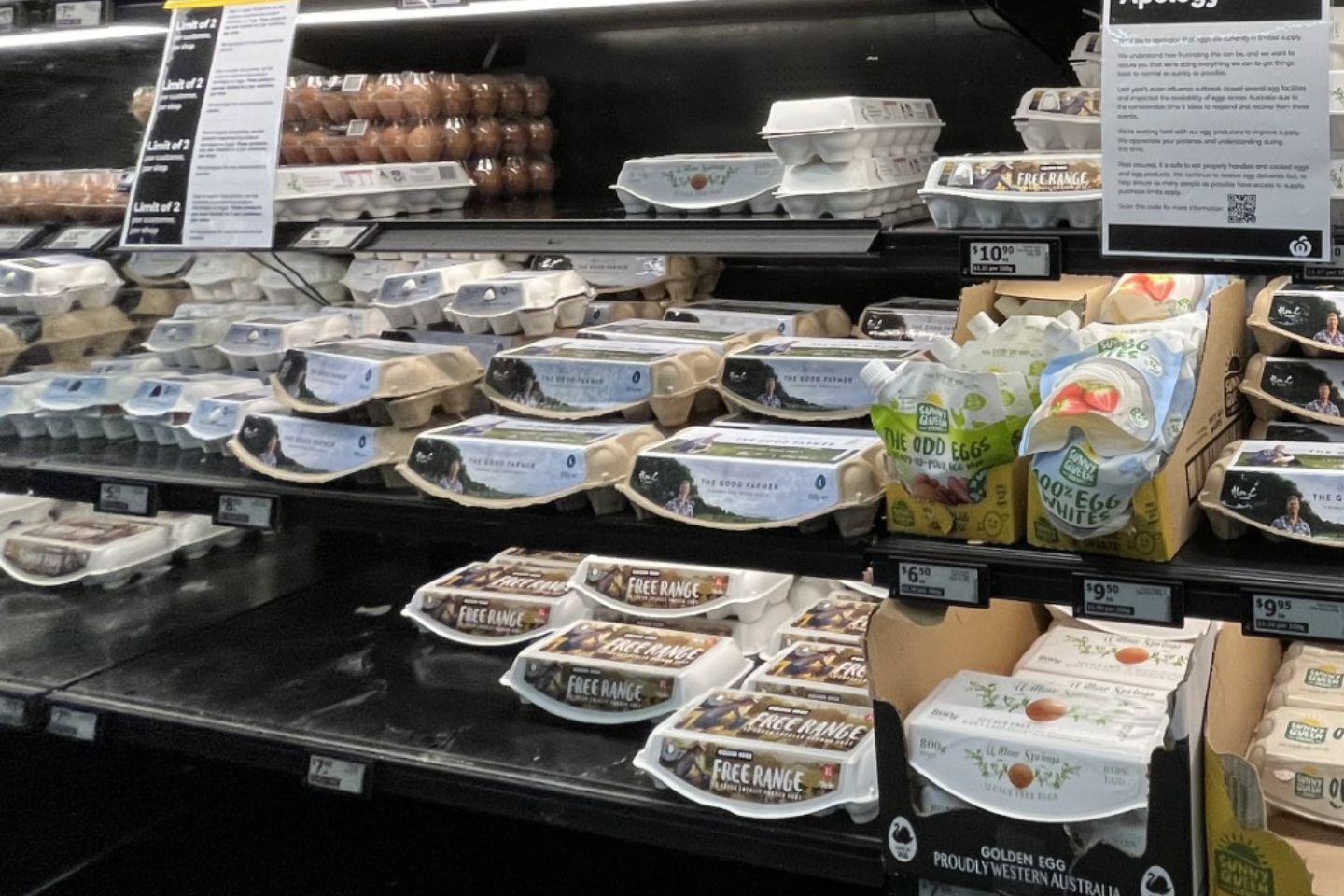
Australians have been warned against panic buying eggs and other poultry products as preliminary testing detects a case of avian flu in a third state.
Business
Thailand’s economy held steady in May, supported by growing tourism and a slight increase in domestic demand

In May, Thailand’s economy stabilized with increased tourism and slight domestic demand improvement. However, exports fell, manufacturing declined, and inflation remained elevated. Key concerns include living costs, geopolitical risks, and El Niño impacts.
Summary
- The Thai economy in May remained broadly stable compared to the previous month.
o On the external front, tourism receipts and foreign tourist arrivals overall increased, supported by a recovery in long-haul markets and an increase in tourist arrivals from China and Malaysia due to their long holiday period. However, other short-haul tourists declined due to weaker demand and reduced flights. Merchandise exports excluding gold decreased, mainly due to lower exports of electronics and jewelry following earlier acceleration in the previous period.
o Domestic demand improved slightly, supported by increases in private consumption and private investment, particularly in the automotive sector. However, consumption and investment in other categories remained relatively stable.
o On the supply side, Manufacturing production declined in line with merchandise exports, while the services sector remained broadly stable.
The Thai economy in May remained broadly stable compared to the previous month. Tourism receipts increased overall, in line with higher foreign tourist arrivals, as supported by a recovery in long-haul markets as well as increased arrivals from China and Malaysia due to their long holiday periods. However, arrivals from other short-haul markets declined due to weaker demand and reduced flight services amid elevated energy costs. Merchandise exports excluding gold declined, mainly due to lower exports in electronics and jewelry after having accelerated in the previous period.
Domestic demand improved slightly, supported by higher private consumption and investment, particularly in the electric vehicle sales, partly reflecting a shift toward the electric vehicle usage amid elevated domestic fuel prices. However, consumption and investment in other categories remained broadly stable. Government expenditure expanded from the same period last year, driven by both current and capital expenditures of the central government.
On the supply side, economic activity remained broadly stable. Manufacturing production declined in line with weaker merchandise exports, while the services sector remained broadly unchanged.
Headline inflation remained elevated but broadly stable. Energy prices declined slightly, while core inflation increased marginally.
Key issues to monitor: 1) The impact of elevated cost of living and production costs on households and businesses 2) geopolitical risks and U.S. trade policy, 3) the impact of government measures, and 4) El Niño developments
Source : https://www.bot.or.th/en/news-and-media/news/news-20260630.html
Other People are Reading

Why is Sumitomo Chemical stock surging today?


I’m a fundamental, valuation-driven investor with a strong focus on identifying businesses that have the potential to scale over time and unlock massive terminal value. My investment approach centers around understanding the core economics of a business—its competitive moat, unit economics, reinvestment runway, and management quality—and how those factors translate into long-term free cash flow generation and shareholder value creation. I focus on fundamental research, and I tend to focus on sectors with strong secular tailwinds. Professionally, I am a self-educated investor that started this journey 10 years ago. Currently, I am managing my own funds, seeded from friends and family. My motivation for writing on Seeking Alpha is to share investment insights, and also at the same garner feedback from fellow investors in this site. My aim is to help readers focus on what truly drives long-term equity value. I believe good analysis should be both analytical and accessible, and I hope my work adds value to readers looking for high-quality, long-term investment opportunities.
Analyst’s Disclosure: I/we have no stock, option or similar derivative position in any of the companies mentioned, and no plans to initiate any such positions within the next 72 hours. I wrote this article myself, and it expresses my own opinions. I am not receiving compensation for it (other than from Seeking Alpha). I have no business relationship with any company whose stock is mentioned in this article.
Seeking Alpha’s Disclosure: Past performance is no guarantee of future results. No recommendation or advice is being given as to whether any investment is suitable for a particular investor. Any views or opinions expressed above may not reflect those of Seeking Alpha as a whole. Seeking Alpha is not a licensed securities dealer, broker or US investment adviser or investment bank. Our analysts are third party authors that include both professional investors and individual investors who may not be licensed or certified by any institute or regulatory body.

BHP workers approve Pilbara labour deal, unions cite lingering concerns

Zcash Sets Ironwood Testnet Live as Wallet Speeds Surge 6x

Embolo, Ndoye score as Switzerland moves on at World Cup with win over Algeria

Stop Looking Wealthy, Start Being Wealthy #finance #money #motivation #entrepreneurship #business


-

 Fashion7 days ago
Weekend Open Thread: Staud – Corporette.com
-

 Politics7 days ago
The House | Manchesterism won’t survive the painful trade-offs unless it gets citizens on board
-

 Crypto World3 days ago
Strategy authorizes up to $1.25B in Bitcoin sales under new capital plan
-

 Business7 days ago
Asia stock markets slide as tech shares slump
-

 News Videos4 days ago
MAJOR BITCOIN & MARKET UPDATE!!!! (MUST WATCH ASAP!!!)
-

 Tech3 days ago
Anonymous researcher drops 0-day ‘exploitarium’ repo
-

 Crypto World6 days ago
Coinbase, Circle Deepen Crypto Stock Losses Despite Resilient S&P 500
-

 Business3 days ago
Australia treasurer says alleged access of prime minister’s bank data ’incredibly concerning’
-

 Crypto World6 days ago
Kraken's xStocks Opens Bending Spoons IPO Registration to EEA Retail
-

 Sports6 days ago
FIH Pro League: India defeat Pakistan 7-1, register biggest win of campaign | Other Sports News
-

 Tech5 days ago
Bluekit phishing kit adopts browser-in-the-middle for login theft
-

 Crypto World7 days ago
Tether (USDT) Passes Ether in Market Cap as ETH Drops Toward $1.5K
-
Crypto World7 days ago
Hyperliquid Named on Singapore MAS Investor Alert Register
-

 Tech6 days ago
Russian hackers now target Signal backup recovery keys
-

 Crypto World7 days ago
RTX holders must register wallets before token distribution begins
-

 Sports2 days ago
Broncos roster: OL Ben Powers (No. 74) entering final year of contract
-
 Business3 days ago
The AI boom won’t burst all at once. It will pop in ‘rolling bubbles’: Macquarie
-

 Tech5 days ago
Claude Code turned every engineer into three. Now companies need more product thinkers
-
 Crypto World7 days ago
SpaceX Called a Market Top Signal Just 2 Weeks After Its $86 Billion IPO
-

 Tech5 days ago
Silicon Valley paid to kill AI regulation, now it wants the rules back
You must be logged in to post a comment Login