
Business
Sensex surges 650 points, Nifty above 24,350. 7 key factors behind today’s D-Street rally


Sensex gained over 650 points, while Nifty 50 rose above 24,350 during Friday’s trading session. The sharp gains added nearly Rs 2.4 lakh crore to the total market capitalisation of all companies listed on BSE, pulling it up to Rs 482 lakh crore.
IT stocks continued to record strong gains, with HCL Tech, Tech Mahindra, Infosys and TCS shares rising 2-5% to lead gains on the Sensex. Tata Steel, Bajaj Finserv and Bharat Electronics shares followed, rising more than 1% each. Bucking the trend, M&M shares fell nearly 1% on Friday morning.
Broader markets, however, sharply underperformed benchmarks, with the Nifty Midcap 100 index rising only 0.2% and the Nifty Smallcap 100 index rising 0.5%. This came as India VIX, which measures volatility in the market, dropped over 1% to 12.13.
Also Read | Adani Enterprises increases QIP size to Rs 15,000 crore, draws bumper 3.8x bids

Sectorally, Nifty IT jumped more than 2% to lead gains. Nifty Metal also rose over 1.5%. Nifty Auto and Nifty PSU Bank indices, however, slipped into the red. The overall market breadth was positive, with 1,832 advances and 607 declines on the NSE, while 91 remained unchanged.
Here are the key factors boosting market sentiment today:
1) Fed rate hike worries cool down
US job growth slowed sharply in June and payroll gains for the prior two months were revised lower, data released on Thursday showed, pointing to a cooling labour market and prompting financial markets to reduce expectations for a near-term rate hike. The unemployment rate dropped to 4.2% last month from 4.3% in May as workers left the labour force, pushing the participation rate to the lowest level in more than five years.”The figures challenged the narrative that the Fed remains on track to hike in the second half of this year,” Reuters quoted Westpac analysts as saying in a research report. The tepid jobs data doused traders’ expectations of an imminent rate hike and raised the odds that the Fed will keep rates on hold until October.
Traders are now pricing in a 46.8% probability that the U.S. central bank will keep rates steady at its meeting on September 15 to 16, compared to a 35.8% chance a day earlier, according to the CME Group’s FedWatch tool.
2) Rupee opens higher
Rupee rose 18 paise to 95.17 against the US dollar in early trade. This came on the back of a weaker US dollar after the tepid jobs report. The dollar index, which measures the greenback against a basket of currencies, was 0.2% lower at 100.77 after a 0.5% decline on Thursday. It is on course for its biggest weekly drop since early April.
3) FII outflows taper off
Foreign investors remained net sellers of Indian equities, net selling shares worth nearly Rs 312 crore on Thursday, according to provisional data on the NSE. This is marginal when compared to the massive FII outflows seen earlier this year during the raging war in the Middle East.
4) Heavy buying in IT stocks
The overall market optimism was boosted by strong buying in heavyweight IT stocks like HCL Tech, TCS and Infosys. The IT stocks are extending sharp gains today, after tumbling to fresh 52-week lows earlier this week.
IT companies derive a significant portion of their revenue from the North American market. Rate hikes or a spike in inflation in the US can weigh on discretionary spending, which, in turn, may affect the sector’s growth prospects. Hence, lower expectations of Fed rate hikes, along with low valuations, are boosting the IT stocks.
5) Positive global cues
Dalal Street is accompanying global peers in sharp gains today. South Korea’s Kospi jumped 2.5%, while Japan’s Nikkei gained around 1% on Friday morning. Hong Kong’s Hang Seng and China’s Shanghai Composite also rose nearly 1% each.
On Wall Street, the Dow Jones Industrial Average rose more than 1% to post a record closing high on Thursday and a fourth straight week of gains. European markets also closed in the deep green yesterday.
6) Iran-US peace efforts
“No news is good news” is what can summarise today’s market scenario. The peace efforts in the Middle East are holding well so far, and no escalation has been reported yet. This comes after Iran and the US held peace talks in Doha earlier this week.
Iran is now preparing for the days-long funeral for the late Supreme Leader Ayatollah Ali Khamenei, whose death early in March had sparked the raging war. US President Donald Trump, meanwhile, has claimed that Iran has conceded to nearly all American conditions in the ongoing diplomatic negotiations while emphasising that the primary objective of the discussions remains preventing Tehran from obtaining nuclear weapons.
7) Oil prices
Oil prices inched up slightly to $72 per barrel, but continue to hover near the pre-war levels as the peace efforts continue to hold well so far. Kuwait’s oil production rose sharply to 1.65 million barrels per day in June from 580,000 bpd in May, Reuters reported, citing sources on Thursday, as the OPEC member boosted exports following the US-Iran interim peace agreement.
Also, at least five supertankers carrying around 10 million barrels of Saudi oil have exited the Strait of Hormuz, with Saudi Aramco switching to spot pricing to speed sales in Asia, Reuters further reported.
What lies ahead?
India’s outperformance continues, aided partly by the weakness in KOSPI and the general weakness in the chip trade, said VK Vijayakumar, Chief Investment Strategist at Geojit Investments. He added that the continuing tapering of the FII outflows is another significant factor supporting the market. But the rally will not sustain unless it is supported by fundamental factors.
“The crash in crude to pre-war level is the strongest macro support to the economy and the market. Purely from the market perspective, a strong fundamental support is the gaining strength of the banking stocks. Latest news regarding the FCNR (B) scheme is that it is receiving a good response, particularly from West Asia, where HNIs are eager to get good and safe returns in the context of the uncertainty caused by the war,” according to the analyst.
Leading banks are offering attractive leverage on deposits and mobilising big money, Vijayalkumar said, noting that there are reports that this scheme may succeed in mobilising up to $60 billion. Since there is impressive credit growth in the economy, these FCNR (B) deposits will come in handy for the deposit-starved leading banks to significantly scale up their lending. “In brief, banking stocks have the fundamental strength to sustain the rally in Bank Nifty. The IT stocks are witnessing an uptrend triggered by low valuations. But the sector has no fundamental strength to sustain the rally,” he added.
Technical view on Nifty
The near-term outlook remains cautiously optimistic, according to Rajesh Palviya, Head of Research at Axis Direct. “Sustained strength above the 24,000 mark keeps the broader trend positive, with immediate resistance seen at 24,300, followed by 24,450. On the downside, 24,050 remains a key support, while a breach could trigger a corrective move towards 23,900,” he said.
Investors, however, should remain watchful of the ongoing global technology selloff, as renewed weakness in semiconductor stocks could prompt profit booking after the recent sharp rally in domestic IT names, he added.
(With inputs from agencies)
(Disclaimer: Recommendations, suggestions, views and opinions given by the experts are their own. These do not represent the views of The Economic Times)

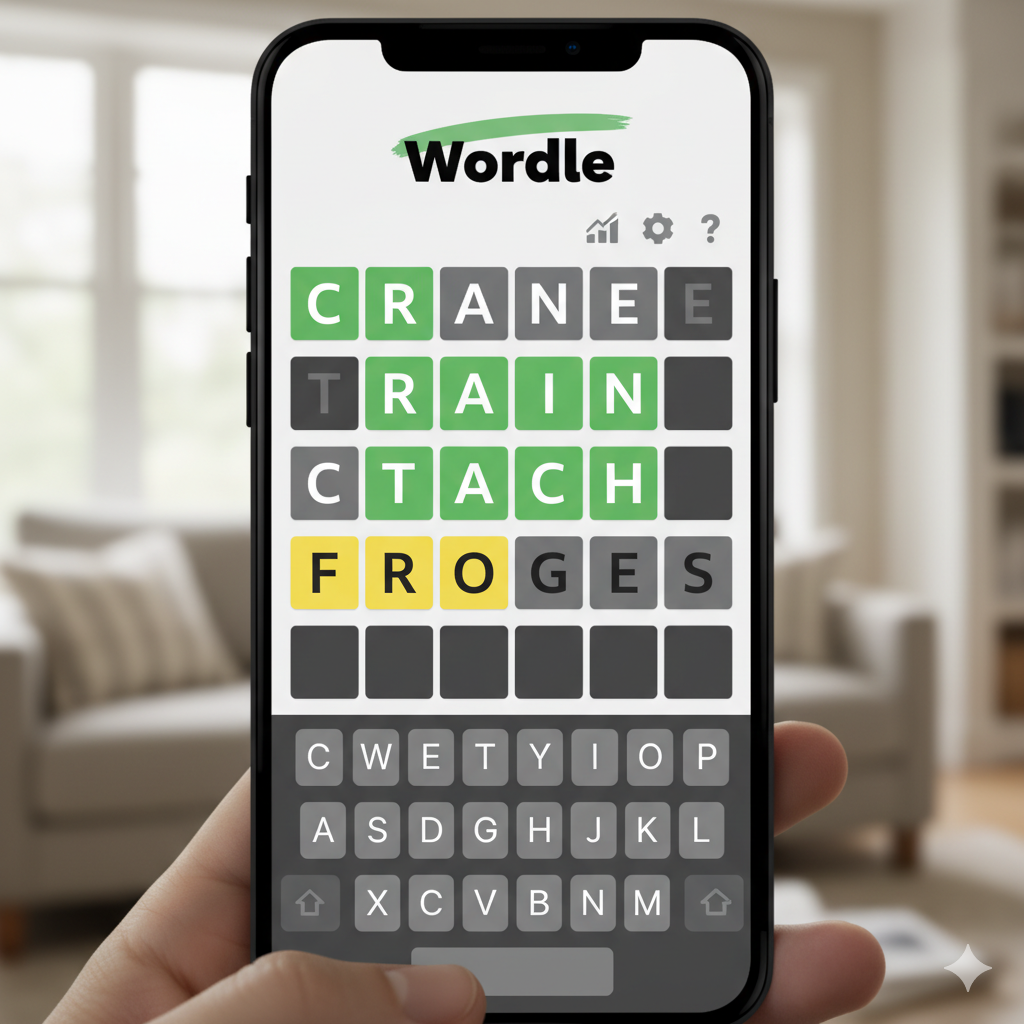
Wordle players tackling Sunday’s puzzle can find help here, with hints and the full solution for game number 1,870, the daily word puzzle from The New York Times.
The word puzzle, which challenges players to guess a five-letter word within six attempts, has remained one of the most consistently popular daily games since its rise to viral popularity in 2022. The game was originally created by software engineer Josh Wardle before The New York Times acquired it, and it has since spawned a broader family of daily puzzles under the Times’ games umbrella.
For players looking for hints before jumping straight to the answer, several clues can help narrow down the possibilities without giving the solution away entirely. Today’s word functions as an adjective and relates to matters of punishment, penalties or punitive institutions, the kind of terminology commonly encountered in legal or criminal justice contexts.
Structurally, today’s word contains two vowels and three consonants among its five letters, with no repeated letters anywhere in the word, meaning each of the five letters used appears only once. The word begins with the letter “P.”
Today’s Wordle answer is PENAL.
Penal describes anything relating to punishment, penalties or the legal systems and institutions built around punishing wrongdoing, as in phrases like “penal code” or “penal colony.” The word derives from the same Latin root, poena, meaning penalty or punishment, that also gives English words such as “penalty” and “pain.”
Puzzle strategy writers who cover Wordle daily offered guidance on effective opening words for tackling puzzles like Sunday’s. According to the New York Times’ WordleBot, which tracks how the average solver performs each day, CRANE has consistently ranked as one of the strongest overall starting words across the full archive of past puzzles, since it efficiently tests several of the most commonly occurring letters in five-letter English words without duplicating any of them. Other frequently recommended opening words include ADIEU, STARE and ROAST, each offering a different balance of vowel and consonant coverage depending on a player’s preferred strategy.
Strategy guides covering Sunday’s specific puzzle noted that words weighted heavily toward vowels, such as ADIEU and AUDIO, tend to rank lower in overall opening-word effectiveness despite their intuitive appeal, since they secure vowel placement at the cost of testing the consonants that more often distinguish one candidate word from another once a player has narrowed the field. For puzzles like Sunday’s, where the final word contains a relatively balanced two-vowel, three-consonant structure, opening guesses that spread coverage across both vowels and high-frequency consonants tend to produce more useful feedback in early guesses.
Wordle strategy guides commonly recommend a systematic approach for players working through the daily puzzle: begin with an opening word that tests several common vowels and consonants simultaneously, then use the resulting feedback, letters marked in green for correct placement, yellow for correct letters in the wrong position, and gray for letters not present in the word at all, to progressively eliminate incorrect possibilities across subsequent guesses. Strategy writers also caution players against ruling out repeated letters too early in a solve, noting that some past Wordle answers, including words like SHEEP and BLOOM, have featured a letter appearing twice, even though today’s specific answer did not follow that pattern. When narrowing down to a final one or two guesses, players are generally advised to avoid speculative or unlikely word choices in favor of guesses that satisfy all previously confirmed letter placements and exclusions.
Wordle has remained one of the most popular daily word games worldwide since its rise to prominence, spawning a broader ecosystem of related puzzles now published by The New York Times, including Connections, Connections: Sports Edition, Strands and the Mini Crossword, all of which are typically released and refreshed at the same time each day alongside the main Wordle puzzle. Sunday’s edition of Connections carried puzzle number 1,148, while Strands carried puzzle number 882, giving players a full slate of word-based challenges to work through alongside Wordle.
Players looking to maintain their daily Wordle streak, a feature the game uses to track consecutive days of play, can find Sunday’s puzzle and previous archived puzzles through the official Wordle website. The New York Times also continues to publish daily hints and strategy guidance across its games section for players seeking assistance without immediately revealing the day’s answer outright, a resource that has become a regular part of many players’ daily puzzle-solving routine, particularly on days when a puzzle’s subject matter, such as Sunday’s legal and punitive theme, falls outside a player’s everyday vocabulary.

Bitcoin holds above $63,000 as Coldcard losses near $89 million
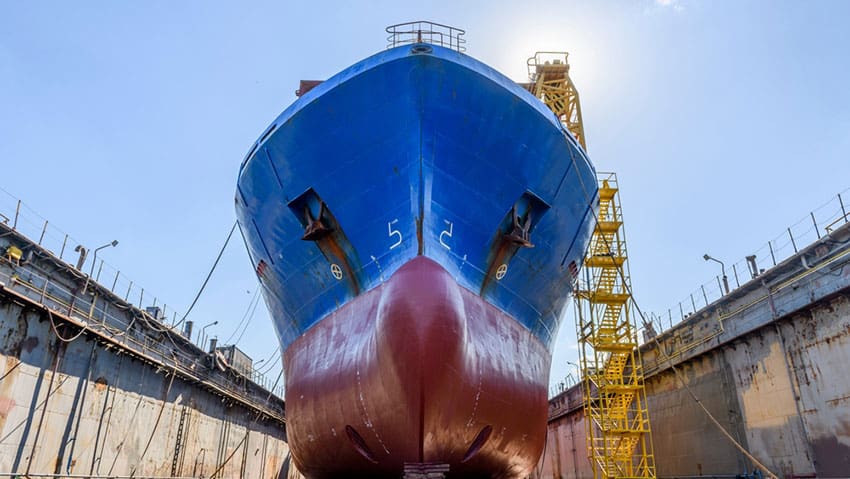
NatWest is facing a $1.1 billion damages claim from Tandanor, a shipyard in Buenos Aires, over alleged fraudulent conduct during its privatisation in 1991, the bank has disclosed in its half-year results.
The FTSE 100 bank said the claim, first filed in 2012, sought unquantified damages until December, when the claimants filed an update putting the figure at $1.1 billion.
The case relates to the sale of the state-owned shipyard under Argentina’s then-president Carlos Menem in the early 1990s.
According to NatWest, the claim was brought by Tandanor against what is now known as the “representative office” of the Royal Bank of Scotland Argentine branch and 11 private individuals. The bank said the representative office, which is in liquidation, had a 2.9 per cent “participation” in the privatisation.
The representative office inherited the claim from Banco Holandés Unido, a bank that formed part of the Dutch group ABN Amro and was bought by RBS in 2007. The Argentine ministry of defence joined Tandanor’s claim in 2014.
An Argentine court initially dismissed the claim because it had been filed too long after the alleged events. NatWest said the dismissal, on “limitation grounds”, came in 2018, and that the claimants were unsuccessful in subsequent appeals.
However, the bank said a series of judicial proceedings since November 2024 means the case has now returned to the Argentine Federal District Court “for further consideration”.
NatWest said: “The representative office continues to defend the claim and has requested a hearing.”
The disclosure came in results in which NatWest reported profit before tax up 20.4 per cent to £4.3 billion for the first half of 2026. The bank had posted first-quarter profits of £2 billion in May, when it raised its income guidance for the year.
The claim is a legacy of RBS’s expansion before the financial crisis. RBS was bailed out by the taxpayer in 2008, changed its name to NatWest in 2020 and returned to full private ownership last year after the Treasury sold down the stake it took in the £45.5 billion rescue.
Tandanor was privatised in 1991 and, according to its website, was renationalised in 2007.
No hearing date has been set. NatWest’s results did not include any estimate of the potential outcome of the proceedings.

Amy Ingham
Amy Ingham is a reporter at Business Matters, covering UK business news with a focus on breaking news, business policy, late payments and insolvency. She joined the magazine in 2026 after completing the NCTJ Diploma in Journalism at Harlow College’s journalism school. Her recent reporting includes British Steel’s nationalisation and its impact on SME suppliers, the decline in late payments by large firms, and Insolvency Service director disqualifications. Reach her at aingham@cbmeg.co.uk.
Business
No Winner in Saturday’s $707 Million Powerball Drawing as Jackpot Continues Climbing Even Higher Still
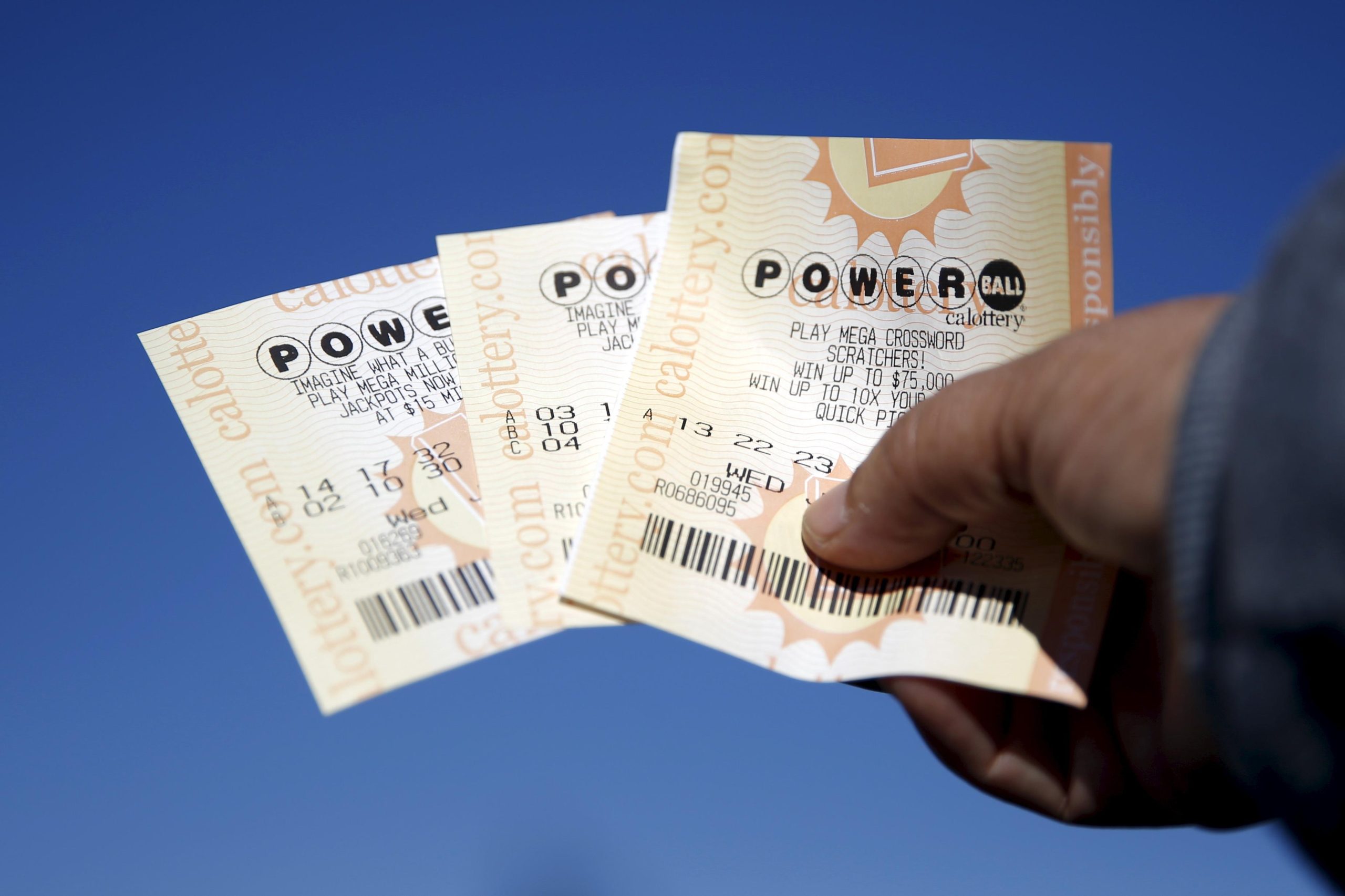
No ticket matched all the winning numbers in Saturday night’s Powerball drawing, allowing the jackpot to continue growing after the prize had already climbed to an estimated $707 million following Wednesday’s drawing, which also produced no winner.
The winning numbers drawn Saturday night were 6, 17, 27, 48 and 50, with a Powerball number of 5 and a Power Play multiplier of 3x. With no ticket matching all six numbers, the jackpot will roll over and continue increasing ahead of the next scheduled drawing.
Winners who select the lump-sum cash payout, the option most jackpot winners historically choose, would currently receive $307.3 million before taxes are applied, based on the jackpot total heading into Saturday’s drawing.
Powerball drawings are held three times a week, on Monday, Wednesday and Saturday nights, with the winning numbers broadcast live at approximately 10:59 p.m. Eastern time, or 7:59 p.m. Pacific time. Ticket sales typically close roughly an hour before each scheduled drawing, though the exact cutoff time can vary depending on the specific state where a ticket is purchased.
Each Powerball ticket costs $2 per play. Players select five numbers ranging from 1 to 69, along with one additional Powerball number ranging from 1 to 26, or can instead opt for a computer-generated Quick Pick selection rather than choosing their own numbers manually. For an additional $1 per play, players can add the Power Play option, which multiplies non-jackpot prize winnings by 2, 3, 4, 5 or 10 times, depending on which multiplier is randomly drawn during that particular drawing.
Powerball tickets are sold across 45 U.S. states, along with Washington, D.C., Puerto Rico, the U.S. Virgin Islands and, as of a recent expansion, the United Kingdom, broadening the pool of participants contributing to the game’s overall prize fund.
Saturday’s rollover keeps the Powerball jackpot well below the largest lottery prizes ever won in U.S. history, though it remains a substantial sum by any ordinary measure. The largest jackpot ever claimed in the United States was a $2.04 billion Powerball prize won in California on Nov. 7, 2022, which remains the largest lottery jackpot ever awarded in the country. Other prizes among the 10 largest U.S. jackpots on record include a $1.817 billion Powerball jackpot won in Arkansas on Dec. 24, 2025, and a $1.787 billion Powerball prize split between winners in Missouri and Texas on Sept. 6, 2025. Mega Millions, the other major multistate lottery game played across the country, has also produced several of the largest jackpots on record, including a $1.602 billion prize won in Florida on Aug. 8, 2023, and a $1.348 billion jackpot claimed in Maine on Jan. 13, 2023.
The current Powerball jackpot adds to what has already been an active year for major lottery prizes in the United States. A Florida ticket buyer recently won an $800 million Mega Millions jackpot, a prize that ranks as one of the largest lottery payouts awarded so far in 2026. Powerball’s own largest jackpot claimed so far this year stands at $250.8 million, won by a player from Arkansas.
The odds facing any individual Powerball ticket remain extraordinarily long. A single ticket faces roughly 1-in-292.2 million odds of matching all the numbers required to win the jackpot, reflecting the astronomically low probability that any given combination of numbers will match the winning draw. Despite those long odds, both Powerball and Mega Millions continue to draw significant public interest whenever their advertised jackpots climb into the hundreds of millions of dollars, a pattern that has repeated again as this jackpot has continued growing following consecutive drawings without a winner.
With no winner emerging from either Wednesday’s or Saturday’s drawings, attention now turns to the next scheduled Powerball drawing on Monday night, when the jackpot is expected to grow further still if once again no single ticket matches all the required numbers. Players interested in purchasing tickets for the upcoming drawing can do so at authorized retailers across participating states and territories, with sales typically continuing right up until the standard pre-drawing cutoff time observed in each individual jurisdiction.
Orion Group Holdings: Rising Costs And Client Delays Have Me Worried

EPR Properties Has Just Shared Game-Changing News (Rating Upgrade)
Business
Australia Records Its First Suspected Mass Bird Flu Die-Off as H5N1 Rapidly Spreads to New Species Nationwide
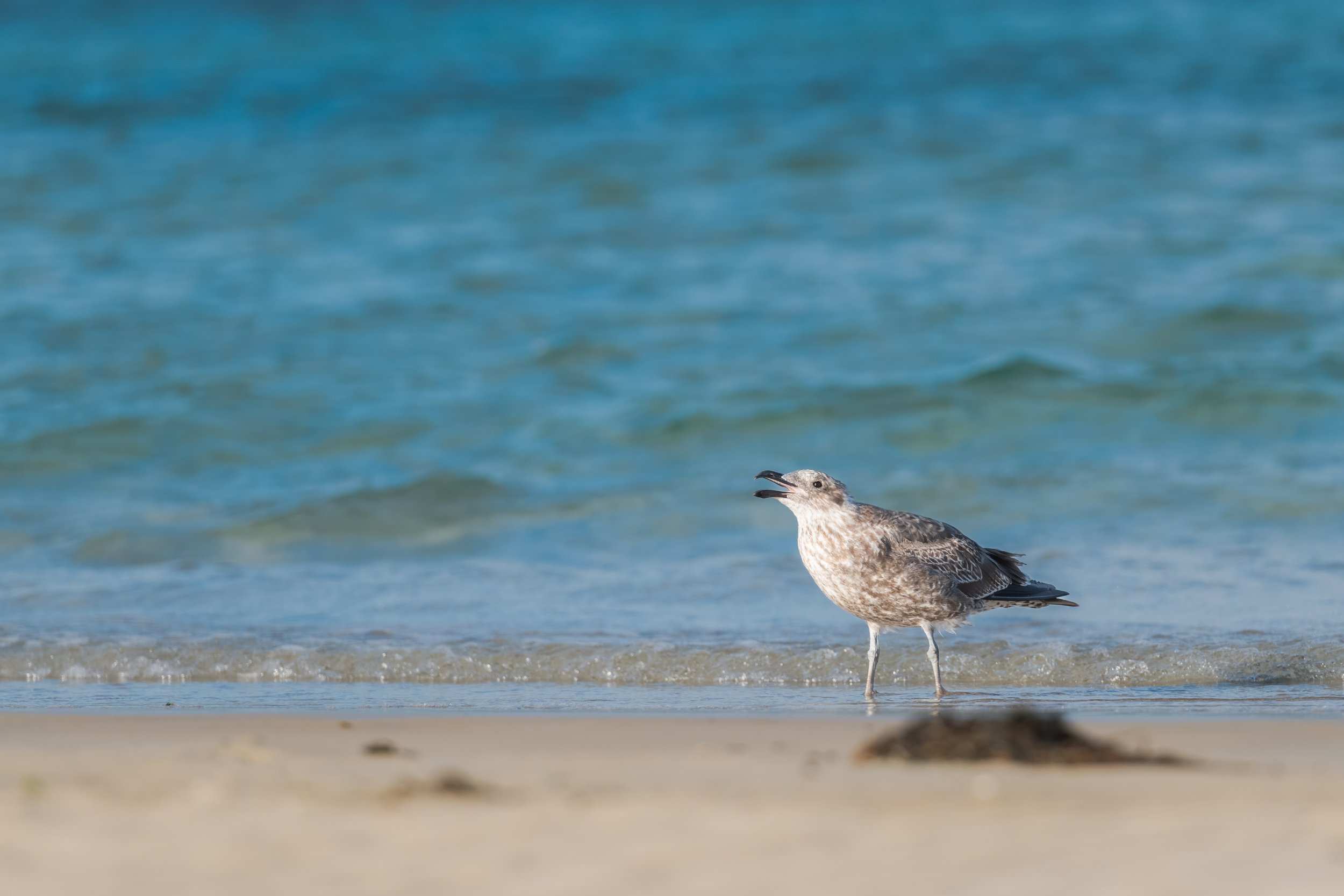
More than 80 dead and dying seabirds have been spotted off the South Australian coast in what authorities suspect is the country’s first mass mortality event tied to the H5N1 bird flu virus, just six weeks after the disease first arrived in Australia.
Helicopter surveillance conducted Saturday revealed 49 dead greater crested terns on Baudin Rocks, near Robe, along with 35 additional sick terns showing signs of the disease, according to South Australian authorities. While some of the birds have been collected for laboratory testing, South Australia’s chief veterinarian, Skye Fruean, said it was likely the first mass mortality event caused by the virus in the country.
South Australia also reported three suspected positive cases involving other greater crested terns, including one bird found inland at Monarto, an area home to several poultry farms, suggesting the disease has begun moving away from the coastline into new inland territory. Three silver gulls were also reported as suspected positive cases, adding to an earlier silver gull that had already been confirmed positive by Australia’s national science agency, the CSIRO, earlier Saturday.
Kate Millar, chief executive of the conservation charity BirdLife Australia, described the developments as a major turning point in the country’s outbreak. “Very significant escalation of the bird flu situation in Australia, and a very bleak milestone,” Millar said. “Sadly, we’re at the beginning of a long and challenging battle and birds and wildlife are going to need all the help they can get.”
Jack Gough, chief executive of the Invasive Species Council, said the pattern now emerging in Australia closely mirrors how the disease has spread in other regions previously affected by the virus. “Starting to take off” and “mirroring the experience in South America of early detections, then rapid increases in numbers and spread leading to mass mortality events in wildlife,” Gough said. He added that the timing of the suspected mass mortality event, arriving just days after the virus was declared not eradicable in Australia, illustrates how quickly the outbreak could continue escalating. “We are still at the very early stages of this devastating disease spreading, but the possible first mass mortality coming just days after the virus was declared not eradicable indicates how quickly this could escalate,” Gough said.
Fruean said there was currently no way to halt the spread of the virus once it establishes itself in a wild bird population, though she noted that ongoing surveillance efforts were successfully tracking the disease’s progression. The latest developments came at the end of a significant week for the outbreak, with confirmed case numbers jumping by 20 over just a few days to reach a current total of 53.
Australia had been the last continent in the world to record the arrival of H5N1, a strain of avian influenza that has killed millions of birds and mammals across the globe since it began spreading widely in recent years. Victoria confirmed its first cases of the virulent strain this week, in a greater crested tern found in Portland, joining Western Australia, South Australia, New South Wales and Queensland, all of which have now recorded positive cases of the disease. Victorian authorities said Saturday that samples from five additional crested terns had been sent to the CSIRO’s laboratory in Geelong for testing, with preliminary results suggesting further positive cases are likely.
The outbreak has also raised significant concern for one of Australia’s endangered species. Five confirmed cases in birds at Seal Bay on Kangaroo Island have heightened fears for the welfare of the area’s Australian sea lions, given that tens of thousands of seals have died from the virus in outbreaks elsewhere around the world.
Sean Dooley, national affairs adviser at BirdLife Australia, said the detection of the virus in silver gulls specifically marks a particularly worrying new stage in the outbreak’s spread. “When people think of a seagull, they’re almost always thinking of the silver gull,” Dooley said. He noted the species’ wide range and adaptability make it a potentially significant vector for further spread. “They’re very common, and primarily they are coastal, but they do come inland and can turn up in Lake Eyre following floods,” Dooley said.
Silver gulls represent the second Australian native species confirmed to have contracted the disease, following dozens of earlier detections in greater crested terns. Dooley said it is specifically the scavenging behavior of silver gulls that concerns experts, since the birds commonly feed on dead or dying animals, a habit that makes them especially prone to picking up the virus from other infected birds. Dooley added that silver gulls also forage detritus from lakes and flooded areas, environments known to serve as breeding grounds for the disease. “There is such a large population of silver gulls, and they move into other habitats. They could be the vector that takes bird flu inland,” Dooley said. “They’re also really successful in urban areas and could bring the disease into those bird populations.”
Because Australia is home to a high concentration of unique native bird species, scientists do not yet know how susceptible many of those species will prove to be to the virus, though experts see no clear reason to expect Australian birds would fare better than bird populations affected overseas. Species that flock around water have historically suffered the heaviest losses in other countries, including sandwich terns, black-headed gulls and northern gannets in Europe, along with pelicans in Peru.
Dooley described the mood within BirdLife Australia this week as one of “trying to suppress that sinking, gut-churning feeling,” noting that the coastal birdwatching season had been unusually strong this winter, with rare petrels appearing in significant numbers along the east coast. “Now that has been heavily tinged because probably among those were birds carrying H5N1,” Dooley said.

A restaurateur friend of mine, who I shall not name because he has to keep serving these people, rang me recently with a tale of woe.
A couple had arrived at his place at one o’clock on Saturday, ordered a burrata to share, one sea bass, a single glass of picpoul and a jug of tap water, and were still there at ten past five. He knows this precisely because in the intervening hours he had turned every other table in the room twice, sent the kitchen home for its break and started laying up for dinner, and there they still were in the window, gazing at each other across the wreckage of a shared crème brûlée.
Four hours. One fish. There is a term in property law for what they were doing, and it is not lunch.
Which brings me to Jeremy King, the man who gave us The Wolseley, Le Caprice in its pomp and the resurrected Simpson’s in the Strand, and the nearest thing British hospitality has to a reigning monarch. Speaking recently on Andy Coulson’s Crisis What Crisis podcast, King observed that the average dwell time at a table in New York is about an hour and a half. In London it is about two and a half hours. In Dublin it is four and a half, at which point you are no longer dining, you are establishing adverse possession. “We have to adapt to keep the lights on,” he said.
He is right, and the numbers are worse than they sound, because somewhere in the last decade the British diner stopped treating a restaurant table as a service and started treating it as an assured shorthold tenancy. We book for eight o’clock and believe we have exchanged contracts. By the main course we have mentally moved in. By the second flat white we are sitting tenants with full security of tenure, and the waiter hovering with the bill is no longer a professional trying to run a business but a rogue landlord attempting an unlawful eviction. Somewhere in Dublin tonight, a table of four is applying for planning permission.
None of this would matter if the table were not the only thing a restaurant actually sells. The food is the excuse. The real product is a few square feet of warm room, rented out in sittings, and a cover is the most perishable stock on earth. An empty chair at seven o’clock cannot be warehoused and sold on Tuesday. It is gone, like an unsold airline seat, except the aeroplane at least gets to fly somewhere nicer.
And the arithmetic has never been tighter. The cost of living squeeze has trimmed what each of us spends when we do go out. The Ozempic brigade order less and the sober-curious drink less, a shift King is too courteous to complain about, though he notes it shortens nobody’s stay. Brexit hollowed out the kitchens and the sector has been tens of thousands of chefs short ever since. Pile on April’s employer National Insurance rise, the living wage and business rates, a combination I have already accused Reeves and Starmer of aiming squarely at the restaurant trade, and you get licensed venues going dark at more than three a day, the fastest contraction since the pandemic.
Business readers will recognise the underlying disease at once: this is an asset utilisation problem, the same arithmetic that governs airlines and hotels. A plane only earns in the air. A hotel room only earns when someone is asleep in it. A restaurant table only earns while plates are landing on it. The metric the smart operators watch is revenue per available seat hour, and when average dwell stretches from two hours to two and a half, that is a 20 per cent cut in capacity with no strike, no new tax and no closure notice. It is the equivalent of every fifth table being removed from the room by customers who think they are being romantic.
Government will not fix this. Its own entrepreneurship adviser recently declared that Britain does not need any more restaurants, which tells you the cavalry is not coming. But here is the cheering part: the utilisation rate is not controlled by the Treasury. It is controlled by us, the diners.
So if you love your local, book the half six sitting. Order like you mean it. Eat well, eat generously, and then, and this is the crucial innovation, leave. Give the table back. The second sitting is where the margin lives, and the most patriotic thing you can do with a Tuesday evening is have a very good dinner in ninety minutes flat.
As for my friend’s window-table couple, the sea bass was excellent, apparently, and he would be delighted to have them back. Just, next time, on a shorter lease.

Richard Alvin
Richard Alvin is a serial entrepreneur, a former advisor to the UK Government about small business and an Honorary Teaching Fellow on Business at Lancaster University.
A winner of the London Chamber of Commerce Business Person of the year and Freeman of the City of London for his services to business and charity. Richard is also Group MD of Capital Business Media and SME business research company Trends Research, regarded as one of the UK’s leading experts in the SME sector and an active angel investor and advisor to new start companies.
Richard is also the host of Save Our Business the U.S. based business advice television show.

AXT Deserves A Higher Valuation Due To Multi-Year Demand Cycle In AI Infrastructure

Fans of The New York Times’ daily word-grouping puzzle can find help here for Sunday’s edition, with hints and the complete solution for Connections game number 1,148.
Connections challenges players to sort 16 seemingly unrelated words into four groups of four, with each group sharing a hidden connection. The puzzle ranks its four categories by difficulty using a color system, from yellow, the most straightforward, through green and blue, up to purple, generally the trickiest and most conceptually layered grouping of the day. Sunday’s puzzle relied heavily on misdirection, with several words appearing to fit obvious travel or conversational themes before revealing a very different underlying pattern, according to coverage from multiple outlets that track the daily game.
Sunday’s 16 words, presented here in alphabetical order so as not to give away any grouping, are: À LA, ACTUALLY, AIRPLANE, ASEA, BEAST, BY, DARK, FLAX, LIKE, LORD, OLGA, PER, SO, THROUGH, VIA and WELL.
Players looking for hints before jumping to the full answer can use the following category descriptions to narrow their thinking. One group gathers common filler words people use in conversation that add little actual meaning beyond padding out a sentence. A second group brings together words and prepositions that all convey a similar idea: accomplishing something by a particular means or method. A third group consists of words that can each precede the same single word to describe a specific setting or state something is in. The fourth and typically most difficult group involves familiar three-letter airport codes with an extra letter added to the front.
For those ready for the complete solution, here are Sunday’s four groups and their associated words.
The yellow category, the most straightforward grouping of the day, gathers common conversational filler words: ACTUALLY, LIKE, SO and WELL. Each word functions as a verbal filler commonly used in everyday speech, adding length to a sentence without necessarily contributing essential meaning, the kind of habitual word choice linguists often study as a feature of natural spoken conversation.
The green category, built around words meaning “by means of” or “through,” includes BY, PER, THROUGH and VIA. Each word can be used to indicate the method or channel through which something is accomplished, as in phrases like “by hand,” “per instructions,” “through the mail” or “via email.”
The blue category, focused on words that can each precede “mode” to describe a specific setting or state, includes À LA, AIRPLANE, BEAST and DARK. The wordplay connects each term to a common compound phrase: à la mode, referring to something served in a particular style, often with ice cream; airplane mode, the smartphone setting that disables wireless connectivity; beast mode, a colloquial phrase for an intensely focused or aggressive state; and dark mode, the display setting many apps and devices offer as an alternative to a standard bright interface.
The purple category, generally the most difficult grouping of the day, gathers familiar U.S. airport codes with an extra letter added at the start: ASEA, FLAX, LORD and OLGA. Each word conceals a well-known three-letter airport code once its first letter is removed: SEA, the code for Seattle-Tacoma International Airport, within ASEA; LAX, the code for Los Angeles International Airport, within FLAX; ORD, the code for Chicago O’Hare International Airport, within LORD; and LGA, the code for LaGuardia Airport in New York, within OLGA.
Puzzle strategy guides commonly advise players to begin with the category they feel most confident about, since locking in an easier group early can help clarify which words remain for the trickier, wordplay-driven categories later in a solve. Guides covering Sunday’s puzzle specifically warned players to watch for red herrings, noting that words like AIRPLANE and BEAST initially appear to fit travel or animal-related themes, while ACTUALLY and LIKE could easily be mistaken for a general conversational category, before the underlying “mode” and filler-word patterns become clear.
Connections remains one of several daily word games published by The New York Times, joining Wordle, Strands, the Mini Crossword and the newer Connections: Sports Edition, a themed spinoff applying the same grouping format to sports-related terminology. All of the Times’ daily puzzle offerings typically reset at midnight local time, giving players a fresh challenge to tackle each day.
Players hoping to protect an ongoing daily streak, a feature Connections uses to track consecutive days of successful puzzle completion, can access Sunday’s puzzle, along with archived puzzles from previous days, directly through the New York Times Games platform. For solvers who become stuck without wanting to reveal the full solution immediately, the Times and various puzzle-focused outlets typically offer tiered levels of hints, ranging from broad category descriptions to more specific clues, before revealing the complete answer for those who have exhausted their guesses or simply prefer to check their work against Sunday’s finished grid.

Alonso welcomes Mykhailo Mudryk Chelsea return after doping ban

Securities firm Rosenblatt raises its AAPL price target following earnings call

#famousshorts #motivation #money #bank #facts #youtubeshorts #video #3stooges #life #finance


-
 Sports7 days ago
Commonwealth Games boxing: Jadumani Singh seals dominant 5-0 win over Pakistan’s Sumama Rehman to enter quarter-finals | Commonwealth Games News
-

 Business4 days ago
Why Trees Belong on the Risk Register
-

 Fashion2 days ago
Weekend Open Thread: Wit & Wisdom
-

 Tech6 days ago
Intel is reversing course and bringing hyper-threading back to its server chips
-

 Politics2 days ago
Meta enters AI-training agreement with far-right ‘propaganda rag’ Newsmax
-

 Politics6 days ago
Luke Littler dismantles Gerwyn Price to retain title in Blackpool
-

 Crypto World20 hours ago
MicroStrategy Post-Earnings CLARITY Act Push Could Add New Catalyst for Its Stock
-

 Politics5 days ago
The Part of the Electric Transition Nobody Wants to Discuss
-
 Entertainment5 days ago
‘Stargate’ Creator’s New Sci-Fi Series Returns for Season 3 Tomorrow
-

 News Videos7 days ago
BITCOIN JUST ENTERED THIS CRITICAL ZONE…
-

 Business4 days ago
Major shareholder moves on Canyon
-

 Politics7 days ago
Spain sweeps the board at 2026 World Cup with individual awards
-

 News Videos3 days ago
Bitcoin Enters the 3rd Stage of the Bear Market
-

 Crypto World1 day ago
XRP Ledger v3.3.0 brings five institutional features
-

 Crypto World4 days ago
Kraken Enables Retail Access to Jersey Mike’s IPO via Tokenized Shares
-

 Tech5 days ago
New macOS Sequoia & Sonoma security updates for older Macs
-

 News Videos5 days ago
Claude: Build Financial Dashboards in Minutes (2026)
-

 Politics3 days ago
Luke Littler’s dominance sparks GOAT debate
-

 Sports2 days ago
Seema Kaliramna Wins Discus Throw Bronze, Takes India’s CWG Medals Tally To 17
-

 Business5 days ago
Johnson & Johnson agrees to $5.5B settlement over talc cancer claims
You must be logged in to post a comment Login