
Business
Nikkei 225 Climbs 506 Points Toward Record Territory as Bank of Japan Eyes a September Interest Rate Hike

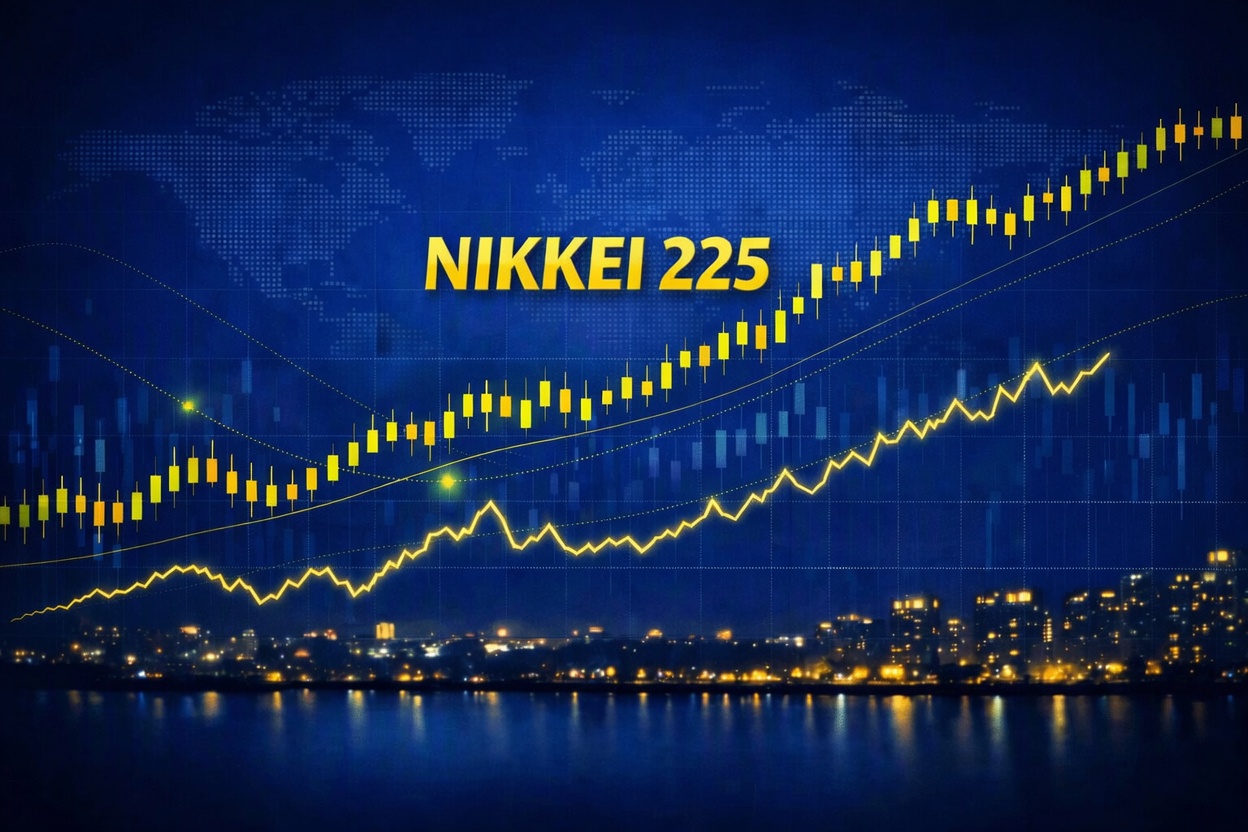
TOKYO — Japan’s Nikkei 225 climbed 506.45 points, or 0.74%, to 69,220.25 as of 3:45 p.m. local time Monday, extending a recovery from Friday’s pullback and pushing the benchmark back toward the record territory it briefly touched last week, even as investors weighed fresh signals that the Bank of Japan may raise interest rates as soon as next month.
Monday’s session opened essentially flat, with the index starting near 68,713.80, unchanged from Friday’s closing level, before gaining momentum through the day. The advance came despite a report from Reuters indicating that the Bank of Japan is considering an interest rate hike as early as September, alongside a potentially faster pace of monetary tightening than markets had previously priced in, a development that carries significant implications for Japan’s export-heavy equity market through its effect on the yen.
The rate-hike signal matters most for Japanese equities through the currency channel. A stronger yen, particularly if reinforced by any coordinated effort between U.S. and Japanese authorities to push back against yen speculators, would tend to compress the value of overseas earnings that Japan’s major exporters convert back into domestic currency, potentially weighing on the profitability of companies whose sales are heavily weighted toward international markets.
Monday’s gains followed a volatile end to the previous week. The Nikkei touched a fresh intraday record high of 69,639.00 on Thursday before retreating through the afternoon session, ultimately closing at 68,732.00 on Friday, down 0.65% for the day. That pullback came after the index had opened Friday at 69,338.00, its highest opening level in recent trading, before steadily giving back gains as the session progressed. The day’s trading range, spanning from a low of 68,471.50 to the intraday record above 69,600, illustrated the scale of the reversal that unfolded within a single session.
Despite Friday’s retreat, the Nikkei has remained one of the standout performers among major global equity indices in 2026, having gained more than 58% over the trailing twelve months as of the most recent full-year comparison. The index has traded within a 52-week range of 41,835.17 to 72,831.73, with the upper end of that range representing a record high reached in June, underscoring both the scale and volatility of the rally that has carried Japanese equities sharply higher over the course of the year.
The broader Japanese market’s underlying strength has extended beyond the technology sector that has often driven headline gains. The TOPIX index, a broader gauge of the Tokyo Stock Exchange, set its own fresh record during the same week the Nikkei pulled back from its intraday high, suggesting the rally has drawn support from a wider base of sectors including financials, materials, energy and industrials, alongside the more closely watched technology and semiconductor-related names that have dominated recent market coverage.
Individual stock performance in recent sessions has reflected that broader participation. Gains on Friday were led by Nintendo, which rose 6.80%, followed by Sony, up 5.38%, and Furukawa Electric, which gained 5.33%, according to data compiled by Trading Economics. On the downside, Isetan Mitsukoshi fell 3.92%, DIC declined 3.84% and Toppan dropped 3.52% during that session, illustrating the uneven performance across sectors even as the broader index posted a moderate loss.
The rally in Japanese equities through the summer has been supported by a combination of factors, including a weaker yen earlier in the year that boosted the competitiveness and repatriated earnings of Japan’s export-oriented companies, alongside broader global enthusiasm for technology and artificial intelligence-related investment that has lifted markets in Japan alongside other major economies. Japanese Prime Minister Sanae Takaichi’s earlier expressed reservations about aggressive Bank of Japan rate increases, along with her nomination of academics viewed as favoring continued monetary easing to the central bank’s policy board, had previously reinforced market expectations that the BOJ would take a cautious approach to tightening, a dynamic that had helped support the yen’s weakness and, by extension, Japanese equity valuations.
The latest reporting suggesting a possible September rate hike represents a notable shift in that narrative, raising questions about whether the central bank’s approach to monetary policy may be evolving more quickly than markets had anticipated earlier in the year. Investors are likely to scrutinize upcoming commentary from Bank of Japan officials closely in the coming weeks for further clarity on the timing and pace of any prospective policy tightening, given the significant implications such a shift could carry for both the currency and the broader equity market.
Monday’s advance also came against a backdrop of generally positive sentiment across Asian markets, with Hong Kong’s Hang Seng index opening 1.3% higher the same day even after Beijing signaled it would support economic growth without introducing a major new stimulus package, according to Reuters reporting cited by market commentators. That broader regional risk appetite appeared to provide additional support for Japanese equities as they extended their recovery from Friday’s session.
Looking ahead, the Nikkei’s ability to reclaim and sustain levels above 69,000, and ultimately challenge its June record high of 72,831.73, is likely to depend heavily on how the balance between continued corporate earnings strength and the emerging shift in Bank of Japan policy expectations plays out in the coming weeks. Should the central bank move forward with a rate increase in September as recently reported, the resulting effect on the yen could test the durability of the export-driven gains that have powered much of the Nikkei’s rally so far this year, even as the broader strength evident across financials, materials and industrial sectors suggests the market’s advance has not been narrowly dependent on currency dynamics alone.

Business
Robbie Williams Reveals Autism Diagnosis, Says It’s Now His ‘Get-Out-of-Jail-Free Card’ for His Quirks

LONDON — Singer Robbie Williams has revealed that he was recently diagnosed with autism, telling fans the discovery has helped him make sense of aspects of his personality and behavior that had puzzled him for years, even as he acknowledged already living with ADHD.
The 52-year-old former Take That frontman shared the news during a question-and-answer session at the Autumn/Winter launch of his clothing line, Hopeium, at Flannels in London on Aug. 13. Speaking candidly to attendees, Williams described the diagnosis in blunt terms. “I have ADHD and I just found out I have a bit of autism as well, which I actually f****** love because it explains so much,” Williams said.
Williams went on to joke about how the new diagnosis has already begun shaping the way he explains his own behavior to those around him. “It is my get-out-of-jail-free card now, and all the weird s*** that I do I just say, ‘Sorry, I’m autistic,’” he told the crowd.
The singer, who first disclosed his ADHD diagnosis in 2023, used the London event to offer a more detailed picture of how the condition affects his daily life and creative process. He described an intense, singular focus that ADHD allows him to bring to certain tasks, contrasted against significant difficulty engaging with other responsibilities. “With the ADHD you can completely and utterly concentrate on something 1000 per cent, but with absolutely everything else, you just cannot do it. Ask my kids,” Williams said.
Williams explained that he leans heavily on creative work as a way of managing anxiety and the intrusive thoughts that can otherwise dominate his attention. “What I’m completely and utterly obsessed with is creating images and making funny things,” he said. “If I’m creating images and funny things, I’m not thinking about me, because my brain is incredibly creative, and it can be creative about everything in the world that you panic or scared about.”
To illustrate the nature of those intrusive thoughts, Williams offered a specific and unusual example from a recent flight. “For example, this is how crazy I am, recently I was sitting on a plane, and I thought, ‘what if I can have telekinesis and my intrusive thoughts tell the plane to crash itself,’” he said. He described the anecdote as representative of a broader pattern he has learned to manage by redirecting his focus toward creative outlets rather than allowing such thoughts to spiral further. “So that’s the kind of level of insanity that I’m dealing with,” he said. “It’s best to train my brain to do something better than worrying about having supernatural powers and crashing a plane.”
Monday’s revelation builds on a broader, yearslong pattern of Williams speaking openly about his mental health, a subject he has addressed repeatedly throughout a solo career that began in 1997 following his departure from Take That. In October of last year, Williams disclosed that he had also been diagnosed with Tourette syndrome, a neurological condition that can cause involuntary tics, describing his own experience of the condition as manifesting primarily through what he called “inside Tourette’s.” Speaking to comedian Paul Whitehouse and researcher Dr. Mine Conkbayir for their podcast “I’m ADHD! No You’re Not,” Williams explained the concept in his own terms, describing the phenomenon as intrusive thoughts rather than the more commonly recognized physical tics associated with the condition.
Notably, Williams’ path toward his current autism diagnosis was not straightforward. During that same 2025 podcast appearance, he revealed that an earlier online autism screening test had not classified him as autistic, though it had identified certain traits associated with the condition, particularly around social interaction. “It turns out I’m not [autistic], but I’ve got autistic traits. And it’s around, social stuff, it’s about interaction,” he said at the time. When pressed by Conkbayir about why he remained convinced he might still be autistic despite the test result, Williams explained that obtaining an official diagnosis would offer him a clearer understanding of longstanding personal struggles. He said a formal diagnosis would help him gain “understanding of why I feel so uncomfortable in my skin,” adding that his sense of comfort was largely confined to very specific circumstances. “When I’m in bed, that’s my comfort zone. Anywhere outside of that bed is my discomfort zone,” he said at the time, while noting that the situation had been gradually improving.
That same conversation offered insight into the gap Williams has said exists between his public persona and his private experience of anxiety and self-doubt. He described himself as highly skilled at concealing his internal struggles behind a more confident public image. “I’m an Olympian at masking,” he said, explaining that he had learned over the course of his career to project confidence, bravado and even smugness, qualities he acknowledged had proven commercially valuable throughout his decades as a performer, even as they masked a very different internal experience.
Williams has built one of the most enduring solo careers in British pop music since leaving Take That in the mid-1990s, releasing more than a dozen studio albums, including his most recent release, “Britpop,” which arrived in January. Throughout that career, he has periodically opened up about mental health struggles including anxiety and depression, gradually building a public record of candor about conditions that he has said significantly shape both his creative process and his day-to-day life.
The National Health Service in the United Kingdom defines autism as a difference in how a person’s brain develops that affects how they see and experience the world, noting that the condition can influence communication, thinking, learning and attention. Autistic individuals are also more likely to experience certain co-occurring conditions, according to NHS guidance on the subject, a pattern broadly consistent with Williams’ own disclosure of both ADHD and autism alongside his previously reported experience with Tourette syndrome.
As of this report, Williams has not indicated whether he plans to speak further publicly about his autism diagnosis or how it may influence his approach to future creative projects, live performances or public appearances, though his history of openly discussing his mental health suggests the subject is likely to come up again as he continues promoting his music and other ventures, including his Hopeium clothing brand.

In today’s fast-paced BPO industry, workstation efficiency plays a critical role in maintaining service quality, improving agent productivity, and managing operational costs. As organizations continue to scale, traditional desktop environments often become more difficult and expensive to maintain due to their larger footprint, higher power consumption, and deployment complexity.
Modern BPOs require workstation solutions that are compact, reliable, scalable, and built for long-term business operations.
The combination of the ASUS NUC 16 Pro and ASUS VA249HG delivers a smarter and more efficient alternative to traditional desktop setups for modern BPO environments.
ASUS NUCs deliver enterprise-grade reliability with MIL-STD-tested durability and an RMA rate of less than 1%, helping reduce unexpected hardware failures, minimize service interruptions, and lower the operational burden on IT teams managing large workstation fleets.
Compared to traditional desktop setups, organizations can reduce electricity consumption by up to 48%. With typical power usage ranging from only 60W to 120W, ASUS NUCs are designed for energy-efficient operations, making them an ideal solution for businesses where electricity is a major operational expense—especially BPO environments running 24/7 at scale. Through lower power consumption and operational efficiency, companies can potentially save up to PHP 1.4 million in operating costs.
With its ultra-compact 4×4 form factor, ASUS NUCs help maximize workspace efficiency, allowing BPO operators to optimize office layouts and accommodate more workstations within the same floor area. Compared to traditional tower desktops, ASUS NUCs can save up to 80% more space without compromising performance. The ultra-compact ASUS NUC 16 Pro is designed to maximize every square meter of the production floor while delivering enterprise-ready performance for demanding business environments.
Paired with the ASUS VA249HG monitor, the latest ASUS NUC 16 Pro provides BPO companies with a smarter, more scalable workstation solution built for modern operations.
Beyond performance and space efficiency, the ASUS NUC 16 Pro is built with business- focused features designed to support modern BPO and enterprise environments.
Equipped with dual LAN ports, it provides stable and reliable network connectivity for mission-critical operations. This allows IT teams to implement dedicated network configurations and redundancy support that can help minimize potential network interruptions in customer-facing environments.
Its compact and versatile design also simplifies large-scale deployment, enabling faster installation, easier maintenance, and more efficient workstation management across multiple office locations. For businesses expanding operations, the lightweight form factor helps reduce logistical complexity compared to traditional desktop towers.
Complementing these advantages is Power Sync support with the ASUS VA249HG monitor, enabling synchronized power control between devices to streamline workstation management while supporting more energy-efficient workplace operations.
As the BPO industry continues to evolve, organizations need workstation solutions that balance performance, reliability, scalability, and operational efficiency.
The combination of the ASUS NUC 16 Pro and ASUS VA249HG offers a compact yet powerful workstation setup designed for modern business demands. From space-saving advantages and simplified deployment to enterprise-ready performance and reliable connectivity, it provides businesses with a smarter alternative to traditional desktop environments.
For organizations looking to modernize workplace infrastructure while optimizing operational efficiency, ASUS NUC delivers a scalable and future-ready solution built for the evolving needs of modern BPO operations.
Explore ASUS NUC solutions and submit inquiries via the official ASUS Business Solutions page: https://www.asus.com/ph/event/BusinessSolutionInquiryPage/
You may also connect with our Authorized Distributors: Techtron Systems Corporation, VST ECS Phils. & Ubertech Inc or authorized ASUS dealers nationwide for specifications, availability, and tailored deployment support.

Business News Philippines was launched in October 2015 as a portal for readers to learn more about operating a business in the Philippines.
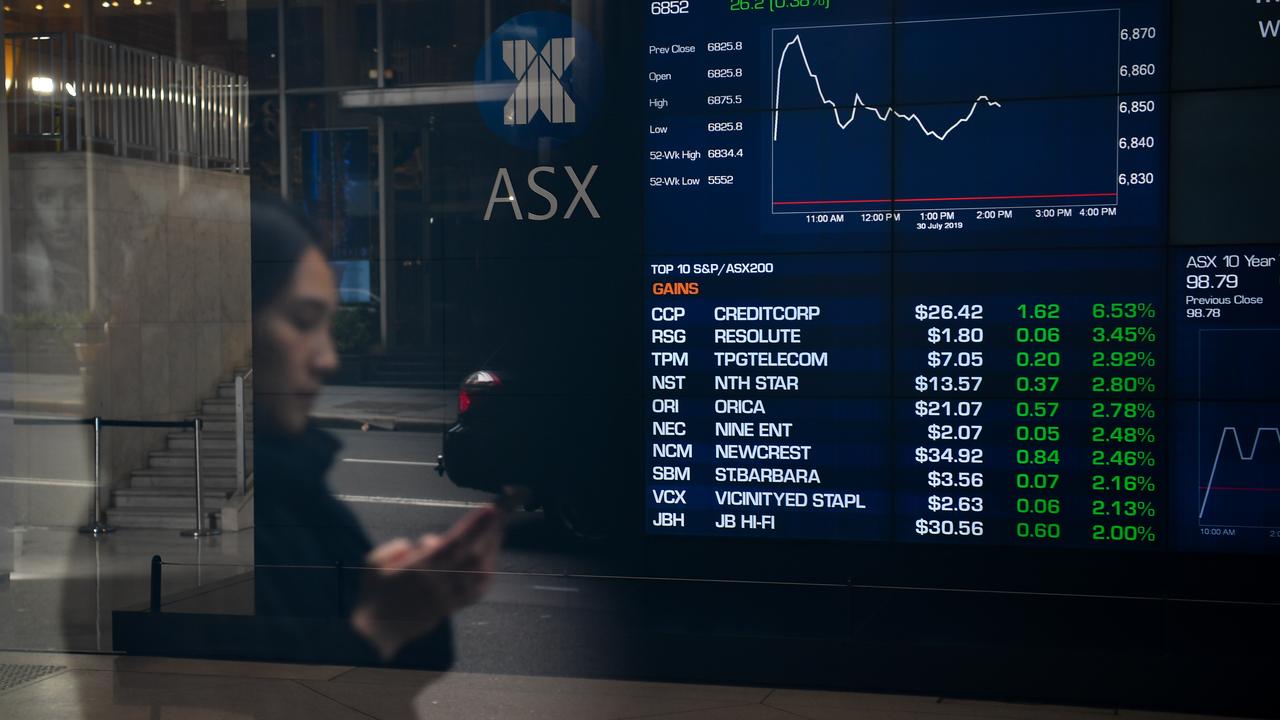
Australia’s share market has started the week on the back foot as investor concerns about the economic outlook weigh on banks and consumer discretionary stocks.
India therefore faces a delicate balancing act. It wants to make UPI financially sustainable without disturbing the conditions that helped make it ubiquitous.
It is not an impossible task. Brazil’s Pix, another hugely successful instant-payment system, is free for individuals but permits low-cost charges for businesses. Yet it is the world’s fastest-growing real-time payment system,, external used by more than 140 million people and 14 million companies, with more than four billion transactions a month averaging about $88 each.
“The key question is not simply whether UPI should remain free for every merchant transaction,” Motheram says, “but whether the pricing structure protects the marginal merchants who are still being brought into the digital payments ecosystem.”
That may be the real test of India’s next UPI experiment.
The first phase was about creating the network. The second was about getting hundreds of millions of people and millions of merchants onto it. The third is now beginning: figuring out how to pay for the system without making it less useful.
Economist Renuka Sane believes the right pricing structure could finally restore “commercial sanity”, external to India’s digital payment rails, allowing the market to price risk, fund critical infrastructure and build a more resilient payments ecosystem.
The bigger risk may not be that Indians suddenly abandon UPI because a large retailer is charged a fraction of a percentage point: experts say its network effects are now too powerful for that.
But there is a potential perception problem: a 2024 survey by polling agency LocalCircles found that 75% of UPI users said they would stop using it if transaction fees were introduced, while only 22% said they would be willing to pay.
The risk is subtler. If charging merchants makes some of them less enthusiastic about accepting UPI – or eventually discourages the smallest ones from joining – the network could begin to lose some of the frictionless quality that made it so successful.

Yes. Corporate subscriptions are available for teams and organisations, with discounted rates as user numbers increase. Pricing starts from $1,625 + GST per user.
Get in touch
to discuss the right option for your organisation.
Business News subscriptions are used by executives, investors, consultants and professionals who need to stay informed and make better decisions about the WA market. When you subscribe you’ll get
- Unlimited access to WA’s most trusted business journalism
- Data & Insights — detailed profiles of WA companies, people, projects and deals
- MyBN — a personalised feed based on the companies, people and sectors you follow
- Special publications and industry reports
- Daily and weekly email newsletters
Data & Insights is a research tool built specifically for the WA market. It draws on more than 30 years of Business News reporting, updated regularly to reflect what’s happening now. Use it to:
- Look up detailed profiles of WA companies, including financials, directors and ownership
- Find decision-makers and track their career movements
- Research live and completed projects across WA industries
- Monitor deals, appointments and market activity
- Access industry rankings and league tables
Data & Insights is updated daily by our dedicated research team, which uses the latest announcements, ASX filings and editorial coverage to keep our person, company, list and project records up to date.
Business News welcome all opportunities to make our dataset accurate, complete and current, so if you have an update request, please email the team at
general@businessnews.com.au, and we’d be happy to assist.
MyBN
is part of every subscription. It’s your personalised view of Business News. You can follow the companies, people, sectors and projects that matter to you, and get a news feed and alerts tailored to your interests. You can save articles to read later and retain only what you need.
Only subscribers have full access to all content on the Business News website.
If staying informed about the WA economy is part of your job, and/or you’re looking for networking opportunities in WA, Business News is built for you.
Business News subscribers are:
- Executives and directors tracking competitors, clients and market movements
- Investors and advisers researching companies, deals and industry trends
- Consultants and professionals staying across sectors relevant to their clients
- Business owners looking for leads, context and market intelligence
Most Business News publications cover national or global markets. Business News is focused entirely on Western Australia, which means the journalism, the data and the intelligence are all built around WA companies, people and projects — not adapted from a national feed. Data & Insights, included with every subscription, combines more than 30 years of WA-specific editorial research with live business data. There’s no comparable product for the WA market.
The Morning Digest Email provides a comprehensive wrap of the major headlines, relevant to WA business, and includes with a snapshot of the overnight news covering oil, gold and ASX-listed companies.
The Afternoon Wrap Email focuses on the news covered by our team of journalists during the course of the working day, including exclusive stories and analysis, all of which relates to WA business and the local economy.
The BN Weekender Email contains a wrap of the Business News from the week that was, highlighting the top stories in each area of WA business.
Sign up for free.
We’re happy to help.
Get in touch
and our team will come back to you.
Business
FTSE 100 Climbs 0.12% to 10,763 as Soft US Retail Data Trims Federal Reserve Rate Hike Bets

LONDON — Britain’s FTSE 100 index advanced modestly on Monday, recovering some ground after its first weekly decline in five weeks, as weaker-than-expected U.S. retail sales data reduced expectations for near-term Federal Reserve interest rate increases.
The blue-chip index was last trading at 10,763.14, up 13.03 points or 0.12% as of 10:06 a.m. GMT+1. The move followed a Friday close of 10,750.11, when the index fell 0.2% and logged a weekly loss of about 1.4%.
Investors pointed to Friday’s U.S. retail sales report, which showed a 0.6% month-on-month decline in July. The figure missed expectations of a 0.1% rise and marked the steepest drop since May 2025. The data, combined with softer recent payrolls and producer price readings, led markets to scale back the implied probability of a September rate hike. Treasury yields eased and the dollar softened, supporting risk sentiment into the new week.
Mining stocks helped lift the FTSE 100 in early trade as industrial metal prices firmed. Glencore, Anglo American and Antofagasta ranked among the stronger performers in the session’s initial rankings, reversing some of the pressure that weighed on the sector last week. The FTSE 350 industrial metals and mining group had posted its weakest weekly performance since late June after copper prices pulled back and production outlooks disappointed.
Software and data-related names also contributed to the rebound. Shares in Sage Group, Experian and RELX had climbed on Friday after reports of private equity interest in U.S. software firm Workday, and the sector retained some of that momentum. Pharmaceutical heavyweights showed mixed moves, with AstraZeneca among the gainers in early rankings while other names lagged.
Sterling firmed against the dollar, trading near $1.356. Broader European markets were mixed, with Germany’s DAX and France’s CAC 40 little changed or slightly lower in early dealings. Asian equities had finished mostly higher overnight, providing a supportive backdrop for the London open.
The FTSE 100 remains well clear of levels seen a year earlier. The index has advanced roughly 17% over the past 12 months and sits more than 8% higher year to date, though it has given back some ground in August. Its 52-week range stretches from approximately 9,107 to a recent high near 10,989. The index last closed above 10,900 in early August before the recent pullback.
Market participants noted that last week’s decline interrupted a sustained summer advance that had pushed several European benchmarks toward or through record territory. Analysts have described the recent softness as potentially reflecting profit-taking after a strong run, with attention now focused on whether U.S. data continue to cool rate-hike expectations or whether energy prices and geopolitical developments reintroduce caution.
Oil markets remained a key variable. Crude prices had been supported in recent sessions by concerns over shipping through the Strait of Hormuz, though any progress toward de-escalation could ease inflationary pressure and further reduce the likelihood of aggressive central-bank tightening. Gold held near multi-year highs, reflecting residual safe-haven demand.
Domestically, attention also turned to the UK housing market. Rightmove data showed asking prices falling 2% month-on-month in August to an average of £364,999, the largest August decline since 2018 and the sharpest annual drop since December 2023. The figures added a cautious note to the domestic economic picture even as equity markets focused on global rate expectations.
Volume on the FTSE 100 remained relatively light in the early session, consistent with typical summer trading conditions. The mid-cap FTSE 250 had ended the previous week largely flat and showed modest gains in early Monday trading, continuing a pattern of relative resilience compared with the large-cap index in recent weeks.
Looking ahead, investors will monitor further U.S. economic releases and any updates on monetary policy from the Federal Reserve and the Bank of England. The FTSE 100’s heavy weighting toward global miners, energy companies and consumer-facing firms leaves it sensitive to both commodity price swings and shifts in interest-rate expectations.
The index’s composition, dominated by multinational companies with significant overseas earnings, has supported its performance through periods of sterling volatility. Dividend yields near 3% continue to attract income-focused investors even as valuation multiples remain elevated relative to longer-term averages.
Monday’s advance, while modest, marked a shift in tone after five sessions of pressure. Whether the rebound extends will depend on the path of U.S. data, commodity markets and broader risk appetite as the summer trading period draws toward its close. For now, the FTSE 100 has stabilized near the 10,760 level, reclaiming a portion of the ground lost in the prior week.
Business
Ronaldo and Messi Both Hint at Retirement as Storied Soccer Rivalry Nears Its Emotional Final Chapter

MADRID — The two-decade rivalry between Cristiano Ronaldo and Lionel Messi, widely regarded as the defining sporting duel of a generation, appears to be approaching its conclusion, as both players have separately signaled in recent days that retirement may be close at hand, driven by starkly different personal circumstances.
Ronaldo, in an interview with Vogue published Sunday, said the current season could mark the end of his playing career. “This is probably my last year of football, and I want to leave a spectacular legacy,” the 41-year-old Al Nassr forward and Portugal captain said. The remarks came just days after Ronaldo formally married his longtime partner, Georgina Rodriguez, following a relationship of roughly a decade, a milestone that has fueled speculation that the Portuguese star is preparing to shift his focus toward a more settled family life once his playing days conclude.
Ronaldo elaborated on his plans for life after football, describing a desire to fill the void the sport’s absence would leave in his daily routine. “Since the void left by soccer could be very large, I need to fill my time in various ways,” he said, adding that he expected to remain busy well beyond his final match. He pointed specifically to leisure pursuits and family time as priorities for the next phase of his life. “I want to enjoy more, travel frequently, play and watch padel, which I truly love,” Ronaldo said, referencing the racket sport that has grown increasingly popular among athletes and celebrities in recent years. He also reflected on the sacrifices of his playing career, saying he hoped to make up for lost time with those closest to him. “As the past 25 years involved many sacrifices, I want to fully enjoy what my family and I have achieved during that time,” he said.
Despite the retirement signal, Ronaldo’s actual departure from the sport may hinge on a specific personal milestone he has pursued for years: reaching 1,000 career goals. Since turning professional in 2002, Ronaldo has scored 976 goals for club and country combined, leaving him 24 short of the landmark figure. Given his well-documented determination to reach that number before stepping away, multiple outlets covering the story have suggested his actual retirement is likely to be timed around the achievement of that milestone, rather than the end of the current season strictly by the calendar. Ronaldo’s contract with Al Nassr runs through June 2027, giving him a window beyond this season in which to continue pursuing the record if needed.
Messi’s retirement signal emerged from a far more painful set of circumstances. The Inter Miami forward’s father, Jorge Messi, who had also served as his longtime agent and one of the most influential figures throughout his career, died on Aug. 7 at age 68 after a long illness. Messi shared a lengthy, emotional tribute to his father on Instagram in the days that followed, offering an unusually candid look at his grief and expressing serious doubt about his footballing future.
“Dad, I still can’t believe you’re gone. It hasn’t sunk in, or rather, I don’t want it to sink in,” Messi wrote in the letter, which also detailed the difficult circumstances surrounding his father’s declining health during this year’s World Cup, held across North America. Messi described how his father had continued urging him to compete in the tournament even as his condition worsened, and how the family had held out hope that Jorge might still be well enough to travel and watch him play. Argentina ultimately reached the tournament’s final in New York before losing 1-0 to Spain, a run Messi had hoped would allow him to bring his father one more moment of triumph. “I wanted to win it to bring it to you and show you a new one. I couldn’t, my legs couldn’t take it anymore,” Messi wrote, reflecting on the physical toll the tournament had taken on him during an emotionally taxing period.
The most striking portion of Messi’s letter addressed his uncertainty about continuing to play the sport that has defined his life. “I don’t know what I’ll do without you, I don’t know how to go on. I have just been playing soccer, and now I’m not sure if I can continue this much longer,” he wrote, a passage that immediately raised widespread speculation across the football world about whether the 38-year-old eight-time Ballon d’Or winner might be nearing the end of his professional career.
Jorge Messi had guided his son’s career from Lionel’s earliest days playing in Rosario, Argentina, through his rise at Barcelona and subsequent moves to Paris Saint-Germain and Inter Miami, serving as both father and agent throughout nearly the entirety of Messi’s professional journey. His death drew an outpouring of tribute and condolence from across the sport, including from longtime rival Ronaldo, along with players such as Neymar, Luka Modrić and Carlos Alcaraz, illustrating the degree of respect the elder Messi commanded throughout the football world well beyond his son’s own accomplishments.
Since his father’s death, Messi has continued to lean on his immediate family for support during what he has described as an exceptionally difficult period, including his wife, Antonela Roccuzzo, and his three children. He has also continued to play for Inter Miami in Major League Soccer, though his form has appeared to reflect the emotional toll of recent weeks; in an MLS match against Nashville SC on Aug. 15, Messi missed a penalty kick and appeared visibly distressed on the field afterward.
Whether either player follows through on retirement in the near term remains to be seen, and neither has provided a definitive final date for stepping away from professional football. Ronaldo’s path appears tied to a specific numerical milestone he has pursued for years, while Messi’s future remains far more uncertain, shaped by grief rather than by any predetermined athletic target. Together, the two developments have prompted extensive reflection across the football world about the eventual close of a rivalry that has shaped the sport’s global narrative for more than 15 years, spanning multiple World Cups, numerous Ballon d’Or contests and some of the most closely followed individual comparisons in the history of professional sports.
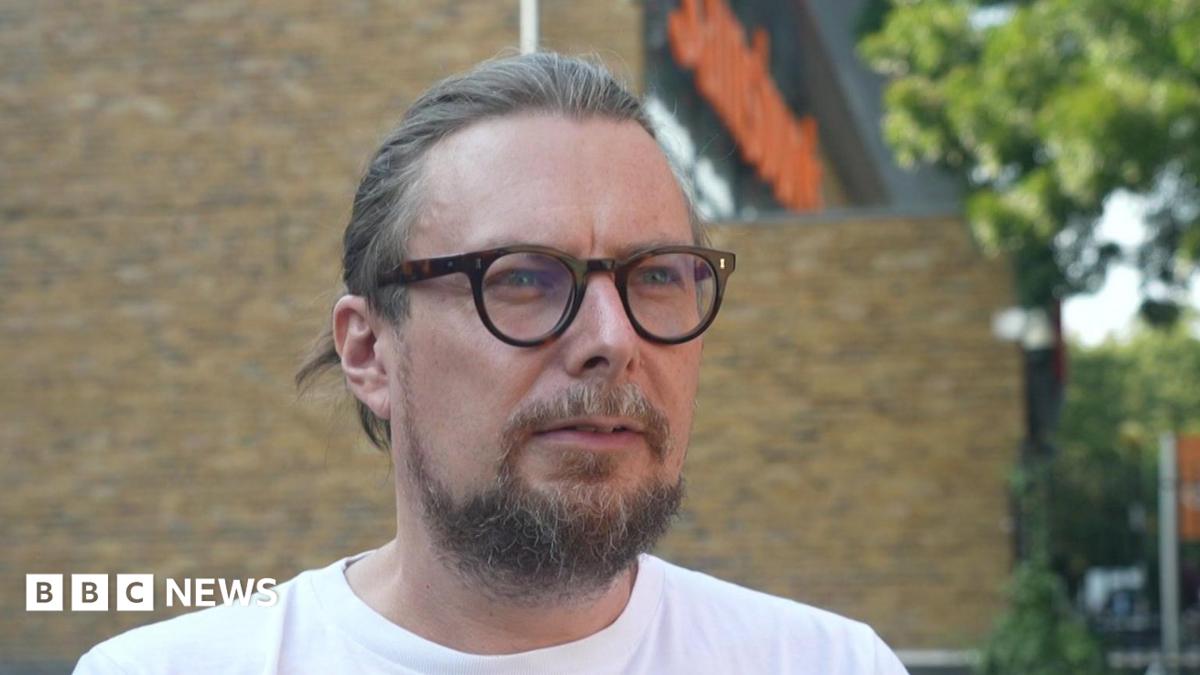
Sainsbury’s highlighted recent British Retail Consortium figures showing 1,600 daily incidents of violence and abuse against shopworkers nationwide, up significantly from 455 a day in 2019-20.
The retailer added that initial trials of the facial recognition system across two stores resulted in a 46% reduction in logged incidents of theft and anti-social behaviour, with over 90% of offenders not returning.
Silkie Carlo, the director of civil liberties group Big Brother Watch, has called for Sainsbury’s to scrap the technology, arguing that it is “treating customers like criminals”.
“Serious mistakes like this are inevitable when a national retailer does hundreds of thousands of ID checks indiscriminately with this sinister surveillance tech,” she said.
Arnold, who donated a £150 goodwill voucher from Sainsbury’s to a local food bank, questioned why the system remains active elsewhere.
“If they’re suspending it in this East Dulwich store, they are conceding there’s a problem with it. Why aren’t they suspending it in every store?”
Listen to the best of BBC Radio London on Sounds and follow BBC London on Facebook, external, X, external and Instagram, external. Send your story ideas to hello.bbclondon@bbc.co.uk, external
Business
Google Shuts Down 449 Korean YouTube Channels for Coordinated ‘Opinion Manipulation’ Before Elections

SEOUL — Google shut down 449 Korean-language YouTube channels during the second quarter of this year after determining they had engaged in coordinated efforts to manipulate public opinion around domestic political issues, with the vast majority of the closures occurring in the weeks immediately preceding South Korea’s June 3 local elections.
According to Yonhap News Agency and South Korea’s information and communication technology industry, Google’s Threat Analysis Group released its “Q2 2026 Influence Operations Report” on July 31, detailing the scale and timing of the takedowns. The report found that Google blocked a total of 449 Korean-language channels between April and June, with 22 channels removed in April, 367 in May and 60 in June.
The concentration of closures in May was especially notable, accounting for 81.7% of the total channels removed during the entire quarter, timing that placed the bulk of the enforcement action just weeks ahead of South Korea’s nationwide local elections. Among the channels taken down in May, the largest single category consisted of 142 channels that had posted content critical of the South Korean government, according to the report.
A more detailed breakdown of the May closures showed a range of political leanings represented among the removed channels. Beyond the 142 channels critical of the government, 71 channels were found to have supported the government, 58 channels supported specific politicians, 53 channels simultaneously criticized both the government and specific political parties, and 43 channels combined support for the government with criticism of specific parties, according to reporting based on the Google report’s findings.
Google determined that the channels had engaged in what the company described as “unauthentic coordinated behavior,” a term the company uses to characterize campaigns in which multiple accounts are mobilized to create the appearance of independent, organic activity by individual users, while in fact working in concert to improperly influence the formation of specific political narratives. When accounting for the full quarter using a broader classification method that grouped channels by their overall stance toward the South Korean government, 255 of the removed channels were found to contain content critical of the government, while 151 channels contained content supportive of the government, according to Korean-language reporting on the underlying data.
Unlike its influence-operations reporting on campaigns linked to China, Russia and Iran, Google did not disclose the specific countries or organizations believed to be behind the Korean-language takedowns, nor did the company release the names of the individual channels that were removed, according to the Asia Business Daily’s reporting on the disclosure. That lack of attribution leaves open questions about who was responsible for organizing the coordinated activity, even as the scale and timing of the removals point clearly toward an effort to influence domestic political discourse ahead of a major election.
The scale of the Korean-language enforcement action stands out in part because of its novelty within Google’s broader influence-operations reporting. According to the Free Press Journal’s coverage of the disclosure, Google had not previously terminated any South Korean YouTube channels for this type of coordinated influence activity between the second quarter of 2025 and the first quarter of 2026, marking the second quarter of this year as the first period in which Korean-language content became a significant target of this specific enforcement category. By comparison, over that same earlier stretch, Google reported shutting down 9,173 channels linked to influence operations originating from China and 2,083 channels linked to Russia, underscoring how much larger those two countries’ documented influence campaigns have been relative to the newly identified Korean-language activity.
The disclosure comes amid a broader period of scrutiny facing major U.S. technology companies operating in South Korea. Just last week, the country’s media watchdog, the Korea Media Communications Commission, concluded that both Google and Apple had violated South Korean law by abusing their dominant positions within their respective app marketplaces. According to the commission, the two companies were found to have circumvented a 2021 revision to the country’s telecommunications business act, a law designed to prevent large app marketplace operators from requiring developers to exclusively use the platform’s own in-app payment systems. The commission said the specific level of sanctions against the companies would be determined at a later date, following the initial finding of violations.
Google’s influence-operations reports, published on a regular basis by the company’s Threat Analysis Group, have historically served as one of the primary public sources of information regarding coordinated, inauthentic political activity detected across Google’s platforms, including YouTube. The reports typically categorize removed content by country of origin and by the nature of the coordinated activity involved, though the company’s disclosure practices vary depending on how confident its investigators are in attributing specific campaigns to particular actors or organizations.
The timing of the Korean-language closures relative to the June 3 local elections is likely to draw continued attention from South Korean election officials, political parties and civil society organizations concerned about the integrity of online political discourse ahead of future elections. South Korea has in recent years faced growing scrutiny over the role of online platforms in shaping political narratives, particularly as political polarization within the country has intensified and as domestic political actors have increasingly turned to platforms such as YouTube to reach voters directly, outside the framework of traditional broadcast and print media.
Google has not publicly indicated whether it plans to release additional details regarding the specific actors behind the Korean-language influence campaign identified in its second-quarter report, nor has the company said whether similar coordinated activity has continued or evolved following the removal of the 449 channels in question. The company’s quarterly influence-operations reports are expected to continue tracking developments in this area, offering periodic updates on the scale and nature of coordinated inauthentic activity detected across its platforms in South Korea and other countries around the world.


Asia Frontier Capital Ltd. is a pioneering fund management company that specializes in investing in high growth Asian frontier economies by managing the AFC Asia Frontier Fund, AFC Iraq Fund, AFC Uzbekistan Fund and AFC Vietnam Fund. The investment objective of AFC Asia Frontier Fund is to achieve long term capital appreciation by investing in public equities of Asian frontier countries (Bangladesh, Bhutan, Cambodia, Georgia, Iraq, Kazakhstan, Kyrgyzstan, Laos, Maldives, Mongolia, Myanmar, Nepal, Pakistan, Papua New Guinea, Sri Lanka, Uzbekistan and Vietnam) that are seeing increasing consumption due to favorable demographic trends, rising incomes and high GDP growth. The AFC Iraq Fund was launched on the 26th June 2015 and aims to achieve long-term capital appreciation for investors by capturing value and growth potential in the post conflict high-growth & resource rich Iraq market. The fund emphasises long term investment horizon to truly capture the opportunity in Iraq. The fund’s investable universe consists of locally listed companies that have their principal business activities in Iraq as well as foreign listed companies that have the majority of the business in Iraq as a whole including the prosperous Kurdish Region of Iraq (KRI). The AFC Iraq Fund offers access to investments in post conflict recovery potential of Iraq, including the KRI, and/or stability in its territory. The AFC Iraq Fund is managed by Asia Frontier Capital (Iraq) Limited, Cayman Islands under the executive leadership team of Thomas Hugger (CEO & Fund Manager) and Ahmed Tabaqchali (CIO) who have more than 47 years of investment experience as well as an extensive background covering global, emerging, frontier and MENA markets AFC Vietnam Fund invests exclusively in Vietnamese equities to capture value in growth companies; especially in the small to medium size company segment. The AFC Uzbekistan Fund invests exclusively in listed equities from Uzbekistan.
Analyst’s Disclosure: I/we have no stock, option or similar derivative position in any of the companies mentioned, and no plans to initiate any such positions within the next 72 hours. I wrote this article myself, and it expresses my own opinions. I am not receiving compensation for it. I have no business relationship with any company whose stock is mentioned in this article.
The AFC Asia Frontier Fund holds BGEO LN (Lion Finance Group) and TBCG LN (TBC Bank Group), both of which have been mentioned in the article.
Seeking Alpha’s Disclosure: Past performance is no guarantee of future results. No recommendation or advice is being given as to whether any investment is suitable for a particular investor. Any views or opinions expressed above may not reflect those of Seeking Alpha as a whole. Seeking Alpha is not a licensed securities dealer, broker or US investment adviser or investment bank. Our analysts are third party authors that include both professional investors and individual investors who may not be licensed or certified by any institute or regulatory body.

XRP Price Prediction: Wells Fargo Disclosed Millions in XRP Holding

Taylor Sheridan’s Gripping 121-Minute Crime Thriller Officially Dominates Streaming Charts

NGB warns against gambling as a quick fix to unemployment and financial hardships

Weekend Open Thread: Staud – Corporette.com

Weekend Open Thread – Corporette.com

Weekend Open Thread: Brooks Brothers
NGB warns against gambling as a quick fix to unemployment and financial hardships

She Became a Millionaire Doing THIS #successmind #money #entrepreneur

Shehzad Poonawalla quits BJP, cites pressing financial and personal issues
-

 Fashion3 days ago
Weekend Open Thread: Ann Taylor
-
 NewsBeat5 days ago
Communication cards help banking customers access services or report scams
-
 Business6 days ago
Oil Price Today (August 11): Crude oil rises to $88 after Trump’s compensation demand dents Hormuz opening. Here’s why
-

 Crypto World6 days ago
Revolut wins French banking licence, creates second EU banking hub
-
 Sports3 days ago
This U.S. Amateur is a glimpse into golf’s future in more ways than you think
-
 Crypto World6 days ago
Why Did Nvidia Stock Fall on Monday Despite a $500 Billion Wall Street AI Deal?
-

 Sports2 days ago
Birmingham 2026: Day 6 Timetable for Irish Athletes
-
 NewsBeat2 days ago
Myanmar says over 300,000 Rohingya refugees verified for repatriation as exodus enters ninth year
-

 Politics2 days ago
SEQ Code: The Three Letter Boarding Pass Code That Could Give You The Worst Seat
-
 Entertainment5 days ago
Keke Palmer Subtly Hints At Sean Evans Drama With Cryptic Post
-
 Crypto World7 days ago
Grayscale quietly drops Cardano, Polkadot and Hedera ETF plans
-

 Fashion7 days ago
Can You Wear Double Cloth Gauze Clothing To Your Office?
-

 Fashion6 days ago
Coffee Break: The Fonteyn Jane Flat
-

 Crypto World6 days ago
Bitcoin's BIP Editors Remove Luke Dashjr Two Days After BIP-110 Fork Stalled
-
 Entertainment6 days ago
57 Years Later, the Best Sitcom Ever Made Still Deserves a Reboot
-

 Tech6 days ago
Zoom Screen-Sharing Bug Let People Fully Take Over Other Devices On A Call
-
 Crypto World7 days ago
Hormuz Nerves Cost Bitcoin $65,000 Mark Despite Solid Institutional Flows
-

 Fashion6 days ago
Claire Life: Kicking Off MVAAFF With the C Suite Luncheon Featuring Phylicia Rashad, Letoya Luckett, and More!
-

 Fashion6 days ago
Should you refinance your debt? Pros, cons, and real numbers
-
 Crypto World5 days ago
XRP bridge drained after software mistook fake deposits for real ones
You must be logged in to post a comment Login