
Business
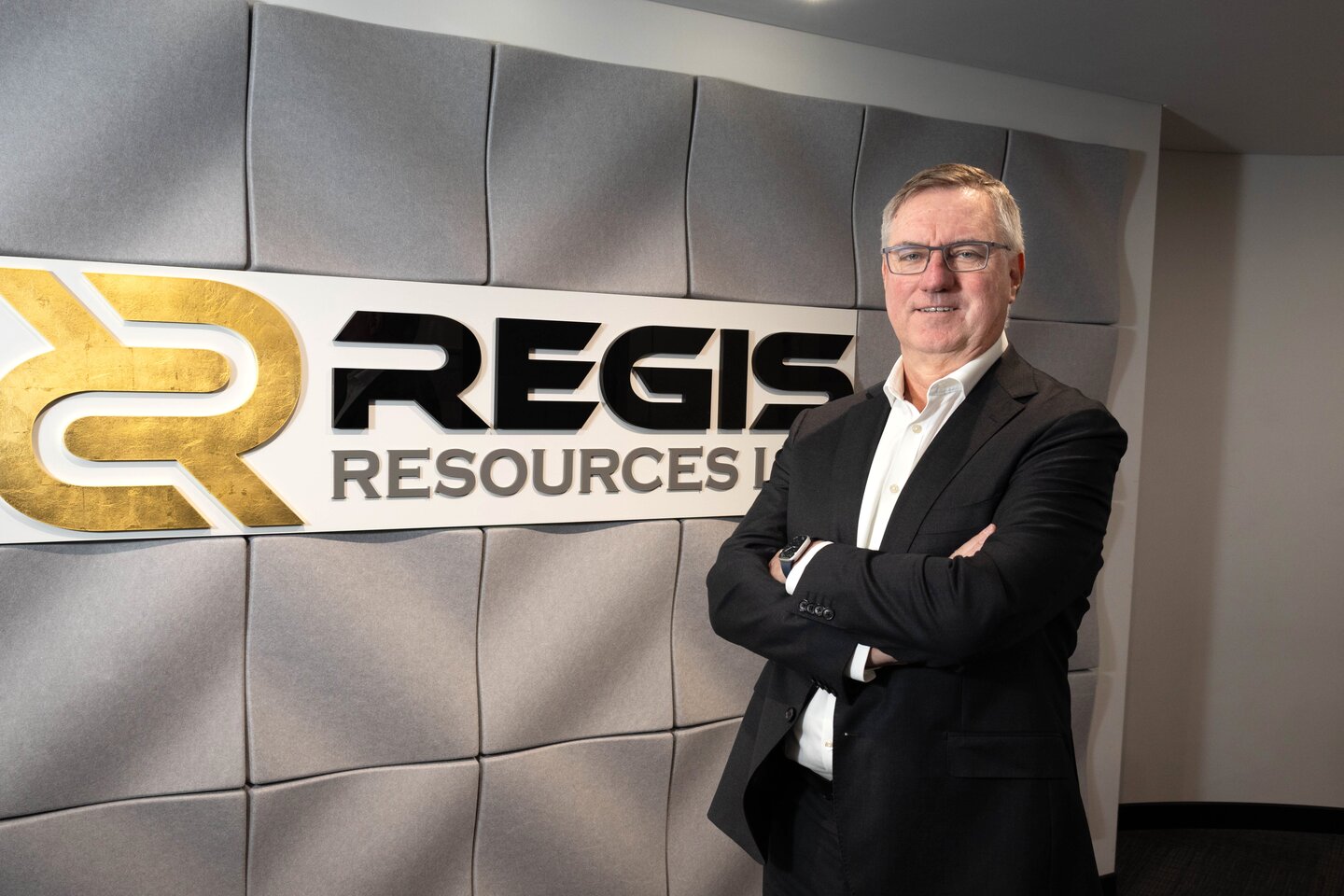
No egos as disciplined Regis targets value


Sprouts Farmers Market: Sales Rebound Underpins Cheap Multiples

OPINION: West Australians understand the value of a home. Not simply as a roof over our heads, but as the place where families gather. Yet somewhere along the way, we’ve lost this message.

Accell Group, the Dutch owner of Raleigh bicycles, has entered court-supervised insolvency proceedings in the Netherlands after takeover talks collapsed, while Accell UK and Ireland has filed a notice of intention to appoint administrators.
The group, whose brands also include Haibike, Lapierre, Ghost and Babboe, said in a statement that Dutch courts had granted a provisional suspension of payments for its Dutch entities with effect from 5 August, and that court-appointed administrators would now work alongside its board.
Jonas Nilsson, Accell’s chief executive, said it was a “deeply sad and frustrating situation” and that the company had “tirelessly explored” every option for the future of the cycling business.
A prospective takeover by the Singapore-based DuTech Group fell through recently, despite the deal having received regulatory approvals in Germany, Austria and Poland.
KKR, the US private equity firm, acquired Accell in 2022 for €1.56 billion, using a mix of equity and debt. In February, the group completed a restructuring that delivered a substantial reduction in debt and transferred majority control from KKR to its syndicate of lenders. In January, Accell sold its titanium specialist brand Van Nicholas to the Italian manufacturer Velo-ce.
Accell said it had since “explored every possible avenue” for its future, including discussions with potential buyers, but that it had not been possible to find a solution that would allow the group to continue in its current form.
Raleigh was founded in Nottingham in 1887 and grew to become the largest bicycle manufacturer in the world. It created the Chopper, with its extended handlebars and backrest seat, in the 1970s. Accell bought the brand in 2012 for about $100 million.
The company no longer makes bikes in Nottingham. Its head office has moved to Eastwood, Nottinghamshire, and it has shifted to selling electric bikes.
Accounts filed at Companies House in January 2025 show Raleigh made a pre-tax loss of £30.1 million in 2023, against a £6.8 million loss in 2022, despite turnover rising 3.5 per cent to £57.7 million.
Several European bicycle businesses have failed or restructured since the pandemic cycling boom ended, as demand weakened and the industry was left with excess stock. They include the Dutch e-bike maker VanMoof, the brand group 7Anna, the power-meter maker Stages Cycling and the online retailer Wiggle Chain Reaction Cycles, whose brand was bought out of administration by Frasers Group in 2024.
Molly Monks, an insolvency specialist at Parker Walsh, said the case showed that a well-known brand could still fail if its cash flow and debts became unmanageable.
She said: “The Raleigh name carries enormous affection and recognition, but nostalgia does not pay wages, suppliers or interest. A company can be known and loved by millions and still reach a point where it cannot meet its financial obligations.”
Monks said restructuring could buy a struggling company time but could not save a business unless its underlying commercial problems were tackled.
She said: “Reducing debt or securing emergency funding may provide breathing space, but it does not restore demand, clear surplus stock or suddenly make an unprofitable operation sustainable.”
She added that insolvency proceedings did not necessarily mean Raleigh would disappear, as valuable brands could be sold, restructured or continue trading under new ownership.
Nilsson said: “This is a deeply sad and frustrating situation given all the hard work and everything we have achieved, with the support of shareholders and lenders, to restructure Accell’s operations and finances. It is an especially difficult moment for our employees, creditors, customers, suppliers and partners.”

Amy Ingham
Amy Ingham is a reporter at Business Matters, covering UK business news with a focus on breaking news, business policy, late payments and insolvency. She joined the magazine in 2026 after completing the NCTJ Diploma in Journalism at Harlow College’s journalism school. Her recent reporting includes British Steel’s nationalisation and its impact on SME suppliers, the decline in late payments by large firms, and Insolvency Service director disqualifications. Reach her at aingham@cbmeg.co.uk.
Business
SK Hynix Shares Plunge 10% as Weak SanDisk, Western Digital Guidance Rattles Memory Chip Stocks
SEOUL — Shares of SK Hynix Inc plunged Thursday, falling 10.37%, or 173,000 won, to close at 1,495,000 won, as disappointing forward guidance from two major U.S. memory chip companies triggered a broad selloff across the global semiconductor sector and rattled South Korea’s benchmark stock index.
The decline made SK Hynix, one of the world’s largest producers of memory chips and a key supplier for artificial intelligence infrastructure, the worst-performing major stock within a broader selloff that briefly pushed South Korea’s KOSPI index down as much as 5% during Thursday’s trading session, triggering the exchange’s automatic “sidecar” mechanism, which temporarily halts programmatic sell orders once futures decline sharply within a short window.
The Trigger: Disappointing US Guidance
Thursday’s selloff traces directly back to earnings reports released after Wednesday’s close by two major U.S. storage and memory companies, SanDisk and Western Digital. Both companies posted results that exceeded Wall Street’s expectations for the quarter just completed. SanDisk reported fiscal fourth-quarter revenue that surged 372% year over year to $8.96 billion, with adjusted earnings per share of $39.25, both figures beating analyst forecasts. Western Digital similarly posted strong results, with fourth-quarter revenue climbing 44% year over year to $3.747 billion and GAAP net income surging 1,215% from a year earlier to $3.195 billion.
Despite those strong headline numbers, both companies issued forward guidance that fell short of the market’s elevated expectations. SanDisk projected first-quarter fiscal 2027 revenue in a range of $10.3 billion to $10.8 billion, with a midpoint of approximately $10.55 billion, below the roughly $10.8 billion analysts had anticipated. That guidance miss, paired with a similarly underwhelming outlook from Western Digital, was enough to trigger sharp declines in both companies’ shares in after-hours and premarket trading, with Western Digital falling as much as 13% to 14% and SanDisk dropping roughly 8% to 9% at various points.
A Selloff That Spread Across Asia
The disappointing U.S. guidance quickly rippled into Asian trading Thursday morning, hitting memory chip producers across the region particularly hard given their central role in the same global supply chain. Samsung Electronics, South Korea’s largest company and SK Hynix’s primary domestic rival, fell alongside SK Hynix, with declines ranging from roughly 5.7% to 6.3% across various points in the session. In Japan, memory chipmaker Kioxia slumped more than 10%, while broader technology indexes across the region also came under pressure, with Hong Kong’s Hang Seng Tech Index falling more than 2%.
The pressure extended back to U.S. markets as well. Micron Technology, another major memory chip producer, fell more than 3% in premarket trading Thursday, while the broader Roundhill Memory ETF, which tracks a basket of memory and storage-related stocks, also declined sharply as investors reassessed valuations across the sector following the guidance misses.
A Sector Already Prone to Sharp Swings
Thursday’s decline extended a pattern of extreme volatility that has characterized memory chip stocks throughout 2026. SK Hynix alone has experienced several dramatic single-session moves this year, including a 15% single-day plunge in mid-July, its largest ever at the time, after a South Korean brokerage published a second-quarter profit estimate for the company that came in 8% below consensus, citing concerns over slower-than-expected shipments of high-bandwidth memory chips used in AI applications.
That volatility has cut in both directions. Despite Thursday’s steep decline, SK Hynix and its memory sector peers have posted extraordinary gains for the year overall, driven by surging demand for the high-bandwidth memory chips that power artificial intelligence data centers. SanDisk shares, for instance, had climbed as much as 640% year-to-date as of a session earlier this week, before Thursday’s guidance-driven pullback, illustrating just how dramatically sentiment toward the memory sector has swung across 2026.
Analysts Divided on What Comes Next
Despite Thursday’s sharp selloff, not all analysts have turned bearish on the sector’s longer-term prospects. Analysts at Goldman Sachs and JPMorgan have maintained buy ratings on memory chip stocks even amid the volatility, pointing to forward price-to-earnings ratios in the range of 3.5 to 3.6 times as evidence that current valuations appear detached from the sector’s underlying fundamentals. Some institutional investors have characterized the current pullback as a potential buying opportunity, provided the broader thesis around sustained AI-driven memory demand remains intact.
Other market observers have expressed more caution, noting that the sector’s heightened sensitivity to even modest guidance misses reflects how aggressively investors had priced in continued exponential growth across the memory chip industry. Analysts tracking the space have noted that any performance falling even slightly below elevated market expectations has been enough to trigger rapid, outsized selloffs in recent months, a dynamic that played out again with Thursday’s reaction to the SanDisk and Western Digital reports.
A Broader Test for South Korea’s Market
Thursday’s decline also arrived alongside separate corporate news involving SK Hynix’s operations. According to a report from the Korea Economic Daily, Solidigm, a wholly owned subsidiary of SK Hynix, has formally begun a pre-IPO financing process ahead of a planned Nasdaq listing, targeting a valuation of approximately 50 trillion won, or roughly $35.15 billion, and aiming to raise between 5 trillion and 10 trillion won, or roughly $3.5 billion to $7 billion, in the process.
Even with that separate corporate development in progress, Thursday’s trading was dominated by the broader memory chip selloff, which analysts characterized as reflecting sector-specific concerns tied to the pace of near-term AI memory demand rather than a systemic risk-off event across markets more broadly.
With SK Hynix and its peers continuing to exhibit some of the sharpest single-session volatility in the global technology sector this year, investors are likely to remain closely focused on upcoming earnings and guidance updates from other major memory producers, including Micron, for further signals on whether Thursday’s pullback reflects a temporary reassessment or a more sustained shift in sentiment toward the artificial intelligence-driven memory chip boom that has defined much of the sector’s performance throughout 2026.


Over fifteen years of experience making contrarian bets based on my macro view and stock-specific turnaround stories to garner outsized returns with a favorable risk/reward profile. If you want me to cover a specific stock or have a question for an article, just let me know!
Analyst’s Disclosure: I/we have no stock, option or similar derivative position in any of the companies mentioned, and no plans to initiate any such positions within the next 72 hours. I wrote this article myself, and it expresses my own opinions. I am not receiving compensation for it (other than from Seeking Alpha). I have no business relationship with any company whose stock is mentioned in this article.
Seeking Alpha’s Disclosure: Past performance is no guarantee of future results. No recommendation or advice is being given as to whether any investment is suitable for a particular investor. Any views or opinions expressed above may not reflect those of Seeking Alpha as a whole. Seeking Alpha is not a licensed securities dealer, broker or US investment adviser or investment bank. Our analysts are third party authors that include both professional investors and individual investors who may not be licensed or certified by any institute or regulatory body.
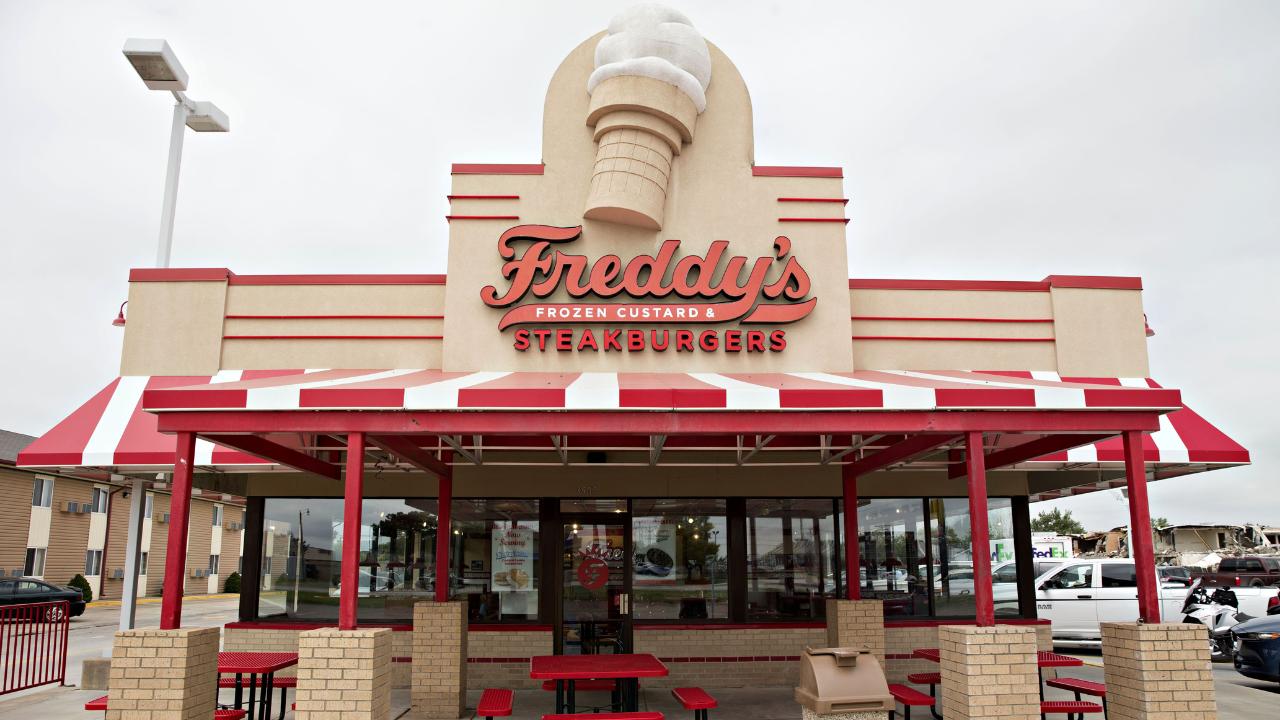
Freddy’s Frozen Custard & Steakburgers CEO Chris Dull defends California’s business climate, telling Fox News Digital it gets a ‘bad rap’ while detailing the Midwest burger giant’s expansion plans in the Golden State.
As restaurant chains pull back in California amid rising labor costs and the state’s $20 fast-food minimum wage, Freddy’s Frozen Custard & Steakburgers CEO Chris Dull is betting bigger on the Golden State, arguing it gets a “bad rap” as a place to do business.
“I feel like California gets a bad rap. It’s hard to find markets that offer you the same level of densities that you see in and around the state of California,” Dull told Fox News Digital.
“It’s a state that has historically been a good state for restaurant brands. Volume is there to be had and lots of guests for you to speak to and turn into raving fans,” he added.

Aerial view of the downtown Irvine, California skyline.
The CEO’s comments come as one of Carl’s Jr.’s largest franchisees plans to close 10 locations and sell 49 others — affecting 59 restaurants total — after filing for Chapter 11 bankruptcy protection earlier this year.
Separately, longtime California restaurateur Mike Georgopoulos recently warned that the Golden State’s business dream has become a math problem that no longer adds up, previously telling Fox News Digital that businesses are “working for peanuts.”
“They own a business, they’re in a lease, they have no other place to go. So they’re just in a vicious cycle, and there’s just nothing coming out on the other end in terms of profit,” Georgopoulos said. “It’s sticker shock, it really is.”
Dull, who became CEO in 2021, dismissed concerns about California’s business climate, defending the state and arguing that the challenges facing competitors can create opportunities for expanding brands like Freddy’s.
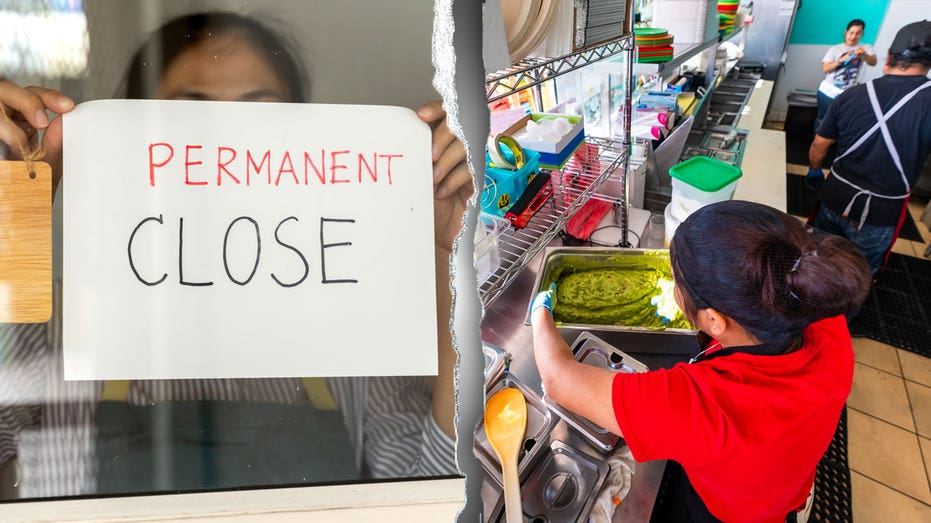
California small business owners and their employees describe the pressure from rising supply, wage and energy costs. (Getty Images/stock / Getty Images)
FUDDRUCKERS BECAME THE ‘BLOCKBUSTER’ OF BURGERS, AND NOW IT’S NEARLY GONE
“Sometimes when you see units that are moving out of markets or shuttering doors, that can actually be a great opportunity for folks like us who are growing. We can go in,” Dull told Fox News Digital.
The Kansas-based burger chain, which operates more than 500 restaurants nationwide, is aggressively recruiting new franchisees and plans to open 60 new locations this year, with a particular emphasis on Northern California.
“California is such a big state. You can focus on regions and still experience pretty tremendous growth, whereas in some of the smaller states, you need the whole state to really make it pan out for you,” Dull said.
Freddy’s already operates a handful of California locations, but the expansion is intended to build “density,” the CEO said, as it looks to win over customers in a state dominated by In-N-Out Burger.
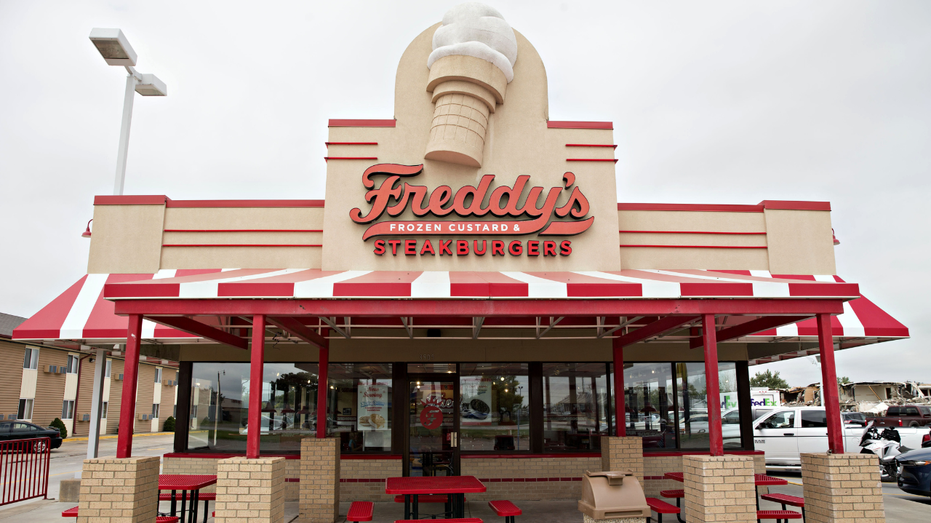
A Freddy’s Frozen Custard & Steakburgers restaurant stands in Hays, Kansas, U.S., on Thursday, June 29, 2017. (Daniel Acker/Bloomberg via Getty Images / Getty Images)
IN-N-OUT PRESIDENT SAYS ‘HEART IS BROKEN’ AFTER EMPLOYEE, CUSTOMERS KILLED IN IDAHO SHOOTING
“We have been making our way further and further west and have restaurants operating in California today. And California offers densities that are hard to find in other parts of the country,” he told Fox News Digital.
Dull explained how Freddy’s adjusts its pricing based on local labor, real estate and operating costs as it expands into new markets.
“Markets where you experience higher real estate costs and higher labor costs, you will also have a higher ticket for your products. It all rolls up,” said the CEO.
Freddy’s is expanding in California, which has a $20 fast-food minimum wage, while also opening locations in Florida, where the statewide minimum wage is $14.
Pineapple Hill Saloon & Grill owner Angela Marsden discusses Anthony Fauci’s congressional testimony on COVID-19 lockdowns, the slow recovery of small businesses, and the upcoming Los Angeles mayoral race.
CLICK HERE TO DOWNLOAD THE FOX NEWS APP
“If a business is being charged more in rent and more in labor, they simply have to charge more for their product, or they will not be profitable,” Dull said.
“It’s about pricing your product at a value where your operator can still generate a profit given the cost structure that they’re looking at in any given market, which means that you will have variation in your pricing across the United States,” he added.
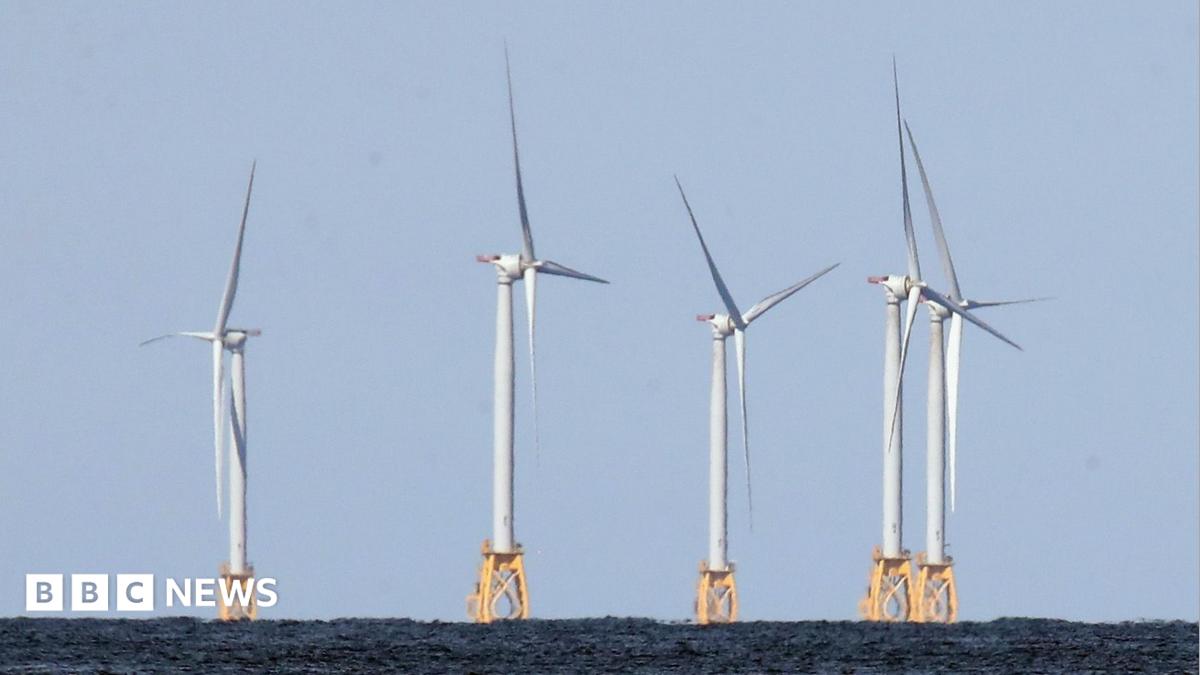
Overall, the German firm plans to invest approximately €17bn (£14.5bn; $19.6bn) in the US over the next six years “to grow its generation capacity”.
Interior Secretary Doug Burgum said in a statement posted on X that Americans deserve an energy system built on common sense and not one dependent on “costly subsidies”.
“We welcome RWE’s agreement and voluntary investment in projects that strengthen our nation’s energy security,” he added.
The deal is the latest the Trump administration has reached this year as Trump, a vocal supporter of the fossil fuel industry, continues his push to halt offshore wind projects.
Trump has sought to boost government support for fossil fuels after campaigning for the presidency under the slogan “drill, baby, drill”.
Days after his return to office, he said “we’re not going to do the wind thing” and called them “big, ugly windmills” that were dangerous to wildlife.
In March 2026, the DoI reached a deal with TotalEnergies putting an end to the French company’s offshore wind projects in the US.
Instead, the firm agreed to reroute investment to build a LNG plant in Texas and to develop “upstream conventional oil” in the Gulf of Mexico.
The administration signed a similar $129bn (£96bn) agreement with Charlotte-based Duke Energy last month in exchange for the termination of the company’s offshore wind lease in the Carolina Long Bay area.
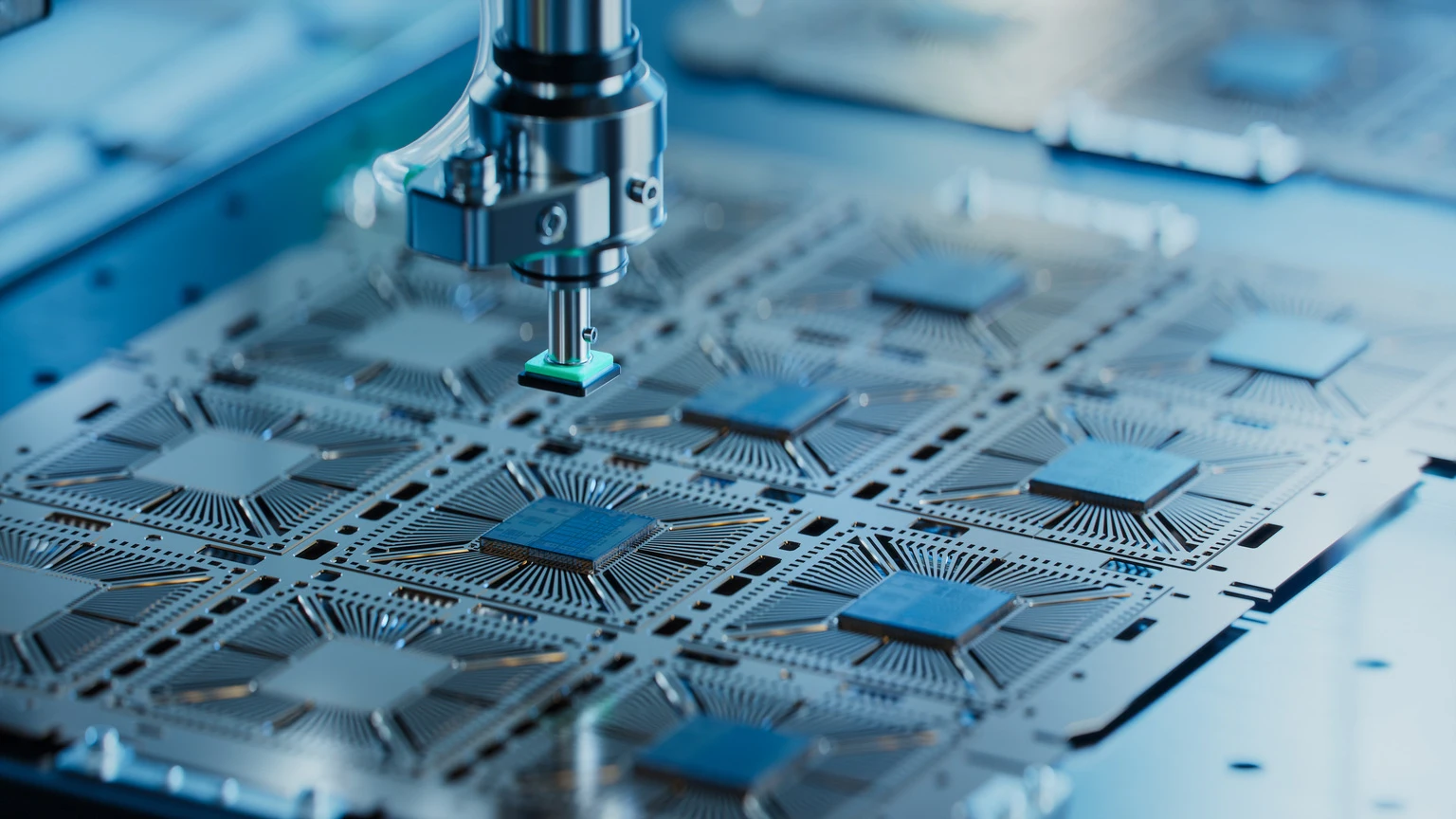
Chart Of The Day: Do Or Die Time For Semis?
Business
Sensex drops over 200 points, Nifty tests 23,600 as Strait of Hormuz tensions rattle oil markets

Sensex fell over 200 points to slip below the 78,700 level, while Nifty50 traded near 24,600. Broader markets also slipped into the red, with Nifty Midcap 100 and Nifty Smallcap 100 indices being down with marginal losses.
Bajaj Finance shares dropped around 5% to lead losses on the Sensex, while Bajaj Finserv shares fell over 3% to follow. ICICI Bank shares dropped nearly 2% while Trent shares fell more than 1%. Bharti Airtel, Eternal and Maruti Suzuki shares meanwhile fell around 1% each. Bucking the trend, IT stocks TCS and Tech Mahindra gained 1-2%.
Nearly all sectoral indices opened in the red, with Nifty Financial Services falling nearly 1%. The overall market breadth was still slightly positive, with NSE seeing 1,297 advances against 1,042 declines, while 154 stocks remained unchanged.
Concerns around Strait of Hormuz reopening plans mount

Iran reviewed a bill to ban US and Israeli vessels from the Strait of Hormuz, where nearly a fifth of the world’s oil and liquefied natural gas is transmitted before the war began at the end of February. As a result, oil prices inched higher. Brent crude futures were trading above $83 per barrel, while WTI Crude futures were up near $78 per barrel.
Iran is seeking fees of between 5% and 7% of the price of cargoes from ships using the strait, according to the senior Iranian official cited by Reuters. Oman is discussing fees of around 3%, while US wants no fees at all. These developments are further clouding hopes for a peace agreement between the parties, spooking investors.
What lies ahead for Dalal Street?
The market is consolidating and slowly inching up, said VK Vijayakumar, Chief Investment Strategist at Geojit Investments, adding that this trend is likely to continue in the near-term, preparing for an eventual breakout on the upside.
There are some key takeaways from the Q1 results that investors should keep in mind, according to the analyst. One, most companies in sectors like financials, automobiles, pharmaceuticals, and telecom have delivered double-digit revenue and profit growth rates. This has imparted resilience to their stock prices. Two, IT continued to face headwinds from sluggish growth and concerns surrounding the AI impact on the sector. Three, in commodities like metals and oil, it has been a mixed bag.
“Going forward, financials, automobiles, telecom and capital goods are likely to maintain the growth momentum. The broader market has delivered superior growth, but the elevated valuations will constrain their upward momentum,” Vijayakumar further said.
Technical view on Nifty
Despite a supportive bullish continuation pattern, yesterday’s lacklustre trades have put the prospects of Nifty’s anticipated breakout move under doubt, said Anand James, Chief Market Strategist at Geojit Investments. “We will wait for a breach of 24,775 to play directional upsides, while brief spikes are expected to be challenged near 24,650-24,690-24,730,” he added.
Meanwhile, Nifty’s inability to clear these hurdles, or to float above 24,570, could expose 24,400, according to the analyst.
(With inputs from agencies)
(Disclaimer: Recommendations, suggestions, views and opinions given by the experts are their own. These do not represent the views of The Economic Times)

Why are Gold Futures rallying today?
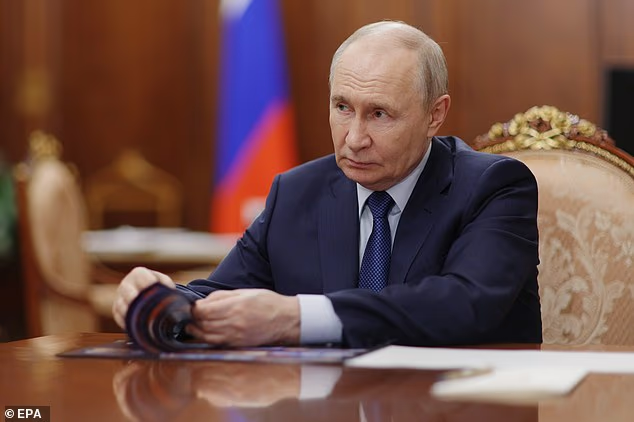
Putin could ‘send armed group to occupy NATO territory within weeks’, warns US intelligence

Sprouts Farmers Market: Sales Rebound Underpins Cheap Multiples

Randwick a Launch Pad for Talented Freedman Pair in 2026

Renter of Home in Anne Heche Crash Denies Settlement With Son

No Jackpot Winner as $257 Million Prize Rolls Over to $269 Million Monday Draw

Weekend Open Thread: Staud – Corporette.com

Trump SCANDALIZED as Bank Declares They FEARED Trump WAS A MONEY LAUNDERER As They Closed Accounts!

Ripple XRP WARNING: The FINAL Crash Hits On This Date! (DON’T SELL)

Gaddafi proposed gold-backed African currency, US halted shift #gaddafi #petrodollar #geopolitics
-

 Fashion7 days ago
Weekend Open Thread: Wit & Wisdom
-

 Politics7 days ago
Meta enters AI-training agreement with far-right ‘propaganda rag’ Newsmax
-

 Politics5 days ago
Zack Polanski: an incitement to murder Nigel Farage?
-

 Crypto World6 days ago
MicroStrategy Post-Earnings CLARITY Act Push Could Add New Catalyst for Its Stock
-

 Crypto World6 days ago
XRP Ledger v3.3.0 brings five institutional features
-

 Crypto World6 days ago
New York sues Kalshi over prediction market gambling
-

 Crypto World5 days ago
Crypto PAC spending tops $2M in Michigan House race
-

 Business7 days ago
Trump Announces Hamas Disarmament Agreement as Iran Strikes Kuwait Air Base and US Attacks Pause Overnight
-

 Business4 days ago
DTCR: Deleveraging And A Hedge Fund Collapse Point To A Possible AI Bottom
-

 Tech5 days ago
ESET tracks rise in malicious AI skills and adaptable malware
-
 Crypto World7 days ago
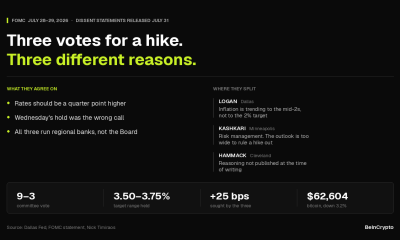
3 Fed Officials Just Explained Their Rate Hike Vote: Is Inflation Winning?
-

 Tech7 days ago
Building A Reproduction PlayStation Motherboard
-

 Sports6 days ago
France Cricket implodes: letters hidden in a drawer and a board at war
-
Crypto World5 days ago
XRP Ledger urges node upgrade after manifest flood
-

 Crypto World6 days ago
Moneyflip CEO charged in $40K murder-for-hire plot
-
 Sports6 days ago
Bruno Fernandes decision made as Man United ‘discuss’ striker transfer option
-
Business7 days ago
FIFA has scrapped $20 billion World Cup sell-off plan, New York Post reports
-

 News Videos6 days ago
Financial Crash Expert: The 90-Day Collapse Timeline They Are Desperately Hiding.
-

 Sports7 days ago
Commonwealth Games 2026 Live Updates | Day 9 CWG 2026: Lovlina Borgohain, Sachin Siwach Enter Final After Indian Judokas Script History
-

 Sports1 day ago
Jordan Coyle & Cordiamo take Laya Arena Stakes at RDS
You must be logged in to post a comment Login