Connect with us

Business

Nobody Approved Power BI. It’s Now Running Your Business.

Published

on

Poorly designed and inadequately maintained workplaces are draining the UK economy of more than £71 billion a year, according to new research from facilities and security services company Mitie.

In most small and mid-sized businesses, Power BI does not arrive as a project. There is no rollout plan, no steering group, no launch. Someone in finance discovers it, finds it instantly familiar, and builds a report.

The report is good. Other people want one. Eighteen months later there are reports everywhere, half the business relies on them, and nobody is in charge of any of it.

I have trained hundreds of new Power BI users over the years, and I see the same light-bulb moment every time. “Oh, this feels like Excel and PowerPoint!” That familiarity is exactly why the tool spreads so quickly, people are not being pushed onto it, they are pulling it into the business themselves. As adoption stories go, that is the good kind. The enthusiasm is real and it is priceless.

But here’s the thing… the same freedom that makes a tool spread is the freedom that creates the mess. Because it grew without guardrails, everyone built things their own way. And a growing business eventually meets the consequences, usually in a meeting.

The day the numbers disagree

The moment this stops being invisible is nearly always the same one. Two people bring two versions of the same figure into the same room. Sales says one number, finance says another, and the conversation that was supposed to be about the business becomes a debate about whose report is right.

Advertisement

It gets called a data problem. It usually is not. Both reports are doing exactly what they were built to do, they were just built by different people, at different times, on different assumptions. One counts orders, the other counts invoices. One strips out cancellations, the other never did. Nobody decided this. It accumulated, one reasonable report at a time.

And underneath it sit the questions that quietly matter more. Who owns these reports? Who fixes the refresh that failed on Monday? Who checked what the new starter can see, and whether the margin data in that shared workspace was ever meant to be visible to everyone with the link? In an unmanaged estate, the honest answer to all of these is usually nobody.

The cost is time, trust and eventually money

None of this shows up as a line on the P&L, which is why it runs for so long. But the costs are real.

Staff time goes first. People rebuild reports that already exist because they cannot find or do not trust the originals. Someone senior spends hours reconciling two dashboards before every board meeting. Then trust goes, and this one is expensive, because once people stop believing the numbers, they stop using the reports and retreat to their own private spreadsheets, and the business is now paying for a reporting tool and running on Excel exports anyway.

Advertisement

And occasionally the cost is sharper than that. A figure nobody can stand behind lands in front of the bank, an investor or an auditor, and the awkward question is not about the number. It is about whether the business is in control of its own information.

The fix is lighter than most owners fear

At this point some owners reach for the opposite extreme, lock it all down, route everything through one person, approve every report. I would gently push back on that too. I have seen over-control fail as often as chaos. Clamp down too hard and people do not stop building reports, they just stop telling you, and the mess moves somewhere you can no longer see it.

For a growing firm, the structure that works is lighter than most people fear. It looks something like this. Every report that matters has a named owner, one person who answers for the figures and one route for fixing it when it breaks. The handful of numbers the business runs on, revenue, margin, active customers, get defined once, in one agreed place that every report draws from, so the same word means the same thing everywhere. Access follows job roles rather than one-off requests and forwarded links. And somewhere, there is a simple, written answer to “how do we do reporting here”, short enough that people actually read it.

That is it. Not a committee, not a six-month programme. Microsoft’s own adoption roadmap covers this ground thoroughly and is genuinely worth a read, I have gone back to it time and time again over the years. But for a small business the heart of it fits on a page. Owners, shared definitions, sensible access, and a bit of support for the people doing the building, because the analyst who taught themselves Power BI is an asset worth investing in, not a risk to be managed.

Advertisement

The stakes are about to get higher

There is one more reason to sort this now rather than later. Power BI is no longer a standalone tool. It now sits inside Microsoft Fabric, Microsoft’s wider data platform, which means the thing your business adopted for reports is increasingly connected to where data is stored, moved and prepared across the company. More capability, and more ways for an unmanaged setup to grow expensive.

This is often the point where firms bring in outside help, and having done a lot of this work, I will tell you what it should look like. When businesses explore Microsoft Fabric consulting in the UK, the first job is usually not the platform at all. It is mapping what already exists, which reports are trusted, which models are duplicated, who owns what, where the access risks sit. Moving a messy estate onto a bigger platform does not clean it up. It gives the mess a bigger stage. Diagnosis first, then the technology.

Boring is the goal

Good reporting in a growing business should be slightly boring. The figures refresh, the definitions hold, people know where to look and stop arguing about whose number is right. The meetings get shorter and go back to being about the business.

The tool that spread through your company without permission got there because it is genuinely useful. That part is a win, and the enthusiasm behind it is worth protecting. It just needs what every useful thing eventually needs, an owner, a shared set of definitions and someone paying attention. The best time to give it those was before it mattered. The second best time is before the platform underneath it gets any bigger.

Advertisement

Continue Reading
Click to comment

You must be logged in to post a comment Login

Leave a Reply

Business

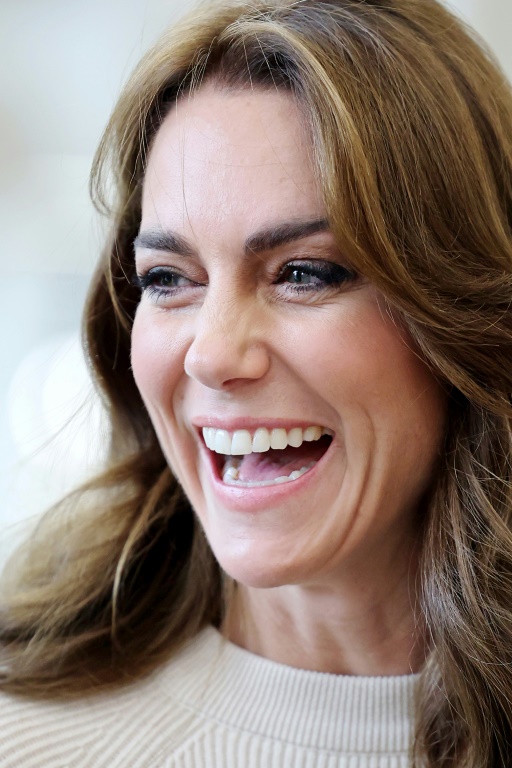
Kate Middleton Is the Monarchy’s “Greatest Asset” as Shared Cancer Battle Deepens Bond With the King

Published

on

Kevin Durant

Kate Middleton has become one of King Charles III’s most trusted family members, with royal watchers pointing to a shared cancer diagnosis and years of steady public service as factors that have deepened the bond between the king and the Princess of Wales.

Katie Nicholl, a royal correspondent for Vanity Fair and co-host of the podcast “The Royals Uncensored,” said the princess has consistently proven her value to the institution since marrying into the royal family. “I think Catherine, the Princess of Wales, has always been a very valuable asset to the royal family,” Nicholl told Fox News Digital. “She is the commoner who married into the royal family … [She has made] a seamless transition into that unique world of royalty. It’s not easy … There’s a huge amount of sacrifice that goes into being a member of the royal family.” Nicholl added that Kate has handled that sacrifice with composure. “Catherine’s had to give up a huge amount, and yet she does it all with a great deal of grace and dignity, always with a smile,” Nicholl said. “So she is absolutely the monarchy’s greatest asset.”

The relationship between Charles and Kate has grown notably closer following parallel health struggles both experienced beginning in 2024. Buckingham Palace announced the king’s cancer diagnosis that year, and Charles shared in December 2025 that his treatment would be scaled back in 2026. Kate revealed her own cancer diagnosis in March 2024, shortly after the king’s announcement became public. She completed chemotherapy that September and announced in January 2025 that she was in remission.

British broadcaster and photographer Helena Chard said the king has drawn inspiration from watching Kate navigate her illness. “King Charles sees enormous value in Princess Catherine,” Chard told Fox News Digital. “Not just as the wife of his heir, but as the cornerstone of the monarchy itself. He genuinely loves his ‘darling’ daughter-in-law. His face lights up when he is with her. They share similar interests, and they have shared a similar cancer journey, one that has created a deep bond and understanding that goes beyond duty.”

Advertisement

Chard said the late Queen Elizabeth II had recognized Kate’s value to the institution well before Charles ascended the throne. “The late queen saw it too,” Chard said. “She recognized Catherine’s superpowers early on — her ability to listen, find solutions and bring calm to difficult situations.” Chard also framed Kate’s role within Charles’s broader approach to his reign. “King Charles fundamentally views his time on the throne as stewardship,” she said. “He sees himself as the caretaker of the institution and is acutely conscious of preparing the next generation. Collaborative preparation between the king and his heir is essential. Having Princess Catherine as the wife of his heir, Charles has struck gold.”

Royal author Sally Bedell Smith, in previous comments to People magazine, described the relationship in more personal terms. “He has always had a very strong bond with her,” Smith told the outlet, adding that Kate is “like the daughter he never had.” Smith said Charles shares a protective instinct toward Kate with his son, Prince William. “He shares with William an impulse to protect her,” Smith said. “They are in this together, Kate and the king.”

When Kate’s diagnosis first became public, Buckingham Palace said Charles was “so proud of Catherine for her courage in speaking as he did.” Author Christopher Andersen has separately written that the king stood by Kate’s side during her treatment “to lend his cherished daughter-in-law moral support.”

Kate has continued advocacy work tied to her cancer experience in the time since her recovery, including a recent charity fundraising climb of the three highest peaks in the United Kingdom for the Royal Marsden hospital. Nicholl said that effort has strengthened public support for the princess. “Thankfully, despite a serious health issue, she has overcome that,” Nicholl said. “We’ve just seen her climb the three highest peaks in the United Kingdom to raise money for the Royal Marsden. She’s turning her experience into something positive, and I think that’s earned her a great deal of respect among the British public, along with a lot of love and affection. People are very much behind her and William.”

Advertisement

Chard echoed that sentiment, describing Kate’s broader connection with the public. “Princess Catherine connects with people in a way that restores faith in the monarchy,” Chard said. “She has learned every aspect of the institution over many years and has blended in carefully without fuss. Princess Catherine is central to the institution’s success, and King Charles knows this.”

Royal commentators say Kate’s steadiness has taken on added significance as the working royal family has grown smaller in recent years. Prince Andrew stepped back as a working royal in 2019 amid his ties to the late convicted sex offender Jeffrey Epstein, and Charles has since formally stripped him of his princely title and HRH style. Prince Harry and Meghan Markle, the Duke and Duchess of Sussex, stepped back from royal duties in 2020 and relocated to California.

Royals commentator Richard Fitzwilliams said the king’s appreciation for Kate extends to her partnership with William. “Naturally, King Charles recognizes the value of Kate, who is indeed the monarchy’s greatest asset,” Fitzwilliams told Fox News Digital. “We should add, ‘together with her partnership with William and their family.’ While we praise Catherine’s many strengths, William is the future king. She will one day be queen consort. They see themselves as a close-knit couple.” Fitzwilliams also pointed to Kate’s support for William amid reported tension over how to handle Harry. “William is currently at the center of reports that he and the king differ over how to handle Prince Harry, in particular,” Fitzwilliams said. “As she showed when the Sussexes met with the king and Queen Camilla, she fully supports William’s approach.”

Royals expert Hilary Fordwich said Kate’s steadiness has translated into measurable public goodwill. “It’s not at all surprising King Charles and Princess Catherine have bonded,” Fordwich told Fox News Digital. “One can tangibly feel the public also values her wonderful assets from the reception she always receives when in public, as well as in opinion polls. She has become indispensable and has won the public’s trust.” Fordwich attributed that trust in part to how Kate handled her illness. “She handled the strain of her cancer battle with dignity, without any indication of self-pity.”

Advertisement
Continue Reading

Business

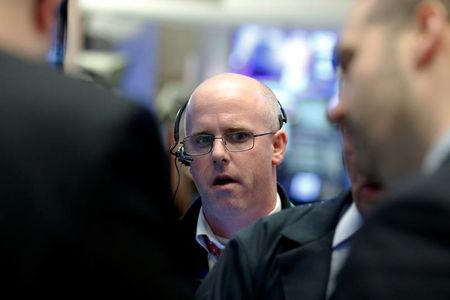
Bombardier Inc. (BBD.B:CA) Q2 2026 Earnings Call Transcript

Published

on

OneWater Marine Inc. (ONEW) Q1 2026 Earnings Call Transcript

Operator

Good morning, ladies and gentlemen, and welcome to the Bombardier Second Quarter 2026 Earnings Conference Call. Please be advised that this call is being recorded. At this time, I would like to turn the discussion over to Mr. Francis Richer de La Fleche, Vice President, FP&A and Investor Relations for Bombardier. Please go ahead.

Francis Richer de La Fleche
Vice President of Financial Planning & Investor Relations

Advertisement

Good morning, everyone, and welcome to Bombardier’s earnings call for the second quarter of 2026. I wish to remind you that during the course of this call, we may make projections or other forward-looking statements regarding future events or the financial performance of the corporation. There are risks that actual events or results may differ materially from these statements. For additional information on forward-looking statements and underlying assumptions, please refer to the MD&A. I’m making this cautionary statement on behalf of each speaker on this call.

With me today is our President and Chief Executive Officer, Éric Martel; and our Executive Vice President and Chief Financial Officer, Bart Demosky, to review our operations and financial results for the second quarter ended June 30, 2026.

I would now like

Advertisement
Continue Reading

Business

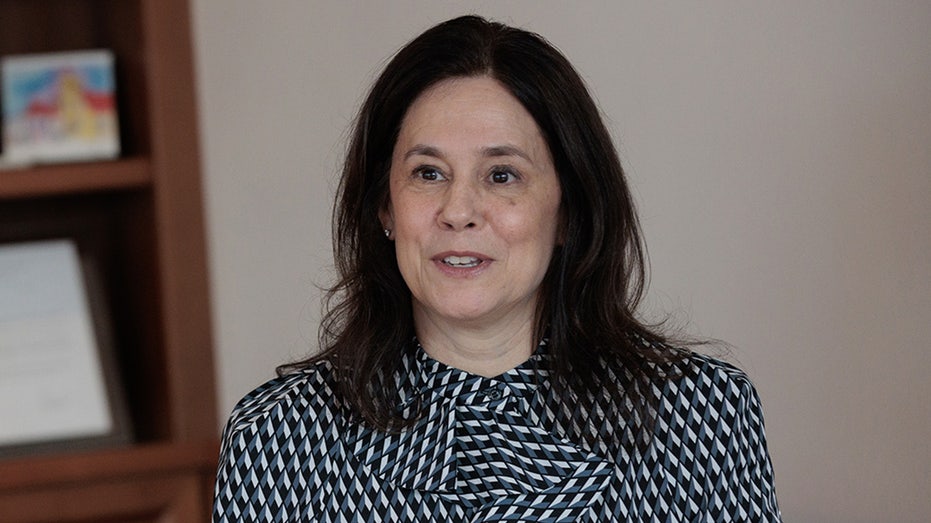
Time for government, companies to adopt artificial intelligence: Deloitte India

Published

on

The Economic Times

MUMBAI: In the midst of Indian companies battling the Covid-19 disruption, there is a growing realisation and acceptance that artificial intelligence (AI) is not only unavoidable but it must be adopted quickly to remain competitive in the marketplace, Deloitte India CEO N Venkatram told ET.“Indian companies need to re-skill, train, and acquire more relevant talent, if they are to successfully integrate AI technologies. Most importantly, they

( Originally published on Dec 27, 2020 )

Continue Reading

Business

Thousands take to Kyiv’s main street, firm on calls for defence minister’s return

Published

on


Thousands take to Kyiv’s main street, firm on calls for defence minister’s return

Continue Reading

Business

Indian dating apps, services see surge of paying users in small cities

Published

on

The Economic Times

NEW DELHI: For Indian dating apps and services, small cities and towns are now driving the growth more than the metros.According to companies like Aisle and Truly Madly, which have millions of users and position themselves as “serious” dating apps, and bespoke high-end dating services like Sirf Coffee, a lot more users from such places are not only keen on using these apps, but also willing to pay for it.While users for these apps from small

( Originally published on Jan 01, 2021 )

Continue Reading

Business

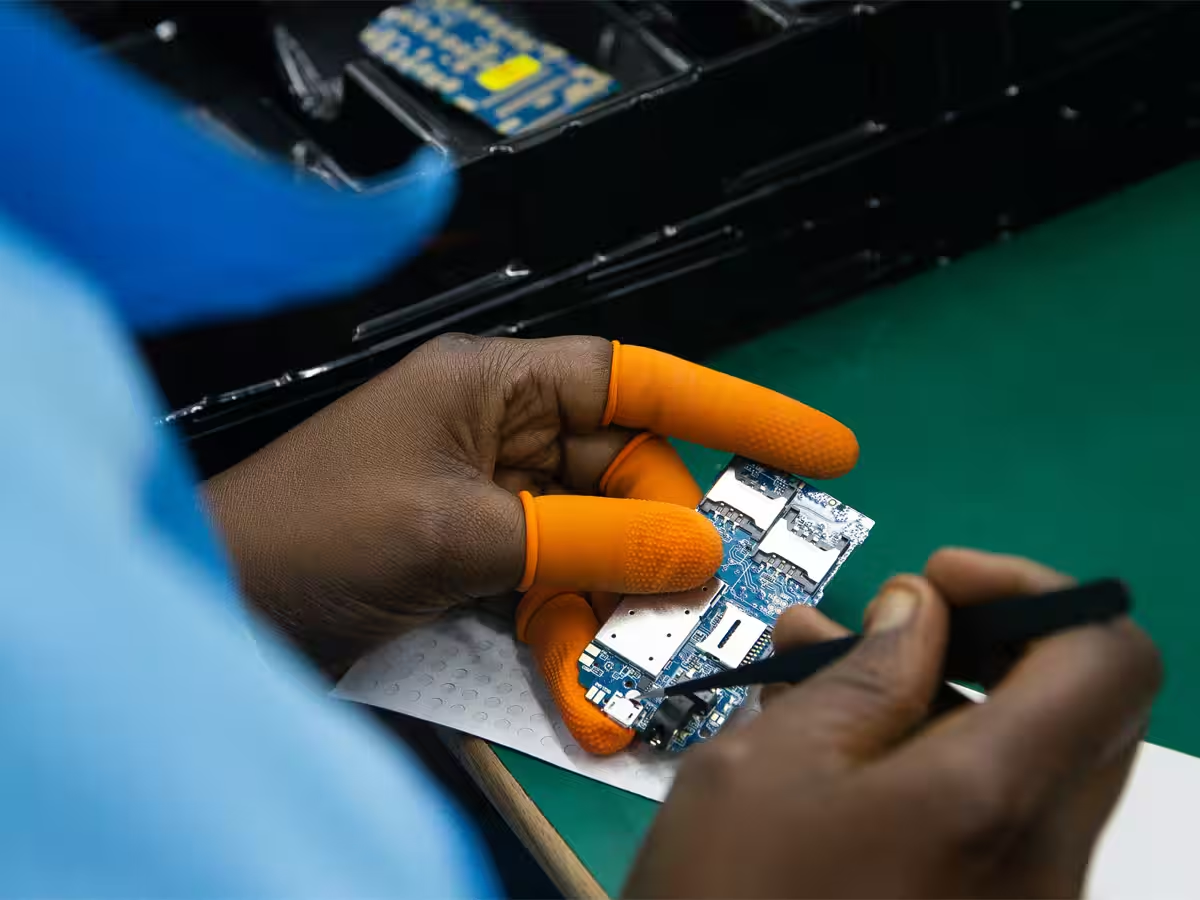
Govt may keep Rs 7,500 cr outlay for IT hardware manufacturing under PLI scheme

Published

on

The Economic Times
NEW DELHI: The government may keep an outlay of Rs 7,500 crore under the production linked incentive scheme for IT hardware products like personal computers, laptops, tablets and servers, according to a source aware of the development.

Foreign companies looking for incentives under the scheme may have to invest Rs 500 crore over four years, while the threshold for domestic firms is likely to be around Rs 20 crore for five years, the source who did not wish to be named said.

“Meity (Ministry of Electronics and Information Technology) will take the Cabinet approval of the detailed guidelines soon and is hopeful of rolling out the scheme from next financial year. The incentive outlay is likely to be around Rs 7,500 crore,” the source said.

The government has announced a cumulative production linked incentive of Rs 2 lakh crore for 10 sectors to encourage domestic manufacturing after seeing traction of global giants like Apple’s contract manufacturers, Samsung etc for the scheme in the mobile devices segment.

Advertisement

According to mobile devices industry body ICEA, India has the potential to scale up its cumulative laptop and tablet manufacturing capacity to over Rs 7 lakh crore by 2025 through policy interventions.

Scaling up laptop and tablet PC manufacturing can take the share of India in the global market to 26 per cent from 1 per cent at present.