
Business
Novo Nordisk Wegovy pill beating Eli Lilly Foundayo early

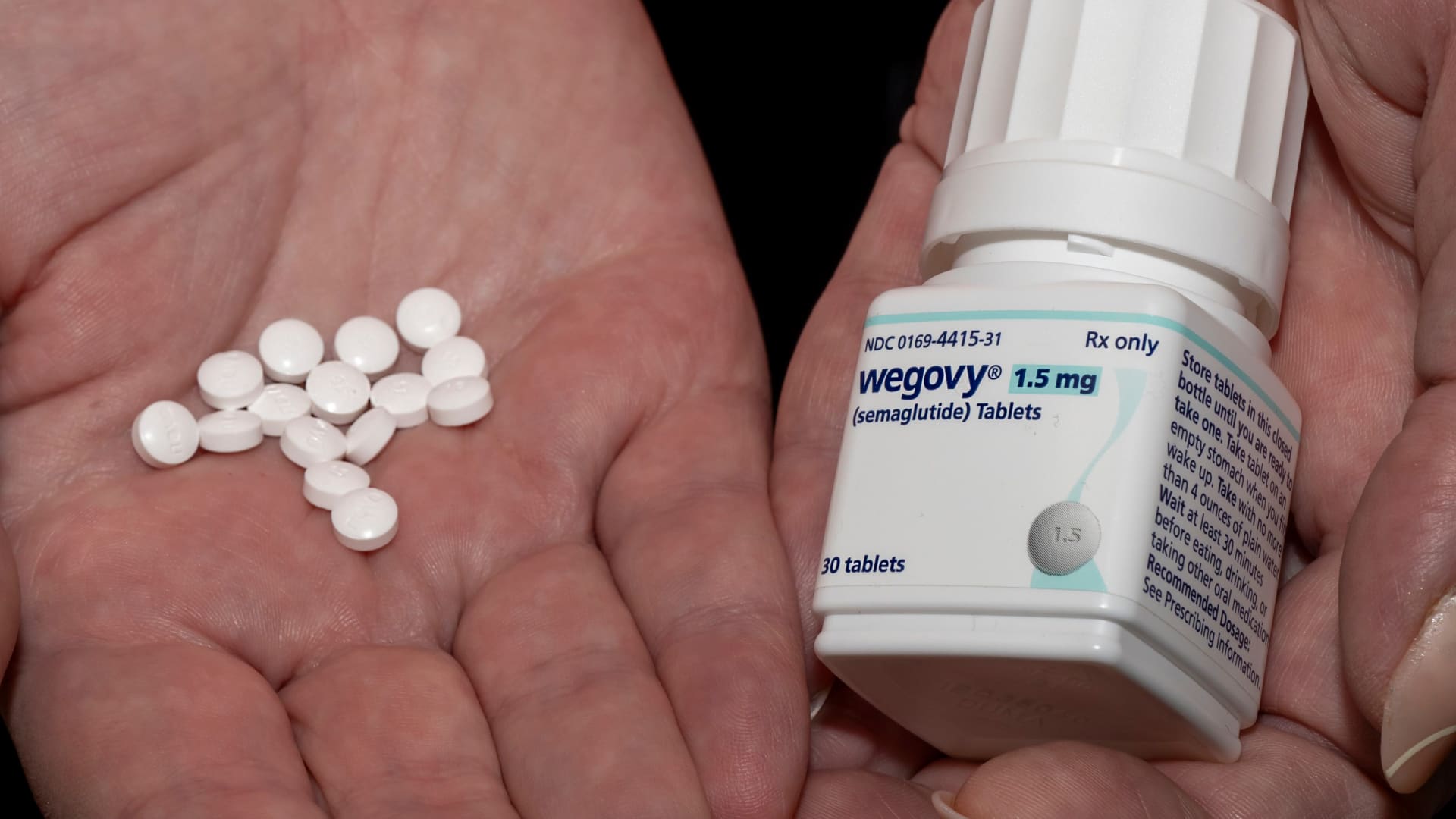
Wegovy semaglutide tablets.
Michael Siluk | Universal Images Group | Getty Images
When the Wegovy pill launched in January, telehealth provider LifeMD said its business doubled almost overnight.
LifeMD went from seeing between 300 and 400 new patients a day to 600 to 1,000 new patients a day, said CEO Justin Schreiber. He knew there would be demand, but that level of interest surprised him.
“There’s no question that the launch of oral medications has improved access,” Schreiber said.
Tens of thousands of people have started taking Novo Nordisk’s Wegovy pill in the four months since it launched in the U.S., the majority of them new to the GLP-1 category. Investors will get a fresh look at the Wegovy pill’s momentum when Novo reports first-quarter results on Wednesday.
The launch has already forced investors to rethink the opportunity in oral GLP-1s – and which company might win it. While obesity and diabetes market leader Eli Lilly launched its own pill, Foundayo, last month, early signs indicate its rollout has been more modest than the Wegovy pill’s start.
“We were all in this camp of Foundayo, Foundayo, Foundayo because Lilly was talking it up and we were also concerned about making enough peptide because Novo was still coming out of shortage,” said BMO Capital Markets analyst Evan David Seigerman.
Now, Novo’s early success has upended the expectations of some investors and analysts who expected the Danish company would fall behind its U.S. rival in the oral category, as it did in injectables.
Novo’s Wegovy pill uses the same main ingredient as its weekly shot. The company had at times struggled to produce enough of the peptide to satisfy the soaring demand for the injection, and the oral formulation required even more of it. Meanwhile, Lilly was telling investors its GLP-1 pill was easier to make and wouldn’t face the shortages that hindered the shots.
Doubts about Lilly’s lock on the market emerged last summer when the company said its pill helped people lose about 12% of their body weight, on average. Seigerman noticed Novo pounced on the opportunity and started to highlight the efficacy of oral semaglutide, the active ingredient in Novo’s Wegovy, which delivered almost 17% weight loss in a separate trial.
When the Wegovy pill was approved around the New Year, Novo and its telehealth partners rolled out a high-profile promotional blitz. Ads blanketed New York City subways and TV broadcasts. The Danish drugmaker even tapped celebrities like DJ Khaled for its first-ever Super Bowl ad.
Novo pushed the pill’s lower entry price of $149 per month and injection-like efficacy. The company used its three-month head start on Lilly to shape the narrative and combat concerns that people wouldn’t want a pill that needs to be taken first thing in the morning without food and with little water, which Novo CEO Mike Doustdar said were “a bit fueled by our competitor.”
“Well, I have news for you, this has been absolutely not the case,” Doustdar told CNBC in March. “People are really interested because it’s the most efficacious pill right now in the market.”
The Wegovy pill — and now Lilly’s own oral drug — are helping to expand the GLP-1 market, reaching patients who wouldn’t have otherwise sought treatment due to a fear of needles or difficulty accessing the injections, which used to cost much more than today’s pills for many patients.
“There’s a fair number of patients that don’t want to be stuck by the needle in the case of a vial and syringe or stung by the price,” Jamey Millar, Novo’s head of U.S. operations, said in a March interview.
People are choosing GLP-1 pills “by a huge factor” more than shots through telehealth platform Sesame, said CEO Michael Botta. He attributes the preference to the lower price of the pills versus the shots and the fact that people are more comfortable trying oral drugs than going straight to shots.
That could bring in a more diverse set of patients to the category. More men are “definitely” starting the medications than before, he said, though women still make up a majority of new patients.
Shortly after the launch, Novo said that many of the initial users were taking the lowest starter dose of the drug. Millar told CNBC that the company is closely watching how many patients move to the highest doses over the coming months.
What to watch in Novo vs. Lilly
Eli Lilly appears to have work to do to catch up to Novo.
While Novo was able to leverage the Wegovy brand recognition right out the gate, Lilly is trying to introduce introduce people to an entirely new brand. Its pill Foundayo has a different active ingredient than its best-selling weight-loss shot Zepbound. Lilly executives last week sought to reassure investors that it’s going to take time to introduce the drug to doctors and patients.
In the first few weeks of the launch, more than 20,000 people have started taking Foundayo, Lilly CEO Dave Ricks told CNBC following the company’s first-quarter earnings report. More than 1,000 people are starting the drug every day, and 80% of those patients are new to GLP-1 drugs, he said. Lilly still needs to build consumer awareness around the pill, Ricks said, adding the company hasn’t started widely advertising it on TV.
“So what we’re seeing now is basically organic demand, which is really strong to us,” Ricks said.
RBC analyst Trung Huynh said investors should wait two or three months to judge the momentum of Lilly’s Foundayo launch because there’s so much early volatility. He thinks it’ll take a year or two for the story to play out. He pointed to the market for weekly shots: prescriptions of Zepbound surpassed those for Novo’s Wegovy six months after Zepbound was introduced in the U.S., even though it launched two years later.
Because Lilly hiked its full-year sales forecast on strength across its GLP-1 business, it should take some pressure off Foundayo prescriptions in the near term, said Barclays analyst Emily Field. The company plans to start introducing Foundayo in other countries later this year and has touted the pill as the key to reaching people around the world.
Novo hasn’t disclosed any specifics around a potential launch of its Wegovy pill outside of the U.S., but in March it announced a $500 million manufacturing investment in Ireland to meet current and future demand for its oral products outside of the U.S. The European Medicines Agency is expected to approve the Wegovy pill later this year.
Investors will get a better look at the Wegovy pill’s performance this week when the company reports earnings from the first quarter it was available in the U.S. Analysts have praised the strength of the rollout, which outpaced even the launch of its shots.
Even so, Wall Street expects a significant drop in overall sales this quarter, as generic competition for the Wegovy shot threatens sales in India, China and Canada. The pill’s lower price point could also crimp U.S. sales.
Investors will be on high alert for any data related to the Wegovy pill and whether Novo stands by the gloomy forecast it issued in February, when it said sales and profits will both decline by 5% to 13% in 2026. Novo’s pipeline will also be a focus. Disappointments in the clinic have weighed on the stock, causing investors to wonder whether Novo’s pipeline is rich enough to help the company stay competitive.
And while the pills are important to both Novo and Lilly, analysts say they won’t define either company.
“Yes it’s shaking things up, but I still think Lilly has enough components to excel,” BMO’s Seigerman said. “And while Novo may win with this, they need more than one win to be the champion.”

NEW YORK — As Meta Platforms Inc. (NASDAQ: META) navigates a volatile 2026 market environment, Wall Street analysts overwhelmingly recommend buying the stock, with a consensus “Strong Buy” or “Moderate Buy” rating and average 12-month price targets suggesting substantial upside from current levels near $610. Despite a post-earnings dip following elevated AI capital expenditure guidance, the social media giant’s robust advertising growth, user engagement and artificial intelligence initiatives position it as a compelling long-term investment for many.

Meta shares traded around $608–$612 in early May 2026, down from recent highs but still reflecting strong performance over the longer term. The stock has faced pressure after the company’s first-quarter results, where it raised 2026 capex forecasts to $125–$145 billion, primarily for AI infrastructure. Yet analysts see the heavy investment as a strategic bet on future dominance rather than a red flag.
Q1 2026 Earnings: Beat Overshadowed by Spending
Meta reported strong first-quarter results on April 29, with revenue reaching $56.3 billion, up 33% year-over-year, and diluted EPS at $10.44 (boosted by a one-time tax benefit). Both figures beat expectations. Advertising revenue, the core driver, continued its momentum amid Reels monetization gains and improved ad targeting.
However, the market focused on the increased capital spending outlook, sending shares down as much as 7–10% in after-hours and subsequent trading. Higher costs for AI chips and data centers fueled margin concerns in the near term, though CEO Mark Zuckerberg emphasized long-term payoffs in efficiency, content creation and new revenue streams.
Analyst Consensus: Strong Buy with $830–$840 Targets
As of early May 2026, 38 to 60 analysts cover Meta, with the vast majority issuing Buy or Strong Buy ratings and zero Sell recommendations in recent tallies. The average 12-month price target sits between $823 and $840, implying roughly 35–38% upside from current prices. High targets reach $1,015, while lows hover around $700.
Firms like Bank of America, Barclays and others have maintained or raised targets post-earnings, citing Meta’s advertising resilience and AI leadership through open-source models like Llama. Valuation remains attractive at a forward P/E around 21x with high margins and return on equity near 30%.
Bull Case: AI Investments Fuel Future Growth
Proponents argue Meta’s spending spree positions it at the forefront of AI-driven social platforms. Advances in recommendation algorithms, ad efficiency and potential new products — including metaverse and hardware initiatives — could drive sustained revenue acceleration. User metrics remain robust across Facebook, Instagram, WhatsApp and Threads.
Analysts highlight Meta’s ability to monetize AI tools for creators and advertisers while controlling costs over time. With no major competitive threats eroding its social dominance and global user base exceeding 3 billion monthly actives, the company’s scale provides a durable moat. Long-term forecasts see continued double-digit revenue growth into 2027 and beyond.
Bear Concerns: High Capex and Macro Risks
Skeptics point to near-term margin compression from elevated spending, potential regulatory hurdles in Europe and elsewhere, and broader economic uncertainty affecting ad budgets. The stock’s pullback reflects investor fatigue with heavy AI outlays before clear monetization proof emerges at scale.
Some trimmed targets post-Q1, citing macroeconomic weakness. However, even cautious voices maintain Buy or Hold ratings, viewing any weakness as a buying opportunity rather than a reason to sell.
Investment Considerations for 2026
For growth-oriented investors, Meta offers exposure to digital advertising recovery, AI innovation and potential efficiency gains. Dividend growth and share buybacks provide additional shareholder returns. Risks include execution on AI, geopolitical tensions and valuation multiple contraction if growth slows.
Diversified portfolios may benefit from Meta as a core tech holding, but position sizing should account for volatility. Short-term traders might wait for stabilization after the capex reaction, while long-term holders see current levels as attractive entry points given analyst targets.
Broader Market Context
Meta’s trajectory mirrors other Big Tech names balancing AI ambition with profitability. Strong Q1 ad performance underscores resilience in a competitive landscape, with competitors like TikTok and emerging platforms challenging but not displacing its ecosystem.
As 2026 progresses, upcoming quarterly reports, AI product launches and macroeconomic data will influence sentiment. Analysts will watch user engagement metrics, ad pricing power and progress on cost discipline amid heavy infrastructure builds.
Conclusion: Overwhelmingly a Buy for Most
Wall Street’s near-unanimous bullish stance, coupled with Meta’s proven business model and forward-looking investments, tilts the scales strongly toward Buy for 2026 and beyond. While elevated spending creates short-term noise, the consensus view holds that Meta’s strategic positioning will deliver significant shareholder value over the medium to long term.
Investors should conduct their own due diligence, consider risk tolerance and consult financial advisors, as stock performance involves inherent uncertainties. With no Sell ratings from major analysts and substantial implied upside, Meta remains one of the more favored large-cap tech names heading deeper into 2026.
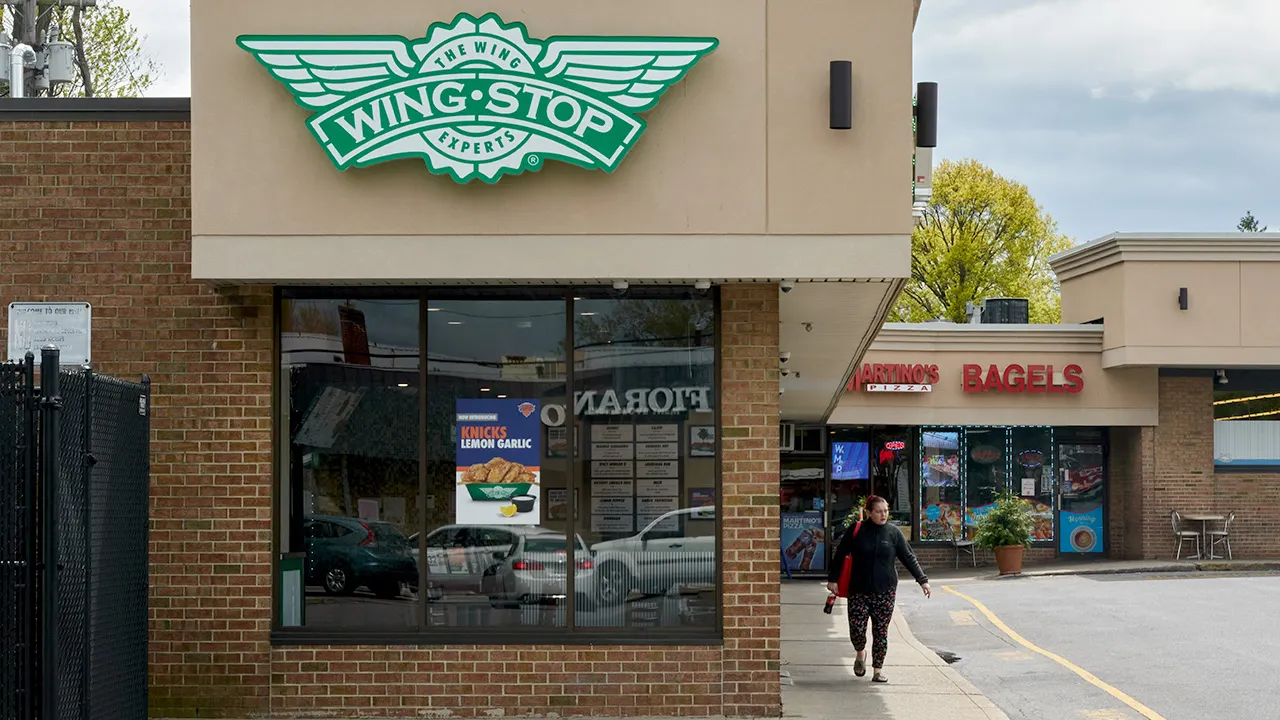
Wingstop CEO Michael Skipworth discusses how soaring gas prices strain household budgets and the affects on Wingstops growth on ‘The Claman Countdown.’
Several U.S. restaurant chains are reporting weaker than expected sales growth in the latest quarter as high gasoline prices squeeze consumers’ budgets.
Gas prices have surged amid the war in Iran, with average gas prices reaching $4.45 a gallon around the country, an increase of about 41% in the last year, according to AAA data.
Prices have risen even more dramatically in certain states, with gas prices in California topping $6 a gallon, which can weigh heavily on restaurants with a presence in the nation’s most populous state.
An analysis by Revenue Management Solutions, a restaurant consulting firm, finds that $4 a gallon is a tipping point as consumers will gradually decrease their restaurant visits until gas prices at the pump hit that threshold, at which point the impact doubles.
DOJ CONFIRMS ANTITRUST PROBE OF MAJOR MEATPACKERS OVER BEEF PRICE INFLATION
Wingstop is one of the restaurants that has reported slowing sales amid the gas price surge. (Bing Guan/Bloomberg via Getty Images)
The firm estimated that $4.20 average gas prices mean about 1.5% fewer restaurant visits, and if they rise to $5.10 or more, fast-food restaurants could see a 3% drop in traffic. Further, it estimated that for a drive-through restaurant with 300 daily transactions, a $1 spike loses about six customers per day and amounts to about $22,000 in lost annual sales.
Wingstop, a chicken-wing chain that touts its affordability, said that higher fuel prices contributed to an 8.7% decline in quarterly same-store sales.
The chain’s CEO, Michael Skipworth, said Wednesday on a call with investors that it was “extremely difficult for anyone to predict this macro environment,” adding that he expects shrinking sales over this year in part because of expectations that gas prices will remain high.
MCDONALD’S IS QUIETLY DITCHING A POPULAR IN-STORE FEATURE NATIONWIDE
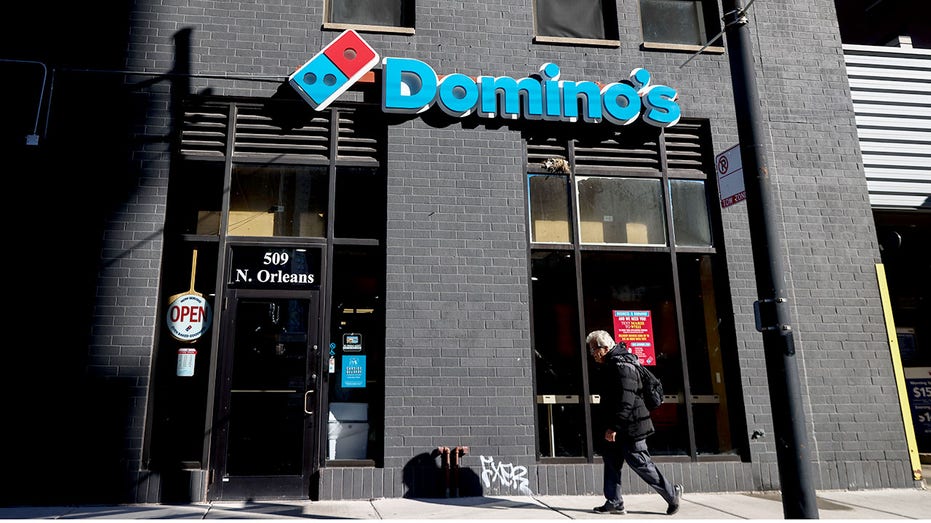
Domino’s said that its rivals are aggressively discounting to compete as consumers are strained by energy prices. (Beata Zawrzel/NurPhoto via Getty Images)
Domino’s CEO Russell Weiner told investors on Tuesday that his chain’s competitors ran promotions “out of our playbook,” which contributed to the weaker than expected same-store sales growth of 0.9% in the latest quarter. Weiner added that while his chain is still better positioned than its rivals to sustain those discounts, the company lowered its sales forecasts for the year.
Some restaurant chains that performed well in the latest quarter are remaining cautious as they look ahead in their outlook. Chipotle had better than expected same-store sales growth of 0.5%, but kept an outlook of flat growth this year, which CFO Adam Rymer attributed in part to gas price uncertainty.
Starbucks reported 7.1% quarterly same-store sales growth in North America on Tuesday and may have benefited from the gloomy consumer outlook, as CEO Brian Niccol told investors the company gained among lower-income consumers who saw the chain as offering “a little bit of indulgence.”
| Ticker | Security | Last | Change | Change % |
|---|---|---|---|---|
| WING | WINGSTOP INC | 150.50 | -10.23 | -6.36% |
| DPZ | DOMINO’S PIZZA INC. | 330.42 | -7.35 | -2.18% |
| YUM | YUM! BRANDS INC. | 154.40 | -3.96 | -2.50% |
| XBUX | NO DATA AVAILABLE | – | – | – |
COSTCO CHANGES BELOVED $1.50 HOT DOG DEAL FOR THE FIRST TIME IN DECADES: REPORTS
Restaurants are also looking to meet consumer demand for affordable meals through value menu offerings. Taco Bell, a subsidiary of Yum Brands, launched a value menu starting at $3 in January and reported 8% quarterly same-store sales growth at U.S. restaurants.
Mark Wasilefsky, head of restaurant finance at TD Bank, said that the industry is “seeing a record level of value menus right now.”
Investors’ concerns about the restaurant sector’s resiliency during the gas price spike has contributed to a 5% drop in the LSEG U.S. restaurant index since the start of the Iran war, which erased over $40 billion in market value, according to LSEG data.
GET FOX BUSINESS ON THE GO BY CLICKING HERE
The next key indicator of the impact of the Iran war and the gas price shock on the restaurant industry and its consumers will come on May 7 when McDonald’s reports, after the chain had stronger sales growth than expected in the prior quarter amid a value menu push.
Reuters contributed to this report.
Business
LARRY KUDLOW: More bombing is coming as Iran pulls out a blank piece of paper to take Trumpian dictation

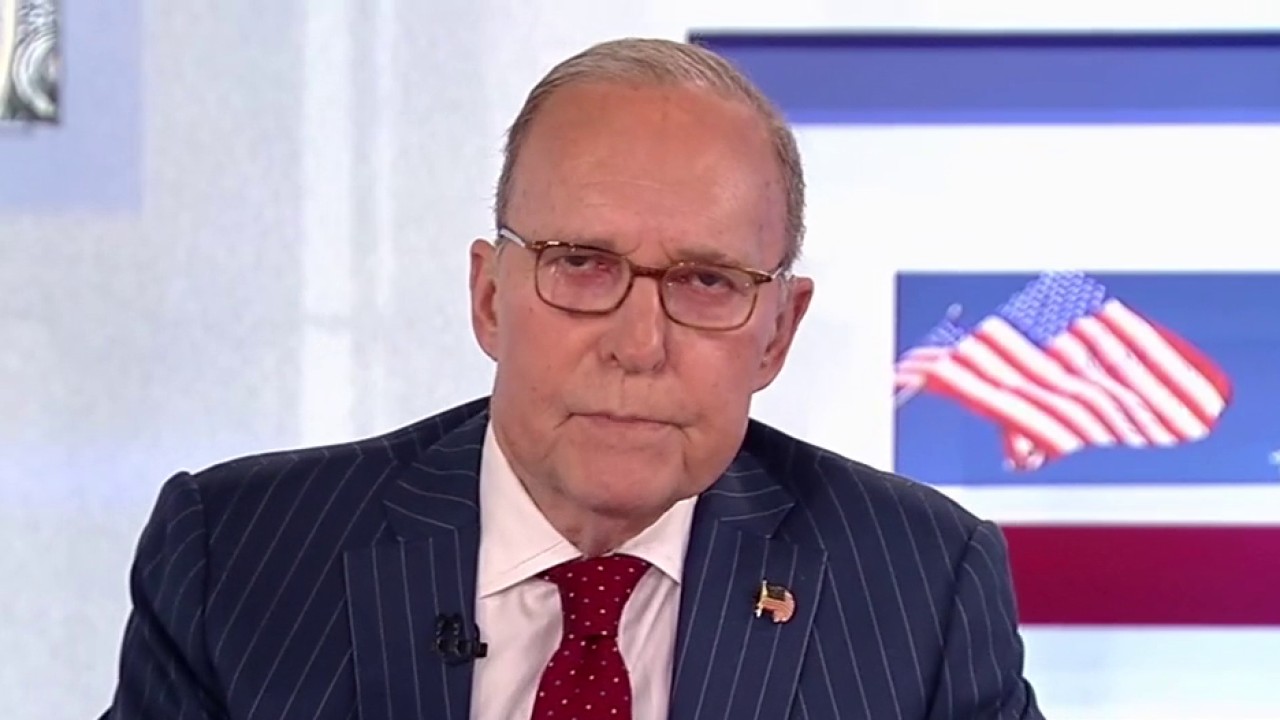
FOX Business host Larry Kudlow discusses what is next in the Middle East conflict on ‘Kudlow.’
So the Iranians send back a ridiculous set of agreement conditions that doesn’t even mention their nuclear threats. Nor does it mention their constant state-sponsored terrorism. And President Trump quickly responded that it was unacceptable.
Time and again the president has said Iran must not have any nuclear capabilities. No nuke building, no enriched uranium, no missiles, no more terrorist proxies, and no more control over the Strait of Hormuz. Those are his red lines. He will stick to them. And as far as Hormuz is concerned, the United States Navy has now begun the process of reopening the Strait. They’ve guided two ships through today and they are likely to ramp up many many more ships to safely pass through the Strait.
In effect, whether the Iranian thugs realize it or not, America has completely taken over the Persian Gulf, which I guess should be the Arabian Gulf, although I may personally be willing to hold out for the Trump Gulf. The Iranians took shots at the United Arab Emirates, which has become a staunch American ally. Leaving OPEC ramping up oil production and transacting through the dollar.
Our naval blockade continues to work as Iran continues to drop into economic and financial ruin. No oil, no money, no meeting payroll or retirement packages. Even all that money the Islamic Revolutionary Guard Corps has stolen and looted from the Iranian people, including running their businesses into the ground, and all that offshore bank accounting has now been frozen or even seized by the United States Treasury.
Ret. Gen. Jack Keane discusses President Donald Trump’s announcement of ‘Project Freedom’ to escort neutral ships safely out of the Strait of Hormuz on ‘Kudlow.’
Meanwhile, without oil exporting, Iran’s storage capabilities are filled up and overflowing, and a shutdown is imminent. Once that happens, the oil fields will be badly damaged for quite some time.
The blockade is going to stay in place. The Navy is going to gradually reopen the Strait of Hormuz and American order will be imposed on the whole region, as more super tankers flow through, that should begin to ease oil prices and perhaps even gasoline prices at the pump. The ceasefire has lasted 3 weeks, though. The Iranians haven’t responded with any serious talks. And my hunch is Mr. Trump is losing patience with them.
At some point Iranian leaders are not going to make it home at night before a resumption of bombing occurs. Analysts say it will only take a couple more weeks to fully complete the mission. There can be no deal without the president’s red lines. And, indeed, I still believe we are headed for unconditional surrender.
I can just see Mr. Trump at a meeting with some Iranian leader if he can find one. Tell that person to take out a blank sheet of paper and write down this and that. That’s called dictation. Unconditional dictation.
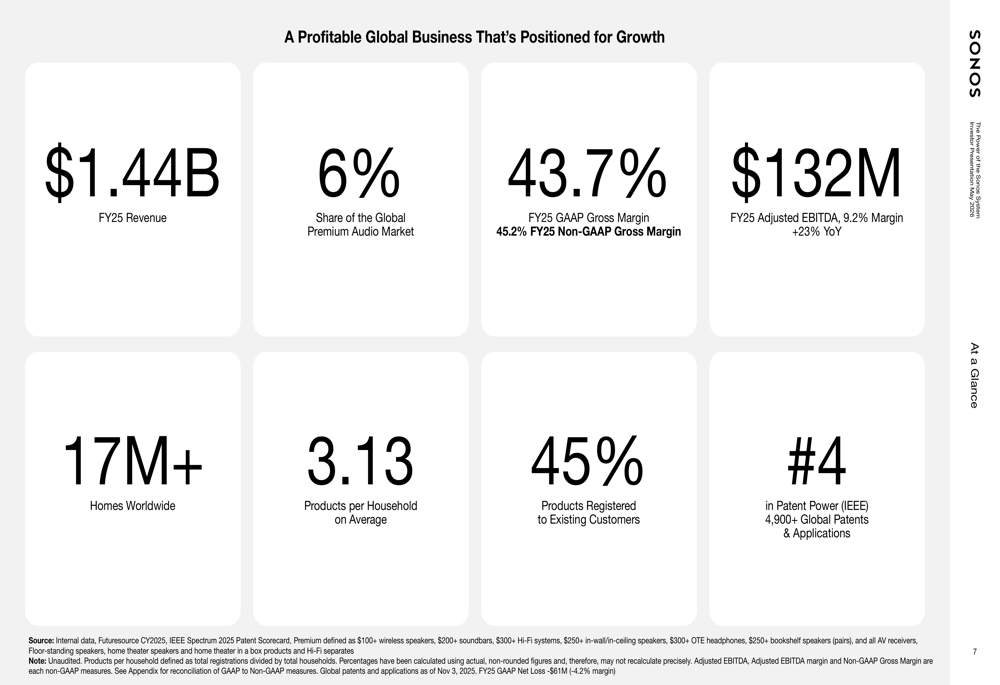
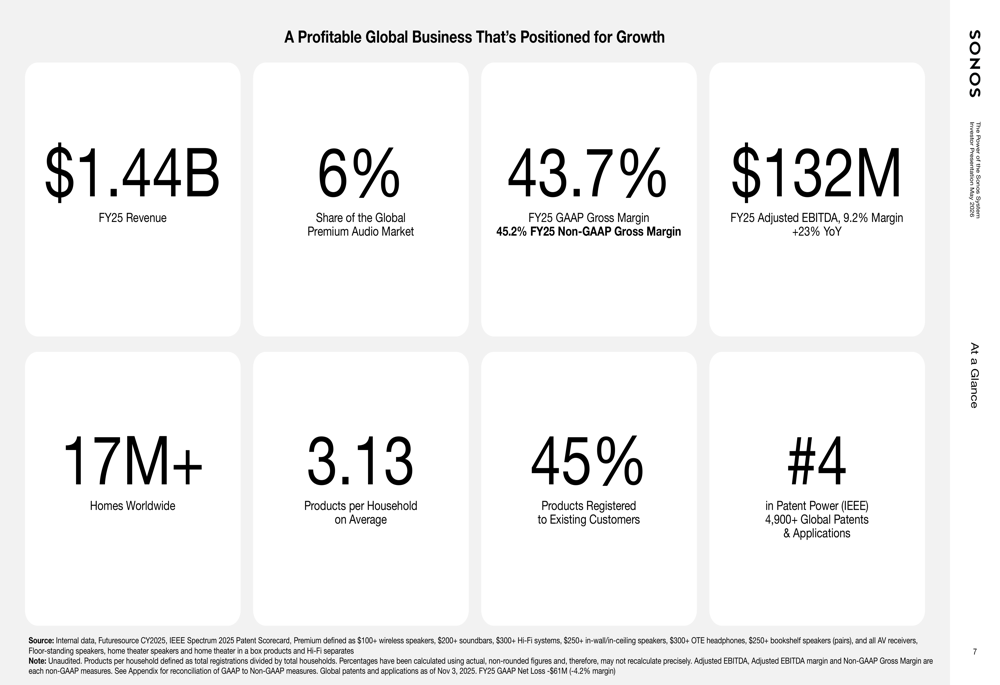
Sonos FY25 slides: $12B opportunity in base despite revenue dip
OPEC sought to project a united front Sunday, agreeing to a symbolic increase in oil output just days after the bombshell departure of the United Arab Emirates. But the pledge masks fault lines that could soon resurface.
The Organization of the Petroleum Exporting Countries and its allies agreed to raise production by about 188,000 barrels a day in June, a third consecutive monthly increase and a signal to markets that the cartel’s policies remain unaffected by the rupture.
Copyright ©2026 Dow Jones & Company, Inc. All Rights Reserved. 87990cbe856818d5eddac44c7b1cdeb8

QYLG: Rotation Into QQQ During The Bull Market

Sothebys International Realty broker Jenna Stauffer analyzes the U.S. housing market, noting a shift in buyer behavior, on ‘Making Money.’
Foreclosures rose to the highest level in six years in the first quarter of this year as homeowners are squeezed by rising costs related to insurance and property tax bills.
The Wall Street Journal reported that data from Attom shows the number of U.S. properties with a foreclosure filing has trended up to nearly 119,000 in the first quarter, an increase of 26% from the same period last year.
That figure is the highest since the first quarter of 2020, when mortgage relief measures implemented to mitigate the economic impact of COVID shutdowns led to a steep decline in foreclosures.
Analysts have noted that the current foreclosure rate represents a return to what were normal levels prior to the COVID-19 pandemic, as opposed to a sign of borrowers becoming increasingly distressed financially.
AVERAGE MONTHLY MORTGAGE PAYMENT HITS NEW HIGH, TOPPING $2K FOR FIRST TIME EVER

Homeowners are facing rising costs and foreclosure levels have returned to prepandemic levels. (Nathan Howard/Bloomberg via Getty Images)
However, the Journal’s report said that although many homeowners have low mortgage rates, rising costs for things like home insurance, property taxes and dues for homeowners’ associations are ramping up spending on bills.
A report by Insurify found that the average annual bill for homeowners insurance rose $2,948 in 2025, up 12% from 2024, while Attom data showed that average property tax burdens were up 3% to $4,427.
CALIFORNIA BUILT MORE HOMES THAN PEOPLE OVER SIX YEARS – SO WHY IS HOUSING STILL SO TIGHT?

Homeowners are facing rising bills from property taxes, insurance and neighborhood association dues. (iStock/Getty Images Plus)
Those who purchased homes within the past few years may be in worse shape after purchasing at higher mortgage rates, as some areas have seen declines in home values that could leave some owners underwater.
Homeowners who are facing financial distress and the risk of slipping into delinquency or foreclosure have fewer options for relief than what was available a few years ago before pandemic-era programs were sunset.
For example, the Federal Housing Administration (FHA) announced in October that homeowners are limited in resorting to measures like loan modification to avoid foreclosure once every 24 months.
PROPERTY TAX BURDEN ON AMERICANS CLIMB AS HOME VALUES DIP, NEW DATA SHOWS
Many federal pandemic-era foreclosure relief programs have ended. (Getty Images)
The data comes as data shows the average monthly payment for all outstanding mortgages reached a new high at the end of last year, as it rose to $2,005 in the fourth quarter, according to Realtor.com data.
The uptick covers the full portfolio of mortgages in the U.S., including a large group of borrowers who took out loans before 2022 and have mortgage rates of 4% or lower – whereas new buyers face significantly higher payments given the elevated mortgage rates.
GET FOX BUSINESS ON THE GO BY CLICKING HERE
The average monthly payment for new homebuyers passed the $2,000 threshold for the first time in September 2022.

Macom SVP global sales Hwang sells over $1m in stock

Earnings call transcript: Itafos misses Q1 2026 EPS forecasts, stock drops
SEATTLE — Steam, Valve Corporation’s dominant digital gaming platform, is currently operating normally as of Tuesday, May 5, 2026, with no widespread outages reported across major monitoring services. Millions of users worldwide can access the Steam Store, Community features, and launch games without major disruptions, though occasional localized or individual connection hiccups remain common in a service handling tens of millions of concurrent players.
Monitoring sites including Downdetector, SteamStat.us and DownForEveryoneOrJustMe confirm stable performance. Steam services show normal operation for the Store, Community, Web API and connection managers at around 97% availability. In-game and online user counts remain robust, with over 34 million users online in recent snapshots and nearly 10 million actively playing.
Current Status: No Major Outage
As of early May 2026, user reports on Downdetector indicate no significant spike beyond typical background noise. The platform’s last notable outage occurred on April 28, lasting roughly 47 minutes and affecting launching games and connections for some users. Routine Tuesday maintenance windows, a long-standing Valve practice, occasionally cause brief interruptions, but none are active today.
SteamStat.us, an unofficial but reliable tracker, reports all core services in the green. Minor database queue delays of around 30 minutes appear in some backend functions but do not impact most players. Connection managers hold steady above 96%, sufficient for smooth gameplay and downloads.
Valve has not issued any emergency notices via its official support channels or social accounts regarding today’s status. Players experiencing issues are likely dealing with individual factors such as local internet problems, router configurations, VPN interference or temporary high traffic rather than a platform-wide failure.
How to Verify Steam Status Yourself
Gamers worried about connectivity should first visit trusted checkers:
- SteamStat.us — Real-time service breakdown
- Downdetector.com/status/steam — User-reported spikes
- store.steampowered.com/stats — Official concurrent user data
Basic troubleshooting steps recommended by Valve include restarting the Steam client, verifying game files, checking firewall/antivirus settings, and ensuring a stable wired connection over Wi-Fi when possible. Clearing the download cache or running Steam as administrator often resolves persistent errors like Code 53 (“Servers too busy”).
Recent History of Steam Outages in 2026
Steam has experienced several disruptions this year. A February event saw over 18,000 user reports in a single morning, primarily server connection failures. May 1 brought scattered complaints, though not at outage levels. These incidents typically resolve within hours thanks to Valve’s robust global server infrastructure.
The platform’s scale contributes to vulnerability. With peaks exceeding 40 million concurrent users during major releases or sales, even minor technical glitches can affect thousands. DDoS attempts, though rare and usually mitigated quickly, have occurred in the past. Routine maintenance every Tuesday remains the most predictable source of brief downtime.
Why Steam Rarely Stays Down Long
Valve’s engineering prioritizes redundancy. Data centers worldwide distribute load, while content delivery networks accelerate downloads. The company’s closed ecosystem allows faster internal fixes compared to more fragmented services. However, heavy reliance on Steam for game libraries, cloud saves and multiplayer means even short outages frustrate dedicated players.
Impact on Gamers and the Industry
When Steam does go down, effects ripple across the PC gaming world. Competitive titles like Counter-Strike 2 and Dota 2 see matchmaking queues freeze. Single-player enthusiasts lose access to achievements and updates. Steam Deck users in handheld mode face additional frustration during travel.
Economically, prolonged outages could dent Valve’s massive revenue from the 30% cut on most transactions. Yet the platform’s near-monopoly status in PC digital distribution means users have few immediate alternatives. Epic Games Store, GOG and others capture niches but lack Steam’s library depth and social features.
Tips to Minimize Disruption
Proactive steps help gamers stay prepared:
- Enable Steam’s offline mode before potential issues.
- Keep games updated during stable periods.
- Use secondary launchers or direct executables for critical titles.
- Monitor Steam’s official Twitter/X and status pages during peak events like new game launches or holiday sales.
For power users, tools like SteamCMD offer command-line access bypassing the full client. Mobile apps provide basic library management even during client-side problems.
Broader Context in 2026 Gaming Landscape
Steam continues dominating as PC gaming’s central hub amid growing competition from cloud services like Xbox Game Pass and NVIDIA GeForce Now. Valve’s focus on Steam Deck and upcoming hardware, including rumored Steam Machine developments, reinforces the ecosystem’s importance. Reliable uptime remains critical to retaining user trust.
As artificial intelligence and enhanced anti-cheat systems integrate deeper, backend complexity increases outage risks. Yet Valve’s track record shows quick recovery, often without public fanfare. Most “Steam is down” panics on social media prove temporary or user-specific upon verification.
What to Do If Steam Goes Down
If widespread problems emerge:
- Check multiple status sites for confirmation.
- Avoid repeated login attempts, which can worsen queues.
- Wait 30-60 minutes before retrying.
- Report specific errors via Steam Support for faster potential resolution.
Valve rarely comments publicly on minor issues, reserving statements for major events. Community forums and Reddit’s r/Steam provide real-time user experiences during incidents.
For now, on this Tuesday in May 2026, Steam remains online and ready for millions of gamers. Whether launching a quick session of your favorite title or browsing the next big sale, the platform stands stable. Occasional hiccups are part of operating at Steam’s enormous scale, but current indicators point to smooth sailing for the vast majority of users.
Gamers should continue monitoring status pages during high-traffic periods and maintain good local network hygiene. With no active outage today, the focus shifts back to play — and perhaps wondering what blockbuster release will next test Steam’s servers.

Jorge Masvidal wants to see Carlos Prates fighting for UFC gold: ‘He’s something scary’

US claims it has sank six Iranian boats targeting civilian ships as Trump moves to reopen Strait of Hormuz

Why Wall Street Says Strong Buy Despite AI Spending Surge

Manchester United reach agreement with Casemiro over contract clause amid transfer speculation

US brings back mandatory military draft registration

Steven Gerrard disagrees with Gary Neville over ‘shock’ Chelsea and Arsenal claim | Football

Money view loan kaise milega 2026 | Moneyview personal loan kaise le | Moneyview personal loan app

#lilzayosama is FACING LIFE IN PRISON after Cryptocurrency K- and disguising as #doordash #yochronic

What’s Makes People Successful After Going On Financial Audit? #wealth #finance #podcast
-

 Fashion6 days ago
Kylie Jenner’s KHY Enters a New Era with ‘Born in LA’
-

 NewsBeat1 day ago
Channel 5 – All Creatures Great and Small series 7 new post
-

 Business6 days ago
Most Commercial Energy Audits Miss the Real Losses
-
 Tech3 days ago
Trump’s 25% EU auto tariff breaches Turnberry Agreement that also covers semiconductors and digital trade
-

 Crypto World6 days ago
CFTC’s AI will review U.S. crypto registration applications, chairman tells CoinDesk
-
 Sports3 days ago
Paul Scholes issues Marcus Rashford reality check as agreement emerges over Man United star
-

 Business5 days ago
Barclay Brothers Avoid Bankruptcy: HSBC Drops High Court Petitions After IVA Deal
-
 Business5 days ago
Tesla Officially Registers Elon Musk’s Stock: What Investors Need to Know
-

 Tech6 days ago
Get Ready for More Brain-Scanning Consumer Gadgets
-
 Crypto World7 days ago
Robinhood Phishing Scam Exploits Gmail Dot Feature to Bypass Security
-

 Crypto World7 days ago
Gmail Dot Trick Underpins Robinhood Phishing, Sending Real-Looking Emails
-

 Entertainment7 days ago
Michael Jackson’s Biopic Excluded Abuse Allegations For $25M
-

 Business4 days ago
Two Powerball Tickets Split $143 Million Jackpot in Indiana and Kansas
-

 Tech5 days ago
Texas Instruments made a new flagship graphing calculator: the TI-84 Evo
-

 Business7 days ago
Superdry co-founder accused of raping woman
-
 Crypto World4 days ago
CoreWeave (CRWV) Stock Climbs 8% Despite $45M Insider Share Dump
-
 Crypto World7 days ago
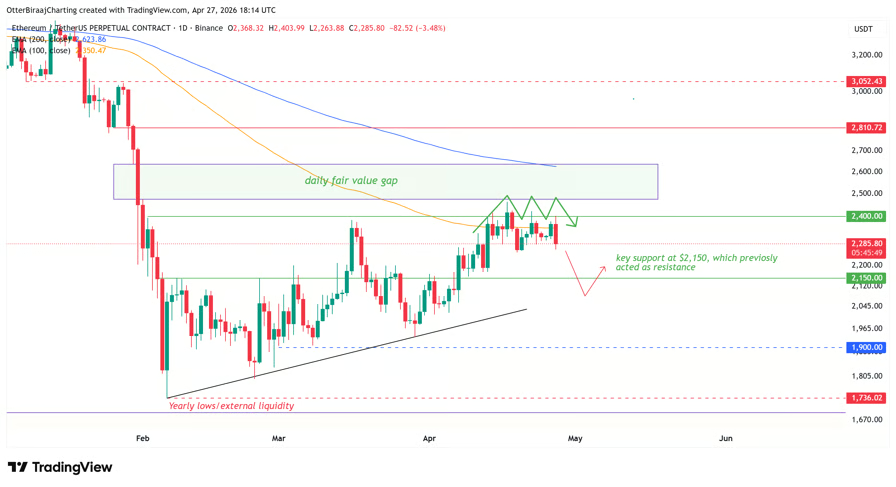
ETH Triple Top Rejects $2.4K As Analysts Flag Weakness Against BTC
-

 Crypto World7 days ago
Will Ethereum hold $2,300 or slip lower from here?
-

 Business7 days ago
Outsourced IT Support vs Internal Teams: A Complete Guide
-

 Entertainment7 days ago
How A Fantasy Flop Finally Found Success On HBO Max
You must be logged in to post a comment Login