
Business
NSW Opens Consultation on Australia’s First Mandatory Solar Panel Recycling Scheme to Force Manufacturer Accountability

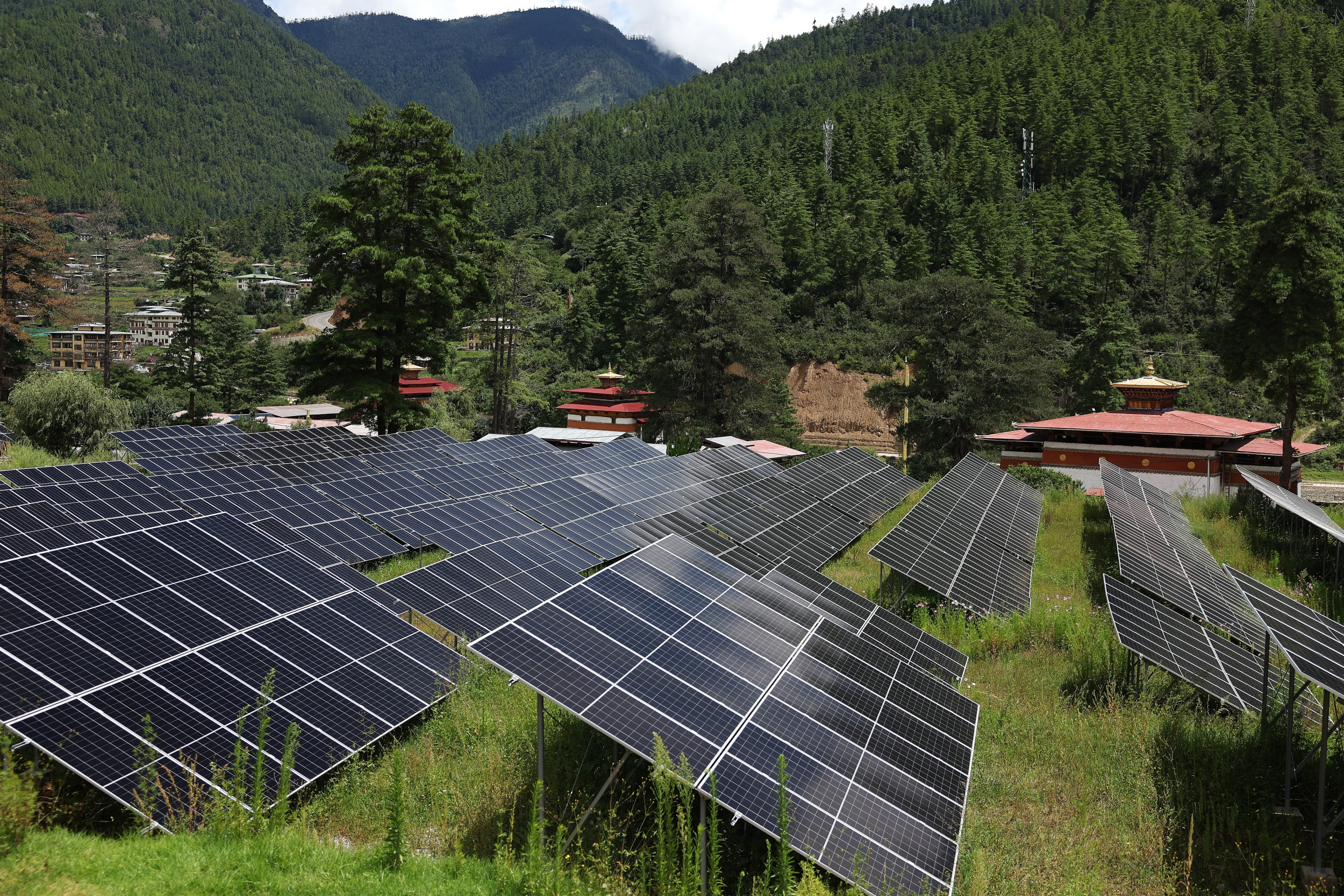
SYDNEY, Australia — NSW Mandatory Solar Panel Recycling Scheme initiatives have reached a key regulatory milestone as the New South Wales Government opens public consultation on draft legislation forcing solar manufacturers and importers to take financial responsibility for end-of-life photovoltaic waste.
The NSW Environment Protection Authority (EPA) formally published the draft Product Lifecycle Responsibility Amendment (Photovoltaic Panels) Regulation 2026, setting a national precedent by establishing Australia’s first mandatory product stewardship framework for solar technology.
Designed to divert tens of thousands of tonnes of decommissioned solar equipment from landfill, the regulation mandates that solar panel suppliers, manufacturers, and importers fund certified collection logistics, recycling infrastructure, and material recovery. With public submissions open through November 16, 2026, the Minns Labor government aims to transform end-of-life solar waste into high-value secondary resources—such as silver, silicon, copper, and glass—positioning NSW as a regional hub for circular clean energy manufacturing.
Environmental policy analysts highlight that enacting extended producer responsibility forces global panel manufacturers to internalize recycling costs, preventing taxpayers and local councils from absorbing future clean-up liabilities.
Key Pillars of the Scheme: Reporting, Stewardship, and Material Recovery
The proposed NSW regulation establishes strict legal obligations for commercial importers and manufacturers operating within the state’s expanding solar energy market.
Under the regulatory framework, suppliers must submit annual reports detailing the exact volume of photovoltaic units imported, sold, collected, and processed within NSW.
The scheme establishes mandatory recovery targets, requiring operators to route decommissioned panels through licensed e-waste processors capable of extracting valuable raw materials rather than resorting to low-cost landfill disposal. Additionally, the policy mandates public education programs and clear handling guidelines for electrical contractors, ensuring safe deinstallation and streamlined drop-off workflows at local government collection hubs.
The comprehensive regulation reflects NSW’s strategy to align renewable energy deployment with long-term ecological sustainability.
Annual Compliance Audits: Mandating detailed reporting on panels imported, sold, decommissioned, and recycled across New South Wales.
Extended Producer Responsibility: Forcing global solar equipment manufacturers to fund end-of-life collection networks and processing infrastructure.
Material Recovery Targets: Driving circular remanufacturing by requiring commercial recyclers to recover silicon, copper, silver, and aluminum.
Public Education Frameworks: Establishing standardized handling protocols for solar installers to ensure safe deinstallation and collection.
Enacting mandatory stewardship guarantees that clean energy generation does not create long-term electronic waste liabilities.
Addressing the PV Waste Surge: Shifting Economics from Landfill to Recycling
The core catalyst driving NSW’s regulatory intervention is the accelerating volume of first-generation rooftop solar panels reaching end-of-life.
With rooftop solar adoption exceeding national historical averages, Australia faces an estimated 60,000 tonnes of solar panel waste annually—a figure projected to exceed 91,000 tonnes per year by 2030 as early rooftop systems are upgraded. Historically, fewer than 17 percent of decommissioned panels were recycled due to high logistics expenses and processing costs that significantly exceeded landfill tipping fees. By imposing legal producer responsibility, the NSW scheme levels the economic playing field, creating a captive volume base for specialized domestic recyclers like PV Industries and Sircel while incentivizing investment in automated deframing and material separation technologies.
Achieving structural commercial viability for solar panel recycling remains essential to establishing a self-sustaining circular economy.
Recycling operations benefit from guaranteed feedstock volumes, allowing processors to achieve economies of scale and lower unit recovery costs.
Strategic Impact on Clean Energy Supply Chains and National Policy
Establishing mandatory producer accountability in NSW serves as a blueprint for broader national solar waste policy across Australia.
While federal initiatives like the $24.7 million National Solar Panel Recycling Pilot gather baseline data across collection sites, NSW’s legislation creates the country’s first enforceable legal mandate. Requiring manufacturers to account for product lifecycles encourages global solar brand names to design panels that are easier to disassemble and recycle. Furthermore, recovering critical materials locally reduces Australia’s dependence on raw material imports, creating high-value onshore processing jobs while securing essential metals for domestic advanced manufacturing.
Following the close of public consultation in November 2026, the EPA will finalize the regulatory impact statement ahead of full legislative implementation.
Sovereign material recovery ensures that Australia retains valuable industrial inputs within its domestic clean technology supply chain.
Expanding Domestic Circular Infrastructure and Cleantech Investment
The mandatory product stewardship framework reinforces Australia’s transition toward a sustainable, closed-loop renewable energy market.
By establishing clear regulatory certainty, the NSW government is attracting private capital into advanced e-waste processing technology and material refinement infrastructure. The technologies developed and scaled under the NSW mandate—ranging from thermal delamination to chemical silver extraction—will yield significant industrial spillovers for adjacent cleantech sectors, including electric vehicle battery recycling. Moreover, building robust onshore recycling capacity protects domestic energy supply chains against international material shortages and global geopolitical trade disruptions.
The ongoing implementation of mandatory solar stewardship cements NSW’s role as a pioneer in circular economy governance and cleantech innovation.
Sustained regulatory enforcement remains a cornerstone of Australia’s long-term environmental protection and clean energy industrial strategy.


Xi rolls into Trump summit with China’s trade engine roaring

China slows humanoid robot IPO rush as hype outruns reality
Yes. Corporate subscriptions are available for teams and organisations, with discounted rates as user numbers increase. Pricing starts from $1,625 + GST per user.
Get in touch
to discuss the right option for your organisation.
Business News subscriptions are used by executives, investors, consultants and professionals who need to stay informed and make better decisions about the WA market. When you subscribe you’ll get
- Unlimited access to WA’s most trusted business journalism
- Data & Insights — detailed profiles of WA companies, people, projects and deals
- MyBN — a personalised feed based on the companies, people and sectors you follow
- Special publications and industry reports
- Daily and weekly email newsletters
Data & Insights is a research tool built specifically for the WA market. It draws on more than 30 years of Business News reporting, updated regularly to reflect what’s happening now. Use it to:
- Look up detailed profiles of WA companies, including financials, directors and ownership
- Find decision-makers and track their career movements
- Research live and completed projects across WA industries
- Monitor deals, appointments and market activity
- Access industry rankings and league tables
Data & Insights is updated daily by our dedicated research team, which uses the latest announcements, ASX filings and editorial coverage to keep our person, company, list and project records up to date.
Business News welcome all opportunities to make our dataset accurate, complete and current, so if you have an update request, please email the team at
general@businessnews.com.au, and we’d be happy to assist.
MyBN
is part of every subscription. It’s your personalised view of Business News. You can follow the companies, people, sectors and projects that matter to you, and get a news feed and alerts tailored to your interests. You can save articles to read later and retain only what you need.
Only subscribers have full access to all content on the Business News website.
If staying informed about the WA economy is part of your job, and/or you’re looking for networking opportunities in WA, Business News is built for you.
Business News subscribers are:
- Executives and directors tracking competitors, clients and market movements
- Investors and advisers researching companies, deals and industry trends
- Consultants and professionals staying across sectors relevant to their clients
- Business owners looking for leads, context and market intelligence
Most Business News publications cover national or global markets. Business News is focused entirely on Western Australia, which means the journalism, the data and the intelligence are all built around WA companies, people and projects — not adapted from a national feed. Data & Insights, included with every subscription, combines more than 30 years of WA-specific editorial research with live business data. There’s no comparable product for the WA market.
The Morning Digest Email provides a comprehensive wrap of the major headlines, relevant to WA business, and includes with a snapshot of the overnight news covering oil, gold and ASX-listed companies.
The Afternoon Wrap Email focuses on the news covered by our team of journalists during the course of the working day, including exclusive stories and analysis, all of which relates to WA business and the local economy.
The BN Weekender Email contains a wrap of the Business News from the week that was, highlighting the top stories in each area of WA business.
Sign up for free.
We’re happy to help.
Get in touch
and our team will come back to you.

The inflows, which at $14.5 billion were second only to the $17.88 billion that ICICI Bank mobilised under the special FCNR (Bank) facility, give new resources to lend and expand the wealth management business, said Sandeep Batra, its managing director and head of wealth and personal banking in India.
Also Read: Banks plan to align norms for project finance lending
The leverage option of up to 19 times – depositors could borrow 19 times the money they deposited – that the bank offered helped attract depositors, Batra told ET in an interview. Half the deposits were for five years.
“We have a plan in place, and we are doubling down on whatever capability we need to develop,” Batra said. “FCNR (B) is one catchment…we are also opening 12 more branches.”

Banks combined mobilised $127.22 billion through FCNR (B) deposits in less than three months until the central bank-driven dollar mop-up exercise closed on August 31, the RBI said earlier this month. HSBC offered deposits ranging from $100,000 to $2.5 million, with a leverage up to 19 times, mostly financed through its branch in Gift City, Gujarat. Out of the $52.8 billion loaned through the Gift City international financial services centre, HSBC accounted for $10.9 billion.
Also Read: FinMin to meet PSB, RRB chiefs on Monday to ensure banking services during 3-day strikeGlobally, the Middle East was the top contributor to the bank’s FCNR (B) scheme, followed by Singapore and Hong Kong. Deposits came from more than 30 markets, Batra said. “We were fully prepared from an NRI reach perspective, number of relationship managers, our focus on the global Indian with, of course, the size and scale of our brand,” he said.
The fact that the bank has an ongoing six-year-old operation in Gift City gave it an advantage, he said.
“We already have clients in thousands in Gift (City). We will pay out interest every six months, which our clients can invest in a range of funds. Clients can make fresh deposits or use our multiple forex cards to spend money,” Batra said. “We also have a 7.5%, three-year fixed mortgage, which is attractive in a rising rate scenario.”
HSBC offered a flat 5.5% interest on three- to five-year deposits. The lending rate was 5% to 5.15%, or 35-50 basis points below the deposit rate. How much clients could borrow depended on their credit profile. After taking into account the leverage, the delivered yield for clients was 10-14%.
Batra said one-third of the clients onboarded during the 52-day RBI window were credit appraised, which would be a force multiplier for the bank’s wealth management business across the board.
In wealth management, HSBC offers services to clients starting with ₹50 lakh of assets to up to $2 million (₹ 80 crore) for private banking clients. With a retail broking business now likely to be started later this year, the bank has a full suite of products to offer to its wealthy clients, Batra said.
The bank plans to use the liquidity generated through the FCNR scheme conservatively, he said. “We are finding deployment tools; those deployment tools should be corporate lending, which is match funded, and mortgages like the three-year fixed product, which we launched recently. Some of it could be deployed into government securities. So, it will be a combination.”

COWZ: Popular Free Cash Flow Yield ETF Needs Change To Catch VFLO

Manitowoc: The Market Paid Cycle Prices For A Refund – Hold


David focuses on growth & momentum stocks that are reasonably priced and likely to outperform the market over the long-term. He is a long term investor of quality stocks and uses options for strategy. David told investors to buy in March 2009 at the bottom of the financial crisis. The S&P 500 increased 367% and the Nasdaq increased 685% from 2009 through 2019. He wants to help make people money by investing in high-quality growth stocks.
Analyst’s Disclosure: I/we have a beneficial long position in the shares of META either through stock ownership, options, or other derivatives. I wrote this article myself, and it expresses my own opinions. I am not receiving compensation for it (other than from Seeking Alpha). I have no business relationship with any company whose stock is mentioned in this article.
The article is for informational purposes only (not a solicitation or recommendation to buy or sell stocks). David is not a registered investment adviser. Investors should do their own research or consult a financial adviser to determine what investments are appropriate for their individual situation. This article expresses my opinions, and I cannot guarantee that the information/results will be accurate. Investing in stocks involves risk and could result in losses.
Seeking Alpha’s Disclosure: Past performance is no guarantee of future results. No recommendation or advice is being given as to whether any investment is suitable for a particular investor. Any views or opinions expressed above may not reflect those of Seeking Alpha as a whole. Seeking Alpha is not a licensed securities dealer, broker or US investment adviser or investment bank. Our analysts are third party authors that include both professional investors and individual investors who may not be licensed or certified by any institute or regulatory body.

In the NSE midcap pack, 13 stocks’ closing prices crossed above their 200-day moving averages (DMA) on September 18, 2026, according to StockEdge’s technical scan data. The 200-day moving average (DMA) is used by traders as a key indicator for determining the overall trend of a stock. As long as a stock’s price remains above its 200-day moving average on the daily timeframe, it is generally interpreted as being in an overall uptrend.

Iran and US trade threats after Houthi attacks escalate regional conflict

Tech leads shares higher in Asia as oil slips
Xi rolls into Trump summit with China’s trade engine roaring

2026 Biltmore Championship money: How much every player made | News

Sweeping EU Child Safety Proposal Would Transform Social Media, Online Gaming and AI Chatbots

Weekend Open Thread – Corporette.com

Weekend Open Thread: Talbots – Corporette.com

Memory prices are slowing because buyers ran out of money

XRP $10,000 PLAN LEAKED?!!! (WE HAVE THE ANSWER!!?!)

How Did the Nazis Secretly Finance Rearmament Before WWII? (MEFO Bills Explained) #OOTF #shorts

THE XRP LOTTERY NUMBERS ARE ABOUT TO BE CALLED – KEVIN O’LEARY SAYS IT’S OVER FOR ETH!
-
 Fashion2 days ago
Weekend Open Thread: Talbots – Corporette.com
-

 Crypto World2 days ago
Circle launches Arc Studio AI agent for building onchain apps
-
 NewsBeat2 days ago
Trump says US has reached an agreement to take permanent control of Greenland’s security
-

 Crypto World6 days ago
Revolut Attackers Warn of Ongoing Daily Customer Data Leaks
-

 Crypto World6 days ago
Kraken Lets xStocks Holders Earn Yield Through DeFi
-

 Crypto World5 days ago
Robinhood engineers charged over $50K crypto scheme
-

 Crypto World5 days ago
What Is the Status of the U.S.-Iran Peace Talks? Here's What Both Sides Are Saying
-

 Crypto World2 days ago
Bitcoin price breaks channel as RSI climbs to 63
-

 Crypto World4 days ago
US Charges Robinhood Engineers Over Crypto Listing Trades
-

 Crypto World7 days ago
Elon Musk Drops a Bombshell: Grok 5 Could Be the AGI Breakthrough
-

 Tech4 hours ago
Researchers escape OpenAI Codex sandbox to run commands on host
-
 NewsBeat7 days ago
‘Sick conspiracy’: Trump says only guardrails AI needs is ‘a strong and smart (High IQ!) president’ in all-caps rant
-

 Crypto World6 days ago
NVIDIA Analysis: Attempted Rising Wedge Breakout Amid Pressure on the AI Sector
-
Business7 days ago
SK Hynix ADRs Fall More Than 6% as Memory Rally Breaks on Fears of Slower AI Spending
-

 Tech5 days ago
Webb’s IC 348 Mosaic Includes Two-Jupiter Dwarfs, Twin Jets, and a Nursery Still Making Worlds
-

 Crypto World7 days ago
3 Token Unlocks to Watch in the Third Week of September 2026
-
Crypto World6 days ago
Can Circle’s Arc Repeat Robinhood Chain’s Meme Coin Boom?
-

 Crypto World6 days ago
DOJ Seeks to Seize $61M in Iran Oil Funds From Binance Accounts It Vouched For
-

 Crypto World3 days ago
Silver prices recover quickly, hitting weekly high today
-

 Crypto World3 days ago
Mortgage and refinance interest rates today, Thursday, September 17, 2026
You must be logged in to post a comment Login