
Business
Nvidia Just Validated Micron’s Biggest AI Bull Case (NASDAQ:MU)


Pythia Research focuses on multi-bagger stocks, primarily in the technology sector. Our approach combines financial analysis, behavioral finance, psychology, social sciences, and alternative metrics to assess companies with high conviction and asymmetric risk-reward potential. By leveraging both traditional and unconventional insights, we aim to uncover breakout opportunities before they gain mainstream attention. Our multidisciplinary strategy helps us navigate market sentiment, identify emerging trends, and invest in transformative businesses poised for exponential growth. We don’t just follow the market—we anticipate where disruption will create the next big winners.Markets don’t move purely on fundamentals; they move on perception, emotion, and bias. We lean into that reality. Investor behavior, anchoring to past valuations, herd mentality during rallies, panic selling from recency bias, creates persistent inefficiencies. These moments of mispricing often mark the start of a breakout, not the end of one.Rather than avoid psychological noise, we analyze it. When the crowd sees volatility, we assess whether it’s driven by emotion or fundamentals. Status quo bias can keep investors blind to companies redefining their category. Fear of uncertainty can delay recognition of businesses with clear but unconventional growth paths. We look for these disconnects.Our process blends deep research with signals others miss: sudden shifts in narrative, early social traction, founder-driven vision, or underappreciated momentum in developer or user adoption. These are often the precursors to exponential moves, if you catch them early.We focus on conviction plays, not safe bets. Each opportunity is evaluated for Risk/Reward profile: limited downside, explosive upside. We believe that the best returns come from understanding where belief is lagging reality.
Analyst’s Disclosure: I/we have a beneficial long position in the shares of MU either through stock ownership, options, or other derivatives. I wrote this article myself, and it expresses my own opinions. I am not receiving compensation for it (other than from Seeking Alpha). I have no business relationship with any company whose stock is mentioned in this article.
Seeking Alpha’s Disclosure: Past performance is no guarantee of future results. No recommendation or advice is being given as to whether any investment is suitable for a particular investor. Any views or opinions expressed above may not reflect those of Seeking Alpha as a whole. Seeking Alpha is not a licensed securities dealer, broker or US investment adviser or investment bank. Our analysts are third party authors that include both professional investors and individual investors who may not be licensed or certified by any institute or regulatory body.

Business
GameStop Stock Holds Near 18 Dollars as Ryan Cohen Reconsiders 56 Billion Dollar eBay Takeover Bid
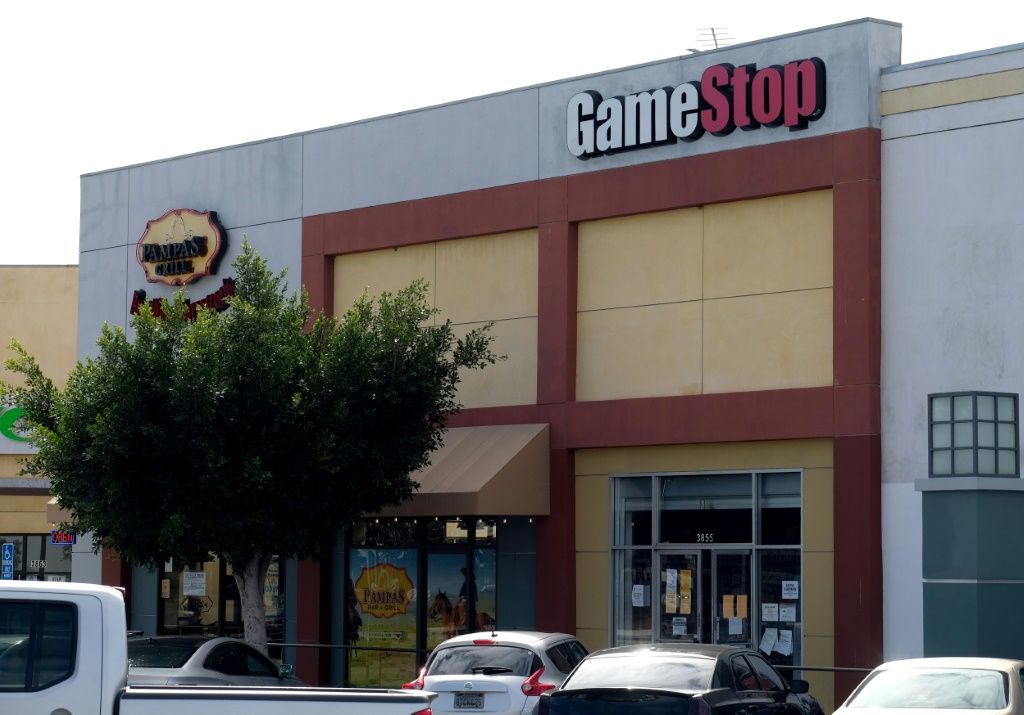
Shares of GameStop Corp. traded modestly lower Friday, hovering near recent multiyear lows as investors continue to weigh the uncertain fate of Chief Executive Officer Ryan Cohen’s unsolicited 56 billion dollar takeover bid for online marketplace eBay Inc.
GameStop stock traded at 18.04 dollars, down 0.21 dollars, or 1.15%, as of 12:31 p.m. Eastern time on the New York Stock Exchange. The stock has spent much of August trading near its 52-week low, touching as low as 17.79 dollars earlier in the month, as investors have grown increasingly skeptical of the company’s strategic direction under Cohen.
The video game retailer stunned Wall Street in May when it submitted an unsolicited offer to acquire eBay for 56 billion dollars, structured as a cash-and-stock deal valued at 125 dollars per eBay share, split evenly between cash and GameStop common stock. The proposal represented a roughly 20% premium to eBay’s trading price at the time and would have combined a company roughly six times GameStop’s size with the smaller, Grapevine, Texas-based retailer.
eBay’s board rejected the offer within days, calling it “neither credible nor attractive” and raising concerns about the deal’s financing structure, corporate governance in a combined company, and Cohen’s compensation arrangement. GameStop’s financing plan had relied on roughly 9.4 billion dollars in cash reserves along with up to 20 billion dollars in debt backed by a commitment letter from TD Securities.
Despite the rejection, Cohen continued building GameStop’s position in eBay throughout the summer. By mid-July, GameStop had increased its stake in the e-commerce company to roughly 9.75%, making it eBay’s second-largest shareholder behind funds managed by Vanguard Group. In a Bloomberg Television interview that same month, Cohen declined to say whether he planned to raise his offer but said, “we’re coming for eBay one way or another,” adding that he hoped to eventually build the combined company into a 1 trillion dollar business.
The dynamic shifted again earlier this month, when Bloomberg News reported that Cohen was reconsidering the full takeover bid altogether. According to the report, which cited people familiar with the matter, Cohen has been weighing a scaled-back partnership or joint venture that would give eBay access to GameStop’s approximately 1,600 U.S. retail locations, potentially helping both companies expand in higher-margin categories such as trading cards and collectibles. As part of any such arrangement, GameStop would seek seats on eBay’s board rather than pursuing outright ownership of the company. GameStop has not made a final decision, according to the report, and Cohen could still pursue other options.
The market’s reaction to the reported shift has largely mirrored its skepticism toward the original bid. GameStop shares have declined roughly 28% since the takeover offer was first disclosed in May, while eBay’s stock has climbed about 7.6% over the same stretch, a divergence that has left GameStop trading at a market value well below its cash holdings relative to what a full acquisition would have required.
GameStop’s stock has also faced pressure from a separate corporate finance move. In early August, the company announced plans to exchange roughly 1.4 billion dollars of convertible notes for common stock, an effort to reduce its long-term debt load. Shares fell as much as 10% following that announcement amid investor concerns about the resulting dilution to existing shareholders, even as the move strengthened the company’s balance sheet.
The uncertainty surrounding the eBay situation comes even as GameStop’s core business has shown signs of improvement. In its most recent quarterly results, the company reported revenue growth of 14% year-over-year to 835.3 million dollars, while net income surged to 389.6 million dollars from 44.8 million dollars a year earlier. GameStop has said it expects adjusted earnings before interest, taxes, depreciation and amortization to exceed 600 million dollars for the full fiscal year, up from 345.4 million dollars in the prior year. The company has also authorized a 2 billion dollar share repurchase program running through 2029.
Short interest in GameStop shares has remained notable throughout the saga, standing at roughly 13.55% of the stock’s float according to recent data, while institutional ownership has modestly declined. Prominent investor Michael Burry, known for his early bet against the U.S. housing market before the 2008 financial crisis, said he exited his entire GameStop position after the eBay bid was first announced, citing concerns about the debt the company could take on to finance a deal.
For now, investors appear to be treating the eBay saga as an open question rather than a settled matter, with GameStop’s stock price reflecting continued uncertainty about whether Cohen will ultimately pursue a full acquisition, a scaled-back partnership, or abandon the eBay pursuit altogether in favor of other uses for the company’s cash.

Marvell: It's Down 10%, But This May Not Be The Dip To Buy
Business
Yelp Stock Climbs 3 Percent as AI Partnerships With OpenAI Help Offset Local Advertising Weakness
Shares of Yelp Inc. rose more than 3% Friday, continuing a choppy but closely watched stretch for the local-review platform as investors weigh the company’s push into artificial intelligence licensing deals against persistent weakness in its core advertising business.
Yelp stock traded at 23.19 dollars, up 0.68 dollars, or 3.02%, as of 12:34 p.m. Eastern time on the New York Stock Exchange. The gain comes amid a volatile month for the stock, which has fallen roughly 11.7% over the past month and about 28.5% over the past year, according to trading data, even as the company has pointed to its expanding artificial intelligence initiatives as a source of long-term growth.
Much of the recent attention on Yelp has centered on the company’s data-licensing partnership with OpenAI, announced in late July. Under the agreement, OpenAI’s ChatGPT chatbot can surface Yelp’s reviews, ratings, photos and business details when responding to local search queries, with Yelp’s branding and links appearing alongside that content. The deal also includes plans to integrate Yelp’s “Request a Quote” feature, allowing ChatGPT users to contact local service providers directly through the chatbot without leaving the interface. Yelp and OpenAI did not disclose the financial terms of the arrangement, which is non-exclusive, leaving Yelp free to pursue similar deals with other artificial intelligence companies.
Yelp Chief Executive Officer Jeremy Stoppelman, who co-founded the company in 2004, has framed the OpenAI partnership as validation of the value of Yelp’s decades of user-generated review data at a moment when consumers are increasingly turning to AI chatbots instead of traditional search engines. “If you want to answer local queries, you really need Yelp,” Stoppelman told Axios when the deal was announced. He added that distributing Yelp’s content beyond its own platform can still benefit the company directly, saying, “Ultimately, we believe that if we allow our content outside the walls of just Yelp, and we provide it in useful ways to consumers … value does accrue back to Yelp.”
The OpenAI deal followed Yelp’s existing data-licensing relationships with companies including Apple Maps and Amazon’s Alexa, and it has become a central talking point in the company’s broader narrative about adapting to an AI-driven search landscape. On Yelp’s second-quarter earnings call earlier this month, Stoppelman described the ChatGPT integration as still in its early stages. “It’s still kind of the first inning, but you can see ratings, it links back to Yelp. You can see review snippets, and those also can link back to Yelp,” he told analysts, adding that the company had also begun rolling out its Request-a-Quote feature within the chatbot.
Yelp’s second-quarter results, reported Aug. 6, showed the tension between the company’s AI ambitions and ongoing pressure on its core advertising business. Net revenue rose about 1.4% year-over-year to 375.5 million dollars, exceeding the high end of the company’s own guidance range by 8 million dollars. Earnings per share came in at 57 cents, sharply above analyst expectations and a 56% earnings surprise, according to trading data compiled by market trackers. However, net income declined 28% from a year earlier to roughly 32 million dollars, as the company increased spending on product development and its AI initiatives.
The company’s advertising business, historically its primary revenue driver, showed mixed trends. Services advertising revenue, which covers categories such as home repair and professional services, was flat year-over-year at 241 million dollars, while restaurant, retail and other advertising revenue declined 10% to 102 million dollars. Yelp’s newer, AI-oriented revenue streams grew far more quickly by comparison: the company’s “other revenue” category, which includes data licensing, nearly doubled year-over-year to a record 33 million dollars in the quarter.
“At the same time, our trusted content is powering local discovery for ChatGPT and other AI partners,” Stoppelman said in the company’s earnings statement. “While headwinds for local businesses persist, I’m confident we are building a stronger Yelp, transformed with AI, that is well-positioned to drive long-term profitable growth.”
Yelp Chief Financial Officer David Schwarzbach highlighted the same trend in the earnings release, noting that the quarter’s revenue outperformance was driven in part by that acceleration. “In the second quarter, Yelp delivered net revenue of 376 million dollars, 8 million dollars above the high end of our outlook range. Other revenue accelerated from the first quarter, increasing 98% year over year to a record 33 million dollars,” Schwarzbach said.
Looking ahead, Yelp narrowed its full-year 2026 revenue guidance to a range of 1.46 billion dollars to 1.47 billion dollars and projected third-quarter revenue of 365 million dollars to 370 million dollars. The company also said it has paused its share repurchase program to prioritize paying down its revolving credit facility, with plans to resume buybacks in 2027. Yelp had roughly 339 million dollars remaining under its existing repurchase authorization as of the most recent quarter.
Wall Street’s reaction to Yelp’s recent results and AI strategy has been mixed. Several analysts have lowered their price targets on the stock in recent weeks even while maintaining favorable ratings, citing softer 2026 guidance, macroeconomic pressure on advertising budgets, and execution risk tied to the company’s newer revenue initiatives. Baird lowered its price target on Yelp to 27 dollars from 28 dollars earlier this month, while other firms, including Craig-Hallum, have maintained buy ratings on the stock.
Business
(VIDEO) Caitlin Clark Debuts Taylor Swift Friendship Bracelet Nike Caitlin 1s After Fever Practice Reveal
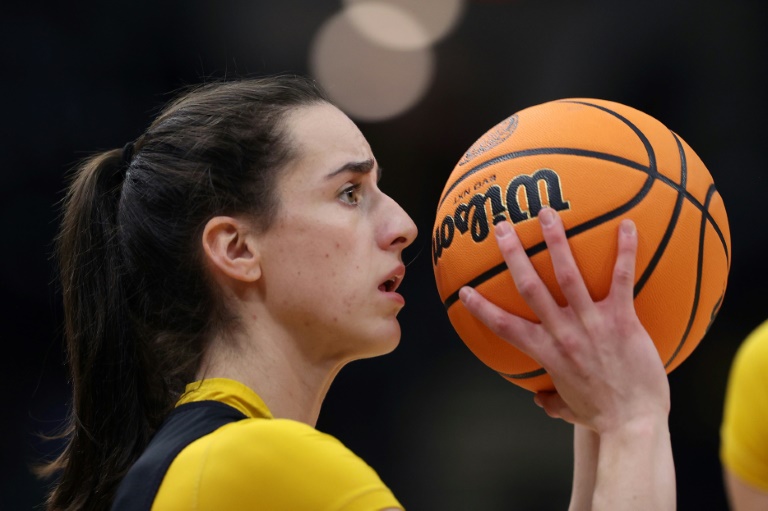
INDIANAPOLIS — Caitlin Clark showed up to Indiana Fever practice this week in a new colorway of her signature Nike shoe, a blush-and-bead design that immediately read as a nod to Taylor Swift’s Eras Tour friendship-bracelet tradition.
The pair, widely identified as the Nike Caitlin 1 “Friendship Bracelet,” features fuzzy, chunky laces threaded with small charm-like beads. Clark’s initials, “CC,” appear on a lace of the left shoe. Her jersey number, 22, is spelled out in block beads on the right — a number that also matches the title of a Swift song. Clark’s logo sits in royal blue on the tongue. The upper mixes soft pink, off-white, metallic and iridescent tones.
Clark posted the shoes on her Instagram Stories with a short caption: “Yeah these are the ones.”
The Indiana Fever account and sneaker outlets circulated closer looks the same day. Clark wore the colorway at practice Wednesday. She has not yet been reported wearing the pair in a regular-season game.
The reveal was not a complete surprise. In June, Clark arrived for a home game against the Toronto Tempo with eight blue bracelets stacked on her left wrist. The beads read “10.01.26” and “Caitlin 1,” a hint at both her signature line and an October retail date tied to the first public colorway.
Nike’s first widely listed Caitlin 1, the Racer Blue edition, has been advertised for pre-order around $140, with a public release expected Oct. 1. Sneaker sites tracking the Friendship Bracelet version have separately pointed to a later window, around Feb. 24, 2027, and a retail price near $150. Nike has not issued a full campaign framing the bead colorway as an official Swift collaboration.
The design language is still unmistakable to anyone who stood in an Eras Tour line. Fans spent years trading handmade bracelets outside stadiums, a ritual often tied to the lyric “So make the friendship bracelets, take the moment and taste it” from Swift’s song “You’re On Your Own, Kid.” Clark moved that idea from wrists to laces.
She has been open about the fandom. After wearing a player-exclusive Nike Kobe 6 inspired by the Eras Tour earlier this season, she told reporters, “I’m a big fan of Taylor [Swift] and the Eras Tour was the best concert of all time, so that was the thought behind these and I think they’re pretty fun.” She also said she wore friendship bracelets on her socks that night.
This month she went further on the idea of Swift wearing her own shoe. “Well, Travis Scott tried on the all-black pair. Obviously, we saw that in my Instagram post. I wouldn’t mind seeing Taylor Swift in a couple versions that I think she would probably like.”
The two have crossed paths in public. They have been photographed together at Kansas City Chiefs games, including a 2025 AFC divisional round against Houston and a later regular-season meeting with Detroit, sitting in a suite as Swift watched Travis Kelce. Reporting around their acquaintance has also described Swift sending Clark Eras Tour merchandise and a note calling her inspiring to watch from afar.
That crossover is part of why the shoe landed so quickly. Clark is the face of a WNBA surge. Swift remains one of the most visible entertainers in the world. A performance basketball sneaker that looks like concert merch sits at the intersection of both audiences.
The Caitlin 1 itself is new. Clark’s first signature Nike model arrived this season after years in other silhouettes. Early colorways have included Iowa Hawkeyes yellow and black, All-Star looks and the forthcoming Racer Blue retail pair. The Friendship Bracelet edition is the most narrative-driven of the bunch: not just a team or school palette, but a specific cultural object from another industry.
Construction details reported by footwear outlets include an OptiCast upper with shifting pastel and pearl tones, metallic swooshes, graphic insoles printed with beads and Clark’s double-C mark, and extra charms in some sample descriptions so buyers can restyle the laces. The midsole stays relatively low, consistent with the performance brief of the Caitlin 1 rather than a fashion-only last.
For Nike, the timing is useful. Clark’s shoe line is still in its first retail cycle. A colorway that can travel beyond basketball shops — into Swift fan communities, social feeds and gift lists — expands the addressable market without requiring a co-branded contract that neither side has announced.
For the Fever, it is another piece of off-court attention during a season already defined by Clark’s drawing power. Practice photos and an Instagram story were enough to push the shoes across sports and entertainment coverage within a day.
There are limits to what the debut actually confirms. A practice wear-test is not a launch event. A caption is not a release date. Conflicting listings for $140 in October versus $150 next February mean shoppers should treat the Friendship Bracelet pair as upcoming, not as the shoe currently in the main Nike pre-order slot unless the company updates that page.
Still, the product logic is clear. Clark has spent two years making her Swift fandom visible: tour-inspired player exclusives, bracelets on game days, suite appearances, and now beads on her own signature model. Swift’s world already knows how to turn small objects into communal tokens. Putting those tokens on a basketball shoe is a simple translation.
Whether Swift ever wears a pair is an open question Clark has already answered in public: she would not mind. Until then, the shoes exist as a practice-court preview and a merchandising teaser — fuzzy laces, “CC” and “22,” blush tones, and a caption that told fans she had found the version she wanted.
When the colorway does reach shelves, demand will likely split between basketball buyers chasing the Caitlin 1 and fans who simply want a wearable piece of the bracelet era. That dual audience is the point of the design. Clark did not put Swift’s name on the box. She put the ritual on the laces and let people recognize it.
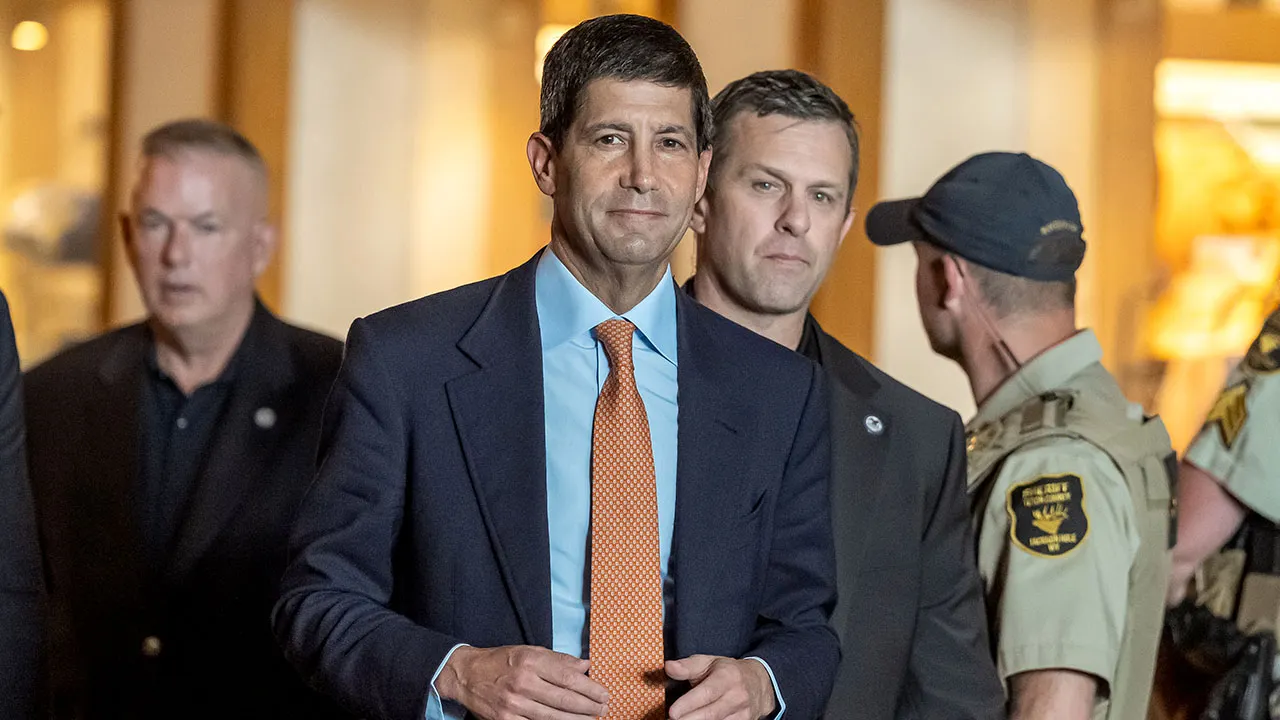
FOX Business White House correspondent Edward Lawrence reports on Federal Reserve Chairman Kevin Warsh’s speech at Jackson Hole, Wy., on ‘Varney & Co.’
Federal Reserve Chair Kevin Warsh on Friday delivered his first keynote at the annual monetary policy conference in Jackson Hole, Wyoming, against a backdrop of uncertainty over inflation, as well as how he will guide policymakers as they consider interest rate moves.
Warsh’s speech comes as the Federal Reserve has held interest rates steady at each of its five meetings so far this year amid persistent inflation, which moved further away from the central bank’s 2% target amid the Iran war.
The annual Jackson Hole conference, which features central bank leaders from around the world, is historically an opportunity for the Fed chair to reset expectations about monetary policy and give their perspective on how economic conditions are developing over the near- and long-term.
Warsh is opposed to giving so-called forward guidance about how policymakers will approach upcoming monetary policy moves, and has taken steps to remove such language from the Fed’s post-meeting statements. That has left some Fed watchers hoping for a clearer view into how Warsh evaluates incoming data and views the economy’s path ahead.
The Fed chair offered an overview of his speech – joking that it could be called an outline or trail map, but not forward guidance – and said he plans to discuss the practice of forward guidance and how markets and the central bank interact. He also said he would address the impact of artificial intelligence (AI) on the economy, as well as key principles for monetary policy and his current view of the economy.
FED CHAIR WARSH FACES JACKSON HOLE SPOTLIGHT WITH INFLATION, RATE PATH IN FOCUS
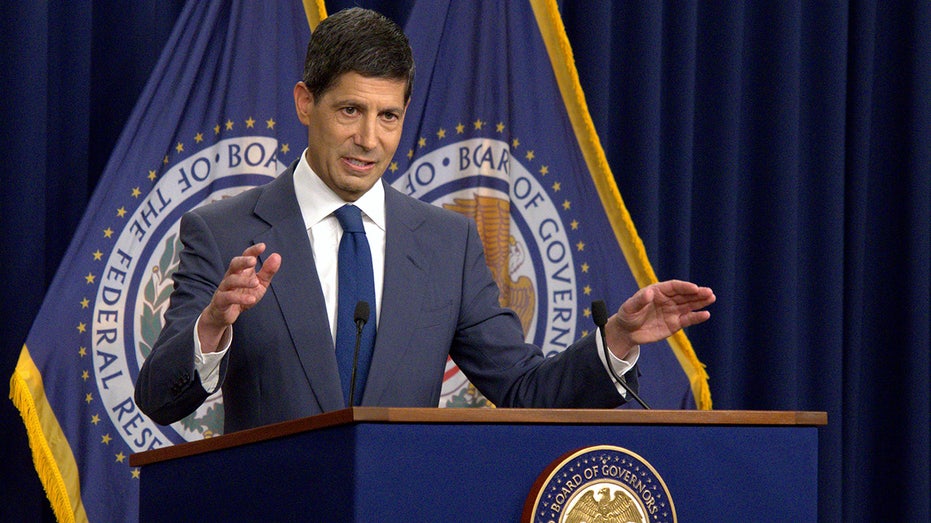
Fed Chair Kevin Warsh has expressed misgivings over the central bank’s use of forward guidance. (Li Yuanqing/Xinhua via Getty Images)
“With the unchanging picture of the Tetons as our backdrop, we are here to survey an economic landscape that is anything but static,” Warsh said, saying that the world is at a hinge point in history.
He said that progress in AI has been faster than anticipated and that the “potential for substantially higher growth is on the rise. Ever-expanding pools of capital pouring into AI-related infrastructure of all sorts. A kind of super Moore’s law seems to be playing out.”
Warsh noted the Fed created an AI task force that will track things like the impact of AI on productivity, jobs and employment, how the industry is developing and how returns are accruing across the labs, chipmakers, energy producers and cloud providers driving it.
FED DISSENTERS WARN INFLATION COULD BECOME ENTRENCHED WITHOUT MONETARY POLICY TIGHTENING NOW
On forward guidance, the Fed chair acknowledged his “long-time discomfort with early pronouncements of future policy decisions,” and offered his own view that “transparency and communications about future policy decisions is not an end unto itself.”
“Forward guidance as a regular practice was adopted by my colleagues and me during the global financial crisis. It was essential at the time, and we introduced it with much fanfare. But as with other legacies of crises past, I believe the practice has outstayed its welcome,” he explained.
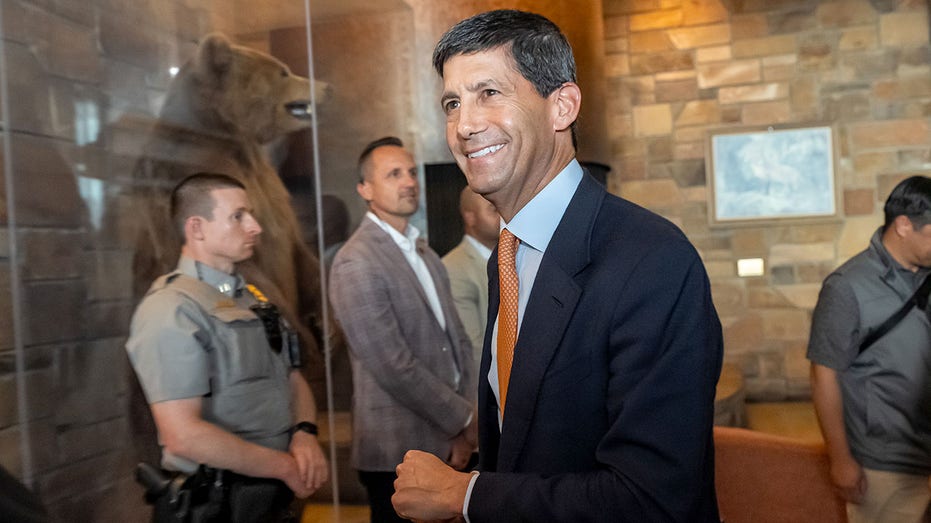
Fed Chair Kevin Warsh said the Fed should be “humble and never naive.” (David Paul Morris/Bloomberg via Getty Images)
Warsh said that in ordinary times, forward guidance should be “limited and circumscribed” because otherwise, it would risk “creating ambiguity in the name of clarity over sharing policy deliberations and committing to future decisions that can lead markets, businesses and households astray.”
“In my view, the Fed should be humble and never naive. The Fed plays an essential role in the economy and markets. Our tools are powerful. We determine the path of short-term interest rates, and market participants will always try to anticipate what we will do next. But we should not indulge a regime in which market participants are looking primarily to the Fed for their next trade,” Warsh explained.
“If the Fed gets inflation wrong and judges the economy wrong, who gets the worst of it? Not the financial high-fliers. Hardworking Americans are the ones left to deal with inflation that’s too high, or jobs that suddenly appear less secure,” he added.
FED’S FAVORED INFLATION GAUGE ROSE MORE THAN EXPECTED IN JULY
Warsh discussed his principles for monetary policy, including that the data the Fed relies on must be “relevant, contemporaneous, accurate and as actionable as possible.” He continued to say that the Fed’s actions are aimed at ensuring the aggregate demand side of the economy is broadly consistent with aggregate supply, though it’s an imprecise balance.
“There should be no misunderstanding. The Fed’s price stability objective of 2%, as measured by the PCE price index, is a firm, fixed target. Let me be equally clear about another aspect of this. Subjective price stability is not self-executing, nor is inflation necessarily mean reverting. It is the Fed’s job to deliver stable prices, no excuses,” Warsh said.
He added that the Fed also bears responsibility for maximum employment, the second component of the central bank’s dual mandate, and said that he doesn’t believe that the “Fed’s dual mandate works across purposes. After all, high inflation itself is very harmful to economic prosperity.”
Other principles Warsh discussed were that short-term interest rates are the predominant tool for achieving the dual mandate, while noting that “unconventional policies to spur economic activity may suit genuine crises of which we all have much experience, but they should otherwise be used sparingly, if at all.”
The central bank’s impact on the supply of money should also receive closer attention for their impact on financial conditions and prices. He also said that a “quieter Fed, a more purposeful Fed in its communications is better able to meet its objectives, and we can be held accountable for delivering on our remit, the only true test of our credibility.”
Warsh also offered an outlook for the economy, noting that the Federal Open Market Committee (FOMC) view of the economy in July was that “labor markets were stable, output solid, but inflation remained too high,” which led the Fed to hold rates steady and remain at the ready to act as circumstances require.
“For my part, as we sit here, I’m impressed by the overall performance of the economy, which appears to have strengthened,” Warsh said while noting that both Main Street and Wall Street have shown resiliency in the face of economic shocks.
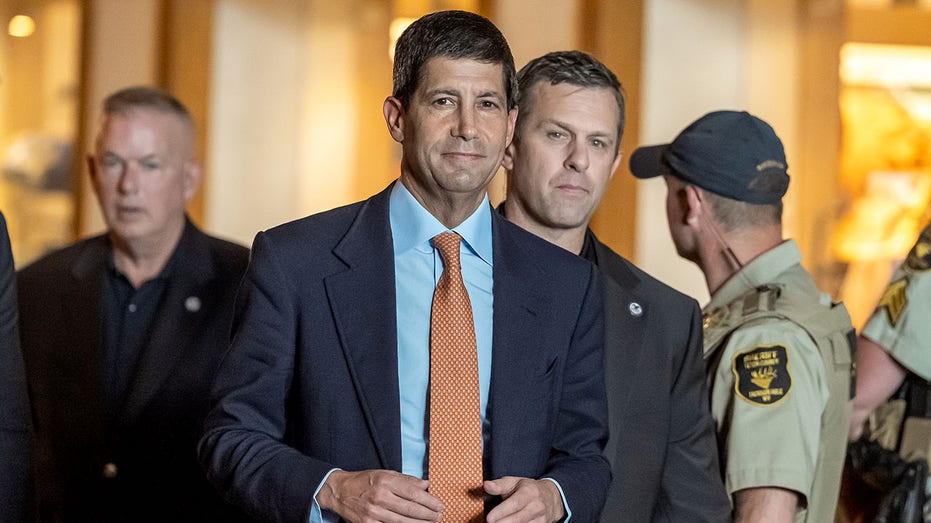
Fed Chair Kevin Warsh expressed concern about elevated inflation in his first keynote speech at the annual Jackson Hole conference. (David Paul Morris/Bloomberg via Getty Images)
FED CHAIR KEVIN WARSH SAYS CENTRAL BANK HAS ‘NO TOLERANCE’ FOR ELEVATED INFLATION
He said that firms in the S&P 500 Index have seen profits grow over 20% in the past year, with profit margins “quite elevated” relative to history, with low volatility in the market. Warsh noted strain in certain sectors, including housing and agriculture, but added he “would be hard-pressed to describe broad financial conditions as restrictive.”
“Labor markets are quite stable. The jobless rate at 4.1% remains low by historical standards and hasn’t changed much in a couple of years,” Warsh said. “In my view, the relatively low turnover in today’s labor market is partly a result of the significant matching between employers and employees that happened in the post-pandemic environment.”
“But when labor supply is barely growing, monthly job gains are naturally going to run low. There are always areas of concern in the labor market, for example, among recent college graduates… But as of now, I believe the labor markets are broadly consistent with full employment,” he said.
“On the price stability side of our mandate, the numbers are more concerning,” Warsh said, noting that PCE inflation is at 3.7% year over year and that “inflation is running above our 2% target, so the Fed’s predominant focus right now should be on prices.”
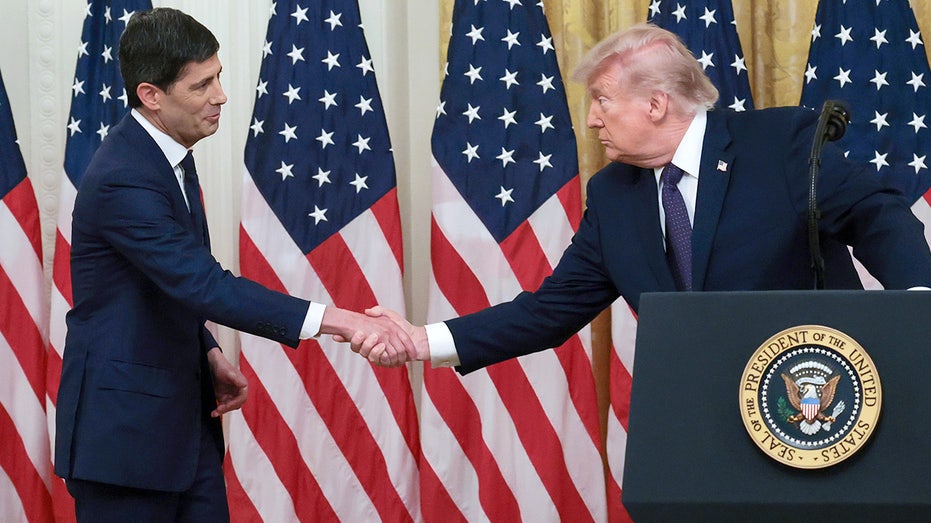
Warsh was confirmed by the Senate and sworn in as Fed chair in May 2026. (Anna Moneymaker/Getty Images)
While PCE and CPI inflation have “fallen significantly from their highs of a few years ago,” the progress in the last couple of years has been more modest and recent readings “do not tell me that underlying trends have meaningfully improved.”
Warsh said that the responsibility for “65 months of sustained, elevated inflation sits squarely with the central bank, and that’s where it belongs. So here is my standard: we must be confident that underlying inflation is moving to our objective clearly and at sufficient speed, otherwise we have work to do.”
GET FOX BUSINESS ON THE GO BY CLICKING HERE
The Fed chair concluded by saying that it’s a “tremendous honor to serve once again at the Federal Reserve,” and that he is “truly grateful for the encouragement, good counsel, and the warm reception I’ve received in my first 100 days from my colleagues.”
The Philippine central bank raised interest rates for the third straight meeting, taking preemptive action against rising inflation risks from a severe El Nino event and possible wage increases.
Bangko Sentral ng Pilipinas raised its benchmark overnight reverse repurchase rate to 5.00% from 4.75%, diverging from some regional peers including Bank Indonesia and Bank of Thailand, which left their rates unchanged.
Copyright ©2026 Dow Jones & Company, Inc. All Rights Reserved. 87990cbe856818d5eddac44c7b1cdeb8

Fastenal options activity surges on heavy put volume ahead of October expiry
Business
Cytokinetics, Incorporated (CYTK) Discusses Positive Phase III Results From ACACIA-HCM Trial of Aficamten in Nonobstructive HCM Transcript

Diane Weiser
Senior Vice President of Corporate Affairs
Hello, everyone. I’m Diane Weiser, Senior Vice President of Corporate Affairs. I’m pleased to welcome everyone to our investor event to discuss the primary results from ACACIA-HCM, the pivotal Phase III clinical trial of aficamten in nonobstructive HCM. Today’s event is being hosted in a hybrid fashion. I’d like to welcome those here in the room with us in Munich as well as those joining online.
I’m pleased to introduce from Cytokinetics, Dr. Fady Malik, Steve Heitner and Robert Blum. And I’m also thrilled to welcome 3 leading experts in HCM for our panel discussions today, Dr. Martin Maron, Dr. Ahmad Masri and Dr. Christina Paitazoglou. Today’s agenda will begin with — is it on the slide? Today’s — we’re going to pause for a minute. Turning to today’s agenda. Fady Malik will provide some brief opening remarks. Next, Dr. Masri and Maron will provide an encore presentation of the ACACIA-HCM results that were presented earlier today in the hotline session at the Congress.
Then Steve will facilitate a panel discussion and Q&A session. And finally, Robert Blum will close us out providing some remarks. For those online, today’s slides are available for download in the webcast. You can submit questions to the panel at any point

Oppenheimer raises Marvell stock price target on AI growth outlook

ONEOK: This 4.5%-Yielding AI Energy Play Is Still Undervalued

MY BIGGEST FINANCIAL MISTAKE

9 photos show life at schools in Bolton in 1974

GameStop Stock Holds Near 18 Dollars as Ryan Cohen Reconsiders 56 Billion Dollar eBay Takeover Bid





-

 Crypto World3 days ago
SpaceX stock could rise 75% to $240, JPMorgan says
-

 Crypto World20 hours ago
Bitcoin’s 22% rally now needs real demand to outlast Treasury liquidity boost
-

 Business6 days ago
Musk’s Tesla, SpaceX Confirm $16.8 Billion ‘Terafab’ Chip Plant as World’s Largest Building in Texas
-

 Crypto World7 days ago
anatomy of crypto’s biggest liquidation event since 2021
-

 Crypto World4 days ago
A $30 Billion AI Fund Implodes, Now the SEC Is Investigating Wall Street’s Role
-

 Crypto World2 days ago
Warsh Jackson Hole keynote puts financial innovation first
-

 Politics6 days ago
6 months on, Irish renters crushed by effects of government housing bill
-

 Crypto World3 days ago
Did Trump Just Move SpaceX Stock With One Truth Social Post?
-

 Business18 hours ago
Salesforce Stock Soars 19% as Blowout Earnings and Agentforce AI Growth Silence Software Skeptics
-

 Business5 days ago
Mystery AI Model ‘Ox Alpha’ Draws Developers With Free Access as Chinese Lab Origins Remain Debated
-
 NewsBeat6 days ago
The ‘Lucky Dip Gang’ causing carnage for clicks: After five thugs were killed speeding in the wrong direction on a motorway, GUY ADAMS investigates a sick new trend… and why police aren’t even allowed to pursue them
-
 Crypto World7 days ago
Nvidia Stock Suffers Longest Losing Streak Since 2022: Will Q2 Earnings End It?
-

 Business2 days ago
Walmart takes aim at younger shoppers with new fashion brand
-

 Business4 days ago
Moderna CEO warns China is pouring state money into mRNA technology
-

 Business4 days ago
NVIDIA Stock Drops Nearly 2 Percent to $210 on Seventh Losing Day Ahead of Critical AI Earnings
-

 Business6 days ago
Will Tesla Stock Be Higher or Lower a Year From Now? Here’s What Wall Street Analysts Are Saying
-
 Crypto World5 days ago
$92 Billion Nvidia Earnings Could Make or Break the AI Trade
-
 Business3 days ago
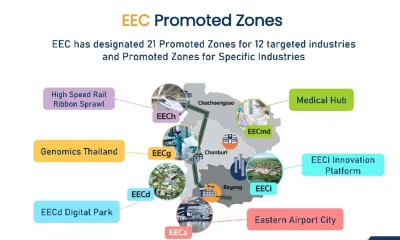
Thailand’s Eastern Economic Corridor Capital City (EECiti): Key Developments and Investment Opportunities
-
 NewsBeat2 days ago
Lindsay Clancy jury braces for closing arguments as judge tells court: ‘You’ve heard all the evidence’ – Live updates
-

 Tech7 days ago
Unitree’s New Superman Robot Claims to Outjump and Outrun Every Human, Usain Bolt Included
You must be logged in to post a comment Login